10 Best Building Kits for Kids (2026), by Age and Skill
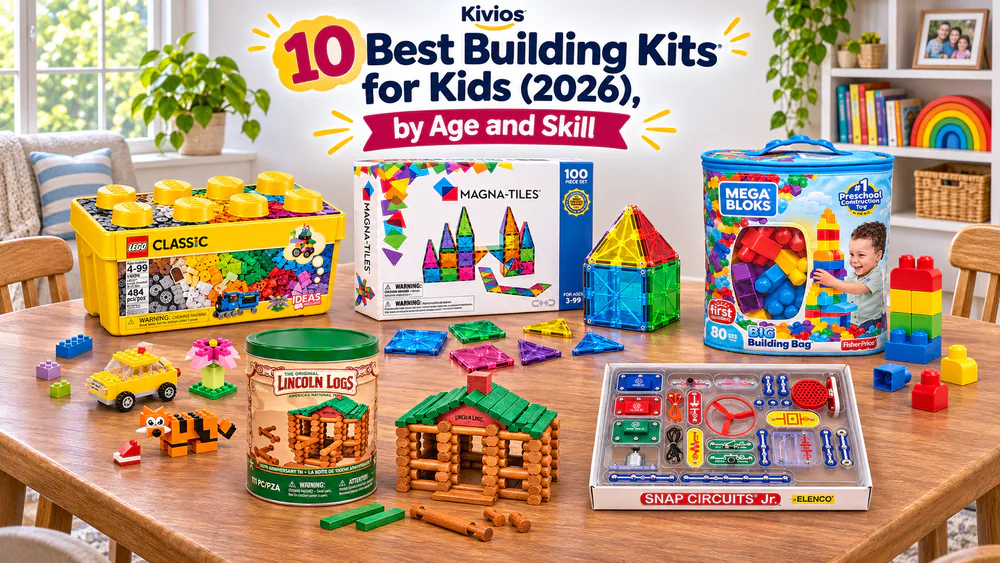
On plenty of afternoons in our home, the LEGO tub comes out once lessons are put away. The kids build trucks, robots and lopsided houses, and then the builds become characters in a story. A good building kit sparks that kind of imaginative play.
Not every set keeps the kids interested, and some need so much parent help that nobody reaches for them twice.
These are the 10 kits that kept our kids coming back, sorted from toddler to tween, with notes on who each suits and how much help to expect.
Our Top Picks at a Glance
Best Overall
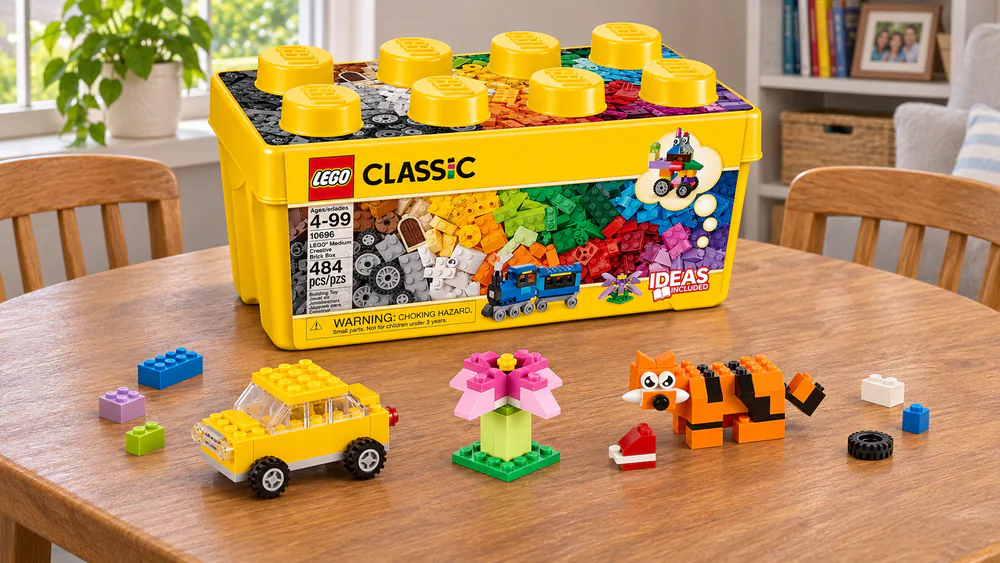
Start with the LEGO Classic Medium Creative Brick Box 10696 if you want one big tub of mixed bricks the whole family can share.
Best for Toddlers and Preschoolers
Skip to the MEGA BLOKS First Builders Big Building Bag if your builder is 1 to 5 and not ready for small pieces.
Best STEM Building Kit
Snap Circuits Jr. SC-100 is for kids who want a build that lights up or buzzes.
Building Kits Compared
| Kit | Best For | Type | Ages | Pieces | Skills |
|---|---|---|---|---|---|
| LEGO Classic 10696 | Best overall | Bricks | 4+ | 484 | Creativity, fine motor skills |
| MAGNA-TILES Classic 100 | Magnetic tiles | Magnetic | 3+ | 100 | Spatial reasoning, geometry |
| MEGA BLOKS Big Building Bag | Toddlers | Jumbo bricks | 1+ | 80 (classic bag) | Grip, stacking |
| Lincoln Logs Anniversary Tin | Wooden building | Wooden | 3+ | 111 | Planning, balance |
| K'NEX 70 Model Set | Rod-and-connector | Rod-and-connector | 7+ | 705 | Mechanics, motion |
| ThinkFun Gravity Maze | Logic builder | Logic | 8+ | 60 cards, 3 marbles | Logic, sequencing |
| Snap Circuits Jr. SC-100 | Electronics | Electronics | 8+ | About 30 parts | Circuits, troubleshooting |
| Sillbird 12-in-1 | Solar robot | Robot | 8-13 | 190 | Gears, solar energy |
| Da Vinci Catapult Kit | Engineering model | Engineering model | About 8+ (varies) | 3 machines | Physics, history |
| LEGO Technic Mars Rover 42158 | Advanced tweens | Engineering model | 10+ | 1,132 | Multi-step engineering |
How We Chose These Building Kits
Every kit here earned its spot through everyday use at home, with sets for each stage from toddler to tween.
We weighed four things. Did the box age match what our kids could do? How much parent help did it need? Did it get replayed and hold up to rough hands? And how easy was it to store?
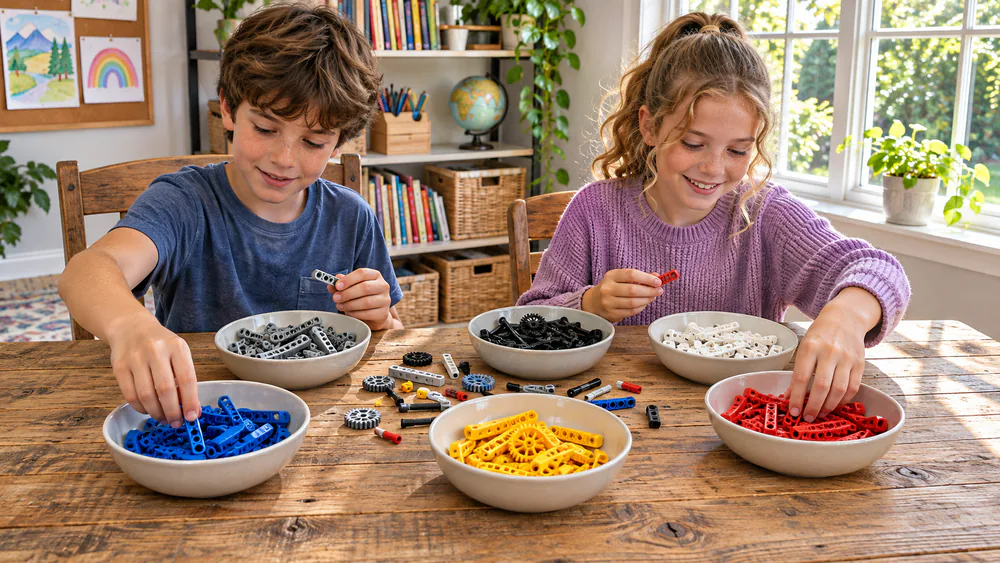
Open-ended sets got far more use once we stepped back and let the kids design their own builds instead of copying the box picture. The list starts with those sets and works up to step-by-step kits for older kids.
1. Best Overall: LEGO Classic Medium Creative Brick Box 10696
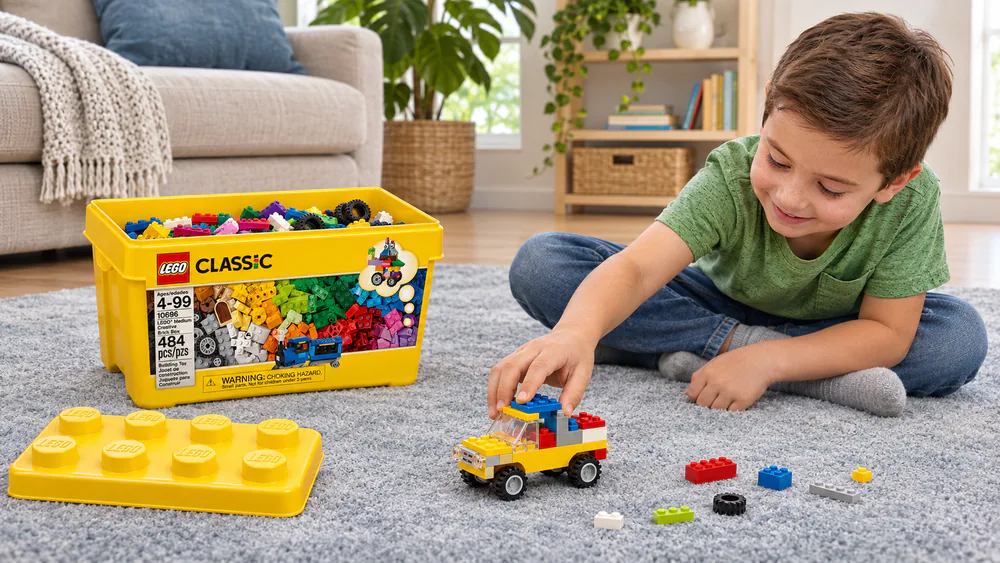
After a busy school day, one of us often sits on the rug beside a builder with the LEGO Classic Medium Creative Brick Box open. A truck that will not hold together comes apart and goes back together a different way. Once it rolls, it drives off into a story. Building together helps both of us unwind.
Who It's For
This is the box for a family that wants one shared pile of bricks. It is rated 4+, but most bricks are small, so kids under about 5 find many pieces fiddly.
What It Builds and Teaches
You get 484 pieces in 35 colors, including 18 tires and wheel rims, windows, toy eyes and a small green baseplate. Released in 2015, the set works with all other LEGO.
Pros
- Open-ended mix for many ages
- Wheels and eyes make vehicles easy
- Tub holds finished builds, with room for bricks from older sets
Cons
- Small bricks are fiddly under about 5
- The lid pops off easily, so carry the tub from the bottom
2. Best Magnetic Tiles: MAGNA-TILES Classic 100-Piece Set
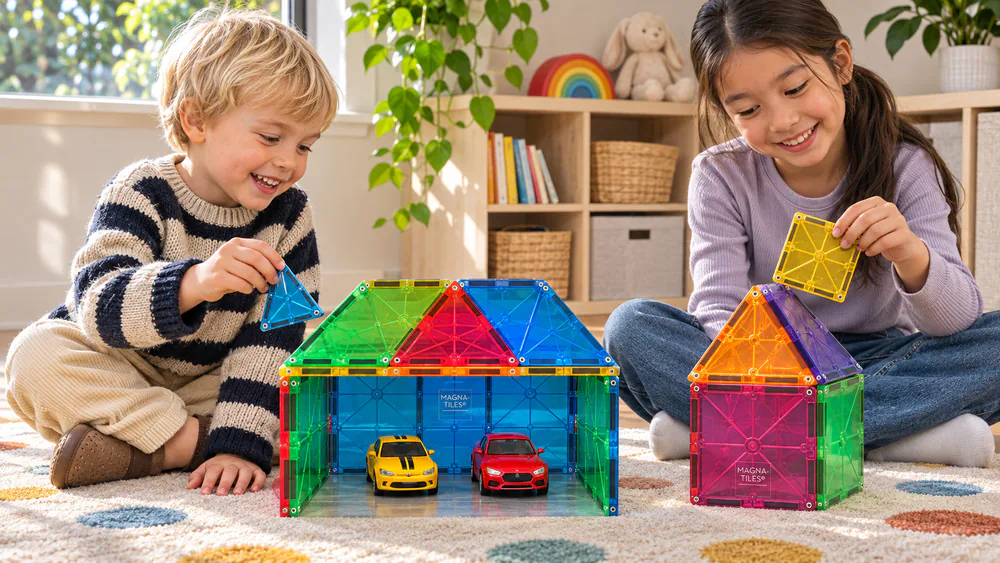
Where LEGO asks for nimble fingers, the MAGNA-TILES Classic 100-Piece Set asks little of small fingers. Still, one of our younger kids was unsure what to do at first. A five-minute demo of a cube got things going. Soon the tiles became a garage for toy cars while an older sibling built a house for stuffed animals alongside. Then the tallest tower crashed.
Who It's For
Pick this for a preschooler who is not ready for small bricks yet. The set is rated 3+ and carries on into early grade school.
What It Builds and Teaches
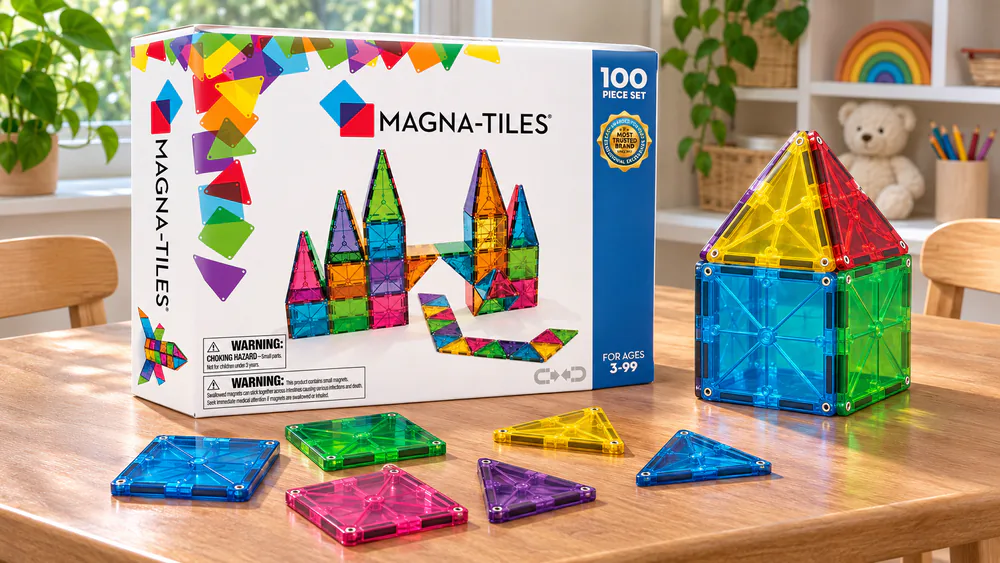
The 100 translucent tiles come in 6 colors: 4 large squares, 50 small squares, 20 equilateral triangles, 11 right triangles and 15 isosceles triangles. Rivets seal the magnets in, and the plastic is free of BPA, phthalates and latex.
Pros
- No instructions needed
- Ours held up across siblings without cracking
- Works with every MAGNA-TILES set
Cons
- Tall towers topple, and 100 tiles runs short for two or three kids
- The cost stings, though the set outlasts cheaper tiles
3. Best for Toddlers and Preschoolers: MEGA BLOKS First Builders Big Building Bag
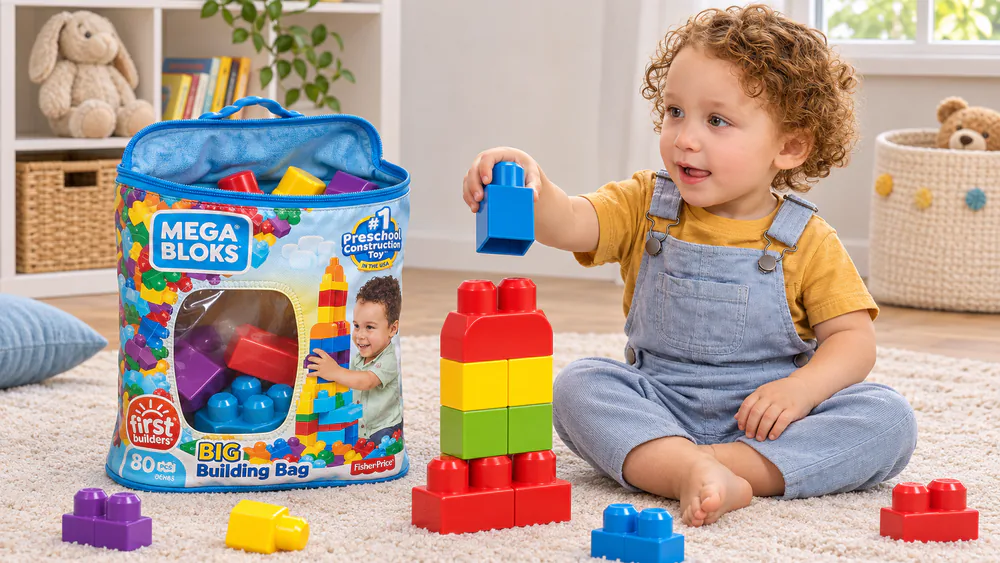
Our youngest builders start here, well before tiles or LEGO. From about 13 months, the little ones in our house carried MEGA BLOKS First Builders Big Building Bag blocks from room to room. They chewed, tossed and stacked them, and the blocks shrugged it all off. Cleanup was quick, because every block went back in the bag.
Who It's For
This bag is for babies and toddlers who need blocks they can grip and pull apart. It is rated 1+, and the First Builders line is designed for roughly ages 1 to 5.
What It Builds and Teaches
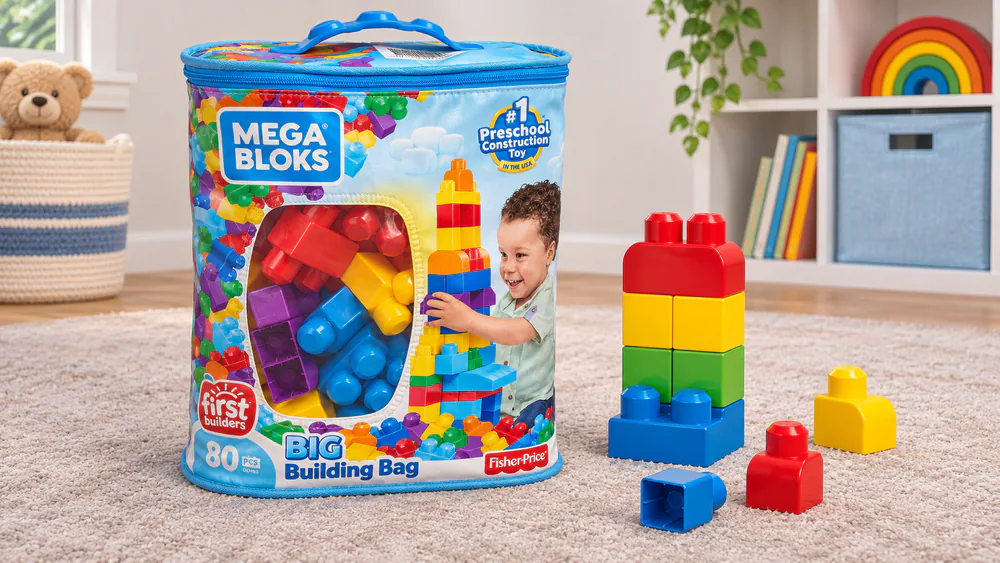
The classic blue bag (model DCH63) holds 80 big blocks. Other bag sizes hold a different count, so check the box you buy. Toddlers practice grip, stacking and hand-eye coordination.
Pros
- Oversized blocks suit small hands
- Survive chewing and rough play
- Works with other First Builders sets
Cons
- The bag is smaller than many parents expect
- Blocks do not hold together firmly for older kids
4. Best Wooden Building Set: Lincoln Logs 100th Anniversary Tin
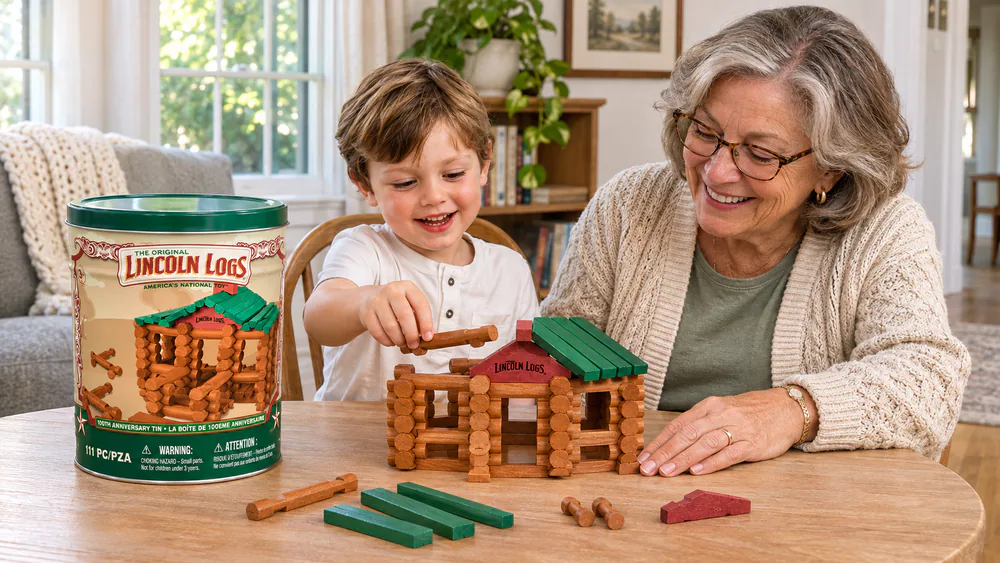
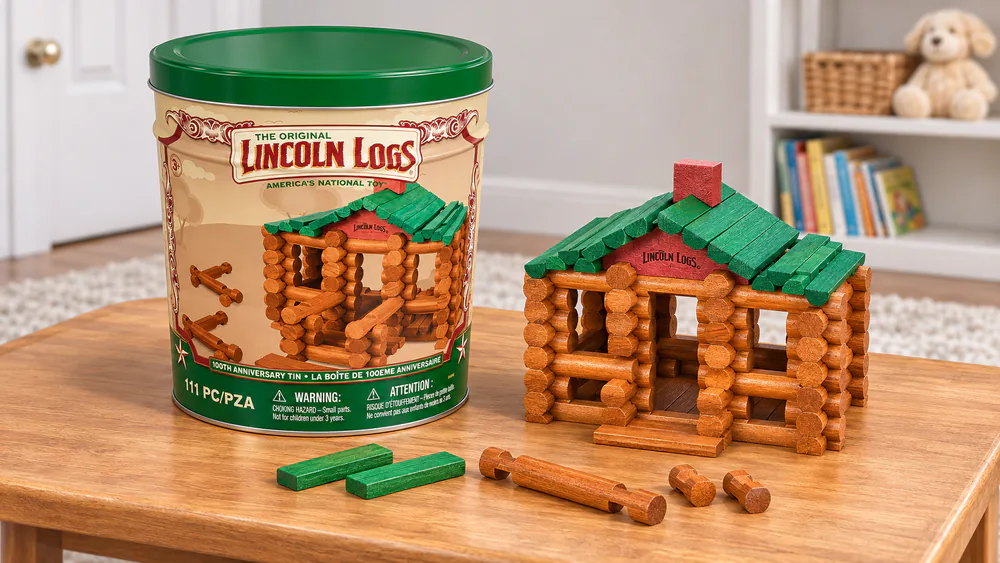
Lincoln Logs are the wooden answer to plastic bricks, and grandparents sit right down at the Lincoln Logs 100th Anniversary Tin because it feels like the set they grew up with. A grandparent and a preschooler can notch logs into a green-roofed cabin together. Then the logs run out. The pieces make one modest cabin, so bigger builds need a second set.
Who It's For
Pick this for a preschooler who wants to build cabins, train depots and fences. Three-year-olds take to the notched logs quickly, and the tin is rated 3+. Hold back small accessories like the bonfire parts from a 2-year-old.
What It Builds and Teaches
Inside are 111 real wood pieces, and the manual shows 3 build ideas. Lincoln Logs were invented in 1916 by John Lloyd Wright, son of Frank Lloyd Wright. The logs are stained maple.
Pros
- Real wood that wipes clean
- Simple notches young kids master fast
- Pulls grandparents into play
Cons
- Only enough logs for one modest cabin
- Small accessories need holding back from toddlers
5. Best Rod-and-Connector Set: K'NEX 70 Model Building Set
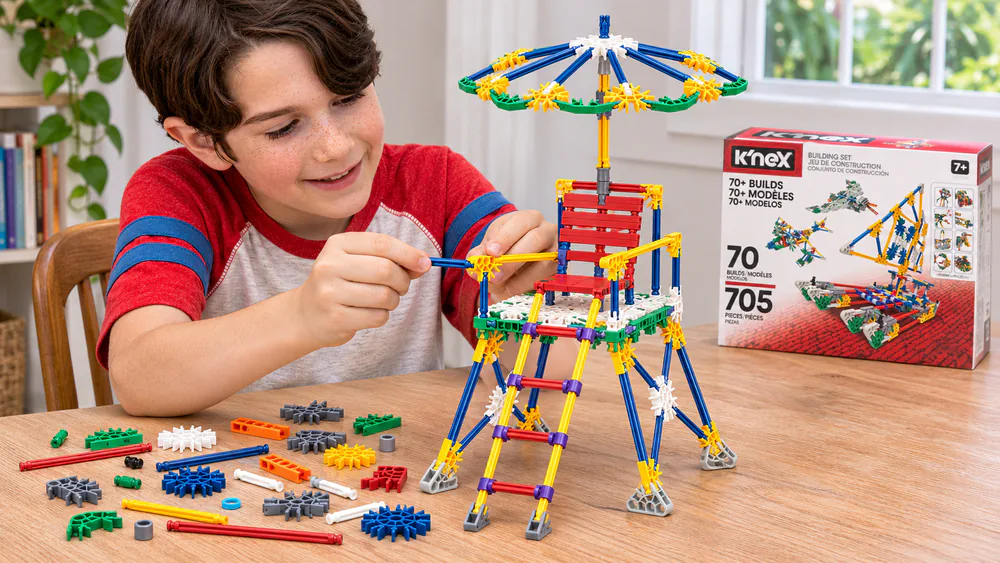
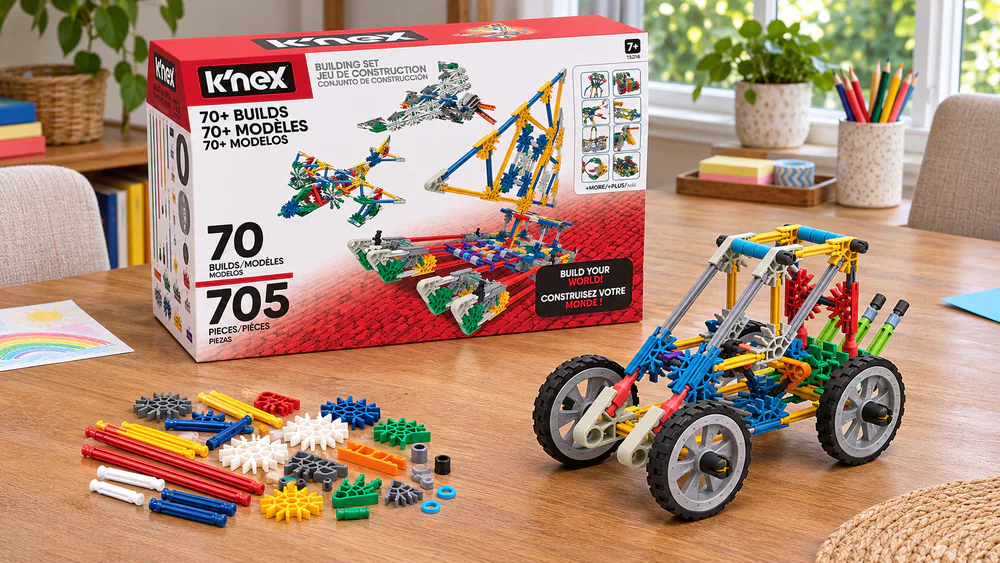
K'NEX is the first pick here that fights back. The K'NEX 70 Model Building Set pieces are stiff to snap together, so our 6- and 7-year-olds needed time and help to get the knack. After that, a 7-year-old built the lifeguard chair with its spinning umbrella alone.
Who It's For
This is a sibling set first, with enough pieces for about four kids to build at once. It is rated 7+.
What It Builds and Teaches
You get 705 pieces and instructions for 70 models. The rods and connectors are made in Hatfield, Pennsylvania, and the mix leans toward tiny connectors over long rods.
Pros
- Wheels, rotors and tracks keep builds moving
- Bigger models hold older kids' and adults' interest
- Replacement-parts guarantee from the maker
Cons
- Stiff snaps frustrate younger builders
- Some diagrams are unclear, and many are online only
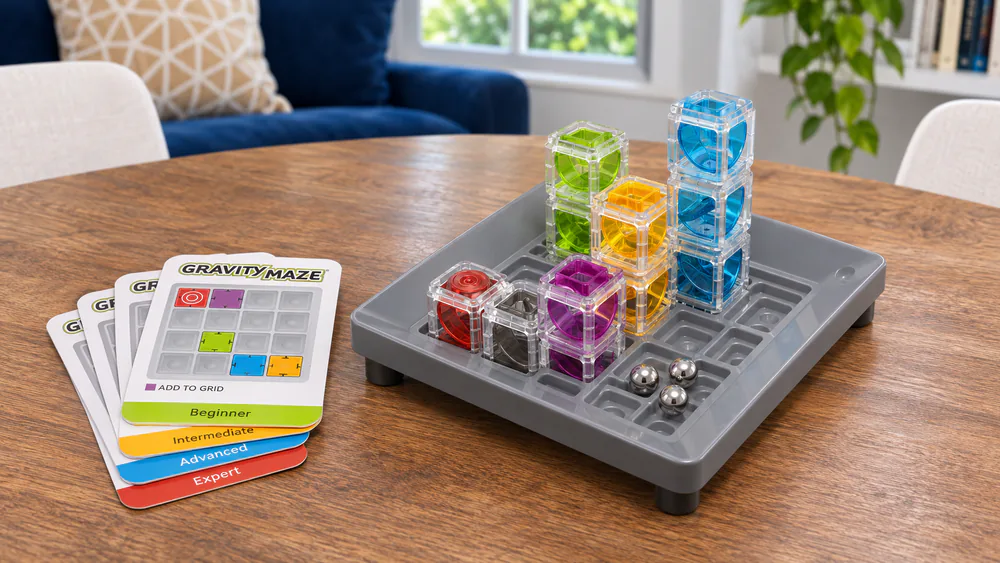
6. Best Marble Run or Logic Builder: ThinkFun Gravity Maze
Gravity Maze is where building turns into solving. Our puzzle-loving 9-year-old raced through the beginner cards in ThinkFun Gravity Maze. The later cards got hard enough to stump an adult, so it became a whole-family puzzle. Meanwhile, a younger sibling who could not solve a card yet dropped marbles into the towers.

Who It's For
This is the pick for kids who like a puzzle more than a pile of pieces. It is rated 8+ and clicks best from about 9 or 10. Read the directions first, because turning the towers the right way is half the puzzle.
What It Builds and Teaches
You get 60 challenge cards from beginner to expert, 3 marbles, a grid, a target piece and stackable towers. It won a Toy of the Year award in the Specialty category.
Pros
- Solutions printed on the card backs
- Works solo or as a family challenge
- Screen-free
Cons
- Tower pieces can pop out of the grid mid-puzzle
- A 7-year-old may find it confusing alone
7. Best Electronics Building Kit: Snap Circuits Jr. SC-100
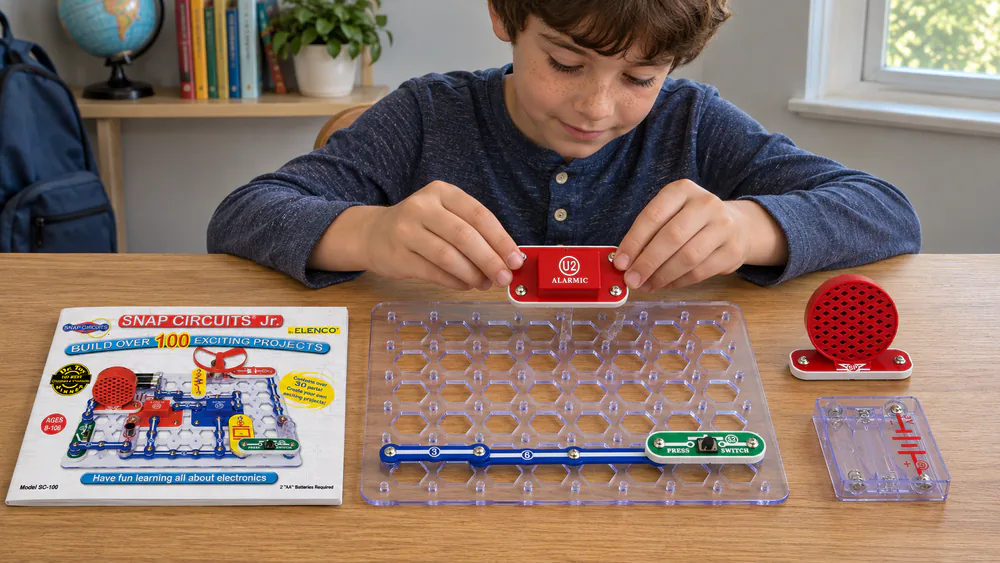
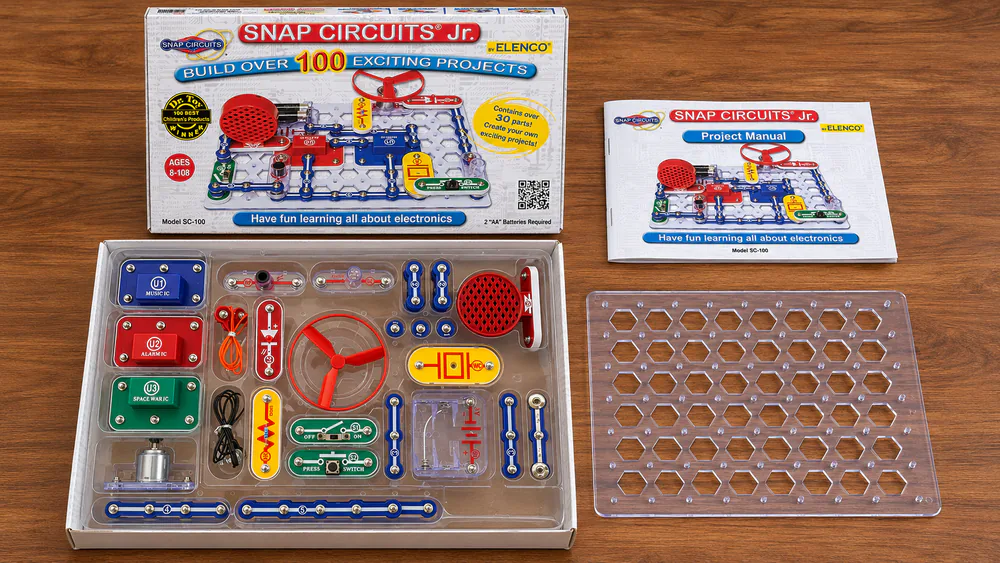
Snap Circuits is where building toys turn into build-it kits. Snap Circuits Jr. SC-100 gave us a working build on day one, when a doorbell-style alarm sounded as the last piece snapped in. By around project 15, our builder was predicting what a circuit would do before finishing it. Our Snap Circuits Jr. SC-100 review goes deeper.
Who It's For
This kit is for the child who keeps asking how things work. It is rated 8+ and runs on 2 AA batteries, not included. Kids drain them quickly, so keep rechargeables handy.
What It Builds and Teaches
The manual numbers 101 projects, so you get more than 100 builds from about 30 snap parts. Numbered, color-coded parts snap onto a plastic grid, with no soldering or tools.
Pros
- Turns into a parent-and-child project
- Clear numbered parts keep setup simple
- Upgrades to bigger kits like the SC-300
Cons
- Snaps can loosen with heavy use
- Some snaps feel fragile if dropped, so store parts in a bin
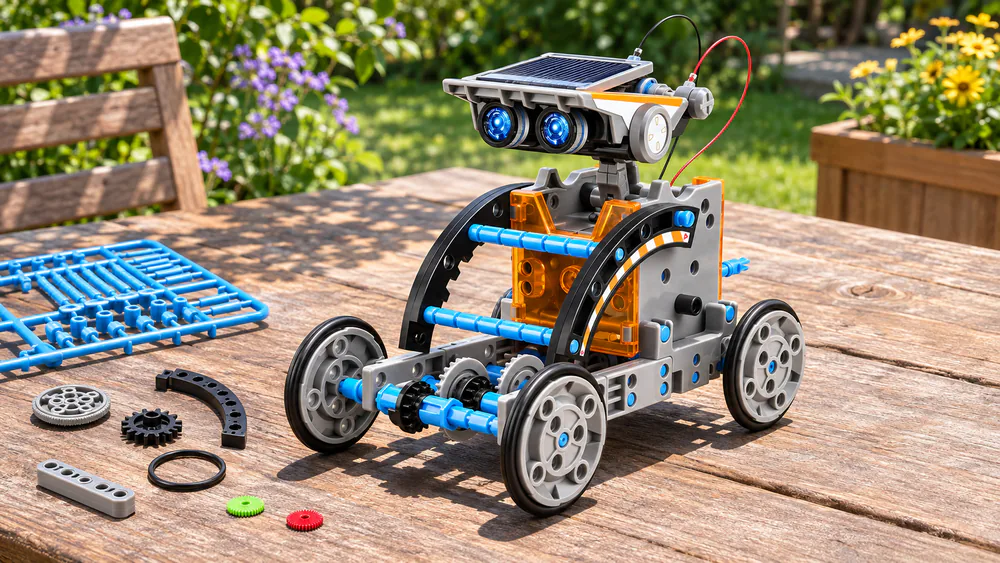
8. Best Solar Robot Kit: Sillbird 12-in-1 Solar Robot Building Kit
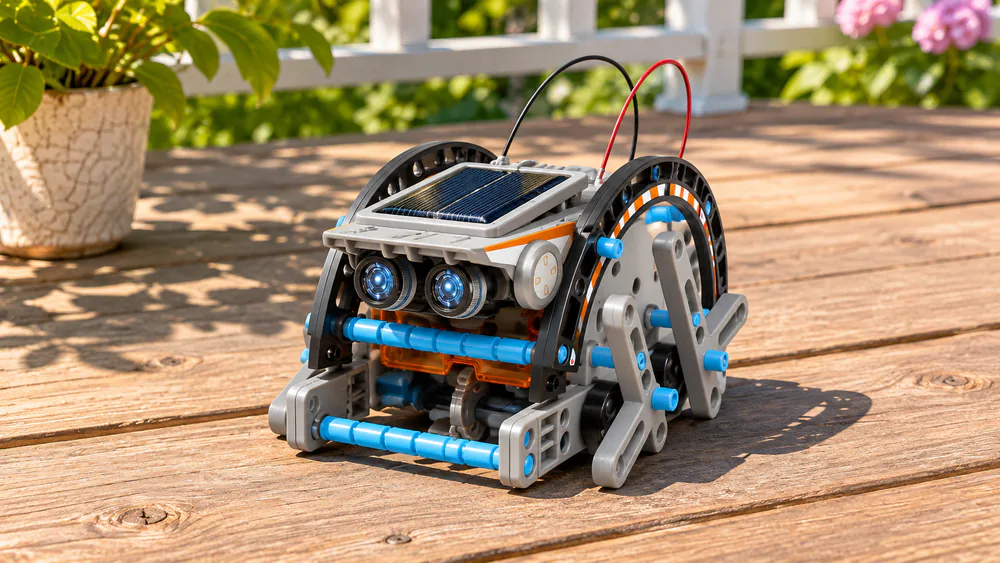
Like Snap Circuits, the Sillbird kit ends in something that moves, but here the sun powers it. The first model in the Sillbird 12-in-1 Solar Robot Building Kit took a 10-year-old in our home about two hours, with help on a few steps. By the third model, the builder was working alone. Sorting parts by shape and color first saved a lot of frustration. See our Sillbird 12-in-1 Solar Robot review for more.
Who It's For
Plan this as a sit-together project. The kit is rated 8-13. It needs full, direct sun, so a finished robot sometimes waits for a sunny afternoon.
What It Builds and Teaches
The 190 pieces build 12 robots and vehicles, from beginner to advanced. It runs on sunlight, or indoors under a strong flashlight. Pointing the panel straight at the sun makes the robot faster, which teaches the angle lesson on its own.
Pros
- 12 builds from one set of reusable parts
- Makes solar energy visible
- Difficulty steps up gradually
Cons
- Slows or stops on cloudy days and in dim rooms
- A panel occasionally never powers the motor, so test a model early while a return is easy
- Tight gears need gentle wiggling, or a finished robot will not move
9. Best Engineering Model Kit: National Geographic Da Vinci Catapult Kit
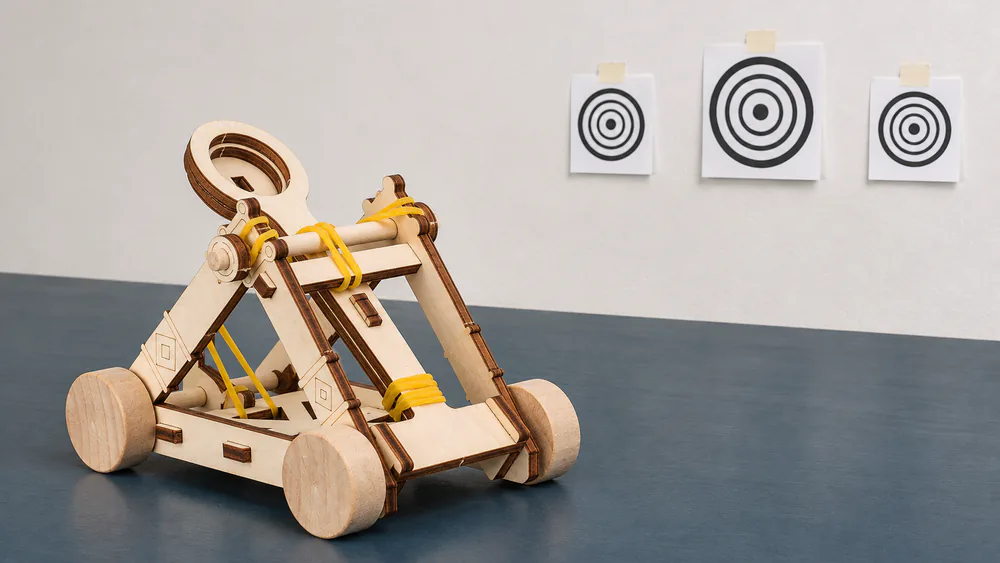
The Da Vinci kit swaps sunlight for rubber bands and adds a history lesson. The best part of the National Geographic Da Vinci Catapult Kit came after the build, because the machines really fire. Once we set up paper targets, it became a family target contest. It also capped off our Leonardo da Vinci unit nicely.
Who It's For
This kit is for kids who want a build that launches. Age grading varies by edition and seller, so think about 8 and up, with help. A 9-year-old may struggle to punch out the laser-cut pieces alone, and a few assembly steps are unclear, especially for the bombard. Start with the catapult, the quickest build, and save the intricate ballista for last.
What It Builds and Teaches
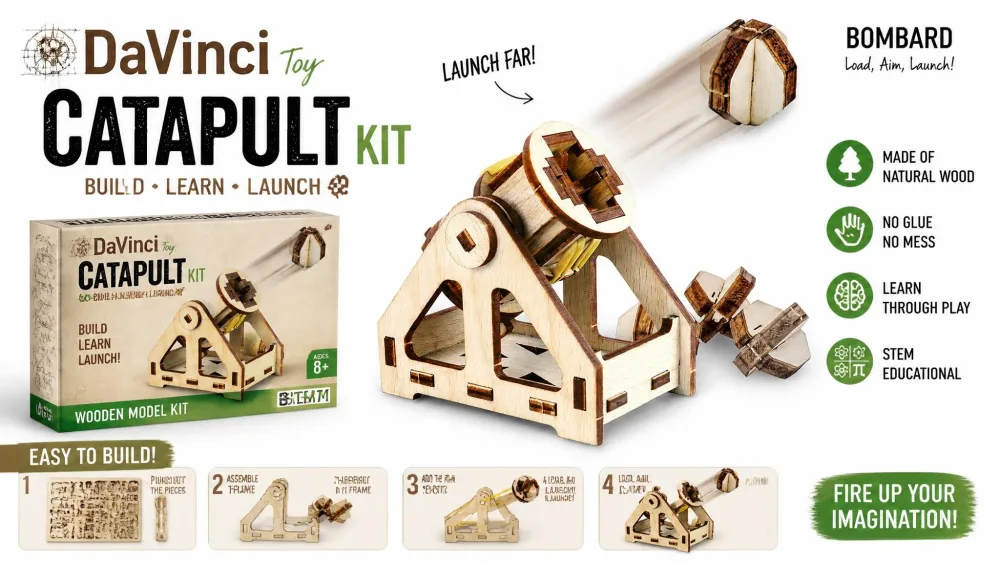
The kit builds 3 machines: a ballista, a bombard and a catapult. Each takes 1-3 hours to assemble from laser-cut wooden parts, rubber bands and sandpaper. Shots can fly up to about 15 feet, though rubber-band tension often keeps them shorter.
Pros
- Three machines that really launch
- Ties history and physics together
- No special tools needed
Cons
- Light wood snaps, though a dab of wood glue fixes most breaks
- The bombard wire is awkward, though floral wire is an easy swap
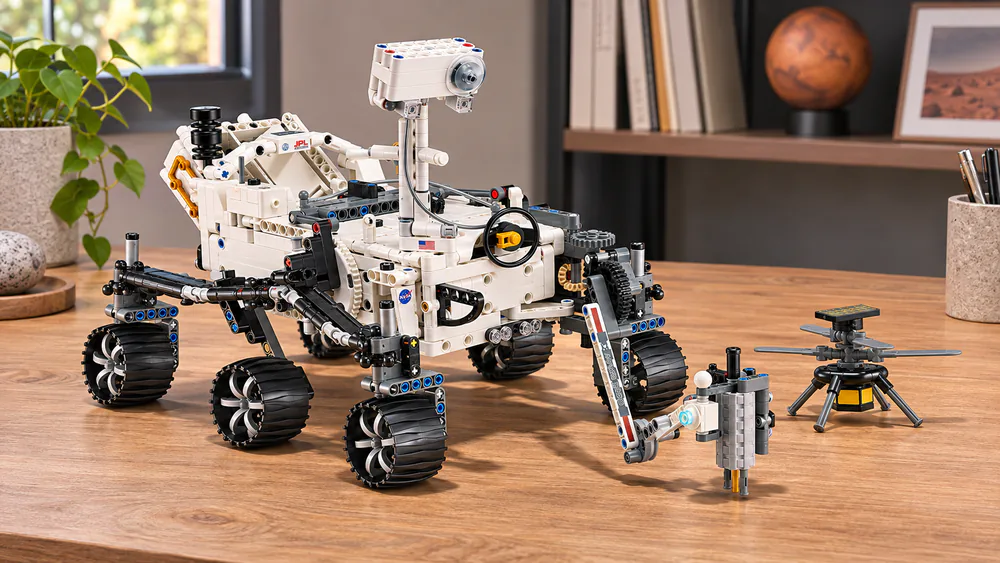
10. Best Advanced Kit for Tweens: LEGO Technic NASA Mars Rover Perseverance 42158
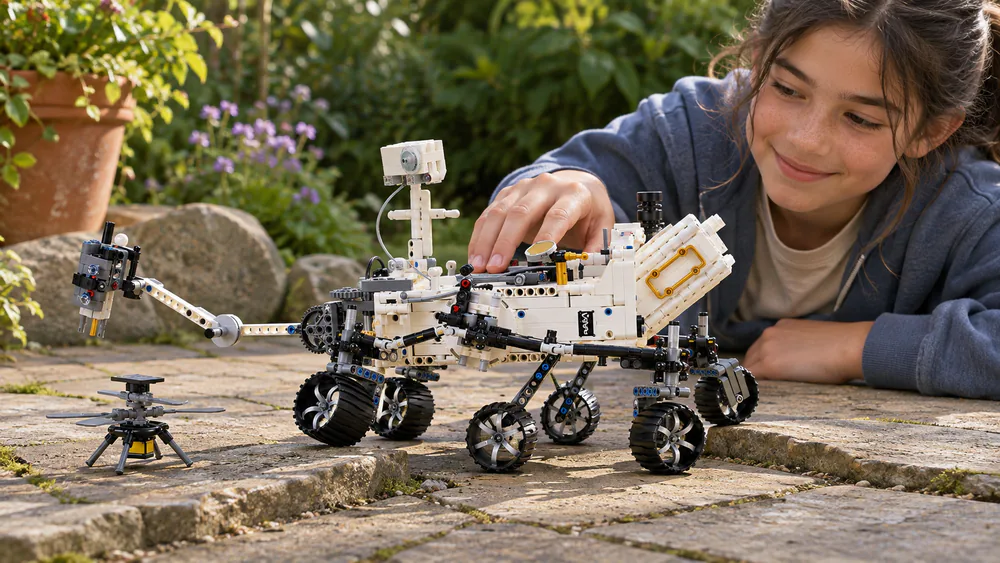
The Technic rover is the long-build end of our age ladder. Attaching the wheel suspension on the LEGO Technic NASA Mars Rover Perseverance 42158 was the most awkward stretch for our 10-year-old, with lots of pushing pins into holes. The tires turned the wrong way until we opened the digital instructions. Once finished, the rover kept its wheels down over bumps, and the slow sample arm was very satisfying to work. Our LEGO Technic Mars Rover Perseverance review has more.
Who It's For
This is for a tween who wants a build that lasts more than a day. The set is rated 10+. Plan on about 4 hours, in one afternoon or spread over several days.
What It Builds and Teaches
The 1,132 pieces build a rover with 360-degree steering, a sample arm, science instruments and a small Ingenuity helicopter. The set is nearing the end of its production run, so availability may tighten.
Pros
- Working suspension and steering
- Sturdy enough for play
- A long build that rewards patience
Cons
- Not motorized
- AR app is separate from the model
How to Choose a Building Kit for Your Child
Match the Kit to Age and Skill Level
Toddlers stack a few blocks or lay tiles flat, and taller 3D builds come as skills grow. Treat the box age as a floor, then weigh your child's patience and hand strength.
Building Toys vs. Build-It STEM Kits
Bricks, tiles and logs are open-ended, with no finish line. Build-it STEM kits follow steps toward one working result, like a circuit or a catapult. For machine-minded kids, see our guides to the best engineering kits for kids, best robot kits for kids and best STEM kits for kids.
Piece Size and Safety (Small Parts, Magnets)
CPSC small-parts rules ban small parts in toys meant for children under 3 because of choking risk. Toy magnets fall under the ASTM F963 standard, which caps magnet strength at a flux index of 50. With a toddler in the house, we pull small pieces from older kids' sets and return them later.
Watch outSmall parts in kits rated 3+ can choke a child under 3. Two or more swallowed magnets can attract inside the body and cause serious injury, so seek care right away if you suspect one was swallowed.
How Much Parent Help It Needs
MEGA BLOKS, LEGO Classic, Lincoln Logs and MAGNA-TILES need little beyond supervision. K'NEX needs help at first. Snap Circuits Jr. is mostly independent from age 8. The Sillbird robot and the Da Vinci kit need the most adult time.
Replay Value and Storage
Sets with no fixed end get the most replay. Storage matters too, because a set with lost pieces stops getting played.
Parent tipGive a toddler's blocks and an older child's small-piece sets separate bins, and keep the small-piece bins up high.
What Kids Learn From Building Kits
The American Academy of Pediatrics recommends simple materials like blocks and puzzles, and says play builds planning, language, math and social skills. In one study, anxious preschoolers were twice as likely to feel less stressed after 15 minutes of play as classmates who heard a story.
The skills kids learn playing with blocks fall into four areas: social, physical, creative and intellectual. More complex preschool block play has even been linked to higher high-school math scores.
Frequently Asked Questions
What age should kids start with building kits?
Watch for readiness more than birthdays. A child who can press stiff connectors together is ready for K'NEX, and one who can stay with a project for an afternoon is ready for a multi-hour build. Kids also keep coming back to MEGA BLOKS after the toddler years.
Are magnetic tiles safe for toddlers?
Well-made tiles seal the magnets inside. MAGNA-TILES are still rated 3+, so supervise younger toddlers and throw out any tile that cracks.
How much adult help do build-it STEM kits need?
Less, if you set things up well. Sort the pieces by shape and color before step one, and read a step or two ahead so you see a tricky part coming. Then let your child do the snapping.
Are LEGO sets worth the price compared with other building kits?
For most families, yes, if you start with one larger base set instead of several small themed ones. The Classic Medium box has been sold since 2015, and one tub of mixed bricks outplays a set that builds one model.
How do I store building kit pieces?
Use clear lidded bins sorted by type, and keep manuals in one folder.
The Bottom Line