40 Easy Art Projects for Kids (Fun Ideas for All Ages)
Art projects give kids a hands-on way to explore color, texture, and their own ideas, and they build real skills while the fun is happening. Every time our kids glue, tear paper, or hold a brush, they are strengthening the small-motor control and hand-eye coordination that later support writing, along with problem-solving and expressive language.
Here are 40 fun and easy art projects, grouped by age band and then by material. Most use supplies you already have, and each is simple to set up at the kitchen table.
Why Art Projects Matter for Kids (a Note From Our Kitchen Table)
The best projects here are open-ended: the child chooses the colors, the shapes, and when the work is done. Early-childhood specialists favor that choice-driven approach over crafts that copy one result, because the thinking a child does matters more than the finished picture. Match a project to your child's age, protect the table, and let the process lead.
NoteWe test every project on this list at our own kitchen table, with our two kids doing the actual making before any idea earns a spot. If a project frustrated them, made a mess we could not clean, or fell flat, it did not make the cut.
We worked through this whole list the way our homeschool weeks already run: a set art afternoon each week, one or two projects at a sitting, across a summer at the kitchen table. Because our two kids are a few years apart, we often ran the same project at two levels of complexity, and that weekly rhythm is how the list earned its keep.
Easy Art Projects for Toddlers & Preschoolers (Ages 2–4)
Projects for this age band reward big movements and forgive messy hands. Think stamping, squishing, and spinning rather than careful lines.
- Finger Painting. Squeeze washable paint onto paper and let little hands swirl and smear. (Ages 2-4, about 15 minutes, high mess.)
- Sponge Stamping. Cut kitchen sponges into shapes, dip them in paint, and press. The chunky grip suits toddlers who cannot yet steer a brush.
- Bubble Wrap Printing. Roll paint over a sheet of bubble wrap, press paper on top, and peel to reveal a field of dots.
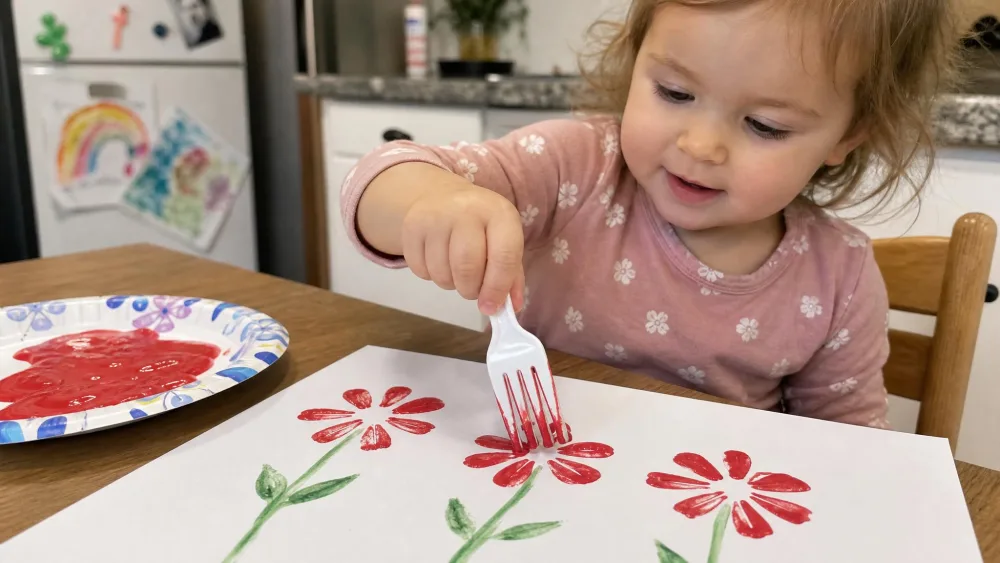
- Fork-Stamped Flowers. Dip a plastic fork in paint and stamp petals around a center. These are near-instant, and our toddler could stamp out a whole page with almost no setup.
- Salad-Spinner Spin Art. Drop paper into a salad spinner, add blobs of paint, and spin. This is our go-to for the youngest: no brush control needed, and the paint stays inside the bowl.
- Foam-Sticker Stamping. Swipe a foam sticker with a marker, stamp, then wipe it with a baby wipe to switch colors cleanly. That quick wipe keeps the whole session low-mess.
- Dot Sticker Art. Hand over a sheet of colored dot stickers and a simple outline, and let your child fill it in. No paint, no cleanup.
- Cotton-Ball Clouds. Glue cotton balls onto blue paper for puffy skies, then add a paper sun.
Simple Art Projects for Kids (Ages 5–7)
Around ages five to seven, kids can follow a two- or three-step process and love a bit of everyday magic in the result.
- Salt Painting. Trace glue lines, sprinkle salt along them, then touch a loaded watercolor paint brush to the salt and watch the color wick and bloom. Fair warning from our table: salt scatters everywhere, so plan for a moderate cleanup.
- Crayon Resist Painting. Draw firmly with white crayon, then wash washable watercolors over the top. The wax repels the paint, so the hidden drawing appears as if by magic.
- Coffee Filter Art. Color a coffee filter with markers, then dab it with water and watch the color spread through the fibers. This one reliably wows kids.
- Symmetry Butterfly Prints. Paint one half of a folded paper, then fold and press to mirror the design onto the other half. It quietly teaches symmetry.
- Pointillism Dot Art. Build a picture from dots using a Q-tip, a toothpick, or the back of a fork. Swapping the tool keeps it interesting across a wide age range.
- Cellophane Stained Glass. Press colored cellophane between clear contact paper and frame it with black paper. It looks flat on the table, then comes alive taped to a sunny window.
- Blow Painting. Drip runny paint on paper and blow it through a straw into branching, spidery lines.
- Paper Plate Weaving. Notch a paper plate, wrap it with yarn, then weave strips over and under.
- Nature Rubbings. Lay paper over leaves and bark, then rub the side of a crayon to lift the texture.
- Handprint Animals. Paint a palm, press it down, and turn the print into a fish, a peacock, or a turkey.
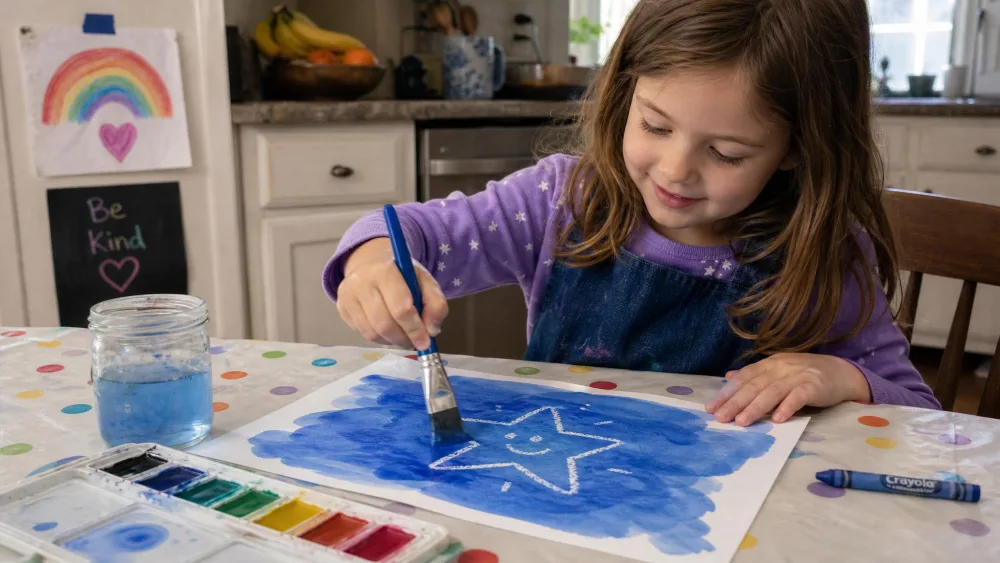
Parent tipSave every "wow" project for a rainy afternoon. Crayon resist and coffee filter art both deliver that magic-reveal moment, which keeps kids leaning in from start to finish.
Creative Art Projects for Older Kids (Ages 8–12)
Older kids, roughly ages 8-12, can handle multi-step projects and enjoy techniques that look genuinely impressive when finished.
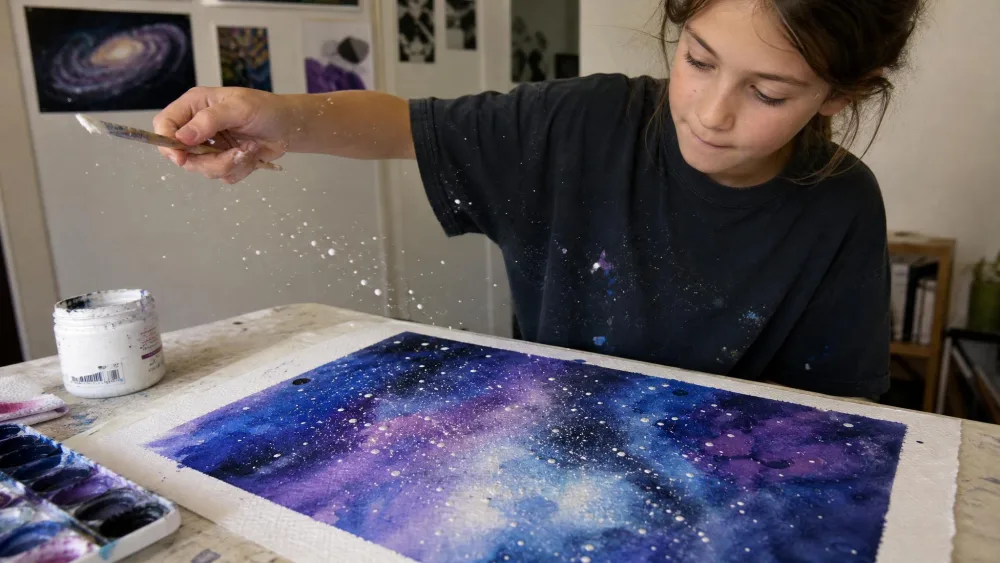
- Watercolor Galaxy. Layer deep blues and purples wet-on-wet, then flick white paint for stars. The wet layers keep blending as they dry, so the finished galaxy looks far more advanced than the small amount of effort it actually takes.
- String Art. Hammer small nails into a pattern on a wood board, then wrap embroidery thread between them.
- Zentangle Patterns. Fill a shape with repeating doodled patterns, one small section at a time. It is calming and needs only a fine-tip pen.
- Oil-Pastel Scratch Art. Color heavily with oil pastels, cover the whole thing in black paint, then scratch a design to reveal the color beneath.
- Origami. Fold origami paper into cranes, boxes, and jumping frogs by following step-by-step diagrams.
- Clay Pinch Pots. Shape a ball of air-dry clay into a small bowl using nothing but thumbs and fingers.
- One-Point Perspective Drawing. Draw a road shrinking toward a single vanishing point to learn real depth.
- Watercolor Resist Lettering. Write a word in white crayon, then wash color over the whole page.
- Paper Quilling. Roll thin paper strips into coils and glue them on edge into flowers and letters.
- Comic Strip Making. Fold and rule a page into panels, then tell a short story with drawings and speech bubbles.
Art Projects by Material & Technique
If you would rather shop your supply cupboard than your child's age, group the ideas by what they use.
Paint Projects for Kids
Paint delivers the boldest color of any supply, and a few smart choices keep the mess in check. For a full set of guided ideas, see our watercolor projects for kids.
- Marbled Shaving-Cream Paper. Swirl drops of paint into a tray of shaving cream, press paper on top, then scrape it clean. It looks alarming but cleans up easily.
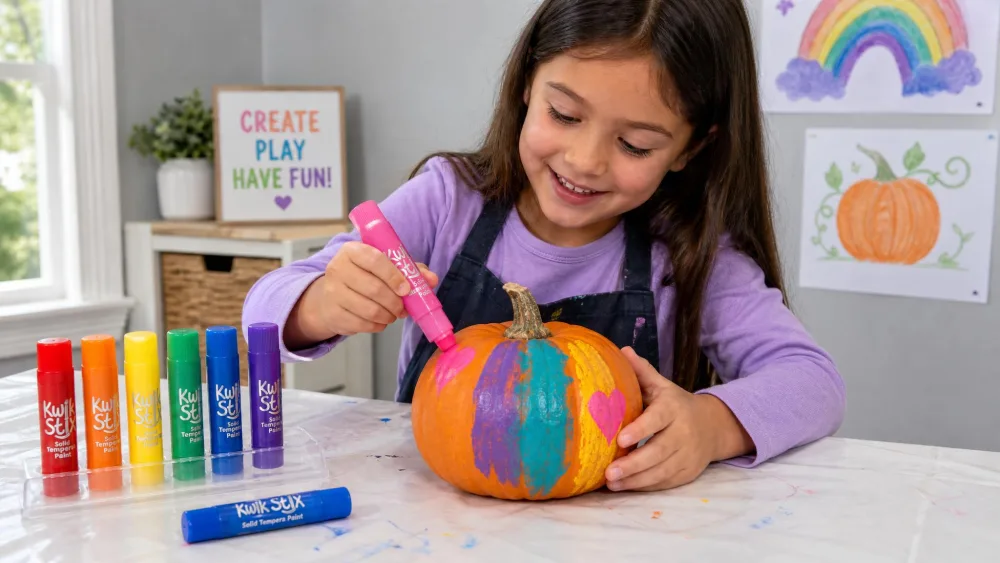
- Paint-Stick Painting. Twist-up paint sticks, like Kwik Stix, glide on like a chunky crayon. They contain the mess far better than liquid paint, so they are our first pick for painting pumpkins and rocks.
- Bubble Painting. Blow colored, soapy washable paint bubbles up out of a cup, then catch the popping domes on paper.
- Wet-on-Wet Watercolor. Brush clean water over the paper first, then drop in color and let it feather softly.
Paper & Collage Projects
- Torn-Paper Mosaic. Tear colored paper into small pieces and glue them into a picture. Tearing is great fine-motor practice.
- Tissue-Paper Collage. Brush watered glue over paper, layer bright tissue squares, and let the colors bleed.
- Magazine Collage. Cut favorite images and words from old magazines and arrange a themed page.
- Paper Chain Sculpture. Loop and staple construction paper strips into chains, then build a standing shape.
Recycled & Nature Art Projects
- Egg-Carton Creatures. Cut egg-carton cups apart, paint them, and add pipe cleaners for caterpillars and spiders.
- Homemade Nature Paint. Make real paint by pressing pigment from spinach, blueberries, turmeric, and strawberries. It turns a snack drawer into an art supply.
- Leaf-Print Painting. Brush paint onto the veined back of a leaf, then press it to make a detailed print.
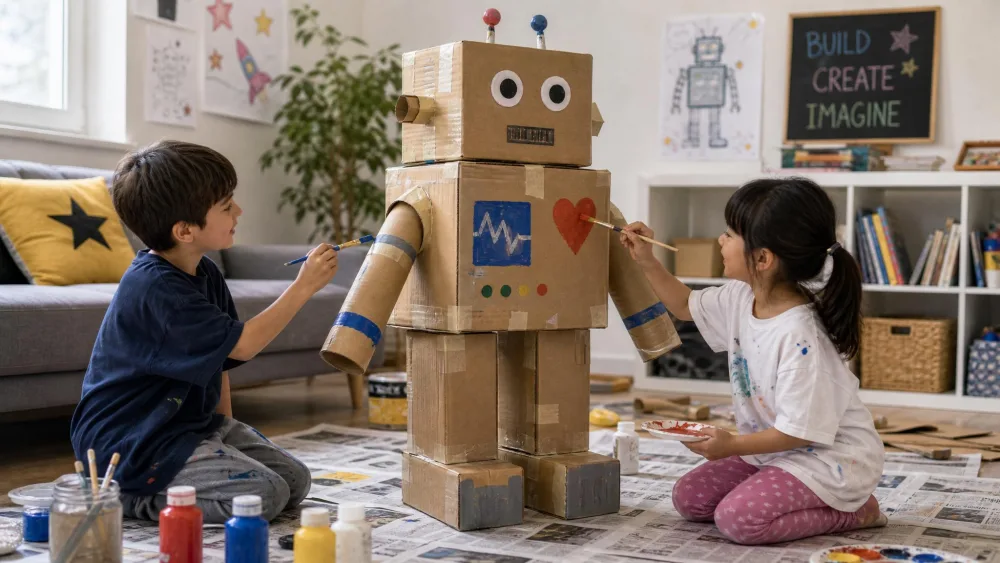
- Cardboard Box Sculpture. Tape boxes and tubes into robots, castles, or cars, then paint the whole build.
Tips to Make Kids' Art Time Fun and Mess-Free
A little setup saves the afternoon. These are the habits that keep art time smooth in our home.
Print a simple template first. A ready-made tree, bunny, or flower outline is the biggest friction-reducer we have found: it cuts setup time and lets younger kids succeed without waiting on an adult to draw.
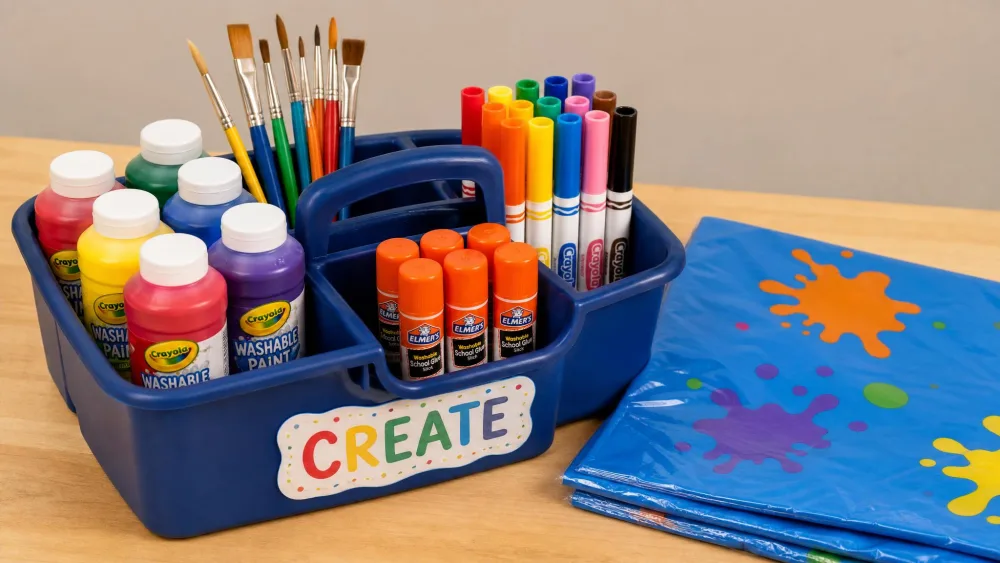
Parent tipKeep a stack of baby wipes and a plastic tablecloth within arm's reach before you start, not after the first spill.
Match the mess to the space. Water-pistol painting, for example, is a blast and easy to set up, but it is genuinely high-mess and only works outside.
Let them eat the art sometimes. Edible projects like candy sushi drive the highest engagement in our house, because the kids stay invested when they get to eat the finished piece.
Display the finished work. Tape cellophane stained-glass panels to a sunny window, where flat table pieces suddenly glow. Where the art ends up can matter as much as the making.
Art Projects for Kids: Frequently Asked Questions
How do I adapt one project across two different ages?
Vary the complexity, not the project. For pointillism dot art, hand a preschooler a fat Q-tip and let an older sibling work in fine dots with a toothpick, so both stay busy at the same table. Salt painting works the same way: the older child plans a design while the younger one just sprinkles.
What supplies do I need to get started?
A basic kit covers most of this list: washable paint or watercolors, brushes, glue, safety scissors, construction paper, and markers. Add salt, coffee filters, and a salad spinner for the science-flavored projects.
What is the easiest art project for toddlers?
Salad-spinner spin art is our top pick. Your toddler drops in paint and spins, the paint stays contained in the bowl, and every result looks great with zero brush skill.
Which art projects are mess-free or good for outdoors?
Dot sticker art and foam-sticker stamping stay clean indoors. Save water-pistol painting and bubble painting for the backyard, where the mess simply hoses away.
How long do these art projects take?
The simplest crafts wrap up in under 30 minutes, though the time swings widely by project and age. Painting and collage projects run longer once kids get absorbed.
Which art projects suit older kids and tweens?
Ages 8-12 gravitate to watercolor galaxies, string art, zentangle patterns, and oil-pastel scratch art. Each one looks impressive when finished, which keeps that age group motivated.
Final Thoughts: Getting Started Today
You do not need a craft closet or a free weekend to begin. Pick one project that fits your child's age, cover the table, and set out the supplies before you call the kids over.
Start with a fun and easy win, like coffee filter art or fork-stamped flowers, and let the process lead from there. The skills, and the memories, build themselves once the making starts.