25 Easy Watercolor Projects for Kids
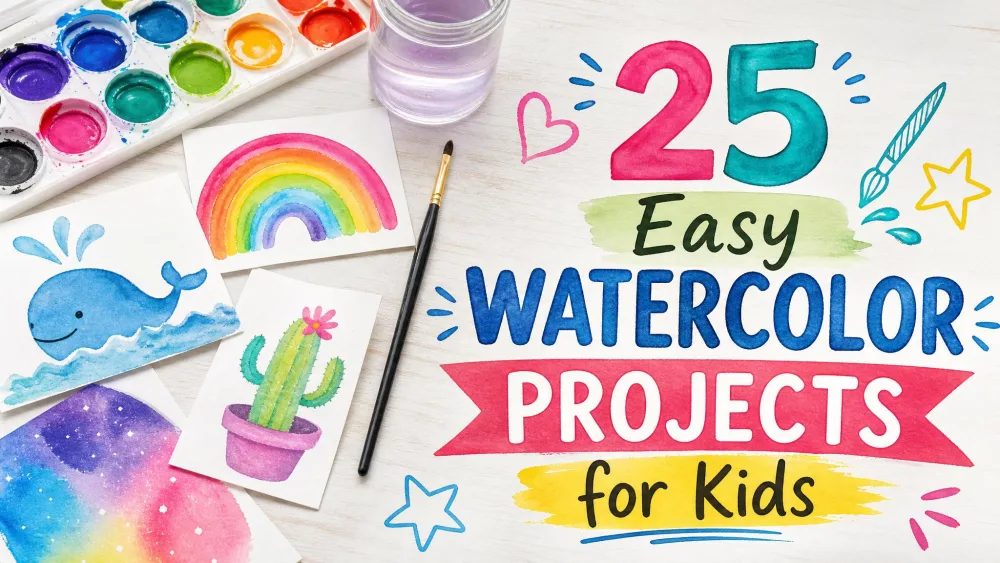
Watercolor is one of the friendliest ways for kids to paint. The colors are forgiving, cleanup is gentle, and one small set carries a child from toddler scribbles to detailed school-age scenes. This collection gathers 25 easy watercolor projects for kids of all ages, sorted from simple preschool washes up through resist, salt textures, and seasonal scenes.
Everything here we have painted at our own kitchen table with our two kids, so these are the ideas that held up between snack breaks and tipped-over water cups.
NoteThe projects that held our kids' attention longest were the loose, low-pressure ones, where the goal is to play with color instead of copy a picture. When we set out two or three colors and one brush, the painting lasted far longer.
Why Watercolor Is Perfect for Kids
Watercolor rewards experimenting, which is exactly how young children want to work. A wet brush and a few colors let kids blend, puddle, and layer with no "right" answer, so the focus stays on play. It is also easy to live with: washable formulas lift off skin and most fabric with warm water, and cleanup is far gentler than tempera or acrylic.
Watercolor Supplies You'll Need
You do not need much, and nothing expensive. A washable set, the right paper, and a brush or two cover every project here. See more of our tested favorites in our guide to kids art supplies, tested by parents.
Best Watercolor Paints for Kids
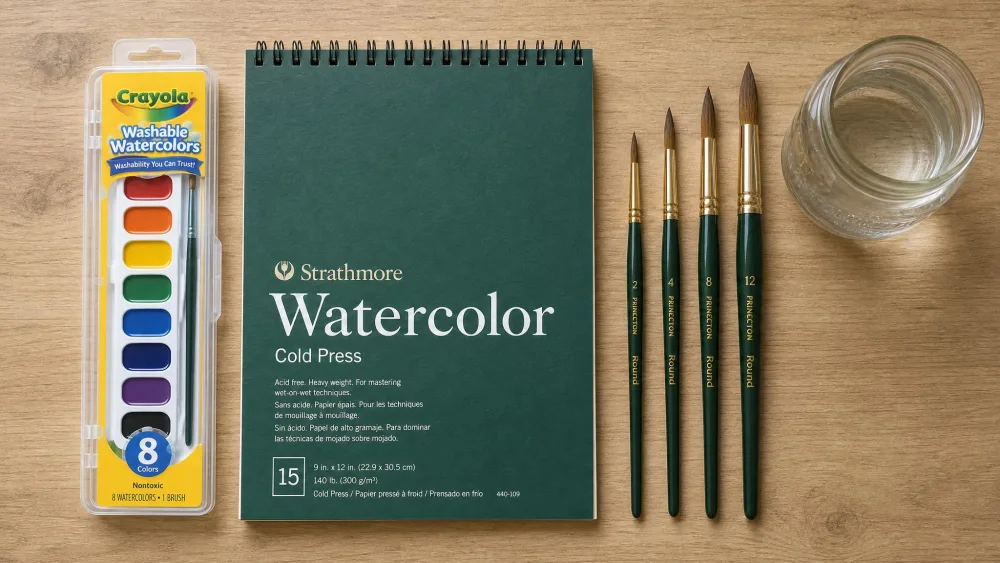
For young kids, semi-moist pan sets are easiest. We reach for Crayola Washable Watercolors and Prang Semi-Moist Washable most, and both come in a core set of 8 classic colors. Crayola usually runs around $3 to $4, Prang about $5. Crayola pans need activating, meaning you drop water on each color and wait a minute or two, which young kids find frustrating. Prang's semi-moist pans skip that step, so the brush loads straight off the pan and the color runs bolder.
| Feature | Crayola Washable Watercolors | Prang Semi-Moist Washable |
|---|---|---|
| Core set size | 8 colors | 8 colors |
| Activation needed? | Yes, drop water and wait 1–2 min | No, loads onto a wet brush |
| Color punch | Bright and vibrant | Bolder and more saturated |
| Washable? | Yes (skin and most fabric) | Yes |
| Approx. price (8-count) | ~$3–$4 | ~$5 |
| Best for | Budget and big groups | Bold color and durability |
Neither is the clear winner. Crayola wins on price and replaceable pods for a crowd, and Prang wins if you want richer color the second the brush touches paper.
Paper, Brushes & Extras
Paper is the upgrade that surprises most parents. Thin sketch or printer paper buckles the moment it gets wet, while 140 lb (300 gsm) cold-press cuts most of that warping and a glued watercolor block all but eliminates it. Canson XL and Strathmore 300 are easy, affordable pads. For brushes, a set of 4 soft synthetic Taklon rounds with chunky handles covers nearly everything.
Quick Watercolor Techniques to Try First
A few simple tricks unlock almost every project below. We keep this short, because we walk through each one in our guide to easy watercolor techniques for kids. Try these four first.
Wet-on-Wet
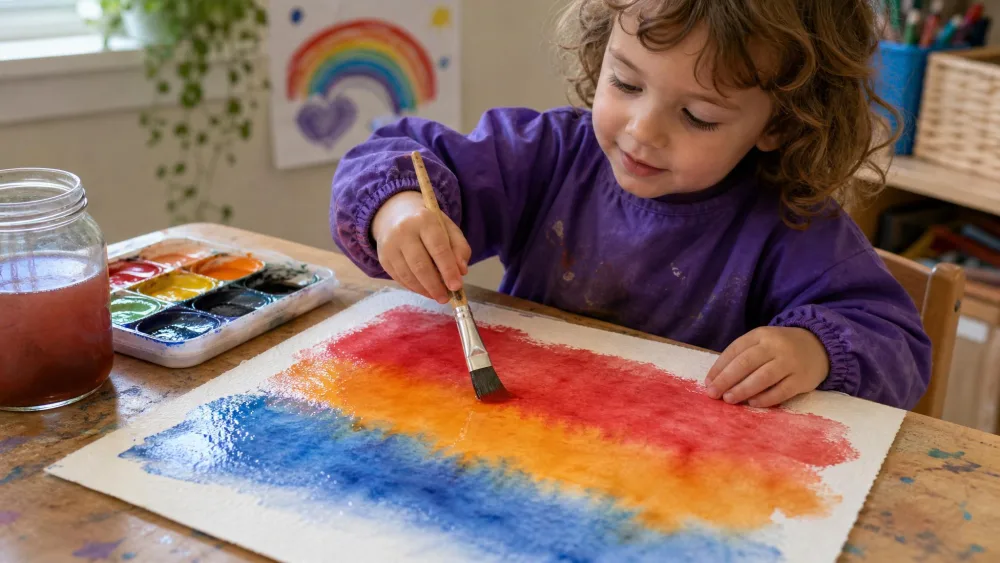
Brush clean water over the paper, then drop color into the damp surface so it spreads and blooms on its own. It is the softest effect and nearly impossible to get wrong. A short step-by-step wet-on-wet walkthrough helps if you want pictures.
Crayon & Oil-Pastel Resist
Draw on dry paper with wax crayon or oil pastel, then wash watercolor over the top so the waxy marks repel the paint and show through. Brush a single pass over the lines, because scrubbing turns the reveal muddy. A box of the best crayons for toddlers and kids is perfect here.
Salt & Texture Effects
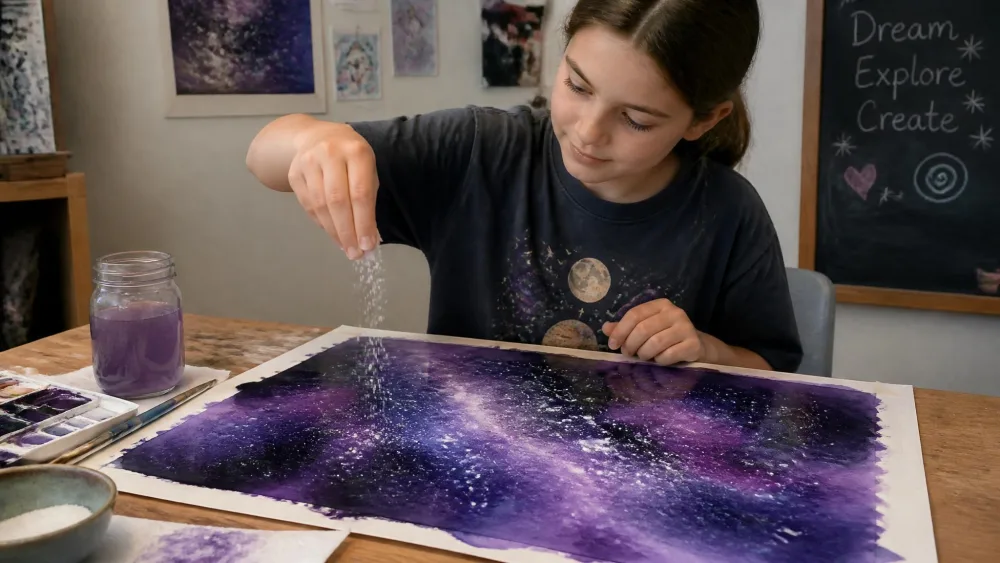
Sprinkle table salt onto a still-wet wash and it pulls pigment as it dries, leaving pale starburst texture. The catch is timing: the wash must be genuinely wet, not just damp. This simple salt texture walkthrough shows the look you want.
Splatter / Spray Painting
Tap a loaded brush to fling dots, or load a spray bottle with watered-down color and mist the paper. Spraying over leaves or stencils makes lovely nature prints, and kids love how unpredictable it is.
Make Your Own Watercolor Paint
Want a rainy-day project that is half science experiment? You can mix watercolor from pantry staples. For the full method see our guide to make your own watercolor paint. It is a fun way to talk about color mixing before anyone picks up a brush.
Watercolor Projects for Preschoolers & Toddlers
Younger kids are process-driven and lose focus fast, so expect about 20 minutes of real painting before they wander off. Keep these open-ended, and pre-wet the pans before you call them over.
1. Rainbow Wash. Lay stripes of color across wet paper and let them bleed together, a no-pressure confidence builder for the youngest painters.
2. Watercolor Dot Art. Dab color in rows or scattered spots; toddlers love the press-and-lift motion that dries into a cheerful, polka-dot painting.
3. Process Painting Play. Hand over two colors and one brush and let them go, because the point is the doing rather than any finished picture.
4. Coffee Filter Butterflies. Color a flattened coffee filter and spritz it so the dyes spread, then pinch the middle with a clothespin for a butterfly.
5. Magic Name Reveal. Write your child's name in white crayon, then wash color over the paper so the hidden letters surface and surprise them.
6. Paper Towel Color Blends. Drip watered-down color onto a folded paper towel and watch it wick and blend, a tidy first lesson in how watercolor travels.
Watercolor Projects for School-Age Kids
Older kids can sit with a painting for 20 to 40 minutes and follow a few steps, so these add a little technique while staying genuinely easy.
7. Crayon Resist Snowflakes. Draw white snowflakes on white paper, then wash a deep blue sky over the top to reveal them, and stars and raindrops work too.
8. Butterfly Symmetry Prints. Paint one half of a folded page, press it shut, and open it to a mirror-image butterfly that surprises kids every time.
9. Plastic Wrap Texture Art. Press crumpled plastic wrap onto a wet wash, leave it to dry, then lift it for stained-glass lines in this plastic wrap process art.
10. Salt Starry Night Sky. Paint a dark, very wet night sky, then sprinkle salt for a scatter of pale stars, and the wetter the wash the bolder the starbursts.
11. Watercolor Fish & Under the Sea. Draw fish and bubbles in crayon, then wash blue-green water over the scene so the sea life pops through the resist.
12. Black Glue Rose Resist. Outline flowers in black glue, let it dry, then paint inside the lines for a stained-glass black glue watercolor resist bloom.
13. Tape Resist Geometric Art. Stick painter's tape in lines or shapes, paint over everything, then peel it for crisp white stripes in this tape resist watercolor process art.
14. Galaxy & Space Scene. Layer deep purple, blue, and black wet-on-wet, then flick white splatter for distant stars and sprinkle salt while it is wet to make it shimmer.
15. Nature Spray Prints. Arrange leaves on paper and mist watercolor over them, then lift them to find ghostly silhouettes in this nature watercolor spray art.
Parent tipTape a few rows of pans closed with painter's tape and set out just two or three colors. Limiting the palette is the single biggest reason a painting stays bright instead of sliding into brown.
Seasonal & Holiday Watercolor Projects
These follow the calendar, so you can pull one out whenever you need a quick, themed activity.
16. Spring Flowers & Gardens. Dab clusters of wet-on-wet petals and let green stems bloom up to meet them, since loose, blobby flowers look the most natural.
17. Watercolor Easter Eggs. Draw egg shapes in white crayon with patterns inside, wash spring colors over them so the designs resist through, then cut them out.
18. Summer Ocean Scenes. Brush a wet-on-wet gradient from pale shallows to deep blue, then add a sandy strip and a crayon-resist sun for an almost foolproof scene.
19. Firework Splatter Skies. Paint a dark sky, then flick and splatter bright color in bursts that never land the same way twice.
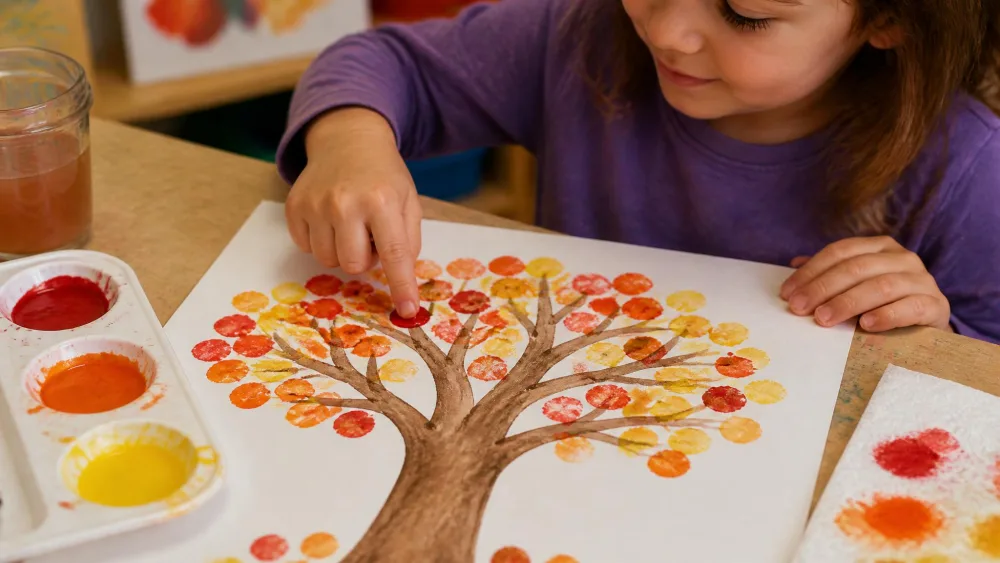
20. Fall Trees. Paint bare brown branches, then dab red, orange, and yellow leaves with a fingertip or scrunched paper towel for a soft, full canopy.
21. Watercolor Pumpkins. Build a round orange pumpkin wet-on-wet, drop in darker orange for shadow so it looks three-dimensional, then add a green stem.
22. Autumn Leaf Prints. Brush color onto the textured back of a real leaf and press it down to print every vein, a lovely way to study leaf shapes.
23. Winter Sky & Silhouettes. Wash a cool sunset sky wet-on-wet, let it dry, then paint a black tree silhouette across the bottom for striking contrast.
24. Snowy Pine Forest. Paint dark green triangle pines against a pale wash, then flick white paint or sprinkle salt for falling snow over the trees.
25. Heart Suncatchers. Paint a bright wet-on-wet wash, cut hearts from the dried sheet, and tape them to a window so the light glows through them.
Tips & Troubleshooting (Watercolor Woes Fixed)
A few small habits prevent almost every watercolor headache.
Stop the buckling. If your paper warps, move up to 140 lb (300 gsm) cold-press and tape the edges to a board, or use a glued watercolor block that stays flat through repeated washes.
Tame the mess. Limit colors to two or three, hand over one brush and one small sheet, and work on a tray or silicone mat. Spritzing the pans instead of using a dunk cup means fewer spills.
Keep them engaged. Younger kids wander off fast, so stay nearby and keep projects short. If focus fades, switch to a splatter or salt step to bring the excitement back.
Watch outNever leave a toddler alone mid-paint with a full brush and a cup of water. The puddles travel fast, and a two-minute phone check is all it takes for the cup to end up on the floor.
Frequently Asked Questions
What age can kids start watercolor painting?
There is no fixed start age, since readiness varies by child. Many toddlers can begin around age 2 with help, and ages 2 to 5 is a sweet spot because watercolor is so easy to set up and clean up.
What's the best watercolor paint for kids?
A washable semi-moist pan set is ideal for most families, and both Crayola and Prang make a solid 8-color set. Crayola is cheaper for groups, while Prang gives bolder color straight off the pan with no activating step.
How do I stop watercolor paper from buckling?
Use heavier paper. 140 lb (300 gsm) cold-press resists most warping, and taping the edges to a board or using a glued watercolor block keeps the page flat.
Is watercolor painting messy for kids, and how do I manage it?
It is one of the tidier paints, especially in washable form. Limit the palette to two or three colors, work on a tray with an old shirt on, and keep one brush per child.
How do you make watercolor paint for kids?
You can mix a simple version from pantry ingredients like baking soda, vinegar, and food coloring. We walk through the full recipe on our make your own watercolor paint page.
What is the easiest thing to paint in watercolor?
A rainbow wash or a wet-on-wet blend, since both are about laying down color and letting it spread, with no shapes to get right. Browse more in our easy watercolor ideas for kids.
Final Thoughts
Watercolor earns its place as a household staple because it grows with your kids. The same 8-color set that gives a toddler a happy rainbow wash will help an eight-year-old layer a galaxy or print a forest. Start with a washable set, sturdy paper, and two or three colors, then work down this list as confidence builds. The best project is simply the next one they are excited to try.