How to Make Watercolor Paint for Kids
Want an easy art project you can mix up from the pantry in about five minutes? Homemade watercolor paint for kids takes four kitchen staples plus a few drops of food coloring, and your kids can be painting with bright colors the same day. We make a batch a few times a year, and our youngest is far more interested in stirring the fizzing baking soda than in the painting that follows. Here is the exact recipe we use, with the tricks that keep the colors vivid instead of pale.
Why Make Homemade Watercolor Paint?
Store-bought watercolors are fine, but a homemade batch costs about $5 and makes roughly six colors. That is hard to beat.
The bigger reason is the making itself. Stirring, fizzing, and pouring turn a simple recipe into hands-on process art, where the doing matters more than the picture. In our house the kids enjoy mixing the paints at least as much as painting with them, and most days probably more. There are real benefits of art for kids in it too.
Supplies You'll Need
You only need a handful of things, most already in your kitchen.
For the paint base:
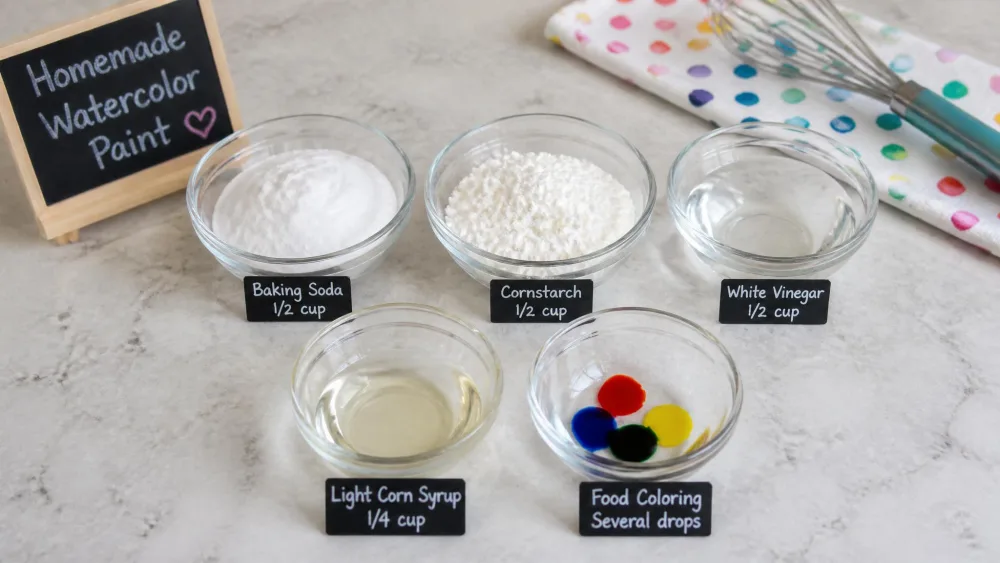
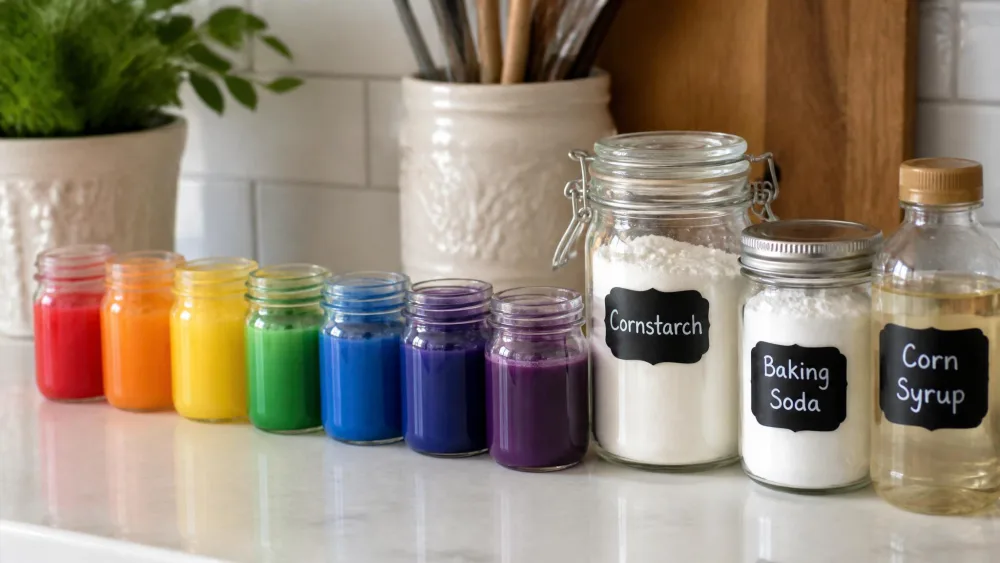
- 4 tablespoons baking soda
- 2 tablespoons cornstarch
- 2 tablespoons white vinegar
- 1/2 teaspoon light corn syrup
- Food coloring, liquid or gel
For mixing and pouring:
- A small bowl and a spoon
- A mini muffin pan, an ice cube tray, egg carton cups, or a few clean jar lids
- Watercolor paper or thick card stock
- A soft round brush and a cup of water
Gel food coloring gives brighter color with less added liquid, so reach for it if you have it. An old box of liquid drops from your kids coloring & art supplies works fine too.
How to Make Watercolor Paint for Kids (Step-by-Step)
Here is the whole recipe in one place, then the steps in detail.
Quick recipe card
Ingredients: 4 tablespoons baking soda, 2 tablespoons cornstarch, 2 tablespoons white vinegar, 1/2 teaspoon light corn syrup, and food coloring.
Notes: One batch makes about six colors for around $5. Stir in plenty of color, since the paint dries lighter than it looks while wet.
Step 1: Mix the dry base
Spoon the baking soda and cornstarch into your bowl and stir. This is a good job for a younger helper.
Step 2: Add the liquid and bind
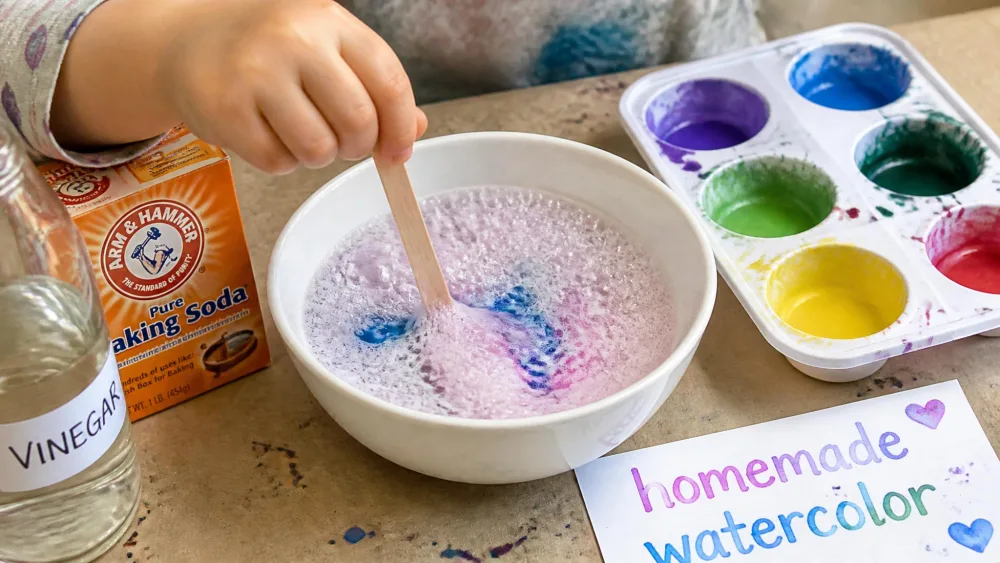
Pour in the white vinegar and watch it foam. The fizz is brief and expected, so wait a moment for the foaming to settle, then stir in the corn syrup.
Kids are fascinated by the mixture here. It feels almost solid until you stir it, which keeps them leaning over the bowl. Stir until it loosens to about the consistency of Elmer's glue.
Step 3: Stir in food coloring and pour into trays
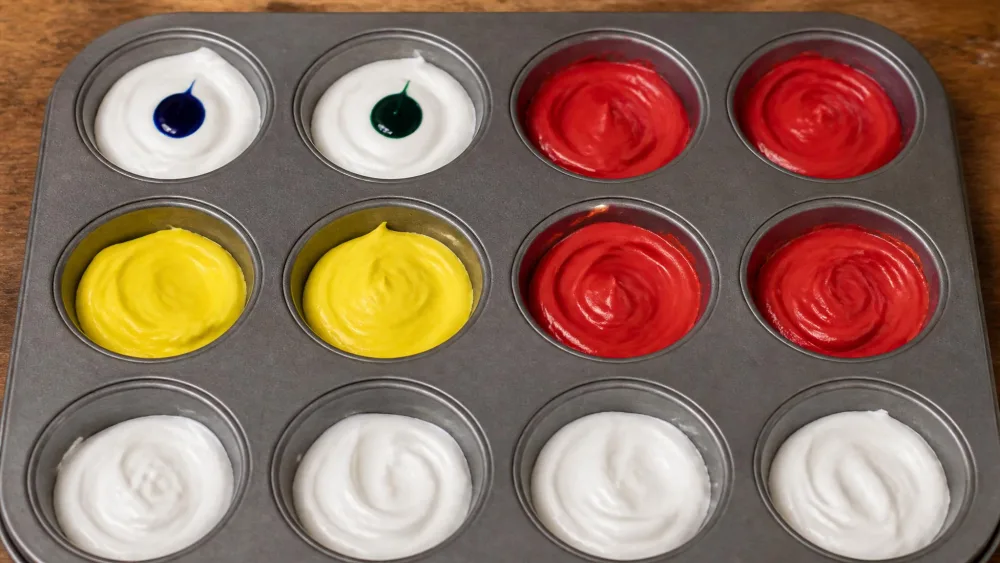
Divide the paste between the cups of your tray, then add food coloring to each cup one color at a time and stir until even.
Add color to taste rather than to a fixed count. Somewhere between a few drops and ten per cup is normal, and pale color almost always just means more drops. Keep going until each cup looks a shade deeper than the color you want.
Watch outFood coloring can stain little hands and clothes, so roll up sleeves, put on a smock, and cover the table. The corn-syrup recipe is non-toxic, but it is not meant to be eaten. If you have a toddler who still mouths everything, skip the corn syrup and use food-based powders instead.
Step 4: Let the paints set
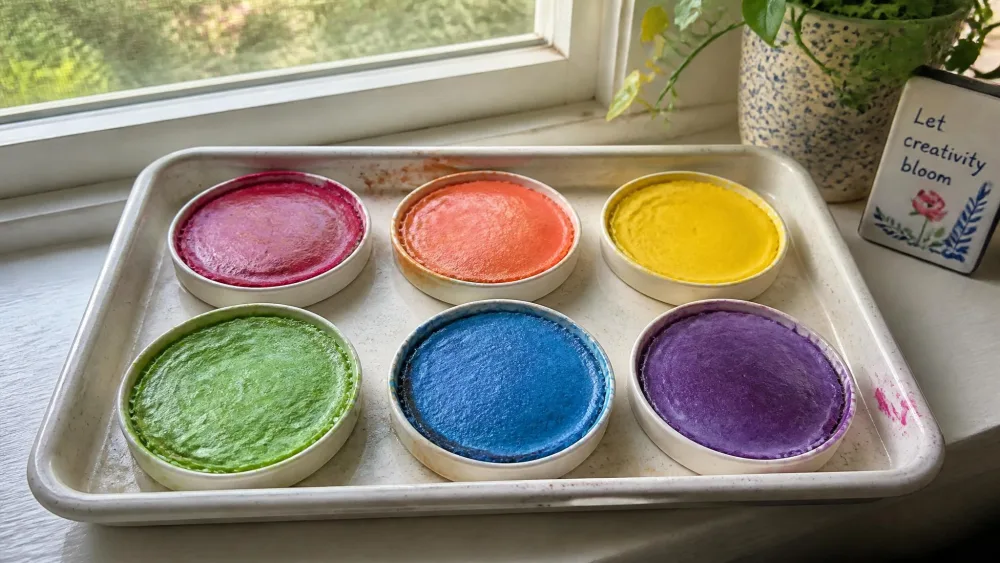
Move the tray somewhere flat and out of reach to harden. Most batches are ready overnight, though a thick batch in a deep mold can take a day or two, depending on the humidity in your kitchen.
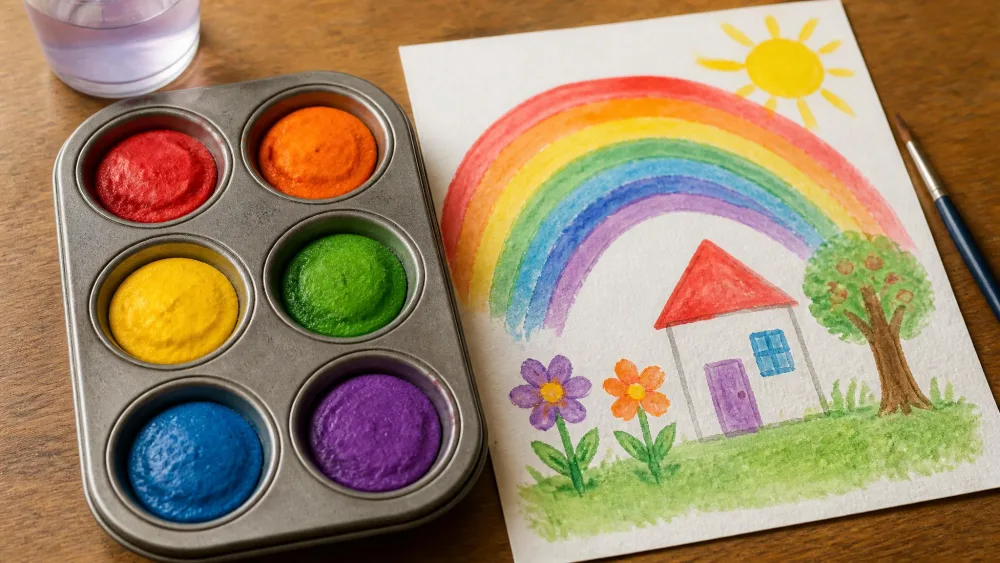
The wait matters. Paint before the cakes are fully dry and the color goes on watery and pale instead of as a crisp wash. Once firm, the hardened paints lift and clean easily out of a muffin tin.
Ways to Customize the Colors
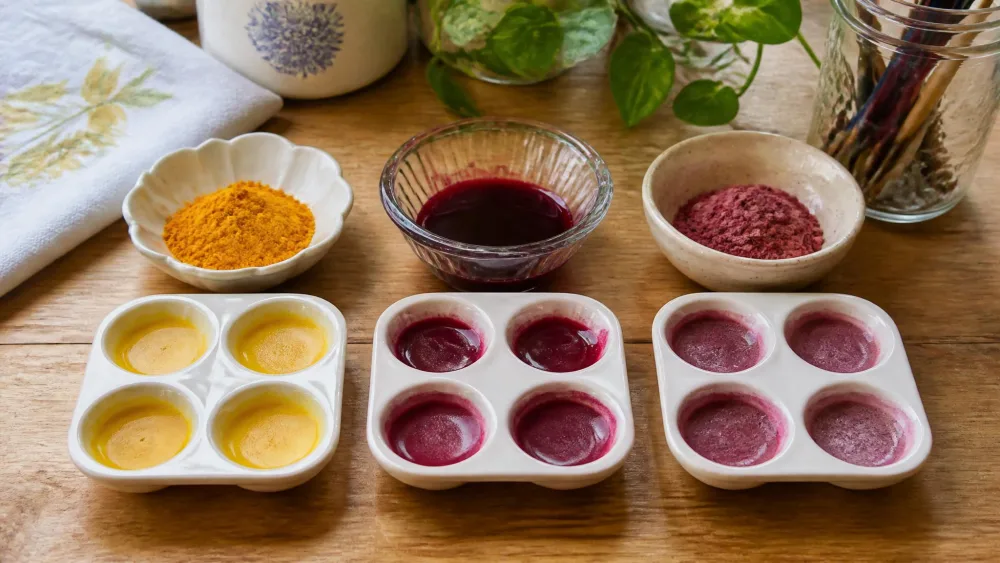
Food coloring is the easiest path to a full rainbow, but not the only one. Ground turmeric makes a warm yellow, beet juice makes pink, and fruit or vegetable powders give soft natural shades. Unsweetened drink powder works too.
Here is how the three most common colorants compare.
| Colorant | Color range | Taste-safe for toddlers? | Vibrancy | Cost |
|---|---|---|---|---|
| Food coloring | Full rainbow, brightest | No in the corn-syrup recipe (non-toxic but not edible) | High (gel highest) | Cheap pantry staple |
| Spice (turmeric) | Warm yellows and oranges, muted | Yes, food-based | Low to medium | Cheap pantry staple |
| Kool-Aid | Reds, purples, oranges, scented | Edible powder, but sweet and sour | Medium | Cheap grocery aisle |
For a taste-safe batch for the youngest painters, leave out the corn syrup and use the food-based colorants in the table above.
Tips for the Best Homemade Watercolors
A few small things separate flat, chalky paint from colors your kids want to use again.
Mix the colors deeper than you think you need, because homemade paint looks rich while wet, then dries noticeably lighter.
During drying, the ingredients tend to separate. Stirring each cup a couple of times before it hardens keeps the color even.
Do not worry if the cakes feel a touch powdery. That is just the cornstarch and baking soda. After heavy use they can develop small cracks, but they still work fine and keep for months.
Parent tipTo paint with the dried cakes, wet your brush and swirl it on the surface to lift the color, just like a store-bought set. Rinse the brush in your water cup between colors so the shades stay clean and bright.
Is Homemade Watercolor Paint Safe for Kids?
For most kids, yes, with the usual supervision. This recipe is aimed at roughly grades K through 4, about ages five to ten, and many children around preschool age and up can join in with a grown-up nearby.
The standard corn-syrup version is non-toxic, but it is not meant to be eaten, so treat it like any craft supply. The colors come from ordinary food dye, and food coloring is FDA-regulated: the agency permits seven certified color additives in food and requires proof a color is safe before it can be used. For toddlers who mouth everything, skip the corn syrup and color with fruit powders instead.
Fun Ways to Use Your Homemade Watercolor Paint
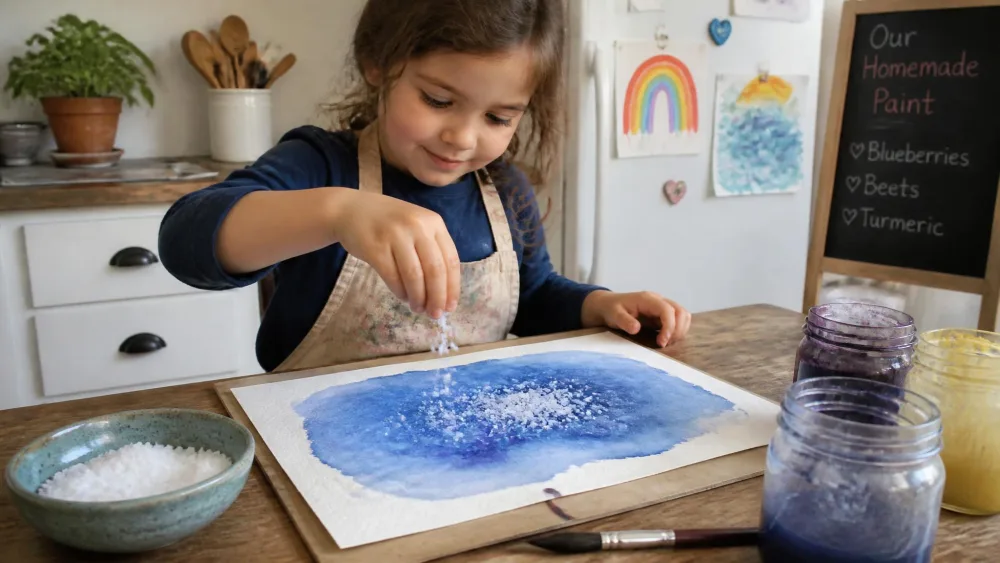
Once the paint is dry, the painting gets more interesting than plain brushwork. A few techniques are easy for young kids and always get a reaction in our house.
- Wet-on-wet: brush clean water onto the paper first, then drop color in and let it spread.
- Salt sprinkle: scatter salt over a wet wash for a speckled texture. Coarse salt makes far better texture than fine table salt.
- Crayon resist: draw with a white crayon, then paint over it and watch the lines show through.
- Splatter and plastic-wrap texture: flick the brush, or press crinkled plastic wrap into a wet wash and peel it off.
These stretch one batch across several projects.
More Homemade Paint Recipes for Kids
If the classic cakes are a hit, try the liquid version too. Scale up to 3 teaspoons light corn syrup, 6 tablespoons cornstarch, 6 tablespoons baking soda, and 6 tablespoons white vinegar, then add food coloring. Stir the cups a couple of times while they dry so the materials do not separate.
From there it is a short hop to other kitchen-table paints like puffy paint and finger paint. If you are stocking up on basics, our guide to the best crayons for toddlers & kids pairs nicely with a fresh tray.
Frequently Asked Questions
What age can kids start using watercolor paint?
This recipe is aimed at roughly grades K through 4, about ages five to ten, but many children around preschool age and up can paint with a grown-up nearby. The younger the painter, the more supervision they need.
Are homemade watercolors taste-safe for toddlers?
The standard corn-syrup recipe is non-toxic but is not meant to be eaten. For a taste-safe batch, skip the corn syrup and color with food-based options like turmeric, beet juice, or fruit powders instead of food coloring.
How long does homemade watercolor paint last and how should I store it?
Kept dry between uses, the hardened cakes last anywhere from several weeks to many months. Store them in their tray or a covered container, and let them dry fully after each session.
Can you make watercolor paint without food coloring?
Yes. Natural colorants work well, including ground turmeric for yellow, beet juice for pink, and fruit or vegetable powders for softer shades. The colors are more muted than food dye, but they are food-based and great for the youngest kids.
Will homemade watercolor paint stain clothes or skin?
Food coloring is what does the staining, not the base, so dress kids in smocks or old shirts and cover the table. Color on skin fades on its own, and washing hands soon after painting speeds it up.