18 Easy Watercolor Ideas for Kids to Try Today
Watercolor painting is one of the easiest art activities to pull out on short notice. All it takes is paint, paper, and water, plus a towel for the puddles. In our house, watercolors are the go-to rainy-day activity, and the one craft supply our kids never need convincing to reach for.
This list rounds up 18 easy watercolor ideas for kids, from puddle painting and coffee-filter blooms to salt-splatter skies and bubble prints. Every idea uses basic supplies you likely already have.
We've tried every idea here at our own kitchen table, adjusting each one for our younger painter's shorter attention span and our older kid's interest in getting the details right.
What You'll Need: Watercolor Supplies for Kids
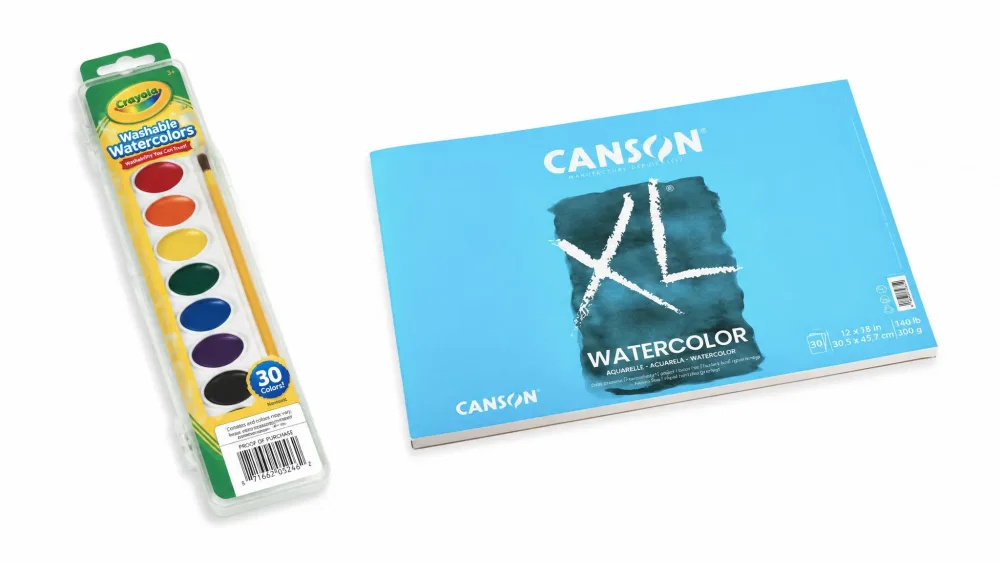
You don't need much: watercolor paint, real watercolor paper, a couple of brushes, a cup of water, and something to protect the table. Pans (dry colors activated with a wet brush) suit a kid who can load a brush and go; liquid watercolors (pre-mixed color you dilute) suit a first-timer chasing bold color. We keep both on hand, but Crayola Washable Watercolors, an 8-color set with the ACMI AP seal, is our workhorse, suited to preschool age and up with supervision for younger kids.
Regular printer paper soaks up water too fast and buckles when wet, so real watercolor paper is worth keeping on hand. Look for at least 140 lb (300 gsm) cold-press paper, like a Canson XL Watercolor Pad; 120 lb works too, but 140 lb is the safer default. A 30-sheet pad runs mid-teens; a starter paint set is a couple of dollars. Toss on a cheap art smock first.
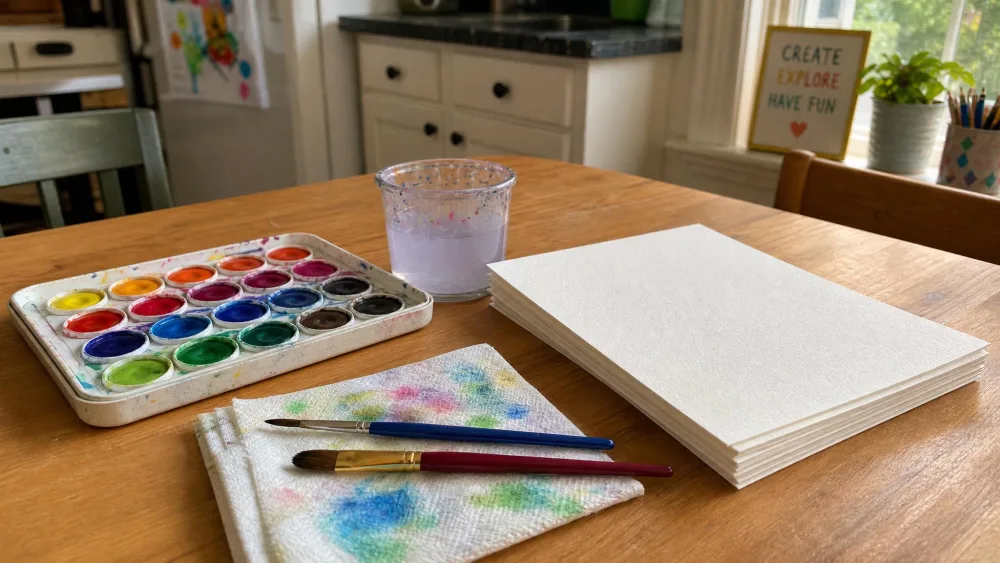
Parent tipCut a full sheet of watercolor paper into four or six pieces before handing it to a young painter. A big blank page feels overwhelming; a small square is easy to finish.
Watch outWatercolor paint is generally non-toxic, but younger kids still put brushes in their mouths. Keep an eye on toddlers, and rinse the brush between colors.
18 Easy Watercolor Ideas for Kids
Here are 18 easy watercolor ideas for kids to spark some creativity on a rainy afternoon.
1. Puddle Painting (Wet-on-Wet Blending)
Wet the whole sheet, then drop color on and watch it bloom on its own; no brush control needed. We handed this to our youngest first since a new painter can't mess it up. Cover the wet paint with plastic wrap and let it dry overnight for a blended look.
2. Coffee-Filter Blooms
Flatten a coffee filter, color it with washable markers, then mist with water and watch the colors bleed into soft blooms. Fold the dry filter into a flower, or swap in a liquid watercolor set for bolder color.
3. Salt-Splatter Skies
Paint a wash of blues and purples for a night sky, then sprinkle salt over it while still wet, not pooling. The salt soaks up pigment as it dries into tiny starbursts; let it dry fully, ideally overnight, before brushing the salt away.
4. Wax-Crayon Resist Pictures
Draw firmly with a white crayon, then paint a wash of color over the top; the wax repels the paint, so the drawing magically appears. We've used this from our five-year-old's scribbles to our eight-year-old's careful drawings.
5. Shaving-Cream Marbled Paper
Spread shaving foam (not gel) in a tray, drop in liquid watercolor, and drag a fork through it to swirl the colors. Press cardstock on top, then scrape the foam off to reveal a marbled pattern with almost no drying time.
6. Bubble Prints
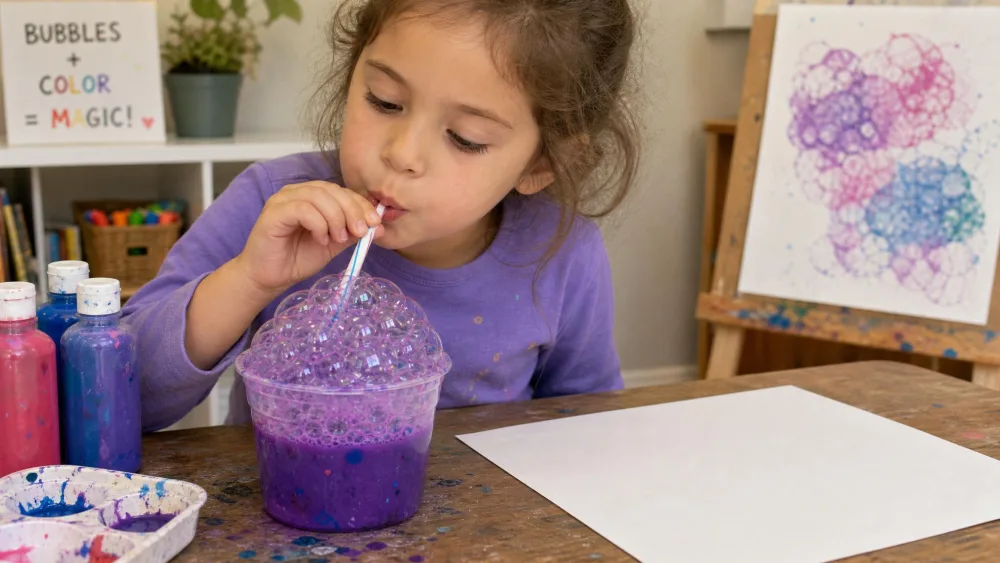
Mix roughly 2 parts liquid watercolor, 2 parts dish soap, and 1 part water (one recipe among several), then blow through a straw until bubbles mound above the rim; a mainstream soap like Dawn or Joy works best. Press paper onto the bubbles to print, and pierce a small hole near the straw's top so kids can't suck up the mix; lay down a plastic tablecloth first.
7. Sticker-Resist Silhouettes
Stick simple stickers onto dry paper, then paint over the top. Peel them off once dry to reveal crisp white silhouettes. It's great for little ones or first-time painters, since there's no real technique to get wrong.
8. Painter's-Tape Resist Shapes
Lay painter's tape across dry paper in a grid or sunburst, then paint freely over it. Peel the tape away once dry to reveal crisp, straight-edged shapes underneath.
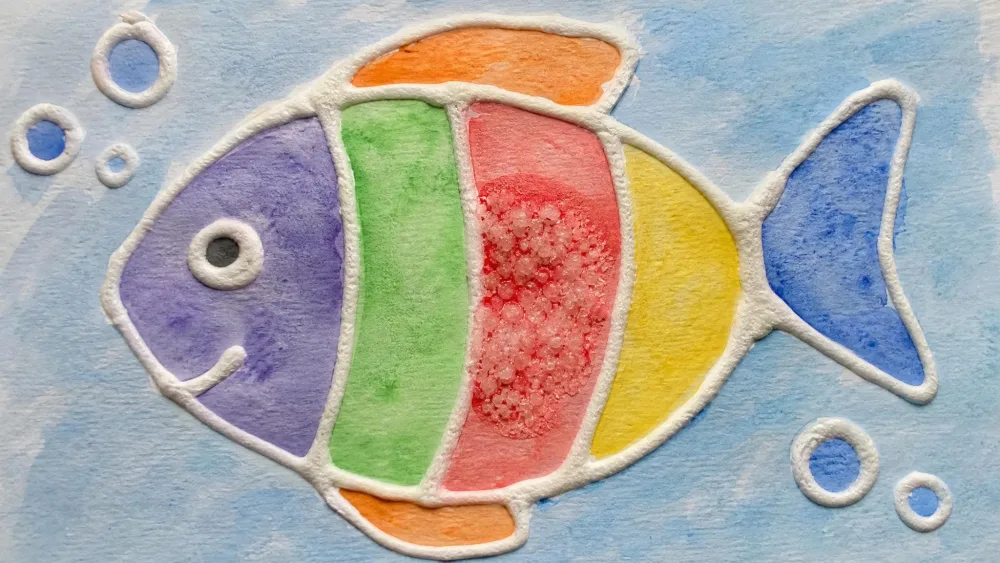
9. Glue-and-Salt Stained Glass
Draw a design in glue lines, let it dry, then paint each section lightly; too much color pools over the lines and soaks the paper. Sprinkle salt into the wet sections partway through, and watch kids react as it soaks up the color.
10. Mini Watercolor Postcards
Cut watercolor paper into postcard-size pieces before your child starts painting. A big blank page can feel like too much pressure, but a small piece is easy to finish, and doubles as a handmade card once dry.
11. Watercolor Rock Painting
Paint smooth, flat rocks with watercolor for a softer look than acrylic gives. The color won't be as durable outdoors, so these suit a windowsill or keepsake box better than the garden.
12. String-Pull Prints
Dip a length of string into paint, arrange it on one half of a folded paper with an end hanging out, then close the paper and pull the string out while pressing down for a loose, symmetrical splash pattern.
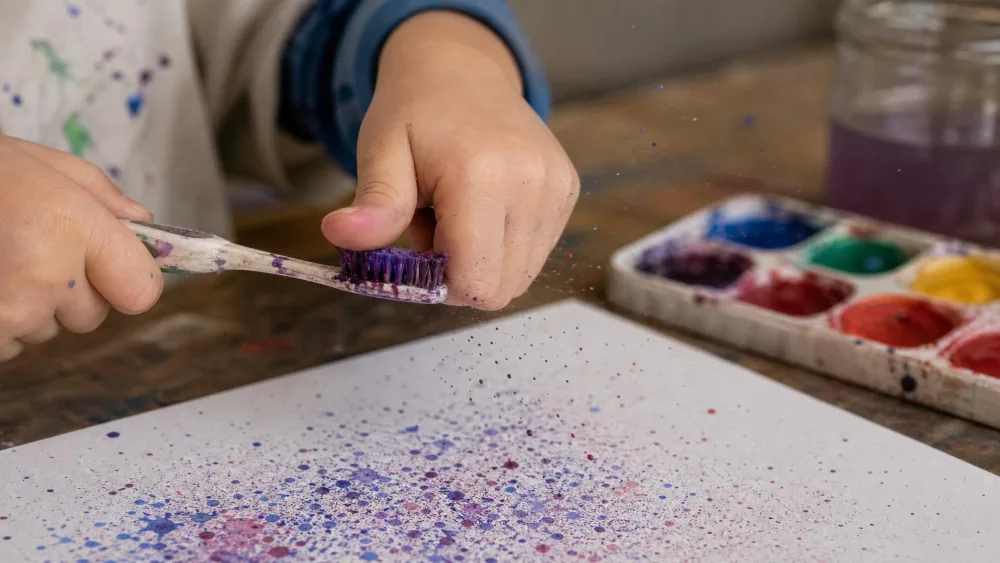
13. Toothbrush Splatter Art
Thin paint with a little water, load an old toothbrush, and run a thumb across the bristles to flick fine splatters across the paper. Cover any area you want clean with tape first; this is a good outdoor activity.
14. Melting Ice Cube Painting
Freeze watercolor into an ice cube tray the night before, then let your child drag the cubes across paper as they melt. The slow melt creates soft, uneven gradients a brush can't replicate.
15. Leaf and Nature Silhouette Prints
Press a flat leaf, fern, or flower onto dry paper and paint around and over it, then lift it away once dry to reveal a clean silhouette. Kids pick their own leaves first on a nature walk.
16. Rainbow Drip Painting
Paint a few thick stripes across the top of a vertical sheet, then tilt it and let the colors run and blend as they drip downward. Prop the paper over a tray to catch the drips.
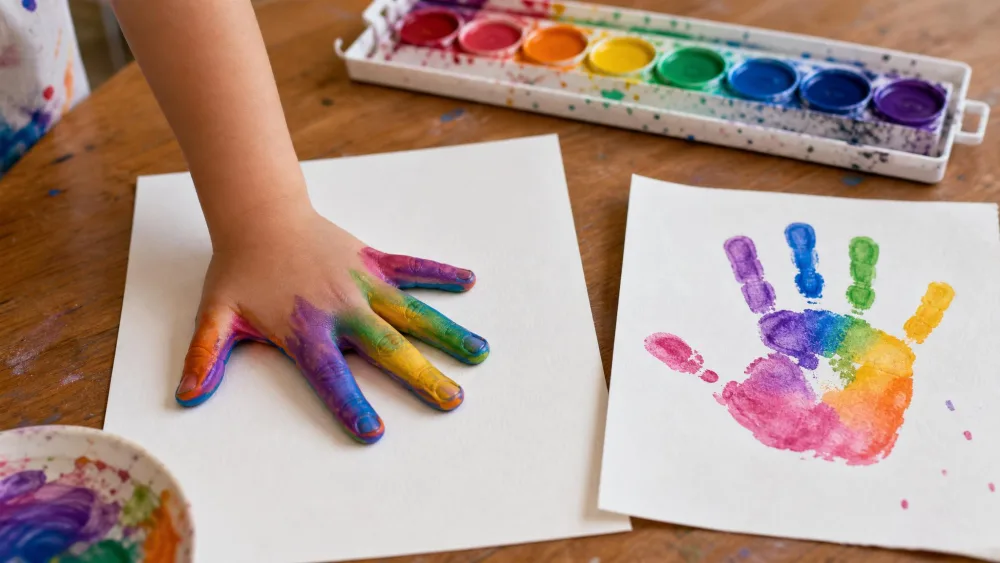
17. Watercolor Handprint Art
Paint your child's palm and fingers with a wash of color, then press it onto paper for a handprint, and let the shape become the base for a bigger picture, like a turkey.
18. Fold-and-Dye Watercolor Greeting Cards
Fold cardstock in half, paint a loose wash across the front while still folded, and let it dry before adding a message inside. Since the front is abstract, there's no pressure to paint anything recognizable.
Quick Watercolor Techniques to Know Before You Start
A few ideas above share the same core techniques. Wet-on-wet means painting onto paper that's already wet, so colors blend with almost no effort. Wet-on-dry means painting onto dry paper for crisper edges. Resist techniques use wax, tape, glue, or stickers to block paint from an area. More on these in our full breakdown of watercolor techniques for kids and our beginner's guide to using watercolors with kids.
Free Printable Watercolor Idea Checklist
Print this list and check off each idea as you go:
- Puddle painting
- Coffee-filter blooms
- Salt-splatter skies
- Wax-crayon resist pictures
- Shaving-cream marbled paper
- Bubble prints
- Sticker-resist silhouettes
- Painter's-tape resist shapes
- Glue-and-salt stained glass
- Mini watercolor postcards
- Watercolor rock painting
- String-pull prints
- Toothbrush splatter art
- Melting ice cube painting
- Leaf and nature silhouette prints
- Rainbow drip painting
- Watercolor handprint art
- Fold-and-dye watercolor greeting cards
Tips for Watercolor Painting Success with Kids
Load the brush lightly and rinse it between colors; jabbing the brush into a full pan picks up a muddy overload of color instead of a clean one. For a basic wash, skip strict ratios and add water until the color looks like weak tea.
Drying time depends on the technique: a simple wash dries in minutes, but anything under plastic wrap or dusted with salt needs to sit undisturbed, often overnight. Rushing that step is why a project often disappoints.
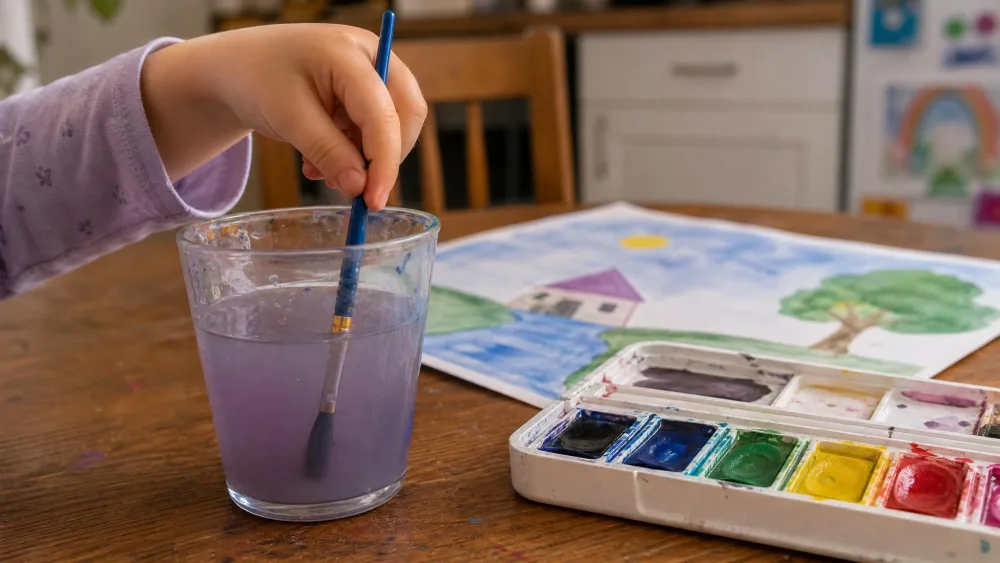
This kind of open-ended painting does more than it looks like. The National Association for the Education of Young Children frames process art like watercolor as developmentally appropriate for preschoolers, building fine motor skills and letting kids explore cause-and-effect.
FAQs About Watercolor Painting for Kids
Here are four questions we hear most from parents. (Wondering how to make your own paint from scratch? We cover that separately in our simple DIY watercolor paint recipe.)
What is the easiest thing to paint in watercolor?
Keep a first project simple. Puddle painting and coffee-filter blooms are two of the easiest places to start, since the water and color do most of the work for you.
What watercolor supplies do kids need to get started?
A basic paint set, real watercolor paper, a couple of brushes, and a cup of water. Everything else on this list, like salt, shaving cream, and painter's tape, you probably already have.
How do you keep watercolor painting mess-free for kids?
Cover the table with a plastic tablecloth, put your child in a smock, and pour paint into a shallow tray instead of one big container. Liquid watercolors stain more than pans, so save those for low-stakes days.
What age can kids start watercolor painting?
There's no single agreed-upon age. Some families let toddlers as young as 1 or 2 explore a simplified, pre-wet setup, while most kids don't develop real brush control until closer to ages 3 or 4. Treat it as a guide, not a hard rule.