30 Themed Watercolor Painting Ideas for Kids
Watercolor painting ideas for kids don't have to start with a technique. They can just start with a subject, something fun to paint, whether that's a rainbow, an ocean scene, a favorite animal, a family portrait, or a season changing outside the window.
That's the thinking behind this list. Instead of grouping projects by method, we sorted 30 ideas by theme, so you can pick a subject first and choose a technique later. For a rundown of methods, see our 20 Easy Watercolor Painting Ideas for Kids guide.
We keep watercolors in constant rotation at our kitchen table, and these are the themes our kids reach for again and again. Pick whatever catches your child's eye and get creative from there.
Parent tipA washable smock or a waterproof tablecloth with elastic edges is the simplest way to keep a watercolor session from turning into a full table cleanup.
Nature & Garden Watercolor Painting Ideas
Garden and nature subjects are an easy entry point because the shapes are big, simple, and forgiving of a shaky brushstroke.
1. Garden Flowers in Bloom
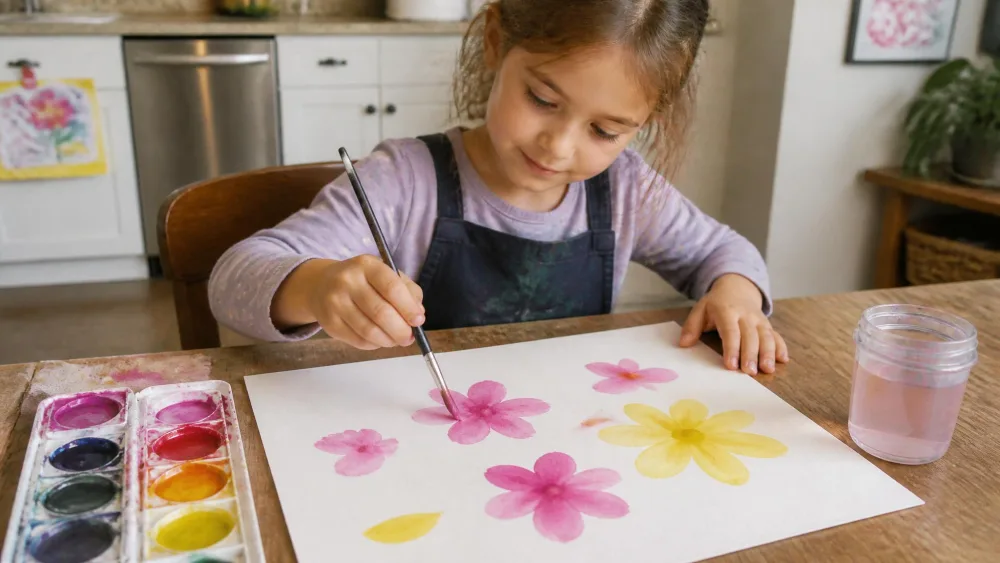
Flowers are one of the most popular watercolor subjects for kids, and it's easy to see why. A few loose petal shapes and a wash of color make something that looks like a real bloom, no matter a child's age.
2. Sunflower or Tulip Bouquet
A bouquet gives kids a reason to paint more than one flower at once. Tulips and sunflowers have simple, repeatable shapes, so a child can paint five or six blooms without redrawing a new shape each time.
3. Blossoming Cherry Tree
A cherry blossom tree is a favorite because the technique is as fun as the result. Kids dot pink paint onto bare branches with a cotton swab or fingertip, then wash a light pink behind them for a soft, blooming look.
4. Rainy Day Garden Puddles
Rain and puddles turn a gray day into a painting subject. Paint reflected garden colors inside a puddle shape, or blow a wet brown line through a straw to build rain-soaked branches.
Ocean Scenes & Sea Life Watercolor Painting Ideas
Water is already watercolor's natural subject, so ocean and pond scenes tend to blend and bloom almost on their own.
5. Under-the-Sea Fish Scene
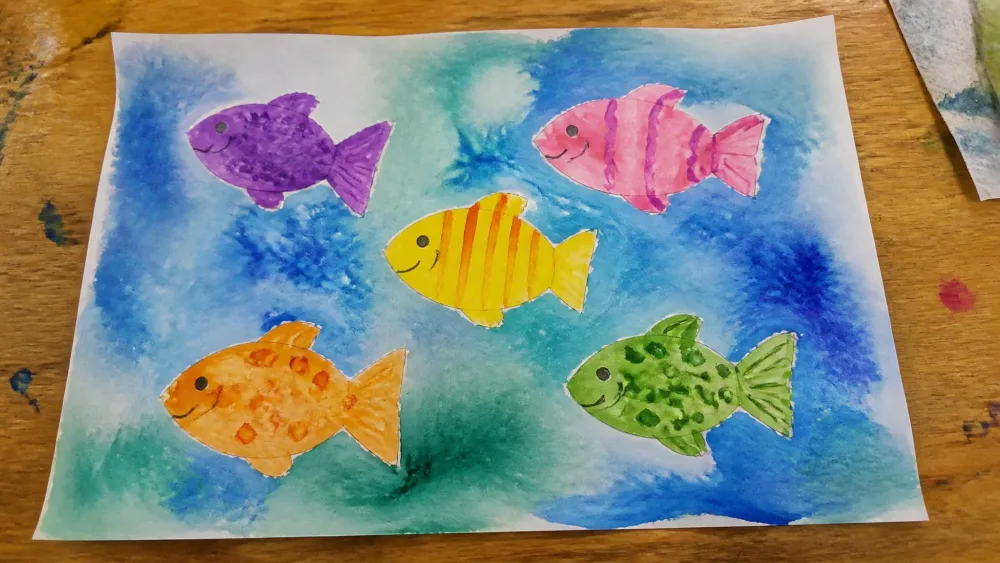
An under-the-sea scene lets kids paint fish in any color they want, since nothing about a cartoon fish has to be realistic. Wet the paper first so blues and greens bleed into a believable underwater background before adding fish shapes.
6. Koi Pond
Koi fish are a favorite subject because going abstract, focusing on color and movement over anatomy, means there's no way to get it wrong. Circular pond shapes with overlapping orange, white, and black koi make a satisfying composition.
7. Seahorse or Coral Reef
A coral reef gives kids a colorful, textured shape to fill with warm oranges, pinks, and purples, and a seahorse adds a fun, curvy subject to tuck into the scene. Sponge-dabbing the coral adds texture without extra drawing skill.
8. Beach Sunset Over the Waves
A beach sunset works as a simple horizon painting: a warm sky wash on top, a few wave lines below, and a dark strip of sand along the bottom. Older kids can blend orange into pink using a wet-on-wet technique.
Animals & Butterfly Watercolor Painting Ideas
Animal subjects give kids a built-in reason to talk about the painting while they work, which makes this a favorite category to hand a reluctant painter.
9. Watercolor Butterfly
A butterfly is a simple two-wing shape that welcomes bold color and pattern, so kids can get creative without worrying about symmetry. For a version where the wings match automatically, try the mirror-symmetry blot technique in idea 27.
10. Woodland Animal Portrait
Foxes, owls, deer, and hedgehogs make gentle, approachable portrait subjects for kids who like animals more than landscapes. Keep the shapes simple and let color do the work. A rust-orange fox reads clearly even without fine detail.
11. Zoo Animal Favorite
Let your child pick a favorite zoo animal, whether that's a striped zebra, a gray elephant, or a bright peacock, to spark their imagination. Patterned animals are especially fun since the stripes or feathers give the painting built-in structure.
12. Farm Animal Scene
Farm animals like pigs, cows, and chickens are simple, rounded shapes that even a preschooler can paint with confidence. Add a fence line or a red barn in the background once the animals are dry.
Seasonal & Holiday Watercolor Painting Ideas
Seasonal themes give kids a natural reason to paint the same subject differently throughout the year.
13. Snowy Winter Trees
We loved this winter tree silhouette idea from Rhythms of Play: kids draw bare branches in black glue resist, let it dry, then paint a blue and purple wash over the top. The glue resists the paint, leaving crisp white branches in the finished wash.
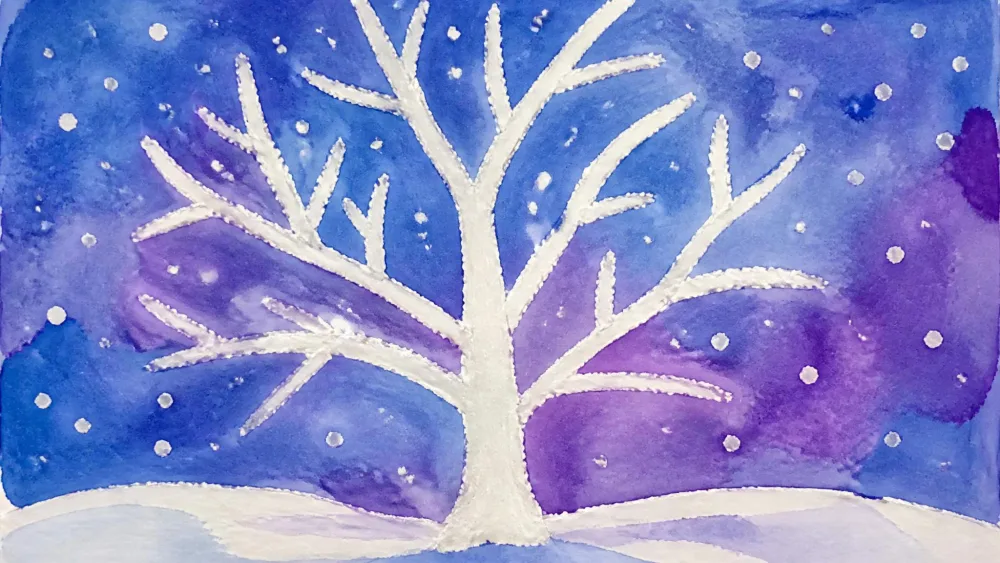
NoteThe black glue resist needs a full overnight dry before you paint over it. Rushing it blurs the line instead of leaving a crisp white silhouette, which is the most common way this project goes wrong, so budget the drying time before you start.
14. Spring Blossoms and Rain
Spring pairs naturally with the cherry blossom method from idea 3, plus a rain theme for the season's showers. Paint the same tree twice, once bare and rainy and once in full bloom, to show the season changing.
15. Fall Leaves and Pumpkins
Fall leaves let kids mix warm colors freely, since real leaves come in every shade of red, orange, and yellow anyway. Pumpkins add a rounded shape that balances the pointed leaves in one easy autumn scene.
16. Valentine's Day Hearts
Hearts are an easy shape for kids of any age, and a watercolor wash inside a heart outline makes a valentine worth mailing. Splatter a few extra hearts around the page for a busier card.
17. Favorite Holiday Ornament or Wreath
Let your child paint a favorite holiday ornament or a simple wreath shape, filled in with greens and a few pops of color for berries or bows. It makes a nice handmade card once dry.
Rainbows, Sky & Space Watercolor Painting Ideas
Sky-based themes are some of the most forgiving on this whole list, since real skies rarely follow a strict pattern anyway.
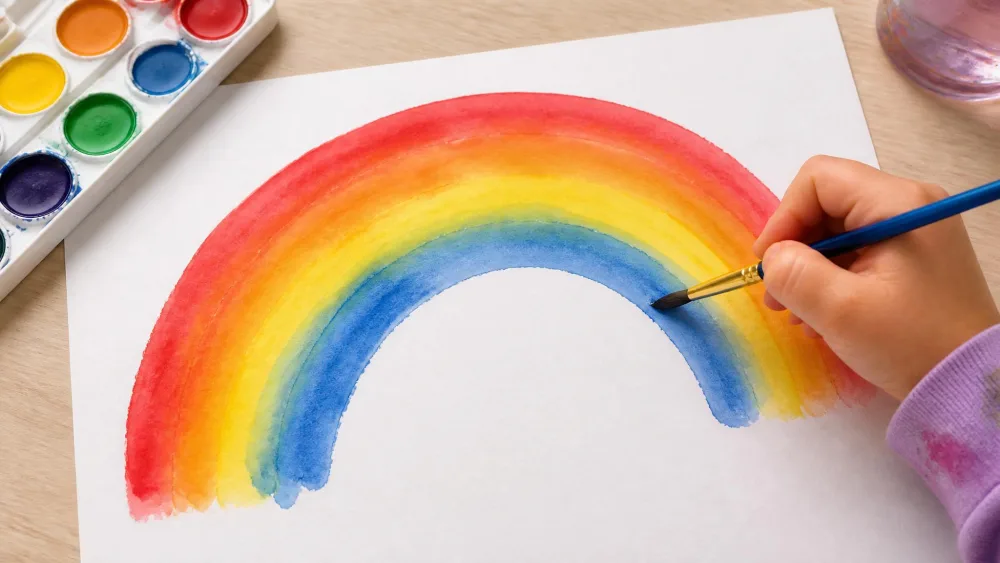
18. Rainbow Watercolor Wash
A rainbow arc is a classic for a reason. Kids paint stripes of color while the page is still wet, so each band blends softly into the next, from a toddler's loose stripes to an older kid's careful, evenly spaced arc.
19. Galaxy and Night Sky
A galaxy painting starts with a dark blue or purple wash, then a sprinkle of salt while it's still wet pulls up starry, speckled texture as it dries. Dab in bright dots afterward for planets or stars.
20. Sunset or Sunrise Sky
A sunset sky is a simple horizon painting: a warm sky wash on top, a horizon line, and a dark strip of land or water along the bottom. Pre-taping the paper keeps a first attempt clean and contained, while wet-on-wet blending brings in a fuller, more painterly range of color once a child is ready for it.
21. Cloudy Weather Scene
A cloudy sky is a quieter subject than a sunset or a galaxy, built from soft grays and blues instead of bold color. Try a wax-resist crayon for puffy cloud shapes, then wash blue around them so the clouds stay bright white.
Family Portraits Watercolor Painting Ideas
Portraits let kids practice painting a person instead of a scene, without needing the result to look exactly right.
22. Self-Portrait
A self-portrait is a fun way for kids to think about how they see themselves, from hair color to a favorite shirt. The goal is a portrait that feels like them, not a technically accurate likeness.
23. Family Portrait
Painting the whole family together makes a sweet keepsake, especially from a younger child who draws people as simple shapes with big smiles. Giving each kid two water cups, one clean and one for rinsing, cuts down on muddy colors.
24. Favorite Pet Portrait
A pet portrait is a natural next step after a self-portrait or family scene. A dog's spots or a cat's stripes give a young painter plenty of color and pattern to play with.
25. Silhouette Portrait at Sunset
This one pairs the sunset technique from idea 20 with a person, not a landscape. Paint a warm sky wash, let it dry, then add a dark silhouette of your child in profile.
Patterns & Abstract Watercolor Painting Ideas
Patterns and abstract painting give kids a break from painting a recognizable subject and let them get creative with color, shape, and repetition.
26. Geometric Shape Wash
Painter's tape laid in triangles, squares, or a checkerboard grid creates crisp white shapes once you paint over the page and peel it away. Low-tack tape matters, since heavy clear tape can tear the paper on removal.
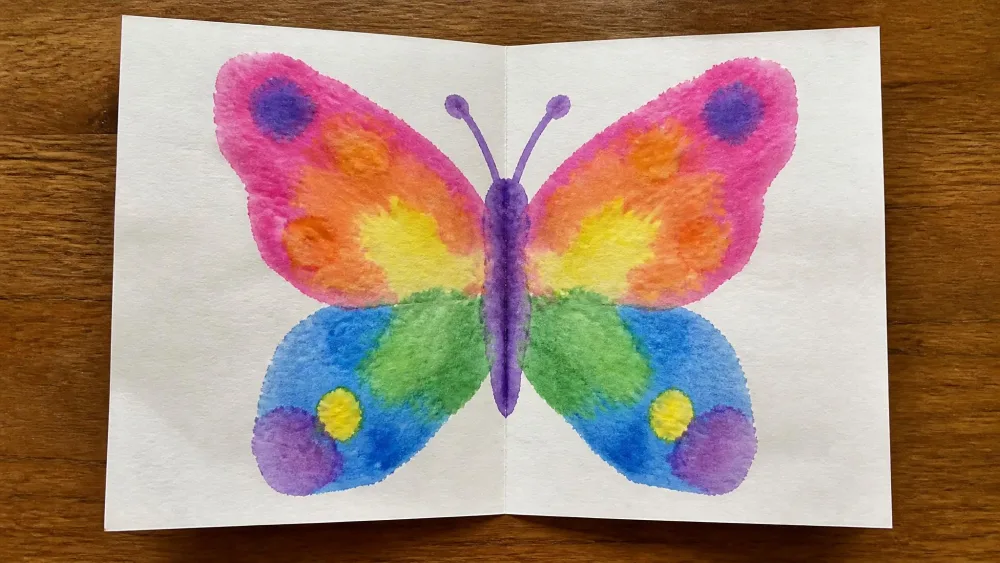
27. Mirror-Symmetry Butterfly Blot
Fold a sheet in half, paint a few thick blobs of color on one side, then press the paper together and open it back up. This needs almost no adult help and finishes in one sitting, which is why even toddlers take to it fast.
28. Polka-Dot Pattern Painting
This one leans less on classic watercolor tradition and more on a simple dot-stamping technique. Dip a cotton swab in paint and dab dots across the page in rows or clusters, keeping the shape small for younger kids.
29. Rainbow Stripes Pattern
Lay strips of washi tape across the page at angles, paint a wash of rainbow colors over the top, and peel the tape once dry. The result looks far more complicated than it was to make.
30. Color-Mixing Abstract Splash
This one is less about a final picture and more about mixing color. Let kids overlap red, blue, and yellow washes to see new colors appear, and rinse the brush between colors to avoid a muddy blend.
What You'll Need (Quick Supplies Checklist)
You don't need much to try any of the ideas above. A basic setup covers every theme on this list.
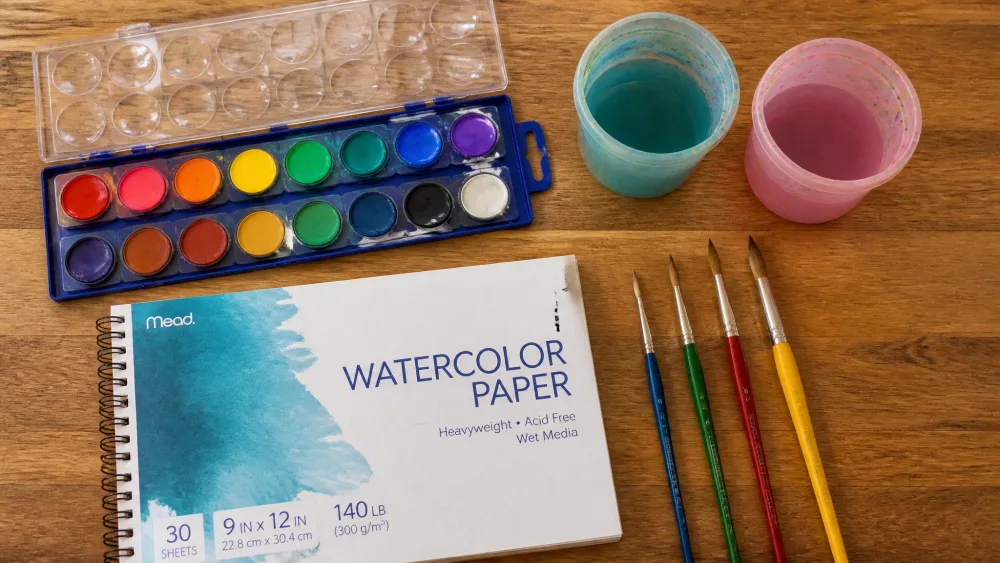
- A pan or tray of liquid watercolors or a washable watercolor set
- A pad of watercolor paper, ideally 140 lb, so a wash doesn't buckle or tear the page
- A couple of paintbrushes in different sizes, plus two cups of water for rinsing
- Painter's tape, cotton swabs, table salt, and a straw for the resist and texture ideas above
Plain printer paper works for loose, open-ended painting, but it soaks up water fast and buckles under a wash. Real watercolor paper stays flat and keeps colors bright, which matters more for a keepsake piece like a portrait or holiday card. Mix your own paint first with our guide to how to make watercolor paint for kids.
How to Choose the Right Watercolor Theme for Your Child's Age
There's no single age chart that matches every theme to an age. What changes with age is how much detail and color-mixing a project asks for, not the subject itself.
For toddlers and preschoolers, stick to big, simple shapes and two or three colors: a rainbow arc, a butterfly blot, or a pre-taped sunset sky. The mirror-symmetry butterfly blot (idea 27) needs almost no adult help, making it a strong first project for the youngest painters.
School-age kids can usually handle three or four colors and some wet-on-wet blending, plus subjects like a koi pond or a woodland animal portrait. Older kids who want more control can add pencil-sketched detail before they paint.
Fussy, dot-by-dot patterns like idea 28 ask for more patience than a preschooler's attention span usually allows. If your child is new to watercolor altogether, our watercolor techniques for kids guide walks through the basic moves that show up across almost every idea on this list.
NoteThis list is about what to paint, not how. For step-by-step methods like wet-on-wet blending, resist, and salt texture, see the watercolor techniques guide linked above.
Frequently Asked Questions
What if my toddler wants to try a detailed idea like the polka-dot pattern (idea 28)?
Let her try, but shrink the space she's covering instead of the ambition. A small shape to fill, or bigger dots stamped with a fingertip instead of a cotton swab, keeps the patience it takes within reach. If she stops halfway through, that's a normal stopping point for this one, not a failed painting.
What's the single biggest mistake that ruins a watercolor painting, no matter the theme?
Overworking the wash. Going back into the same wet area again and again to "fix" a color causes more muddy blooms and marred paper than the paint or paper brand ever does. Once a wash is down, it's usually better to leave it alone and let it dry.
Can these ideas work with any watercolor technique?
Yes. Every theme here can be painted with a simple flat wash or dressed up with resist, salt texture, or splatter. The theme is the subject; the technique is up to you.
Where can I learn watercolor techniques step by step?
Our how to use watercolors for kids guide walks through six easy techniques you can apply to any idea on this list.
How many watercolor ideas should we try in one sitting?
One is usually plenty. Most watercolor projects wrap up in a single sitting, so let your child stop while they're still having fun.
How do I display or preserve a finished watercolor painting?
Once a painting is fully dry, press it under books overnight if a heavy wash left the page buckled. A frame, a wall clip, or a scanned copy turned into a card all work well.
Conclusion
Thirty ideas is a lot of options, but the real goal is getting your child started. Pick whichever theme jumps out first: a rainbow, a fish, a family portrait, a snowy tree.
For more ideas by theme, browse our 25 Easy Watercolor Ideas for Kids, watercolor activities for kids, and watercolor projects for kids. If painting isn't the only thing on your child's mind today, our toys for kids, by interest hub has more open-ended ideas to explore.