How to Use Watercolors for Kids: Easy Techniques, Supplies & Project Ideas
Watercolors have a reputation as the messiest paint in the cupboard, and plenty of parents leave them on the shelf for that exact reason. We understand the worry. In our home, though, watercolors turned out to be the easiest paint to hand a young child, and the cleanup is gentler than you would expect. With a few simple supplies and the right setup, kids of all ages can paint happily without flooding the table.
Why Watercolors Are Perfect for Kids
Watercolors forgive mistakes. Colors blend and bloom on their own, so a child does not need fine control to make something beautiful. That is why the whole approach works best as process art: the goal is exploring color and water, not producing a perfect picture. A lower bar is what makes watercolor so welcoming for messy young painters.
There are real benefits of art for children too, from fine-motor practice to early color theory. Best of all, the same paints suit a curious toddler and a focused eight-year-old.
Watercolor Supplies You'll Need
You do not need much to begin. A basic kit, plus a few things from your kitchen, covers every technique in this guide.
Types of Watercolor Paints for Kids (pan, tube, liquid)
Three kinds of watercolor show up in kids' art. Pan, or cake, sets are dried pigment cakes in a snap-lid palette that you activate with water; they are cheap, long-lasting, low-mess, and the type used in school. Tube watercolors are a toothpaste-consistency paint with more concentrated pigment, ready straight away, but costlier and messier. Liquid watercolors are concentrated dye in dropper bottles that you dilute with water; they are vibrant for process art, though dye-based, so they stain more and fade over time.
For everyday painting we reach for a washable pan set. If you want a hands-on extra, you can even make your own watercolor paint at home with pantry ingredients.
| Feature | Pan / cake | Tube | Liquid |
|---|---|---|---|
| Form | Dried cakes in a palette | Paste in tubes | Dye in dropper bottles |
| Activate by | Adding water | Squeeze, ready to use | Dilute drops with water |
| Mess level | Low | Higher | Highest (stains) |
| Best for | Everyday play, school | Large washes, big projects | Vivid process art |
| Cost | Cheapest | Mid to higher | Concentrated, lasts long |
| Lightfastness | Good | Good | Fades over time |
Paper, Brushes & Simple Tools
The single upgrade that changes everything is real watercolor paper. Standard watercolor paper is 140 lb (about 300 gsm), and it absorbs water without wrinkling or tearing. Thin copy or printer paper buckles the moment it gets wet, which is the most common frustration we hear from parents.
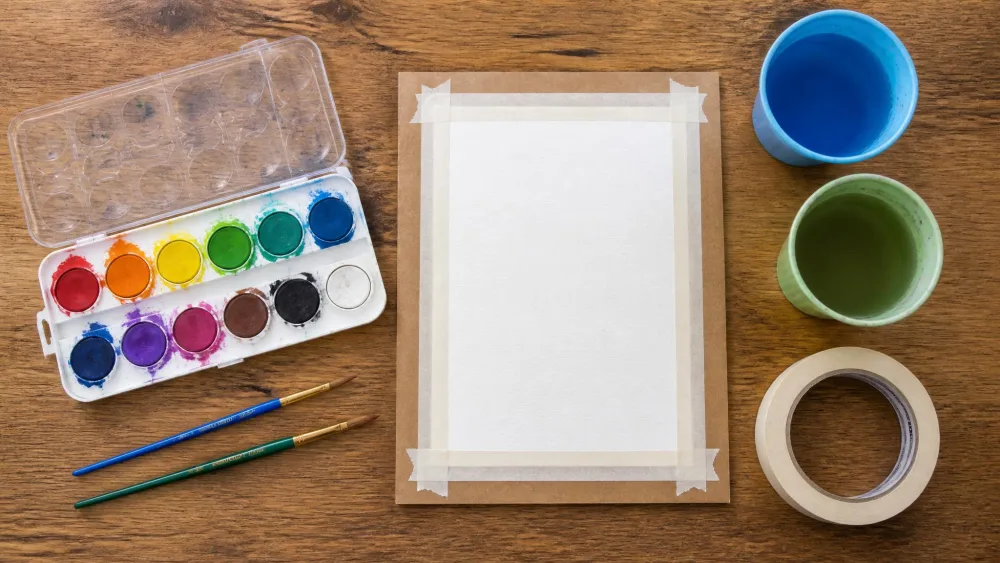
A couple of round brushes in different sizes, a palette or mixing tray, and paper towels round out the kit. Two water cups help keep colors clean, one to rinse and one for clean water, though a single rinse cup is fine for casual play. For the youngest painters, a set of washable crayons made for toddlers doubles as a resist tool. You can gather all of it through the kids' art supplies aisle.
Setup & Mess-Free Tips
A little prep makes the difference between calm and chaos. We set every material out before the kids sit down, which lets them dive in and explore on their own. Tape all four edges of the paper to a board or tray with painter's tape; this stops it sliding, dries it flat, and leaves a clean white border. Lay an old towel under the work area, and keep the palette to three or four colors so the results stay bright instead of going muddy.
Parent tipCut a large sheet down to a small four-by-five-inch piece for young children. A small page feels far less intimidating than a big blank one, and kids fill it with confidence.
NoteWhen we paint at our own kitchen table, the trick is having the water cups filled and the paper taped down before anyone sits. With the prep done, our kids start exploring right away, and we get to enjoy the painting instead of refereeing it.
Easy Watercolor Techniques for Kids
Here are six techniques that reliably work with kids. Each one is simple, forgiving, and ready in minutes.
Wet-on-Wet
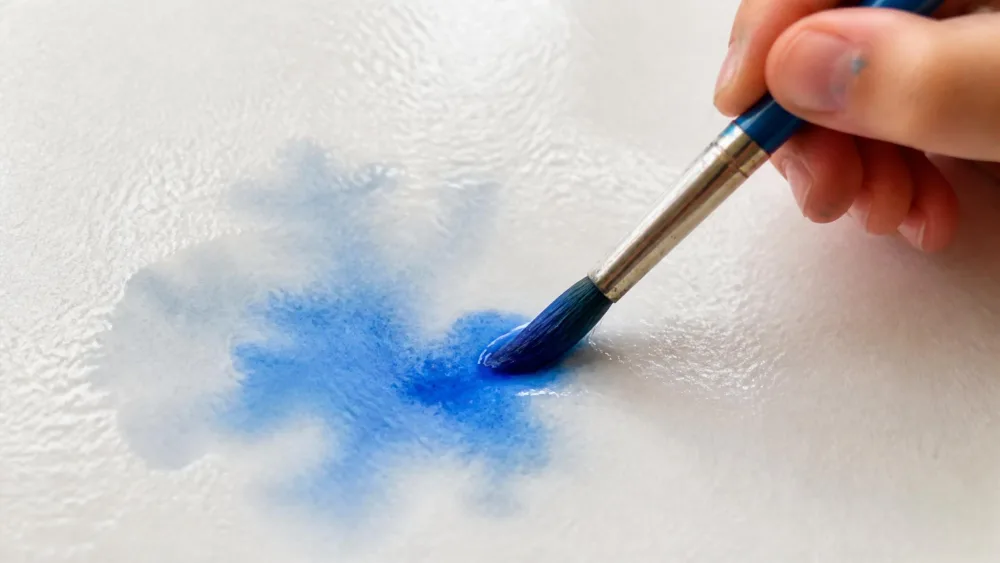
Brush clean water over the paper first, then touch loaded color onto the damp surface. The pigment spreads and blooms softly on its own, blending into gentle gradients no child could paint by hand. It is the most relaxing technique to start with.
Watercolor Wash
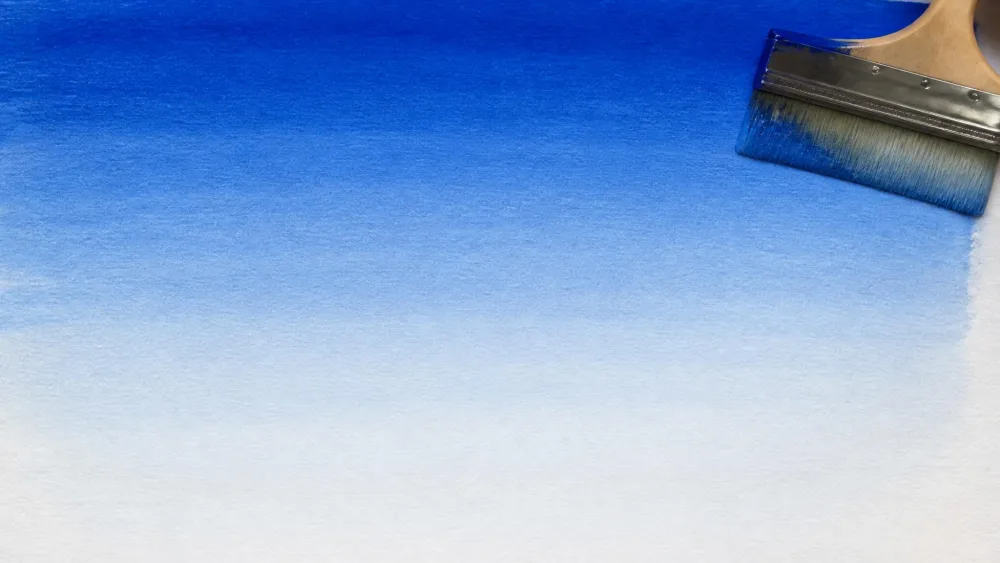
A wash is a smooth layer of color across the page. Load a fat brush and sweep it side to side, working from the top down. Add more water as you go for a graded wash that fades from deep to pale. Washes make perfect skies and ocean backgrounds.
Salt Texture
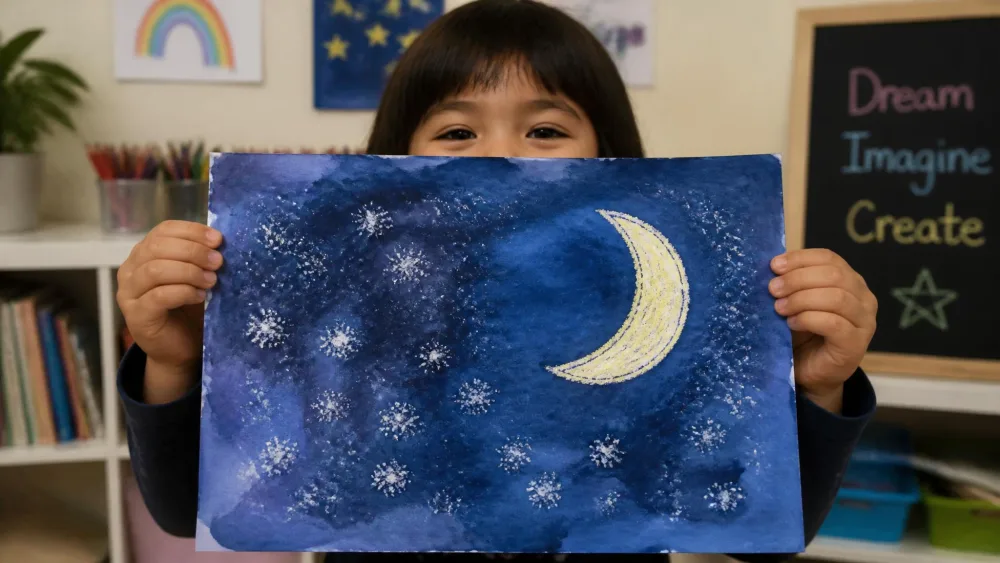
Paint a wet area of color, then sprinkle ordinary table salt over it while the paint is still damp. The salt pulls pigment toward each grain and dries into starry, snowflake-like spots. Once it dries, brush the salt away to reveal the texture underneath.
Parent tipSalt only works on paint that is still wet and shiny. If the puddle has soaked in and gone matte, rewet a small patch and sprinkle again.

Crayon / Oil Pastel Resist
Draw a hidden picture with a white crayon or oil pastel, then wash watercolor over the whole page. The waxy lines repel the paint, so the secret drawing appears as if by magic. This one earns the biggest reaction in our house every time, and asks almost no skill.

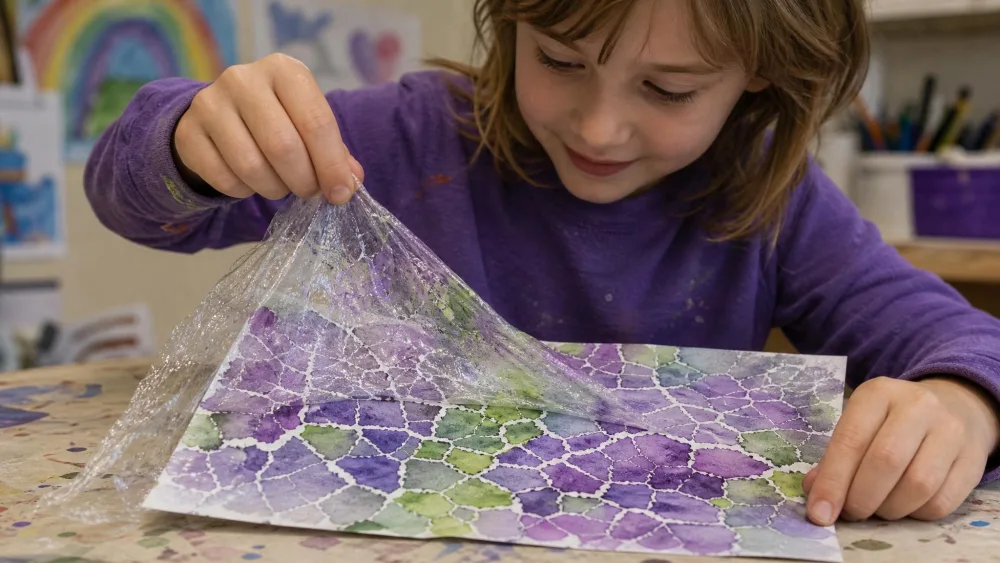
Plastic Wrap Texture
Lay a piece of crinkled plastic wrap onto a freshly painted, still-wet area and press it down gently. Leave it until the paint dries, then peel it away. The wrinkles leave behind crackled, stained-glass-like patterns, and kids love peeling off the wrap to reveal what formed underneath.
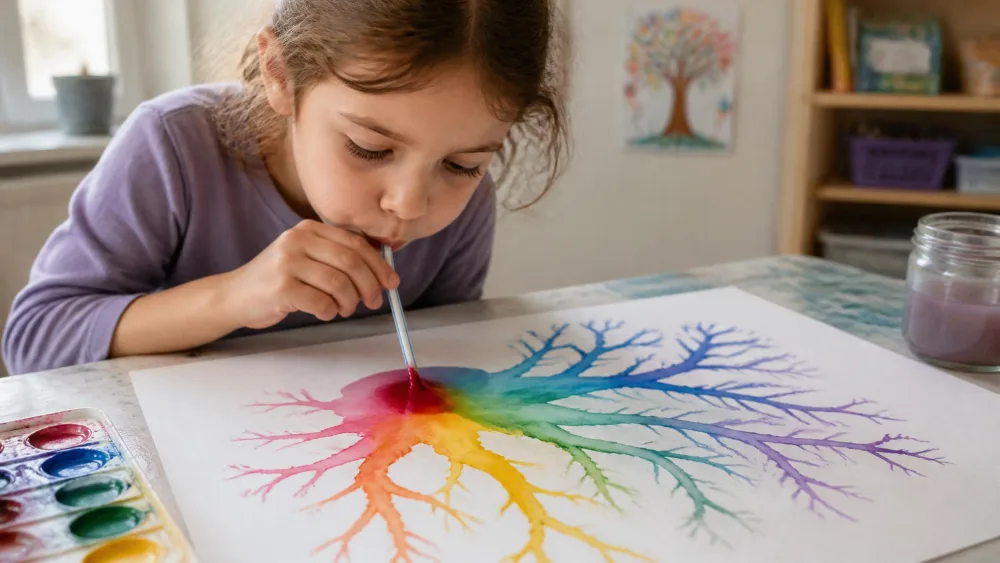
Splatter & Blow Painting
For splatter, load a brush and tap it over the page for a spray of dots. For blow painting, drop a puddle of liquid watercolor on the paper and blow through a straw to push it into branching, treelike lines. Blow painting works best with concentrated liquid paint, since pan color is usually too thin and dry to move well.
Fun Watercolor Project Ideas for Kids
Once a technique clicks, turn it into a project. Here are ideas grouped by age and stage.
Beginner Projects (Toddlers & Preschool)
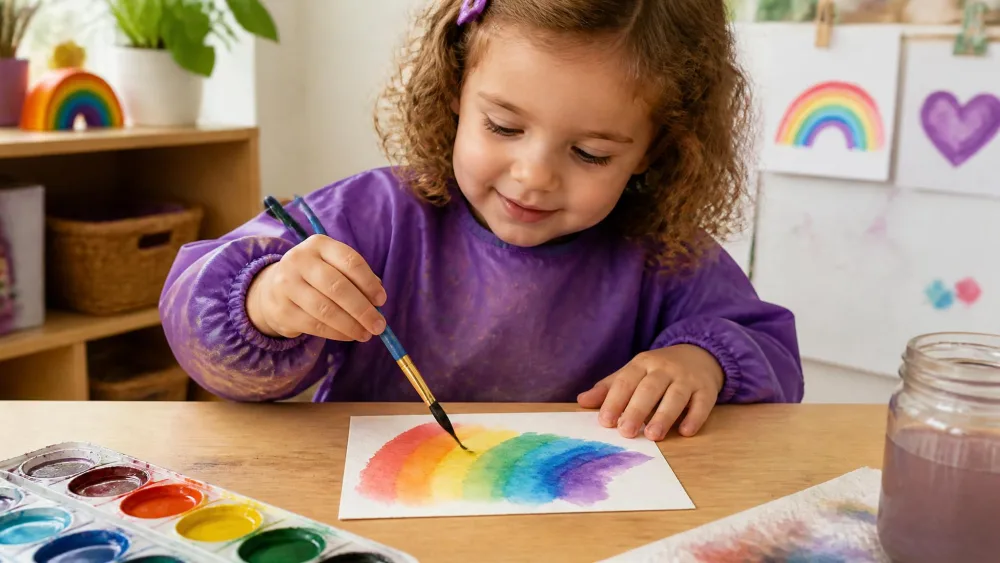
Start small and keep it free. A wet-on-wet rainbow on a four-by-five-inch card is the perfect first project, since the colors blend themselves. Salt-textured "snow" pictures and simple color-mixing puddles also delight this age. Even a two-year-old explores color in a new way with these gentle techniques, so there is no reason to wait until they are older.
Intermediate Projects (Ages 4-7)
This age loves a surprise. A secret-message card made with white-crayon resist is always a hit, as is a salt-sprinkled night sky full of stars. Plastic-wrap "stained glass" suncatchers, taped at the edges and trimmed once dry, make a proud piece to hang in a window.
Advanced Projects (Ages 8+)
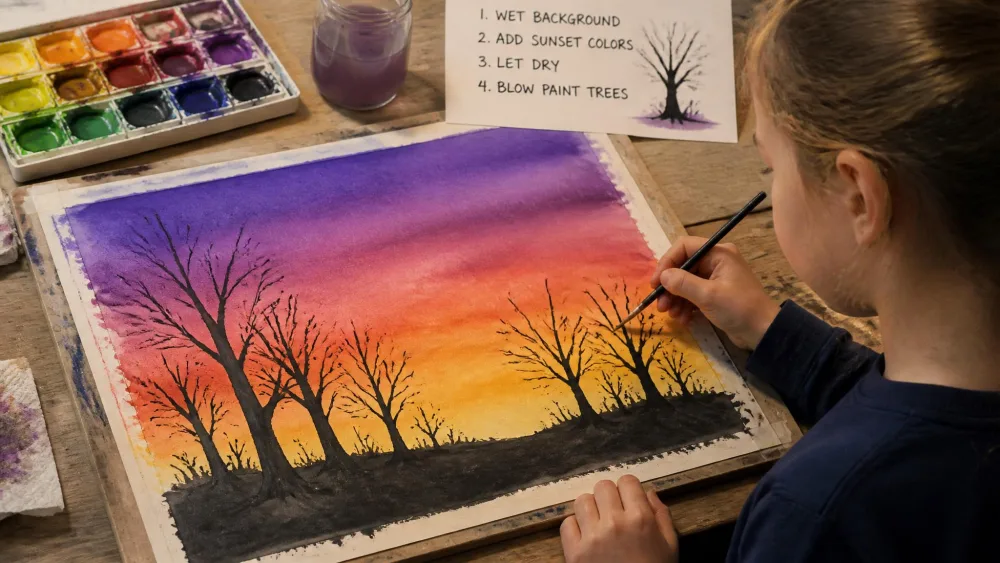
Older kids can layer techniques. A graded-wash sunset with blow-painted trees in the foreground combines two skills in one painting. Landscapes and galaxy scenes reward a little patience. A better-quality paint set noticeably lifts results at this age, so it is worth upgrading from the cheapest tray.
Watercolor Tips by Age Group
Match the session to the child. Toddlers usually stay engaged for about five to fifteen minutes, preschoolers for fifteen to thirty, and school-age kids for thirty minutes or more, though every child and every day differs. Keep the youngest painters to a few colors and large brushes; give older kids more colors and a real technique to practice. Across every age, treat the painting as play, not a test, and kids come back on their own.
Troubleshooting Common Watercolor Problems
Two complaints come up again and again. The first is wrinkled, buckled paper, which almost always means the paper was too thin. Switch to 140 lb watercolor paper and tape the edges down, and the problem disappears.
The second is muddy, dull color. That comes from a dirty rinse cup and too many colors crowded together. Rinse the brush between colors, keep the palette to three or four colors, and use two water cups so your clean water stays clean. Bright results come down to clean water and a little restraint.
Frequently Asked Questions About Watercolors for Kids
What age can kids start watercolor painting?
Earlier than most parents expect. Even a two-year-old can explore color with simple, supervised watercolor play, and many washable sets, like Crayola Washable Watercolors, are labeled for ages 3 and up. Keep the first sessions short, and let exploring be the point.
Are watercolor paints safe for toddlers?
Look for non-toxic labeling before you buy. The ACMI AP non-toxic seal certifies, through a toxicologist's review, that a product contains nothing harmful to children, and it is the seal to look for on supplies for kids in sixth grade or younger. Crayola Washable Watercolors carry that certification and meet the ASTM D-4236 safety standard.
What's the difference between pan, tube, and liquid watercolors?
Pan sets are dried cakes you activate with water, cheap and low-mess and ideal for everyday play. Tube paints are concentrated and ready to squeeze out, better suited to large washes. Liquid watercolors are vivid dyes in dropper bottles, wonderful for process art but more prone to staining.
How do I keep watercolor paintings from wrinkling?
Use heavier paper and tape it down. Standard 140 lb (about 300 gsm) watercolor paper absorbs water without buckling, and taping all four edges to a board dries the painting flat. Thin copy paper wrinkles the moment it gets wet.
Can watercolors stain clothes, furniture, or skin?
Washable pan sets, such as Crayola and Prang, rinse off hands and most fabrics easily, which is why parents reach for them with the youngest kids. Concentrated liquid watercolors stain more and can leave a tint on skin that usually washes or fades off within a day or so. Wear old clothes and cover the table to be safe.
How do I display or preserve kids' watercolor art?
Let each painting dry completely flat before you move it, which keeps it from curling. Pieces taped at the edges dry with a tidy white border. Store finished work flat in a folder, and rotate favorites onto the fridge or a window.