7 Best Crayons for Toddlers: Safe, Non-Toxic & Washable Picks
Toddler crayons are the first drawing tools most children ever hold. They are shorter, chunkier, and safer than the thin crayons older kids use, and they are built around one simple idea: a set that fits little hands, survives being dropped, and washes off when it lands somewhere it shouldn't.
The best crayons for toddlers do three things well. They are non-toxic, so a curious one-year-old chewing on a color is a shrug and not an emergency. They are easy to grip, with jumbo, egg, or triangular shapes that a developing palm can actually hold. And many are washable, which is the difference between a hallway you wipe clean and a hallway you repaint.
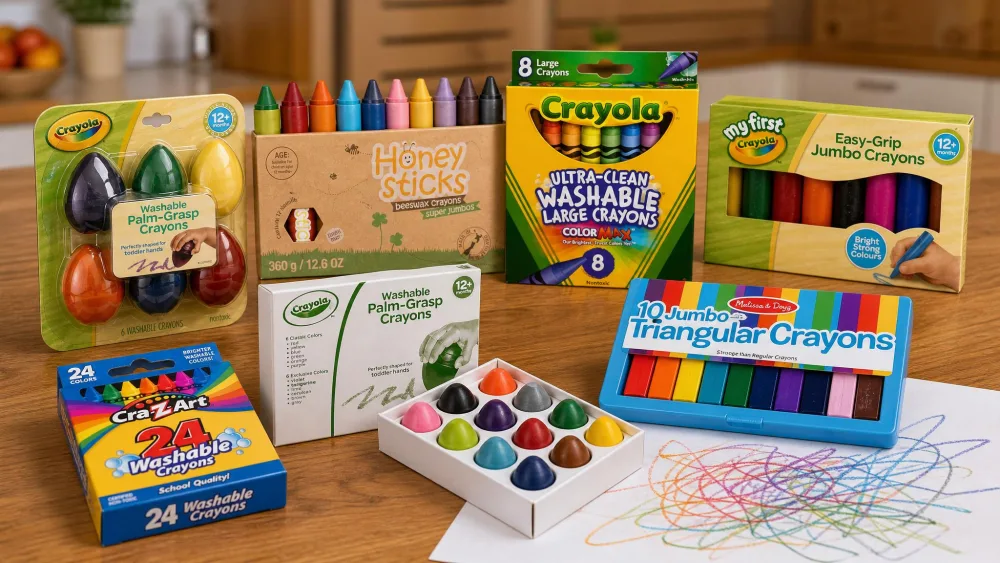
We pulled together seven sets that cover every toddler situation, from the youngest palm-grabbers to preschoolers building a proper pencil grip. Here is how we sorted them, and which one we would hand a toddler first.
How We Chose These Crayons
We looked at the crayons parents actually reach for again, then judged each set on the four things that matter most at this age: safety and non-toxic materials, grip and shape, real-world washability, and how well they survive daily toddler use. Price and pack value broke any ties.
We bought and tested these sets ourselves at the kitchen table, the same place most first drawings happen. We paid special attention to durability, because a crayon that shatters on the first drop teaches a toddler nothing except frustration. We also weighed color payoff, since a crayon that only shows up under hard pressure discourages small hands quickly.
Our own two are past the toddler stage now, so we leaned on the youngest hands we could gather: the little ones in our homeschool circle, plus our own kids helping test grip and cleanup at the table. We put each set through the same routine over repeated coloring sessions rather than a single sitting, so we could see how the crayons held up to real drops, hard presses, and the occasional trip to the wall before we settled on our picks.
NoteThe two sets that surprised us most were the ones on opposite ends of the durability scale: the beeswax sticks that a chewing baby can safely gnaw, and the triangular plastic crayons that shrugged off drop after drop onto tile.
What to Look for in Toddler Crayons (Buying Guide)
Shopping for a toddler's first crayons is different from buying for a school-age child. Grip strength, mouthing habits, and clumsy drops all change what counts as a good crayon. Here is what to weigh before you buy.
Non-Toxic & Safety Certification (ASTM D-4236 / EN71)
Every crayon on this list is labeled non-toxic, and that label matters most at the toddler stage, when a color is as likely to end up in a mouth as on paper. In the United States, art materials that pass review under the ASTM D-4236 standard carry a conformance statement, and many imported sets also reference the European EN71 toy-safety standard.
Non-toxic does not mean edible, though. It means that if a toddler bites or swallows a small amount, it is not expected to cause harm. That distinction is worth keeping in mind, especially because young children absorb some substances more readily than adults do, as summarized in research on how young children absorb chemicals. The safest habit is still supervision.
NoteThe "non-toxic" claim on these boxes is a manufacturer label, not a promise your toddler can eat crayons. Store them out of reach between sessions and keep coloring supervised for the under-two crowd.
There is real history behind the caution: decades ago there was a CPSC recall of imported crayons that contained lead. Sticking to trusted, clearly labeled brands is the simplest way to buy with peace of mind.
Shape & Grip (Jumbo, Egg, Triangular)
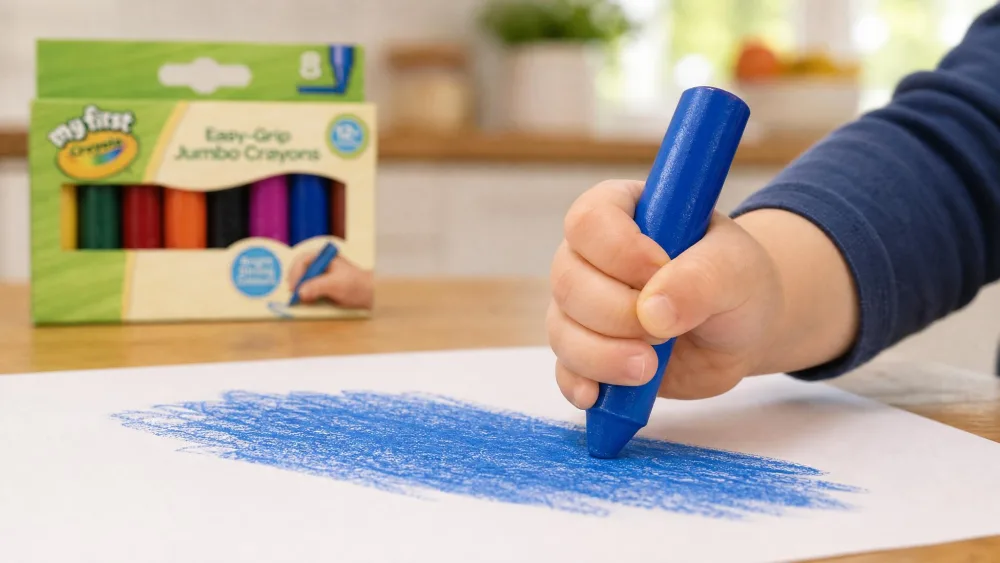
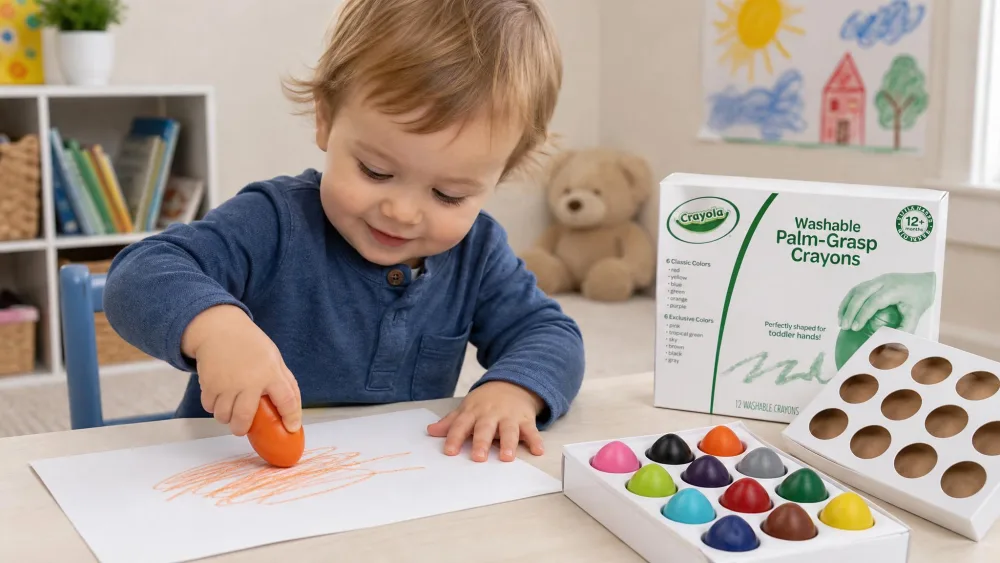
Toddlers do not hold crayons the way we do. They grab with a full fist, so a fat crayon beats a thin one. Three shapes dominate at this age. Jumbo crayons are thick barrels sized for a whole palm. Egg or palm-grip crayons are rounded blobs a toddler cups in one hand, which suits the very youngest. Triangular crayons add flat sides that train the three-finger grip children need later for pencils, with a bonus: they do not roll off the table.
Washability & Mess Control
If your toddler colors anywhere but paper, washability is not optional. A truly washable crayon wipes off skin, most clothing, and even painted walls with warm water. Not every set claims it, though. Beeswax and plastic crayons often skip the washable label, so check before you assume a wall will wipe clean.
Parent tipTest any new crayon on a hidden patch of wall or fabric first. The sets marked "washable" lift off far more easily than beeswax or plastic ones, which are worth buying for other reasons but not for easy cleanup.
Break Resistance & Durability
This is where toddler crayons quietly separate into winners and letdowns. Chunky egg and palm-grip crayons look sturdy, but many are hollow inside and chip or crumble when thrown or dropped. Thin value crayons snap under a hard press. If your toddler is rough, the most break-resistant option is a plastic triangular crayon, which we found close to indestructible.
Age Suitability
Match the crayon to the age. From about 12 months, egg and palm-grip shapes suit the fist-grabbing stage. Around two, jumbo crayons work well as hand control improves. By three, triangular crayons and standard washable sets fit well as toddlers build a real pencil grip.
Quick Comparison Table
Here is every pick at a glance. Prices and star ratings were checked in July 2026 and shift with new reviews and Amazon promotions, so treat them as a snapshot.
| Product | Role | Pack | Shape / grip | Washable | Age | Price | Our rating |
|---|---|---|---|---|---|---|---|
| Crayola My First Palm Grip | Best Overall | 6 | Egg palm-grip | Yes | Toddler | Check price | 5 of 5 |
| Honeysticks Beeswax | Best Non-Toxic | 12 | Chubby stick | Not stated | 1 yr+ | About $22.95 | 4 of 5 |
| Crayola Ultra-Clean Washable, Large | Best Washable | 8 | Large barrel | Yes (skin/clothes/walls) | Toddler | About $5.50 | 5 of 5 |
| Crayola MyFirst Jumbo | Best Jumbo / Easy-Grip | 8 | Jumbo easy-grip | Not stated | 12 mo+ | About $9.47 | 4 of 5 |
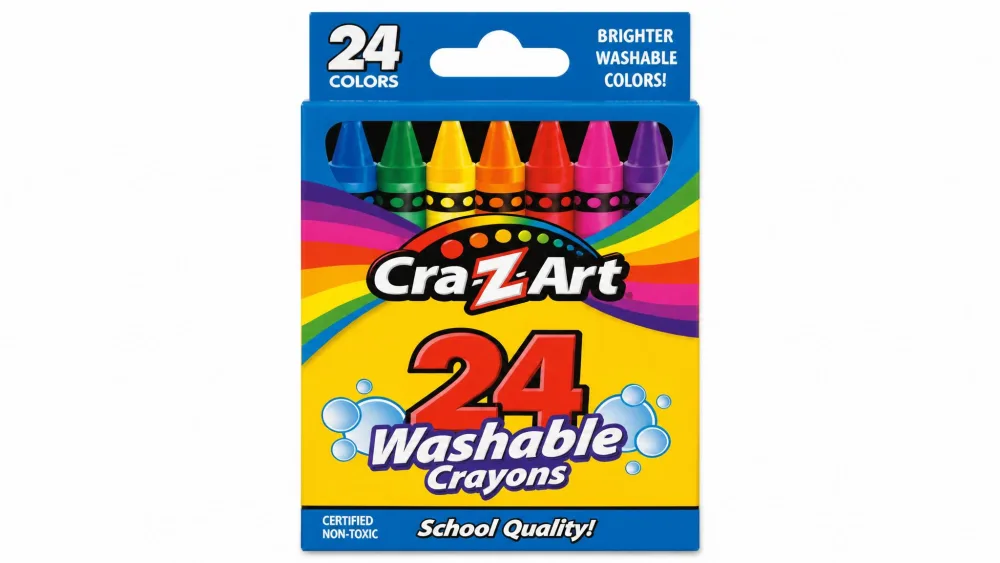
| Cra-Z-Art Washable 24ct | Best Value | 24 | Standard barrel | Yes | 3+ | About $1.59 | 5 of 5 |
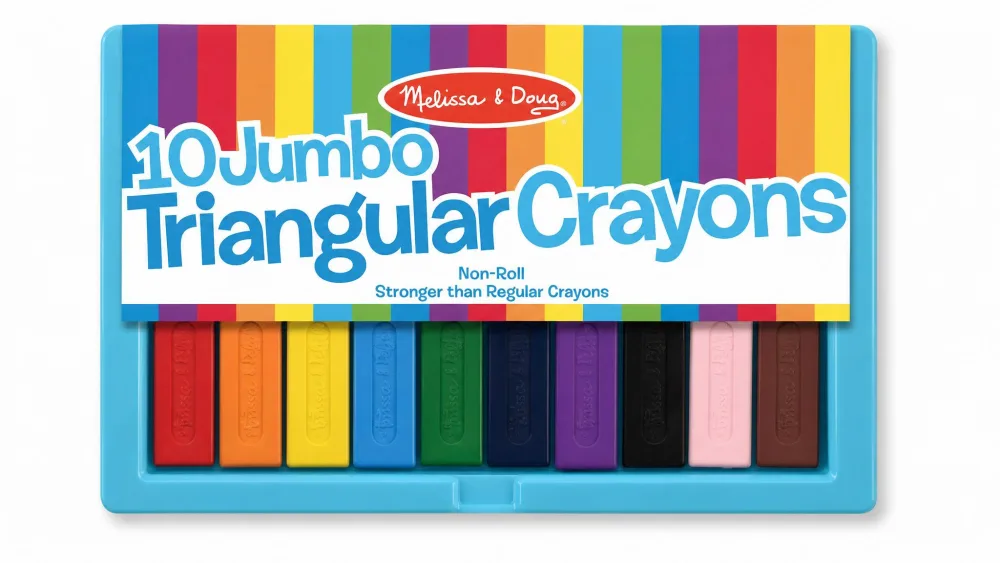
| Melissa & Doug Jumbo Triangular | Best Grip-Training / Anti-Roll | 10 | Triangular non-roll | Not stated | 3 to 8 | About $6.49 | 4 of 5 |
| Crayola Large Egg | Best for Youngest | 12 | Egg palm-grip | Yes | 12 mo+ | About $19.99 | 4 of 5 |
The Best Crayons for Toddlers
1. Crayola My First Palm Grip Crayons: Best Overall
Why We Picked It
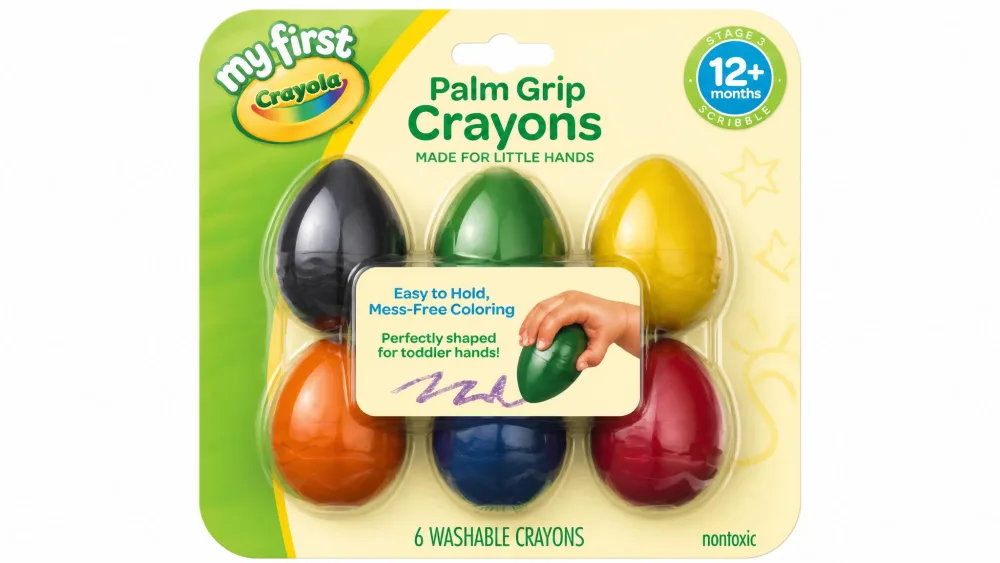
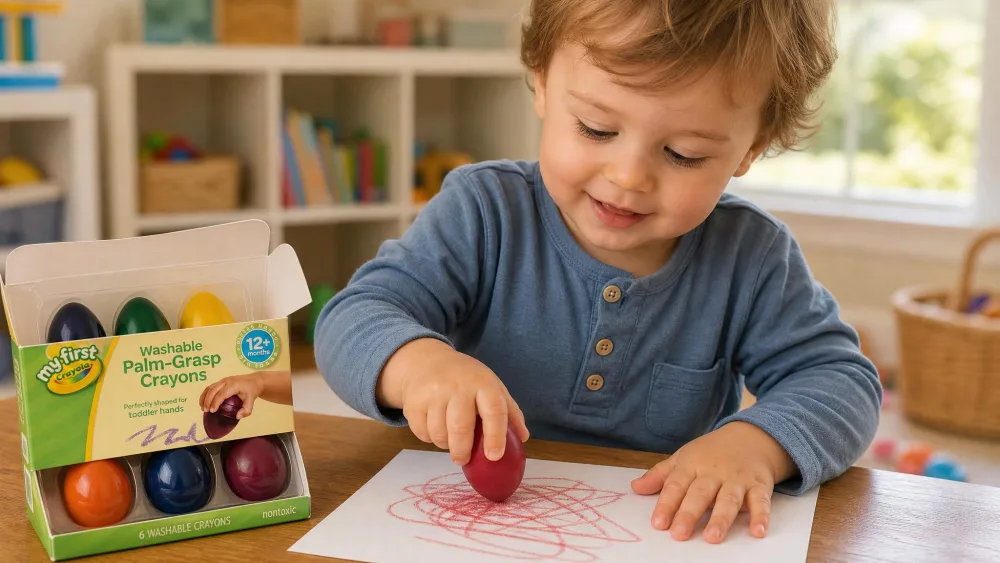
This is the set we would hand a toddler first. The Crayola My First Palm Grip Crayons come in a pack of 6 egg-shaped, palm-grip crayons in red, orange, yellow, green, blue, and purple, and the ergonomic shape is genuinely easy for little hands to hold. We noticed toddlers are also less tempted to put the chunky shape in their mouths than a thin crayon, which is a small relief at this age. They are washable for hassle-free cleanup, and Crayola rates each palm-grip crayon as equal to 14 regular crayons, so a set of 6 lasts.
The catch is durability. These crayons are hollow and layered, and we found they can break, chip, or shatter when a toddler drops or throws them. The colors also lay down a little light, and the crayons feel heavy and bulky for the very smallest hands. Even so, the combination of grip, washability, and safety makes this the most well-rounded first crayon we tested.
Pros
- Egg palm-grip shape is easy for little hands to hold
- Washable for hassle-free cleanup
- Chunky size discourages mouthing
- Each crayon equals 14 regular crayons
Cons
- Hollow build can chip or shatter when dropped
- Colors lay down light
- Bulky and heavy for the smallest toddlers
2. Honeysticks 100% Pure Beeswax Crayons: Best Non-Toxic
Why We Picked It
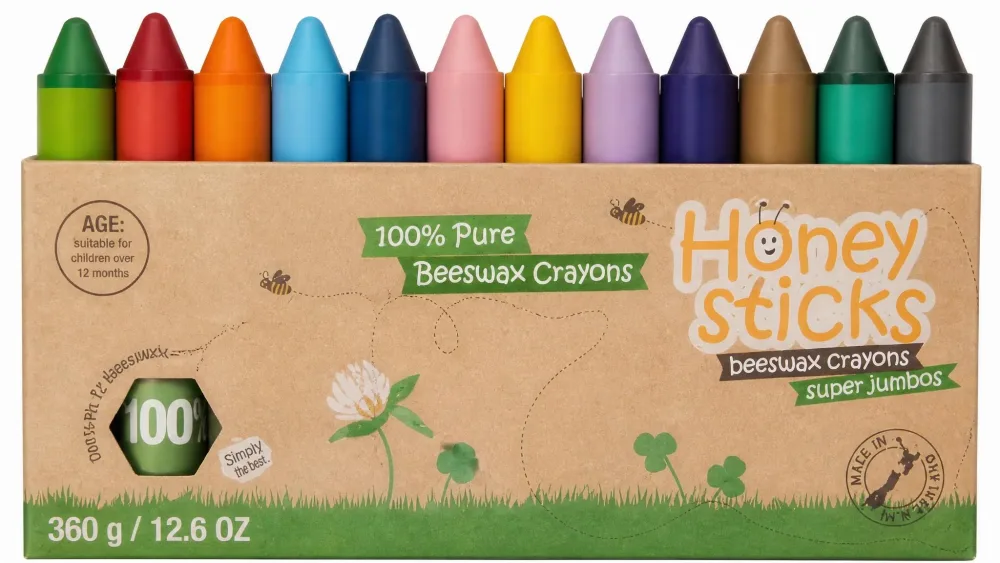
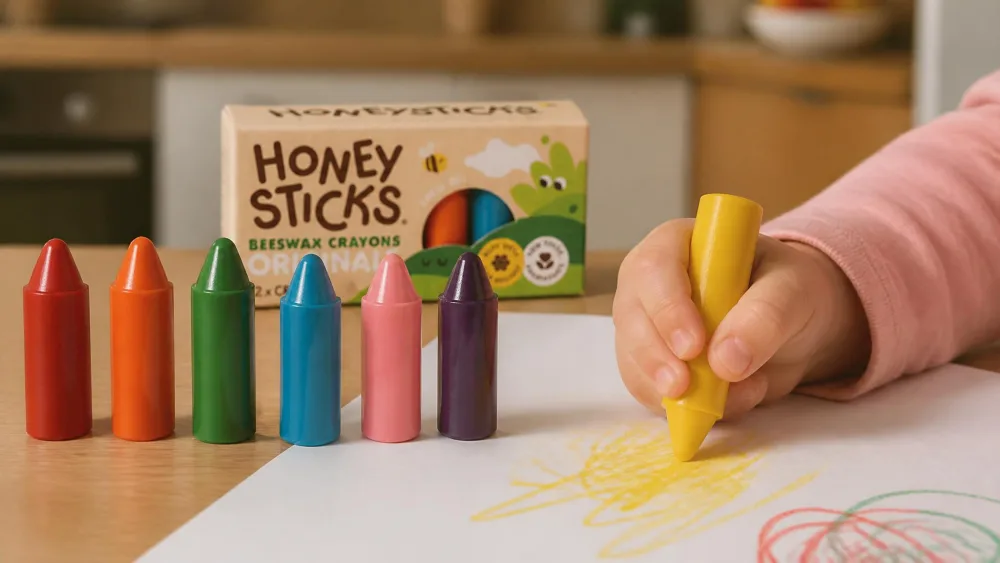
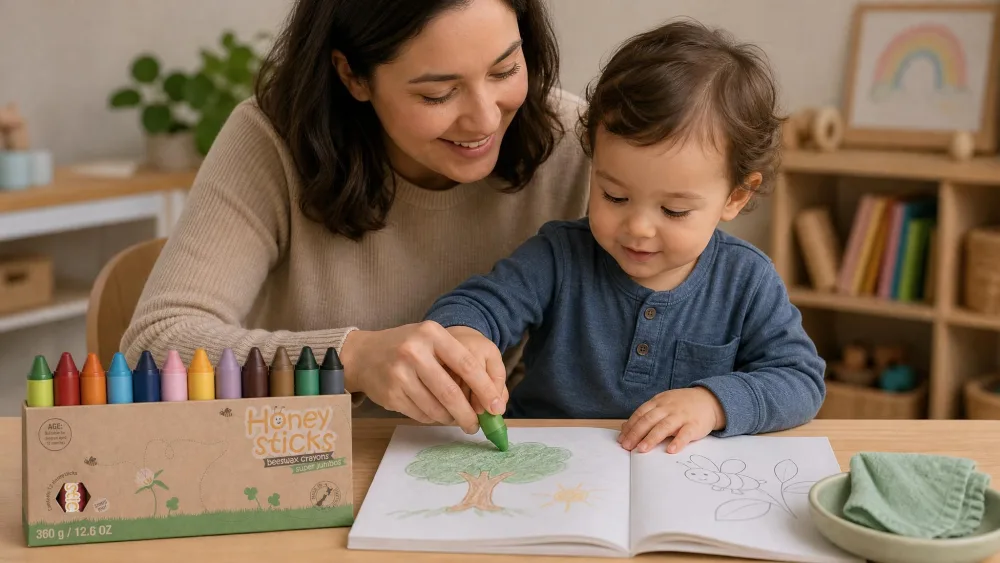
If your toddler is still in the mouthing stage, this is the set that buys the most peace of mind. The Honeysticks 100% Pure Beeswax Crayons are made from 100% pure natural beeswax with food-grade colors and no petroleum-based paraffin or fillers. They are handmade in New Zealand, plastic free, and come as 12 crayons in 12 bright colors, each about 2.2 inches long and 0.8 inches in diameter. Because they are truly non-toxic beeswax, we did not panic when a toddler chewed on one, and the natural honey scent is a repeated delight.
The chubby shape stands up on the table and is easy to grip, and colors go down smoothly with vibrant, well-pigmented results. Two honest downsides: they run expensive for their small size, and some sticks arrive smaller than expected or can shatter when dropped on a hard floor. The listing does not claim these wash off walls, so treat them as a paper-and-supervision crayon rather than a mess-proof one.
Pros
- 100% pure beeswax with food-grade colors, no paraffin or fillers
- Truly non-toxic for the mouthing stage
- Chubby shape stands up and is easy to grip
- Smooth, vibrant color payoff
Cons
- Expensive for the small size
- Some arrive smaller than expected or can shatter on hard floors
- Not marketed as washable
3. Crayola Ultra-Clean Washable Crayons, Large: Best Washable
Why We Picked It
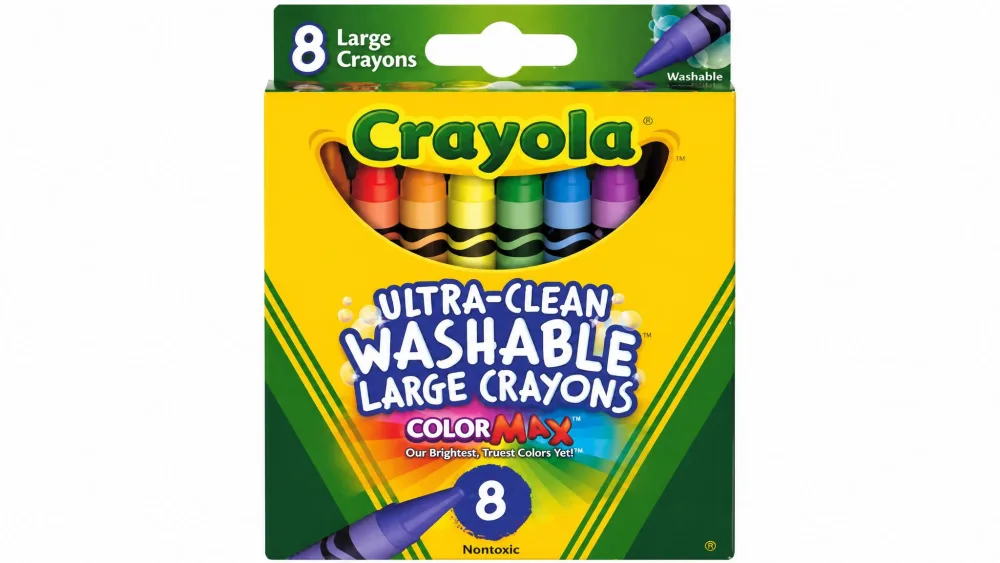
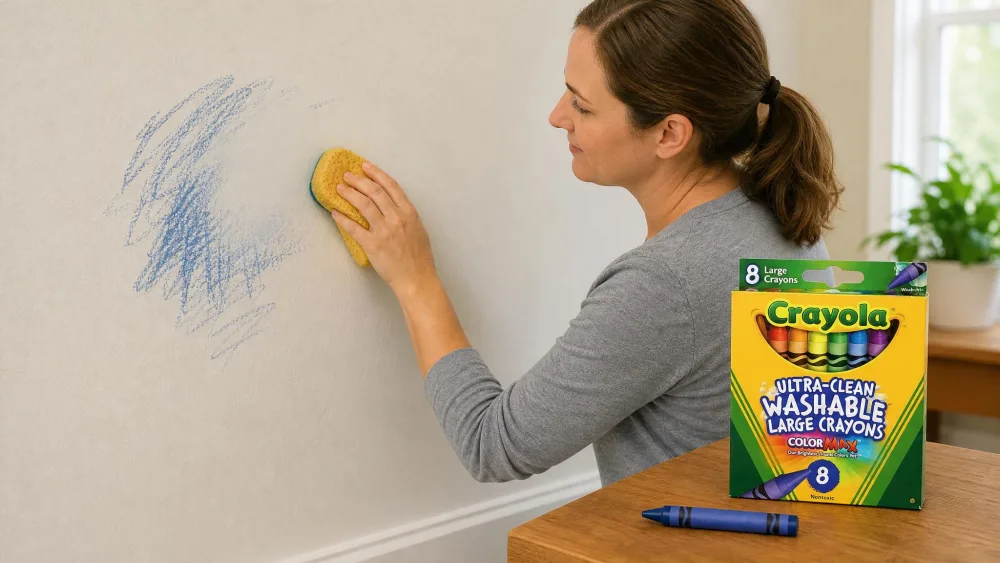
When cleanup is the deciding factor, these win. The Crayola Ultra-Clean Washable Crayons come as 8 large, non-toxic crayons built on Crayola's most washable formula. They wash clean from skin, clothing, and even painted walls, and wipe off nonporous surfaces with warm water and a sponge. We can confirm the washability lives up to the claim: marks lifted off hard surfaces, clothing, and the wall with just water, which is exactly what you want when a toddler treats the hallway as a canvas.
The larger size suits chubby toddler hands, and the colors are vibrant. Durability is the common gripe here, though: they snap fairly easily, sometimes breaking into pieces after a short drop or under heavy toddler pressure. At around $5.50 for the set, they are affordable enough that the occasional broken crayon is easy to forgive.
Pros
- Washes off skin, clothing, and painted walls with water
- Large size fits chubby toddler hands
- Vibrant color
- Affordable and non-toxic
Cons
- Snaps fairly easily under toddler pressure
- Can break after a short drop
- Only 8 colors in the pack
4. Crayola MyFirst Jumbo Crayons: Best Jumbo / Easy-Grip
Why We Picked It
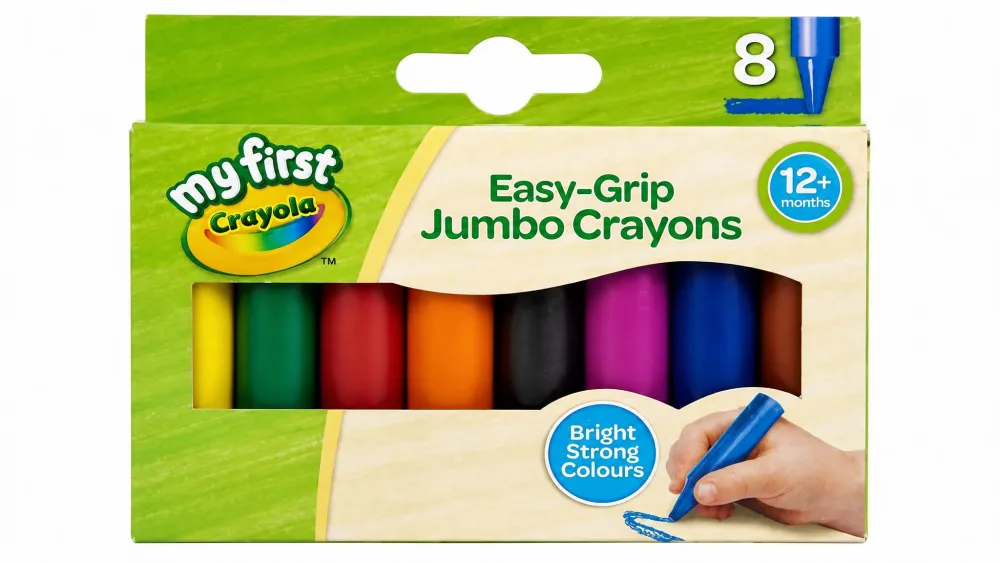
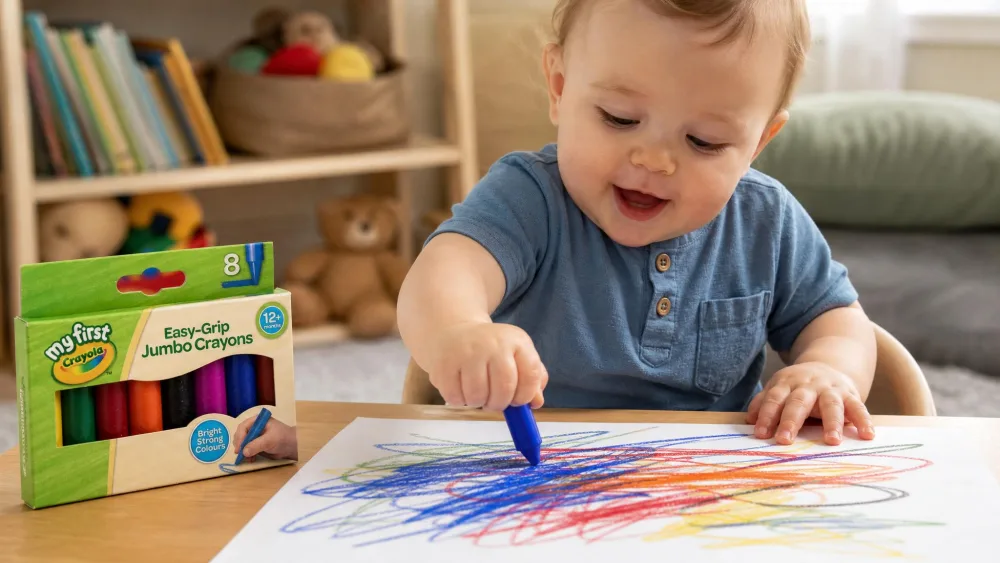
For the newly-walking, fist-gripping stage, these are an easy first jumbo crayon. The Crayola MyFirst Jumbo Crayons are a pack of 8 easy-grip jumbo crayons, non-toxic and rated for ages 12 months and up, with a shape sized to fit toddler palms. There is no paper wrapper to peel, which we appreciated, and they make a solid introduction to color for one- and two-year-olds.
One thing to know before you buy: despite the "jumbo" name, these are short. They run about 7cm, roughly 2 inches, so they are noticeably shorter than a standard jumbo crayon, and many parents are surprised by that. The most common complaints are that they feel small and a touch pricey for what you get, that tips can break or arrive broken, and that they need a firm press to lay down strong color. Manage the length expectation and they are a fine early pick.
Pros
- Easy-grip jumbo shape sized for toddler palms
- Non-toxic, rated for 12 months and up
- No paper wrapper to peel
- Good first color introduction
Cons
- Much shorter than a standard jumbo (about 2 inches)
- Feels small and slightly pricey for the count
- Tips can break or arrive broken
- Needs firm pressure for strong color
5. Cra-Z-Art Washable Crayons (24 Count): Best Value
Why We Picked It
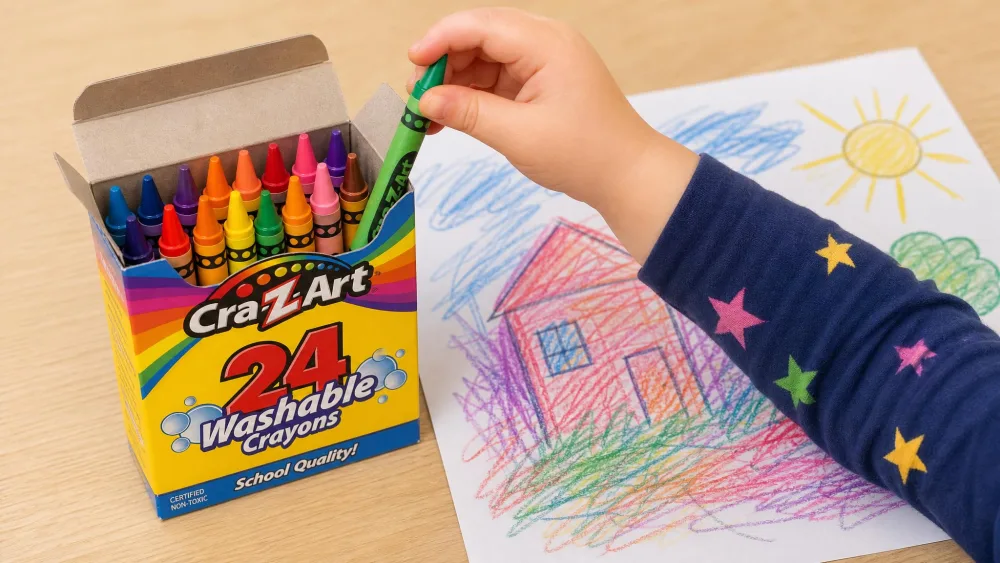
Nothing else here comes close on price. The Cra-Z-Art Washable Crayons give you 24 crayons in 24 colors for around $1.59, and they are certified non-toxic and rated safe for kids ages 3 and up. They wash easily off skin and most children's fabrics, and we found the bright colors do wipe right off walls and clothes. As a big, cheap box to keep stocked, refill, and not worry about losing, it is hard to beat.
The trade-off is build quality. These are thin crayons, and they break easily. Several boxes arrive with crayons already broken or missing from loosely packed trays, and if your toddler presses hard, expect snapped sticks. For a three-year-old with a lighter touch, the value is excellent. For a rough one- or two-year-old, a fat crayon holds up better.
Pros
- Outstanding value: 24 colors for around $1.59
- Certified non-toxic, rated for ages 3 and up
- Washes off skin, fabric, and walls
- Bright, smooth color
Cons
- Thin crayons break easily
- Some arrive broken or short-counted
- Not ideal for heavy-handed younger toddlers
6. Melissa & Doug Jumbo Triangular Crayons: Best for Grip Training
Why We Picked It
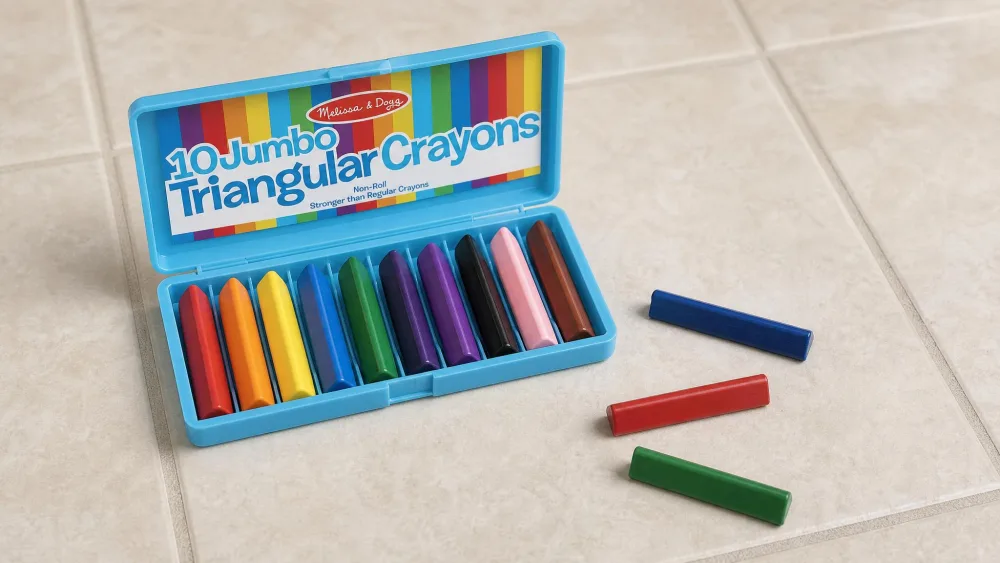
If durability is your top worry, buy these. The Melissa & Doug Jumbo Triangular Crayons are the standout for toughness in our testing: made completely of break-resistant plastic rather than wax, they are close to indestructible and survived drops from the table onto tile. The triangular, non-roll shape also keeps them from rolling off the table and gently promotes a writing-readiness grip. You get 10 crayons in 10 colors, a handy flip-top storage case, and a rating for ages 3 to 8, so they outlast the toddler years.
The plastic build is the trade-off. Colors are less vivid than wax, and you have to press harder to get real saturation, which is the biggest complaint we heard. For grip training and survivability, though, nothing else here matches them.
Pros
- Break-resistant plastic survives repeated drops
- Triangular non-roll shape trains a writing grip
- Includes a flip-top storage case
- Ages 3 to 8, so they last
Cons
- Colors are less vivid than wax
- Needs hard pressure for saturation
- Plastic feel is different from a traditional crayon
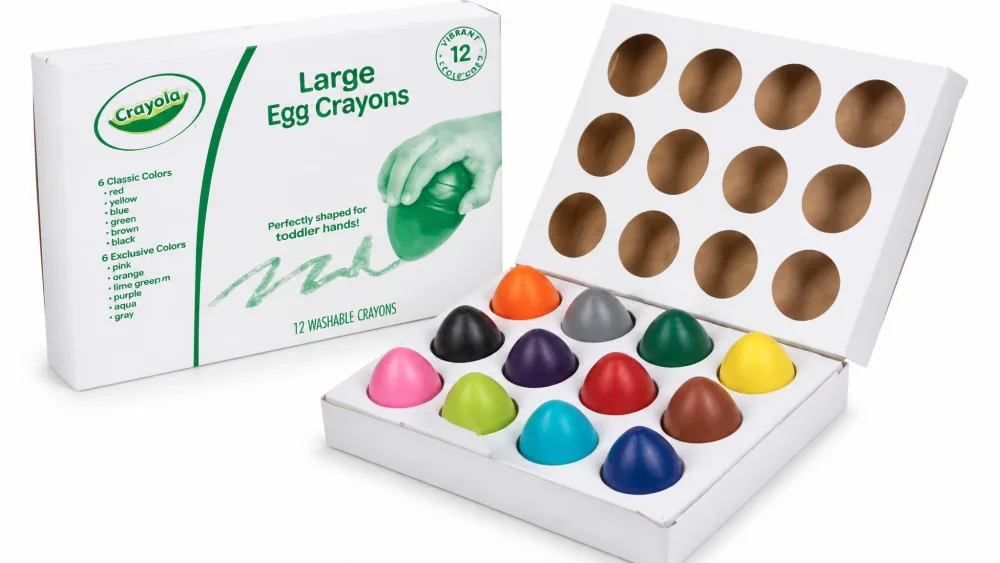
7. Crayola Large Egg Crayons (12 Count): Best for the Youngest Toddlers
Why We Picked It
For a brand-new toddler just learning to grab, the egg shape is ideal. The Crayola Large Egg Crayons are 12 large, palm-grasp, egg-shaped crayons with an ergonomic design that fits toddlers' palms, rated safe and non-toxic for ages 12 months and up. We found the youngest toddlers palm and grip these easily, and the washable design cleans off skin and most washable clothing. The set is also sensory-friendly, and some families use egg crayons in occupational therapy. Like the palm-grip pick, each giant crayon is rated equal to 14 regular crayons.
The downsides echo the palm-grip line. Some of these crayons are hollow and can break or crumble, the colors can be too light to show up boldly, and a few hands will find them too chunky. At around $19.99 for 12, they are a premium buy, but for the 12-month-old just starting out, the grip is worth it.
Pros
- Egg palm-grasp shape suits the youngest toddlers
- Washable off skin and most clothing
- Sensory-friendly, useful for occupational therapy
- Each crayon equals 14 regular crayons
Cons
- Hollow build can break or crumble
- Colors can lay down too light
- Chunky and premium-priced
Crayons vs. Markers vs. Colored Pencils for Toddlers
Crayons are almost always the right first choice for toddlers. They need no lid, they cannot dry out, and light pressure gives light marks, so a toddler cannot flood the page the way a marker allows. Markers are tempting because the color is bold and effortless, but that means big, wet strokes on skin, furniture, and clothes, plus a cap that is a choking risk if it comes off.
Colored pencils ask for fine motor control most toddlers do not have yet. The thin barrel and hard tip need a real pinch grip, and pressing too hard snaps the lead. Save pencils for the preschool years, once a child can hold a triangular crayon comfortably. For now, a chunky washable crayon does everything a toddler needs and forgives everything a toddler does.
Are Crayons Good for Toddler Development?
They genuinely are. Gripping and moving a crayon builds the small hand muscles a child later uses to hold a pencil, do up buttons, and use scissors. Every scribble is fine-motor practice, and the shapes on this list nudge that development along. Palm-grip and egg crayons meet the fist-grasp stage where it is, while triangular crayons encourage the three-finger grip that comes next.
There is more going on than muscle, too. Choosing colors, filling a space, and connecting a hand movement to a mark all support early hand-eye coordination and self-expression. Hand a toddler the right crayon and some paper, and the rest takes care of itself.
Tips for Using Crayons Safely with Toddlers
A few small habits make crayon time safer and calmer. Keep coloring supervised for the under-two crowd, and pack crayons away out of reach between sessions rather than leaving them in a toy bin. Choose fat shapes over thin ones for the youngest children, both for grip and because a chunky crayon is harder to fit in a mouth.
Watch outEven non-toxic crayons are a choking hazard when they break into small pieces. Check chunky, hollow crayons for cracks before each session, and take away any crayon that has snapped into a bite-sized bit.
Set a simple rule that crayons stay at the table, which cuts down on wall art and makes cleanup predictable. Keep a damp cloth nearby for the washable sets, and if you are worried about ingredients, Crayola's ingredient transparency page lists what goes into their crayons.
Frequently Asked Questions
At what age can toddlers start using crayons?
Most toddlers can start around 12 months with the right crayon. Egg and palm-grip shapes suit the fist-grabbing stage from about a year old, jumbo crayons fit well around two as hand control improves, and thinner triangular or standard washable crayons work from about three. Always supervise coloring for children under two.
Are these crayons safe if my toddler eats one?
Every set here is labeled non-toxic, which means a small bite or swallow is not expected to cause harm. Non-toxic does not mean edible, though. Beeswax crayons like Honeysticks feel the safest for the mouthing stage because they are pure beeswax with food-grade colors. If your child swallows a large piece or you have concerns, call your doctor or a poison-control line.
What does "washable" actually mean, do they wash off walls?
Washable crayons are formulated to wipe off skin, most clothing, and painted walls with warm water and a little effort. The Crayola Ultra-Clean and Cra-Z-Art sets genuinely lifted off our walls with water. Beeswax and plastic crayons are usually not marketed as washable, so do not assume they clean off surfaces the same way.
Are beeswax or soy crayons better than paraffin?
They are a good choice if avoiding petroleum-based paraffin matters to you, and pure beeswax crayons like Honeysticks are truly non-toxic with a pleasant natural scent. The trade-offs are cost and washability: beeswax runs pricier and usually is not washable. Paraffin-based washable crayons clean up more easily and cost far less, so the "better" option depends on your priorities.
Do triangular or egg-shaped crayons really help with grip?
Yes. Egg and palm-grip shapes are easy for the youngest toddlers to hold with a full-hand grasp, and triangular crayons have flat sides that gently guide the three-finger grip children need later for pencils. As a bonus, triangular crayons do not roll off the table.
Will toddler crayons break easily?
It depends on the build. Thin value crayons and hollow palm-grip or egg crayons can snap, chip, or crumble when dropped or pressed hard. If durability is your priority, the Melissa & Doug triangular crayons are made of break-resistant plastic and held up to repeated drops onto tile in our testing.
Jumbo vs. regular crayons, which is better for a toddler?
For toddlers, jumbo wins. A thick barrel fits a developing fist far better than a thin one, is harder to snap, and is less likely to fit in a mouth. Move to thinner regular or triangular crayons around age three, once your child is building a pinch grip.
Final Thoughts
If you want one set to start with, the Crayola My First Palm Grip Crayons balance grip, washability, and safety better than anything else we tried, even with their so-so durability. For a baby still mouthing everything, the pure-beeswax Honeysticks buy the most peace of mind. When cleanup is your worry, the Crayola Ultra-Clean washable set truly wipes off walls, and for a near-indestructible crayon that also trains a grip, the Melissa & Doug triangular set is the toughest on the list.
Match the crayon to your toddler's age and habits, keep coloring supervised and at the table, and let the scribbling begin. The right first crayon is simply the one your little one can hold, that survives the drop, and that washes off when it lands somewhere it shouldn't.