7 Best Crayon Sharpeners for Kids and Classrooms (No Broken Tips)
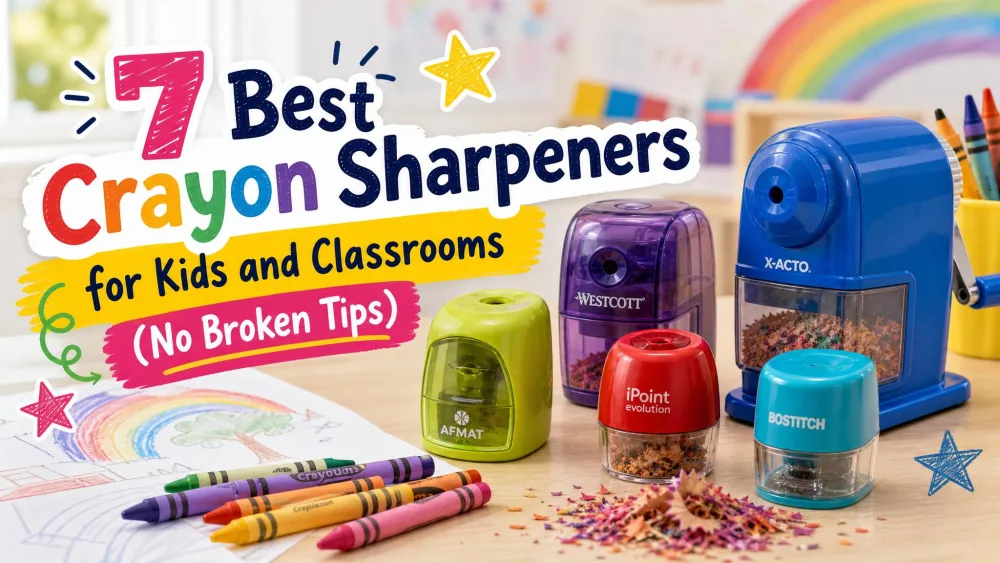
Nothing derails a coloring session faster than a broken crayon tip. Push a fat wax crayon into a cheap sharpener and you get a snapped point, a jammed blade, and shavings scattered across the table. Regular pencil sharpeners only make it worse, because crayons are soft wax, not brittle graphite. We handed our five- and eight-year-old a shoebox of stubby crayons and worked through seven sharpeners at our kitchen table, from a classroom twist model to a rechargeable electric. Here's what actually keeps a clean, even point, and what you'll want to look for.
Quick Comparison Chart
Here's how the seven picks compare; the full reviews follow below.
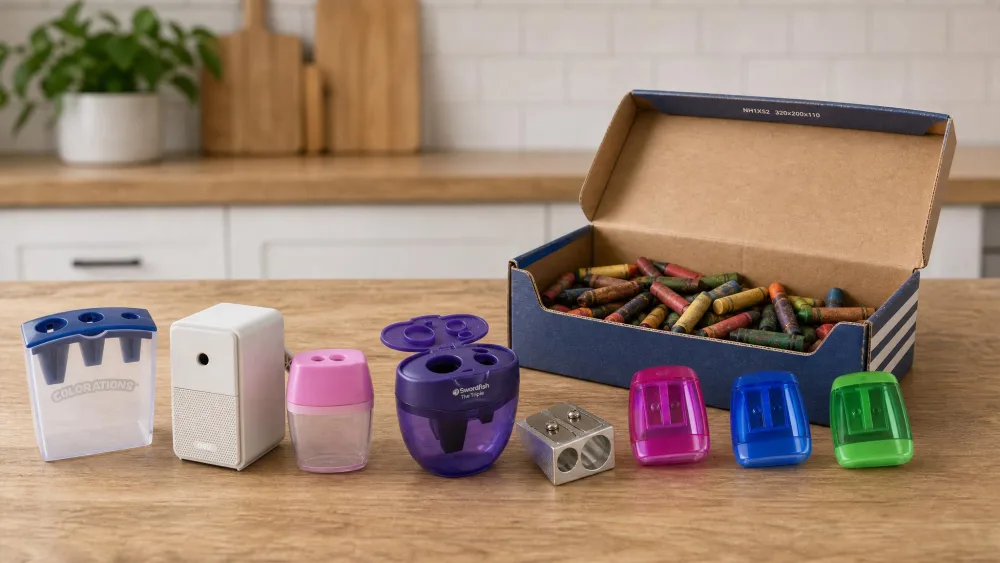
| Model | Type | Best for | Holes & crayon sizes | Key spec | Price |
|---|---|---|---|---|---|
| Colorations Universal | Manual twist | Classrooms | 3 holes: standard, large, jumbo | Ages 3+, plastic safety blade | Around $5 |
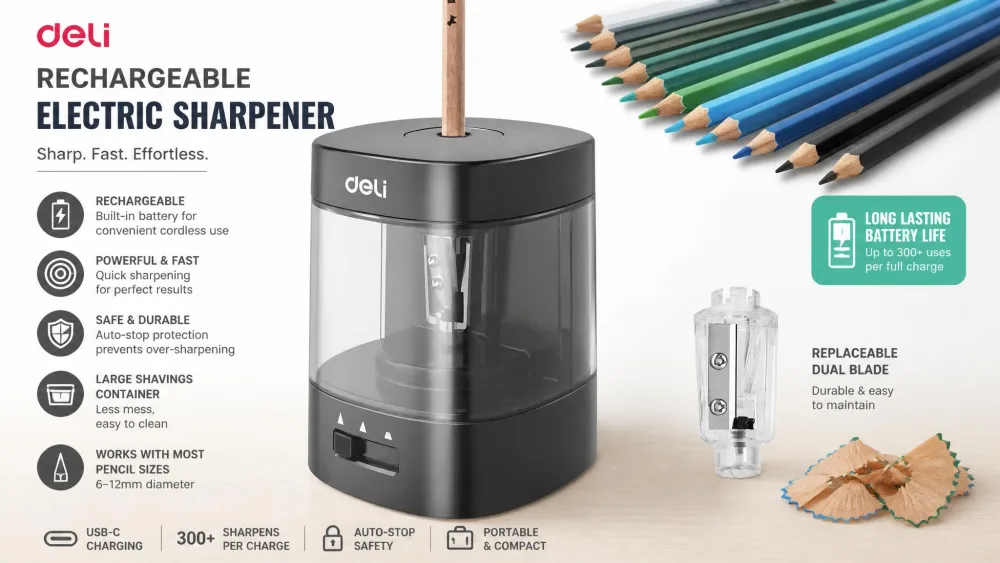
| Deli Rechargeable Electric | Electric (USB) | The electric pick | 1 auto hole, 6.9–12 mm (standard & large) | 2000 mAh, 5 settings, auto-stop | See price |
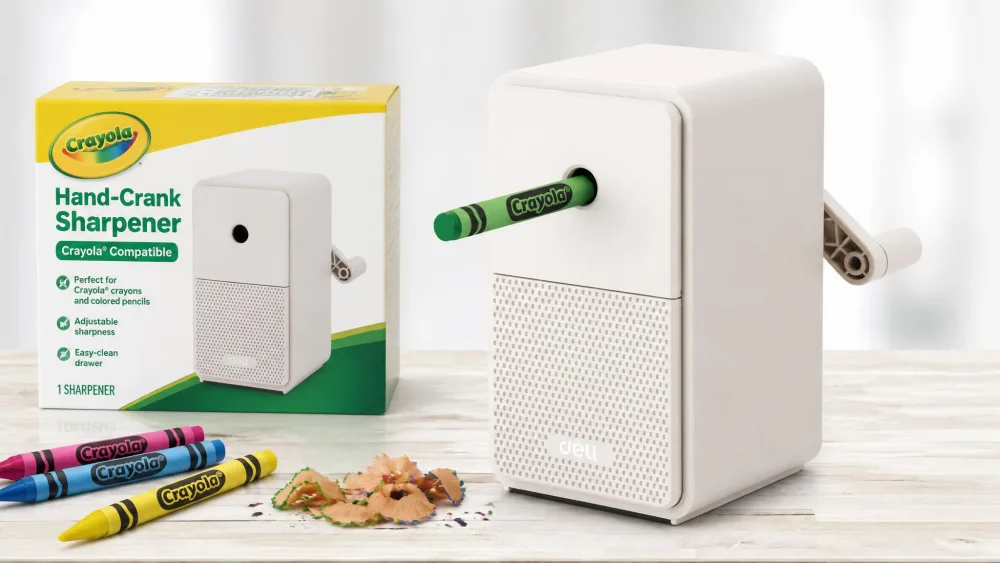
| Crayola-Compatible Hand-Crank | Manual hand-crank | A satisfying crank | 1 hole (standard) | Removable shavings drawer | See price |
| Westcott 2-Hole (15234) | Manual | Crayons + pencils | 2 holes, 0.8 cm / 1 cm | Steel blades, clear reservoir | Around $4 |
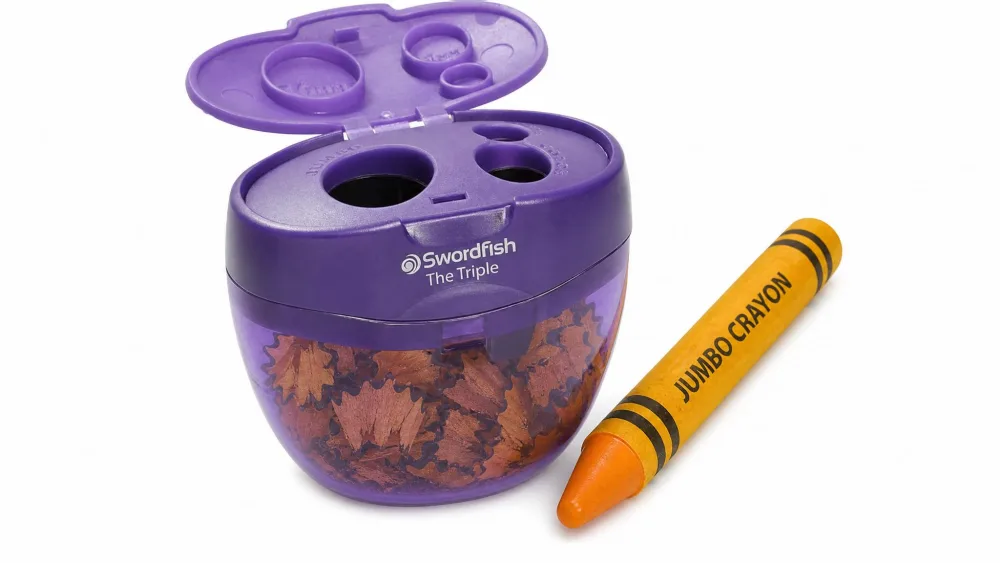
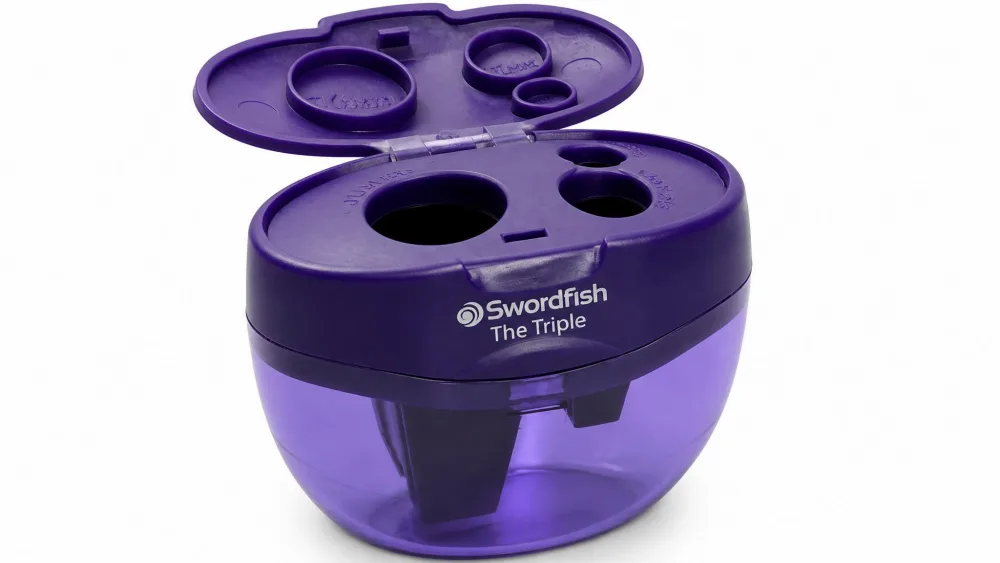
| Swordfish Triple | Manual canister | Jumbo crayons | 3 holes: 8 / 11 / 16 mm | 16 mm jumbo hole, canister | See price |
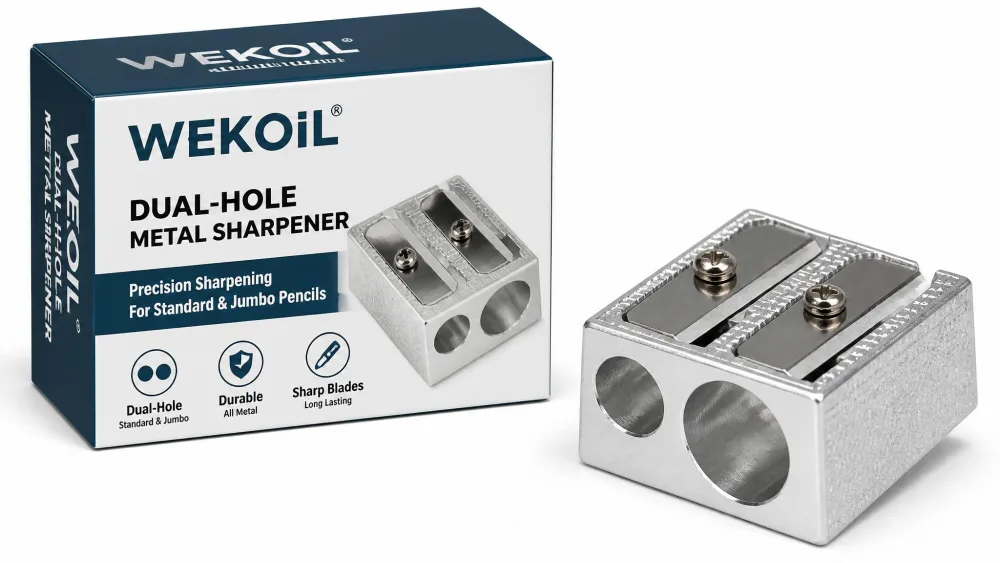
| WEKOIL Dual-Hole Metal | Manual (metal) | Budget | 2 holes: 8 / 11 mm | Aluminum body, steel blade | See price |
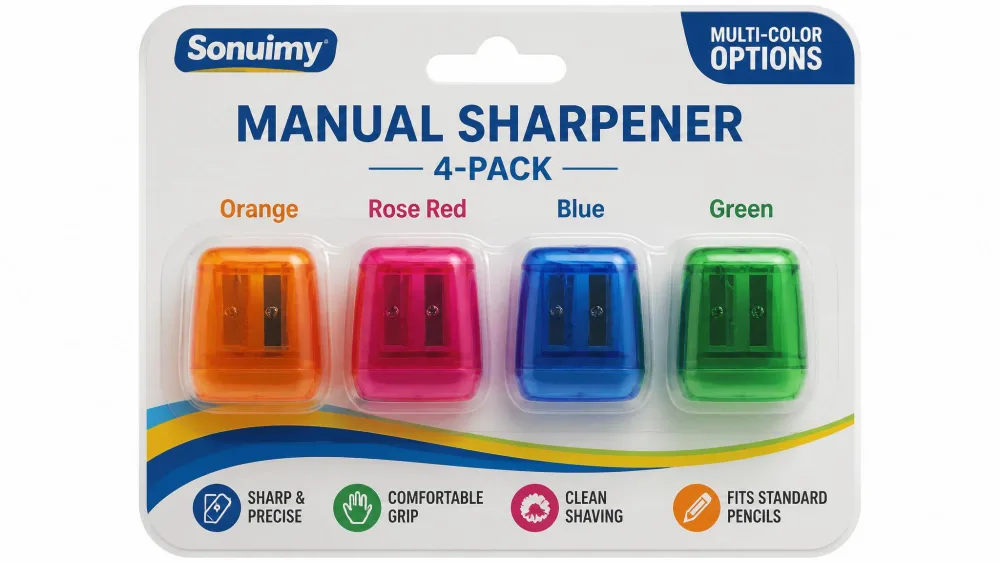
| Sonuimy 4-Pack | Manual (multipack) | Value multipack | 2 holes (dual size) | 4 sharpeners per pack | See price |
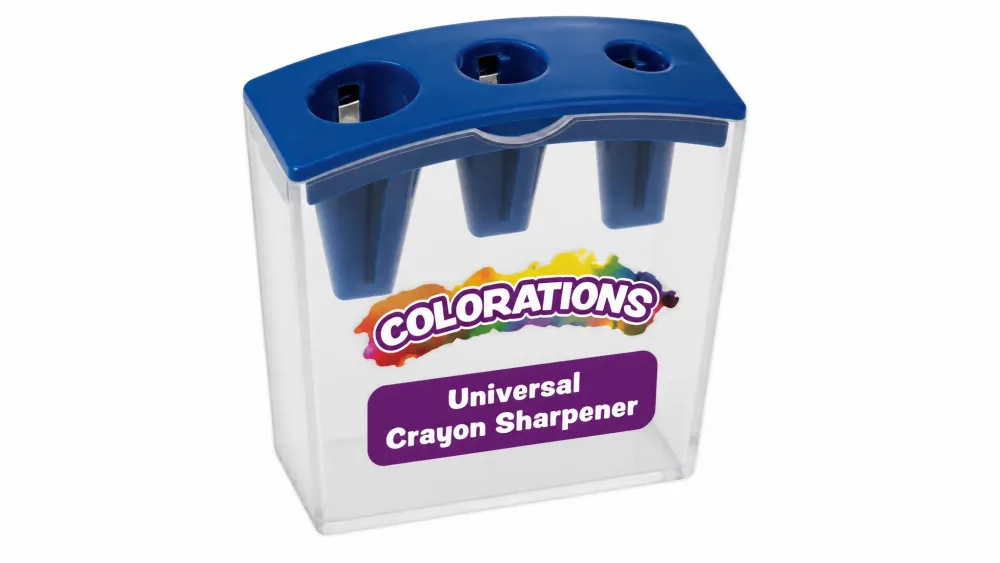
Colorations Universal Crayon Sharpener — Best for Classrooms
For a classroom or a busy craft bin, this is the one to hand a whole room of kids. It's a manual twist sharpener with 3 holes sized 0.31", 0.44", and 0.5", so one compact body (about 2.5 inches tall) covers standard, large, and jumbo crayons. The blade is durable plastic with no exposed metal, so it's rated for ages 3+ and safe for our five-year-old alone. One habit matters: peel back a little of the paper wrapper first, or it balls up and jams. It lists around $5, though prices drift by retailer.
Pros
- 3 holes fit standard, large, and jumbo crayons
- Child-safe plastic blade, no exposed metal
- Tiny and light for desks or backpacks
Cons
- Manual twisting is slow for a big batch
- Plastic blade's life under heavy use is unproven
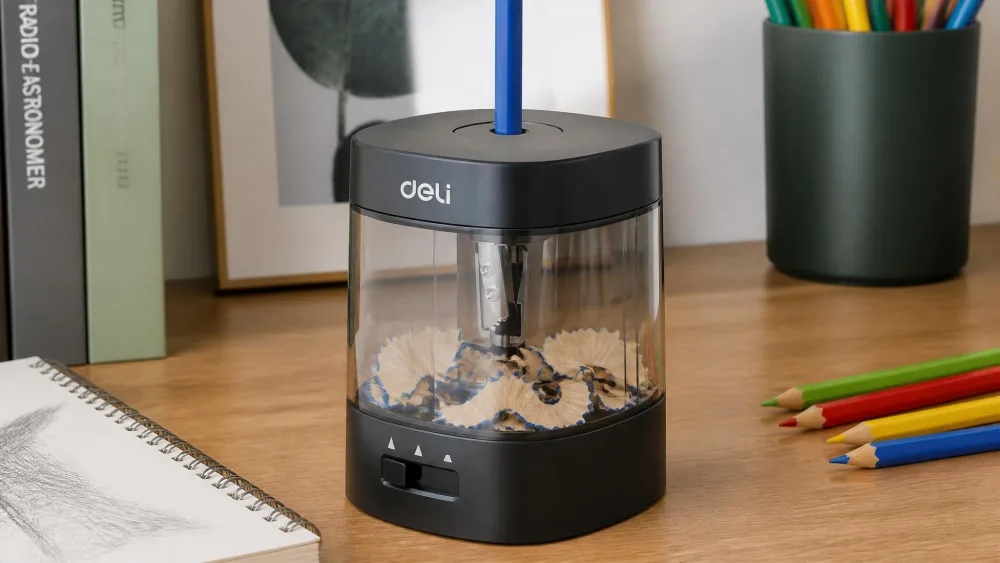
Deli Rechargeable Electric Sharpener — Best Electric
When you've got a whole box of stubs to restore at once, an electric earns its place. The Deli is USB-rechargeable, runs on a 2000 mAh battery, and charges fully in about 1.5 hours. Drop a crayon in and it sharpens in around five seconds, then auto-stops so nobody grinds a fresh crayon to a nub. It's built for barrels 6.9 to 12 mm, which covers standard and large crayons and colored pencils, but not true jumbo crayons. Like most electrics, it wants a hand holding it steady, and even the low-noise motor hums in a quiet room. The anti-slip base kept it planted, and the power cuts off when the shavings box opens.
Pros
- Fast, about five seconds a crayon
- Auto-stop prevents over-sharpening
- Safety cutoff when the shavings box opens
Cons
- Won't fit true jumbo crayons (14 mm)
- Needs a steady hand and hums, not for toddlers
Crayola Hand-Crank Crayon Sharpener — Best Manual Crank
This is a hand-crank sharpener sold as compatible with Crayola crayons, not a Crayola-made product, but it's the crank our kids reached for most. You feed a crayon into the single hole and turn, and the auto-feed centers it so it sharpens evenly instead of snapping the core. Shavings drop into a removable drawer that empties over the trash. The catch: the light plastic body wants two hands, so steady it for a younger child. For restoring a jar of dull crayons to a clean point, the crank is satisfying and mess-free.
Pros
- Auto-feed centers the crayon for an even point
- Removable drawer empties cleanly
- Light and travel-friendly
Cons
- Wants two hands to hold steady
- Single hole, one crayon size at a time
Westcott 2-Hole Pencil & Crayon Sharpener — Best Dual-Purpose
For one small tool that handles both crayons and #2 pencils, the Westcott (model 15234) does double duty. It has 2 holes, 0.8 cm and 1 cm across, with stainless-steel blades and a translucent reservoir that keeps shavings from scattering. It's pocket-sized and light-duty. Our five-year-old figured it out with no coaching, because a handheld sharpener needs almost no fine-motor control. It lists around $4, though multipack pricing varies. Just know it's a standard-crayon-and-pencil tool, not a jumbo sharpener.
Pros
- Sharpens crayons and #2 pencils in one tool
- Steel blades and a clear, mess-catching reservoir
- Easy for a five-year-old to use alone
Cons
- Light-duty, not built for jumbo crayons
- Assorted colors aren't selectable
Swordfish Triple 3-Hole Sharpener — Best for Jumbo Crayons
Jumbo crayons defeat most sharpeners. A standard crayon is about 8 mm across and a large one about 11 mm, but a jumbo runs around 14 mm and won't fit a normal hole, so it jams at the opening. The Swordfish "Triple" solves that with 3 holes sized 8, 11, and 16 mm, and the 16 mm hole clears a jumbo with room to spare. It's a canister design, so shavings collect in a translucent barrel that shows when it's full. The blades are inset so little fingers stay clear, and tamper-resistant screws keep kids from popping them out.
Pros
- 16 mm hole fits true jumbo crayons
- Canister shows when it's full
- Inset blades and tamper-resistant screws
Cons
- Manual, slower than an electric for batches
- Canister smaller than a classroom bin needs
WEKOIL Dual-Hole Metal Sharpener — Best Budget
Most cheap sharpeners are all plastic, which is exactly what cracks when a kit gets dropped one too many times. The WEKOIL spends its budget on an aluminum-alloy body around a high-grade steel blade, so it shrugs off drops that break flimsier models. It has 2 holes, 8 mm and 11 mm, covering standard crayons, large crayons, and pencils. A small shavings box clips on underneath with a clear lid. It sells cheap in bulk packs. It won't take a true jumbo, but for everyday sizes it's hard to beat for the money.
Pros
- Metal body survives drops better than plastic
- Steel blade and a clear shavings box
- Cheap when bought in bulk
Cons
- 11 mm hole won't fit true jumbo crayons
- Basic twist action, nothing automatic
Sonuimy Manual Sharpener 4-Pack — Best Value Multipack
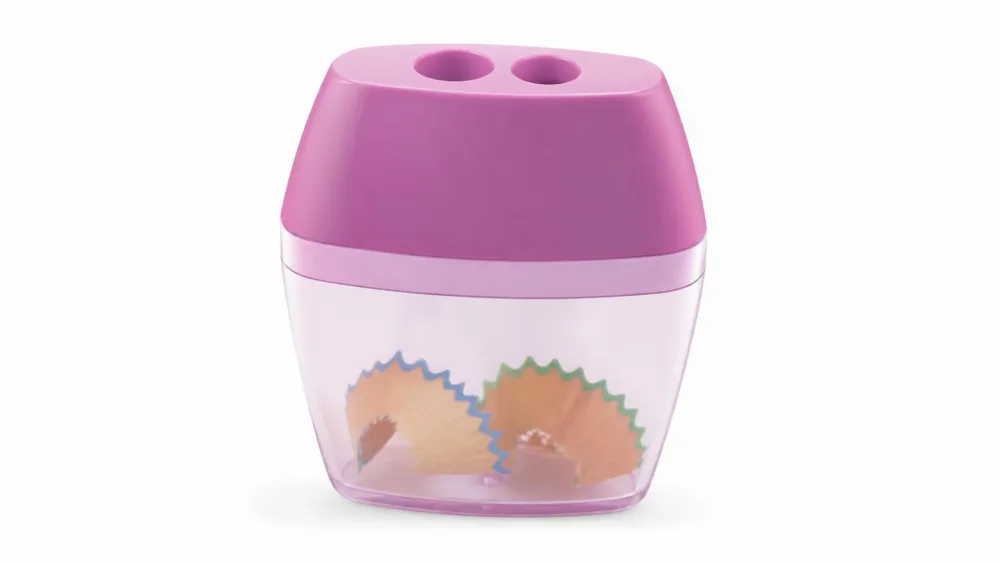
When you need a sharpener in every room, a 4-pack beats one nice unit. Sonuimy gives you 4 dual-hole handheld sharpeners in four colors, each with two hole sizes and a removable box with a clear lid. Be honest about what a cheap multipack is: semi-disposable classroom stock, not a heavy-duty tool. The plastic housings crack if dropped enough, the blades dull faster, and sharpness can vary between units in a bulk set. For scattering around the house, though, the value is genuine.
Pros
- Four sharpeners cover the whole house
- Lidded boxes keep shavings contained
- Four colors are easy to tell apart
Cons
- Plastic shells crack if dropped repeatedly
- Blade sharpness can vary between units
How to Sharpen Crayons Without Breaking Them
The best fix for broken tips costs nothing: freeze the crayons first. We stuck a shoebox of stubs in the freezer for about an hour, and the hardened wax sharpened to a smooth point instead of crumbling. Frozen crayons barely break, so a whole box loses only a tip or two. Two more habits help. Hold the crayon firmly and push it straight in, because if it spins loosely in the hole, the tip shears off. And peel back a little of the paper wrapper first, so it doesn't ball up and clog the blade. Sharpen over a trash can and empty the tray often, since soft wax shavings pile up fast.
Parent tipPop your crayons in the freezer for an hour before sharpening. Cold, hardened wax cuts to a clean point instead of crumbling, which is the difference between a smooth tip and a snapped one.
What to Look For in a Crayon Sharpener
A few features separate a sharpener that lasts from one you'll toss by spring.
Manual vs. Electric
Manual sharpeners are quiet, cheap, and need no charging, and a simple handheld one is intuitive enough for a five-year-old. Electric models like the Deli, or dedicated crayon electrics from brands like X-ACTO, sharpen in seconds and shine on a big batch, but they need a steady hand and aren't right for the youngest kids. Reach for an electric when volume is the problem.
Crayon Size Compatibility (Standard, Large & Jumbo)
Match the hole to the barrel. A standard crayon is about 8 mm across, a large one about 11 mm, and a jumbo around 14 mm. Crayola's standard, large, and jumbo crayons set the sizes most brands follow. If your kids use fat jumbo crayons, you need a wide hole like the Swordfish's 16 mm, or the crayon jams.
Blade Quality & Durability
Steel blades stay sharp longer than plastic ones, though a plastic blade with no exposed metal is safer for the youngest hands. A metal body, like the WEKOIL's aluminum shell, survives drops that crack all-plastic sharpeners. Blades dull faster on wax than on graphite, so treat a cheap multipack as semi-disposable and a metal or electric unit as the keeper.
Shavings Collection & Mess Control
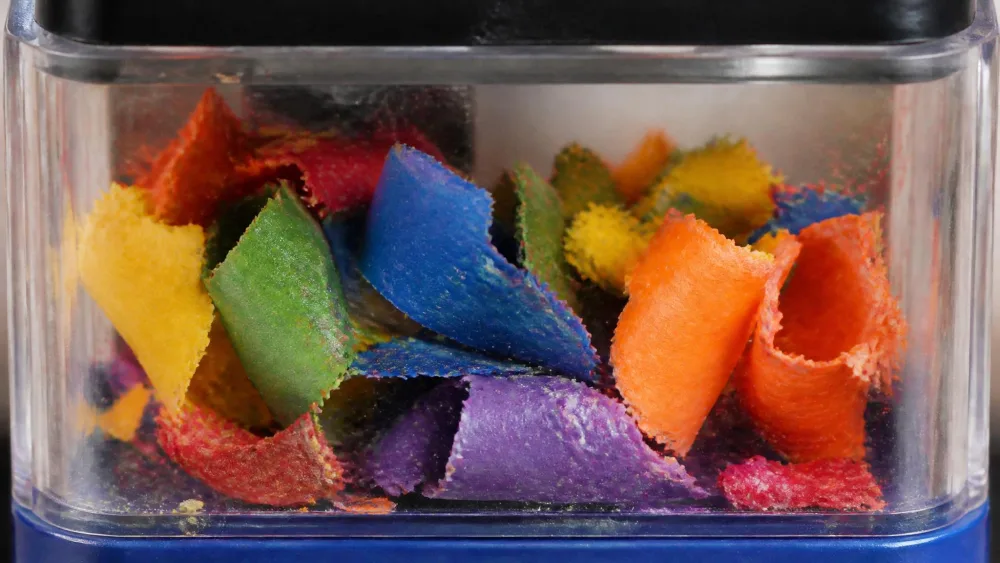
Sharpening crayons is messier than pencils, because soft wax shavings clump and pile up fast. Look for an enclosed container with a clear lid or a translucent canister, so you can empty it before it overflows. Clogging is the most common way a cheap sharpener dies, so an easy-open box makes clearing wax far easier.
Kid-Safety Features
For young kids, look for inset blades with no exposed metal, tamper-resistant screws, and, on electrics, a motor that cuts off when the lid opens. It's worth checking the crayons are non-toxic too: US art materials must state they conform to ASTM D-4236, and the ACMI AP seal means a toxicologist found nothing in them toxic to children.
Watch outDon't reach for a regular pencil sharpener on wax crayons. Its steep blade angle shears the soft wax unevenly, snaps the tip, and clogs almost immediately.
Ease of Use & Portability
The best sharpener is the one your kids will use without help. Handheld twist models are simplest and pack into any bag, a hand-crank needs two hands on the table, and an electric is fastest but wants a flat spot and a charge. Pick the format that fits where it lives.
Frequently Asked Questions
Can I use a regular pencil sharpener on crayons?
It's not a good idea. Crayons are soft wax, not brittle graphite, so a pencil sharpener's steep blade angle shears the wax and snaps the tip, and the wax clogs the blade fast. A crayon sharpener uses a wider angle and bigger holes made for the soft core.
How do I sharpen jumbo or large crayons?
Match the hole to the crayon. Large crayons are about 11 mm across and jumbo ones about 14 mm, so they won't fit a standard 8 mm hole. Use a sharpener with a wide hole, like the Swordfish Triple's 16 mm opening, or the fat crayon jams.
Are electric crayon sharpeners worth it for kids?
They're worth it when volume is the problem. An electric restores a whole box in minutes and auto-stops before it over-grinds a crayon. But it needs a hand to hold it steady and hums a little, so it's better run by a parent or teacher than handed to the youngest kids.
How do I clean a clogged crayon sharpener?
Wax buildup is the usual culprit. Empty the shavings tray often, and dig any clumped wax out of the blade with a toothpick or another crayon's tip. Peeling back the paper wrapper first keeps paper from balling up inside, and freezing the crayons cuts down on sticky buildup.
Do crayon sharpeners work on colored pencils too?
Many do. Dual-hole models like the Westcott, WEKOIL, and Sonuimy have a smaller hole for pencils, and the Deli handles them in its 6.9 to 12 mm range. A dual-purpose sharpener saves a drawer slot.
Final Thoughts
There's no single winner; the right sharpener depends on who's using it and where. For a classroom or a busy craft bin, the Colorations Universal covers every crayon size with a child-safe plastic blade. To restore a big box fast, the Deli electric wins, as long as you skip the jumbos. If your kids live in fat jumbo crayons, the Swordfish Triple is the one that fits them. And to keep cheap sharpeners in every room, the Sonuimy 4-pack does the job. Whatever you pick, freeze the crayons first, peel the wrappers, and empty the tray often, and you'll trade broken tips for clean, even points.