7 Best Crayons for 1 Year Olds: Safe, Easy-Grip Picks for Tiny Hands
A crayon that works for a 1 year old is a different thing from a regular crayon. It needs to be non-toxic, chunky enough for a whole-fist grip, and tough enough to survive a drop, a throw, and the occasional bite. Washability helps too, because a first coloring session rarely stays on the paper.
Get those traits right and coloring becomes an easy, mess-free win. We test art supplies at our kitchen table, and for the youngest hands we paired that work with close attention to how each set performs in homes with toddlers. Below are the seven sets we would hand a 1 year old.
Our quick picks
How We Chose the Best Crayons for 1 Year Olds
We test kids' art supplies at our kitchen table, and coloring is part of our daily rhythm. Because our own children are past the toddler stage, we did not stage live infant testing. Instead, we scored each set on the four things that matter most at 12 months: safety and materials, grip and shape, durability, and washability.
To ground the youngest-age findings, we leaned on how these crayons perform in homes with 1 year olds who color, mouth, and toss crayons daily. That is why the durability and washability notes reflect real use, from beeswax sticks that lasted over a year to pebble crayons that survived months of biting and dropping.
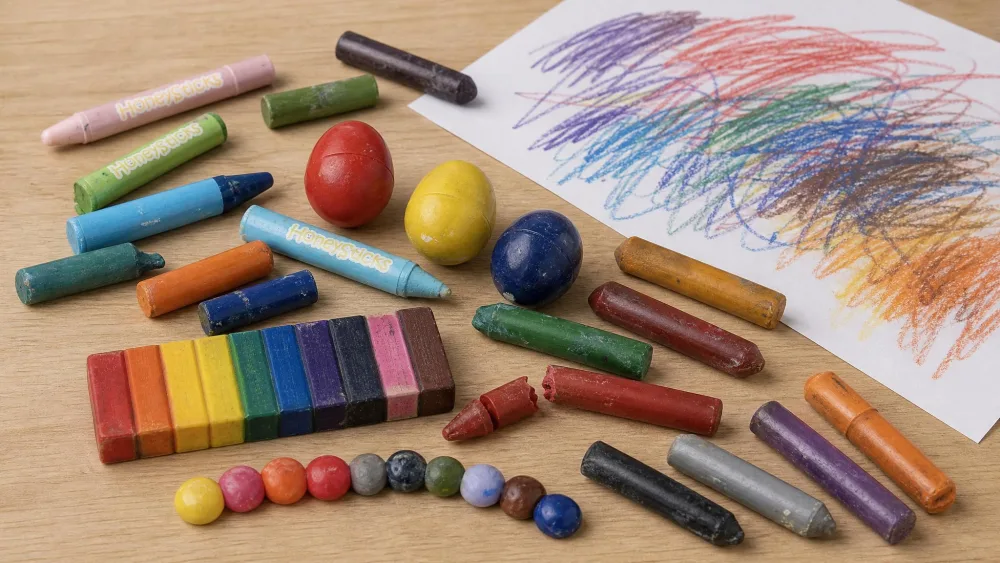
Quick Comparison
Every set is non-toxic and shaped for tiny hands, so the differences come down to material, grip, and cleanup.
| Product / Model | Type | Best For | Key Feature | Buy |
|---|---|---|---|---|
| Honeysticks 100% Pure Beeswax | Chunky beeswax stick | Best overall / natural | 100% beeswax, food-grade | Check price |
| eco-kids eco-crayons | Triangular soy + beeswax | Best natural / eco | Non-roll, made in USA | Check price |
| Crayola My First Palm-Grasp | Egg / palm-grasp | Easiest to grip | Washable, ergonomic grip | Check price |
| Crayola My First Jumbo | Jumbo barrel | Best washable | Washable, long-lasting | Check price |
| Wee Can Too Veggie Baby | Square / stackable | Best taste-safe | Edible plant-based | Check price |
| Crayon Rocks | Pebble / tripod-grip | Best value | Virtually unbreakable | Check price |
| Melissa & Doug Jumbo Triangular | Triangular plastic | Best color variety | Break-resistant build | Check price |
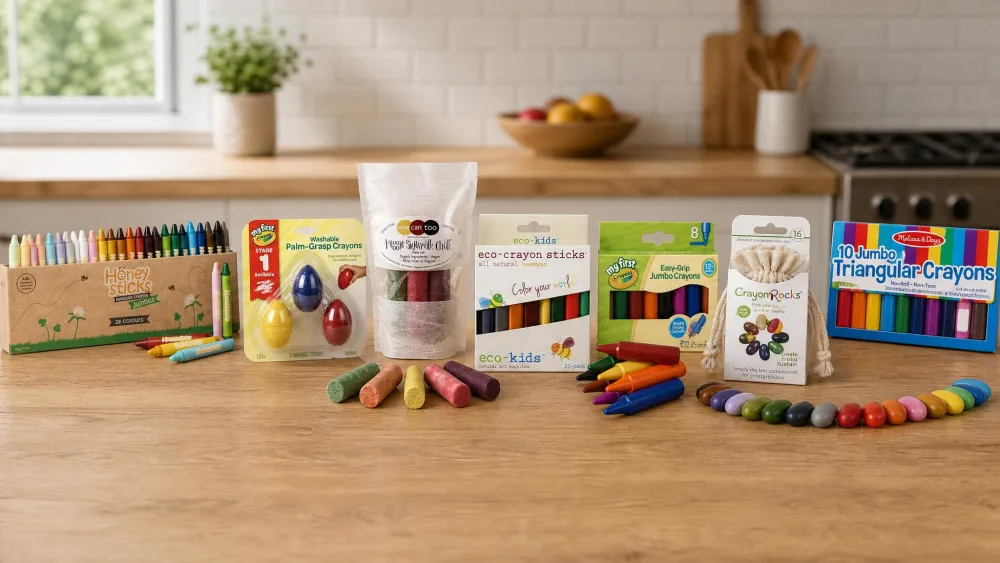
Best Crayons for 1 Year Olds
1. Honeysticks 100% Pure Beeswax Crayons — Best Overall
Why We Love It
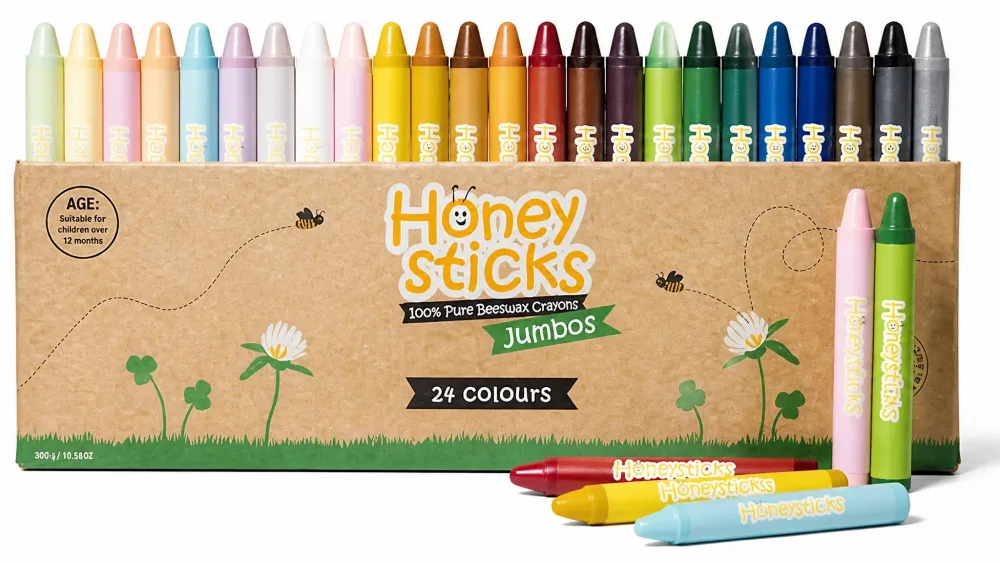
The Honeysticks 100% Pure Beeswax Crayons are the set we recommend first to almost any parent. They are made from 100% pure New Zealand beeswax with food-grade colors, and the chunky palm-grasp shape fits a whole fist. They are rated for ages 1 year and up, and in daily use the triangular version has lasted over a year without cracking while holding up to biting and dropping.
Things to Consider
The soft wax scuffs in loose storage, and the beeswax scent that children enjoy can read as strong to some parents.
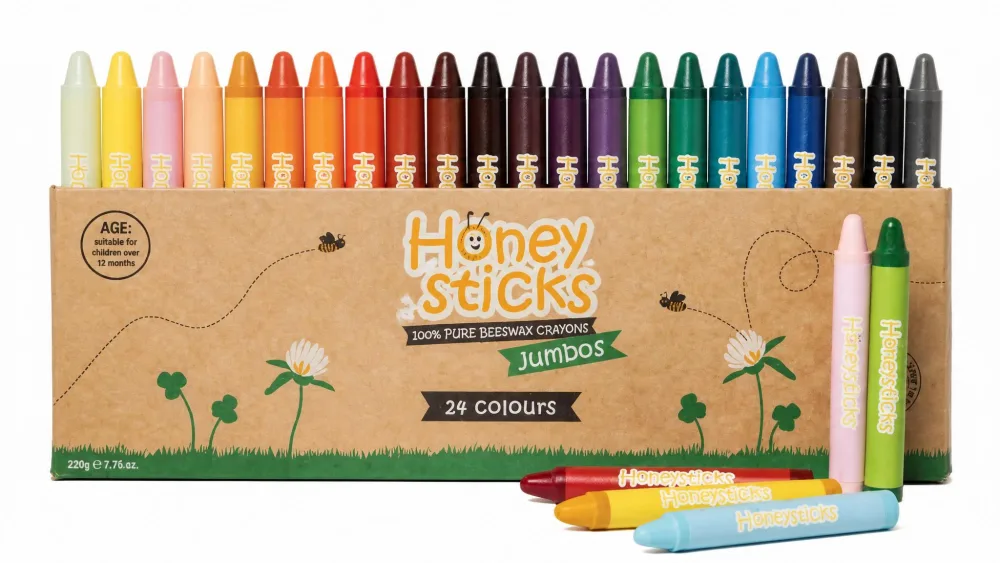
Pros & Cons
Pros
- 100% pure beeswax with food-grade colors
- Chunky palm-grasp shape for little hands
- Break-resistant through a year of daily use
Cons
- Soft wax scuffs in loose storage
- Scent can feel strong to some adults
2. eco-kids eco-crayons — Best Natural / Beeswax Alternative
Why We Love It
If you love the natural angle but want more colors, the eco-kids eco-crayons are a lovely step up from a single-material beeswax set. They are made from beeswax, soy wax, and natural mineral pigments, handmade in Portland, Maine, and the 20-count set offers a wide, muted palette in a three-sided, non-roll shape that stays on the table.
Things to Consider
Natural block crayons can transfer a little color onto small hands, and a 20-color set is a lot of choice for the youngest toddlers, so offer just a few sticks at a time.
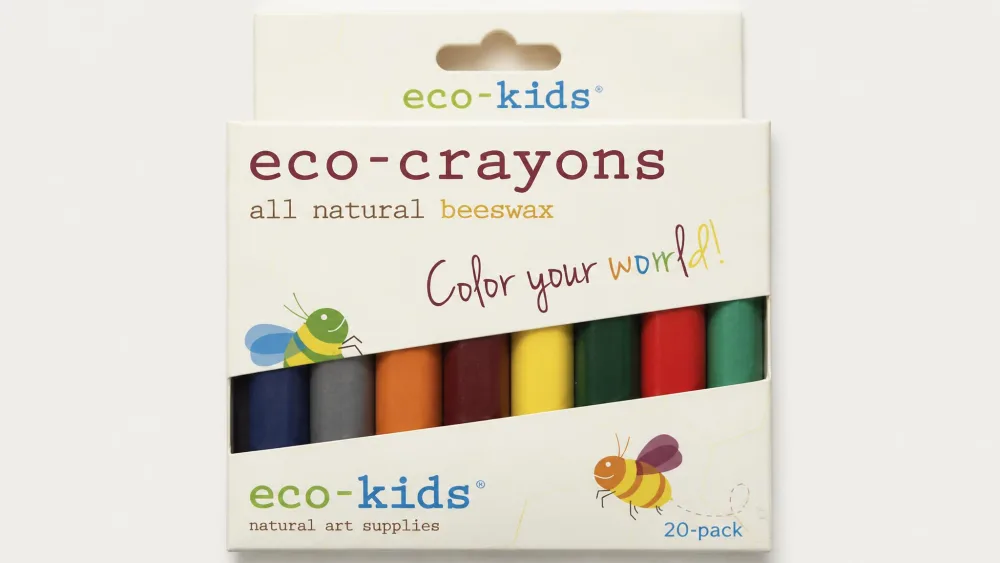
Pros & Cons
Pros
- Natural beeswax, soy, and mineral pigment blend
- Non-roll triangular shape stays on the table
- 20 colors, handmade in the USA
Cons
- Colors can transfer onto little hands
- 20 shades may overwhelm the youngest toddlers
3. Crayola My First Palm-Grasp Crayons — Easiest to Grip
Why We Love It
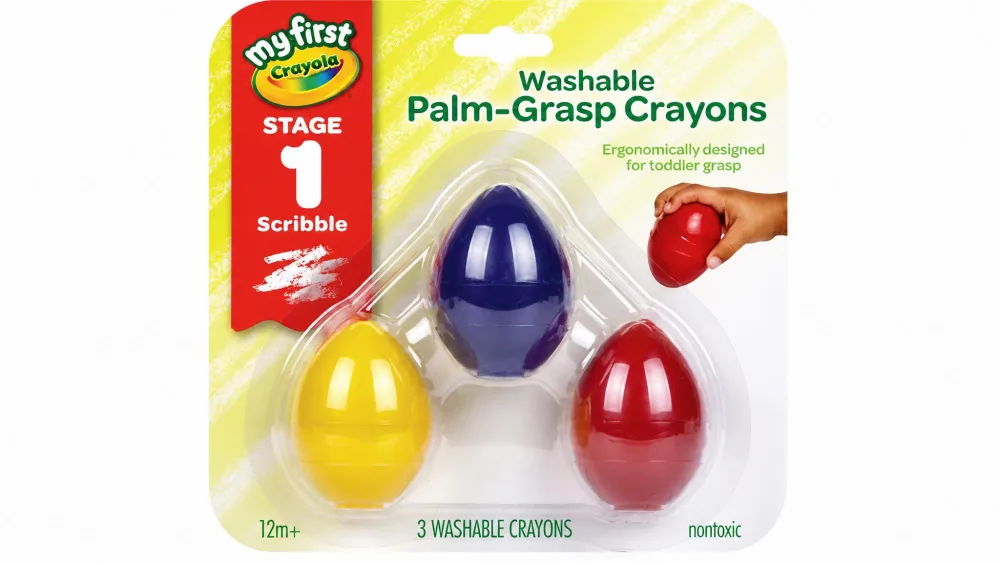
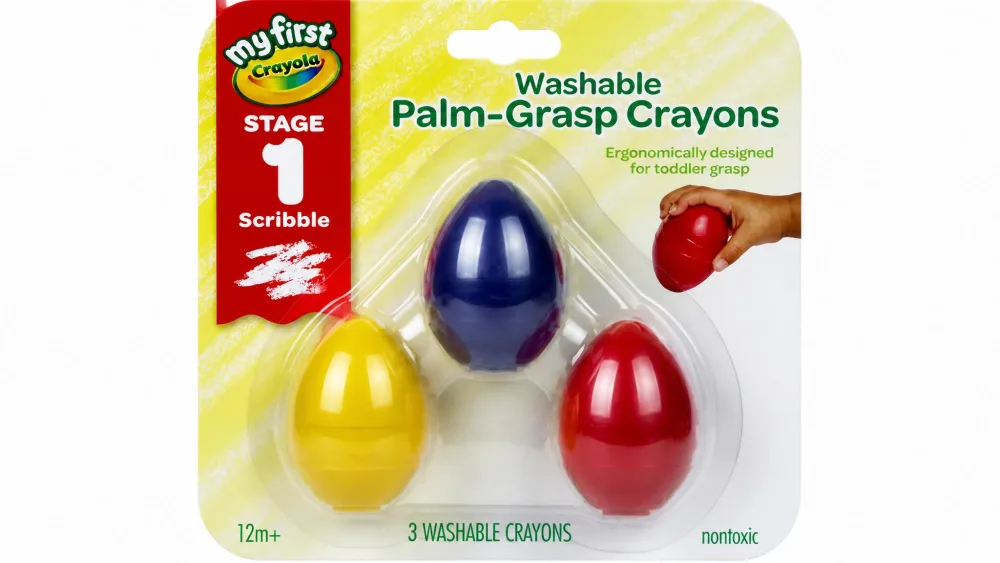
For sheer ease of holding, the Crayola My First Palm-Grasp Crayons are hard to beat. The egg-shaped grip sits naturally in a closed fist, they are washable, non-toxic, and rated for ages 12 months and up, and marks wipe off skin and most washable clothing cleanly.
Things to Consider
The egg-shaped crayons are hollow inside and can break apart under heavy use, and the peanut shape is small enough to fit inside some toddlers' mouths. That does not make them unsafe, but it is a good reminder to keep coloring a supervised, sit-down activity at this age.
Pros & Cons
Pros
- Egg shape fits a first fist grasp
- Washable off skin and most clothing
- Non-toxic, rated for 12 months and up
Cons
- Hollow build can break under hard use
- Small enough to fit in some mouths
4. Crayola My First Jumbo Crayons — Best Washable
Why We Love It
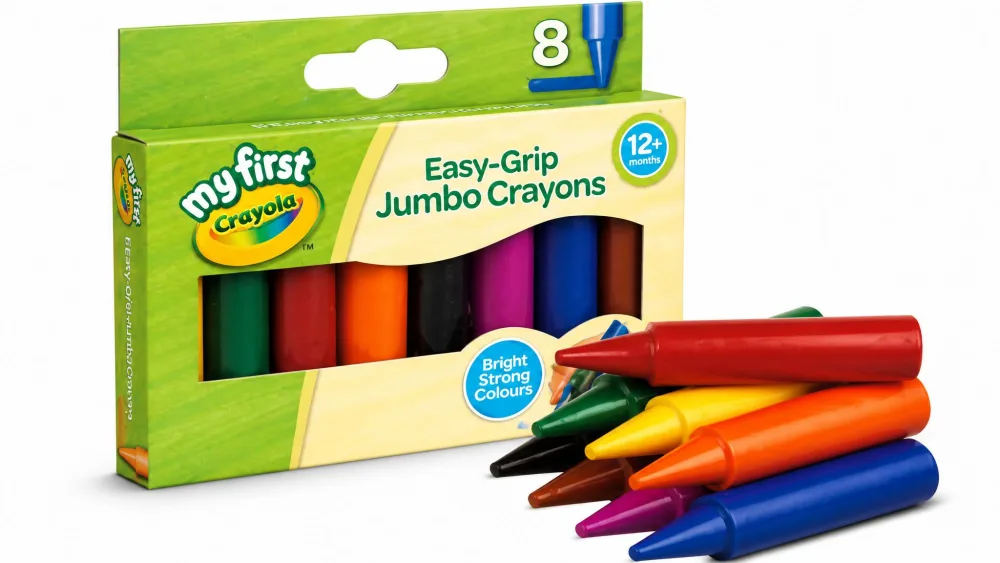
When cleanup is your top worry, the Crayola My First Jumbo Crayons are the reassuring choice. The jumbo, easy-grip barrel is chunky enough for little hands, a washable large-crayon option lifts marks off skin and most fabrics, and they are ideal for kids aged 12 months and up. That washability is the single biggest cleanup relief a first crayon can offer.
Things to Consider
Crayola states that one toddler crayon is equivalent to 14 regular crayons, though that durability figure is a manufacturer marketing claim rather than an independently measured value.
Parent tipFor the fastest cleanup, wipe fresh marks off walls and skin while they are still new. Washable formulas lift most easily before they have a full day to set.
Pros & Cons
Pros
- Genuinely washable off skin and most fabric
- Jumbo easy-grip barrel for little hands
- Bright, classic colors in a neat box
Cons
- Marketing durability claim is not verified
- Fewer colors than larger sets
5. Wee Can Too Veggie Baby Crayons — Best Taste-Safe
Built for the child who mouths everything
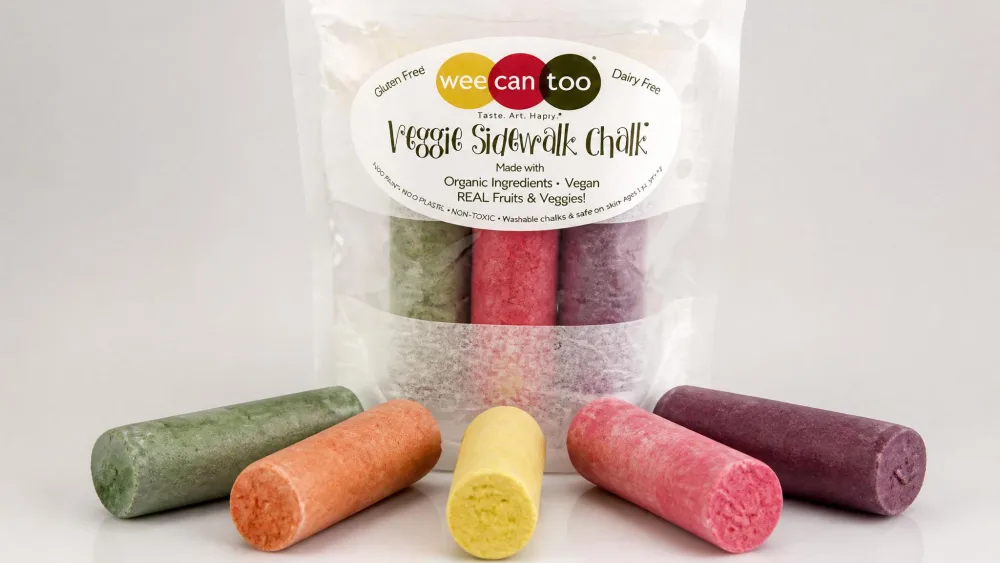
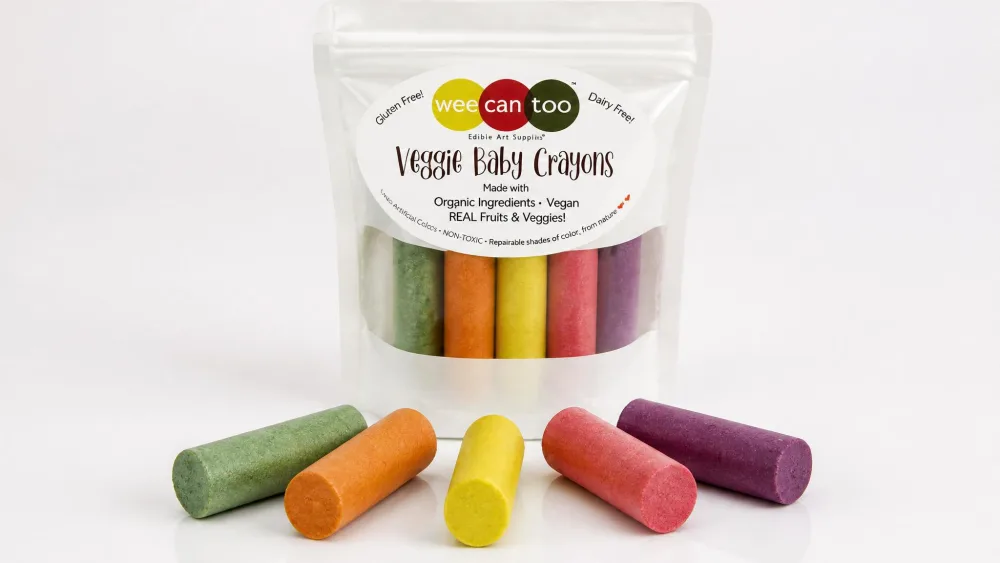
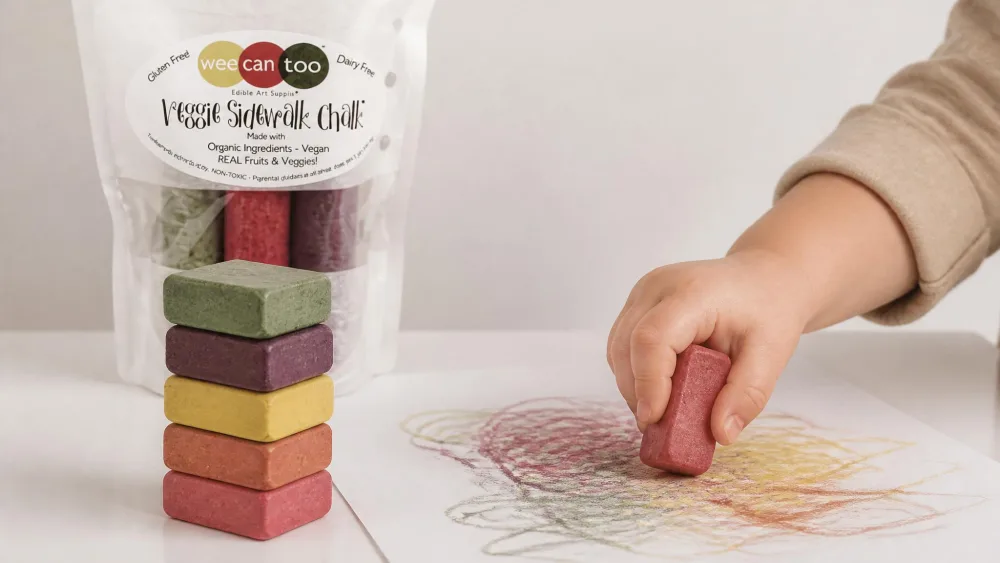
For the child who puts everything in their mouth, the Wee Can Too Veggie Baby Crayons offer the most peace of mind. They are made in the USA from soy wax with organic fruit and vegetable powders, are vegan and formulated to be hand-to-mouth safe, and are designed for children as young as 1 year, with 5 organic colors in gentle fruit scents. Where the picks above lean on shape and washability, this one leads with what happens when a crayon meets a tongue.
Things to Consider
Taste-safe does not mean these are a snack, so keep them in a coloring session rather than a lunchbox. The 5-color palette is small, which is fine for a beginner but limited as your child grows.
Pros & Cons
Pros
- Plant-based, hand-to-mouth safe formula
- Made in the USA, vegan, no wheat or sugar
- Square stackable shape for a palm grip
Cons
- Only 5 colors
- Taste-safe, but still not a food
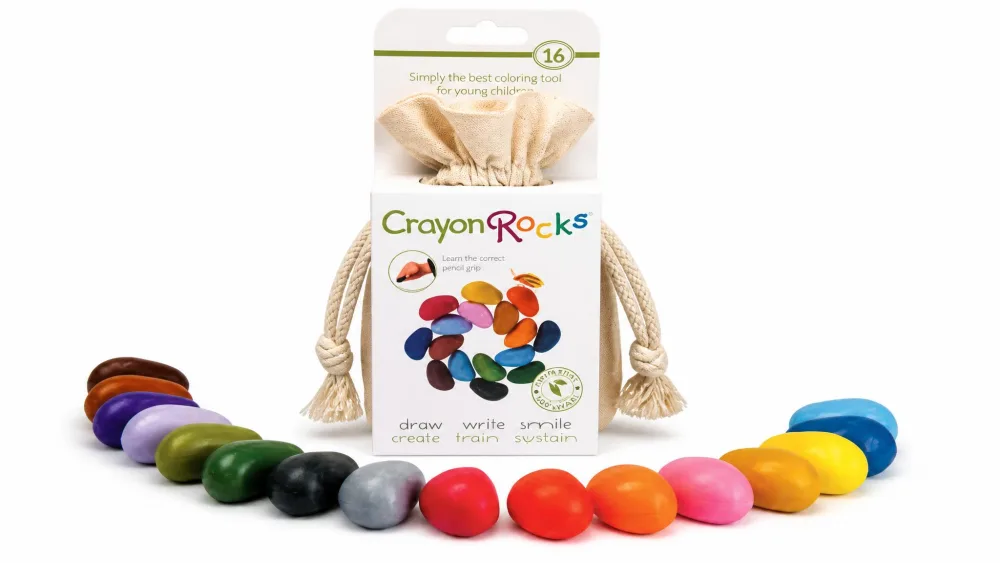
6. Crayon Rocks — Best Value
The set that simply will not quit
If durability is the trait you care about most, Crayon Rocks are remarkable. They are virtually unbreakable, surviving months of biting, throwing, and being stepped on without a chip. Made from soybean wax with natural mineral pigments, the pebble shape trains a proper tripod grip, and the set holds up long after softer crayons crumble. The set we point parents to is the Crayon Rocks 32 Count / 32 Colors, 32 rock-shaped crayons that arrive in a muslin bag.
Things to Consider
The pebble size is the catch, so this set needs supervision for children under 2, who are most likely to mouth them.
Pros & Cons
Pros
- Virtually unbreakable soy-wax build
- Pebble shape trains a tripod grip
- Outstanding long-term value
Cons
- Small size needs supervision under age 2
- Pebble shape is unfamiliar at first
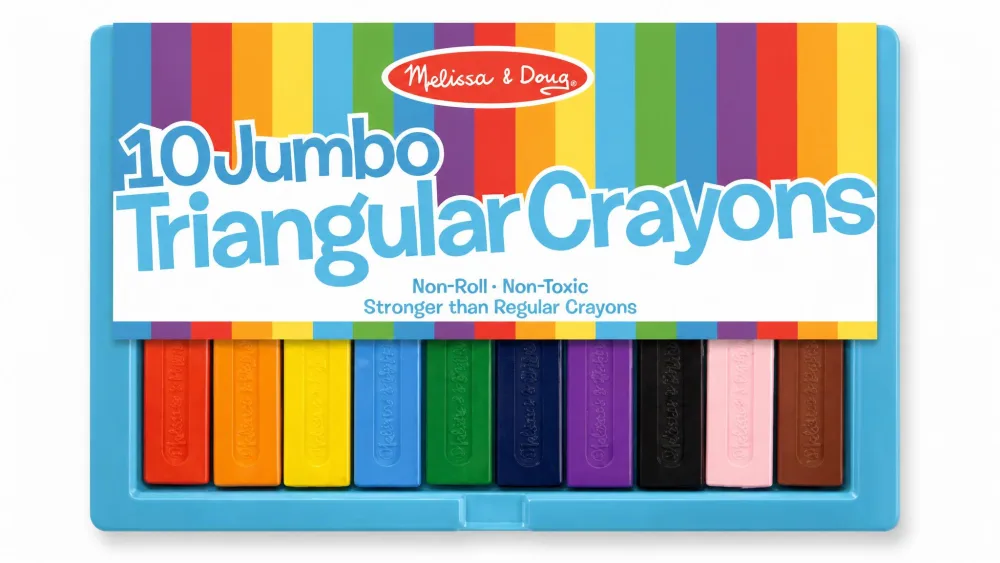
7. Melissa & Doug Jumbo Triangular Crayons — Best Color Variety
The toughest classic-style crayon here
Rounding out the lineup, the Melissa & Doug Jumbo Triangular Crayons are the toughest classic-style crayon on this list. They are made from super-strong break-resistant plastic instead of wax, which makes them genuinely toddler-proof; little hands struggle to break them. The triangular, non-roll shape encourages a tripod grip, and blue and red need a firmer press that limits dark wall marks.
Things to Consider
Because the barrels are plastic, the coloring feel is firmer than soft wax, so the very youngest may need a moment to lay down bold color.
Pros & Cons
Pros
- Break-resistant plastic build
- Non-roll triangular shape trains a tripod grip
- Firmer pigments limit dark wall marks
Cons
- Firmer to color with than soft wax
- Plastic feel differs from a classic crayon
For a 1 year old, the shape and safety of a crayon matter far more than how many colors are in the box.
How to Choose Crayons for a 1 Year Old (Buying Guide)
Choosing a first crayon comes down to four things: safety, grip, durability, and cleanup.
Safety and Non-Toxic Certifications
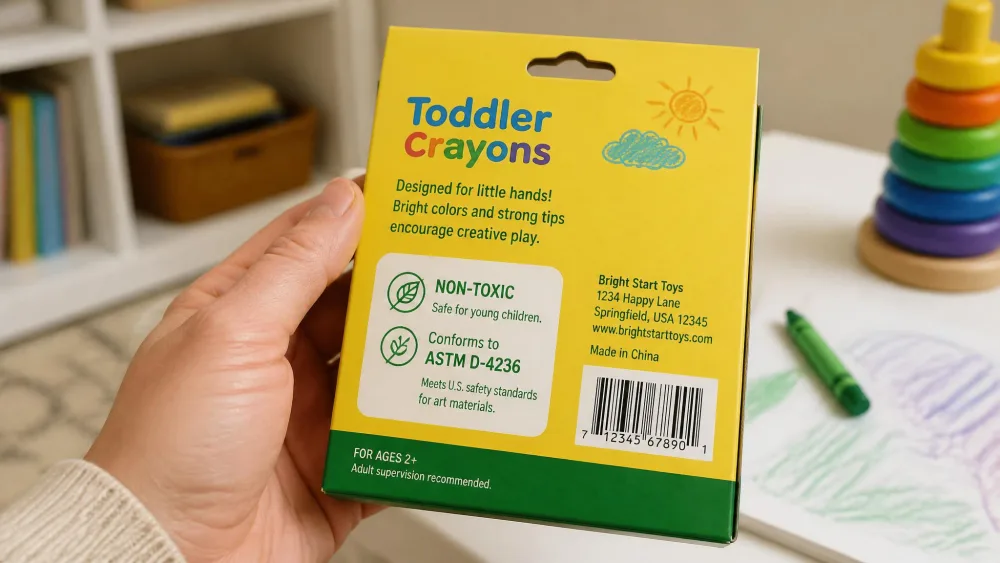
Safety is the whole point at 12 months, because coloring and mouthing often happen in the same breath. Look for a clear non-toxic label, and where a brand offers it, an ASTM D-4236 non-toxic certification. ASTM D-4236 is the standard practice for labeling art materials for chronic health hazards, and a D-4236 mark indicates a toxicologist reviewed the product.
Grip Shape and Size
A 1 year old holds a crayon with a whole fist, not the pincer grip of an older child, so chunky, oversized shapes work best. Jumbo barrels, egg or palm-grasp shapes, square blocks, and triangular non-roll sticks are all built for that early grasp. Triangular and pebble shapes also guide fingers toward the tripod grip your child will use for writing later.
Durability and Break Resistance
Toddlers press hard, drop things, and test whether a crayon will snap. Plastic-barrel and pebble-shaped crayons are the most durable, while soft beeswax sticks trade a little toughness for a cleaner formula. Some stackable crayons ship with a waxy coating that feels stiff at first, then colors more brightly once it wears in.
Washability and Cleanup
Assume the first coloring session will land somewhere other than the paper. Washable crayons wipe off skin and most clothing easily, and that is the single biggest cleanup relief you can buy at this age. For the fewest wall marks, firmer-pigment crayons like triangular plastics leave lighter marks than soft, dark wax.
Parent tipA smaller palette is easier for the youngest toddlers. Sets of 16 or more colors can overwhelm a 1 year old, so starting with a handful of sticks keeps early coloring simple.
Common Mistakes Parents Make
The most common mistake is buying a standard thin crayon for a 1 year old. Slim crayons are built for a pincer grip toddlers do not have yet, so they snap quickly and frustrate little hands. Start with a chunky, oversized shape instead.
The second mistake is chasing color count, when a large palette can overwhelm the youngest toddlers. The third is treating taste-safe crayons as truly edible. Even Wee Can Too, made from food-based ingredients, is not intended as food, so coloring should stay a supervised, sit-down activity. Finally, do not skip the label, because a quick check for a non-toxic mark buys real peace of mind.
Frequently Asked Questions
When can a 1 year old start using crayons?
Many toddler crayons are made for exactly this age, with sets from Honeysticks, Crayola, and Wee Can Too rated for 12 months and up. Around the first birthday, most children can hold a chunky crayon in a full fist and enjoy making marks. Keep sessions short, seated, and supervised.
Are crayons safe or non-toxic if my baby eats them?
The picks in this guide are non-toxic and made for toddlers, and taste-safe options like Wee Can Too use food-based ingredients formulated to be hand-to-mouth safe. That said, no crayon is meant to be eaten, and some grip shapes fit in a small mouth. Always keep coloring supervised.
How do I get dried crayon off a painted wall?
For a washable crayon, a damp cloth with a little dish soap usually lifts most of a fresh mark, and a non-abrasive cleaning eraser handles the stubborn bits. Spot-test a hidden corner first, since matte paint scuffs more easily than satin or gloss.
Are beeswax crayons safe if my toddler has a bee-product allergy?
Beeswax allergies are uncommon but real, so if your child reacts to honey or bee products, skip beeswax sets like Honeysticks and eco-kids. A soy-wax option such as Wee Can Too or Crayon Rocks gives the same natural appeal without any bee-derived content.
How many colors should a first crayon set have?
Fewer than you might expect. A set of five to eight colors is plenty for a 1 year old, who is exploring the act of making marks more than choosing shades. Large 16-plus color boxes can overwhelm the youngest toddlers, so save them for when your child is older.
Final Thoughts: Our Top Pick