How to Kid-Proof Furniture from Crayons and Markers
Crayons and markers turn kids' furniture into a canvas, and the marks always find the pieces you care about most. You can kid-proof furniture from crayons and markers with a simple mix of washable finishes, protective covers, and quick-clean tricks that stop stains before they set. This guide covers both halves of the job: lifting a fresh mark the moment you spot it, and setting up your home so the next scribble barely leaves a trace.
Why Crayon and Marker Marks Are So Common on Kids' Furniture
In our house, the marks rarely appear during planned craft time. They show up when a marker is in reach and the grown-up is busy, so it is a setup problem to fix, not defiance to punish. The surface matters too: crayons are wax-based and wipe off sealed coatings like polyurethane and varnish, but oil and wax finishes let pigment soak in and stain.
What to Do the Moment You Spot a Fresh Mark
With a fresh mark, speed wins. Keep baby wipes where art happens; they cut oily messes and, being alcohol-free, are gentle on wood and laminate.
- Blot, don't scrub, so you are not grinding pigment deeper.
- Wipe with a baby wipe or warm damp cloth, moving with the grain.
- Repeat with a clean cloth, then dry the spot right away.
How to Remove Crayon From Furniture
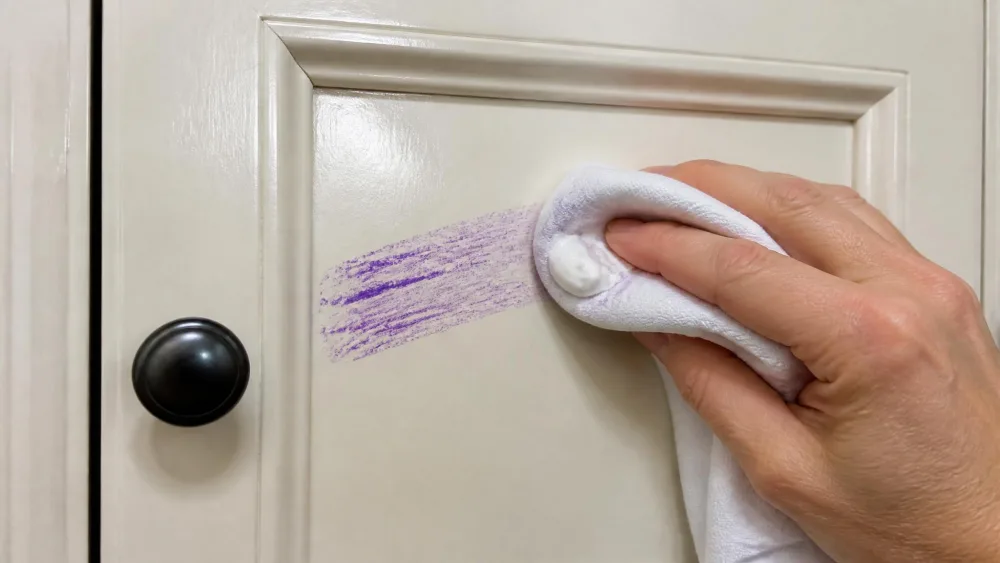
Crayon is the easiest of the three, because the wax sits on a sealed surface. Start gentle and escalate only if needed.
- Wipe with a baby wipe or warm, damp cloth, working with the grain.
- If it lingers, rub on non-gel white toothpaste or paste wax in small circles, then wipe with the grain. Two gentle passes clear almost any crayon mark off a sealed finish.
- Still there? Spray all-purpose cleaner, then sponge with warm water and dish soap, and dry.
For a waxy smear, WD-40 melts crayon off fast, but use it once, since repeated use can stain real wood. A Magic Eraser works too but can dull glossy wood, so press lightly and spot-test first.
How to Remove Marker From Furniture
Marker is two problems. Washable marker is water-based and usually easy; permanent marker is solvent-based and stubborn, especially on unsealed wood.
Washable Marker
- Press a warm, damp cloth flat on the mark for a few seconds.
- Wipe with the grain, then dry immediately with a separate cloth.
- For anything stubborn, add a drop of dish soap and repeat.
A plain warm damp cloth handles most washable-marker marks on sealed wood, as long as you wipe with the grain and dry right away.
Permanent Marker
Permanent marker needs a solvent, and rubbing alcohol is the safest on a sealed finish.
- Dab 70% isopropyl alcohol onto a cotton pad.
- Hold it on the mark briefly, then wipe once with the grain.
- Repeat with a fresh pad until the ink lifts.
Let the finish set expectations: on sealed poly or lacquer the ink usually comes up, but on an oil- or wax-finished piece it only lightens, since the ink soaks into the wood itself.
Here is how the three mark types compare at a glance.
| Mark type | Behavior on furniture | Best removal method | Best prevention method |
|---|---|---|---|
| Crayon | Waxy; sits on a sealed finish and wipes off, but smears if rubbed hard | Baby wipe first; stubborn marks, non-gel toothpaste or paste wax with the grain | Washable crayons on a craft mat in a set art zone |
| Washable marker | Water-based; wipes off sealed surfaces but soaks into bare wood | Warm damp cloth with dish soap, with the grain, dried right away | Washable markers on a craft mat; wipe while fresh |
| Permanent marker | Solvent ink; soaks into unfinished and oil- or wax-finished wood | 70% isopropyl alcohol on a sealed finish, spot-tested first; never acetone or bleach | Store permanent markers closed and out of reach |
How to Fix the Finish After Cleaning Up a Stain
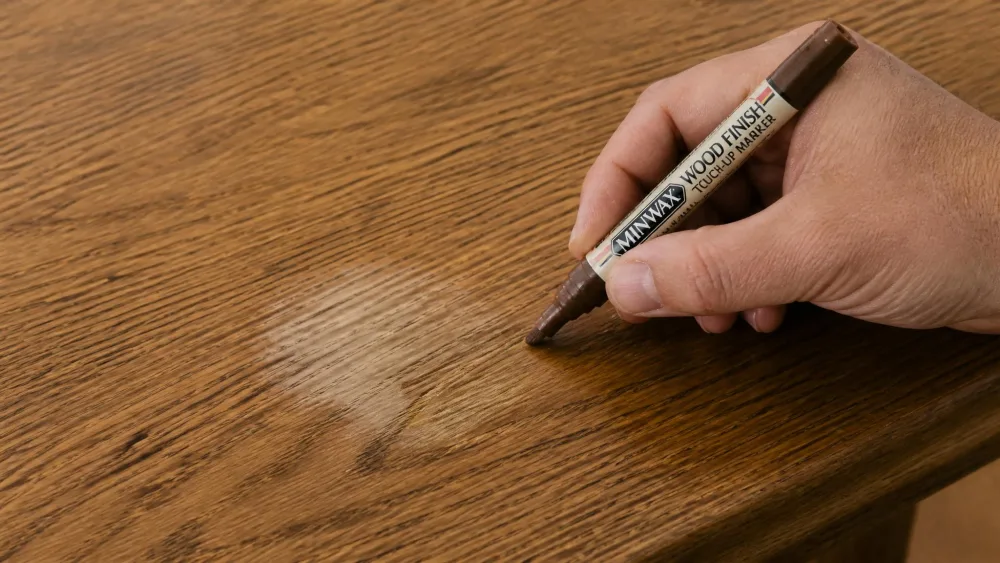
This is the step most people skip. Almost every cleanup leaves a spot that is clean but dull, and a bare patch can look worse than the mark did.
- Let the spot dry completely.
- Run a wood touch-up marker in one light pass with the grain, reaching a few inches into the finish around the spot.
- Add more color only if you need it, since removing touch-up once it sets is hard.
If cleaning exposed a dent, press wood repair wax in, level it flat, and let it harden before coloring over it. Cure time runs roughly 15 to 20 minutes for a typical kit, though it varies.
Mistakes to Avoid When Cleaning Crayon or Marker Off Furniture
A few well-meant fixes do more harm than the mark itself.
Watch outSkip acetone and nail-polish remover, which dissolve most wood finishes, and skip bleach, steel wool, and green scrub pads, which cut through the coating. Rubbing alcohol is generally safe on sealed poly, lacquer, and varnish when used briefly and wiped off, but it can cloud or soften wax and oil finishes, so spot-test first.
The other slip-ups are pressing too hard, scrubbing against the grain, and letting moisture sit.
How to Set Up Furniture and Art Spaces to Prevent Damage
Prevention is what saves your furniture, and most of it is setup, not supervision.
Choose a Designated Art Zone
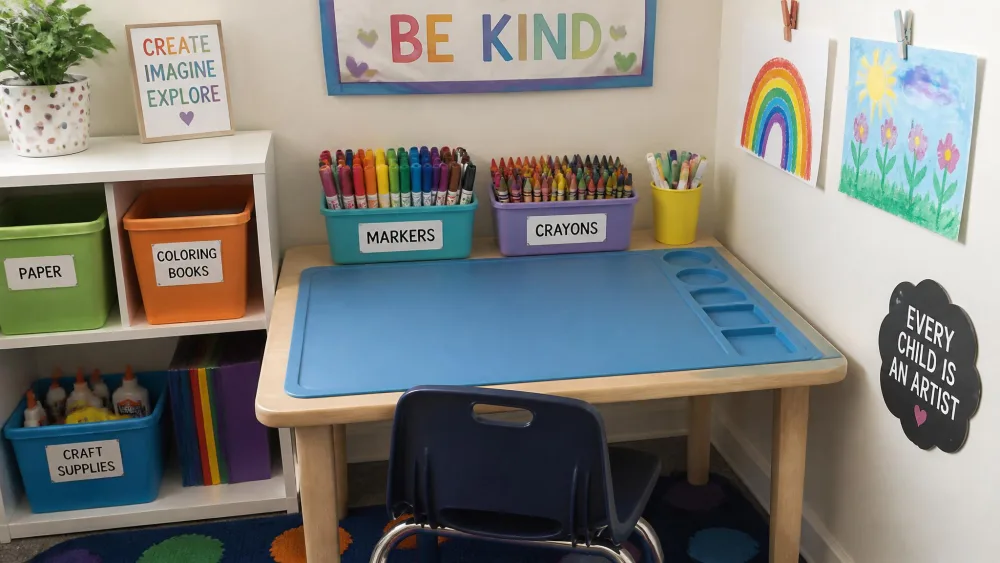
Give your kids one spot where drawing is clearly allowed: a small table, a corner desk, or a big sheet of paper taped down. With an obvious place to make art, the rest of the house stops looking like an option. A quick cleanup at the end gives art time a clear beginning and end.
Use Washable Supplies and Craft Mats
Stock the zone with washable everything: markers, crayons, finger paints, and glue, so a slip-up wipes away instead of setting. If you are restocking, our guides to the best washable markers for kids and the best crayons for kids are a good place to start.
Then put a barrier under the supplies. A silicone craft mat, a wipe-clean placemat, or a fitted tablecloth all work; we like a fitted, elastic-edged one because it stays put during a busy craft session, not sliding around like a loose cover.
Add Protective Covers or Corner/Edge Guards
For heavily used pieces, add a layer: a hard acrylic topper for the tabletop, foam mats for floor spills, and washable chair covers you can wash clean. Corner and edge guards blunt the dents kids put into exposed edges.
While you are at it, anchor the furniture; a dresser or bookcase in a play area is a tip-over risk. Strapping tall furniture and TVs to the wall follows CPSC guidance on preventing furniture tip-overs, since nearly 80% of tip-over fatalities involve children 5 and younger.
Store Markers and Crayons Out of Reach
Keep the risky supplies locked down: permanent markers, Sharpies, and pens in closed containers, up high and away from the kids' washable set. Give every supply an obvious home, since kids clean up more reliably with labeled bins. And when a marker does wander, a calm "that's for paper, let's take it to your art spot" beats a lecture.
Materials and Products That Make Furniture More Kid-Proof
A few buying and refinishing choices make everything above easier.
Protective Finishes, Waxes, and Sealants
A durable clear topcoat hardens a surface against marks. Wipe-on polyurethane in about three coats, or a non-yellowing water-based poly such as General Finishes, leaves a sealed surface for ink and wax to sit on. On a piece you would rather not refinish, a clear non-toxic furniture wax or a silicone-based spray adds a lighter barrier. Aim for a sealed finish either way, since that decides whether a mark wipes off or soaks in.
Fabrics and Surfaces That Resist Stains
For surfaces, dense hardwoods take abuse best. White oak and hard maple make durable tops, and hickory holds up to the spots kids kick, like chair legs, with a Janka hardness of about 1820. In our home, over about four years the real damage was not crayon but toy-impact dents, water rings, and loose-joint wobbles, and the hardwood tops shrugged off most of it. For upholstered pieces, choose machine-washable slipcovers, cushions, and rugs you can launder.
FAQ
Does crayon come off furniture?
Yes, especially on a sealed finish. A baby wipe or warm damp cloth handles most marks; for stubborn ones, rub with non-gel white toothpaste or paste wax, with the grain.
Does permanent marker come off wood furniture?
Usually, on a sealed finish. Dab 70% isopropyl alcohol on a cotton pad and wipe with the grain. On oil- or wax-finished wood it only lightens, since the ink soaks in.
What household product removes crayon or marker without damaging the finish?
A baby wipe is the gentlest first try. Non-gel toothpaste and paste wax are safe on sealed wood too. Skip acetone, bleach, and steel wool.
Will rubbing alcohol or other cleaners damage the finish?
70% rubbing alcohol is generally safe on sealed poly, lacquer, and varnish if you wipe it off fast, but it can cloud wax and oil finishes, so spot-test first.
How do I stop my kids from drawing on furniture in the first place?
Set up an art zone stocked with washable supplies on a craft mat, and store permanent markers out of reach. Kids mostly draw when supplies are handy and no one is watching.
Final Thoughts
Kid-proofing furniture from crayons and markers is two habits working together. Keep a baby wipe close so you catch a fresh mark before it sets, and build a washable, well-stocked art zone so most marks never reach the furniture you love. Match your method to the mark and the finish, spot-test first, and blend the finish back afterward.