How to Get Crayon Out of Fabric (Fresh, Melted & Dried-In Stains)
The first time it happened in our house, one forgotten crayon rode through a full dryer cycle and speckled an entire load. Not one shirt, but leggings, pajamas, swimsuits, and our eight-year-old's favorite hoodie, all freckled with waxy blue dots. If you just opened your dryer to the same scene, or you are staring at a scribbled sleeve, take a breath. Don't panic. Crayon on fabric looks permanent, and it usually is not.
Our kitchen table doubles as an art studio most mornings, so crayon on clothes is a regular visitor here. Over the past couple of years we have worked through nearly every method you can find, from freezer tricks to WD-40, on our own kids' laundry. This guide walks you through what actually lifts crayon out of fabric, sorted by the kind of stain you are dealing with: fresh and soft, melted and waxy, or washed and baked in. Start with the section that matches your situation and skip the rest.
Why Crayon Is So Hard to Get Out of Fabric
Crayon is not a normal stain, and that is the whole problem. A juice spill is water based, so water and soap pull it back out. Standard crayons are made mostly of paraffin wax mixed with color pigment, so you are fighting two things at once: an oily wax that grips the fibers and a concentrated pigment riding inside it. If you want the full breakdown, Crayola explains what crayons are made of on its site.
Heat is the other half of the story. Standard crayons begin to soften at around 105 degrees Fahrenheit and fully melt somewhere between 120-147 degrees. A warm dryer sits right in that window, which is why a single crayon can liquefy and spread across a whole load. That heat sensitivity is your friend later, but it is also the trap. Once wax has been baked in by dryer heat, the pigment sets and your odds drop fast.
Watch outBefore you do anything else, resist the urge to scrub. Rubbing a fresh crayon mark grinds the wax deeper and spreads the color into clean fabric around it. Work from the outside of the stain inward, and always test any cleaner on a hidden seam first.
What You'll Need
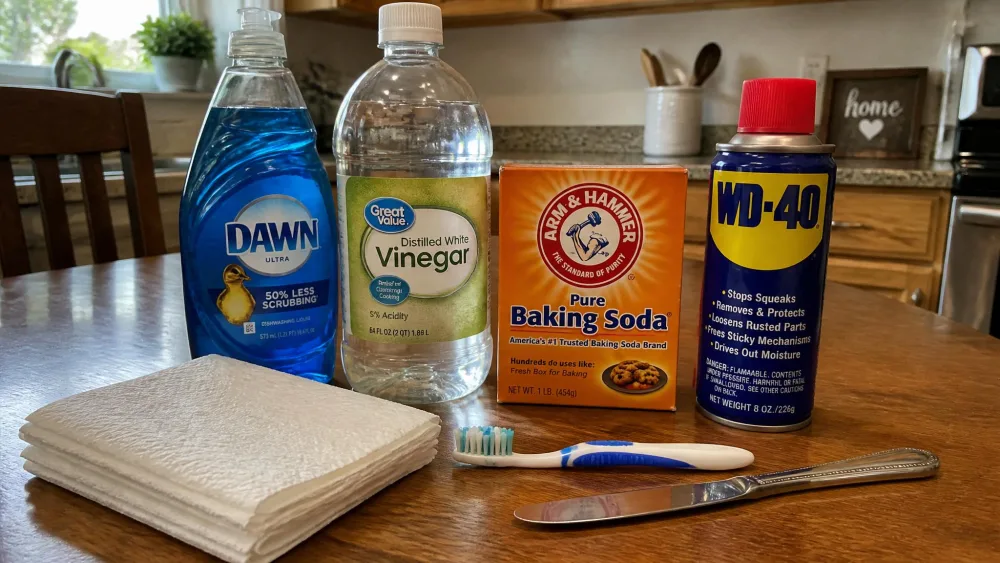
You almost certainly have most of this already. Gather what you can before you start.
- A dull butter knife or the edge of a spoon for scraping
- Grease-cutting dish soap (Dawn is the one we reach for)
- Plain white paper towels, plus an old iron
- White or distilled vinegar
- Baking soda
- WD-40 and rubbing (isopropyl) alcohol for stubborn set-in wax
- An oxygen-based stain remover such as OxiClean
- An old toothbrush and a piece of cardboard
How to Get Fresh or Soft Crayon Out of Fabric
Caught it early, before the wash? You are in the best possible spot. Fresh crayon is still sitting mostly on the surface, so your job is to lift the bulk of it and then break down what is left.
Freeze and Scrape Off the Excess Crayon
Soft, smeared crayon just spreads when you attack it, so harden it first. Pop the whole garment in a plastic bag and into the freezer. Harden time depends on how thick the fabric is and how much wax is embedded, so plan on somewhere between 30 minutes and an hour rather than a fixed number. You want the crayon brittle enough to crack.
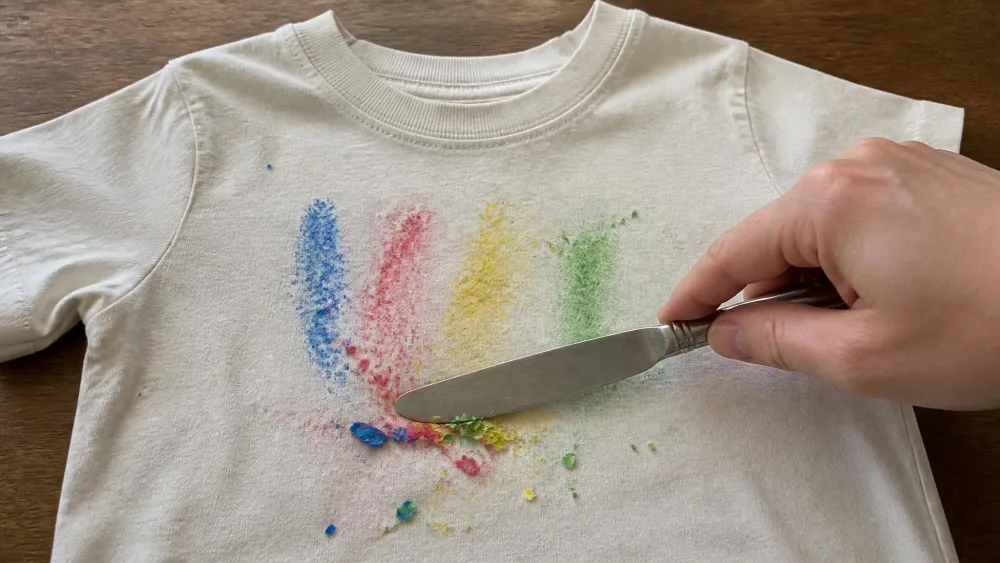
Once it is stiff, lay the fabric flat and scrape the raised wax off with a dull butter knife or the edge of a spoon. Work gently and lift the flakes away rather than mashing them back in. On our kids' cotton tees this step alone removes most of the crayon before any cleaner touches it.
Pretreat With Dish Soap
Now for the oily film left behind. Grease-cutting dish soap is built to break down exactly this kind of residue. Squeeze a little directly onto the mark and work it in with your fingers or an old toothbrush, then let it sit about 15 minutes so it can dissolve the wax. Rinse with warm water from the back of the fabric to push the stain out the way it came, then check your progress before washing.
Parent tipGrease-cutting dish soap is the single most useful thing in this whole guide. If you only own one product on the list, make it a bottle of Dawn. It does the heavy lifting on fresh marks and doubles as your dryer-drum cleaner later.
How to Remove Melted Crayon From Fabric
Melted crayon has soaked into the fibers, so scraping alone will not cut it. Here you use heat to draw the wax back out, then a solvent for whatever clings on.
Lift the Wax With Heat (Iron and Paper Towel)
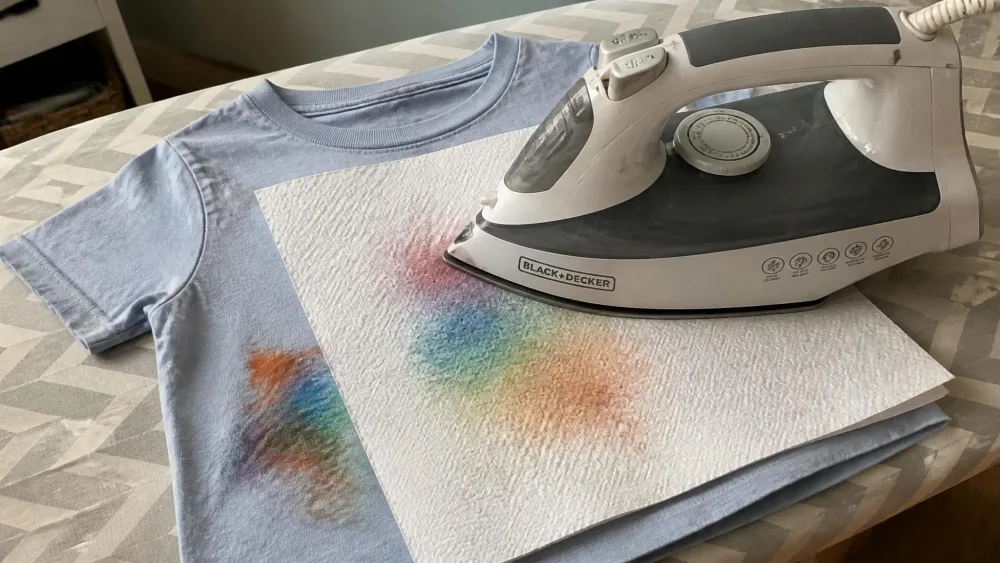
This trick feels like magic the first time you see it. Set the stained area between two plain white paper towels, one underneath and one on top. Skip anything printed, since the ink can transfer into the fabric. Press a warm iron on a low, no-steam setting over the top towel. The heat re-melts the wax, and the paper soaks it up like a sponge.
Keep sliding the fabric to a clean patch of paper towel as the wax transfers. You will actually see the colored blot move onto the towel. Repeat until no more wax lifts. A hair dryer works on a smaller scale if you would rather not iron.
Loosen Stubborn Wax With WD-40 or Rubbing Alcohol
If a greasy shadow of color survives the iron, reach for a solvent. WD-40 breaks down the remaining wax so soap can carry it away. First, slip a piece of cardboard inside the garment. On thin fabric WD-40 bleeds straight through to the other side, and the cardboard stops that cold. Spray the back of the stain, then the front, and let it sit. Dwell time runs anywhere from about 10 to 20 minutes depending on how set the stain is.
Rubbing alcohol is the gentler alternative. Dab a small amount onto a clean cloth and blot the stain, lifting color a little at a time. Whichever you use, rinse the oily residue out with dish soap and warm water before the garment goes near the wash. Never assume a solvent is safe on every fabric, so test a hidden spot first.
How to Get Crayon Out of Washed and Dried Clothes
This is the hard case, the one that sent us down this path in the first place. The wax has been through a wash cycle and possibly dryer heat, so the pigment is set in. A lot of it still comes back with patience. In our experience cotton t-shirts and pajamas need several wash cycles before the color fully lifts, so do not judge success after a single pass.
Rewash With an Oxygen-Based Stain Remover
Start with an oxygen-based stain remover rather than chlorine bleach, which the sources we trust do not recommend for crayon. Apply it to the residual color and wait 15-30 minutes, then rewash on the hottest water setting the fabric can safely handle. Heat helps here because it keeps the loosened wax liquid so it rinses away instead of resettling.
Watch outDo not put the clothes back in the dryer until the stain is completely gone. Air-dry first and check in good light. Dryer heat sets any leftover pigment permanently, and machine-drying too early is the single mistake that turns a fixable mark into a ruined shirt.
Try a White Vinegar Soak
White vinegar is a quiet workhorse on dried-in crayon. You have two ways to use it. Either scrub the mark directly with an old toothbrush dipped in vinegar, or soak a cloth in vinegar and lay it over the stain for about 15 minutes before washing. For a whole speckled load, add about 1 cup of white vinegar to the wash cycle along with your detergent.
Make a Baking Soda Paste
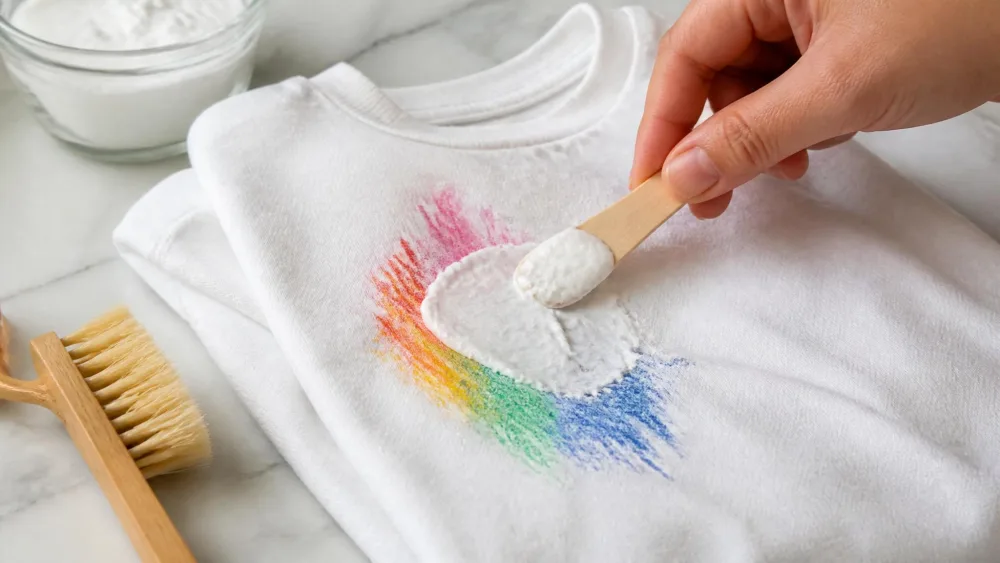
Baking soda adds gentle scrubbing power without harsh chemicals. Mix it with a little water into a thick, spreadable paste. The exact ratio is not fussy, so aim for something that holds together rather than measuring precisely. Spread it over the stain, let it sit 10-15 minutes, then work it with a soft brush and rinse. For extra muscle on a full load, you can add about 1 cup of baking soda to the wash alongside your regular detergent.
How to Clean Melted Crayon Out of the Dryer
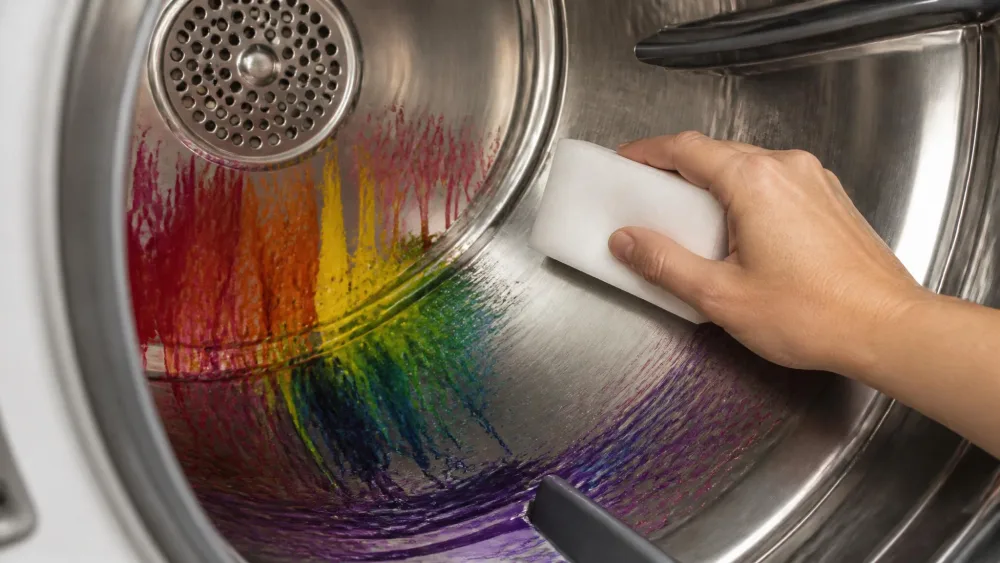
If a crayon melted mid-cycle, your drum is now coated too, and it will re-stain the next load if you ignore it. The fix uses the dryer's own heat against it. Run the empty dryer on high for about 20 minutes to soften the wax on the drum, then wipe it down while it is still warm.
A Magic Eraser is our go-to for this. It lifts softened crayon off the metal in a few passes with almost no scrubbing, though a soapy cloth works too. If a stubborn film remains, wipe the drum with WD-40 on a rag, follow with soapy water, then run a load of old towels before drying anything good to catch any last residue.
Parent tipWipe the drum the moment you spot melted crayon, before you start any rescue laundry. Otherwise you clean the clothes only to have them pick color right back up on the next dry cycle.
Removing Crayon From Delicate Fabrics, Upholstery, and Leather
Everything above assumes washable clothing. Delicates, upholstery, and leather need a lighter touch. Always follow the care label, and test any cleaner on a hidden area such as an inside seam or the back of a cushion before you commit.
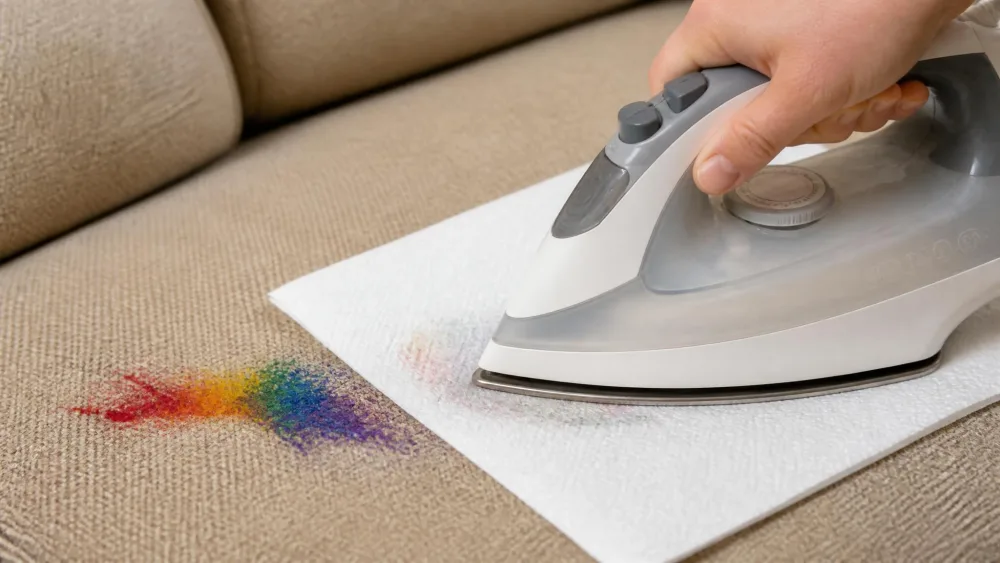
For upholstery, the iron-and-paper-towel method is your friend, since it pulls wax up without soaking the piece. Blot, do not scrub, and work inward. On leather, skip solvents and abrasives, and use only a barely damp cloth with a touch of mild soap. For vintage pieces or silk, call a professional cleaner rather than experimenting. Some fabrics simply will not survive a home rescue, and an antique is not the place to learn that.
NoteBeing honest about the losses: not everything came back for us. Most of that first dryer-melted load cleaned up beautifully, but a pair of polyester shorts faded to a soft gray shadow, and one textured-weave shirt showed no improvement at all. Synthetics and heavy textures hold pigment the hardest, so temper your expectations there.
How to Prevent Crayon Stains
The easiest crayon stain is the one that never happens. A few habits have cut our laundry incidents way down.
- Buy washable crayons. They still stain, but they surrender far more easily in the wash.
- Check every pocket before laundry. This one habit prevents the dryer disaster entirely. A single crayon left in a pocket is all it takes to speckle a full load.
- Use smocks or old play clothes for art time so the good outfits never enter the danger zone.
Treat crayon-stained clothes before they go anywhere near the washer and dryer. Run them through untreated and the wax just re-melts and re-adheres, to the fabric or the machine.
Frequently Asked Questions
Does vinegar remove crayon from clothes?
Yes, white vinegar helps break down dried-in crayon color. Scrub the mark directly with a vinegar-dipped toothbrush, or add about 1 cup to the wash cycle. It works best as one step in a full treatment rather than a standalone miracle.
How do you get melted crayon out after the dryer?
Do not re-dry the clothes. Treat each mark with the iron-and-paper-towel heat lift, follow with an oxygen stain remover for the leftover color, and rewash on the hottest safe setting. Air-dry and check before machine-drying again. Then clean the dryer drum so it does not re-stain the next load.
Does WD-40 damage fabric?
WD-40 is oil based, so it can leave its own mark and is not confirmed safe on every fabric. Always slip cardboard inside the garment, test a hidden spot first, and rinse the oily residue out with dish soap before washing. Skip it entirely on delicates and leather.
Can you get crayon out of delicate fabrics like wool or silk?
Sometimes, but tread carefully. Follow the care label, test a hidden area, and stick to the gentle heat-lift method rather than solvents. For silk, vintage, or anything you would be heartbroken to lose, take it to a professional cleaner instead.
Does Goo Gone or rubbing alcohol work on crayon?
Rubbing alcohol does dissolve crayon wax; dab a little on a cloth and blot the stain, lifting color gradually. Some people reach for a citrus solvent like Goo Gone as well. Whatever you use, spot-test first and rinse thoroughly before washing.
A faint stain remains after washing. What now?
Absorbent cottons often need several passes, so do not give up after one wash. Reapply an oxygen stain remover, let it sit 15-30 minutes, and rewash in hot water. Keep air-drying between attempts so you never bake in what is left.
Final Thoughts
Crayon on fabric feels like a disaster and usually is not one. Match the method to the stain: freeze and scrape fresh marks, use heat to lift melted wax, and hit dried-in color with vinegar, baking soda, and an oxygen stain remover before you reach for the dryer. The rule that matters most is patience. Air-dry and check between attempts, because a warm dryer is the only step that truly makes a stubborn stain permanent.