How to Get Kids' Paint Out of Clothes: Wet or Dried
Did another shirt just come home with a paint splat across the front? You can save it, whether the paint is washable, tempera, acrylic, or even oil-based, and whether it's still wet or already dried. The two rules that decide everything: act quickly while the paint is wet, and keep the garment away from heat until the stain is completely gone.
Paint on clothes is a regular event in our house. Everything below is the routine we actually use, backed up by what the paint makers themselves recommend.
Know Your Paint Type First
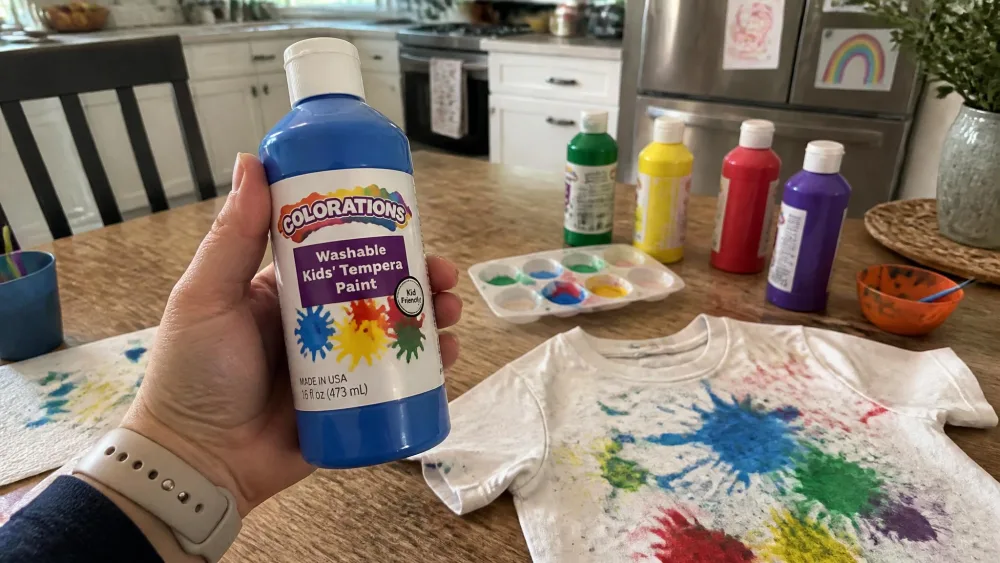
Before you reach for anything, check the paint bottle. The label tells you whether this is a five-minute fix or a longer rescue mission.
| Washable/tempera | Acrylic | Oil-based | |
|---|---|---|---|
| Wet treatment | Scrape, blot, cold rinse, dish soap, launder | Rinse excess, dish-soap pre-treat, launder | Blot from the back, solvent (per can label; mineral spirits default), detergent, launder |
| Dried treatment | 30-minute warm soapy soak, scrape, re-treat, rewash | Rubbing alcohol soak, scrape with a plastic knife, wash | Mineral spirits or turpentine to soften, detergent, overnight hot soak |
| Water temp | Disputed: cold first (general rule) vs hot (Crayola's own instructions) | Hottest safe for the garment | Hot soak after the solvent step |
| Works when dried? | Often, with repeat washes, but not guaranteed | Usually, with rubbing alcohol | Sometimes; the hardest of the three |
Washable and Tempera Paint
This is what most preschools and craft kits use, and it's the easiest to remove. These paints are water-soluble, so plain rinsing plus dish soap or detergent handles most of it. In our experience the "washable" label is honest when you catch the splat wet. Once it fully dries, it often leaves a mark that takes several rounds to fade. Glitter versions are the usual culprits for faint leftover stains even when the regular colors wash clean.
Acrylic Paint
Acrylic starts water-based but dries into a plastic film that bonds to fabric. Wet, it rinses out much like tempera; dried, it needs rubbing alcohol to soften it.
Oil-Based Paint
Oil-based paint (think house paint or some model paints) won't budge with water at all. It needs a solvent, which means extra care around kids. If you can't treat an oil-based stain right away, wrap the garment in plastic so the paint can't dry out; UGA Extension's paint stain guide recommends this trick; it buys you hours instead of minutes.
What to Do in the First Few Minutes (Before Anything Dries)
Wet paint is a chore, but dried paint may become permanent, so the first few minutes matter more than any product you own.
- Scrape off the excess with a spoon or a butter knife. Don't smear it wider.
- Blot the spot with a dry paper towel. Press straight down and lift.
- Rinse from the back of the fabric with cold water to push paint out, not through.
- Keep the garment away from the dryer, the radiator, and hot water until you know the paint type.
Parent tipBlot, don't rub. Scrubbing a fresh splat grinds pigment deeper into the fibers, and that's the single most common way a saveable stain becomes a permanent one.
Step-by-Step: Removing Wet Paint
Supplies You'll Need
- A spoon or butter knife for scraping
- Plain liquid dish soap
- Clean white cloths or paper towels
- Laundry detergent
- An old toothbrush (optional, for gentle working)
The Dish Soap Method (Works for Most Kids' Paint)
This is our default for every wet, water-based splat, and it does the trick most of the time.
- Scrape and blot the excess paint.
- Rinse the stain from the back under cold running water until the water runs mostly clear.
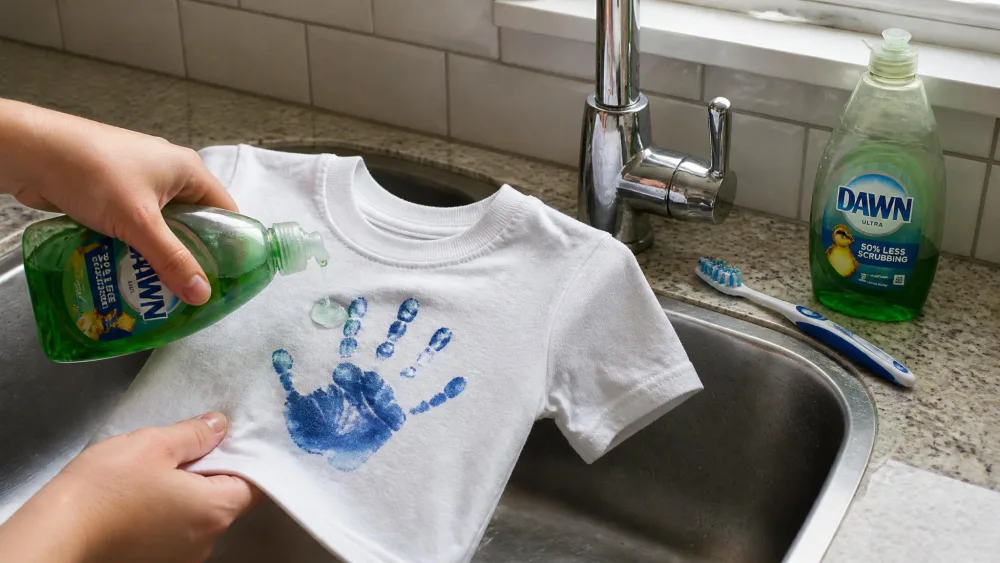
- Work a drop of liquid dish soap into the stain with your fingers or a toothbrush and let it sit 5-10 minutes.
- Rinse, check, and repeat the soap step if color is still lifting.
- Launder with your usual detergent, then air dry and inspect before any machine drying.
For Crayola washable paint specifically, Crayola's official stain-removal instructions say to rinse with hot water until no more color comes out, then wash in hot water with detergent for about 12 minutes on a heavy-soil cycle. If the stain persists, Crayola suggests a one hour soak in an OxiClean or Clorox 2 solution, then air drying.
Water temperature is the one point where the experts genuinely disagree. Crayola says hot for its own washable paint; most tempera guides say cold, because heat can set the stain. Our rule: cold rinse first for any unknown paint, and follow Crayola's hot-wash instructions only when you know it's Crayola washable.
NoteWe tested this on a real shirt: our five-year-old's white tee took a full handprint of blue washable paint mid-project. Caught wet, the cold rinse and dish soap lifted the paint completely, and after a normal wash you can't find the spot. The same paint left to dry on a sleeve a month earlier took three rounds and still shows a faint shadow.
Watch outNever put a paint-stained garment in the dryer. Heat sets paint stains, and every major source agrees: air dry between attempts and don't machine-dry until the stain is completely gone.
Step-by-Step: Removing Dried Paint
Dried Washable and Tempera Paint
Dried water-based paint can usually be softened back up.
- Soak the garment in warm, soapy water for 30 minutes.
- Gently scrape away the softened paint with a spoon or your fingernail.
- Re-treat the remaining mark with dish soap, let it sit, and rinse.
- Launder and air dry. Repeat the whole cycle if a shadow remains; stubborn stains often fade over two or three rounds.
Dried Acrylic and Oil-Based Paint
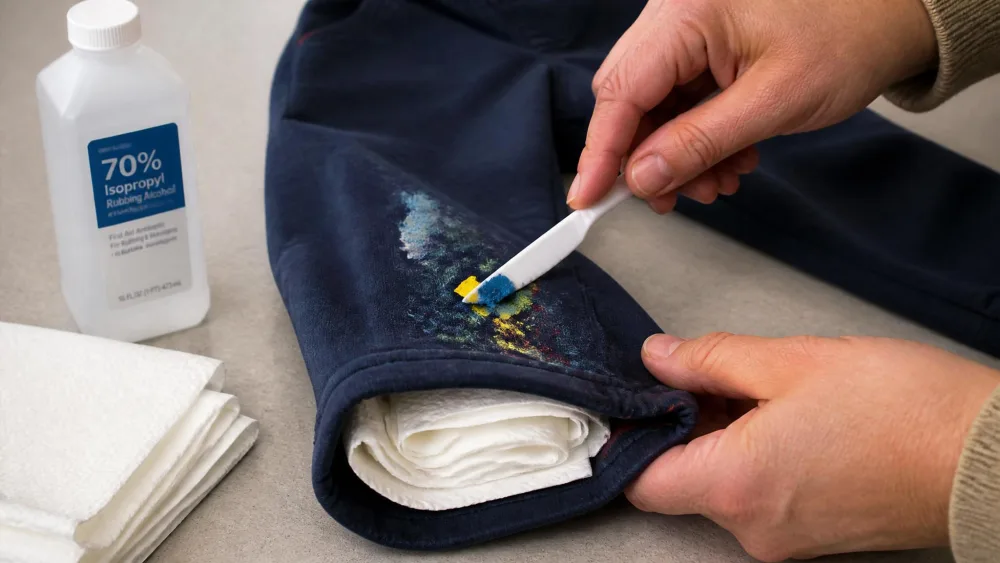
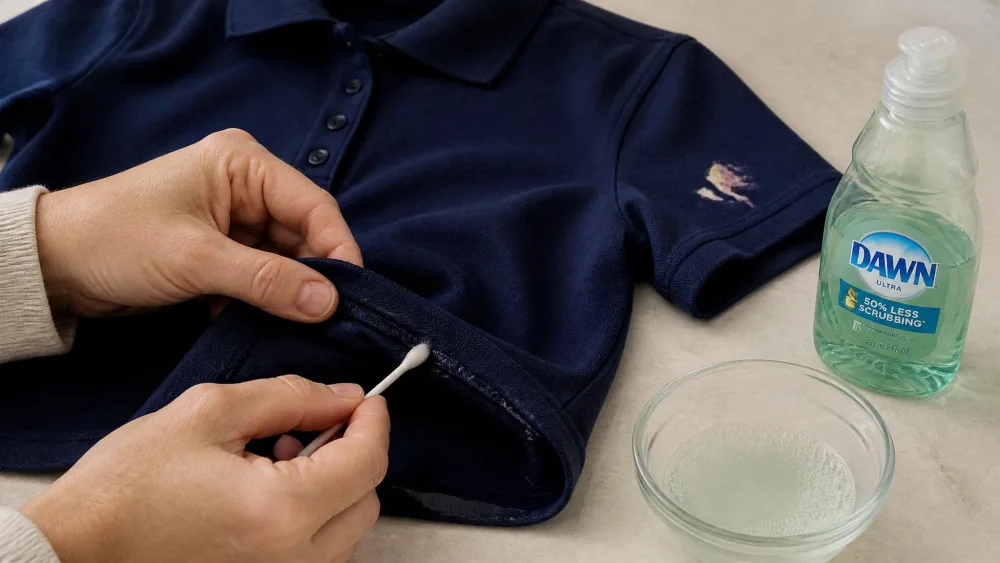
For dried acrylic, rubbing alcohol is the fix. Spot-test an inconspicuous area first, slide paper towels under the stained layer so dissolved paint can't bleed through to the other side, then soak the stain with alcohol. Let it sit for a minute or a few (thicker, older paint needs longer), scrape the softened paint with a plastic knife or a fingernail, and wash the alcohol out with soapy water. Plain alcohol wipes dissolve small dried acrylic spots almost instantly, which is why a pack lives in our art drawer.
Dried oil-based paint is the hardest save. Sponge the stain with the solvent the paint can recommends; if the label doesn't say, mineral spirits is the default. Work liquid detergent into the wet stain, soak overnight in hot water if needed, then launder and repeat.
Watch outSolvents like mineral spirits and turpentine are not kid-friendly. Work in a ventilated room away from children, never use them on rayon, acetate, or triacetate, and store leftovers well out of reach. Skip acetone (nail polish remover) on kids' clothes entirely; it damages synthetic fibers like acetate.
Stain Removers That Actually Help (and What to Skip)
Liquid dish soap and your regular detergent handle most kids' paint. For follow-up on residual color, an oxygen bleach soak (OxiClean or Clorox 2, per Crayola's own instructions) is the one add-on worth keeping. Tide's paint-stain guide also suggests pretreating acrylic with a Tide To Go pen: dab with a clean cloth, wait 10-15 minutes, then wash normally.
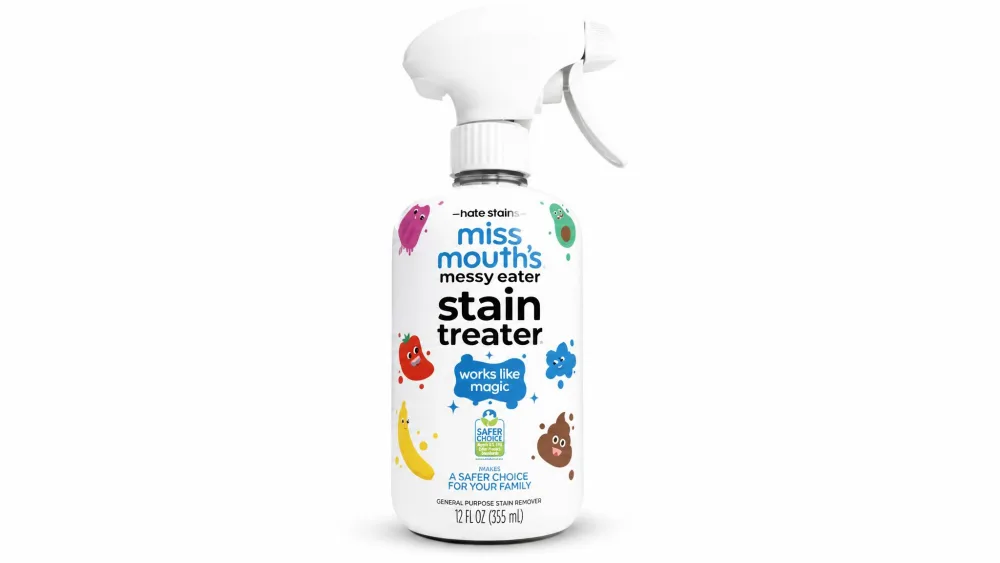
We keep Miss Mouth's Messy Eater Stain Treater on hand, and it earns its spot for food, berry, and sauce messes. We recommend it as a general kid-stain treater rather than as a paint fix, since paint responds better to the methods above.
What to skip: chlorine bleach (it risks ruining the fabric without dissolving the paint), acetone on synthetics, and heavy scrubbing of any kind.
If the Stain Still Won't Come Out
Don't give up after one wash. Repeat the treat-wash-air-dry cycle two or three times; as long as the garment never hits the dryer, each round usually lifts a little more paint. If a faint shadow survives everything, try one more oxygen bleach soak, then let the shirt graduate to the art-clothes pile, where a lot of "ruined" shirts get a happy second life.
Delicate Fabrics and School Uniforms
For wool, silk, and anything dry-clean-only, stop after scraping and blotting and take it to a cleaner; mention the paint type. Most school uniforms are sturdy poly-cotton blends that tolerate the dish soap method well. Test on an inconspicuous area first (an inside hem works), skip solvents on anything with a rayon or acetate lining, and air dry so you can re-treat before the next school morning.
How to Prevent Paint Stains Next Time
We haven't eliminated paint laundry, but these habits cut it way down:
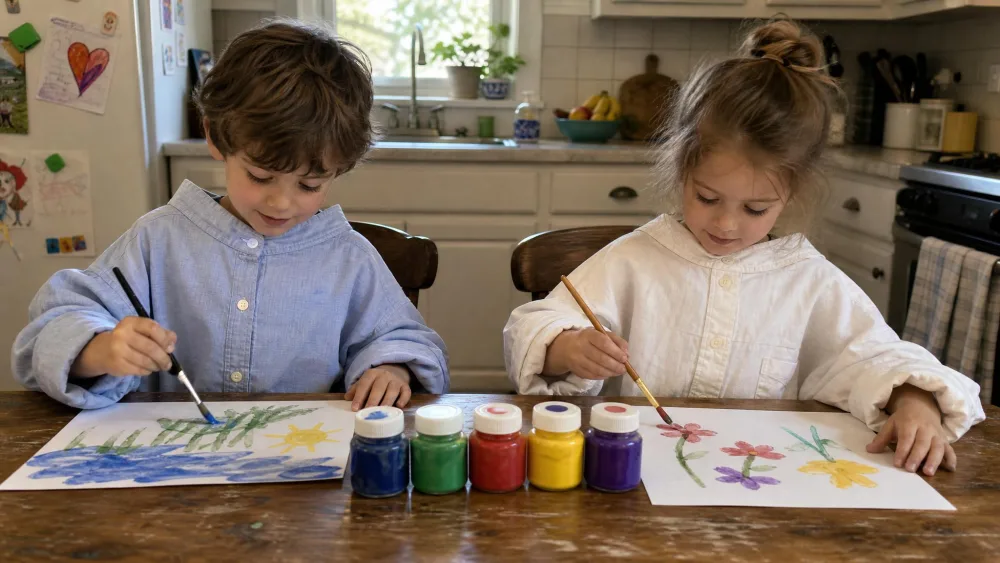
- A real smock or an adult's old button-down shirt, worn backwards, for every paint session
- A designated art-clothes outfit that's allowed to get wrecked
- Sticking to genuinely washable paints for the youngest kids, and skipping glitter formulas on days they're wearing clothes you care about
- Mixing our own when we want total control over what's in the paint, using our guide to How to Make Watercolor Paint for Kids
- Teaching brush-and-water habits early; our walkthrough on How to Use Watercolors for Kids covers the routines that keep paint on the paper
FAQs About Getting Paint Out of Kids' Clothes
Does washable kids' paint really come out of clothes?
Usually yes, if you treat it while wet. Real-world results are genuinely mixed once it dries: some loads come out perfectly, while dried splats (especially glitter formulas) can leave a faint mark that needs several treat-and-wash rounds.
Does vinegar remove paint from clothing?
It's a gentle maybe. Vinegar is safe to try on wet water-based paint, but its usefulness is disputed, and it's not a reliable fix for dried or acrylic paint. Dish soap is the stronger first move.
Can I use rubbing alcohol on paint stains?
Yes, and it doesn't have to come from a bottle. Ordinary isopropyl rubbing alcohol works, plain alcohol wipes dissolve small dried acrylic spots almost instantly, and hand sanitizer makes a workable backup because it contains alcohol. Just know its limits: it's an acrylic trick, and it won't help much on oil-based paint.
Is bleach safe for paint stains?
Skip chlorine bleach; it can ruin the garment and still leave the paint. An oxygen or color-safe bleach soak (OxiClean, Clorox 2) is fine as a follow-up for residual color after the paint itself is out.
What if the paint went through the dryer?
Heat-set stains sometimes fade over several treatment-and-wash rounds, but full removal isn't guaranteed. Repeat the dish-soap method for washable paint or the rubbing-alcohol method for acrylic, and air dry between every attempt.
Final Word
Most paint stains on kids' clothes are saveable. Scrape, blot, cold rinse, dish soap, and keep everything away from heat until the stain is gone. Match the tougher steps to the paint type, be patient through a repeat round or two, and remember that the shirts you can't save make excellent art clothes. In our house, that counts as a win either way.