How to Get Crayon Out of Carpet (Easy 3-Step Guide)
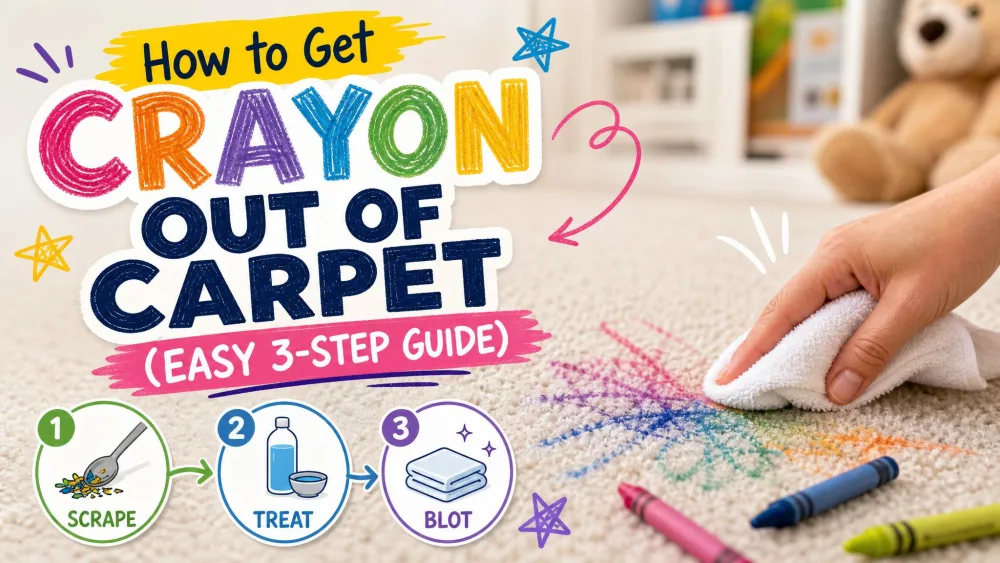
A crayon gets crushed into the carpet, and suddenly there is a waxy smear ground into the fibers. It looks permanent, and rubbing only spreads the color wider. The good news: crayon almost always comes out, even after weeks, as long as you work in the right order.
We color at the kitchen table most days with our two kids, so we have cleaned plenty off the floor. Crayon is two problems in one, solved in two stages.
Why Crayon Is Hard to Get Out of Carpet
Crayon is mostly wax mixed with pigment, and the two behave differently. The wax hardens and clings to the fibers, while the pigment leaves a colored stain. Try to lift both at once and you smear the color deeper.
So the wax and color come out in two stages, not one. You lift the wax first, then treat the leftover pigment. Reaching for hot water first is the classic wrong move, because it melts the wax and drives it deeper.
What You'll Need
Most of this is already in your kitchen:
- A dull knife or spoon, and a bag of ice
- Plain white paper towels or a brown paper bag, and an iron
- Dish soap, white vinegar, and warm water
- Rubbing alcohol, WD-40, or Goo Gone
- Clean white cloths for blotting
Keep your cloths white, since colored materials can transfer dye into damp carpet.
First: Scrape and Freeze the Excess Crayon
Before any liquid touches the carpet, remove as much solid wax as you can. This first step makes the biggest difference of anything you do.
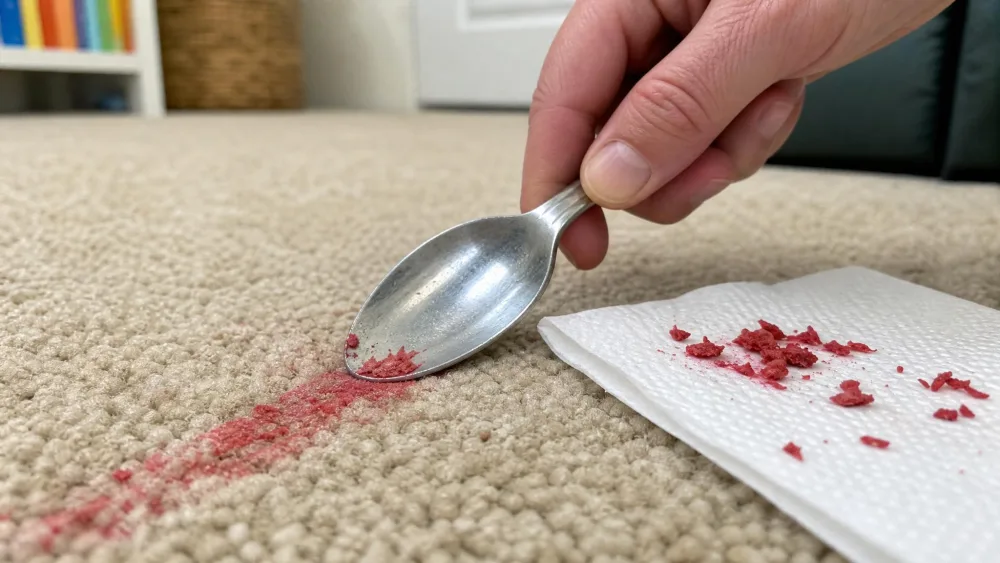
Scrape off the solid crayon
Use a dull knife or spoon held at about a 45-degree angle to lift the chunks of wax away from the fibers. Work from the outer edge toward the middle so you do not push it wider, and skip anything sharp that could cut the carpet.
Harden stubborn bits with ice
For wax smeared into the pile, hold a bag of ice on the crayon for 5-10 minutes to harden it. Cold wax turns brittle, so it chips off in flakes instead of smearing, and most of the crayon is gone before any cleaner comes out.
Method 1: The Iron and Paper Towel Trick (Best for Melted or Ground-In Crayon)
When wax is melted or worked into the pile, heat transfer is the most reliable fix. You warm the wax just enough to melt it, then let clean paper absorb it. Never use printed or colored paper; a warm iron transfers ink.
Step-by-step
- Lay a plain white paper towel flat over the stain.
- Set the iron to low heat with no steam. High heat is the real risk here.
- Press the iron on the paper in short bursts of about 5-10 seconds, then lift.
- Slide the paper to a clean spot and press again as the wax soaks in.
- Keep going until the paper stops picking up wax.
This one feels slow. Light stains lift in a few passes, but a heavy smear can take 3-5 repetitions or many more before the paper comes away clean.
Watch outSpot-test the iron on a hidden patch first. Nylon fibers can start to melt near 430°F, and some man-made carpets soften even at low settings. Never use the iron on olefin (polypropylene) carpet, or hold it directly on the fibers.
After the wax lifts, expect a faint colored shadow. That is the pigment, treated separately below.
Method 2: Dish Soap and Warm Water (For Color Residue)
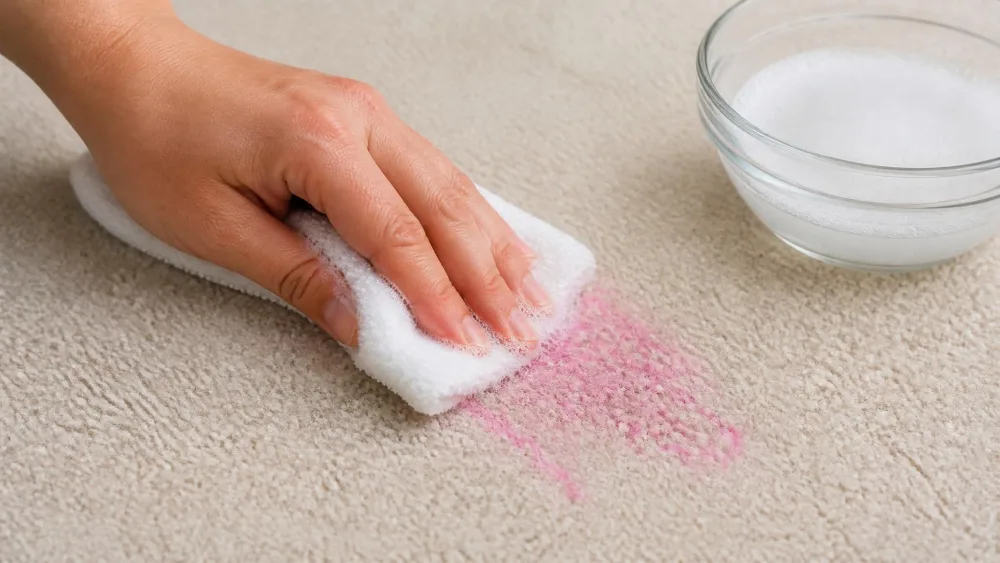
Once the wax is gone, dish soap handles most of the leftover color. Mix a small squeeze of dish soap into about 1 cup of warm water. The exact ratio does not matter much; you want gentle suds, not a heavy dose of soap.
Dip a clean white cloth in the solution and blot from the outside in. Do not scrub, because scrubbing fans the color wider and works it deeper. Rinse, reapply, and keep blotting. The dish soap method takes about 15-20 minutes.
Method 3: Vinegar Solution (For Stubborn Stains)
If color hangs on after the dish soap, white vinegar is the next gentle step. Mix equal parts white vinegar and water, dab it on with a clean cloth, blot, then rinse with plain water. Spot-test first, and rinse so no residue is left behind.
Method 4: WD-40, Goo Gone, or Rubbing Alcohol (For Old, Set-In Crayon)
For old, set-in crayon that will not quit, a stronger solvent finishes the job. Even a stain that has sat for weeks will often lift with patience.
- WD-40: Spray lightly, let it sit 3-5 minutes, then dab with a clean white cloth. This is the fastest route, clearing crayon in about 10-15 minutes.
- Goo Gone: Of the store-bought fixes, Goo Gone pulls the dye out more reliably than rubbing alcohol or dish soap in our comparison. Apply a little, let it work, then blot.
- Rubbing alcohol: Use isopropyl alcohol at 70% or 90% to lift stubborn pigment. Dab it on a white cloth and blot up the color.
Watch outApply any solvent sparingly. Over-spraying WD-40 or cleaner soaks through to the pad, and that trapped moisture leads to mildew and backing damage. Skip these harsh products on wool, and open a window for airflow.
Rinse and Dry the Carpet
Rinse the spot with a cloth dampened in plain water to pull out leftover cleaner, then blot up the moisture with a dry towel. Let the area air dry completely, typically 2-6 hours depending on carpet thickness and humidity. A fan speeds things along.
Crayon Removal by Carpet Type
Match the method to your fibers.
- Synthetic (nylon, polyester): Tolerates heat and alcohol better than natural fibers; most methods are safe after a spot-test.
- Olefin (polypropylene): Skip the iron entirely. This fiber has a low melting point and can scorch.
- Wool: Use only the gentle dish soap method. Avoid WD-40, alcohol, and peroxide, and consider a pro.
- Berber loop-pile: Work carefully to avoid snagging the loops; blot, don't rub.
| Method | Best For | Key Caution |
|---|---|---|
| Scrape + freeze (ice) | First response, solid crayon | Use a dull edge; don't grind the wax in |
| Iron + white paper (low, no steam) | Melted or ground-in wax | Spot-test; never on olefin; no high heat |
| Dish soap + warm water | Leftover color residue | Blot, don't scrub; use warm not hot water |
| White vinegar (equal parts water) | Stubborn, set-in stains | Spot-test; rinse after |
| WD-40 / Goo Gone / alcohol | Old, set-in crayon and pigment | Apply sparingly; avoid on wool; ventilate |
What NOT to Do
A few habits make crayon stains worse, and they are easy to fall into when frustrated:
- Don't rub aggressively. It spreads color and pushes wax deeper.
- Don't use hot water first. The heat melts the wax and drives it down.
- Don't oversaturate with cleaner. A soaked pad invites mildew.
- Don't use printed or colored paper under the iron, or metal tools that could cut fibers.
NoteThe lesson we keep relearning at our own kitchen table is that patience wins. Every time we get impatient and scrub, the stain fans out wider and takes twice as long. Blotting gently from the edge inward beats brute force.
When to Call a Professional Carpet Cleaner
Sometimes the smart move is to hand it off. Call a professional for large, old, or multiple stains, for wool or expensive carpets, or when DIY methods have not worked.
How to Prevent Crayon Stains on Carpet
The easiest stain never happens. A few habits keep most crayon off the floor:
- Choose washable crayons, which clean up more easily.
- Give kids a coloring spot with a hard surface or washable mat.
- Teach a paper-only rule, and clean up dropped crayon before the wax sets.
Frequently Asked Questions
Will the iron method damage my carpet?
Not if you keep the heat low, use no steam, and press in short 5-10 second bursts through plain paper. Spot-test first, and never iron olefin (polypropylene) carpet, which melts easily.
Does vinegar remove crayon from carpet?
Yes, for the leftover color. Mix equal parts white vinegar and water, dab it on, blot, and rinse. It works best on pigment after the wax is lifted.
Can I use WD-40 or rubbing alcohol on carpet?
Both work well on old, set-in crayon. Apply them sparingly so you do not soak the pad, blot rather than rub, and keep them off wool.
Can I use a hair dryer instead of an iron?
We would not rely on it. It does not give the steady heat the transfer trick needs, and hot air can drive the wax deeper.
How long before a crayon stain becomes permanent?
There is no hard deadline. Fresh crayon is easiest, but even a stain that has sat for weeks usually lifts with the right method and patience.
Are washable crayons easier to remove?
Generally, yes. Washable formulas release from surfaces more readily than standard wax crayons.
Final Thoughts
Crayon on the carpet looks like a disaster and almost never is. Lift the wax first by scraping, freezing, and ironing, then treat the leftover color with soap, vinegar, or a stronger solvent. Work gently from the outside in, and rinse when done. In our home, the messes that looked hopeless almost always cleared with what was already in the kitchen.