How to Get Melted Crayon Out of Clothes

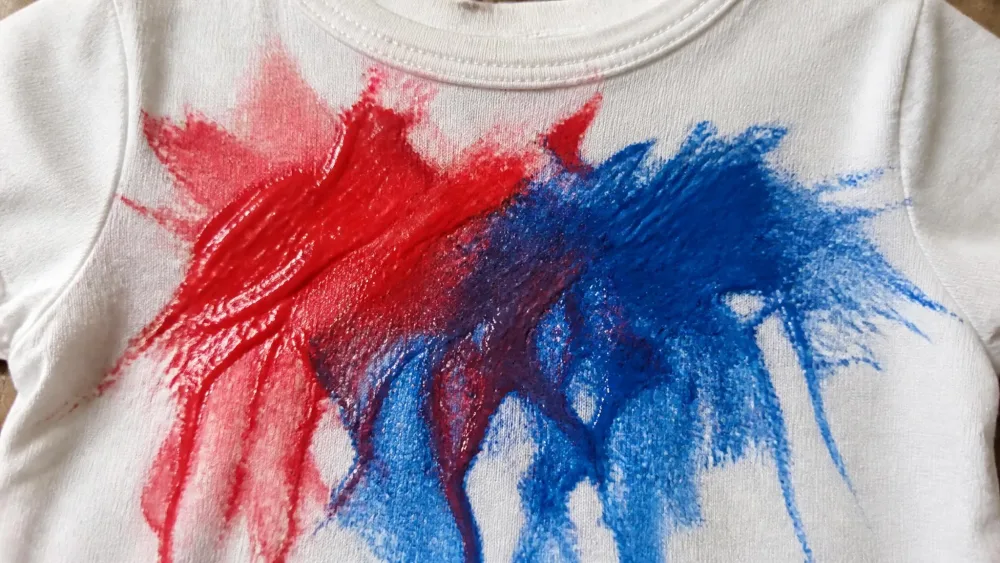
If a stray crayon rode through the dryer in someone's pocket and left a waxy smear across a favorite shirt, you know that panic. It happened in our house, and the good news is that a melted crayon stain is almost always fixable with household items you already own. No specialty product, no dry cleaner, just patience and the right order of steps so you do not set the color deeper.
Below is the method we reach for, built around Crayola's official steps plus a few tricks for stubborn cases. Work through it in order, and keep the garment away from the dryer until the wax is gone.
Why Melted Crayon Is So Hard to Remove
A crayon is two ingredients pressed into a stick: wax and pigment. When heat melts the wax, it carries that pigment deep into the fibers, and high heat bonds the color hard. That is why a crayon smudged on a cool table wipes away, but the same crayon through a hot dryer becomes a project. You are fighting a wax film on top and a dye soaked into the weave underneath.
That is why a single rinse never works. You lift the wax first so the pigment is reachable, then flush the color with soap and hot water. For the full official breakdown, Crayola's own melted-crayon stain guide is worth a read, and the steps below lean on it. Reapplying heat before the wax is gone only drives the stain deeper.
Before You Start: Check the Fabric Care Label
Before any iron, hot water, or vinegar touches the garment, flip it inside out and read the care label. It tells you the hottest wash the fabric can take and whether it can handle an iron. Silk, wool, satin, and dry-clean-only fabrics need a gentler path. Then test your method on a hidden spot like an inside seam. Even Crayola notes results vary and full removal is not guaranteed on heat-set stains, so a patch test protects you from a surprise on the front of a shirt.
Parent tipTreat a delicate or brightly dyed fabric as fragile: skip the iron and WD-40, lean on the freeze-and-scrape and dish-soap steps, and use the coolest water that still lifts the wax.
What You'll Need
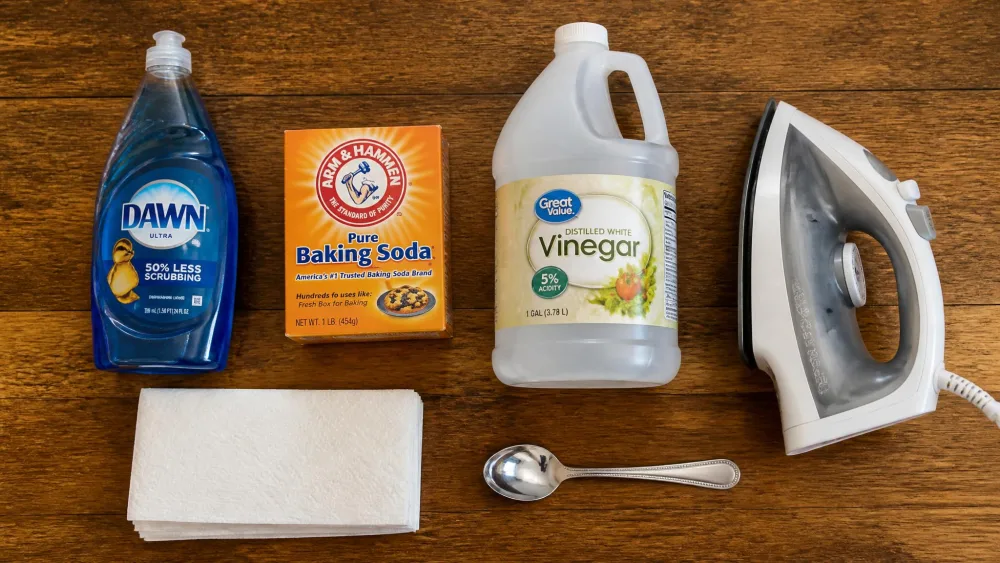
You almost certainly have all of this already:
- A dull knife, spoon, or old credit card for scraping
- A freezer and a zip-top plastic bag
- An iron and a stack of plain white paper towels (no printed napkins, which transfer ink)
- Liquid dish soap and an oxygen booster like OxiClean or Clorox 2
- White vinegar and baking soda for the stubborn cases
- A washing machine and a spot to air dry
Step 1: Scrape and Freeze Off the Excess Wax
Lift off every bit of hardened crayon before you add moisture. If the wax is soft, harden it first: seal the garment in a plastic bag and freeze it for 1-2 hours until the crayon turns brittle, since cold wax cracks and flakes instead of smearing. Once it is frozen firm, lay the fabric flat and scrape with the dull edge of a knife, a spoon, or a credit card, working from the outside of the stain toward the center. In our experience, chilling the wax first releases far more of it than attacking a soft, smeary stain head-on, and it leaves less pigment to chase later. The fabric will not look clean yet; the next steps handle the color left behind.
Step 2: Heat Transfer With an Iron and Paper Towels
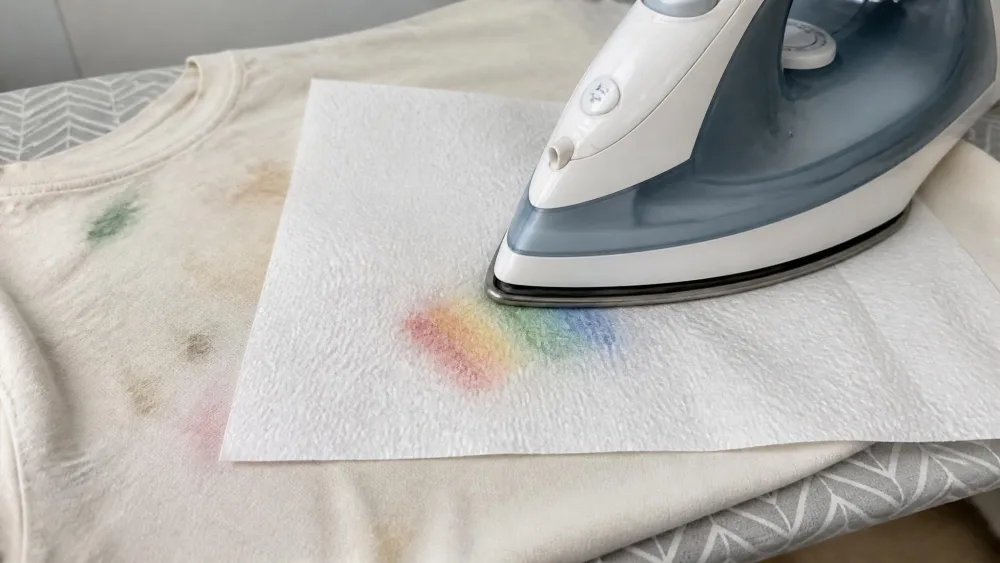
With the loose wax gone, the iron pulls the melted-in wax up and out. Sandwich the stain between two clean sheets of plain white paper towel, one under and one on top. Set the iron to low-to-medium heat with the steam off, since steam only pushes wax around. Press in short bursts of roughly 5 to 15 seconds, then lift and check; you should see wax soaking into the paper as a colored patch. The right press time depends on the stain and fabric, so lift often, since longer presses can spread the wax. Each time the paper saturates, slide a clean section under the stain.
Parent tipRotate to a clean patch of paper towel every few presses. Once the paper stops picking up color, the iron has done all it can.
The iron has limits. On a light or fresh stain it clears the wax almost entirely, but on a deeply set, dryer-melted stain it rarely finishes alone. Treat it as one step in the sequence and move on to the dish soap for whatever color remains.
How to Do It Safely
Keep the iron moving and lift it often so you never scorch the fabric or paper. Never use steam, and never iron hotter than the care label allows. If you smell scorching or see the paper browning, drop the heat and add another layer of paper towel.
Step 3: Treat the Residue With Dish Soap or Stain Remover
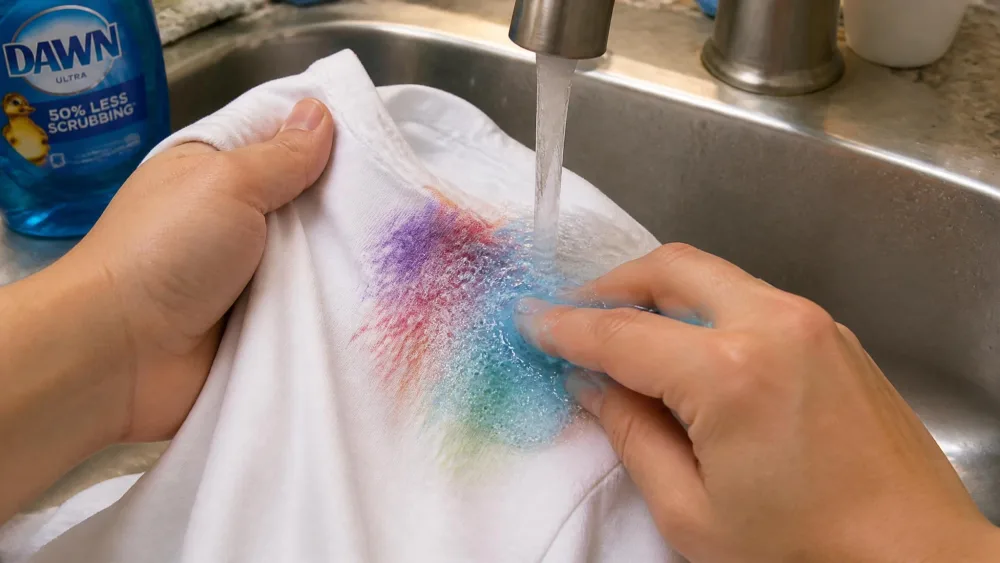
Now flush the pigment. Work a generous squeeze of liquid dish soap into the remaining stain with your fingers or a soft toothbrush. Dish soap cuts grease, which is exactly what wax residue is, so it loosens the last of the film while lifting color. Let it dwell before rinsing. Sources disagree on how long: Crayola says a few minutes, others suggest 15 to 20 minutes for a set-in stain. Rather than over-soaking once, treat it, rinse under warm running water while rubbing the fabric against itself, and re-treat if color remains. For anything still hanging on, dab in a little OxiClean or Clorox 2 before the wash; these boosters keep working on the dye during the cycle.
Step 4: Wash — and Check Before You Dry
Machine wash on the heavy-soil setting in the hottest water the fabric will allow, adding your oxygen booster with your regular detergent. Hot water keeps the loosened wax and pigment moving out rather than resettling. When the cycle ends, do not reach for the dryer. Pull the garment out wet and check the stain in good light. If any color remains, re-treat and wash again. Only once it is gone should you dry it, and air drying is safest while you confirm.
Watch outDo not return the garment to the dryer or apply high heat until the wax is completely gone, or you will heat-set the stain and make it far harder to remove. If the crayon reached your dryer in the first place, Maytag's guide to crayon melted in the dryer walks through cleaning the drum before you dry anything else.
Alternative Methods for Stubborn Stains (Vinegar & Baking Soda)
When soap alone leaves a faint tint, two pantry staples help. For a vinegar soak, mix equal parts white vinegar and water and let the stain soak 30 minutes to an hour; the mild acid breaks down leftover pigment. Sprinkle a little baking soda over the wet spot afterward for a gentle lifting fizz. For heavier residue, make a paste of 3 parts baking soda to 1 part water, spread it a quarter-inch thick, and leave it 30-45 minutes before rinsing and laundering. Both are gentle enough for most washable fabrics. WD-40 also dissolves wax quickly, but it is not in Crayola's official method, so treat it as a last resort: keep it off silk, wool, and satin, and always follow with dish soap to cut the oil before washing.
Removing Crayon That Melted in the Dryer
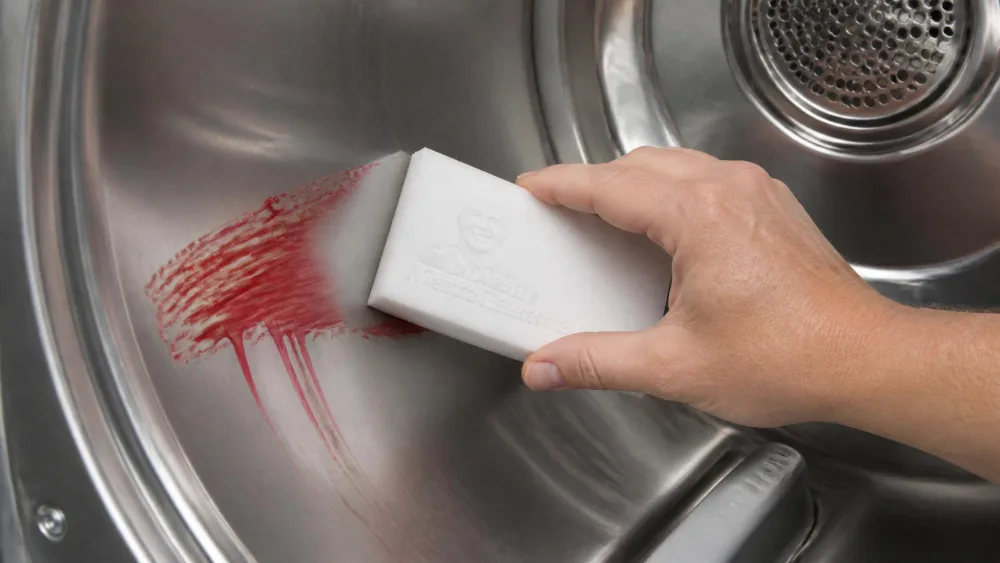
The dryer disaster needs its own plan because it rarely stays a one-garment problem. One broken crayon in a pocket can tint an entire load. In our house a single red crayon turned a whole load faintly pink, so plan to treat every affected item and clean the machine. Start with the clothes: soak the whole load in the hottest water the fabrics allow with a generous amount of dish soap, then run a long hot wash on a sanitize or heavy setting. When we hit that pink load, about a 15-minute hot soak with roughly four tablespoons of dish soap followed by a full hot cycle cleared nearly all of it in one pass, with only faint residue in a couple of mesh pockets. Then clean the drum, because leftover wax will re-stain the next load: wipe it with paper towels, scrub remaining color with a Mr. Clean Magic Eraser, and tumble a few clean, damp rags through a full cycle.
Special Fabrics: Delicate and White Clothes
Delicate fabrics like silk, wool, and satin cannot take the iron, WD-40, or the hottest wash settings. Stick to freezing and scraping the wax, then a gentle dish-soap treatment in cool-to-warm water, and consider a professional cleaner for anything you cannot risk. White clothes give you more room on the pigment: an oxygen booster works well, and for a stain that will not quit you can move up to a color-safe bleach for whites. Vinegar is safe on whites too. Just avoid chlorine bleach on any colored trim, and confirm colorfastness on a hidden seam first.
What NOT to Do
A few moves turn a fixable stain into a permanent one. Skip these:
- Do not dry the garment before the stain is gone. Heat sets the pigment, the most common way people lock in a crayon stain for good.
- Do not scrub a fresh, soft stain hard. You will grind the wax deeper and spread the color; harden it first, then scrape.
- Do not use steam during the iron step. Water pushes wax around instead of lifting it into the paper towel.
- Do not pour WD-40 on delicate or dry-clean-only fabrics, and never skip the dish-soap rinse afterward.
- Do not give up after one wash. Crayon often needs two or three rounds.
How to Prevent Crayon Stains in the Future
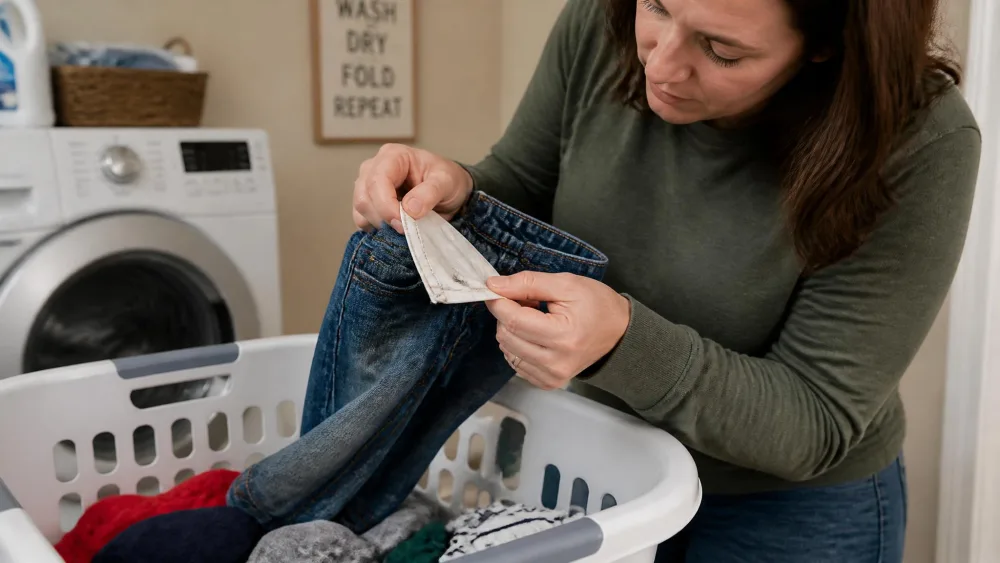
The cheapest stain is the one that never happens. Check every pocket before laundry, since a forgotten crayon is almost always how a whole load gets ruined. Store crayons somewhere cool, out of hot cars and sunny windowsills where they soften and snap. Buy washable crayons when you can, keep coloring to wipeable surfaces, and treat any crayon mark before it meets the dryer. Catching a stain while it is fresh and cool is the easiest version of this whole guide.
Frequently Asked Questions
How do I get crayon out of clothes after it's been through the dryer?
Treat it like a set-in stain. Scrape off any raised wax, use the iron-and-paper-towel transfer, then work in dish soap and an oxygen booster and wash in the hottest water the fabric allows. Air dry, repeat if color remains, and clean your dryer drum before the next load.
Can I use vinegar on colored clothes?
Usually yes, since white vinegar is much gentler than bleach, but colorfastness varies. Test a hidden seam first with your equal-parts vinegar-and-water mix; if the fabric's own dye does not budge, it is safe.
Is WD-40 safe to use on fabric?
It dissolves crayon wax well, but it is an oil, so keep it off silk, wool, satin, and dry-clean-only fabrics. On sturdy washable fabrics, apply sparingly, then cut the oil with dish soap before washing.
What's the fastest way to avoid setting the stain?
Keep heat away until the stain is gone. Do not dry the garment, do not use steam on the iron, and rinse in warm rather than scalding water during treatment. Heat is what bonds the pigment, so removing it is the whole game.
What if the stain won't come out completely?
Crayon often takes two or three rounds, so re-treat and re-wash before deciding it is permanent. Even Crayola notes full removal is not guaranteed on heat-set stains, so for a delicate or valuable garment, a professional cleaner is a reasonable next step.
Final Thoughts
A melted crayon stain looks alarming, but it rarely wins. The method works because it respects the two-part problem: lift the wax, flush the pigment, and keep heat away until the color is gone. Freeze and scrape, transfer with the iron, treat with dish soap, wash hot, and check before you dry. Be ready to repeat a round or two on a dryer-set stain. In our home the shirts and the pink laundry load both came back, and yours can too.