How to Get Crayon Off a Couch: Step-by-Step Stain Removal
Finding crayon smeared across the couch is a small heart-drop moment, but the cushion is almost never ruined. In our house, we have cleaned up more waxy streaks than we can count, and most of them came off with things we already had in the kitchen.
This guide walks through the exact steps we use, from checking your fabric to lifting stubborn marks. We will cover six removal methods, how to handle melted wax, and how to keep your couch safe while you work.
Why Crayon Sticks to Upholstery (and Whether You Can Remove It)
Crayon is mostly wax and pigment. On its own, a fresh crayon mark tends to sit on top of the fibers rather than soaking in, which is why so much of it lifts off as dry flakes. The real staining starts once the wax melts or gets pressed and heat-set into the fabric. That is when the color spreads and grips the weave.
So the honest answer is yes, you can almost always remove it. Fresh, un-melted crayon mostly scrapes away. Older or heat-set marks take patience, and stubborn or multicolored spots usually need more than one pass, so plan to repeat.
Before You Start: Check Your Couch Fabric
Before any liquid touches the cushion, find out what your couch can handle. This one step prevents the water rings and bleach spots that turn a small crayon fix into a bigger problem.
Watch outAlways test your chosen cleaner on a hidden spot first, such as the back of a cushion or a seam near the floor. Skipping this test is what turns a crayon fix into a discoloration or water ring, especially on solvent-only and delicate fabrics.
Fabric couches (polyester, microfiber, cotton blends)
Most modern couches are covered in durable synthetics like polyester, nylon, acrylic, or a microfiber and cotton blend. These usually tolerate a mild water-based cleaner, which makes crayon removal straightforward. You still test first, but you have more room to work.
Leather and faux-leather couches
Leather and faux-leather are less absorbent, so crayon tends to sit on the surface. That works in your favor. You will skip the soaking methods here and lean on gentle wiping instead, which we cover in the leather section below.
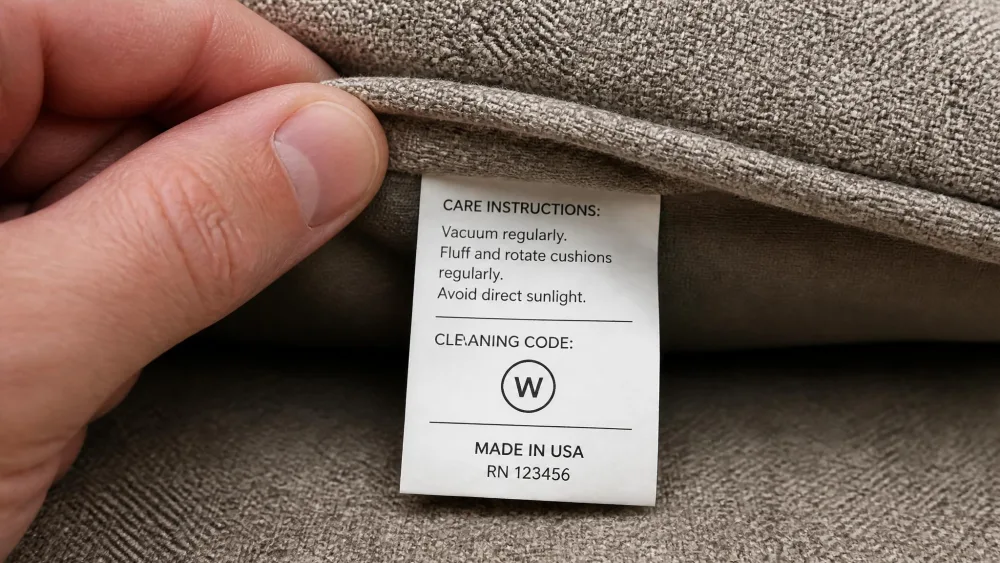
Reading the upholstery care tag (W, S, W/S, X codes)
The care tag is usually printed under a cushion or on the underside of the frame. It carries a cleaning code that tells you exactly what is safe:
- W means clean with a water-based cleaner, such as mild dish soap and water.
- S means solvent-only, so use a water-free dry-cleaning solvent and never water or steam.
- W/S means either a water-based cleaner or a solvent is fine, so start with the gentlest option.
- X means vacuum or brush only, with no liquid cleaners of any kind.
The W code is the most common and covers those durable synthetics and blends. If your tag reads S or X, be extra careful and lean toward scraping, a solvent, or a professional. You can read more in this guide to upholstery cleaning codes.
What You'll Need
You likely have most of this already. Gather it before you start so you are not hunting mid-clean:
- A dull knife or plastic scraper
- An ice cube or two (for soft, smeared wax)
- Mild dish soap and warm water
- Baking soda
- White vinegar
- Non-gel toothpaste
- A melamine (Magic Eraser) sponge
- WD-40 Multi-Use Product (for stubborn melted wax)
- Several clean white cloths and paper towels
Step 1: Scrape Off Excess Crayon
Start dry. Use a dull knife, spoon, or plastic scraper to gently lift off any visible or hardened wax. If the crayon is soft and smeared, press an ice cube on it first. Chilling the wax makes it brittle enough to flake off with the scraper instead of smearing under the blade.
Work gently and blot up the loose pigment rather than rubbing it around. The less you smear now, the less you have to clean later.
Step 2: Choose Your Removal Method
With the loose wax gone, pick a method that suits your fabric and how stubborn the mark is. We start with the gentlest option and move up only if the stain holds on. Whatever you reach for, blot from the outer edge inward. Rubbing outward is the mistake that spreads the crayon into a bigger ring.
Method 1: Dish soap and warm water
This is our first try on any washable couch. Mix a little mild dish soap into warm water, dab a clean cloth in the solution, and blot the stain from the outer edges inward. Reapply with a fresh section of cloth as the color transfers.
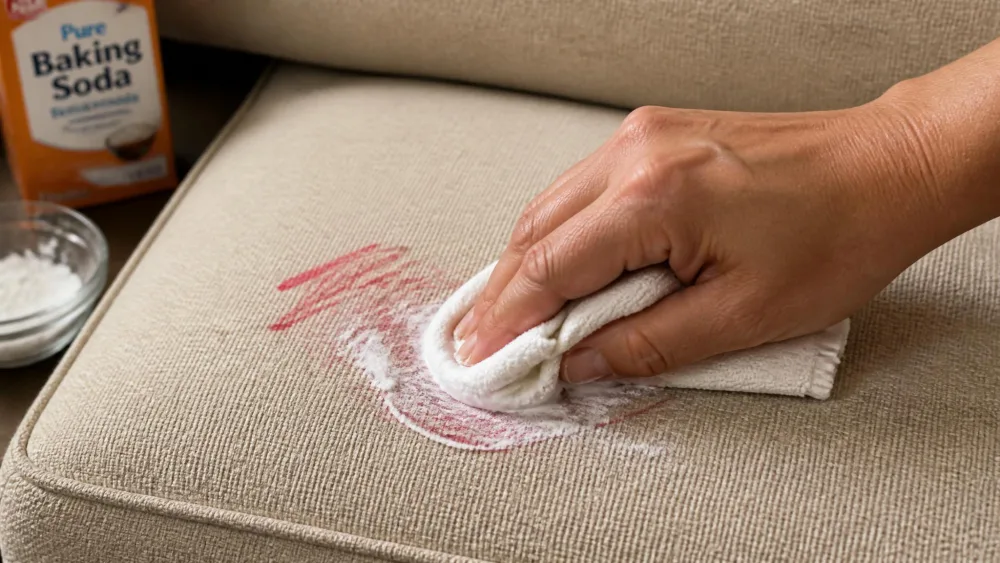
Method 2: Baking soda paste
Baking soda is gentle and safe for light surface marks. Mix it with water into a thick, spreadable paste, apply it to the marks, and gently rub in circles with a soft cloth or sponge. Wipe away the residue with a damp cloth so it does not dry into a chalky film.
Method 3: White vinegar
Vinegar helps break down waxy buildup. Dampen a cloth with white vinegar, but do not soak it. Rub the stain in circular motions and let it sit for about 5 minutes to loosen the wax, then wipe with a damp cloth and dry. Because vinegar can affect some fibers, test it on that hidden spot first.
Method 4: WD-40 (for stubborn wax)
For melted or heat-set wax that will not budge, WD-40 dissolves the crayon well. Spray a little onto the mark and let it work for a moment. The catch is that WD-40 lifts the wax but leaves its own oily film, so you have to follow immediately with dish soap or you just trade one stain for a grease stain. Work liquid dish detergent into the spot, then sponge with cold water and a clean white cloth and blot dry.
The WD-40 Multi-Use Product label lists crayon removal from upholstery as a use, with a note to test a small area first. Keep it off S-code and X-code fabrics.
Method 5: Non-gel toothpaste
Plain non-gel toothpaste is a mild abrasive that works well on small stubborn spots. Apply a small amount to a soft cloth or an old toothbrush, rub gently in circles for 1-2 minutes, then wipe with a damp cloth. Repeat if the mark is still there. Use non-gel paste only, since gel formulas can add their own tint.
Method 6: Magic eraser (for hard/leather surfaces)
A melamine sponge, sold as a Magic Eraser, is great for lifting crayon from harder surfaces and leather. Dampen it and use light pressure. Too much scrubbing can abrade a finish, so go slow and check your progress often.
Which Method Should You Use? (Quick Comparison)
Here is how the six methods stack up so you can match the right one to your couch:
| Method | What You Need | Best For | Caution |
|---|---|---|---|
| Dish soap + warm water | Mild dish soap, warm water, clean cloth | Fresh marks on W or W/S fabric couches | Blot edge to center; don't oversaturate |
| Baking soda paste | Baking soda, water, soft cloth | Light surface marks; a gentle first try | Rub gently; wipe residue fully |
| White vinegar | White vinegar, cloth | Waxy buildup; let sit about 5 minutes | Damp, not soaked; test first |
| WD-40 | WD-40 Multi-Use Product, dish soap | Stubborn or melted wax | Leaves oily film; must follow with dish soap; avoid on S/X |
| Non-gel toothpaste | Non-gel toothpaste, soft cloth or toothbrush | Small stubborn spots | Non-gel only; rub 1-2 minutes gently |
| Magic eraser | Melamine sponge, water | Hard surfaces and leather | Light pressure; can abrade finishes |
Step 3: Remove Melted or Heat-Set Crayon
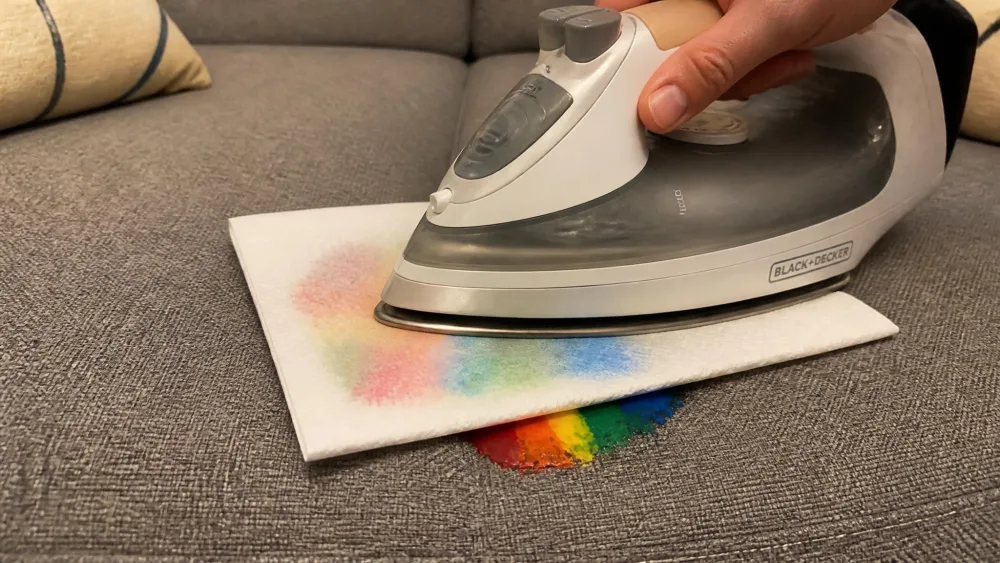
Melted crayon looks scary, but the iron trick pulls it right out of the weave. Lay a few paper towels, or a piece of brown paper bag, over the crayon. Run a warm, not hot, iron over the paper so the melting wax transfers off the fabric and onto the paper. As each section of paper soaks up wax, move to a clean section and keep going.
Keeping the iron warm rather than hot is the part that matters. Too much heat drives the wax deeper instead of pulling it up into the paper. Once the wax is gone, you can treat any leftover color with one of the methods above.
Parent tipFor a broad melted patch, use fresh paper the moment you see it darken with wax. A saturated sheet just presses the crayon back down.
Step 4: Blot, Rinse, and Dry the Area
After your chosen method lifts the crayon, wipe the spot with a cloth dampened in plain water to rinse away any cleaner. Blot, do not rub. Then press a dry towel over the area to pull up as much moisture as you can.
Let the couch air dry completely, and do not apply heat until the stain is fully gone. Heat can set any remaining pigment, which makes the next pass much harder.
Step 5: Treat Any Remaining Oil or Color Residue
Sometimes the wax is gone but a faint color shadow lingers, especially with dark or multicolored crayons. Go back over it with a little dish soap solution and blot patiently. For an oily mark left by WD-40, a second round of dish detergent usually clears it.
For lingering pigment on a sturdy, water-safe fabric, you can dab a little rubbing alcohol on a cloth. Test it on the hidden spot first, since it is stronger than the other options. If a shadow still remains after a couple of passes, stop and let it dry rather than scrubbing harder.
How to Get Crayon Off a Leather Couch
Leather is more forgiving than fabric because the crayon sits on the surface. Wipe the mark with a soft cloth dampened in warm water and a drop of mild soap. For anything stubborn, a lightly dampened melamine sponge lifts crayon well under light pressure.
Avoid soaking leather, harsh solvents, and hard scrubbing, all of which can dull or damage the finish. Wipe the area dry when you finish, and follow with a leather conditioner if your couch usually gets one.
What Not to Do (Common Mistakes That Set the Stain)
The fastest way to make a crayon mark worse is to grab random cleaners from under the sink, mix solutions together, or scrub aggressively. That is what frays fabric and bleeds the color deeper. A few habits save you every time:
- Do not skip the hidden-spot test. It is the difference between a clean fix and a bleach spot.
- Do not rub outward. Always blot from the edge toward the center so the stain does not grow.
- Do not apply heat too soon. Wait until the color is fully gone before anything warm touches the fabric.
- Do not expect one pass to do it. Stubborn marks need repeats, so be patient rather than forceful.
NoteThe mistake we made early on was reaching for whatever spray was closest and scrubbing hard. Slowing down, testing first, and blotting gently has saved more of our cushions than any single miracle product.
Getting Crayon Off Other Surfaces (Walls, Wood, Carpet, Clothes)
Crayon rarely stays on just the couch. If the same set of marks landed elsewhere, we have dedicated walkthroughs for each surface, since the safe method changes with the material:
- How to get crayon off walls
- How to get crayon off wood
- How to get crayon out of carpet
- How to get crayon out of fabric
- How to get melted crayon out of clothes
When to Call a Professional Upholstery Cleaner
Most crayon stains never need a pro, but a few do. Call a professional upholstery cleaner when the stain persists after correct treatment, or when more scrubbing clearly does more harm than good. This is especially true on delicate S-code fabrics, antique pieces, or a couch you cannot afford to risk.
How to Prevent Crayon on Furniture Going Forward
You cannot fully childproof a coloring session, but a few habits cut down the cleanup. Keep crayons at a designated table with paper taped down, and store them out of reach between sessions. Washable crayons are far kinder to upholstery than the classic wax kind. And treat any mark while it is fresh, before it can melt or heat-set.

Frequently Asked Questions
How do you get melted crayon off a fabric couch?
Lay paper towels or a brown paper bag over the wax and run a warm, not hot, iron over the paper. The wax melts and transfers onto the paper. Move to a clean section as it soaks up, then treat any leftover color with dish soap and water.
How do you remove crayon from a microfiber couch?
Microfiber is usually a W-code fabric, so start with mild dish soap in warm water and blot from the edge inward. Baking soda paste works well for light marks. Always test a hidden spot first, and let the area air dry before any heat.
Does a hair dryer or iron really work on upholstery?
The iron and paper-towel method works well for melted wax because the paper absorbs it. Keep the iron warm, not hot, or you will drive the wax deeper. A hair dryer is gentler but slower and less reliable, since it can soften and spread the wax without anything to catch it.
Will WD-40, vinegar, or rubbing alcohol stain or damage my couch?
Each can affect certain fabrics, so a hidden-spot test is essential. WD-40 leaves an oily film that you must follow with dish soap. Vinegar and rubbing alcohol are stronger on fibers, so keep them off S-code and X-code fabrics and use them sparingly.
How do you get old or dried crayon out of a couch?
Dried crayon that never melted usually scrapes off as flakes with a dull scraper. If it has set in, expect more than one pass. Work through dish soap, baking soda, then vinegar, and save WD-40 for the most stubborn spots, always followed by dish soap.
How do you get crayon off a leather couch?
Wipe the mark with a soft cloth, warm water, and a drop of mild soap. For stubborn spots, use a lightly dampened melamine sponge with light pressure. Avoid soaking or harsh solvents, and condition the leather afterward if you normally do.