How to Get Crayon Off Walls: 6 Easy Methods That Actually Work
Sooner or later, a wall becomes a canvas. In our house it happened during a quiet ten minutes we thought were safe, and a red streak appeared. The good news: crayon almost always comes off, and you probably already own everything you need.
Over the years we have wiped marks off satin walls, flat paint, and one unlucky doorframe. Below are the six methods we keep coming back to, from the gentlest first try to the heaviest hitters.
Why Crayon Comes Off Walls (Quick Primer)
Crayon is mostly wax and pigment, and it sits on top of the paint rather than soaking in, which is why it lifts so readily. Every method here either loosens the wax with oil or mild acid, or gently abrades the mark away. That also explains the risk: the same action that lifts wax can dull paint if you push too hard. So start gentle and escalate only if you have to.
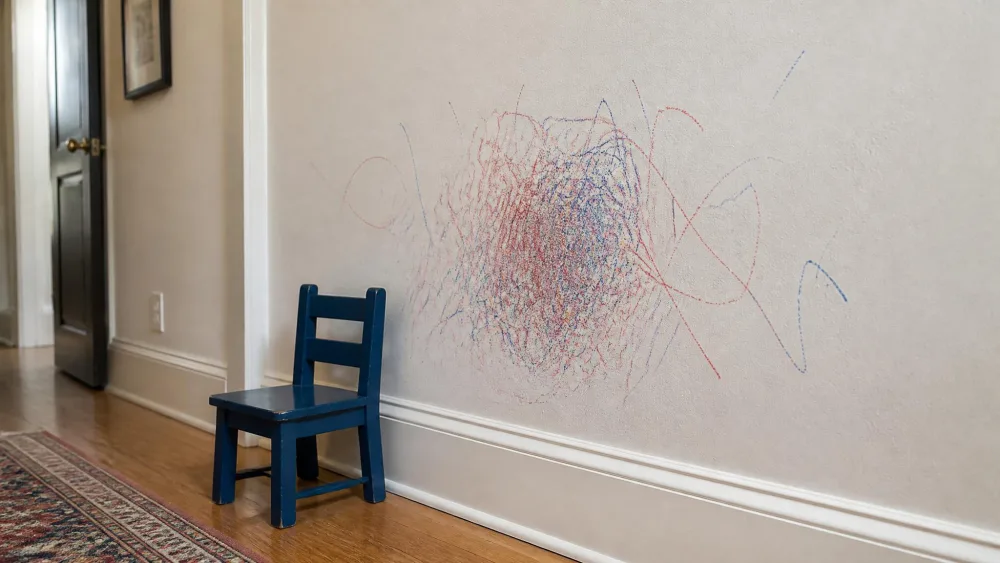
Before You Start: Test a Small, Hidden Spot First
Before any method touches the visible mark, test in an inconspicuous spot first. We use a low corner behind a door. Rub the method there, let it dry, and check that the paint sheen and color still match. This habit has saved our walls more than once. Flat and matte finishes are the most fragile, and a shiny burnished patch is harder to hide than the crayon was.
Parent tipKeep a soft microfiber cloth, an old toothbrush, and a melamine sponge in your caddy. Treating a mark while it is fresh is when almost everything works better.
Method 1: Magic Eraser
A Mr. Clean Magic Eraser is simply melamine foam. You wet it, wring it out, and rub. It needs no added cleaner, and in our own five-method comparison it was the clear winner, taking the least effort and working the fastest. It lifted even the marks the other methods left behind.
The catch is that melamine foam is mildly abrasive. It works like ultra-fine sandpaper, so light pressure is everything. It also works best on fresh marks. Older, ground-in crayon takes a few more passes.
Step-by-Step
- Dampen the eraser with water and squeeze out the excess. Do not soak it.
- Rub the crayon with light, even pressure using small circles.
- Wipe away any residue with a damp cloth, then dry the spot.
Watch outOn flat, matte, or satin walls, press gently and stop the moment the mark lifts. We tested on a satin finish and found that too much pressure can burnish or thin the paint. Spot-test first, every time.
Method 2: Baking Soda Paste
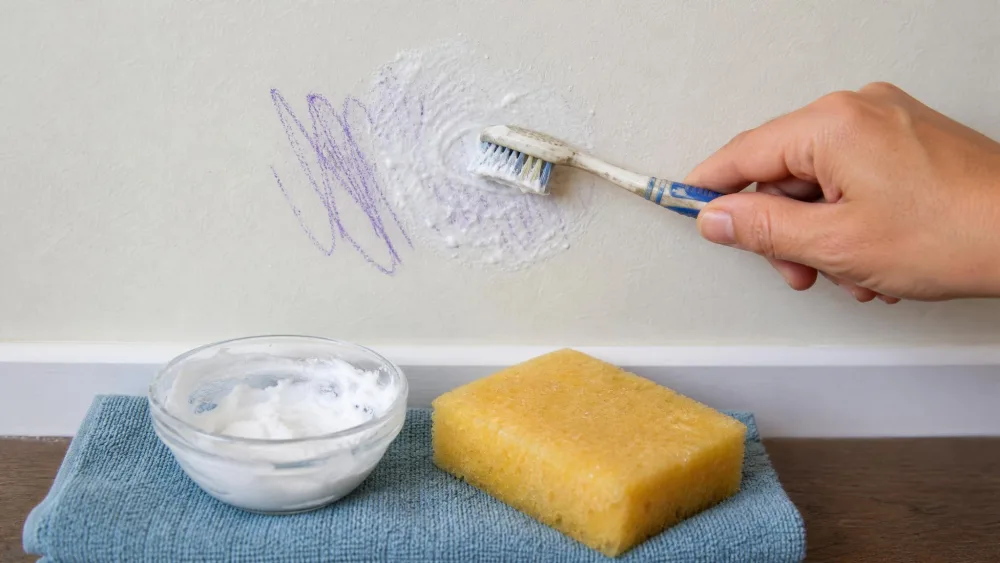
Baking soda earns its place when a mark needs more muscle than a damp cloth. Mix roughly 3 parts baking soda to 1 part water into a thick paste. About 3 tablespoons of baking soda to a tablespoon of water gives a spreadable consistency. We will be honest about this one: it needed real scrubbing with a toothbrush to shift the crayon, noticeably more elbow grease than the dish-soap route.
Step-by-Step
- Stir the paste until it is thick and spreadable.
- Dab it onto the marks and scrub lightly with a damp sponge or soft toothbrush.
- Wipe clean with plain water and dry.
Because baking soda is slightly abrasive, keep the pressure light on delicate finishes.
Method 3: Dish Soap and Warm Water
This is where we start now. In our testing, dish soap and warm water was the least demanding method by a wide margin, and worth trying before anything abrasive. A grease-cutting Dawn dish soap handles most light and fresh marks on its own. One detail matters more than you would expect: rinse the cloth often. A dirty cloth just smears melted wax across the wall instead of lifting it.
Step-by-Step
- Add a few drops of dish soap to a bowl of warm water.
- Wet a microfiber cloth, wring it out, and rub the marks firmly but gently in circular motions.
- Rinse the cloth often, then wipe the wall with clean water and pat dry.
Method 4: White Vinegar
When a waxy mark shrugs off soap, mild acid is the next step. Distilled white vinegar breaks apart the wax the crayon leaves behind, and it is gentle enough for most painted walls. We reach for an old toothbrush so we can work it into just the mark and nowhere else. If a vinegar smell lingers, a quick pass with dish soap and water clears it.
Step-by-Step
- Dip an old toothbrush or soft-bristled brush into white vinegar.
- Scrub the marks in small circles, keeping the vinegar on the crayon only.
- Rinse with plain water and dry.
On flat or matte paint, go easy. Repeated acidic scrubbing can dull the finish, so spot-test and use the lightest touch.
Method 5: WD-40 (for Stubborn Marks)
For a mark that will not budge, WD-40 is our stubborn-spot tool. Its solvents dissolve the oils and wax so the crayon wipes away. It works, but we keep it near the bottom of the list on purpose. The usual way people damage a wall here is scrubbing too hard and taking paint off with the crayon, so watch every wipe.
Step-by-Step
- Spray a little WD-40 onto a folded paper towel, never straight onto the wall.
- Gently rub the marks, switching to a fresh section of towel as it picks up color.
- Wash off the oily residue with dish soap and water, then wipe with a damp microfiber cloth.
Watch outWD-40 is a solvent, so it can lift paint if you press hard or linger. Test a hidden spot first, use the lightest pressure that works, and stop the moment the crayon is gone.
Method 6: Mayonnaise
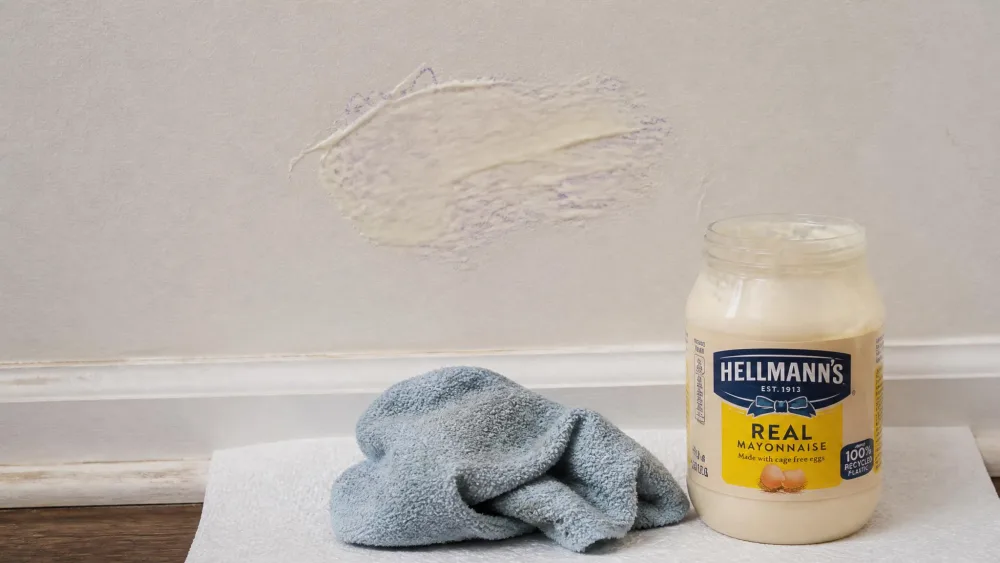
Mayonnaise is the gentle, oddball last resort, and the kindest option for delicate paint. Full-fat mayo works best because the oil is what dissolves the wax. Rub it onto the marks, let it sit about 10 minutes, then wipe away. We will set expectations honestly: in our comparison, mayonnaise underperformed badly. It did not come close to the Magic Eraser and left marks behind. We keep it for light marks on fragile finishes where abrasion is off the table.
Step-by-Step
- Spread full-fat mayonnaise over the marks with a cloth.
- Let it sit for about 10 minutes so the oil can break down the wax.
- Wipe away and clean the spot with a damp cloth. Keep pets away while it sits so they do not lick it off.
What to Watch For on Flat vs. Glossy Paint
The finish on your wall decides how aggressive you can be. Glossy and semi-gloss paints are the most forgiving. Their harder surface shrugs off scrubbing, and most of these methods clean up without a trace. Flat and matte finishes are the fragile ones. Abrasive methods and solvents can leave a dull burnished spot or lift color. On those walls, start with dish soap or mayonnaise and use the lightest pressure that works.
One more rule from experience: steel wool belongs only on wallpaper, never on painted drywall. It will strip paint every time. For more, the American Cleaning Institute and a university extension stain-removal guide both keep helpful references on crayon marks.
If you are already planning to repaint, a quick wash with dish soap to lift wax and dust gives your primer a clean surface to grip. Prevention helps too. You can kid-proof your furniture from crayons and markers and store kids' markers and crayons out of reach between projects.
Frequently Asked Questions
Does a Magic Eraser damage painted walls?
It can if you press too hard, because melamine foam is mildly abrasive. Use light pressure, test a hidden spot first, and stop as soon as the mark lifts. It is safest on glossier finishes and riskiest on flat or matte paint.
Will WD-40 or mayonnaise remove crayon marks?
Both dissolve the wax. WD-40 is strong and fast on stubborn marks, but it is a solvent, so scrub gently and wash off the residue afterward. Mayonnaise is far gentler but much weaker, so we save it for light marks on delicate finishes.
How do I get crayon off flat or matte paint without leaving a mark?
Start with the gentlest method, dish soap and warm water, and use the lightest pressure you can. Avoid abrasives and solvents on flat paint when possible, and always test an inconspicuous spot first so any dulling stays hidden.
How do I remove crayon before repainting?
Wash the area with a few drops of dish soap in warm water to lift the wax and dust, then let it dry fully. Clean, wax-free walls give primer and fresh paint a surface they can grip.
Is the method different for wallpaper versus painted drywall?
Yes. Wallpaper can handle a little more, and steel wool should only be used on wallpaper, never on painted drywall. On drywall, stick to soft cloths, sponges, and light pressure to protect the paint.
Final Thoughts
If we could give you one takeaway, it is this: start gentle and escalate slowly. Dish soap and warm water clears most fresh marks, a Magic Eraser handles the stubborn ones with the least effort, and the rest cover the odd job in between. Test a hidden spot, keep your pressure light on flat paint, and you will almost always win. When a new mark shows up next week, and it will, you will know exactly what to reach for.