Best Way to Clean Crayon Off Walls: 7 Methods That Actually Work
You walk into the room and there it is: a bright red scribble running along the hallway paint. Take a breath, because crayon comes off walls more easily than it looks. The wax sits on top of the paint rather than soaking in, so the right method lifts it with almost no scrubbing.
We tried these methods on a set of marked satin-finish walls, watching which lifted crayon fastest and which risked the paint. Most of what you need is already in your cupboard. Below are seven ways, ranked by how well they worked for us.
What You'll Need (Crayon-Cleaning Tools & Supplies)
You don't need a cabinet full of specialty cleaners. Most of these methods share the same short supply list, so gather them once and you're set.
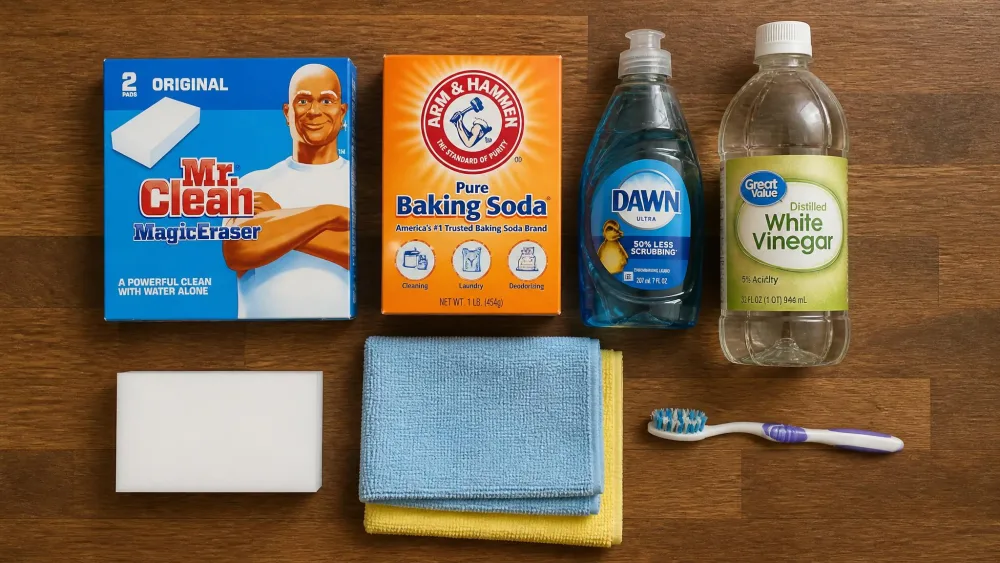
- A Mr. Clean Magic Eraser or a store-brand melamine-foam sponge
- Baking soda and a couple of soft microfiber cloths
- Gentle dish soap, such as Dawn, and a bowl of warm water
- Distilled white vinegar and an old soft-bristled toothbrush
- A plastic credit card for scraping off excess wax first
Before You Start: Test a Small Spot First
This is the step people skip, and the one that saves your paint. Test any method on an inconspicuous spot first, like a low corner behind a door. Start gently and build up pressure only if you need to, since most damage comes from scrubbing too hard.
Before you wet anything, scrape off the raised wax with the dull edge of a plastic credit card, so you have less to clean. The American Cleaning Institute's guidance on removing crayon marks mirrors what we found: work from gentle to firm, never the other way around.
Watch outNever use steel wool on painted walls. It scratches and dulls the finish almost instantly. Save it only for scratched-in crayon on sturdy wallpaper, and even then test a hidden patch first.
7 Ways to Remove Crayon From Walls
Here are the seven methods, best first. We put the top four head to head.
1. Magic Eraser (Best Overall)
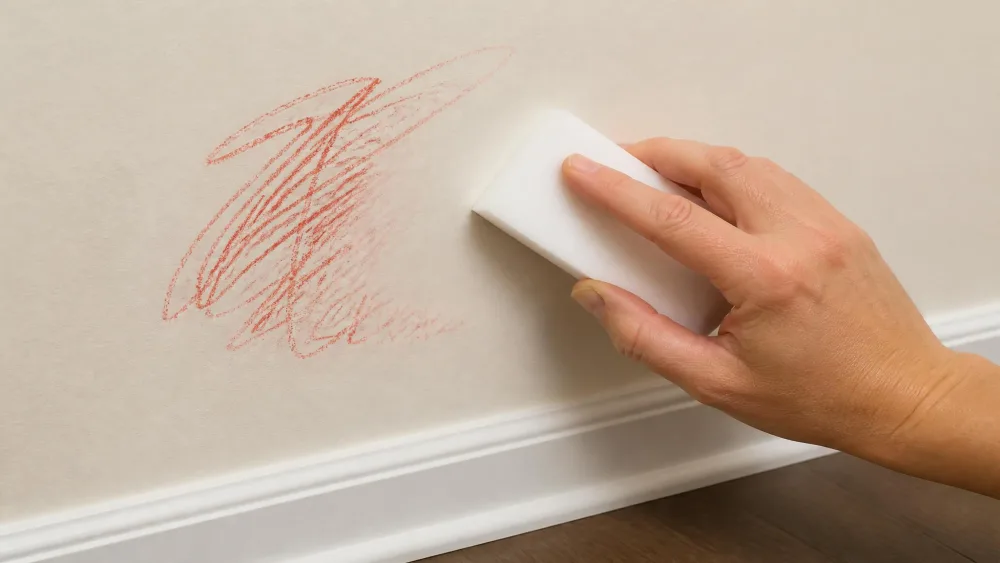
Across our head-to-head test, the Magic Eraser was the clear winner. It took the least effort and worked fastest, lifting even stubborn marks with gentle circular motions. Wet the melamine-foam eraser, squeeze out the excess water, then rub the crayon with light-to-firm pressure and pat dry.
Since the eraser is mildly abrasive, keep your touch light so you don't dull flat or glossy finishes. It works best on fresh crayon and lifts permanent marker too. Older, ground-in marks just take a few more passes.
2. Baking Soda Paste
Baking soda is the best household option, especially on flat or matte paint. Mix roughly 3 parts baking soda to 1 part water into a thick paste; that 3:1 ratio is the sweet spot. Apply it with a damp cloth, rub gently in circles, then wipe clean and rinse off the residue. It worked for us, but needed more scrubbing than the eraser, and never harmed the paint.
3. Dish Soap and Warm Water
The gentlest starting point, and often all a light fresh mark needs. Add a few drops of Dawn to warm water, dampen a soft cloth, and rub gently in circles. Rinse with a clean damp cloth, then pat dry; it took extra rinsing to clear the residue. Don't over-wet the wall, because soaking flat paint can leave marks, so wring the cloth well.
4. White Vinegar
Vinegar's acidity breaks down the wax in the crayon, which makes it a strong choice for waxy buildup. Dip an old toothbrush in distilled white vinegar, scrub the mark gently in circles, then wipe with a cloth and warm water. It cut the crayon well, for about the same effort as dish soap. Finish with a plain water rinse to cut the vinegar smell.
5. Non-Gel Toothpaste
Non-gel toothpaste, the baking-soda type, works like a mild abrasive paste. Rub a small amount onto the mark with a cloth, then wipe clean with a damp rag. It behaves much like the baking-soda method, so treat it as a handy backup rather than a front-runner.
6. WD-40
WD-40 is an oil-based solvent, so it lifts the crayon wax off the surface. Spray a little onto the mark and let it soak briefly. There's no exact dwell time to clock, so let it soften and re-apply rather than timing it, then wipe it away with a clean cloth. Because WD-40 leaves an oily film, always follow with warm soapy water and a dry pass, or you'll trade a crayon mark for a grease spot that dulls the paint sheen.
7. Hair Dryer + Wipe (Heat Method)
Heat softens wax, which makes stubborn marks let go. Warm the crayon with a hair dryer on a low setting, then wipe it away with a soft cloth. Add a little dish soap for lingering residue, and keep the dryer moving so you don't overheat the paint.
Best Method by Wall Type (Flat, Satin, Semi-Gloss, Wallpaper)
The safest method depends on your paint. We ran our tests on satin-finish walls, and flat or matte paint needed extra caution because pressing too hard risked marring the finish.
- Flat or matte: Start with baking soda paste or dish soap, and keep the cloth barely damp. Over-wetting is the easiest way to leave a water mark here.
- Satin: Almost anything works. The Magic Eraser is fastest, just keep the pressure light.
- Semi-gloss: Durable and forgiving. Dish soap or the eraser both lift marks easily.
- Wallpaper: Identify the type first. Vinyl or vinyl-coated wallpaper is water-tolerant, so a well-wrung sponge with a little mild dish soap lifts crayon safely. Uncoated paper wallpaper is not, so stick to dry methods instead. Either way, scrape gently with a credit card first and test a hidden corner (more in the FAQ below).
If the marks have spread beyond the wall, our guides on how to clean crayon off plastic and how to get crayon off wood cover those surfaces the same gentle way.
What to Avoid (So You Don't Damage the Paint)
The cleaner is rarely the problem. Used gently, none of these methods damaged the tested paint. The failure mode is almost always pressing too hard or soaking the wall.
A few things to skip: don't scrub at full force on the first pass, don't drench flat paint, and never reach for steel wool on anything painted. UGA Extension's stain-removal guidance suggests a detergent solution rather than bar soap, then a rinse. If a faint trace remains, a pass of glass cleaner works as a backup.
The cleaner is almost never what wrecks the paint. Pressing too hard is. Start gentle and let the wax do the leaving.
How to Prevent Crayon Marks on Walls
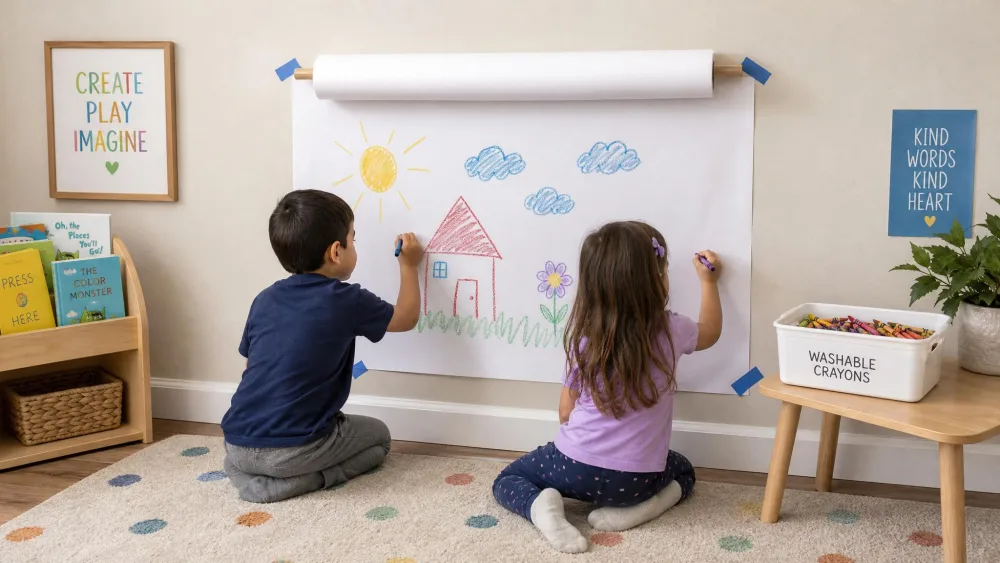
You can't stop kids from wanting to express their creativity, and you wouldn't want to. Switching to washable crayons turns most future scribbles into a quick wipe instead of a scrubbing project.
Set up a drawing zone with a taped-up roll of paper at kid height, keep crayons within reach only at the table, and hang a small chalkboard for when they really want a wall. For cleaners built for this job, see our roundup of the best cleaners for crayon on walls.
Frequently Asked Questions
Does crayon stain differently on new versus old paint?
Yes. Fresh, cured paint is smooth, so the wax sits on top and wipes away easily. Older or worn paint has micro-scratches where wax works in, so those marks take more passes and may need a follow-up pass of glass cleaner.
Does mayonnaise really remove crayon from walls?
It can, but it underperformed for us and we wouldn't reach for it first. Rub full-fat mayonnaise onto the mark, let it sit about 10 minutes, then wipe clean. A Magic Eraser or baking soda paste works far better.
Will WD-40 get crayon off the wall?
Yes. As an oil-based solvent it lifts the crayon wax. Spray a little on, let it sit briefly, wipe it away, then wash the spot with warm soapy water so you don't leave an oily residue.
Does toothpaste or baking soda remove crayon?
Both do. Baking soda mixed into a 3:1 paste with water is the stronger, better-tested option and is gentle on flat paint. Non-gel toothpaste is a milder version of the same abrasive paste.
Can I use a Magic Eraser on a textured or painted-over wall?
Go carefully. A Magic Eraser is mildly abrasive, and on a raised texture it grabs the high points first, so it can burnish those ridges before the crayon is gone. Press lightly, work the grooves with a corner of the eraser or an old toothbrush, and test a hidden patch first.
How long should I wait before repainting a cleaned spot?
Let the cleaned area dry fully first, at least a couple of hours, and longer if you used WD-40 or a soapy rinse. Wipe away any oily or soapy film, then prime any spot where crayon soaked into worn paint so the wax doesn't bleed through the fresh coat.
Final Thoughts
Crayon on the wall feels like a disaster but is one of the easier messes to fix. A Magic Eraser handles most marks in seconds, and baking soda or dish soap covers you with things you already own. Whichever you choose, test a small spot first and let the wax do the leaving.