How to Clean Crayon Off Walls: 6 Best Cleaners and Methods
You walk into the hallway and there it is, a bright waxy scribble marching across the paint. If you're staring at crayon on your wall and wondering whether it comes off without wrecking the finish, the good news is that it almost always does. We put five methods head to head on our own walls, tested them on both fresh and set-in marks, and sorted out which cleaner actually works on which surface. Here's what held up.
Quick Answer: The Best Way to Remove Crayon From Walls
For most walls, a damp Magic Eraser is the fastest fix. In our side-by-side testing across five methods, the Magic Eraser was the clear winner. It took the least effort and worked the fastest, lifting even the most stubborn marks with just a few light passes.
That said, it isn't the gentlest option, and it can be too aggressive for flat or matte paint. So the honest best answer depends on your paint finish. Start gentle with dish soap and warm water, move up to a mild abrasive if you need to, and save the Magic Eraser or WD-40 for marks that won't budge.
One thing we noticed every single time: fresh crayon marks come off dramatically easier than old set-in ones. How fast you respond matters more than which cleaner you grab.
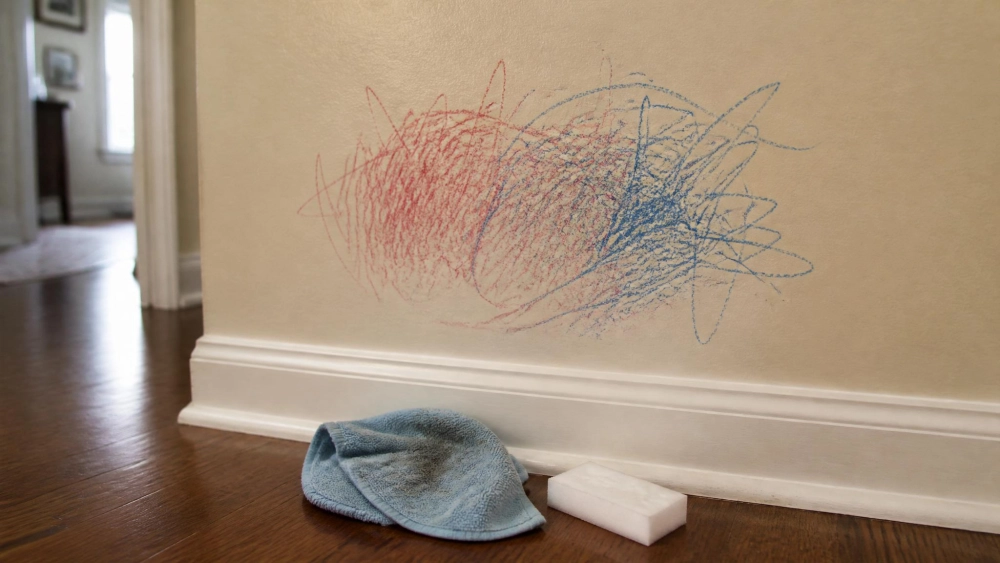
What You'll Need (Supplies Checklist)
You almost certainly have most of these on hand already. These are common household items, not special-order supplies:
- A Magic Eraser (melamine foam sponge)
- Gentle dish soap, like Dawn
- Baking soda
- Distilled white vinegar
- A can of WD-40 (for stubborn marks only)
- Plain white, non-gel toothpaste
- Two or three clean microfiber cloths
- A soft old toothbrush
- A plastic credit card or similar dull edge for scraping
Parent tipKeep a pack of plain baby wipes in the room where your kids draw most. In our house they handle small, fresh marks surprisingly well and are the lowest-friction thing to grab before a scribble sets.
Before You Start: Identify Your Paint Finish and Spot-Test
Before you touch the mark, figure out what kind of paint you're working with. Flat and matte finishes are the most delicate. They scratch, burnish, and lift far more easily than satin, eggshell, or semi-gloss. Glossier paint is tougher and more forgiving, which is why a Magic Eraser that dulls a matte wall can leave a satin wall looking untouched.
Always test in a hidden spot first. Pick an inconspicuous spot behind a door or below a light switch, run your chosen method there, and let it dry before you commit to the visible mark. Thirty seconds of testing saves you from trading a crayon scribble for a permanent dull patch.
Watch outThe most common self-inflicted mistake we see is over-scrubbing and over-wetting. Too much water or too much pressure damages the paint regardless of which cleaner you use. Work gently and let the cleaner do the job.
Best Cleaners and Methods for Crayon on Walls
Here are the five methods we tested head to head, plus a few pantry tricks worth knowing, ordered roughly from gentlest to most aggressive. Work down the list and stop as soon as the mark lifts.
Magic Eraser (Melamine Foam) — Best Overall
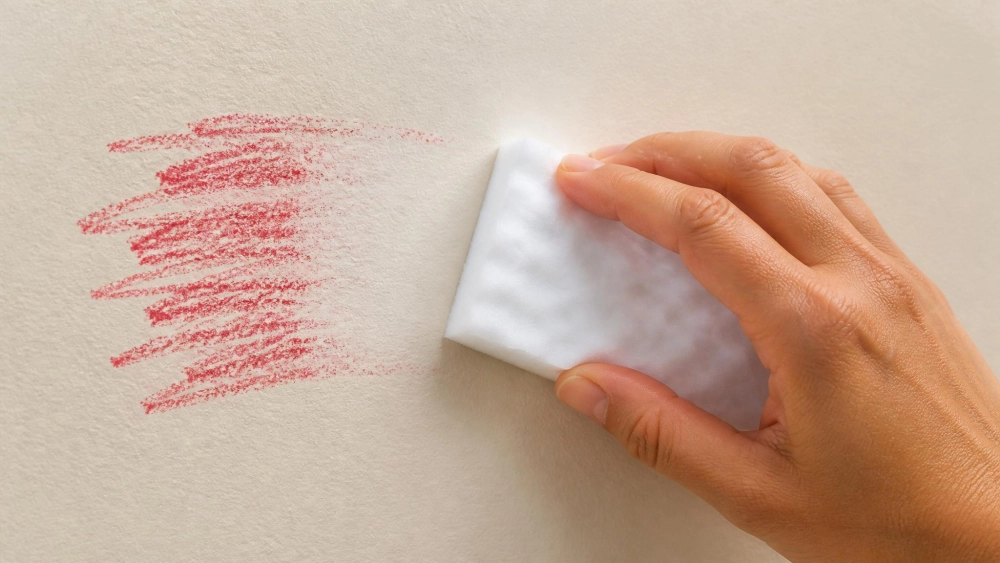
The Magic Eraser is melamine foam, a fine abrasive that needs no added cleanser and activates with plain water. Dampen it, squeeze out the excess, spot-test, then rub the crayon and wipe away the residue. In our testing it beat every other method on both speed and effort.
The catch is that same abrasiveness. On flat or matte paint it can burnish or lift the finish, leaving a dull spot. Pressing hard is what does the damage. When we used light pressure, a satin wall held up far better than a flat one. Keep your touch light and let the foam glide.
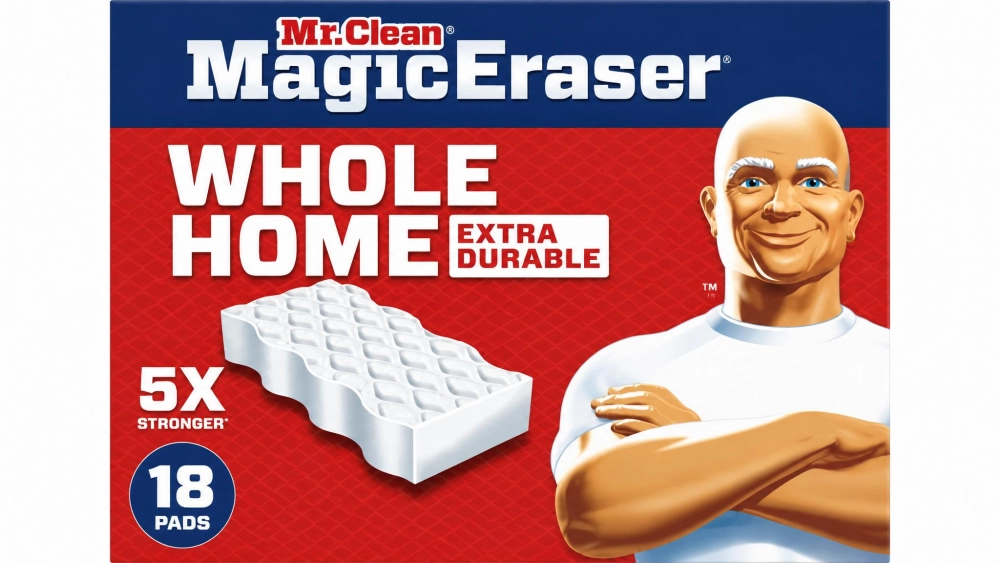
Our pick is the Mr. Clean Magic Eraser Extra Durable, which held its shape longer than the standard sponges through repeated passes.
Dish Soap and Warm Water — Gentlest First Try
This is where we always start on delicate paint. Put a few drops of gentle dish soap in warm water, dip a damp microfiber cloth, and wipe the mark in small circular motions. It lifted fresh, light marks cleanly without any risk to the finish.
If you want a more precise recipe, the University of Georgia Extension suggests 1 teaspoon of white dishwashing detergent per cup of lukewarm water. Whatever ratio you use, don't over-wet the wall. A damp cloth beats a soaking one every time.
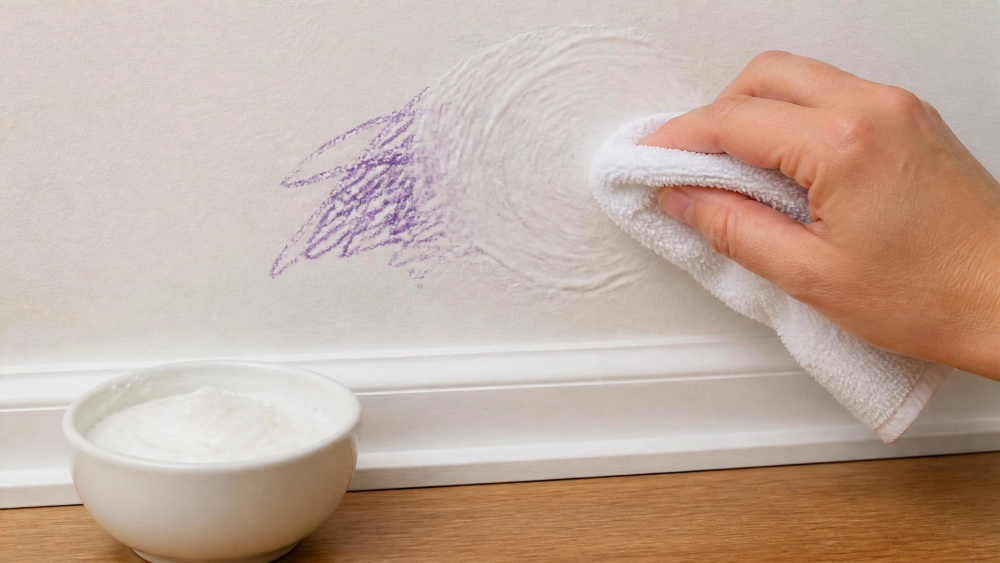
Baking Soda Paste — Mild Abrasive
Baking soda gives you gentle grit without harsh chemicals. Mix roughly 3 parts baking soda to 1 part water into a thick paste, apply it to the mark, and scrub lightly in circular motions before wiping clean. Spot-test first, because the abrasive can dull matte paint.
It works, but be ready for it. In our testing the baking soda paste needed sustained circular scrubbing, noticeably more effort than a Magic Eraser for the same mark.
White Vinegar Solution — Natural Option
Vinegar's acidity helps break down the crayon wax, and it's a solid natural choice if you'd rather skip commercial cleaners. Dilution varies from straight distilled vinegar to a 1:1 vinegar-water mix depending on how set-in the mark is. For a fresh scribble, diluted is plenty; for older wax, go stronger.
The key technique is to keep the vinegar off the wall directly. Spray it onto the cloth or a soft old toothbrush, then work the mark. That keeps drips from running down and soaking the paint below.
NoteKeep vinegar off unsealed or delicate wallpaper. It's safe on most painted walls, but the moisture can mark porous paper.
WD-40 — For Stubborn, Set-In Marks
When a mark won't lift any other way, WD-40 is the heavy hitter. Spray a little onto a clean cloth, not directly onto the wall, wipe the crayon away, then wash the area with dish soap to remove the oily film it leaves behind. That final wash isn't optional.
Use it carefully. WD-40 is an oily solvent, so it risks staining flat or matte paint. Reserve it for stubborn marks, keep it off delicate finishes, and always clean off the residue afterward.
Toothpaste and Other Household Fixes (Mayonnaise, Pencil Eraser)
A few pantry tricks round out the list. Plain white, non-gel toothpaste works as a mild abrasive, much like baking soda. Apply a little and gently scrub. For small, light marks, the pink end of a standard pencil eraser, dampened if needed, rubs them right off.
Mayonnaise gets passed around online as a crayon fix, and the oil does break down wax if you leave a dab on the mark for 5-10 minutes. But it underperformed badly next to the Magic Eraser in our testing and left an oil-stain risk on flat paint. Treat it as a fun trick, not a reliable method.
Cleaning Crayon From Different Surfaces (Flat Paint, Gloss, Wallpaper, Textured Walls)
Your surface decides your method more than anything else.
On flat and matte paint, stay gentle. Dish soap and water first, then a light baking soda paste. Skip or go very carefully with the Magic Eraser and WD-40, since both can dull or stain these finishes.
On gloss, semi-gloss, and satin, you have room to be more aggressive. These held up well to the Magic Eraser in our testing, so you can jump straight to it for stubborn marks.
On wallpaper, moisture is the enemy. For crayon on vinyl wallpaper, the University of Georgia Extension recommends laying a paper-towel blotter over the mark and holding a warm iron over it to lift the melted wax up into the towel. It works beautifully and keeps the paper dry.
On textured walls, a soft old toothbrush reaches into the low spots that a flat cloth skips over. Work gently so you don't grind wax deeper into the texture.
Common Mistakes to Avoid
The biggest one is the one we already flagged: over-scrubbing and over-wetting. More pressure and more water feel like more cleaning power, but they mostly just damage paint. Let the cleaner work.
Skipping the spot-test is the second. It takes thirty seconds and it's the only way to know your method won't leave a mark worse than the crayon.
Reaching for the harshest cleaner first is the third. Start gentle and escalate only if you need to. And a safety note worth stating plainly: never use gasoline, lighter fluid, or carbon tetrachloride to remove crayon, no matter what an old household hint suggests.
Watch outFor genuinely tough non-painted surfaces only, fine 0000 steel wool or a soap-filled pad can work, but never use steel wool on flat painted walls. It will scratch the finish permanently.
How to Prevent Crayon Marks on Walls
You can't fully childproof a wall, but you can lower the odds. Keep crayons to a dedicated drawing space, ideally at a table stocked with plenty of paper so the temptation to decorate the wall shrinks. Switch younger kids to washable crayons, which surrender far more easily on the rare miss. And clean marks the moment you spot them, because a fresh scribble wipes off in seconds while a set-in one can take real work.
Comparison Table: Which Crayon Cleaner for Which Wall
| Method | Best for | Surface safety | Effort |
|---|---|---|---|
| Magic Eraser | Best overall; stubborn marks, fast | Risky on flat/matte (can burnish); spot-test | Low (fast, little scrubbing) |
| Dish soap & water | Gentlest first try; fresh marks | Safe on most; avoid over-wetting | Low–moderate |
| Baking soda paste | Mild abrasive; moderate marks | Spot-test; can dull matte | Moderate (sustained scrub) |
| White vinegar | Natural option; waxy marks | Safe; keep off unsealed wallpaper | Moderate (scrub + rinse) |
| WD-40 | Set-in stubborn marks | Oily; can stain flat paint | Low but needs residue cleanup |
Frequently Asked Questions
Does crayon come off painted walls?
In almost every case, yes. Crayon is wax and pigment sitting on the surface, so the right cleaner lifts it without staining. Fresh marks come off far more easily than old set-in ones, so act quickly for the best result.
Will a Magic Eraser damage wall paint?
It can on flat or matte finishes. The melamine foam is a fine abrasive, and pressing hard can burnish or lift the finish and leave a dull spot. Use light pressure, spot-test in a hidden area first, and it's safest on satin or glossier paint.
What's the best cleaner for crayon on walls?
There's no single winner, because the right answer depends on your paint finish: a damp Magic Eraser is fastest on satin and gloss, while dish soap and warm water is the safer starting point on delicate flat paint.
How do you remove crayon from flat or matte paint?
Stay gentle. Wipe with dish soap and warm water first, then try a light baking soda paste of about 3 parts baking soda to 1 part water. If both come up short, don't reach for a Magic Eraser on flat paint. A small dab of matching touch-up paint over a faint remaining shadow is safer than risking a permanent dull patch.
Does WD-40 or vinegar work on crayon?
Both do. Vinegar's acidity breaks down the wax, and WD-40 dissolves stubborn set-in marks. Apply either to a cloth rather than the wall, and wash off WD-40's oily residue with dish soap afterward.
How do you get crayon off wallpaper?
First check whether your wallpaper is vinyl or a paper/non-vinyl type. Run a damp cloth over an edge: vinyl feels slick and repels the water, while paper absorbs it and darkens. The warm-iron-over-a-paper-towel trick is for vinyl only. On non-vinyl paper, skip the iron and dab very gently with a barely-damp cloth, since both heat and moisture can ruin it.
Conclusion
Crayon on the wall looks like a disaster and almost never is one. The single habit that matters most is matching your cleaner to your paint finish, testing in a hidden spot first, and working gently instead of hard. Escalate only as far as the mark demands, and move quickly while it's still fresh. Do that, and the wall will be back to normal before anyone notices.