How to Store Kids' Markers and Crayons: 12 Simple Ideas
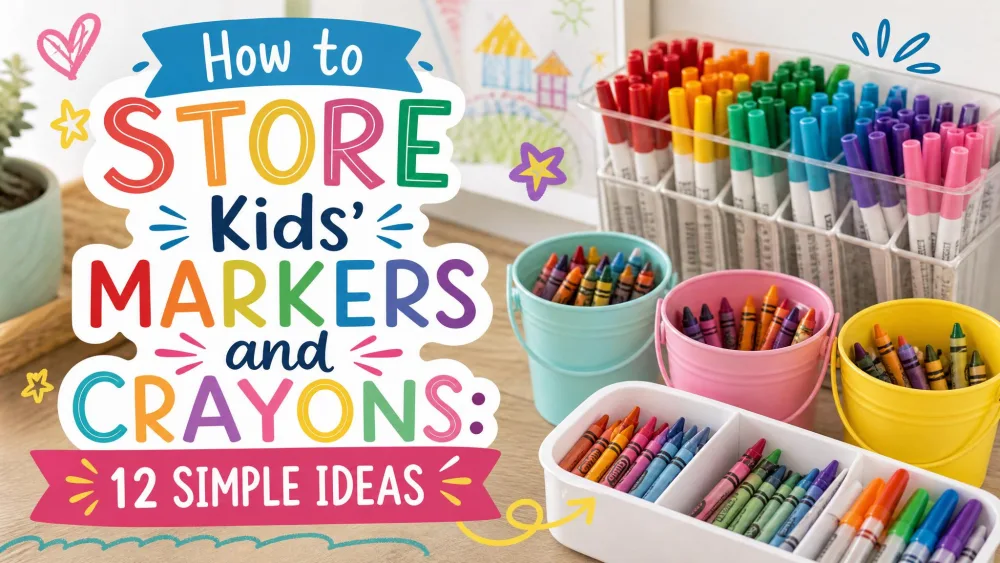
The simplest fix is to sort everything into clear divided bins and one spinning caddy, so each color gets a home within reach. In our house, the mess was never the kids' fault. It was crayons under the couch, paper on every chair, and one lost marker at a time. Once we treated it as a storage problem, not a kid problem, the clutter finally backed off. Here's the system that stuck.
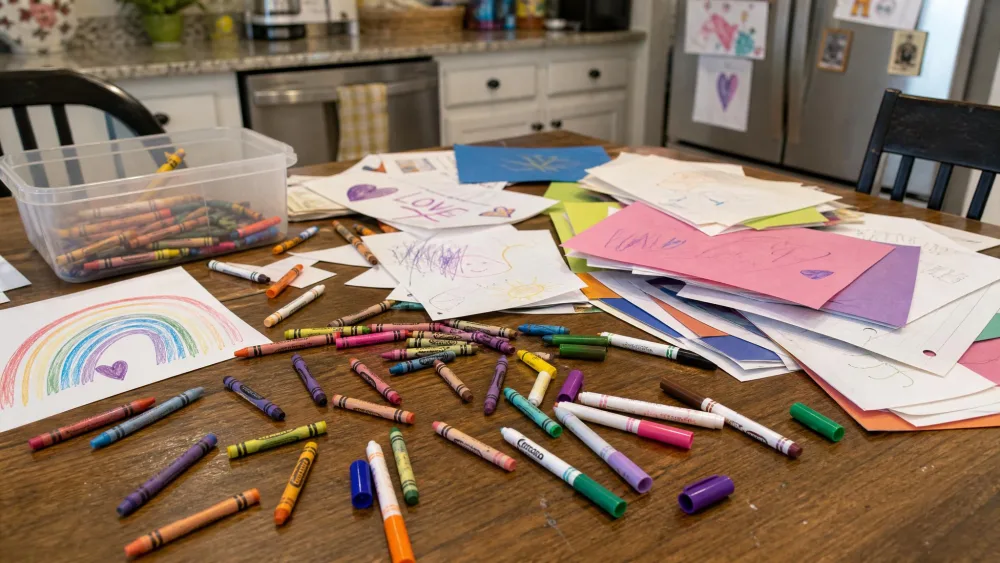
Start Here: Sort and Declutter First
Dump everything into one pile and sort it into three stacks: keep, toss, and donate, then restock only when something runs out.
Toss dried-out markers and test the rest
Test each marker on scrap paper. If a water-based one skips, dip the tip in warm water for about 5 seconds, then recap it and wait 24 hours. Doodle markers need longer, up to 72 hours, but permanent inks are done once they dry.
Save (or retire) broken crayons
Keep the whole crayons, and save the broken bits for melting projects later. Refreshing the whole stash? Our guide to the best crayons for toddlers and kids can help.
How to Store Markers So They Don't Dry Out
Store markers tip-down or lay them flat
Store markers on their side or tip-down so the ink stays fed to the nib. Tip-up lets the ink drain back and dries the tip first.
Keep caps on with a divided caddy or cup
Loose caps are how markers die young. Give each one a snug home where the cap clicks back on between uses.
The Best Way to Store Crayons
Keep them in the original box or a divided bin
Crayons live fine in their original box for the first few months. Then they start breaking and going missing, and that's when a divided bin earns its keep.
Sort by color in jars or a lazy Susan
Sorting by color turns cleanup into a game, and little ones find the shade they want fast.
What to do with broken crayons (and keeping crayons from melting)
Crayons soften around 105°F and fully melt between 120-147°F, so keep them off radiators and out of hot cars. To reuse the broken bits, melt the stubs in silicone molds at about 275°F for 7 to 8 minutes. DIY tutorials range from 250°F to 350°F, so treat that as a starting point.
12 Simple Storage Ideas for Markers and Crayons
Pick one or two that fit your space and your kids.
1. Clear divided bins for see-through sorting
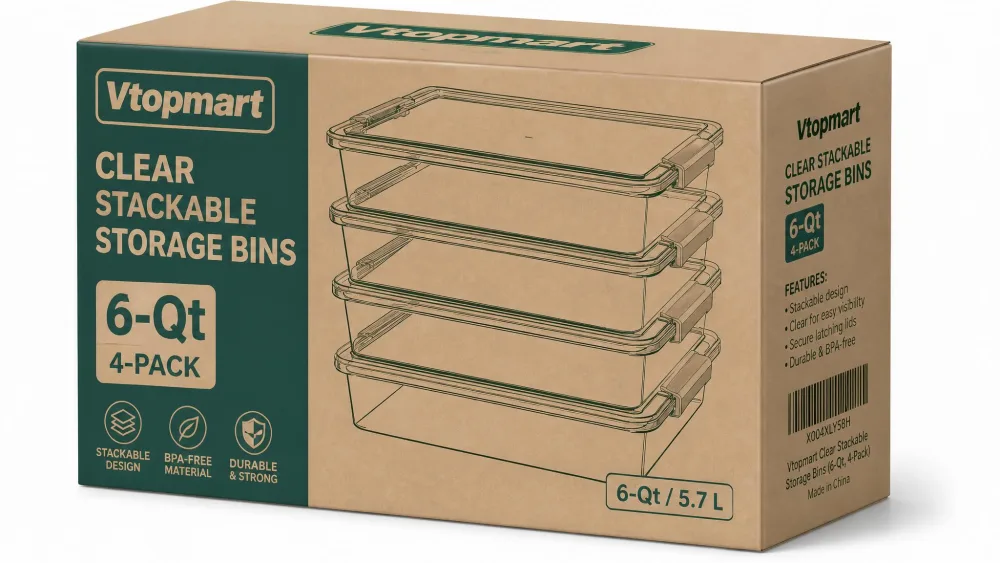
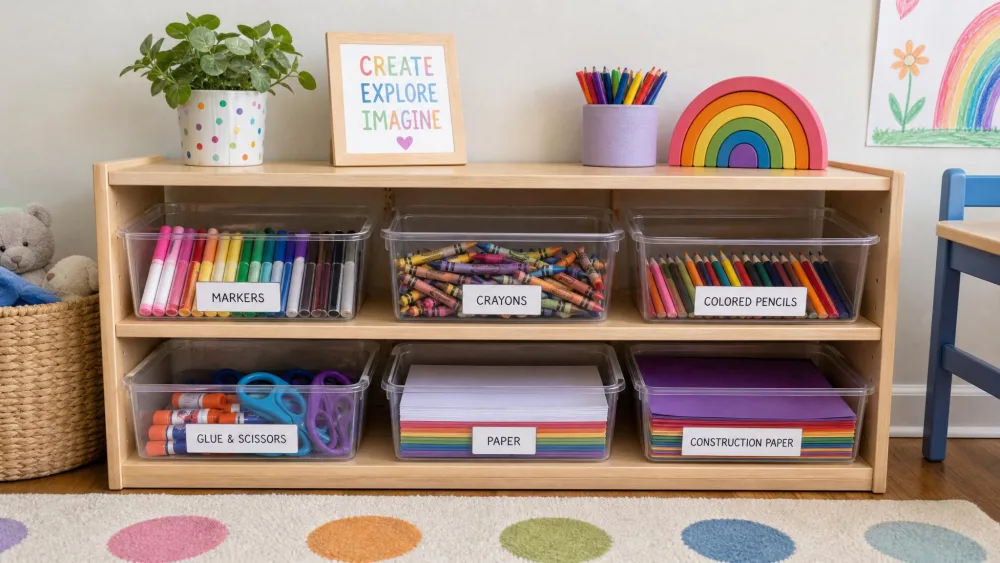
If kids can't see it, they can't find it. Clear stackable storage bins let them spot a color and put it back without dumping the drawer.
2. Lazy Susan or rotating art caddy
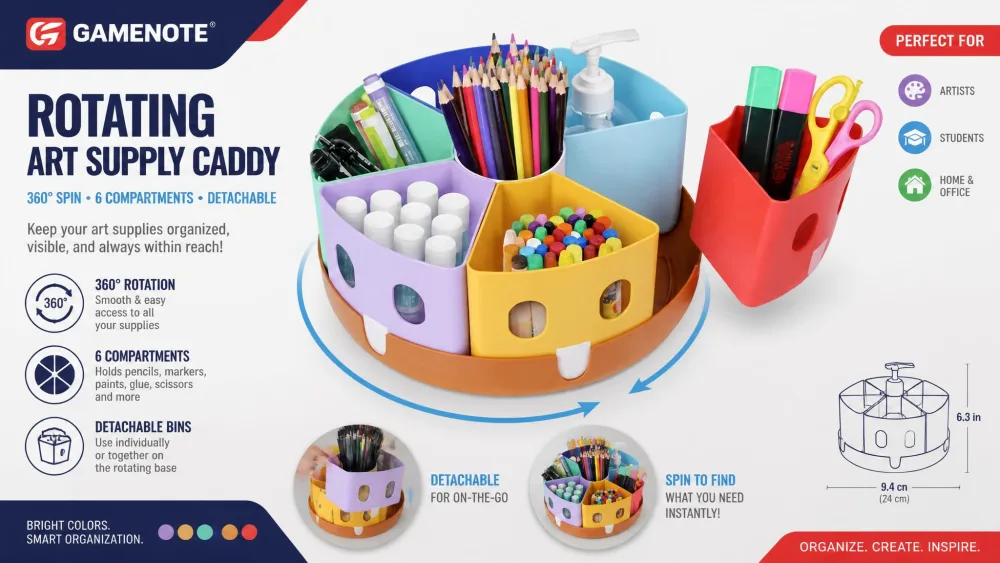
A spinning lazy Susan caddy shines when several kids make art at once, so everyone can spin and grab a color.
3. Rolling art cart on wheels
A 3-tier rolling art cart gives each category its own tier and rolls room to room. Self-serve access is the real win: when kids can reach their supplies, they actually put them back. You can also set up an art cart yourself.
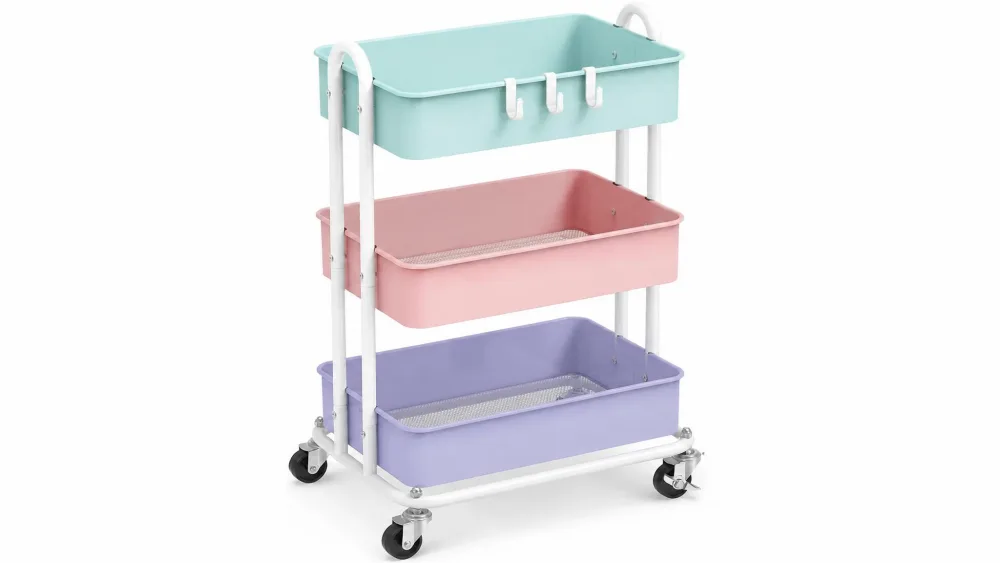
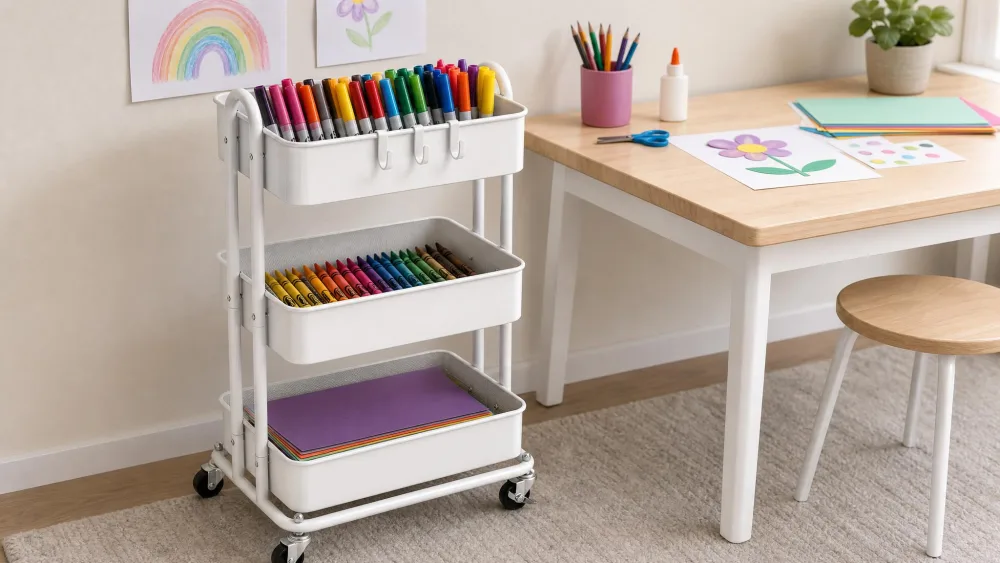
4. Drawer dividers and organizer trays
Drawer dividers turn a junk drawer into sorted rows. A repurposed photo-organizer case separates thick markers, thin markers, and twistable crayons into their own trays.
5. Pegboard with hanging cups
A pegboard wall organizer keeps supplies off the table and within reach, with cups for markers and small shelves for paper.
6. Over-the-door shoe organizer
Short on floor space? An over-the-door organizer with clear pockets puts a door to work, and its open pockets invite kids to create.
7. Labeled jars and containers (color-coded for pre-readers)
Labeled jars keep the small stuff sorted. Picture labels or color dots help pre-readers match the picture and know where each thing goes.
8. Cube storage units and low open shelves
Cube storage with fabric bins gives one bin per category on shelving kids can reach. Low and open beats tall and closed every time.
9. Divided tackle box or craft case for small supplies
A divided tackle box closes up and travels well. It suits beads, small parts, and broken-crayon bits that pack away after each session.
10. Repurposed household items (cereal boxes, cupcake stands, cans)
Cereal boxes become paper slots, a cupcake stand holds cups of crayons, and clean cans corral the markers. Pick function over looks, because kids beat up a fancy container anyway.
11. Zippered pouches and pencil cases for on-the-go
Reusable zippered pouches outlast single-use bags and are easy for little hands to zip. A compact all-in-one case travels well; grab it and take it to grandma's.
12. Stacking drawer units for a bigger stash
Got a bigger stash? Stackable drawer units hide it while keeping the contents visible through clear fronts. Label each drawer for easy refills.
Where to Store Markers and Crayons at Home
Kid-accessible everyday supplies
Keep the everyday supplies within reach on a low shelf or cart: crayons, washable markers, and plain paper. When kids can reach their materials, they create more and clean up on their own.
Parent-controlled or supervised supplies (permanent markers, paint, small parts)
Some supplies don't belong on the open shelf. Paint, glitter, permanent markers, hot glue, and small parts go in lidded bins up high, out of reach. The CPSC's small-parts rule treats anything that fits a young child's throat as a choking risk. So keep beads and loose caps in the parent zone. Look for the ACMI AP non-toxic seal on the label. And if paint hits clothes, our guide to getting kids' paint out of clothes can help.
Watch outKeep permanent markers, paint, glitter, and small parts in a parent zone up high. They come out only with supervision, never the open shelf.
How to Keep the System Organized
Label everything (picture labels for pre-readers)
Label each bin so everyone knows what goes where, and use picture labels for pre-readers who can't sound out words.
Build a 2-minute cleanup routine
Kids skip cleanup for three reasons: it's complex, far away, or just too much. So keep the system simple, close, and small. Add a one-in, one-out rule and a two-minute tidy after each session. That habit stops the clutter from taking over.
Frequently Asked Questions
How do you store markers so they don't dry out?
Store them on their side or tip-down, never tip-up. Press each cap on until it clicks. If one dries out, dip the tip in warm water for about 5 seconds, recap it, and wait 24 hours.
What is the best way to store crayons?
The real trick is handling them as they break. Toss the whole crayons in a divided bin, but move the broken bits to a small tackle box for melting projects. Add a picture label so pre-readers can sort them back on their own.
How do you organize markers and crayons for toddlers?
Use clear, low, open bins on a shelf toddlers can reach, and add picture labels so pre-readers know where things go. Keep permanent markers, paint, and small parts up high.
How do you keep crayons from melting?
Keep them off sunny windowsills and out of hot cars, which get brutal in a Florida summer. If a few soften and clump, peel off the paper and remelt the stubs in a silicone mold for fresh crayons.
Final Thoughts
It really comes down to three habits: sort first, give markers and crayons their own easy homes, and keep the messy supplies up high. Start with one clear bin and a spinning caddy, then add a cart or pegboard as your stash grows. For more project ideas, browse our Coloring & Art Supplies for Kids hub.