Best Watercolor Paper for Kids
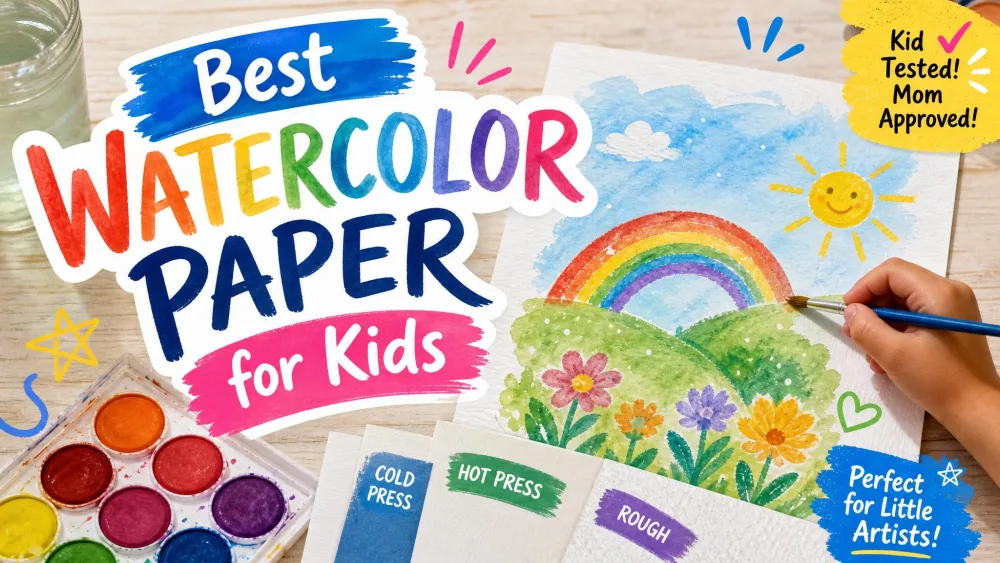
Watercolor paper made for kids isn't the same as the drawing paper in a school supply pack or a pad of printer paper from the drawer. It's heavier and textured, built to survive soaking, scrubbing, and repeated painting without falling apart.
Buy the wrong paper, and even a good watercolor set turns into a soggy, curled mess by the second wash. We test kids' art supplies at our kitchen table, and paper decides whether a session ends with art worth hanging up or a pile of torn, pilled sheets.
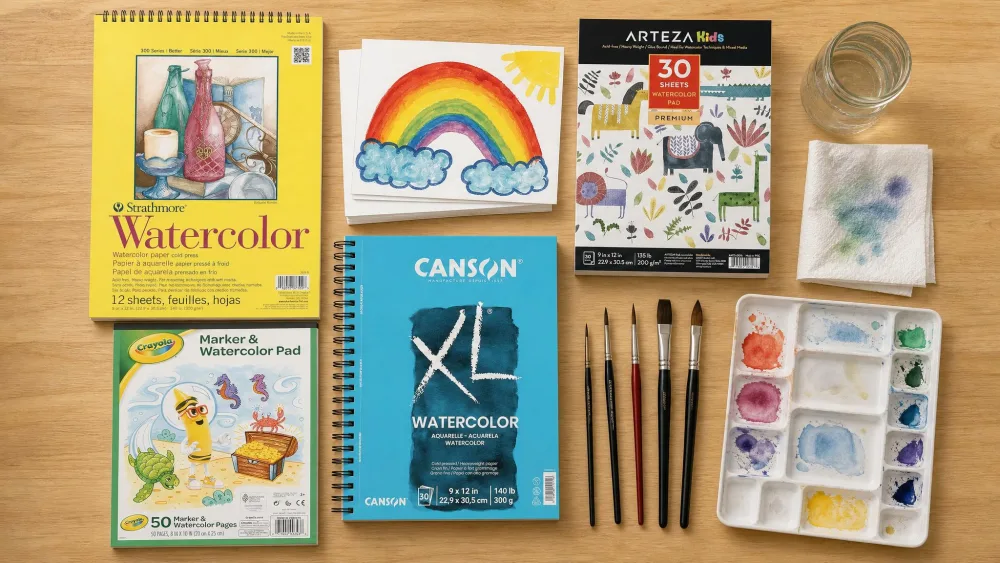
Here are the five pads that held up best with our kids, plus what to check on the label before you buy.
At a glance
Here's how the five pads compare.
| Product | Best for / Age range | Paper weight | Texture | Price tier | Buy |
|---|---|---|---|---|---|
| Canson XL Watercolor Pad | Ages 6+, general home use | 140lb / 300gsm | Cold-press | Low-mid (roughly $10-$18) | Check price |
| Crayola Marker & Watercolor Pad | Ages 3+, youngest beginners | Not published (thin stock) | Smooth, marker-friendly | Lowest (roughly $3 a pad) | Check price |
| Arteza Kids Watercolor Paper Pad | Ages 3+, first watercolor pad | 135lb / 200gsm | Smooth-ish, glue-bound | Mid (roughly $25 for the 2-pad set) | Check price |
| Colorations Ultimate Art Paper | Classroom or co-op use | Not published (heavyweight) | Medium-tooth, sized | Low-mid (roughly $13 per 100 sheets) | Check price |
| Strathmore 300 Series Watercolor Pad | Ages 8+, real cold-press texture | 140lb / 300gsm | Cold-press plus smooth reverse | Low-mid, scales with size (roughly $9-$31) | Check price |
The reviews
With the specs above in mind, here's how each pad performed with real paint, real water, and real kids.
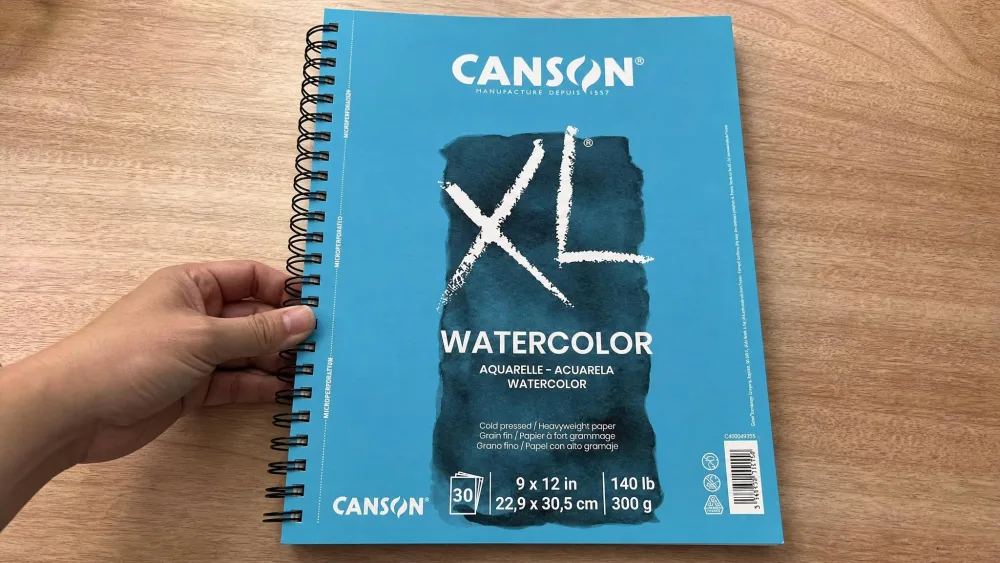
Canson XL Watercolor Pad — Best Overall
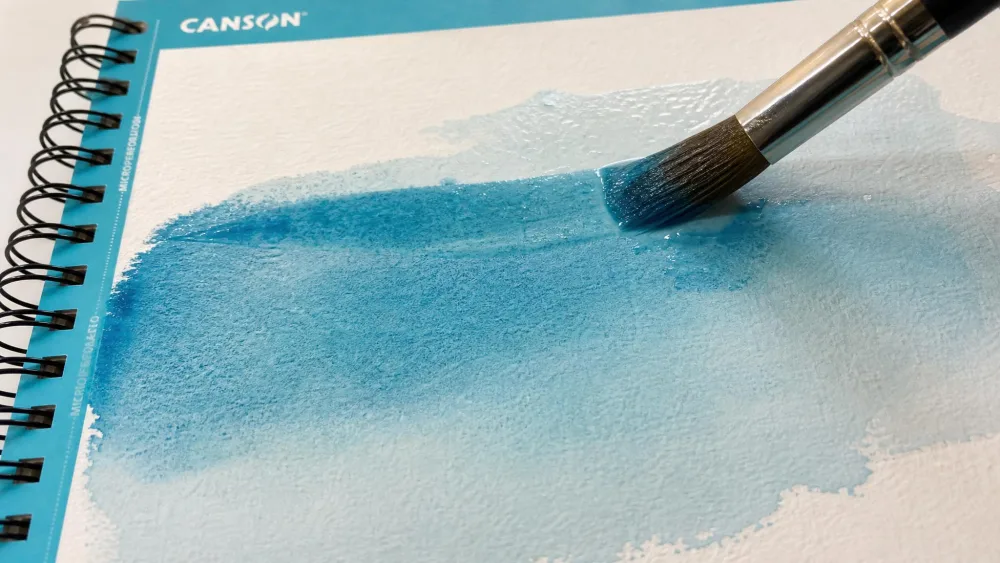
Our go-to pick for most families: 140lb/300gsm, cold-press, and acid-free, with 30 sheets per pad lasting for weeks. Wet-on-wet washes cockled the paper slightly, then relaxed flat once dry, as expected at this weight. Scrub hard to fix a mistake, though, and the surface pills, so we tape the edges down first.
Pros
- 140lb/300gsm cold-press paper resists warping
- Acid-free, works across watercolor, acrylic, marker
Cons
- Pills if scrubbed hard
- First layers can look blotchy at first
Best for: Kids 6+ painting regularly. Not for: Brand-new painters, or heavy layering. Age tested: 8 years old.
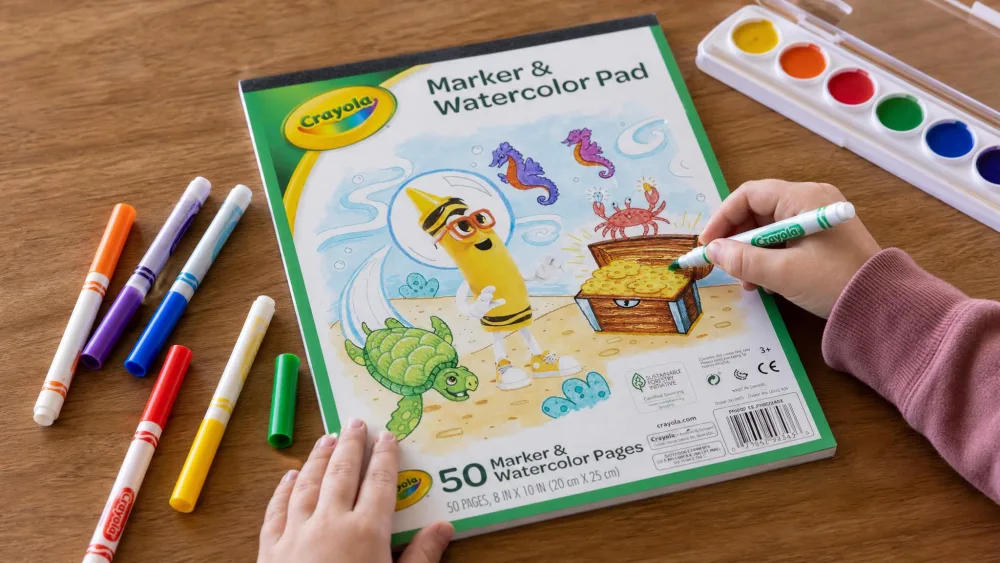
Crayola Marker & Watercolor Pad — Best Budget Pick
Where the Canson XL is the all-rounder, the Crayola pad is the one to hand a three-year-old first: about $3 buys the cheapest way to find out if a kid likes watercolor at all. Our five-year-old kept things light at first, and the sheets held up fine; the first time she loaded a fuller wash, water pooled in the low spots and the page went translucent under her brush.
Each pad holds 50 bright white, 8x10-inch sheets rated for ages 3+. The paper runs thinner than the rest of this lineup, but it holds marker lines just as well when watercolors stay in the cabinet.
Pros
- Very low price per sheet
- 50 sheets means plenty of room to experiment
Cons
- Paper weight isn't published; stock runs thin
- Not built for heavy wet-in-wet washes
Best for: Kids 3+ discovering watercolor. Not for: Kids who love soaking the page. Age tested: 5 years old.
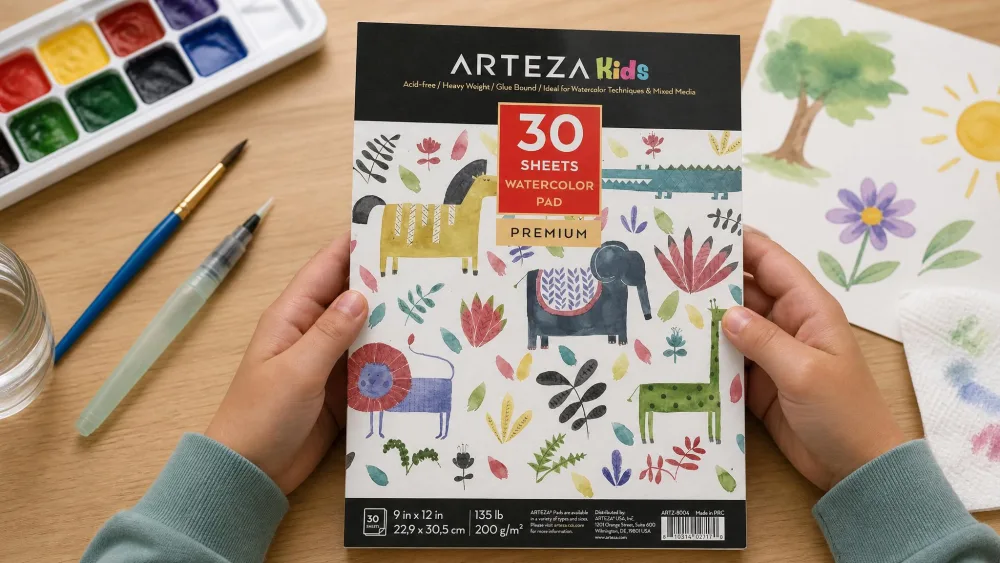
Arteza Kids Watercolor Paper Pad — Best for Beginners
Once a kid outgrows the Crayola pad, the Arteza is a natural next step, right down to the kid-friendly packaging. Two glue-bound, 30-sheet pads (60 sheets total) at 9x12 inches tear out cleanly for display, and the paper feels thick for the price, though at 135lb/200gsm it's lighter than the 140lb standard here. Light washes held up fine, but when our five-year-old soaked a page edge-to-edge for a wet-in-wet sky, the sheet buckled almost right away and the water sat in puddles instead of soaking in.
Pros
- 60 sheets across two pads
- Feels thick and sturdy for everyday use
Cons
- 135lb/200gsm is lighter than the 140lb standard
- Buckles under a heavy wet-in-wet wash
Best for: Beginners 3+ with lighter washes. Not for: Kids who paint with a lot of water. Age tested: 5 years old.
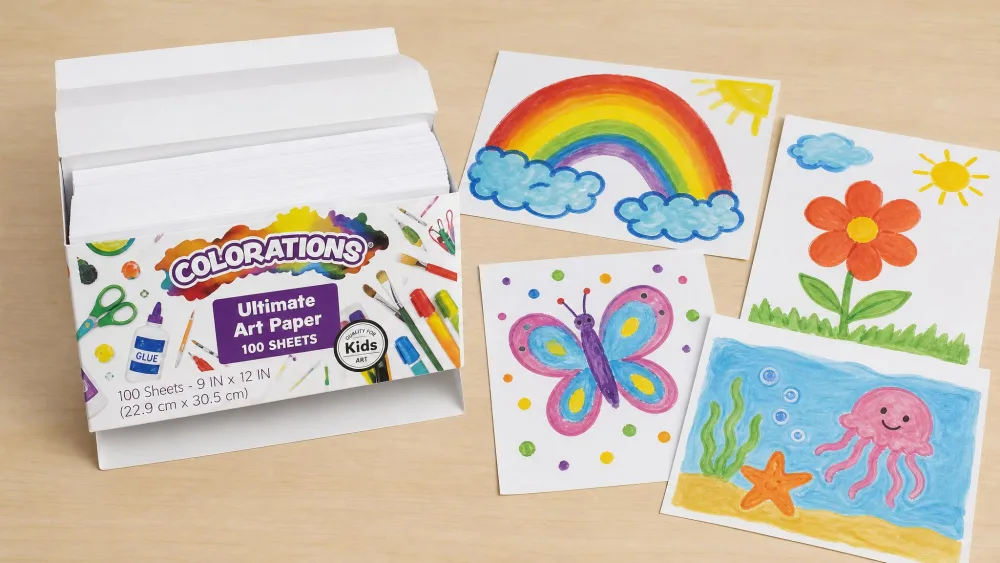
Colorations Ultimate Art Paper — Best for Classroom Use
While the first three pads here suit a single kid's art drawer, Colorations is built for volume: a single pack holds 100 sheets at 9x12 inches, priced for a classroom or co-op budget. The paper's heavyweight, medium-tooth finish carries extra sizing meant to keep wet paint on top instead of soaking through to the table. We still slide a mat under it before a wet-on-wet session anyway.
Pros
- 100 sheets per pack, the most volume here
- Acid-free and made in the USA
Cons
- Paper weight isn't published
- Not marketed as a dedicated fine-art paper
Best for: Classrooms, co-ops, or heavy paper use. Not for: A premium, dedicated watercolor surface. Age tested: 5 and 8 years old.
Strathmore 300 Series Watercolor Pad — Best Cold-Press Pick
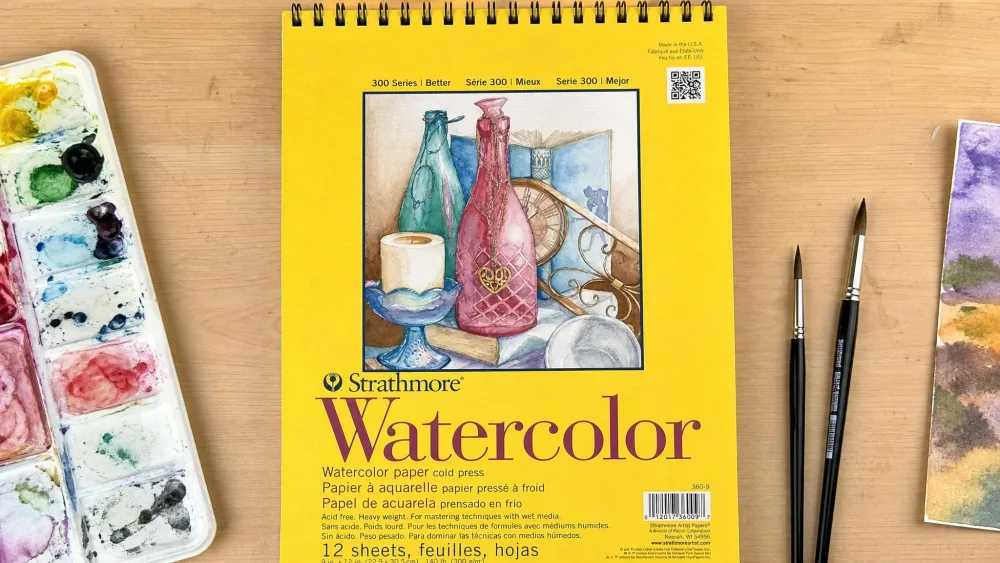
If Colorations is the volume pick, Strathmore is the pad we reach for when a kid is ready for real cold-press texture: 140lb/300gsm, tape-bound, with a felt cold-press side and smoother reverse for detail. The base pad ships with 12 sheets; a 24-sheet version is also sold. Light washes buckled minimally, but a full wash needed a bulldog clip to keep the page flat, and layered paint tended to slough off rather than soak in.
Pros
- Real 140lb/300gsm cold-press texture at a student price
- Two usable surfaces per sheet
Cons
- Base pad ships with only 12 sheets
- Layered paint can slough off rather than soak in
Best for: Kids 8+ ready for real cold-press texture. Not for: Younger beginners, or heavy layering. Age tested: 8 years old.
What to look for
The five pads above prove it: not every product labeled "watercolor paper" performs the same way.
Paper Weight (lb / GSM)
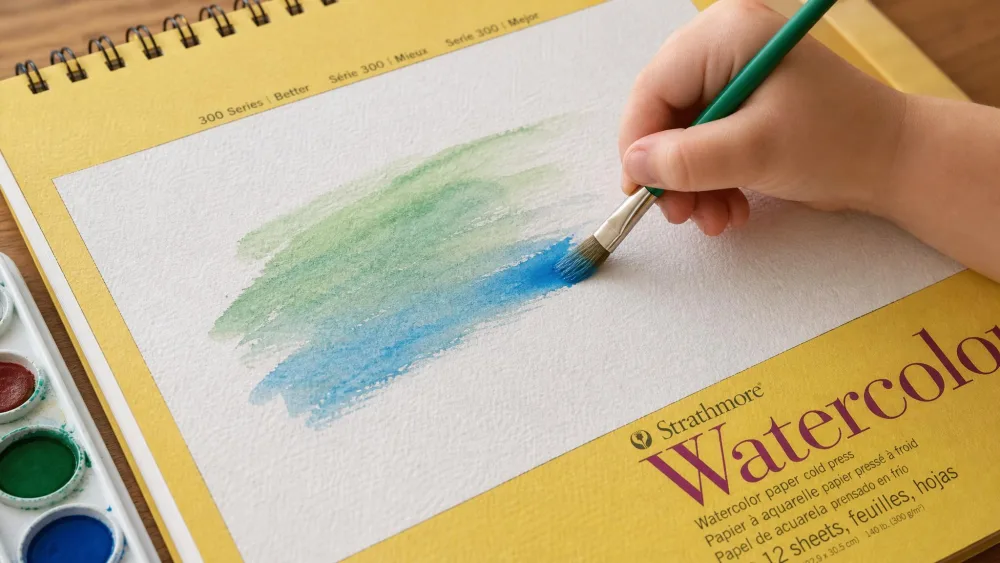
Paper weight decides how well a sheet handles water. 140lb (300gsm) is the standard minimum, heavy enough to resist warping without pre-stretching. Lighter papers, like the 135lb stock above, buckle and pool paint sooner. Cotton-fiber sheets tend to resist buckling longer than cellulose sheets at the same weight.
Watch outWet-on-wet painting, where a loaded brush touches paper that's already damp, is the technique most likely to expose a weak pad. Stick to 140lb or heavier for any soaking session.
Texture: Cold-Press vs. Hot-Press vs. Rough
Watercolor paper comes in three textures. Hot-press is smoothest, best for fine detail, but needs more brush control than most kids have. Cold-press is the most versatile, holding pigment evenly without being fussy. Rough paper has the most visible tooth and hides cockling well, but suits older kids better than a first pad.
Parent tipFor a young beginner's first pad, go with cold-press. It's forgiving of uneven brush pressure and still lets colors bloom the way kids love.
Size and Sheet Count
Bigger isn't always better: a 9x12-inch sheet gives room to work without overwhelming small hands, while an 8x10-inch pad is easier for younger kids to finish. Sheet count matters too: 30 sheets disappear fast, while 60 to 100 sheets buys real breathing room. Pair a big pad with a few watercolor activities for kids for extra mileage.
Our kids don't care about the finished painting nearly as much as they care about watching the color bloom the second water hits the page.
Acid-Free and Non-Toxic Certification
Acid-free paper resists yellowing, useful for framing a favorite piece. For safety, look for the ASTM D-4236 label, the federal chronic-hazard-labeling standard non-toxic kids' art supplies are tested against.
NoteASTM D-4236 and the ACMI AP Seal work together: ASTM D-4236 is the labeling law, and the AP Seal is the safety review behind it.
Every pad here is student-grade, the right call for kids. Premium, artist-grade paper from mills like Arches (paper since 1492), Hahnemühle Leonardo (600gsm), St. Cuthbert's Mill (paper since the 1700s), and Winsor & Newton (300gsm) costs far more and suits artists layering paint for hours, not a five-year-old mixing colors.
Common mistakes
Even the right pad won't fix a few habits. The most common mistake is buying paper on price alone, then blaming the paint or brush when a painting falls apart mid-session. Paper weight is almost always the real problem: no amount of technique fixes a pad that buckles or tears.
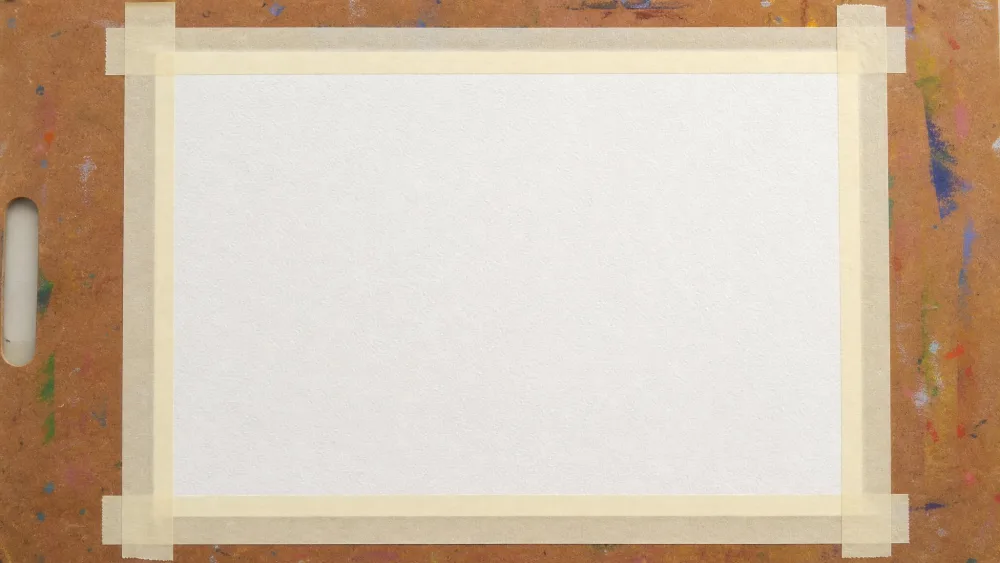
The second mistake is skipping the flat step: wet paper curls as it dries, and taping all four edges to a board before painting solves most of that, even on a lighter pad.
Most watercolor paper also has a right and wrong side, so check which one a kid is painting on.
Pair the right paper with a few simple watercolor painting ideas for kids, and if your kids' art drawer leans more toward markers and crayons, our guide to the best crayons for toddlers and kids is worth a look too.
How we chose
We bought all five pads ourselves, the same way any parent would, off the shelf or online at full price, then handed our two kids, ages 5 and 8, a stack of paper, a water jar, and their usual cheap watercolor set, and let them paint however they normally do, from a careful wash to a full soak that reveals a pad's weak spots fast. Each pad got worked into our regular painting time over several sittings rather than judged in one afternoon, so we could see how it held up beyond first impressions.
For every pad, we watched how it handled wet-on-wet painting, whether it buckled or stayed flat, and how it looked once dry, plus the specs that matter most: weight, texture, sheet count, and acid-free labeling. A pad that scored well but cost far more than a similar performer got cut.
FAQ
Will regular printer paper work for watercolor?
For one light wash, sure, but it isn't built for water and will wrinkle or tear by the second layer. Tape it down and keep to a single wash, or start with one of the pads above.
What's the difference between a glue-bound and a tape-bound pad?
Glue-bound pads, like the Arteza, tear out cleanly for display. Tape-bound pads, like the Strathmore, hold the sheet a bit more securely mid-painting but take more care to remove. Either way, water performance comes down to weight and texture, not the binding.
Is premium, artist-grade paper worth buying as kids get older?
Once a kid is chasing real control over glazing and layering, mills like Arches or Winsor & Newton start to earn their price. A kid still experimenting with how paint moves is better served by more sheets of a student-grade pad.
How do I stop watercolor paper from warping or buckling?
Tape all four edges to a board with painter's tape before painting; pre-wetting the top surface first gives an even flatter result.
Which of these five pads are labeled acid-free?
Four of five: Canson XL, Arteza, Colorations, and Strathmore. Crayola doesn't publish an acid-free claim, though it's marketed for kids ages 3 and up.