10 Best Watercolor Workbooks for Kids
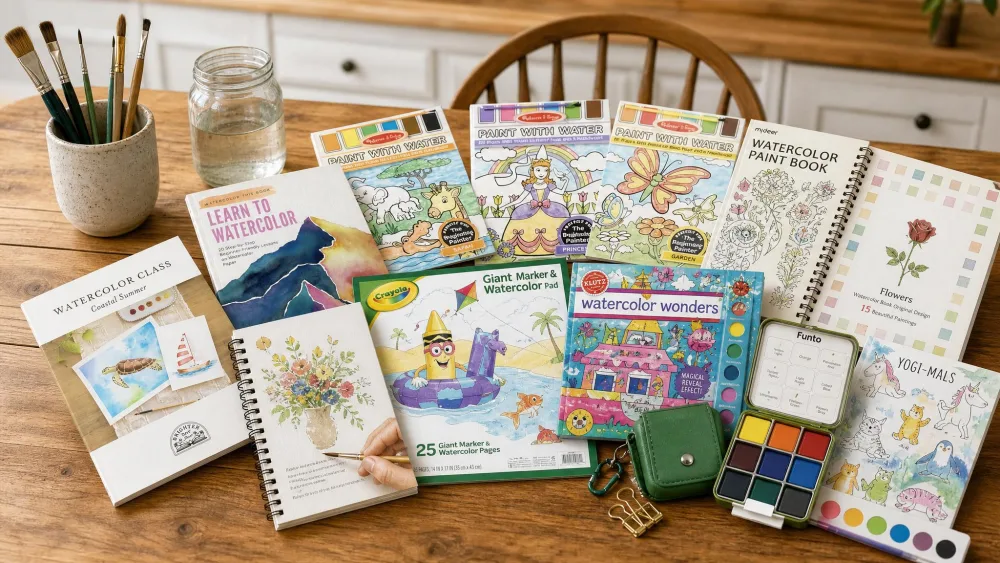
Watercolor painting looks effortless in the box photos, then a five-year-old overloads the brush, drags it across the page, and every color runs into the next until the sheet turns the same muddy brown. That's exactly why so many kids give up before painting gets fun. A good workbook fixes what trips beginners up: a blank page with no starting point, and no way to tell a painting is going wrong until it already has. We put ten of the best watercolor workbooks for kids on our kitchen table to find out which ones actually earn a spot on the shelf.
The Best Watercolor Workbooks for Kids
These ten watercolor workbooks stood out for guided lessons, paper quality, and age-appropriate projects, each picked for a different kind of young artist.
1. Brighter Day Press Watercolor Workbook: Nature – Best Overall
Bottom line: This is the workbook we'd hand to almost any first-time painter, guided lesson and all.
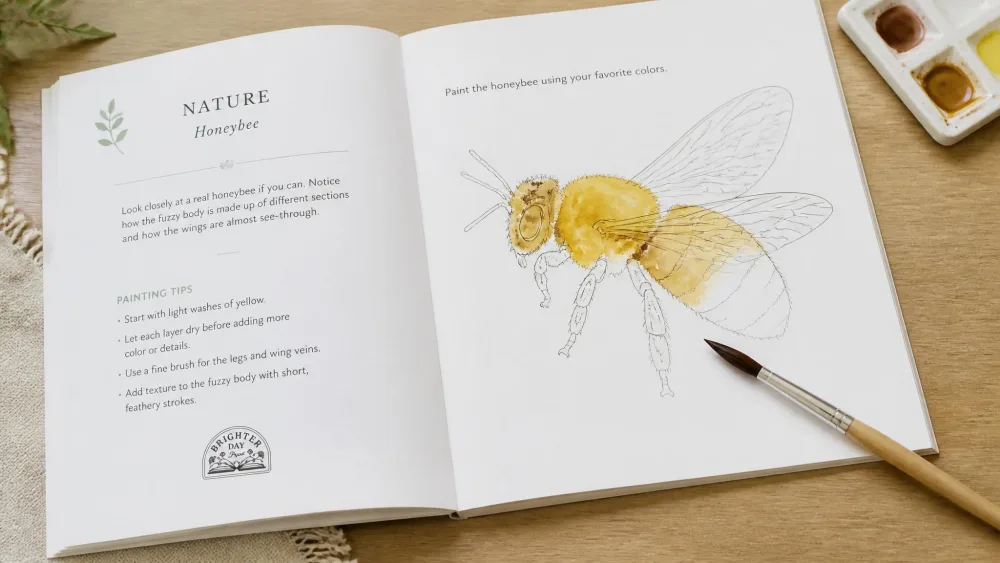
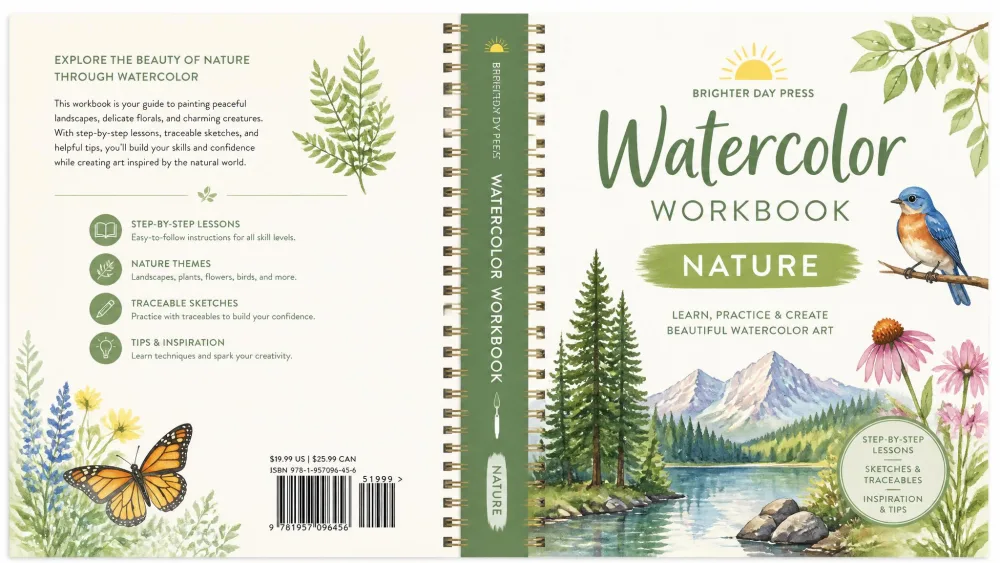
The Nature workbook walks a young artist through 10 tutorials, among them a honeybee, a barn owl, a sunflower, and a forest scene, each with a light pre-printed outline on cold-pressed paper, so there's never a blank page to stare at. QR codes link every lesson to a video walkthrough, and the written steps work fine without one.
One of us sat down with our older kid over the honeybee page, both of us new to painting, and we were both pleased with the results. What helped wasn't talent. It was having the sketch already there instead of a blank page to guess on.
The workbook runs $32.00 for 10 lessons, ships from a Made in the USA print shop, and is designed for ages 7+. Paint is sold separately.
2. Walter Foster Learn to Watercolor: 20 Step-by-Step Beginner-Friendly Lessons – Best for Beginners
Bottom line: Twenty step-by-step lessons make this the most complete beginner course in book form.
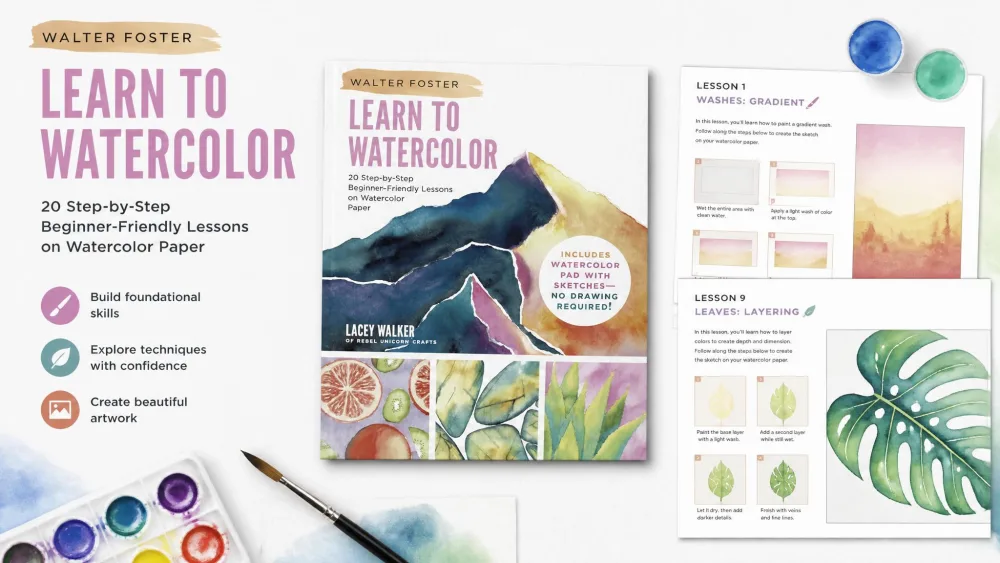
Learn to Watercolor packs 20 step-by-step lessons into an 8 x 10 book, each pre-sketched so a new painter never has to draw first and paint second. Pages tear out along a perforation, so a finished piece can go straight on the fridge.
Painters working through the book report results that match the picture step by step. It teaches wet-on-wet, wet-on-dry, layering, and the bloom technique, with QR-linked videos for anyone who'd rather watch first.
Walter Foster markets this one as beginner-friendly rather than assigning it a specific minimum age, so use your own kid's patience and brush control as the guide rather than a number on the cover. Paint is sold separately. At $24.99, it's priced like a book, not an art kit, and the 2024 release picked up a USA Today bestseller nod.
3. Melissa & Doug My First Paint with Water 3-Pack – Best Value
Bottom line: No paint to buy, no mixing to manage, and three theme pads for under $27.
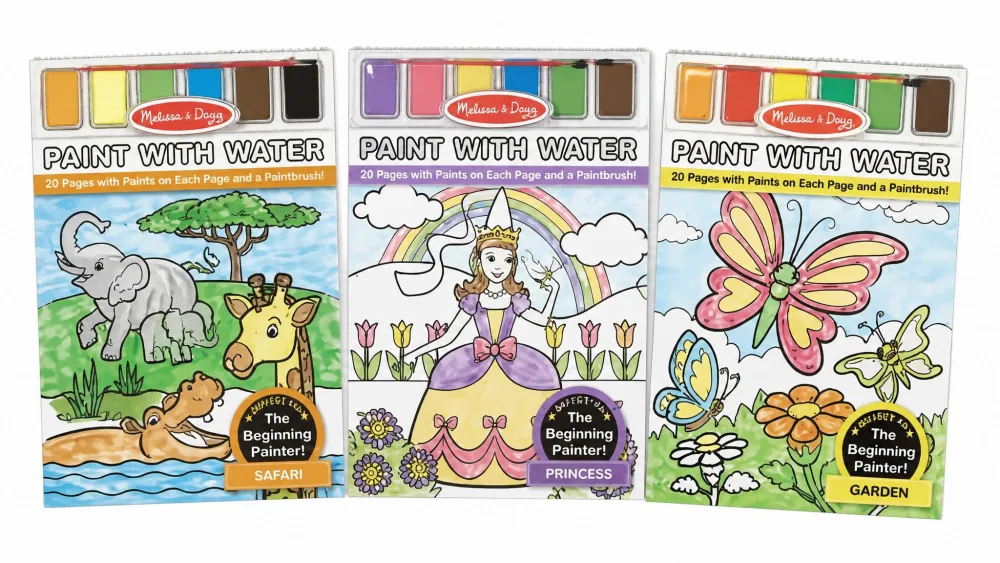
This 3-pack paint-with-water bundle combines Animals, Vehicles, and a multi-themed pad, 72 pages total, with color built into the paper. Add water with the included brush and the picture appears — no palette required, nothing to spill.
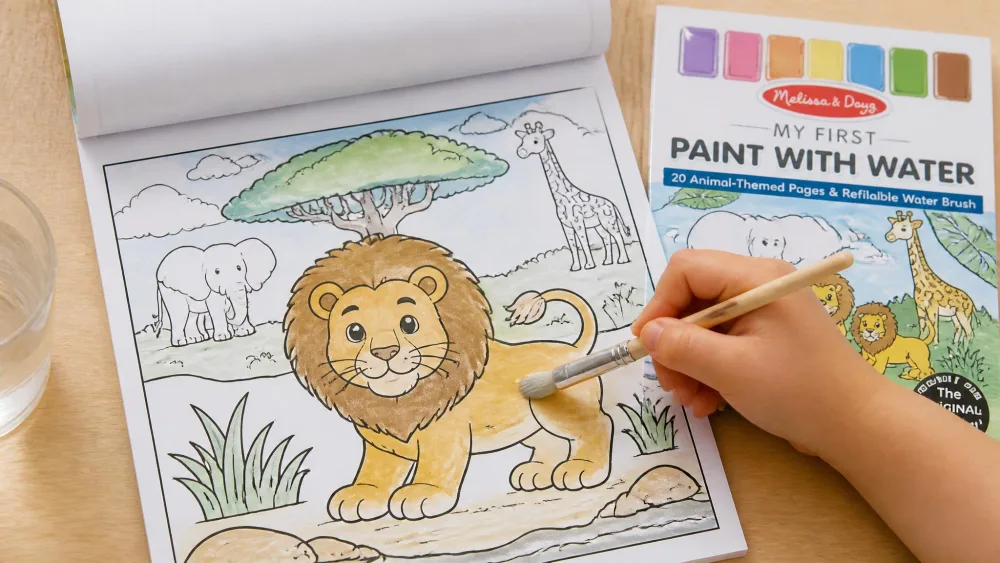
It's rated for ages 3+ and FSC certified. The tradeoff is durability: these are perforated pages, thin enough that a slow-to-release spot of built-in color can wear through under extra scrubbing, occasionally leaving a small hole before a painting's finished.
At $26.99 for three full pads, it's the cheapest way to keep a preschooler painting for weeks, and it packs flat at 24.35 x 11.0 x 0.9 inches for travel.
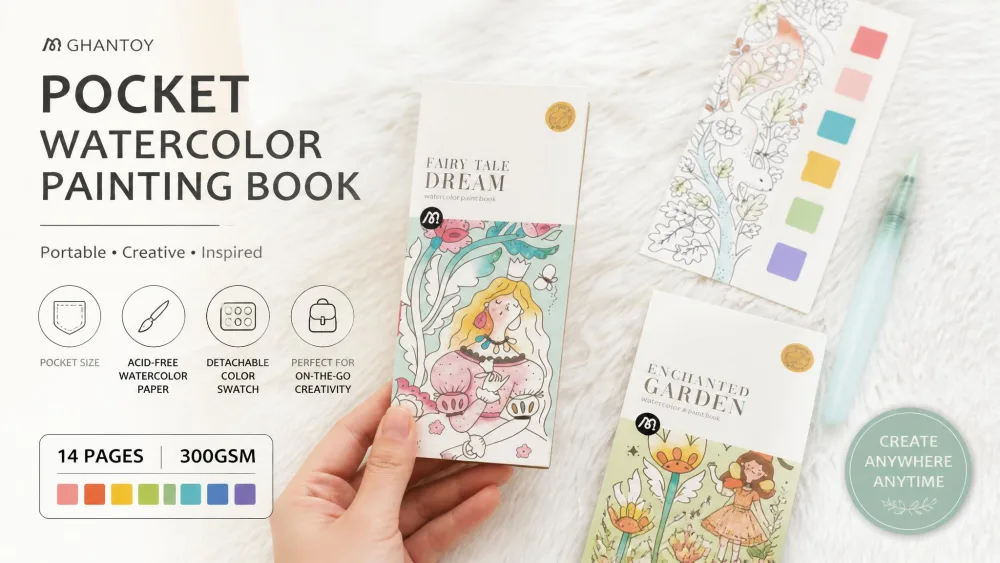
4. Ghantoy Pocket Watercolor Painting Book – Best Pocket-Sized / Travel Pick
Bottom line: Small enough for a car door pocket, with a paintbrush and palette built right in.
At roughly 7.36 x 3.07 inches, closer to a passport than a notebook, this pocket watercolor book is built for a backpack pocket or a car door, not a desk. Each of its 20 pages has a built-in dry watercolor palette that only needs a drop of water, plus a small brush tucked into the cover.
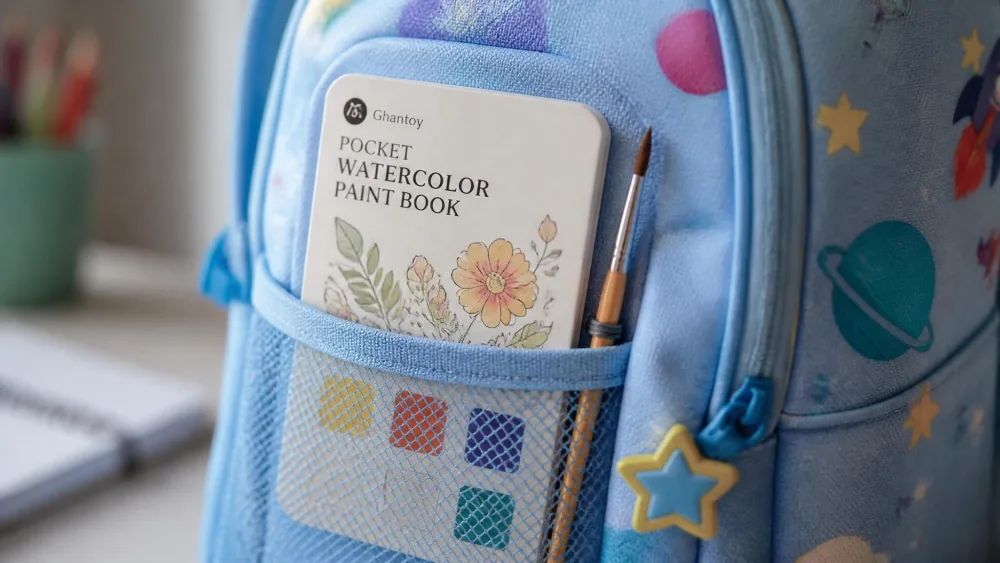
The nicest touch is a finished page that peels out as a bookmark, not just a painting to shelve. Age guidance runs 3 to 10 on the retailer listing, wide enough to treat as a loose starting point, and pricing shifts enough to check the current listing before buying.
5. Pureadee 5-Piece Pocket Watercolor Painting Book Set – Best Themed Designs
Bottom line: Five small books, five different themes, so there's a fresh set of pages whenever the last one runs out.
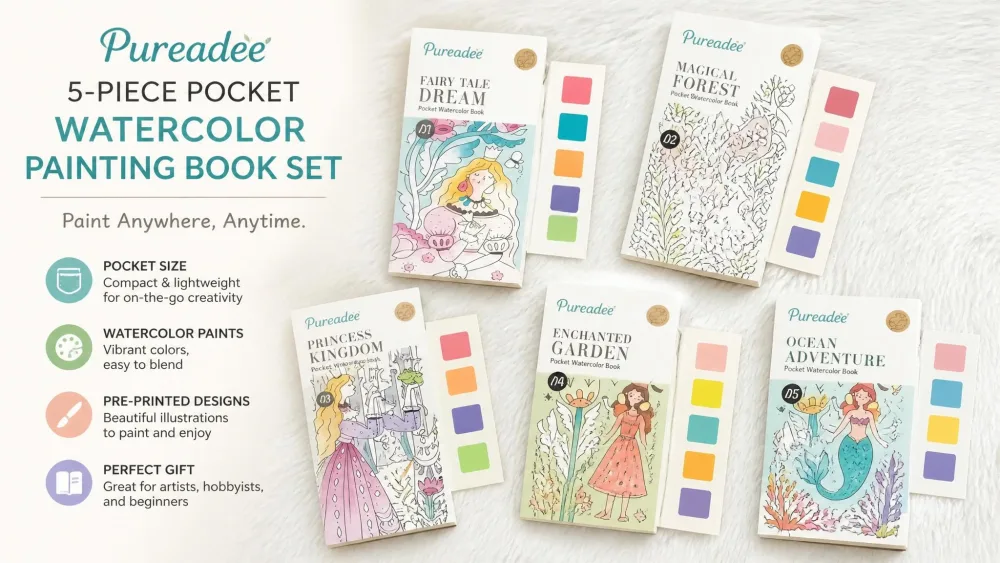
Where most pocket workbooks give you one theme, this five-book themed set spreads 100 pages across five small books: World Adventure, Wonderful Holiday, Fairytale Dream, Wonderful Forest, and Enchanted Garden, so a bored kid can switch themes instead of waiting for a new book. Each uses the same wood-pulp paper and built-in dry palette as the single-book sets.
Five books beat one for holding a kid's interest: once World Adventure is finished, Fairytale Dream or Enchanted Garden is ready instead of a trip back to the store. The listed age range runs a wide 3 to 14, broad enough to treat as a loose guide, and pricing on this bundle shifts enough to check the current listing first.
6. KOROI Watercolor Workbook, 15 Flower Designs – Best Heavy-Weight Paper
Bottom line: Real 300gsm cotton paper that can take a heavier, wetter brush than any other pick on this list.
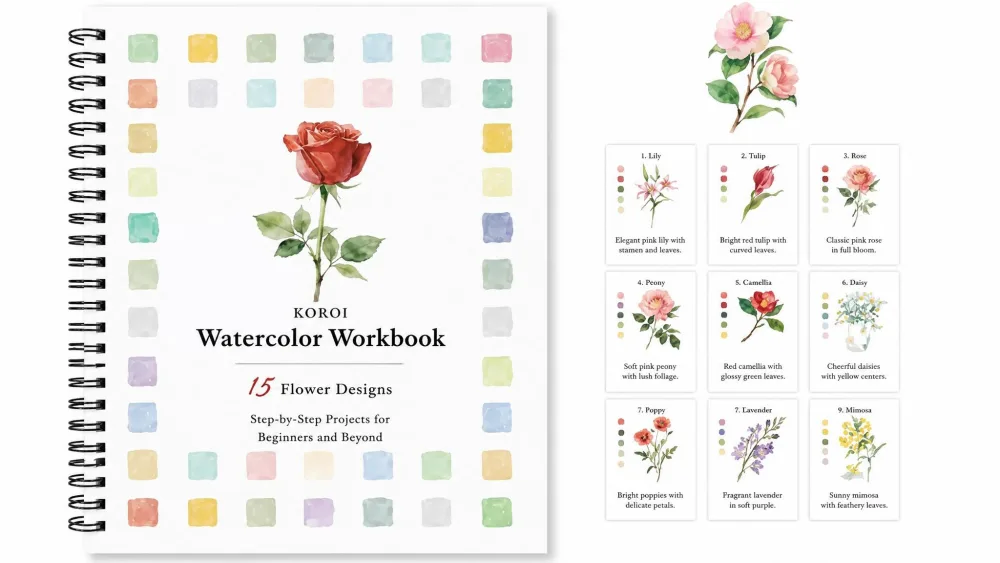
This is the one heavyweight cotton-paper workbook on this list built on genuine 300gsm (140lb), 100% cotton, cold-pressed paper, packed into 36 pages across 15 floral designs at 10.2 x 6.9 inches.
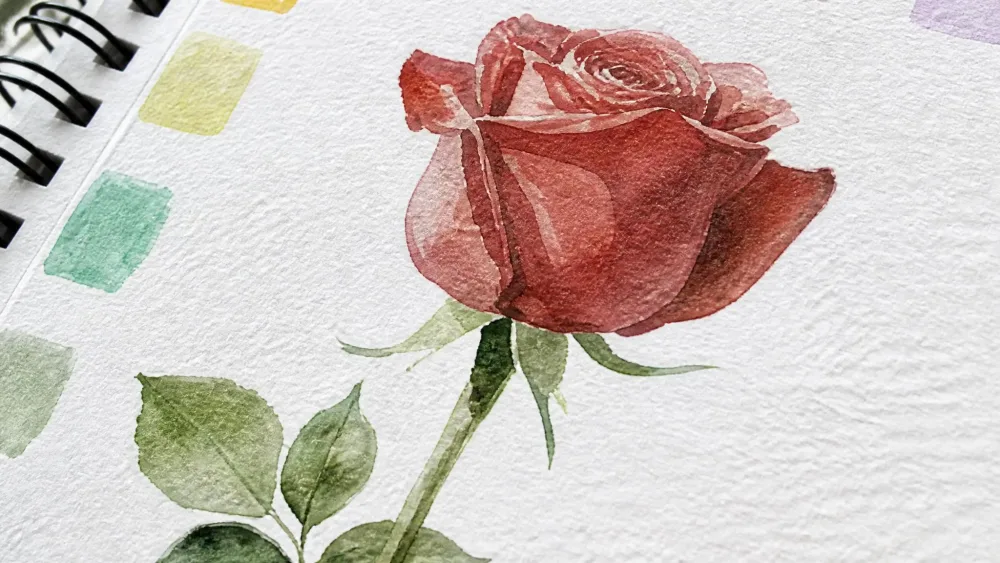
Cotton paper like this handles pooled water and multiple wet layers without buckling the way cheaper pulp paper does. The seller markets it to "adults and teens," not young children; the intricate line work suits a kid with some brush control already, not a first-timer. Think of it as the upgrade you buy once a tween outgrows the built-in-palette pocket books. Pricing shifts with frequent discounts rather than a stable list price, but it's positioned as an affordable step up from the pocket-format books, not a premium art-store purchase, so check the current listing before buying.
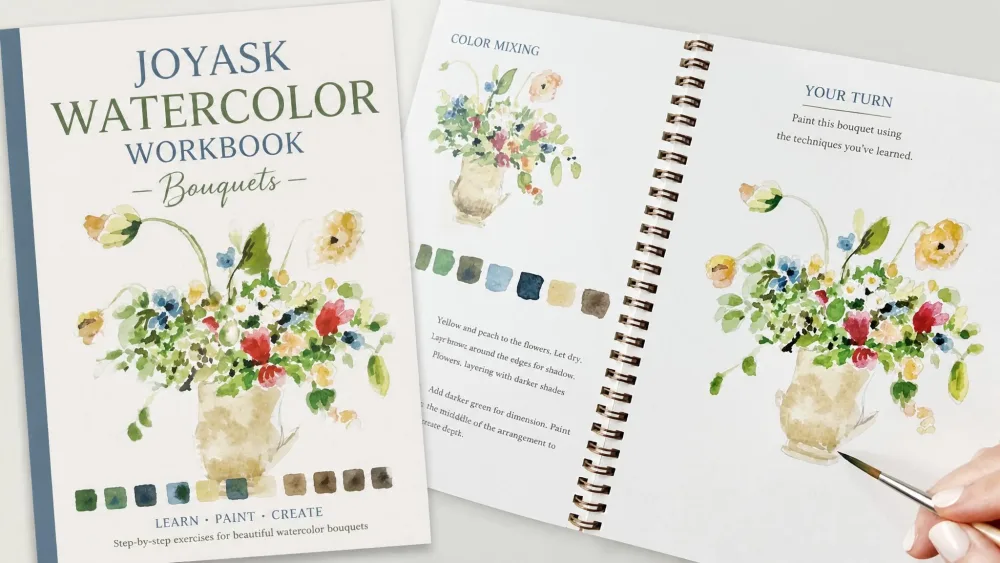
7. Joyask Watercolor Workbook (Bouquets) – Best for Advanced Techniques
Bottom line: A 50-color paint set plus a full tool kit makes this the pick for a kid ready to go beyond basic washes.
Joyask's bouquet workbook pairs 12 floral patterns with an advanced 50-color paint set (38 regular shades, 4 fluorescent, 8 metallic and pearlescent), plus a water brush pen, paintbrush, eraser, sharpener, pencil, color chart, and sponge. It's a full studio kit, and overkill for a child still learning to hold a brush steady.
The spiral-bound paper is thicker than the average pocket workbook and resists curling once wet. Age guidance points toward teens and adults, and the intricate designs back that up: this is a pick for a kid who already has a workbook or two behind them. It runs around $17.99 at the time of writing, though marketplace pricing for a set like this can shift without notice, so treat that as a snapshot rather than a fixed number.
8. Crayola Marker & Watercolor Pad – Best Multi-Media Compatible
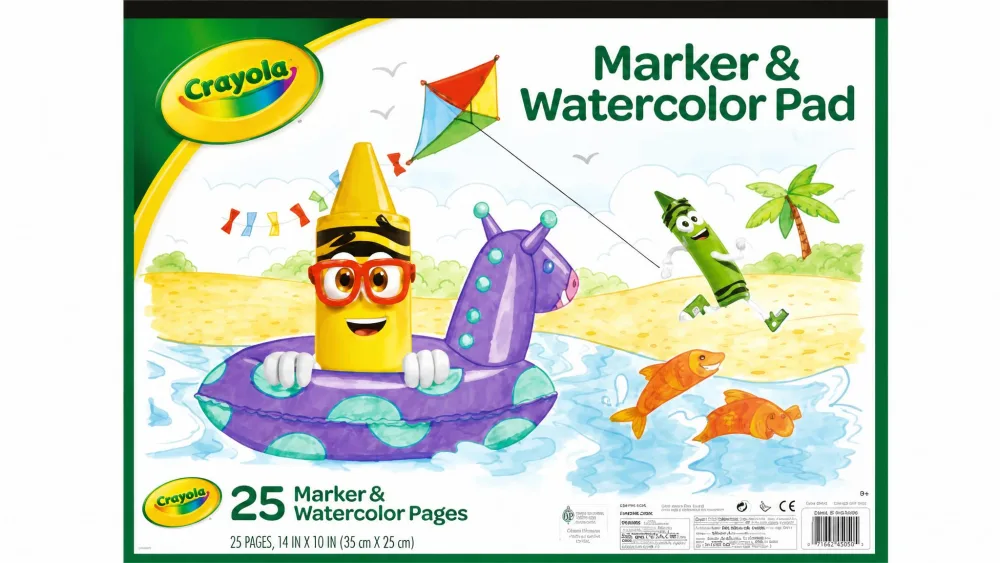
Bottom line: Blank, sturdy pages built to handle markers and watercolor on the very same drawing.
Every other workbook on this list comes with a design already printed on the page. This blank marker-and-watercolor pad is the exception: 50 blank sheets at 8 x 10 inches, engineered to take both marker ink and watercolor paint without the paper buckling or the marker bleeding through.
That makes it the pick for combining techniques: markers for outlines, watercolor washes for backgrounds, all on one sheet. An included art-project idea card gives a starting point without locking a kid into a pre-printed outline.
It's rated for ages 3+ and priced like a school-supply pad rather than an art kit, though price varies by retailer and bundle size. Crayola built this pad specifically to hold up to both media on one page without pilling.
9. Klutz Watercolor Wonders – Best Gift Set (Paints & Brushes Included)
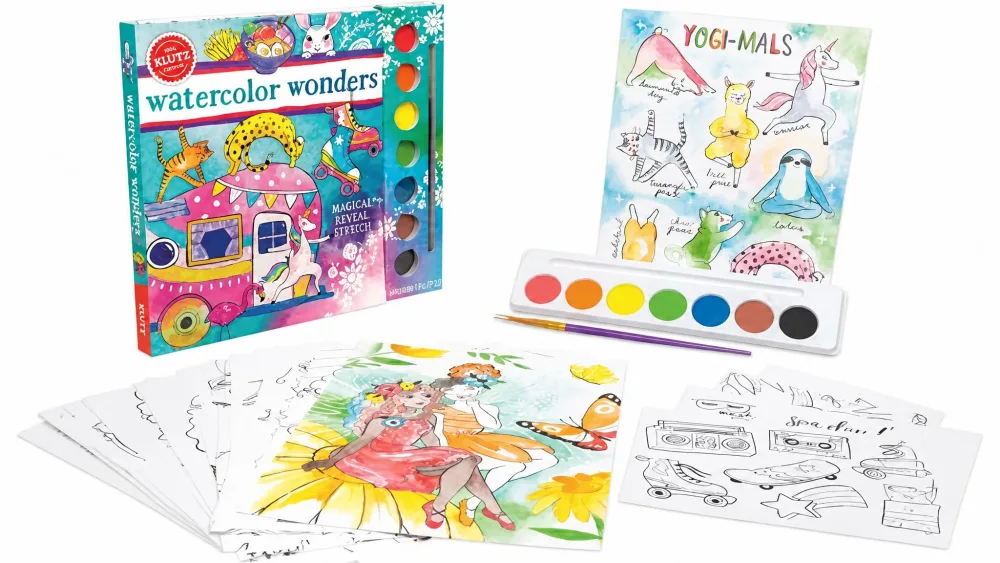
Bottom line: Everything's in the box: paint, brush, palette, and a hidden-picture hook that makes kids want to keep painting.
Watercolor Wonders hides an invisible, paint-resistant line on each page that only reveals its design once a kid actually paints over it. The 54-page book covers 20 hidden designs across 18 pages of real watercolor paper, and the box includes 7 paint colors, one paintbrush, and a mixing palette, so there's nothing else to buy first.
We'd keep this one for ages 6+; it works best once a kid can follow multi-step instructions mostly on their own. The 20 hidden designs lean toward animals, fairies, and pastel colors, more traditionally girl-marketed than gender-neutral, worth a look before wrapping this as a gift. The paint quality matches the printed designs, making it a solid standalone gift.
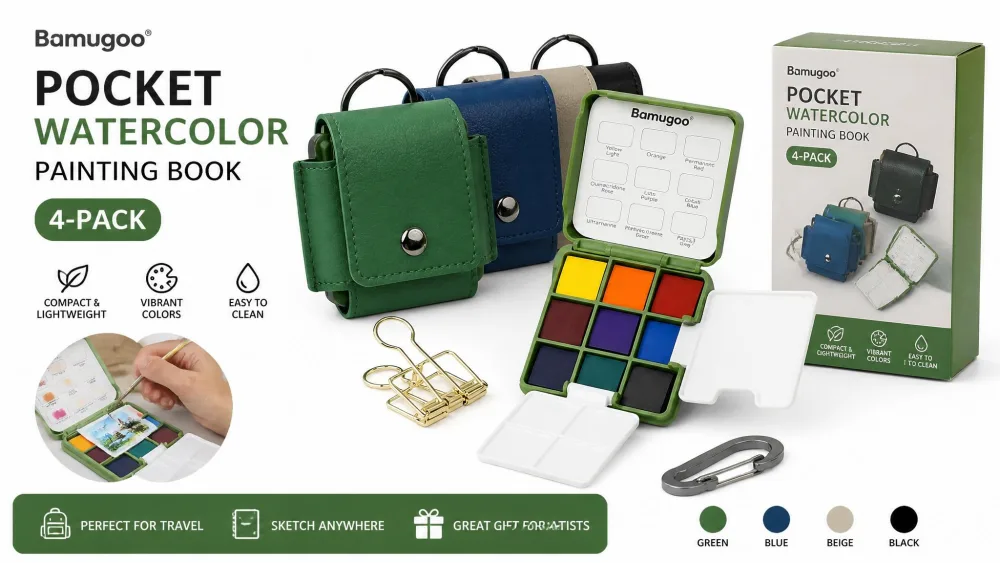
10. Bamugoo Pocket Watercolor Painting Book (4-Pack) – Best for Little Hands (Preschool / Early Elementary)
Bottom line: Four small, animal-and-ocean-themed books sized for hands that are still learning to hold a brush.
This four-book pocket set bundles four pocket-sized books, 80 pages total at about 20 each, built around animal and ocean-life themes that land well with a preschool or early-elementary crowd. Every book measures roughly 7.56 x 3.23 inches, small enough for a young kid to hold flat, and each ships with two paint swatch cards and its own brush.
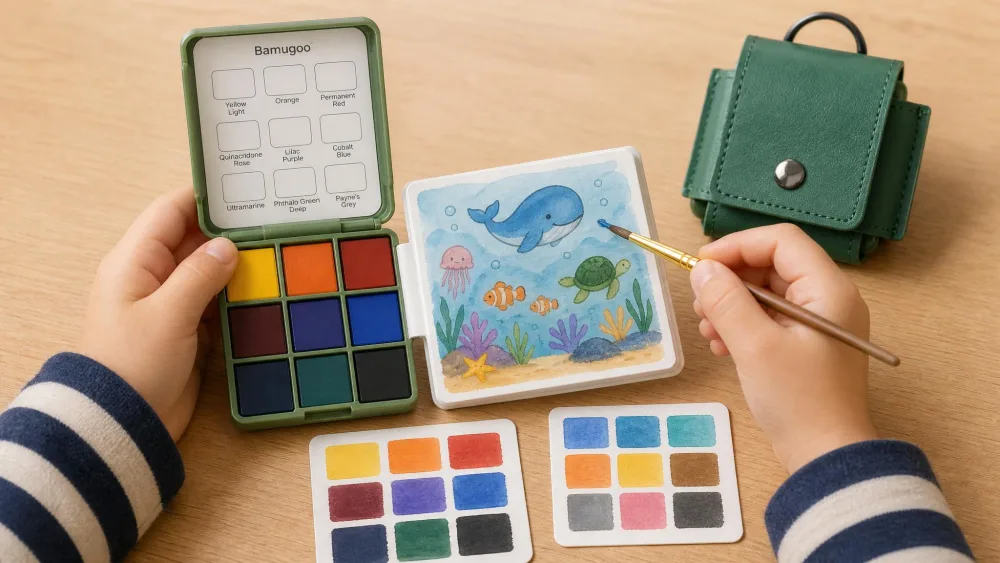
Splitting 80 pages across four small books means a project rarely feels half-finished: a kid closes out one theme in a sitting instead of abandoning a half-painted book. Age guidance runs 3 to 10, and the trim size and simple designs make this the one we'd start a five-year-old on before finer detail. Pricing shifts by listing, so check the current figure first.
Quick Comparison: Watercolor Workbooks at a Glance
Here's how all ten stack up side by side.
| Product | Page Count / Projects | Dimensions / Paper Size | Recommended Age |
|---|---|---|---|
| Brighter Day Press Watercolor Workbook: Nature | 10 tutorials | 8.5 x 11 in | 7+ |
| Walter Foster Learn to Watercolor | 20 lessons | 8 x 10 in | Beginner-friendly (no official minimum stated) |
| Melissa & Doug My First Paint with Water 3-Pack | 72 pages | 24.35 x 11.0 x 0.9 in (packaged) | 3+ |
| Ghantoy Pocket Watercolor Painting Book | 20 pages | ~7.36 x 3.07 in | ~3–10 |
| Pureadee 5-Piece Pocket Watercolor Set | 100 pages (5 x 20) | Pocket-book format | ~3–14 |
| KOROI Watercolor Workbook (15 Flower Designs) | 36 pages / 15 designs | 10.2 x 6.9 in | Teens & adults |
| Joyask Watercolor Workbook (Bouquets) | 12 designs | Spiral-bound, thick paper | ~14+ |
| Crayola Marker & Watercolor Pad | 50 sheets | 8 x 10 in | 3+ |
| Klutz Watercolor Wonders | 54-page book (18 watercolor pages / 20 designs) | Compact gift-book format | 6+ |
| Bamugoo Pocket Watercolor Painting Book (4-Pack) | 80 pages (4 x 20) | ~7.56 x 3.23 in | ~3–10 |
How to Choose a Watercolor Workbook for Kids
A few things separate a workbook that gets used all school year from one that gets abandoned after a single page.
Safety & Non-Toxic Materials
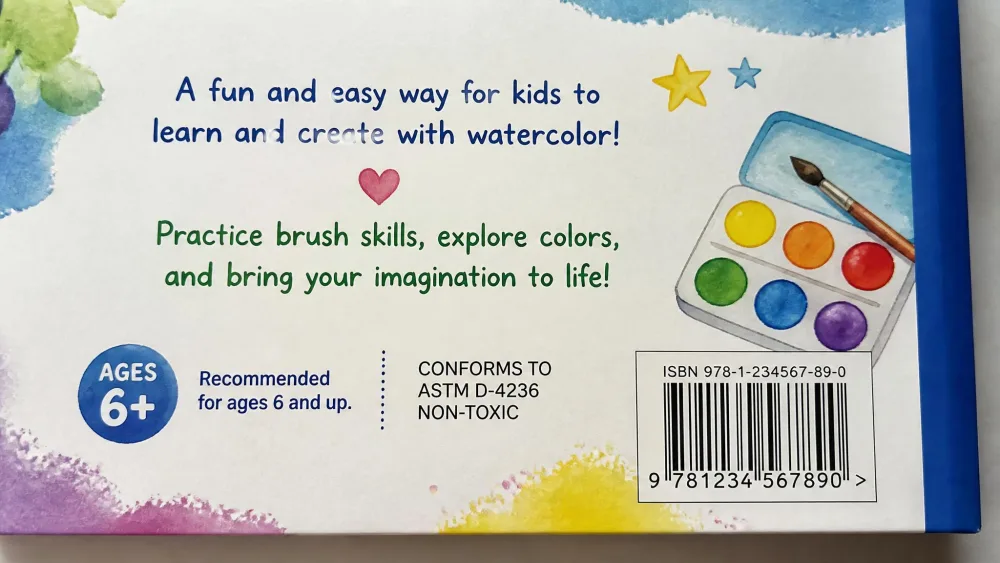
Any art material sold to US families needs to meet ASTM D-4236, the federally required safety-labeling standard for chronic health hazards under the Labeling of Hazardous Art Materials Act. A toxicologist has to review a product before it can legally carry the "Conforms to ASTM D-4236" label, so look for that phrase on the paint set, the brush, and the workbook itself. Built-in-palette workbooks add one more thing worth checking: whether the small brush itself is a choking hazard for a preschooler working solo.
Watch outWatercolor sets built for very young kids should always get adult supervision for the smallest parts. Brush caps, palette lids, and loose paint pans are all choking hazards.
Illustration Style & Themes
Themes decide whether a workbook gets opened twice or twenty times. Nature-focused designs work broadly for kids who like animals and the outdoors; themed multi-book sets solve the opposite problem by handing a bored kid a whole new set of pages instead of losing them altogether. A hidden-picture reveal turns painting into a small discovery, though it's worth checking the actual designs first, since florals and fairies won't land the same for every kid as an ocean or animal theme would. It's less about art skill than about which cover gets picked up first.
Paper Weight & Book Size
Paper weight is the difference between a workbook that survives a few wet layers and one that tears the moment a brush gets loaded twice. Genuine cotton, cold-pressed paper at 300gsm (140lb), the standard on the heaviest workbook on this list, handles pooled water without buckling or pilling. Thinner pulp paper, especially where color has to be scrubbed loose, is far more likely to tear before a painting is finished.
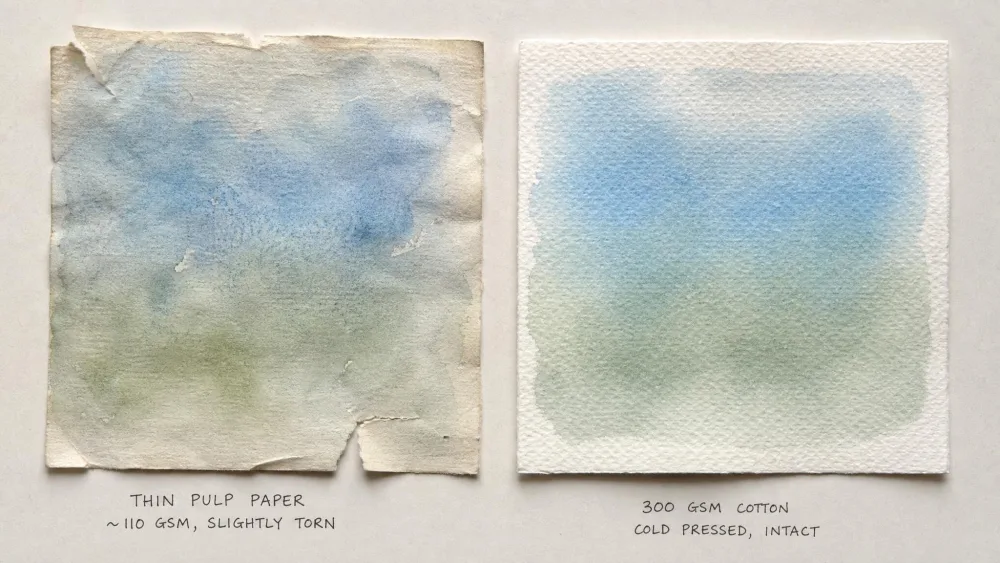
As a rule of thumb, 140lb is a reasonable minimum for combining watercolor with ink or marker; lighter paper is fine for one simple wash.
Paint & Palette Quality
Whether a workbook needs its own paint varies by product. Brighter Day Press and Walter Foster are sold as paper and instruction only, so budget for a separate set. Melissa & Doug, Klutz, Joyask, and the pocket-format books all bundle paint and a brush right in the box.
Quality inside that bundle ranges widely. Klutz includes 7 ready-mixed colors suited to a beginner, while Joyask ships a 50-color set built for a kid who already wants to mix and layer.
Parent tipIf a workbook doesn't include paint, a basic 12- to 24-color set and one round brush is enough for an entire beginner book. You don't need an advanced color count on day one.
Age Range & Skill Level
Age ranges on these workbooks span from 3 up through teens. Painting a guided outline exercises the same small-muscle skills — brush control, staying inside a line, steady pressure — that carry over into handwriting, cutting, and buttoning. A fine-motor development benefit like that shows up whether the workbook costs $27 or considerably more.
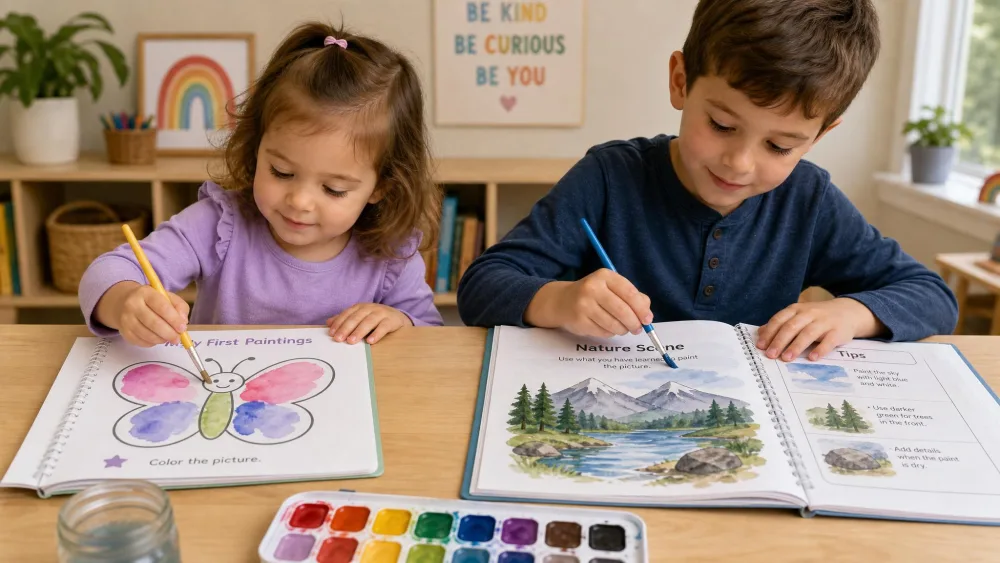
As a rough map: preschool and early-elementary kids do best with a built-in palette and simple shapes; kids around 6 to 8 are ready for pre-sketched lesson books with separate paint; workbooks marketed to teens and adults are worth saving for later.
FAQs About Watercolor Workbooks for Kids
A few questions come up in almost every household shopping for one of these.
Can watercolor workbooks be used with other art supplies?
Yes, but layering order matters more than which pad you buy. Sketch in pencil first, paint last: a wash sits cleanly over pencil, while water brushed over marker or ink can bleed. KOROI's cotton paper and the Crayola pad take a second medium best; the pocket-format books' thinner paper prefers watercolor alone.
How do watercolor workbooks help kids build skills over time?
Each lesson typically adds one new technique on top of the last: wet-on-wet blending, then layering, then a bloom effect. A kid who finishes a full book picks up real brush control instead of repeating the same wash every time. Structured lessons give clear direction instead of hunting for painting ideas online.
Are these workbooks portable enough for travel?
The pocket-format sets, Ghantoy, Pureadee, and Bamugoo, are built for exactly this. Each fits in a backpack pocket or car door, with a built-in palette and brush, so there's nothing extra to pack. The larger lesson books need a flat surface, so they suit a hotel desk more than a moving car.
Do I need to buy a separate paint set?
It depends on the book, and if you own paint, watch its condition, not the calendar. Brighter Day Press and Walter Foster are paper-and-instructions only, so either pairs with whatever palette you have. For books with built-in paint, heavy scrubbing to release any color, or a palette pan scraped to bare plastic, means a book is nearer its last lessons than the cover suggests. A kid outgrowing Klutz's 7-color set is ready to step up to something like Joyask's 50-color kit.
What should beginners know before starting?
Read a full lesson before picking up the brush. Lessons are usually sequenced light-to-dark, and painting out of order, a dark shade before the lighter layer beneath it dries, is a fast way to muddy a page a pre-printed outline was meant to make foolproof. A practice stroke on scrap paper first shows how much water that day's paint needs.
Final Verdict: Our Top Pick
Every kid wants something slightly different from these ten workbooks: a clear outline for a first-timer, real cotton paper and a bigger palette for a tween, big simple shapes for a preschooler. If we had to send just one home with a family getting started, it's the one whose ten lessons scale from a honeybee to a full forest scene, guiding a parent with no painting background as much as the kid.