30 Easy Spring Art Projects for Kids (Toddlers to Elementary)
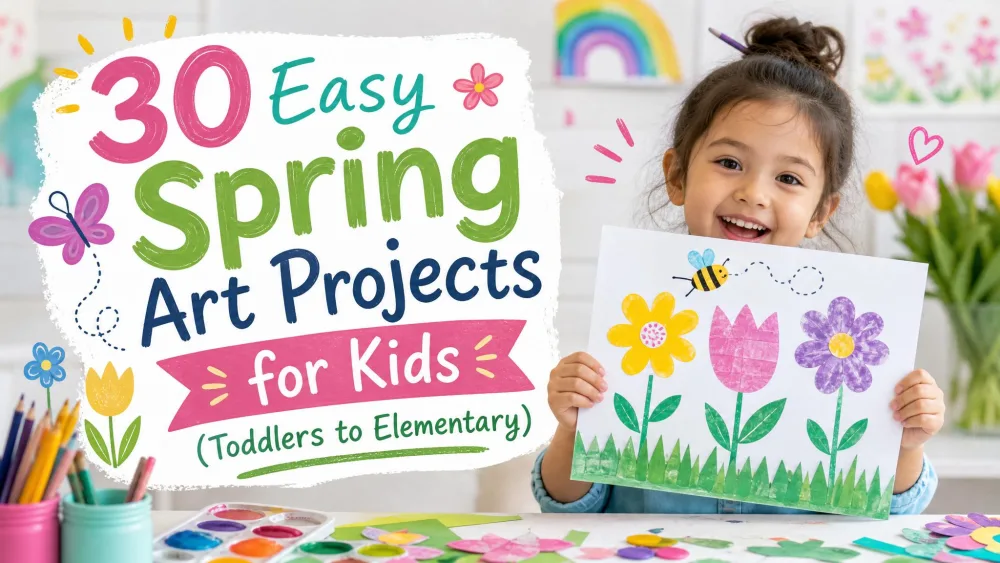
Spring at our kitchen table means paint jars, cut-up straws, and a stack of coffee filters waiting to become flowers. When the garden wakes up, the crafts follow, and we like to celebrate the season with color instead of a shopping list. Nearly all of these ideas lean on cheap household and recycled bits we already have, so a spring session rarely needs a supply run. Here are 30 hands-on spring crafts for little ones and big kids alike, sorted by theme and then by age.
NoteEverything below has been through our own kitchen table with a five-year-old and an eight-year-old. We have noted which projects held their attention and which ones got messy, so you can plan your afternoon before you open a single paint jar.
Spring Flower Art Projects
Flowers are where every spring art session tends to begin, and most of these need nothing sharper than a cotton ball. For more open-ended painting ideas, our easy art projects kids can make page pairs nicely with this section.
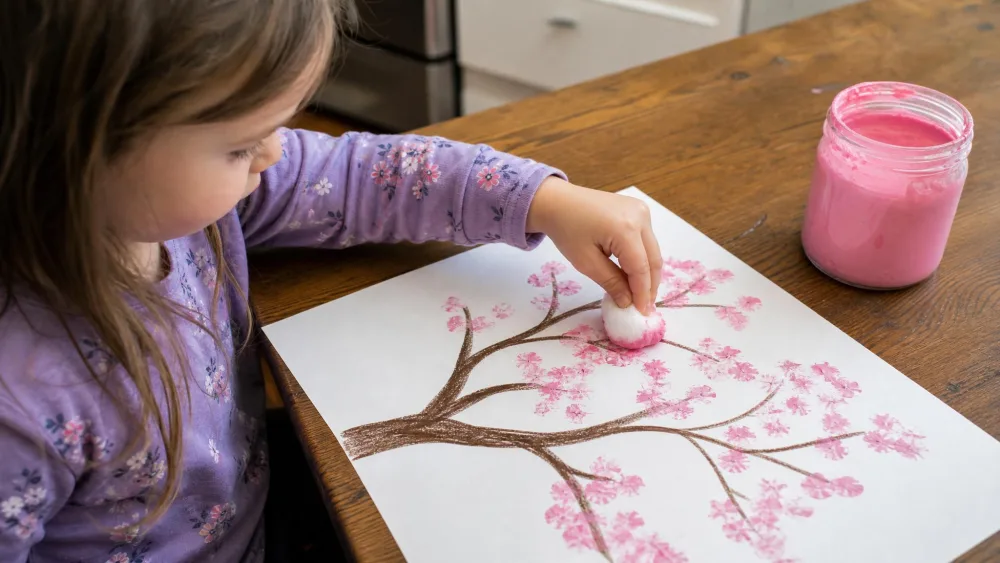
Cotton Ball Cherry Blossoms
Cherry blossom painting is made by dabbing pink paint onto branches with cotton balls, and the stippled texture looks convincingly like real petals. We draw a few bare branches in brown first, then let the kids pinch a cotton ball and press. It is a forgiving, low-frustration way to try spring flower painting for kids.
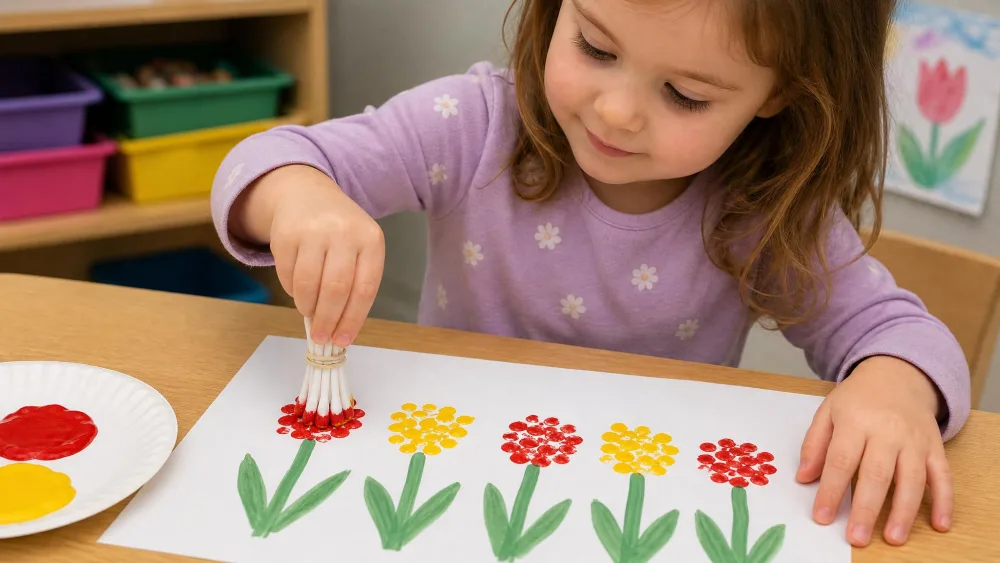
Q-Tip Field of Tulips
This field-of-tulips spring craft is made by dotting paint with Q-tips, either singly or bundled together, onto paper or a printable template. Cotton balls and Q-tips give young hands better paint control than a brush, which is exactly why they are our go-to tools for toddler and preschooler flower work.
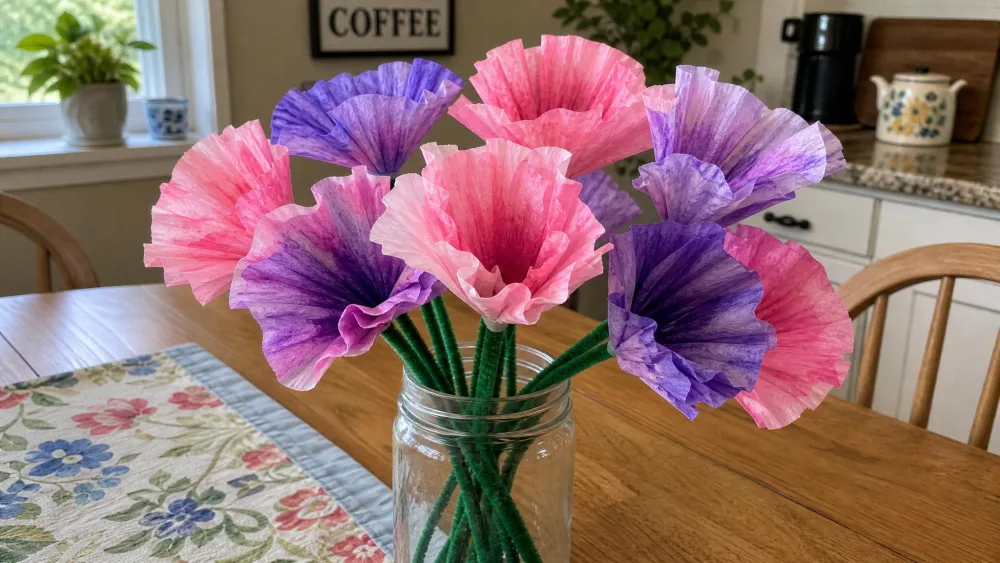
Coffee Filter Flowers
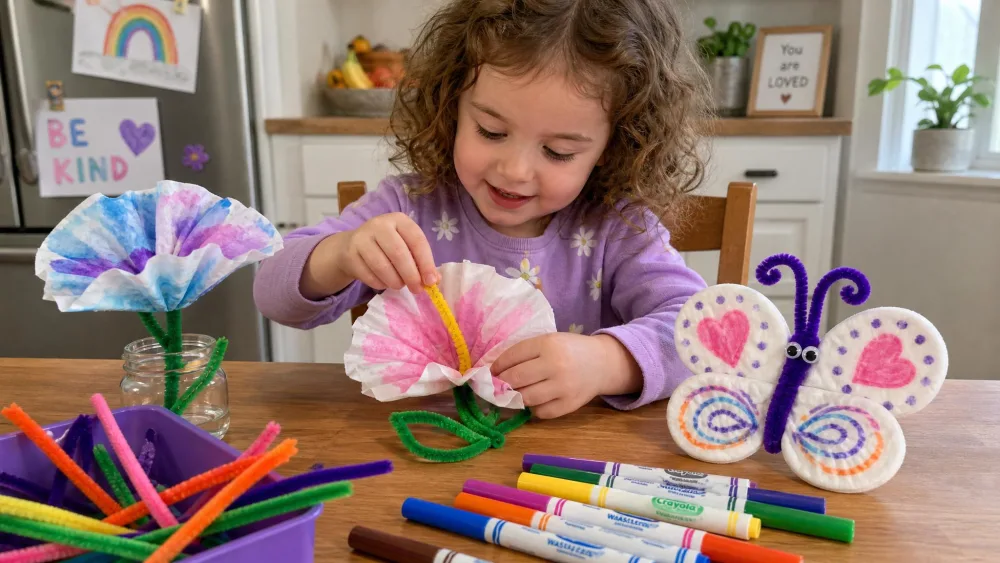
For coffee filter flowers, the kids color white filters with washable markers, then we assemble them onto green pipe-cleaner stems. The colors bleed and blend as the marker ink spreads, so no two flowers turn out the same.
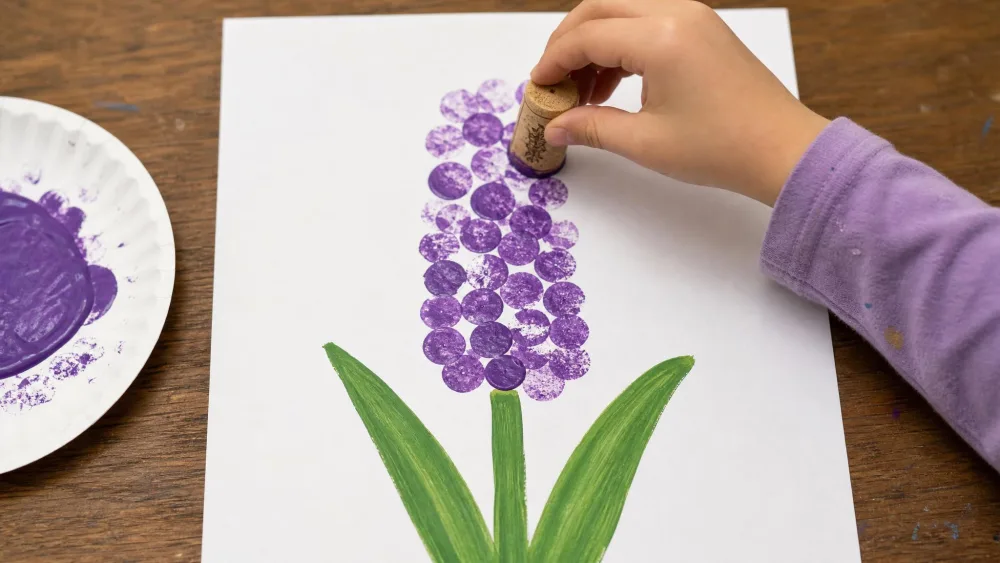
Cork-Stamped Hyacinths
Save your wine corks for this one. Painting with household objects like corks, forks, and bubble wrap hooks engagement through novelty, and it pulls in the kids who tune out of ordinary brush painting. A dabbed column of purple cork-print hyacinths becomes a flower in about a minute.
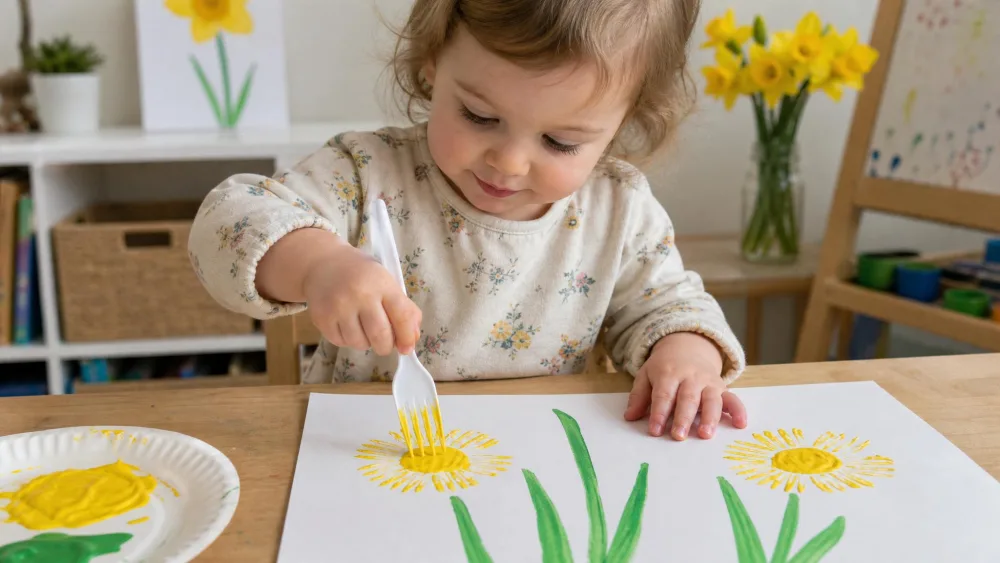
Fork-Stamped Daffodils
Fork-stamping is one of the easiest wins for the youngest crafters because there is no cutting or gluing involved. Dip a plastic fork in yellow paint, press it in a ring, and you have a daffodil. This is our first project of choice for a two-year-old who wants in on the fun.
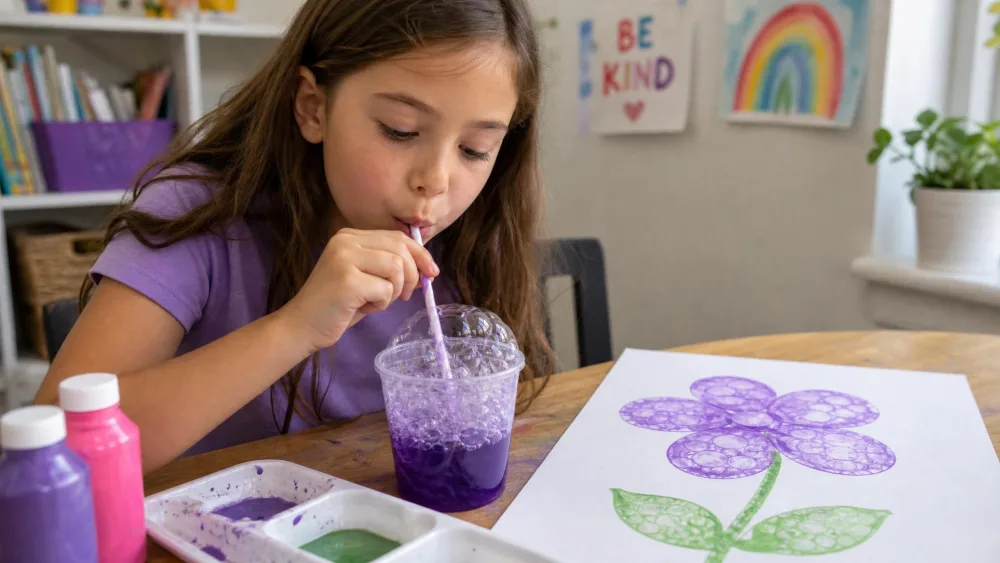
Bubble-Paint Blossoms
For older kids, bubble paint is a favorite. Mix acrylic paint, dish soap, glycerin, and water in a 1:1:1:1 ratio, then blow through a straw for these bubble-paint spring blossoms to raise a dome of colored bubbles and press paper on top. Because it needs breath control and gets messier, it suits older kids or close supervision.
Butterfly & Bug Crafts
Once the flowers dry, the bugs arrive. These lean on symmetry, sponges, and torn paper, and they are some of the most-requested crafts in our house every year.
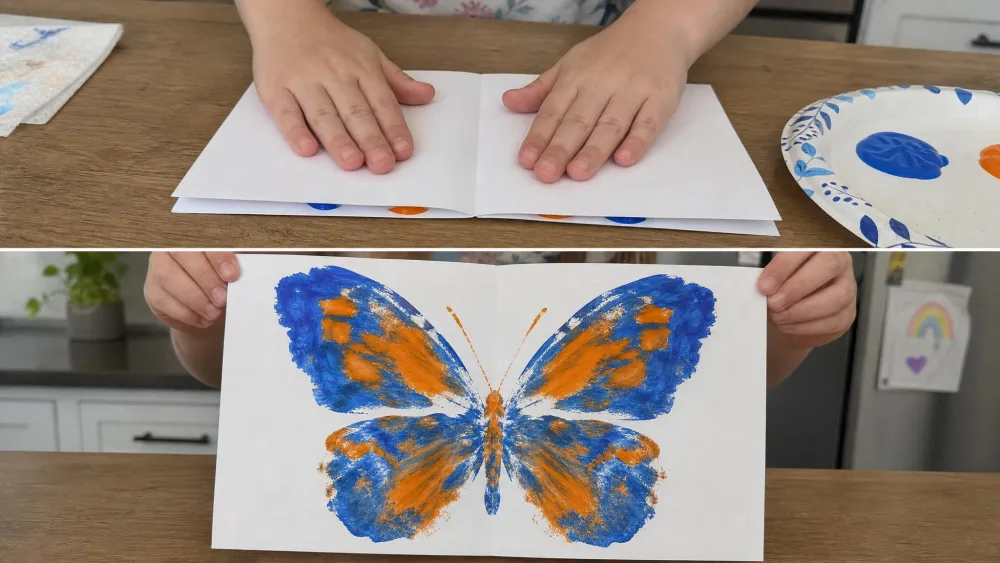
Symmetry Butterfly Painting
Symmetry butterfly painting is the classic fold-and-press. The kids blob paint on one half of a folded page, press the halves together, and open it to a mirrored butterfly. It teaches symmetry without a single word of instruction, and it is a reliable butterfly painting project for kids.
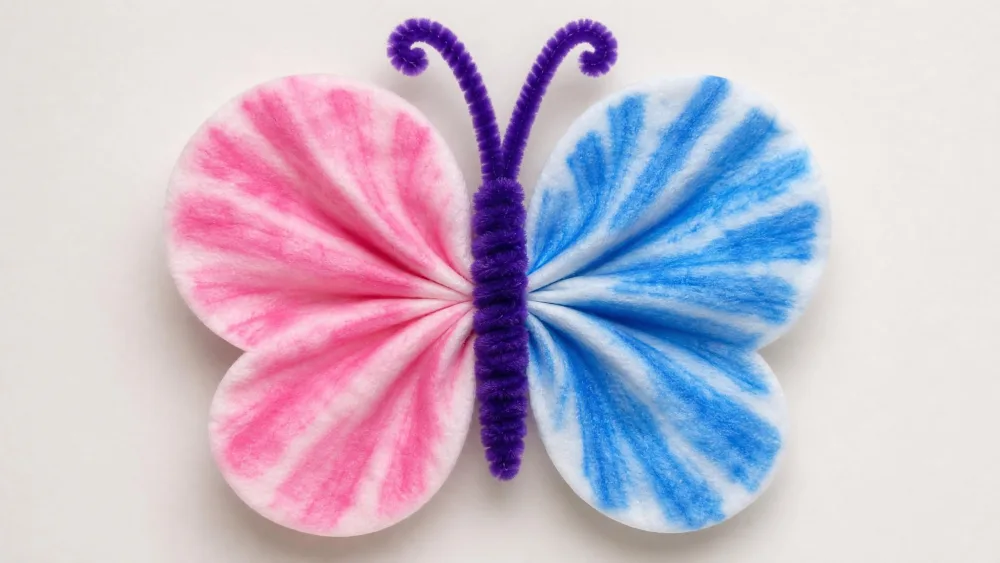
Cotton Pad Butterflies
Round cotton pads make instant butterfly wing crafts. The kids color them with markers, pinch them in the middle, and add a pipe-cleaner body with antennae. It is a calm, no-mess option for a preschooler.
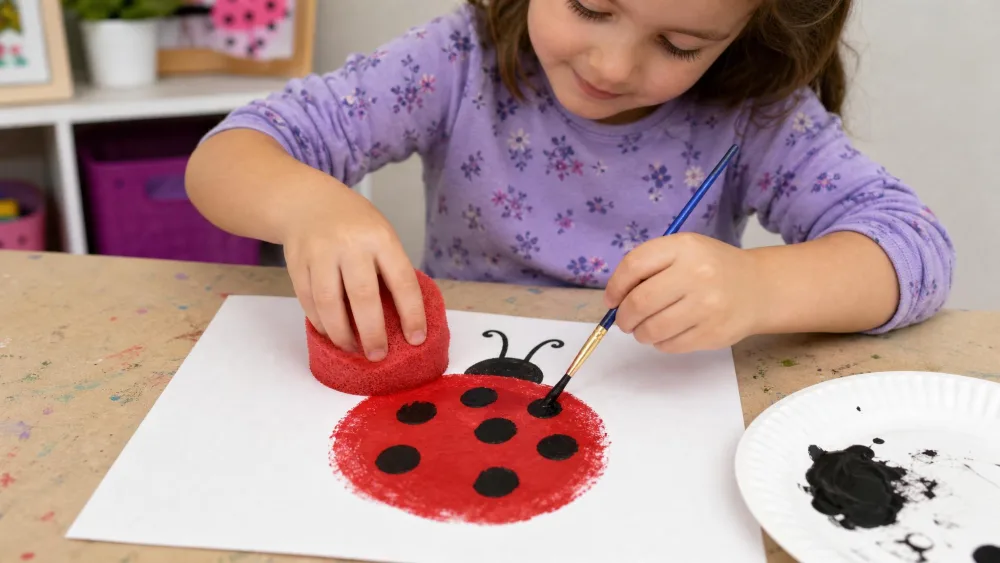
Sponge-Painted Ladybugs
For these sponge-painted ladybugs, we cut a sponge into a rounded shape and stamp red bodies, then add black dots and legs once dry. Sponge painting is bug-craft season at its simplest, and it holds up to enthusiastic pressing.
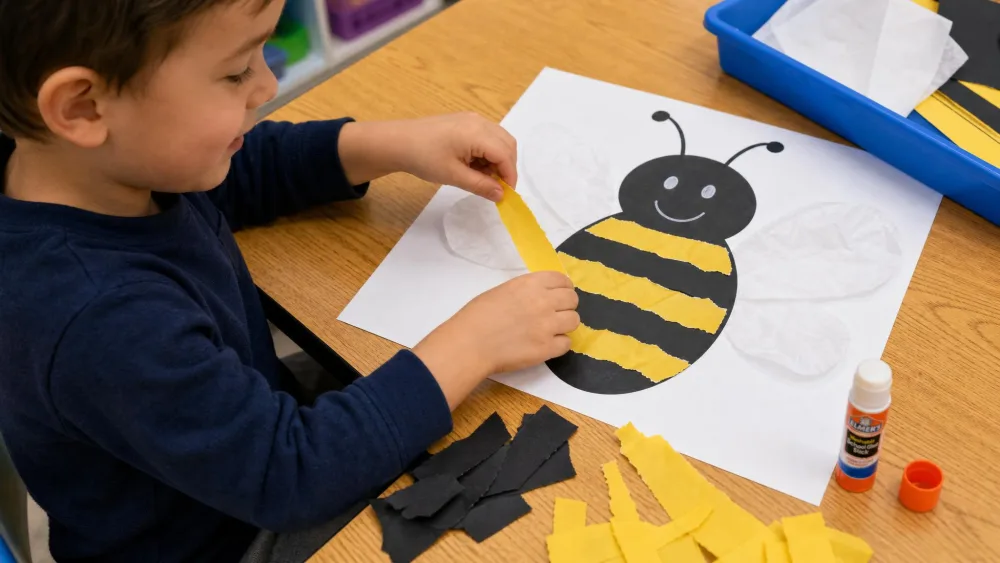
Torn-Paper Bees
Torn-paper bees are a tearing-and-gluing project that builds fine-motor control. Yellow and black strips get torn and layered into a plump bee body, with wax-paper or tissue wings. No scissors required, which toddlers love.
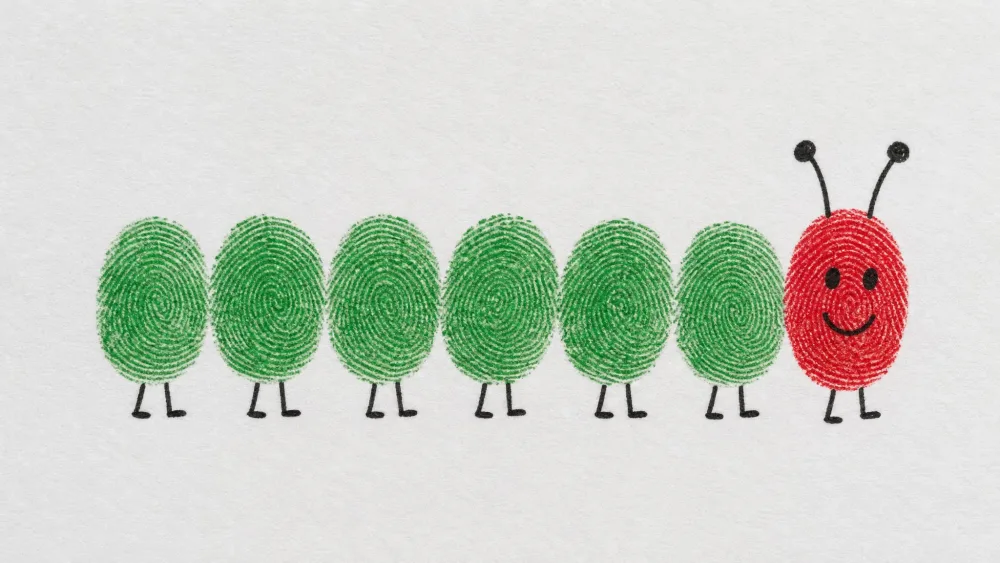
Handprint Caterpillars
Press five fingerprint caterpillars in a row and you have a bug. We use green paint, add a red dot for the head, and draw on tiny legs. It doubles as a keepsake of just how small those hands are this spring.
Rainbow & Weather Art
Spring weather is all sun showers and rainbows, and rainbow crafts run from popsicle sticks to genuinely tricky watercolor. There is a rainbow here for every age.
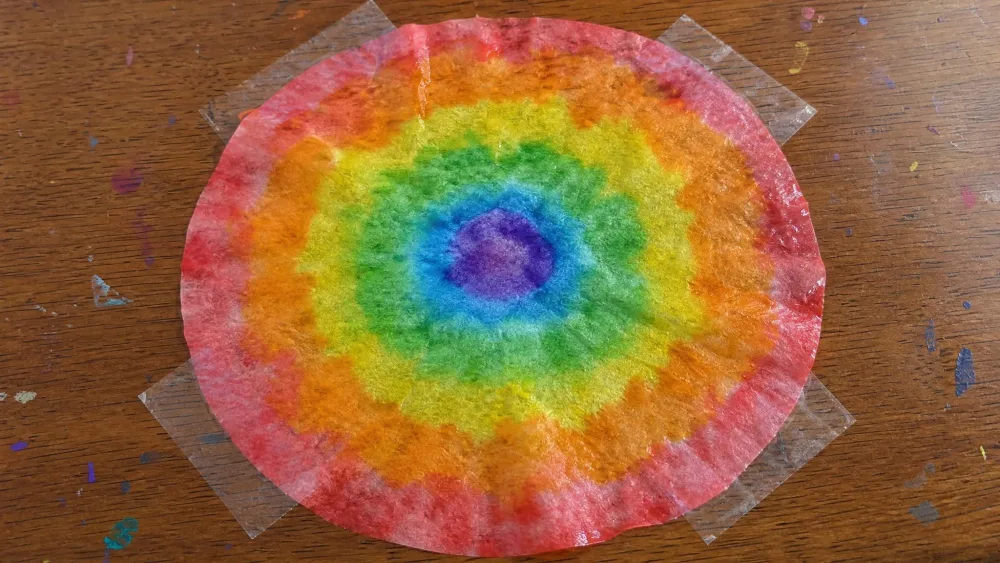
Coffee Filter Watercolor Rainbow
Painted from the center outward on a wet coffee filter, watercolor colors blend beautifully, which makes this a reliable and forgiving win for younger kids. We tape the filter down, wet it with a spray bottle, and let the bands bloom into each other.
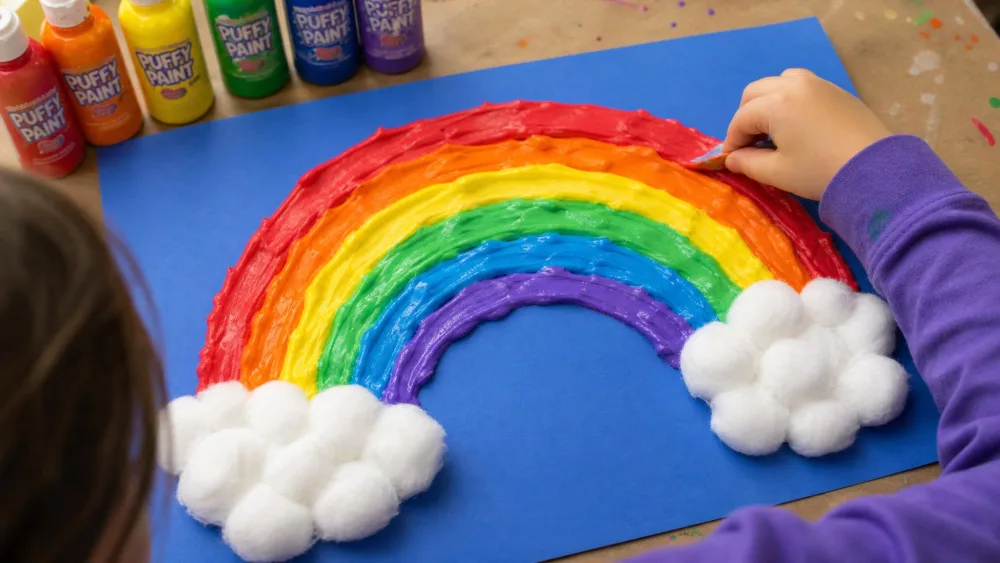
Puffy Paint Rainbows
Puffy paint rainbows (equal parts shaving cream and glue) dry raised and squishy, and rainbows are the obvious canvas. The kids swirl the colors into arcs and add cotton-ball clouds at each end.
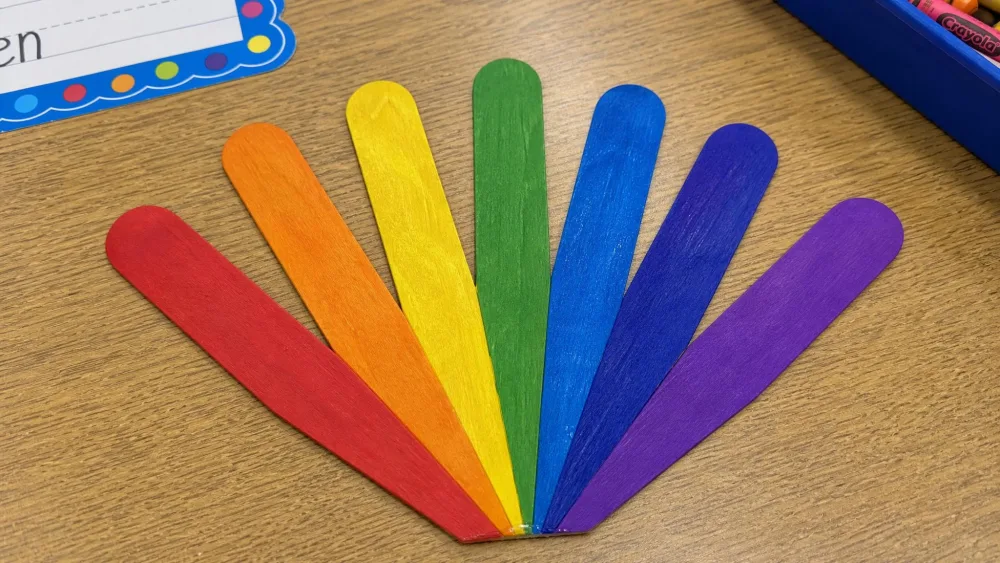
Popsicle Stick Rainbows
Glue seven painted popsicle-stick rainbows in a graduated fan and you have a standing rainbow. It is a tidy, low-mess build we like for a classroom table where cleanup time is short.
Realistic Watercolor Rainbow
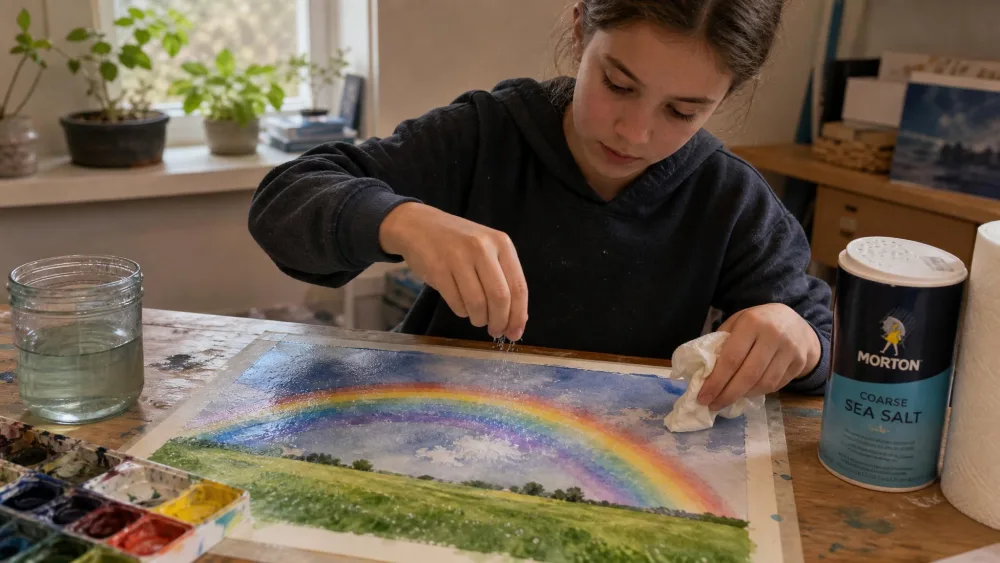
For tweens and teens, the realistic watercolor rainbow painting uses watercolor paper, coarse salt for grass texture, and tissue lift-off for clouds. It is genuinely challenging. Cloud lift-off and salt timing trip up beginners, so our eight-year-old wanted to practice on scrap paper first.
Bird, Nest & Animal Crafts
Baby animals are peak spring, and this batch covers bunnies, chicks, frogs, and birds. Most reach for paper plates and recycled odds and ends.
No-Sew Sock Bunny
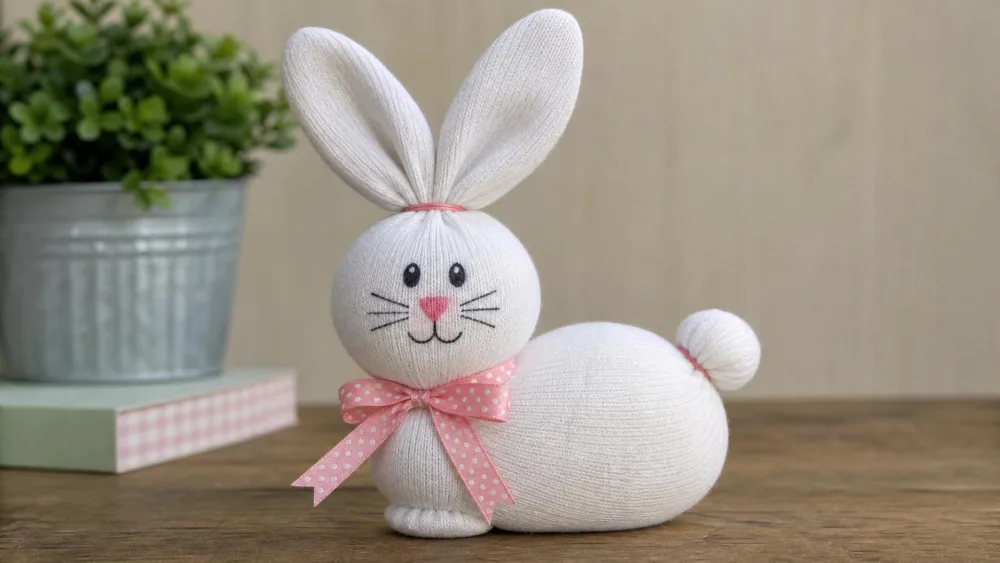
Our very favorite is the no-sew sock bunny. Fill an unmatched sock with 1 cup of uncooked rice, shape it with rubber bands for the head, midpoint, and cottontail, trim the ears, and draw a face with a marker. It needs almost no cleanup. The only real risk is spilled rice, and toddlers can help fill the sock while older kids assemble it themselves. It is our go-to sock bunny craft every Easter week.
Paper Plate Chicks
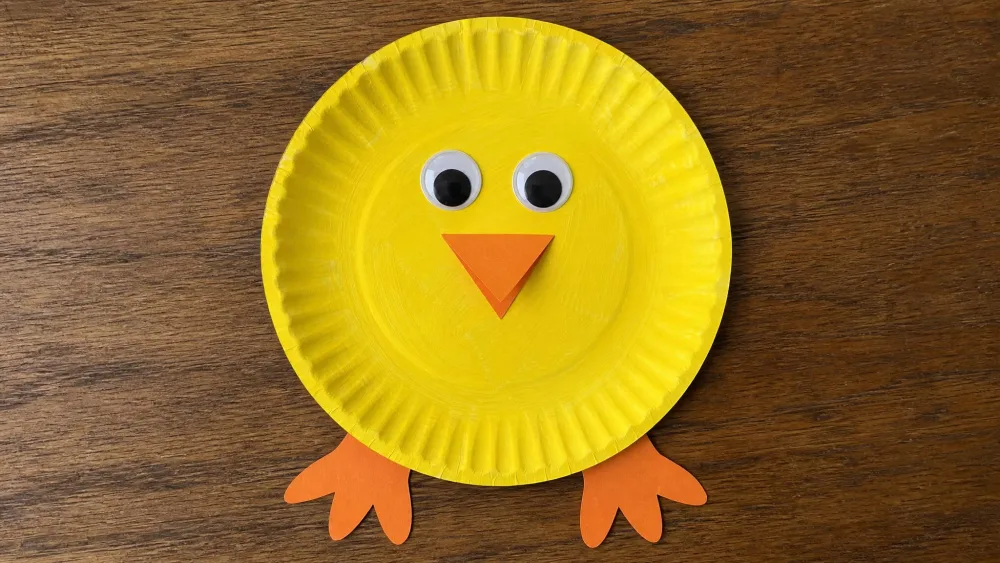
Paper-plate spring chicks get painted yellow and assembled with a construction-paper beak and feet. Paper plates soak up and hold more paint than regular paper, so they stand up to heavy toddler painting without buckling.
Paper Plate Frogs
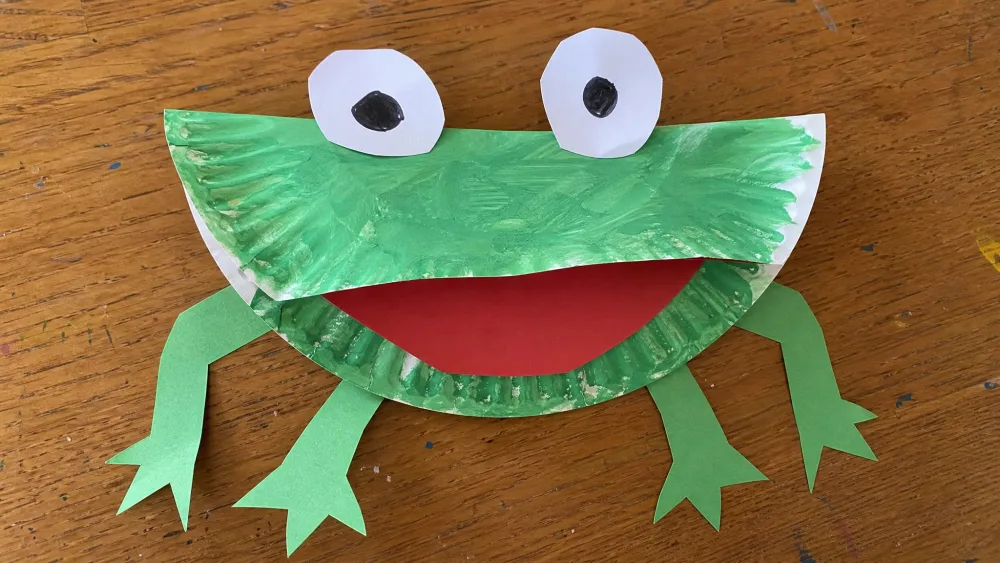
Same plate, different animal. A green-painted plate folded in half becomes a frog with a wide paper mouth and bulging eyes. Our five-year-old made three in a row and lined them up on the windowsill.
Handprint Birds & Nests
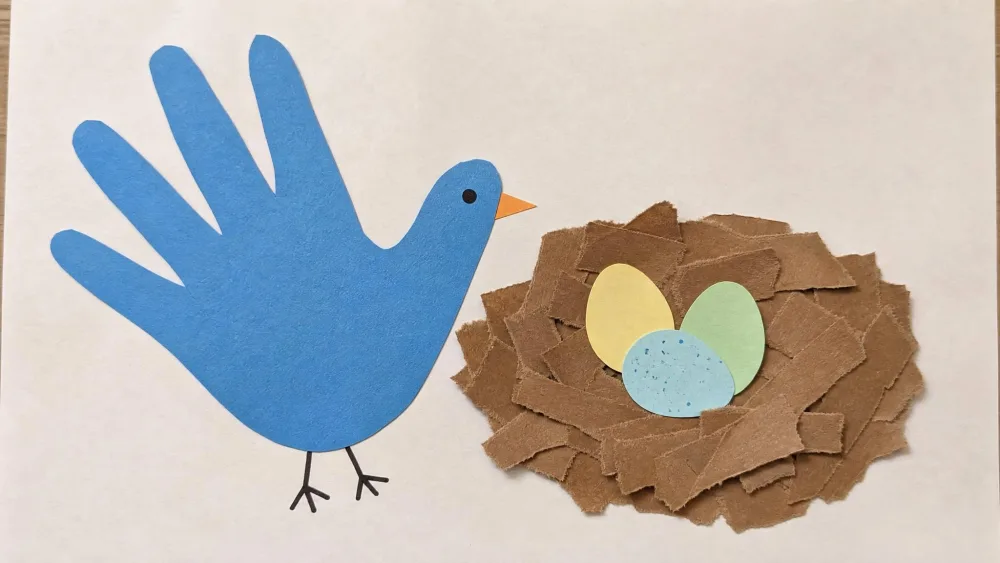
Trace a handprint for the bird's body and tail, then glue torn brown paper into a nest with a few paper eggs. This is a sweet, keepsake-worthy spring animal craft for kids that captures the size of their hands.
Suncatcher & Coffee-Filter Crafts
When the afternoon sun comes through the kitchen window, suncatchers earn their keep. These translucent, light-based crafts are simple to make and lovely to hang.
Coffee Filter Suncatchers
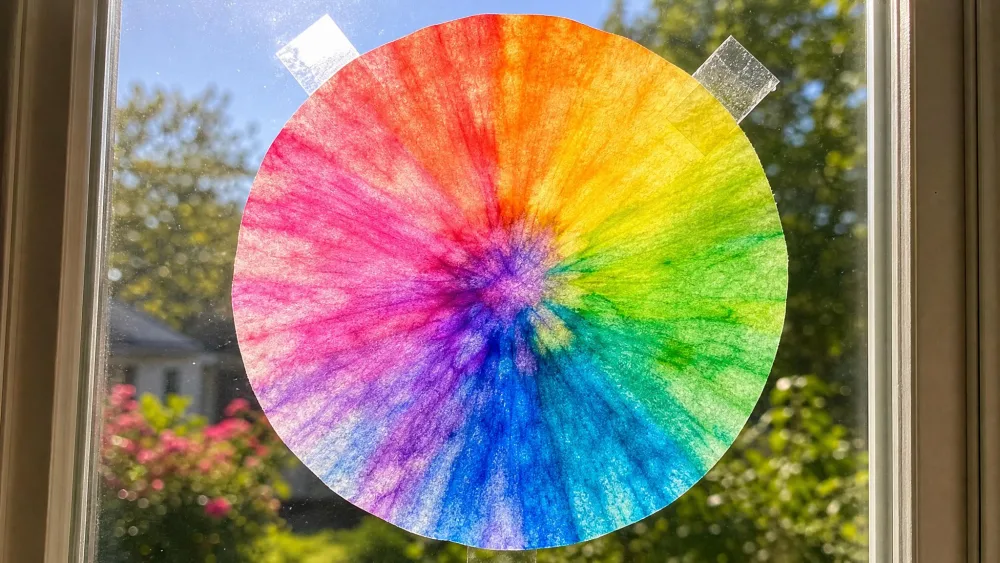
Color a white coffee filter suncatcher with washable markers, spritz it to blend, let it dry, and backlight it in a window. The glow when the sun hits it is what sells the kids on it every time.
Tissue Paper Suncatchers
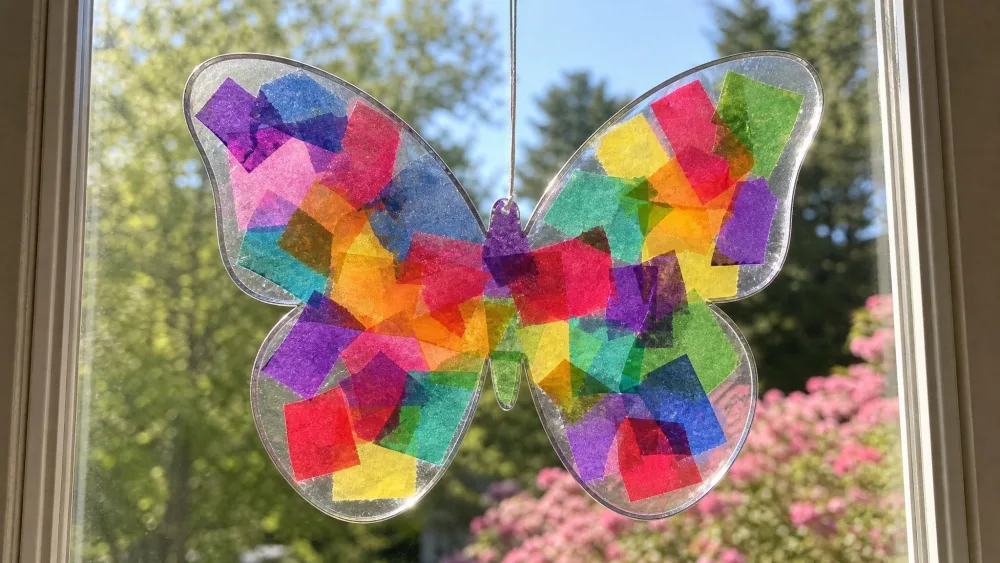
Torn tissue-paper squares pressed onto contact paper make a stained-glass suncatcher in any spring shape, from a butterfly to a flower. No drying time, so it goes straight in the window.
Handprint & Nature/Sensory Art
Some of the best spring art comes straight from the yard. Nature and sensory work turns a walk into a supply run and gives sensory-seeking kids plenty to touch.
Handprint Flower Keepsake Canvas
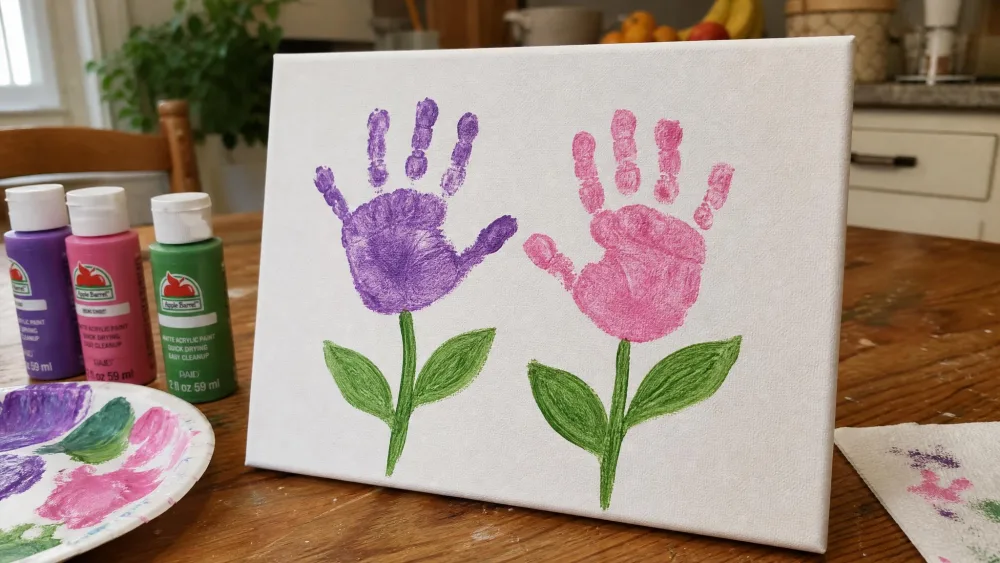
Press painted hands onto a canvas as flower petals and add stems and leaves. Our kids had a blast with this one, and the finished canvas becomes a keepsake worth actually displaying, not just recycling.
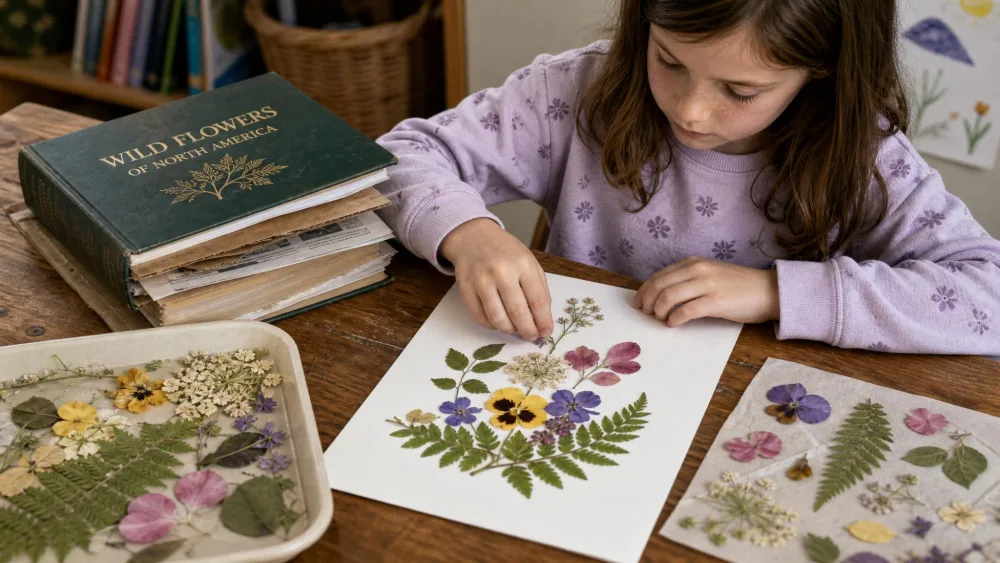
Pressed Flower Art
Nature and sensory art comes together from real flowers, leaves, and garden bits through collage, weaving, and pressed-flower work. We press real flowers for nature art in a heavy book for a few days, then arrange them into cards and framed keepsakes.
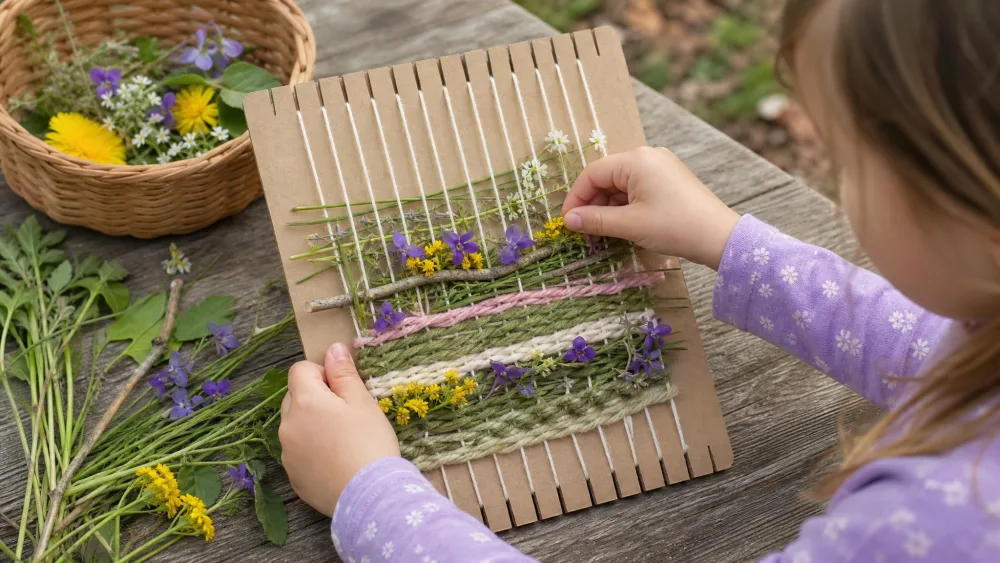
Nature Collage & Weaving
A cardboard loom strung with yarn becomes a nature weaving once the kids tuck in petals, grasses, and twigs from a spring walk. It is open-ended and calming, and it is one of the nature art projects for kids we return to most.
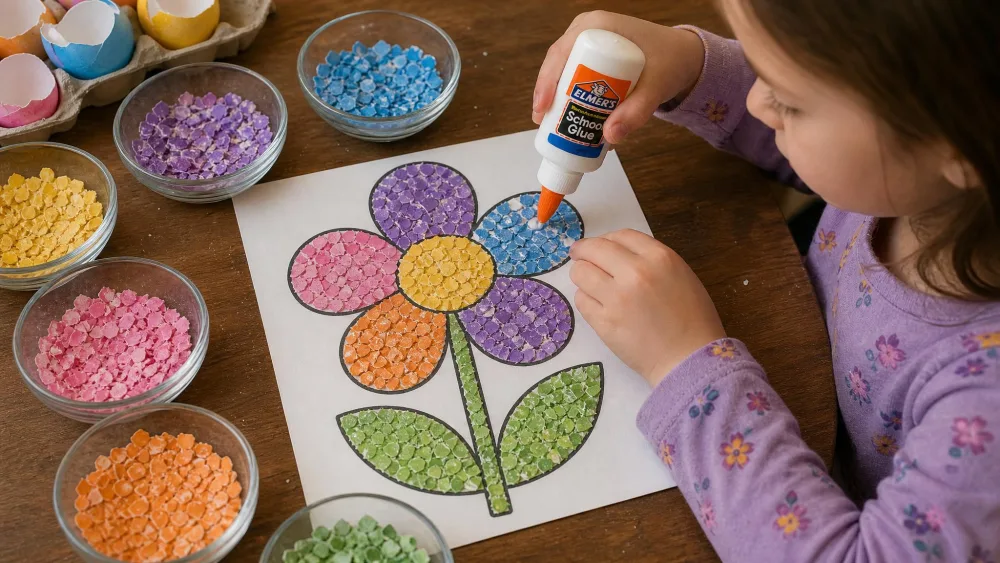
Eggshell Mosaic
Save and dye eggshells, let them dry, then crush and glue them into a mosaic flower or butterfly. It is a satisfyingly tactile way to use up shells the sensory-seekers love to crunch.
Paper Plate Spring Crafts
Paper plates deserve their own section because they hold so much paint and cost almost nothing. Beyond the chicks and frogs above, here are two more we make on repeat.
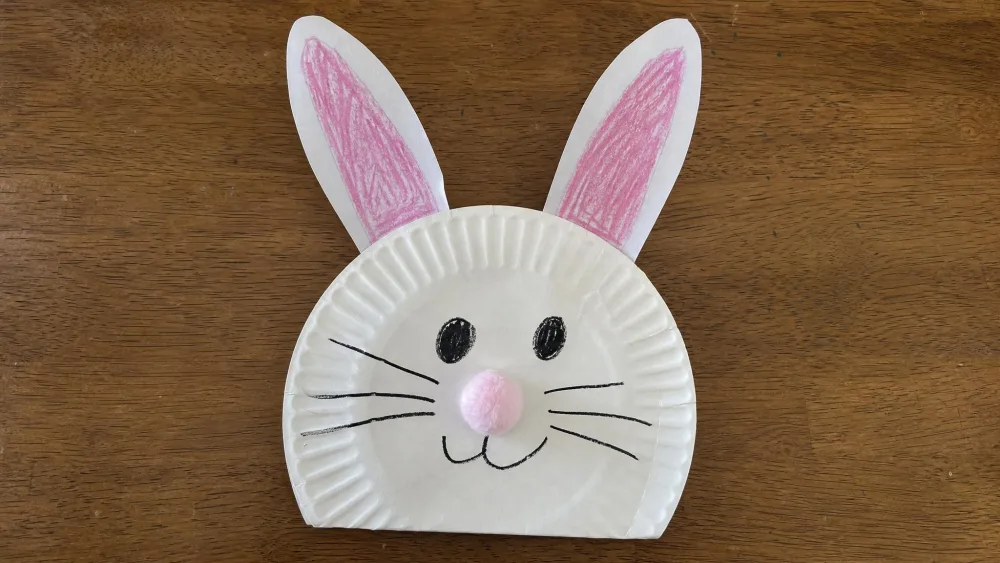
Paper Plate Bunny
A plain paper plate becomes a paper plate bunny with two tall paper ears, a cotton-ball tail, and a drawn-on face. Painted or left white, it is a five-minute craft that toddlers can nearly finish on their own.
Paper Plate Spring Wreath
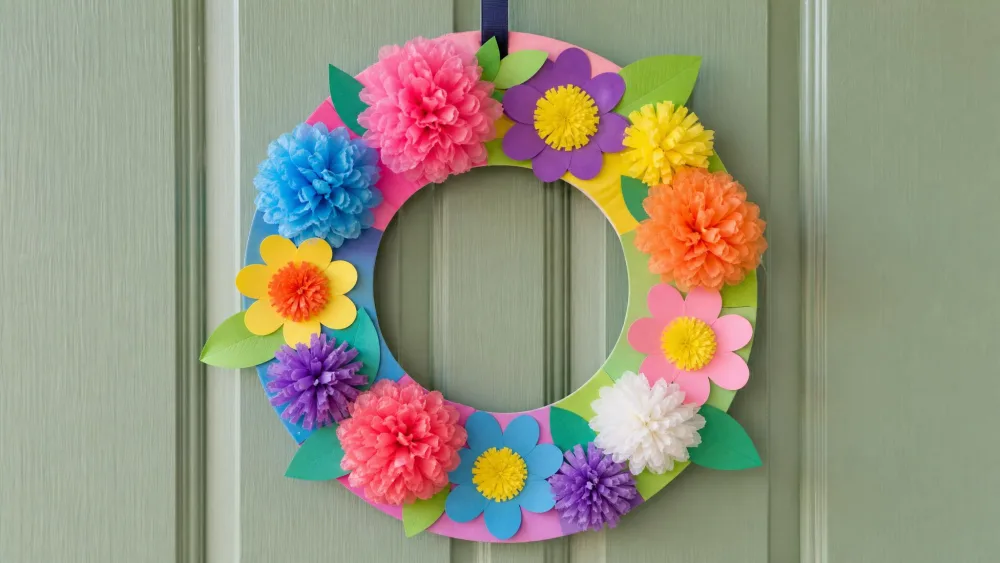
Cut the center from a plate to make a ring, then glue on handprint flowers, tissue blooms, or coffee-filter petals for a spring wreath to hang on the door. It is a lovely way to use up the odds and ends from every other project on this list.
Spring Art Projects by Age Group
The same theme can flex up or down the ages. Here is how we match the projects above to who is sitting at the table.
Spring Art for Toddlers
For toddlers, we stick to no-scissors, no-fuss work. Fork-stamping and pom-pom printing are the easiest wins for the youngest crafters because there is no cutting or gluing involved. Cotton balls and Q-tips also give little hands better paint control than a brush, so cherry blossoms and tulips land well.
Parent tipFor the under-threes, tape the paper down and offer one color at a time. Fewer choices means longer focus and far less paint on the floor.
Spring Art for Preschoolers
Preschoolers are ready for a little assembly: coffee-filter flowers on pipe-cleaner stems, cotton-pad butterflies, and paper-plate animals. These add a gluing step without demanding precision, which keeps the frustration low and the buy-in high.
Spring Art for Elementary Kids & the Classroom
Elementary kids and classrooms can handle the trickier techniques: bubble-paint blossoms, salt-textured watercolor rainbows, and nature weaving. The open-ended meadow painting has no right or wrong way, so kids quickly find their own solutions, which makes it a low-frustration, high-buy-in spring meadow painting for a whole class of six- to eight-year-olds.
NoteFor a classroom, prep sets the tone: pre-cut templates, one supply tray per pair, and a drying rack near the sink turn 25 kids and wet paint into a calm afternoon rather than chaos.
Tips for Mess-Free Spring Art at Home
The mess is manageable with setup, not inevitable. Even splatter and splat painting can be kept controlled and contained rather than messy once you plan the space first.
A vinyl tablecloth, an old shirt worn backward, and a cookie sheet to corral loose supplies do most of the work. We keep a damp cloth within reach and reach for washable markers and paint wherever we can, because those wipe off skin and tables in seconds.
Parent tipSet out a "wet work" zone and a "dry work" zone before you start. Painting stays on the wipeable side, and gluing and assembly happen on the other, so finished pieces do not smear on their way to dry.
Because these roundups uniformly lean on cheap household and recycled supplies like socks, cardboard tubes, cupcake liners, coffee filters, corks, and straws, you can pull a whole spring session together without a store trip. If you want a running stash, our kids art supplies guide covers the basics worth keeping on hand.
Final Thoughts
Spring is the easiest season to get crafty, because the theme is everywhere you look: the first tulips, the bees, the sudden rainbows after a warm rain. Every project here is budget-friendly, hands-on, and built for kids of all ages, so pick a few, cover the table, and welcome spring one paint jar at a time. When the weather turns, our fall art projects for kids and winter art projects for kids keep the seasonal crafting going all year.