30 Easy Art Projects for Kids (Simple Ideas for Every Age)
Some afternoons you just need something for the kids to do that isn't a screen. That was us last rainy Tuesday, staring at a table and a box of washable paint, wondering what to make.
The good news is that easy art projects rarely need a shopping trip. Most of the ideas below use everyday supplies you probably already have in a drawer or a recycling bin.
We tried all of these at our own kitchen table, and we grouped them by age so you can jump straight to what fits your kids today. Little ones get tactile, low-instruction projects, and older kids get a bit more challenge.
Why Easy Art Projects Are Great for Kids
Art time is one of the easiest ways to give kids a screen-free hour that still does real work. Cutting, gluing, and gripping a brush all help with developing fine-motor skills that carry over into writing and dressing.
There is a bigger reason, too. Open-ended making is a form of play-based learning, where kids test ideas, make choices, and see what happens.
The best part for parents is how little it asks of you. You do not need art training, a plan, or a perfect result. You just need to set out a few supplies and let the kids explore.
Easy Art Projects for Toddlers (Ages 2–4)
Toddlers explore art mostly through touch, so the winners here are the ones they can dig their hands into. Keep the instructions light and let them lead.
1. Finger Painting
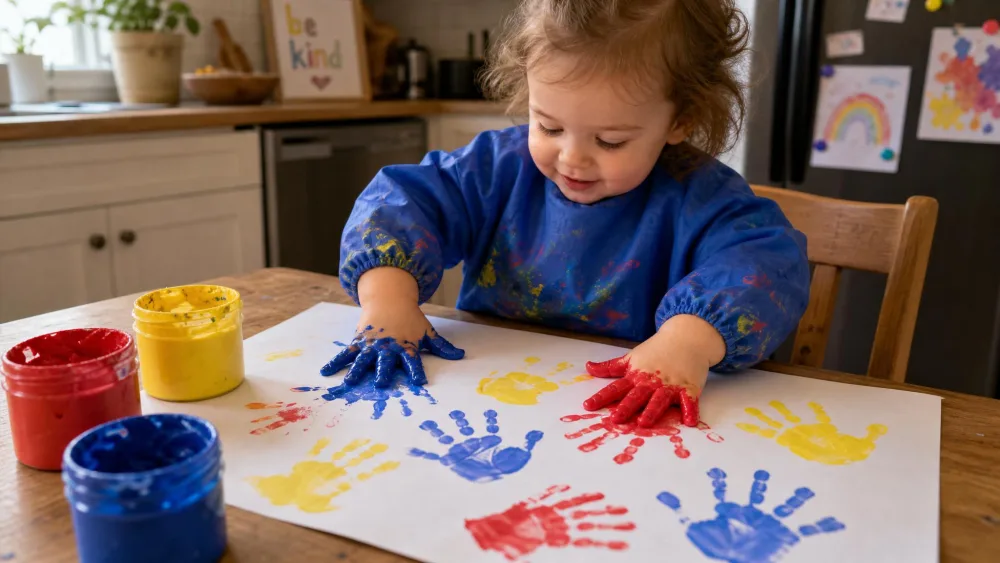
Nothing beats finger painting for the youngest kids. They get to explore color and texture freely using just their hands, and there is no wrong way to do it.
Materials: washable paint, thick paper.
Best for: ages 2–4.
2. Cotton-Ball Painting
Clip a cotton ball to a clothespin and you have a soft, dabbing brush that is easy for small hands to hold. The gentle prints feel like clouds.
Materials: cotton balls, clothespins, washable paint.
Best for: ages 2–4.
3. Sponge Stamping
Cut a kitchen sponge into simple shapes, dip, and press. Our youngest loved lining up the prints in wobbly rows across a whole page.
Materials: sponges, washable paint, paper.
Best for: ages 2–4.
4. Bubble-Wrap Printing
Paint a sheet of bubble wrap, flip it onto paper, and peel. The pattern surprises kids every time, and it is a great way to reuse packing scraps.
Materials: bubble wrap, washable paint, paper.
Best for: ages 2–4.
5. Handprint Animals
Press a painted hand onto paper and turn the print into a fish, a peacock, or a little crab. These double as keepsakes you will want to save.
Materials: washable paint, paper, markers.
Best for: ages 2–4.
6. Torn-Paper Collage
Tearing paper is a small workout for little fingers, and it needs zero scissors. Kids glue the scraps into a rainbow, a tree, or a happy mess.
Materials: scrap paper, glue stick, cardstock.
Best for: ages 2–4.
7. Play-Dough Sculpting
Play dough is easy enough for a two-year-old but scales up beautifully. Add pipe cleaners, beads, and feathers and even our eight-year-old stayed busy.
Materials: play dough, pipe cleaners, beads.
Best for: ages 2–4 and up.
Easy Art Projects for Preschoolers & Kindergarten (Ages 4–6)
Around this age kids can follow a couple of steps and handle child-safe scissors, so you can add a little structure. Salt painting is where the wow moments start.
8. Salt Painting
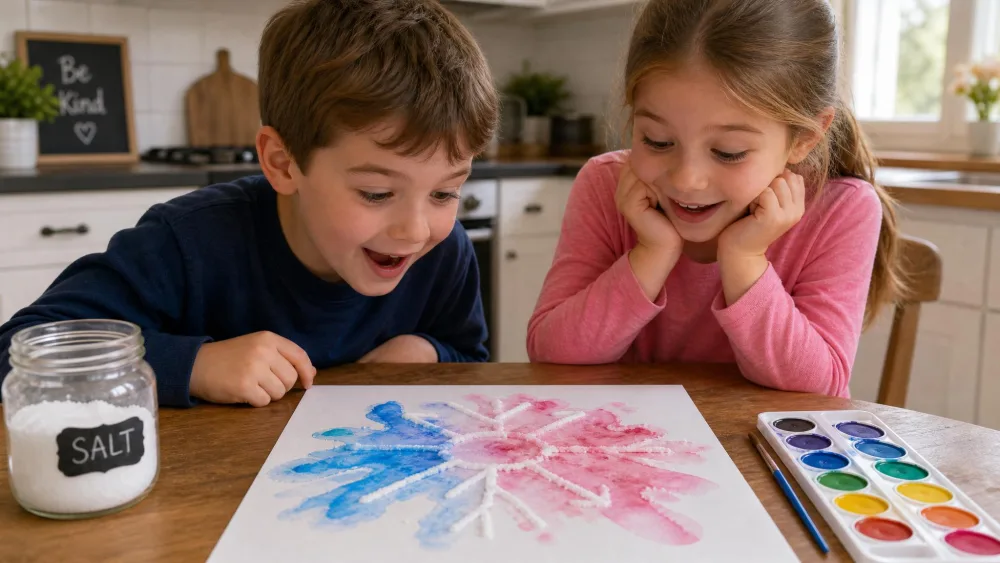
This one gets gasps every time. Draw with glue, sprinkle on salt, then touch a wet watercolor brush to the lines and the color spreads through the design like magic.
Materials: glue, salt, watercolors.
Best for: ages 4–6.
9. Crayon-Resist Painting
Draw with white or light crayon, then wash watercolor over the top. The hidden drawing pops through, which feels like a secret revealed.
Materials: crayons, watercolors, paper.
Best for: ages 4–6.
10. Coffee-Filter Color Diffusion
Color a flat coffee filter with markers, spritz with water, and watch the colors bleed and blend. Dried filters make lovely flowers and butterflies.
Materials: coffee filters, markers, water.
Best for: ages 4–6.
11. Shape Collage
Cut simple shapes ahead of time and let kids arrange them into houses, robots, or animals. It is quiet, tidy, and great for early scissor practice.
Materials: colored paper, glue, scissors.
Best for: ages 4–6.
12. Paper-Plate Animals
A plain paper plate becomes a lion, an owl, or a turtle with a little paint and glue. This is a classic for a reason.
Materials: paper plates, paint, googly eyes.
Best for: ages 4–6.
13. Q-Tip Dot Painting
Hand over a cup of cotton swabs and let kids build pictures out of dots. It is a calm, focused project that also sneaks in fine-motor practice.
Materials: cotton swabs, washable paint, paper.
Best for: ages 4–6.
14. Nature Faces
Head outside, gather twigs, pebbles, and leaves, then arrange them into funny faces on paper or a paper plate. The hunt is half the fun.
Materials: leaves, twigs, glue, paper.
Best for: ages 4–6.
Easy Art Projects for Elementary Kids (Ages 7–10)
Older kids want a result they feel proud of, so these projects have a bit more technique and payoff. A few still lean on paper and collage skills they can now do neatly.
15. Watercolor Galaxy
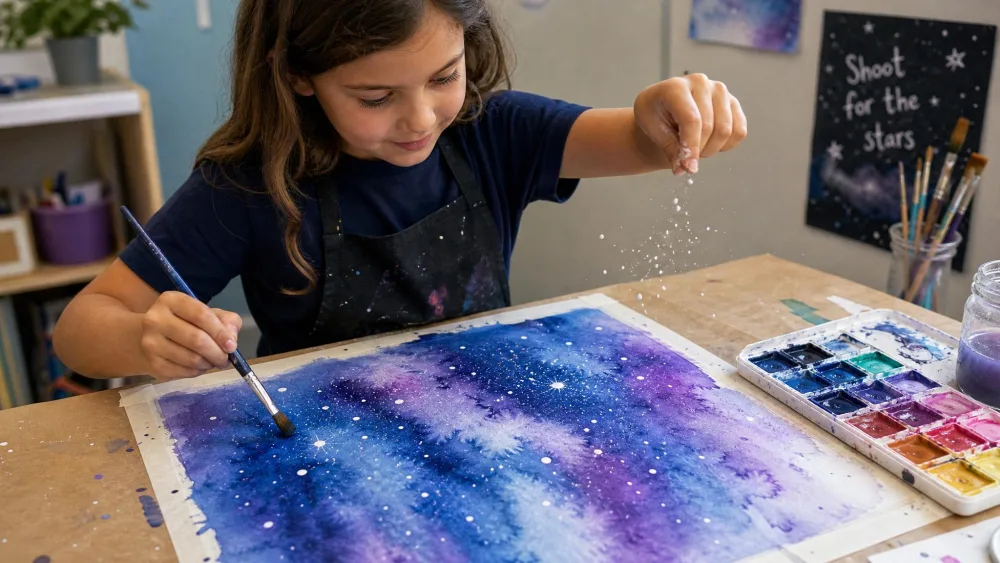
Wet the paper, drop in blues and purples, then flick on white paint for stars. The blended sky looks impressive with almost no drawing skill.
Materials: watercolors, white paint, thick paper.
Best for: ages 7–10.
16. Paper-Strip Weaving
Weaving is one of the best quiet projects we know for building patience and fine-motor control. Younger kids need the strips pre-cut, but this age can cut their own.
Materials: colored paper, scissors, glue.
Best for: ages 7–10.
17. Splatter Painting
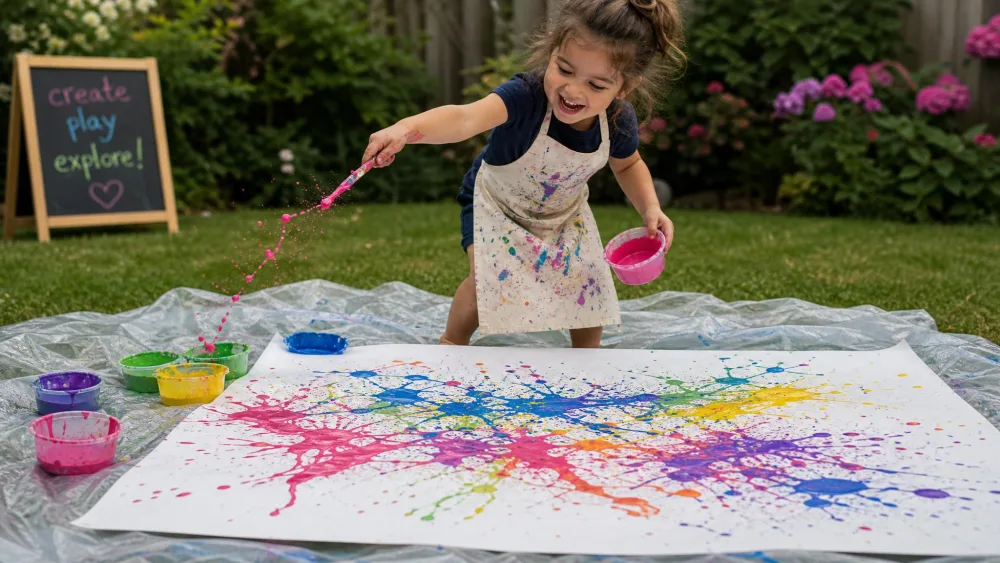
Kids get a real kick out of flinging paint at a page. It is a little messy, but it is well worth it, so we take this one outside.
Materials: washable paint, brushes, big paper.
Best for: ages 7–10.
18. Scratch Art
Color a page with bright oil pastels, paint over it in black, then scratch a picture back through. The reveal never gets old.
Materials: oil pastels, black paint, a skewer.
Best for: ages 7–10.
19. String Art
Dip yarn in glue, then drag and drop it across paper to make loops and swirls. Simple materials, surprisingly striking results.
Materials: yarn, glue, cardstock.
Best for: ages 7–10.
20. Optical-Illusion Drawing
A grid and some curved lines turn a flat page into a hand that looks 3D. Kids love showing these off, and the steps are easy to follow.
Materials: paper, pencil, markers.
Best for: ages 7–10.
21. Paper Quilling
Roll thin paper strips into coils and glue them on edge to build flowers and letters. It is fiddly in the best way for kids who like detail.
Materials: quilling strips, glue, a toothpick.
Best for: ages 7–10.
22. Pop Art Portraits
Trace a photo or a simple face four times and color each panel in bold, clashing colors. The result feels straight off a gallery wall.
Materials: paper, markers, a printed photo.
Best for: ages 7–10.
Fun Art Projects for Kids of All Ages
These are the ones the whole family can do together, with each kid working at their own level. They are our go-to when the ages at the table are all over the map.
23. Shaving-Cream Marbling
Swirl drops of paint into shaving cream, press paper on top, and scrape it clean. It prints differently every single time, so our kids want to repeat it again and again.
Materials: shaving cream, paint, paper.
Best for: all ages.
24. Rock Painting
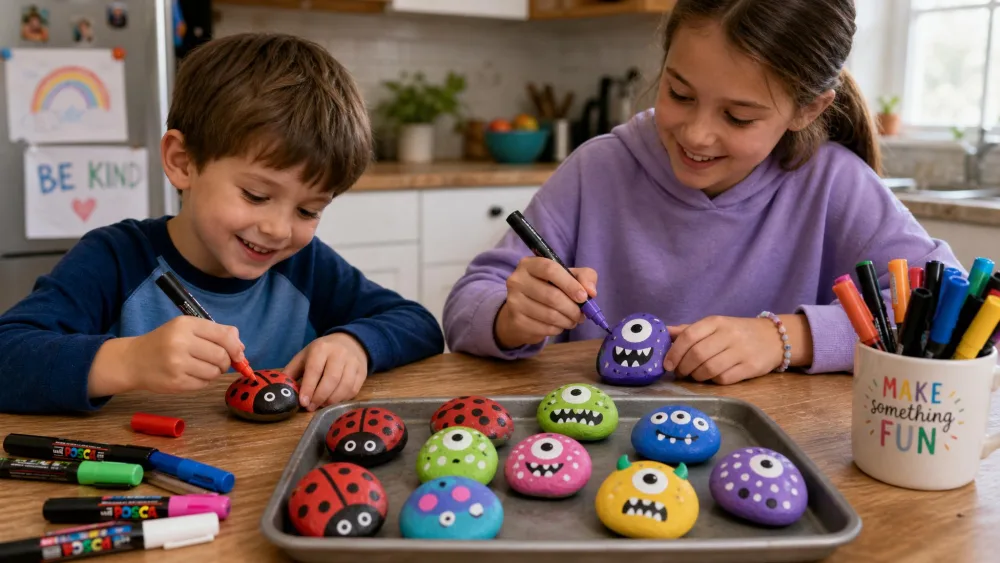
Smooth stones become ladybugs, monsters, or kindness rocks to hide around the yard. It works for a toddler with one color and a ten-year-old with fine detail.
Materials: smooth rocks, acrylic or paint pens.
Best for: all ages.
25. Squeegee Painting
Line up blobs of paint, then drag them across the page with a piece of cardboard. It is slightly messy, but it gives bold, full-page backgrounds that make simple work look finished.
Materials: paint, cardboard scraps, paper.
Best for: all ages.
26. Paper Mache
Layer newspaper strips and flour paste over a balloon and you have a bowl, a piñata, or a planet. Just plan for a day or two of drying between steps.
Materials: newspaper, flour, water, a balloon.
Best for: all ages.
27. Cellophane Stained-Glass
Stick colored cellophane onto clear contact paper cut into shapes, then tape it to a sunny window. The glow is worth the sticky fingers.
Materials: contact paper, colored cellophane.
Best for: all ages.
28. Egg-Carton Sculptures
Cut an egg carton into cups and turn them into caterpillars, flowers, or little creatures. It is a satisfying way to rescue something from the recycling.
Materials: egg cartons, paint, pipe cleaners.
Best for: all ages.
29. Homemade Nature Paint
Mash blueberries, spinach, or a spoon of turmeric with a little water to mix your own paints. Kids love that the colors come from the kitchen.
Materials: berries, spinach, turmeric, water.
Best for: all ages.
30. Magazine Collage
Snip pictures and colors from old magazines and glue them into a wreath, a monster, or a self-portrait. Everyone can join in at their own pace.
Materials: old magazines, scissors, glue, cardstock.
Best for: all ages.
Art Supplies You'll Need to Get Started
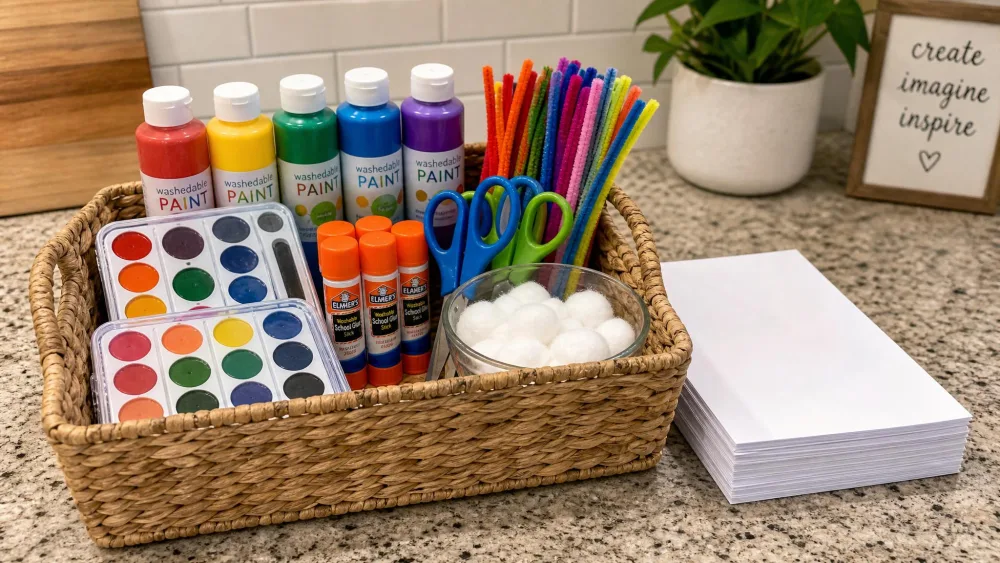
You do not need a craft-store haul to make any of this happen. Most of these projects use supplies you probably already have on hand, which is exactly why they are so easy to say yes to.
A small starter kit covers almost everything above. Keep washable tempera paint, a set of watercolors, glue sticks, child-safe scissors, and a stack of thick paper within reach.
After that, your recycling bin does the rest. Save egg cartons, cardboard, old magazines, and bubble wrap, and add odds and ends like cotton balls, yarn, and pipe cleaners as you go.
Tips to Make Art Time Fun and Mess-Free
The trick that changed art time in our house was simple. We cover the table first, default to washable everything, and stop fighting the mess so we can actually enjoy the hour.
Match the project to the mess you can handle that day. The water-based ones like splatter, drip, and any painting with a squeeze bottle are the messiest, so we save those for outside.
When we want almost no cleanup, we reach for markers, oil pastels, and drawing projects instead. Twist-up paint sticks are another favorite, since they keep the mess contained compared to open pots of liquid paint.
Parent tipSet out fewer choices than you think you need. Two or three colors and one simple project keep little ones focused, and cleanup stays quick when there is less on the table.
If your child freezes up or worries about doing it "right," steer them toward open, abstract projects with no single correct outcome. That is where hesitant kids build confidence fastest.
Frequently Asked Questions
What art projects can kids do with things around the house?
Plenty. Torn-paper collage, egg-carton sculptures, bubble-wrap printing, magazine collage, and salt painting all use everyday supplies like paper, glue, and recycling. You rarely need to buy anything special.
How do I set up art time without a big mess?
Cover the table first, use washable paint and markers, and take the wettest projects outside. Setting out just a few colors and one project at a time keeps the cleanup small and manageable.
What are the best first art projects for toddlers?
Start with tactile, low-instruction projects like finger painting, sponge stamping, and torn-paper collage. Toddlers explore art through touch, so anything they can dig their hands into holds their attention best.
Final Thoughts
The projects your kids remember are almost never the fanciest ones. They are the afternoons you said yes, set out a few supplies, and let them make something.
Pick one idea from your kids' age band, cover the table, and start there. Once you see how little it takes, art time becomes the easy answer to "I'm bored" on any rainy day.