12 Best Science Kits for Kids in 2026 (Ages 4-12)

Our seven-year-old sat down with a gemstone dig brick and a plastic chisel and did not move for two hours. That is the bar we hold every science kit to now.
Our house runs on a wide age spread, so most of these kits were opened by more than one child, and the ones that stuck got opened again weeks later. We are not going to pretend every kit got the same number of hours, because that is not how a real household works.
We bought these kits ourselves and scored each on safety, instruction clarity, mess, and whether the experiments actually work. Below are the 12 that earned a place. Every price is a snapshot, and every age band is the manufacturer's own.
Our Top 3 Picks at a Glance
Our quick picks
How We Tested and Chose These Science Kits
We ran each kit on a wipeable surface, on an ordinary weekday, with an adult nearby, and we scored instruction clarity first, because a kit whose booklet defeats a child gets abandoned before lunch. After that we looked at supervision needs, mess, consumables and reusability, in that order. The test we apply is whether a kit keeps a child working past the first experiment, not how many experiments the box claims.
NoteWe do not have a lab. We have a kitchen counter, a roll of paper towel, and a rule that chemical packets stay where a grown-up can see them.
The 12 Best Science Kits for Kids
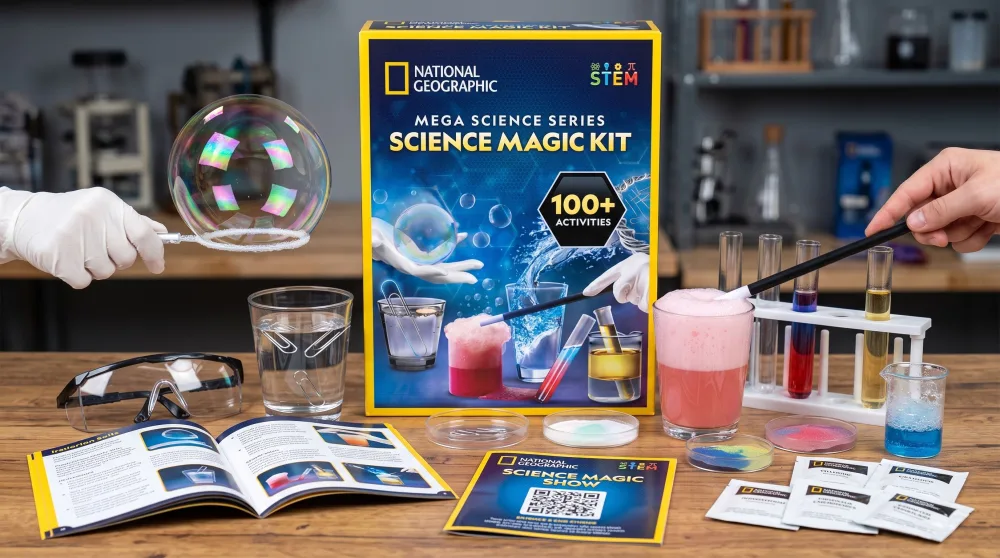
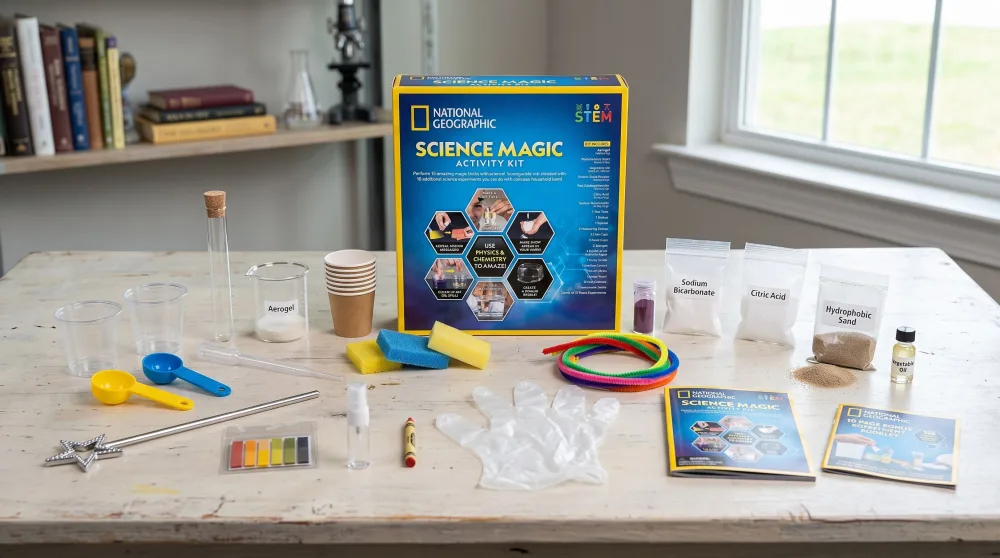
1. National Geographic Science Magic Kit: Best Overall Science Kit for Kids
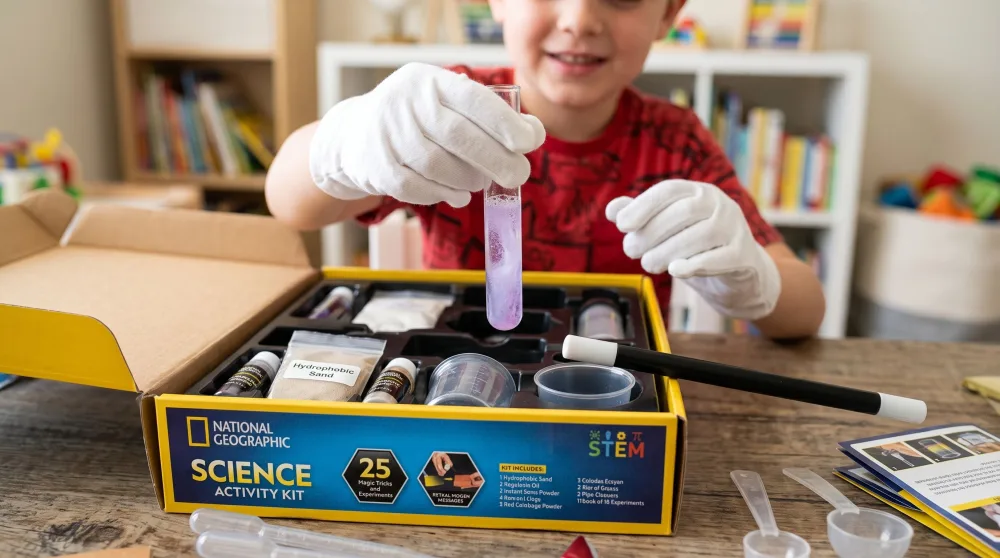
It carries 100+ science experiments and magic tricks, of which 20 come fully supplied and the rest arrive as a bonus guide of 85+ more. The magic framing lands with younger kids, because the tricks feel like a performance while still teaching the reaction underneath, and the instructions are clear enough to follow without an adult reading every line.
Expect fixation. Kids latch onto one trick and repeat it all day rather than working through the booklet in order, and the chemical packets are the reason to stay at the table while they do it. It sells for around $29.99 and rates 4.7 stars from roughly 8,800 ratings.
What We Loved
- 20 supplied tricks plus 85+ bonus experiments
- Performance framing gets reluctant kids started
The Not-So-Great
- Chemical packets need an adult at the table
- Kids fixate on one trick and skip the rest
Bottom Line
The best all-round starter for ages 8-12, if you sit down with them.
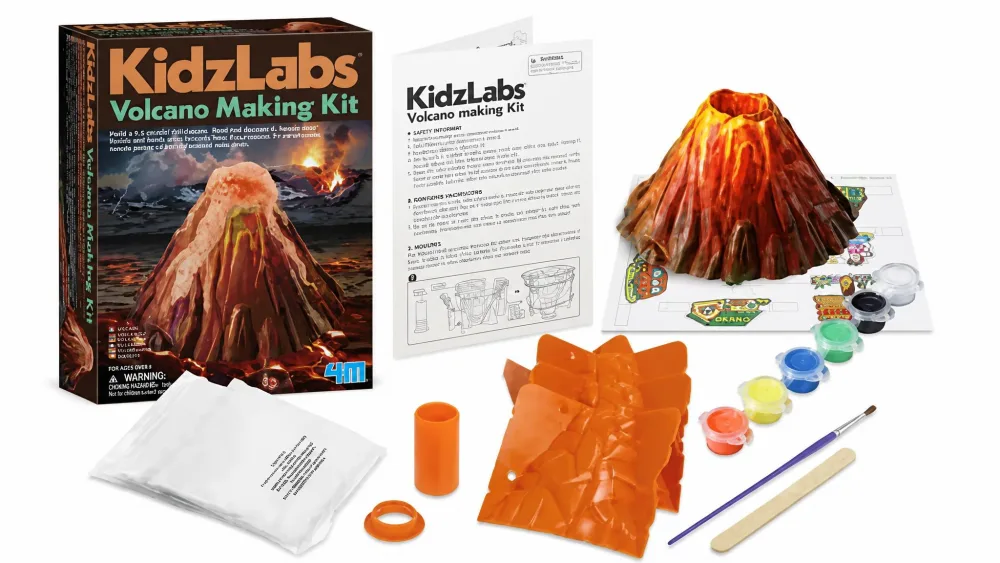
2. 4M KidzLabs Volcano Making Kit: Best Budget Science Kit
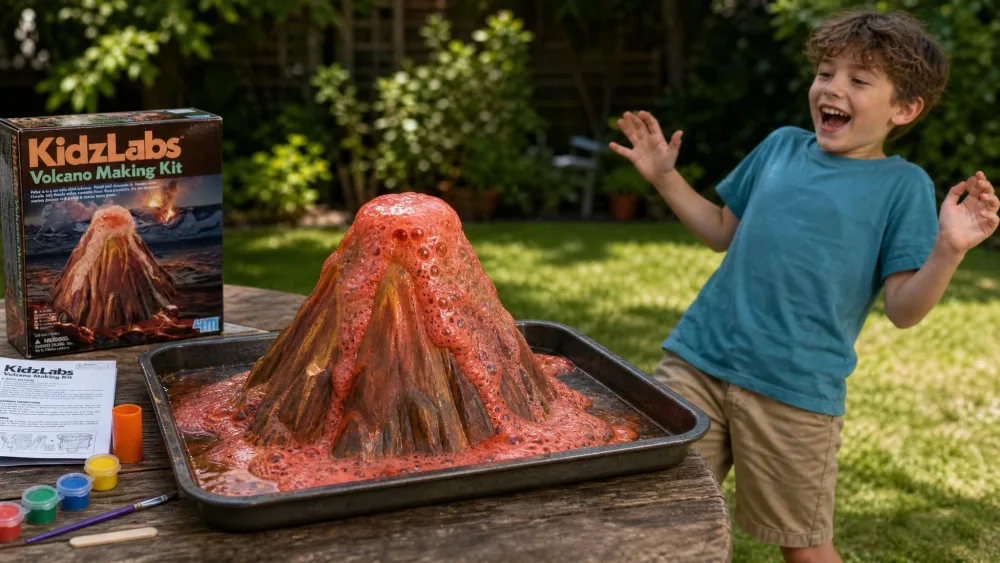
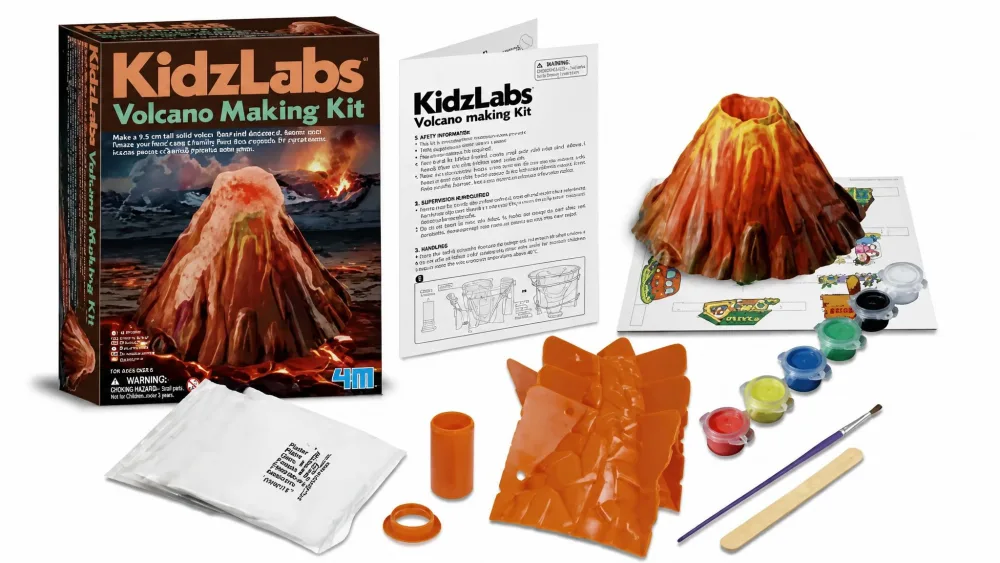
Where the magic kit asks for an adult at the table, this one asks mostly for patience. It is a two-part project under fifteen dollars: mold and paint a volcano one day, erupt it the next. The four-panel mold snaps together, and the kit supplies plaster, paint, a brush and a stir stick. It is recommended for ages 8 and up, and second and third graders can mold and paint it on their own.
Give the plaster real drying time, because painting a damp volcano is how you end up doing it twice. The mold is reusable if you buy more plaster, though it stops holding together cleanly after a few pours. You supply the vinegar and baking soda. It rates 4.4 stars from roughly 2,200 ratings, and it is the kit we would buy on a tight budget without feeling we had compromised.
Parent tipDo the eruption outdoors or in a baking tray. Cleanup takes thirty seconds instead of twenty minutes, and you can run it again the same afternoon.
What We Loved
- Reusable mold and repeatable eruptions
- Kids of 8 and up can build it unaided
The Not-So-Great
- Plaster needs long drying before painting
- Vinegar and baking soda not included
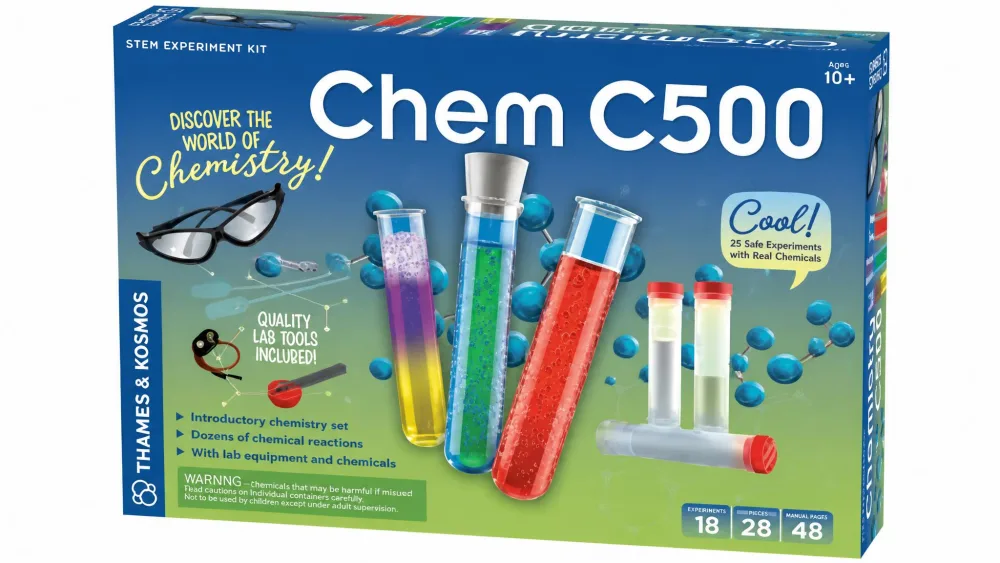
3. Thames & Kosmos Chem C500: Best Chemistry Set for Kids
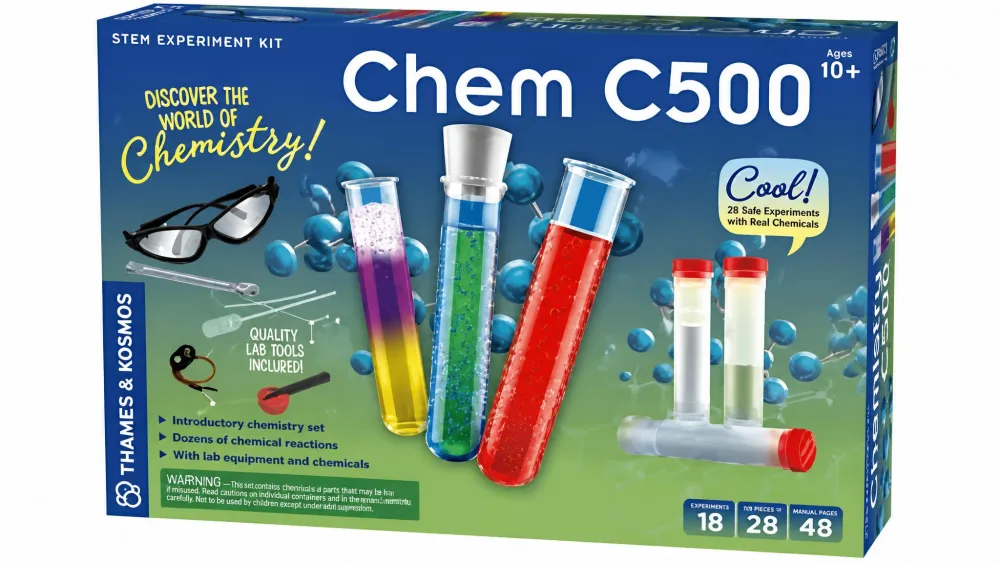
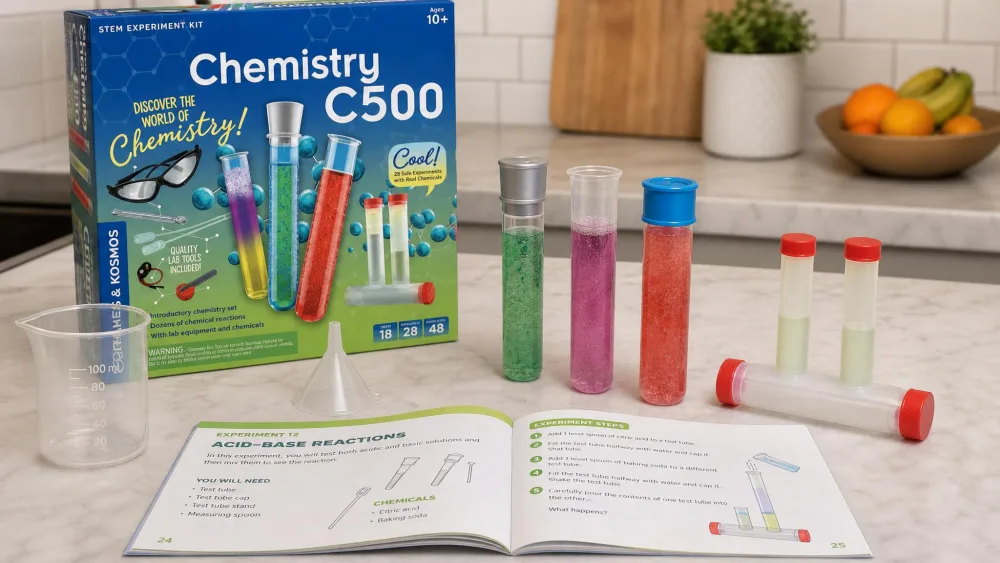
If the volcano is the cheapest way in, this is the cheapest way into real chemistry. The first session ended halfway through the acid-and-base sequence, when the packet ran dry and there was nothing left to measure out. We went to the cupboard for vinegar, filled a jug with distilled water and tore up paper for the indicator strips, and the experiment finished on kitchen supplies rather than kit supplies. That trip to the cupboard is the whole ownership experience in one afternoon.
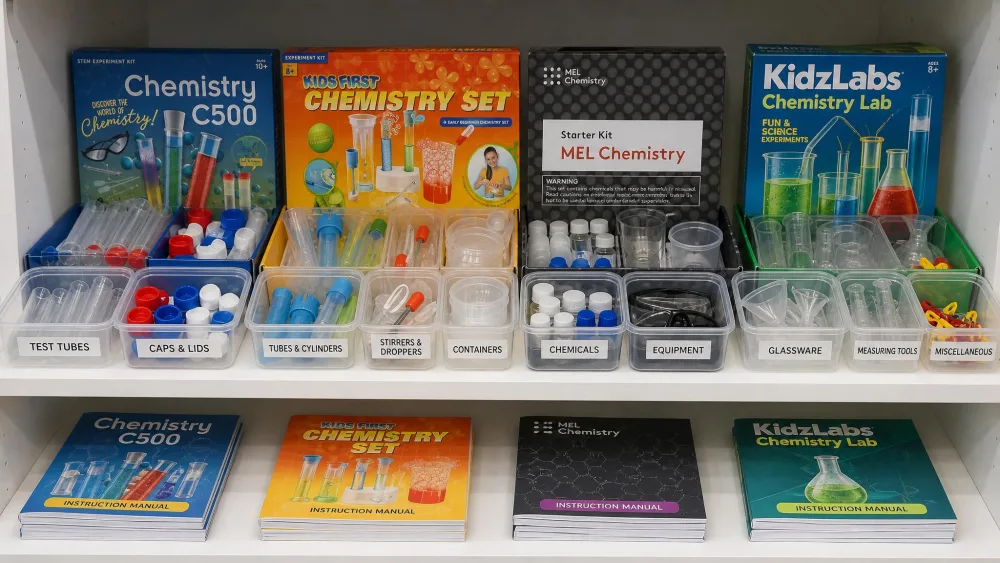
Beyond the consumables, though, this is a proper set. The 28 guided experiments cover acids and bases, fizzy reactions, invisible ink, and reactions between solids, liquids and gases, all laid out in a 48-page full-color manual, and the glassware is proper lab glassware rather than toy plastic, which is why children take it seriously. It ships with only four chemicals, and the quantities cover one run of each experiment, which is the argument for starting with the bigger kit. This Parents' Choice Silver Award winner sells for around $19.95.
What We Loved
- 28 guided experiments in a 48-page manual
- Genuine lab glassware, not toy plastic
The Not-So-Great
- Only four chemicals, enough for one run each
- Constant topping up from the cupboard
Bottom Line
The best entry into real chemistry, provided you accept it as a consumable.
4. National Geographic Mega Crystal Growing Kit: Best Crystal Growing Kit
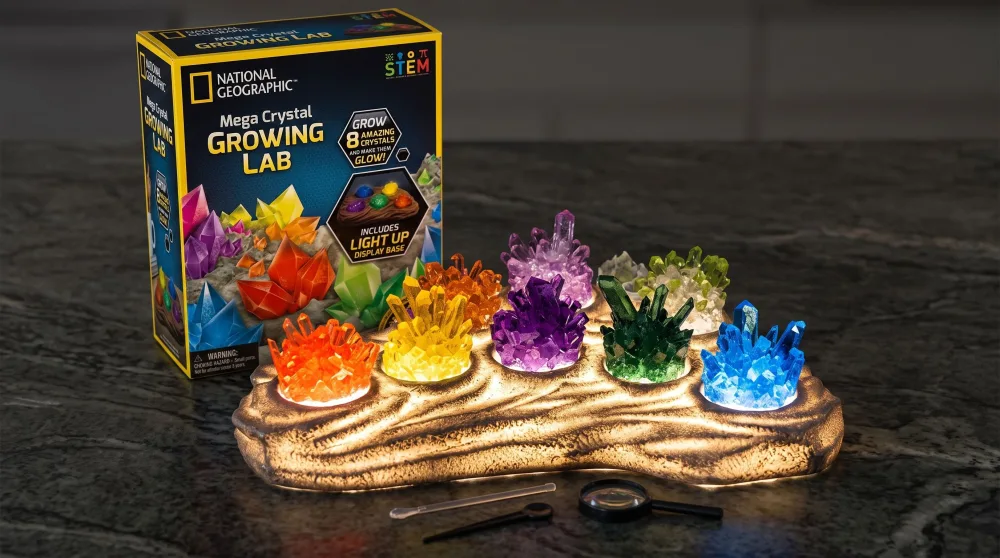
The failure comes first with this one, so we may as well start there. A finished crystal snapped as it came out of the silicone cup, in the last two seconds of a job that had taken four days of waiting, and it broke because the grip you need to free it is very nearly the grip that destroys it. One crystal in the set of six never grew at all, with no obvious cause and nothing we could have done differently.
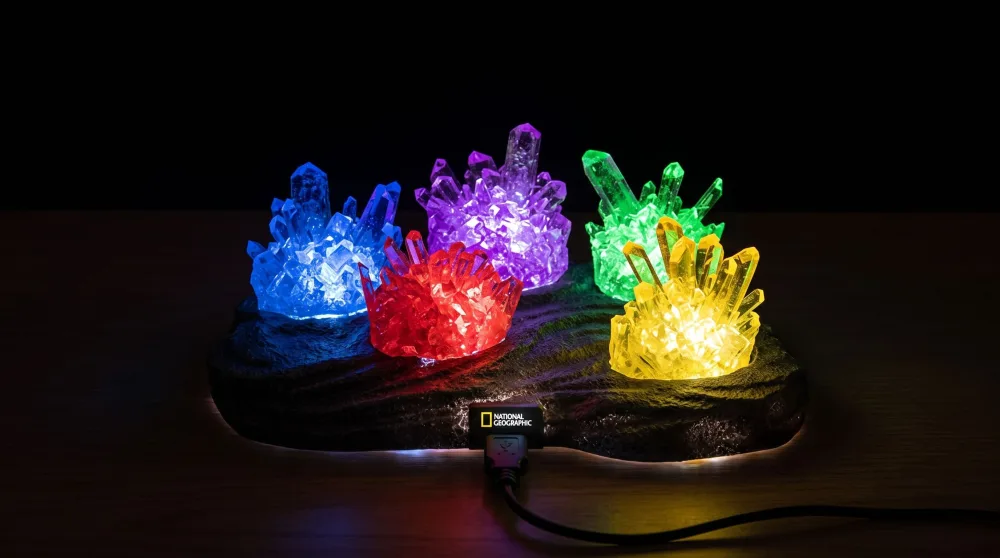
The results that survive are genuinely worth the shelf, which is why the kit stays on this list. It grows 6 crystals in blue, red, purple, green, yellow and glow-in-the-dark, using two silicone chambers, and it includes four real gemstone specimens and a USB display that holds 5 crystals rather than all six. It is labelled for kids 8-12. The box says crystals grow in 3 - 4 days, though growth time varies with water temperature and room conditions, and 3 to 7 is the realistic window. The printed instructions are dated and point to a dead video link, so work from the box copy rather than the QR code. It sells for about $29.99.
What We Loved
- Grows 6 crystals including glow-in-the-dark
- Four real gemstone specimens included
The Not-So-Great
- Finished crystals snap easily during removal
- Instructions are dated and sometimes missing
Bottom Line
Beautiful results and a real lesson in patience, with one likely failure per set.
5. National Geographic Mega Gemstone Dig Kit: Best Earth Science / Geology & Gemstone Dig Kit
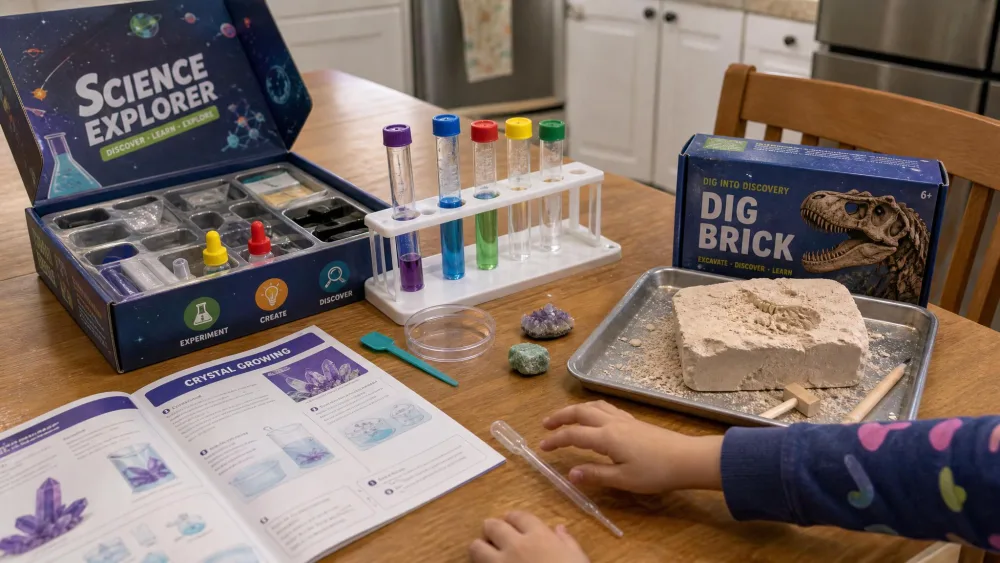
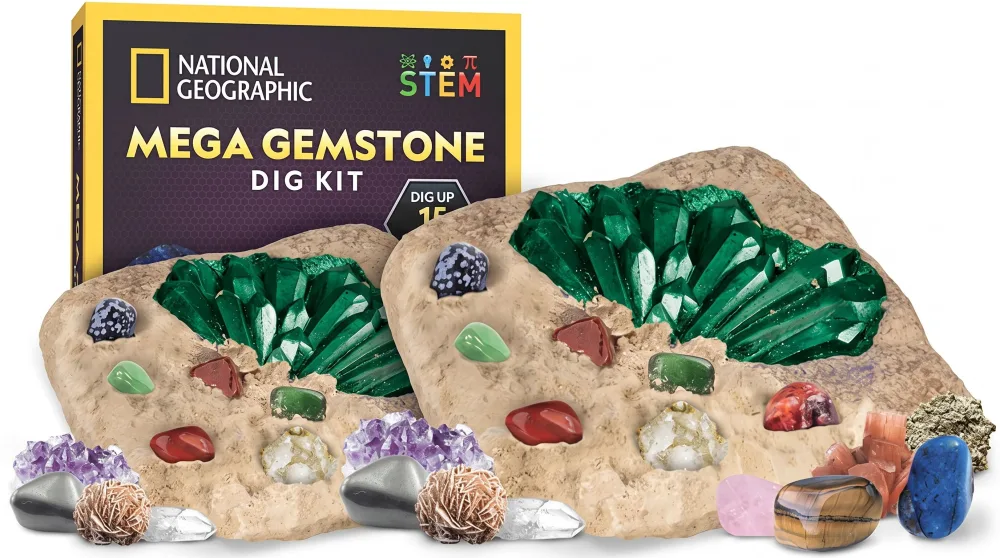
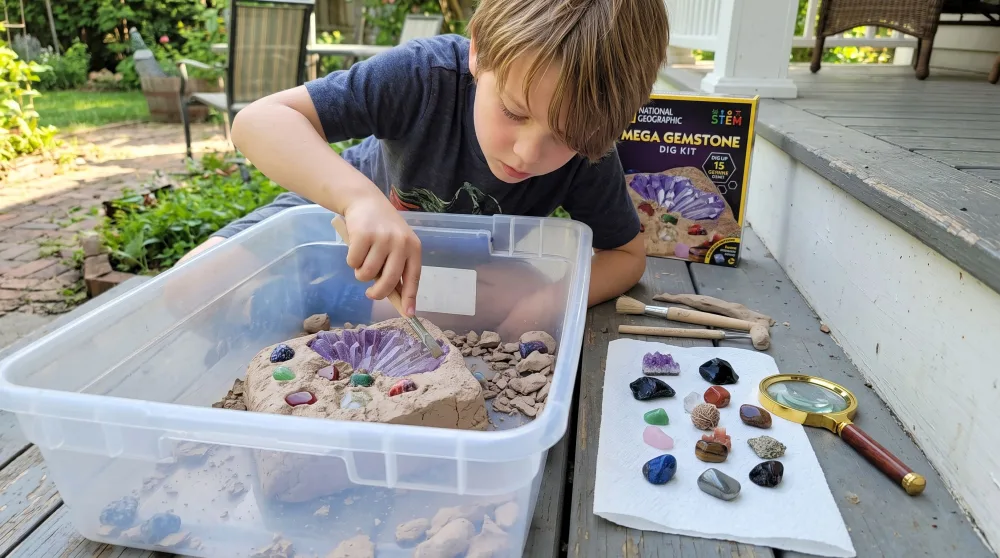
After the waiting game of crystal growing, this is the kit that pays out immediately, and it is the one that produced our two-hour session. You dig 15 real gemstones and crystals out of a clay brick with a chisel and brush, then identify each using the 16-page full-colour guide, which explains how gemstones form and are mined. Specimens include pyrite, amethyst, tiger's eye and fluorite.
The digging is dusty work and belongs outdoors or on a tray, and wetting the brick first makes it manageable, since dry plaster is hard enough that younger children need help starting. It runs about $24.99 and rates 4.7 stars from roughly 27,100 ratings, which makes it the best value in earth science here and the kit we recommend most often.
NoteWe keep a shallow plastic tub just for dig kits. The brick goes in the tub, the tub goes on the porch, and the dust stays out of the house.
What We Loved
- 15 real gemstones and a 16-page identification guide
- The child keeps the specimens afterwards
The Not-So-Great
- Dusty enough that it belongs outside
- Dry brick is hard work for younger children
6. Thames & Kosmos Kids First Chemistry Set: Best for Ages 4-6 (First Science Kit)
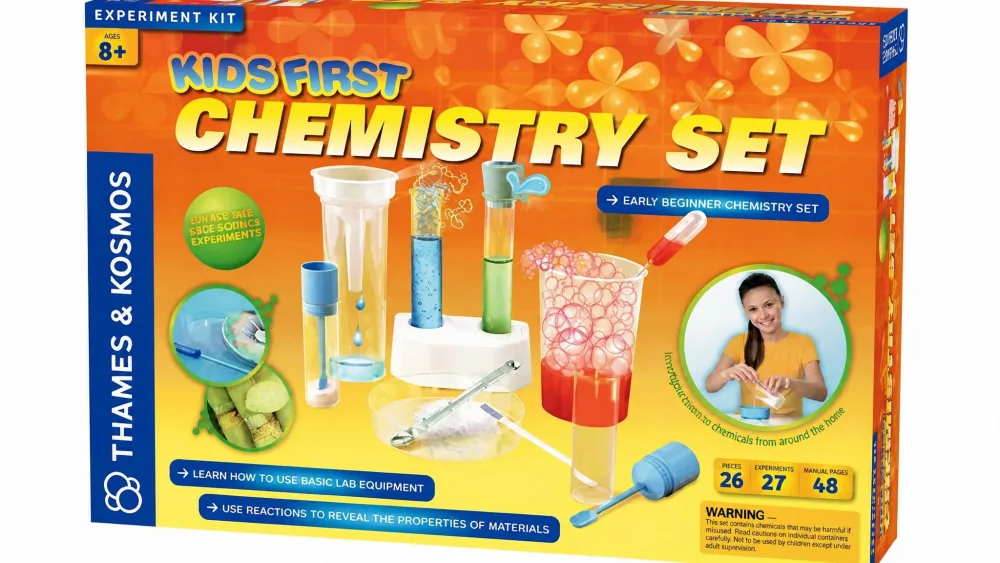
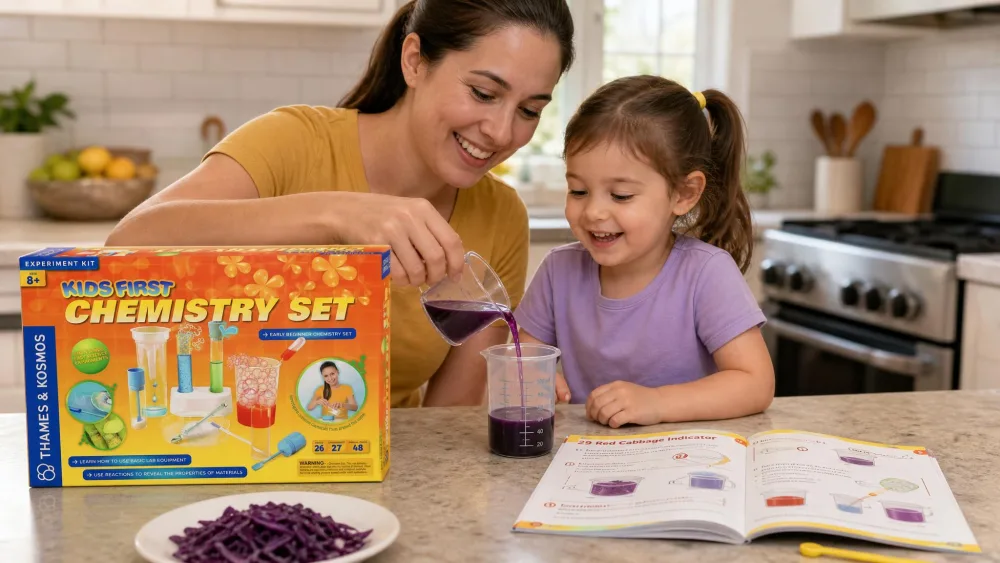
Everything above assumes a reader, and this is the first chemistry set that works without one. The 48-page full-colour manual is picture-led, so a four-year-old can follow it with a parent alongside, and the equipment is real beginner lab gear rather than moulded pretend glassware. Activities cover identifying chemicals and discovering carbon dioxide and its visible effects.
Treat it as a parent-and-child activity rather than a solo one, and it holds up right through the older end of the band: nearly-seven-year-old twins worked through it side by side at the kitchen counter without losing interest. You make your own cabbage juice for the acid-base work and supply baking soda, rock salt, a candle and markers, so the box holds fewer consumables than the price suggests. It sells for about $44.00, which is high for what is inside it.
What We Loved
- Picture-led 48-page manual for pre-readers
- Works from four right through to seven
The Not-So-Great
- Priced high for what is in the box
- Few consumables, and you supply the rest
Bottom Line
The right first kit for ages 4-6, if you plan to do it together.
7. UNGLINGA 70 Lab Experiments: Best for Ages 7-9
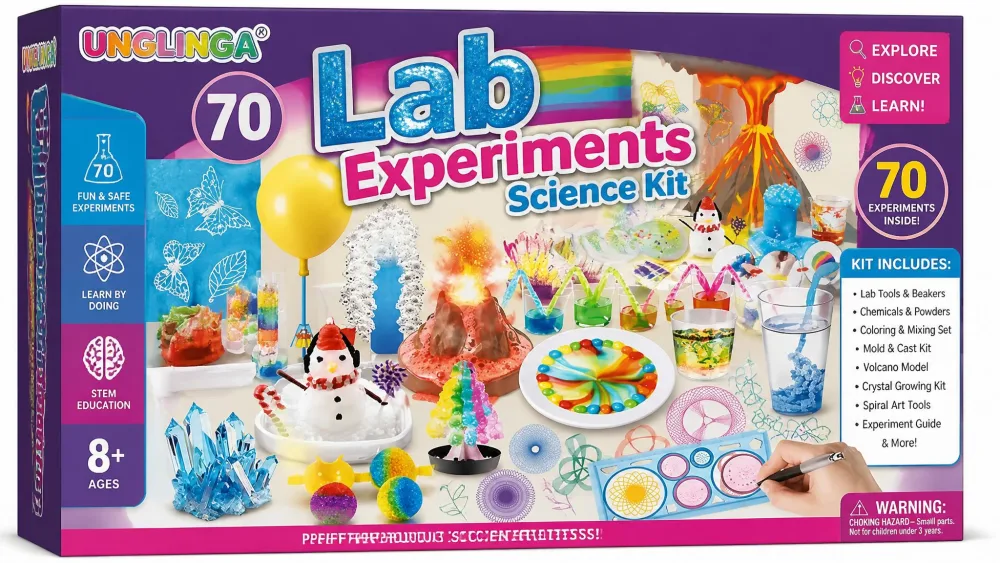
Seventy experiments is a lot of afternoons, and this kit spends them on an erupting volcano, crystal growing, a balloon rocket and fruit circuits, with an illustrated step-by-step manual, safety glasses, and child-safe ingredients supplied. At one experiment a week it stretches across a whole school term without repeating itself.
It is messy enough to belong somewhere wipeable, and a seven-year-old needs help parsing the instructions even though they read easily to an adult. The booklet is the weak point, with typos, unclear directions, and a handful of experiments that do not work as written. We would still buy it, because seventy attempts at around $21.99 is strong value even when a few of them misfire.
Parent tipCross experiments off the booklet as you go. When one fails, note it and move on rather than spending an afternoon debugging a typo.
What We Loved
- 70 experiments with ingredients supplied
- Safety glasses included in the box
The Not-So-Great
- Booklet has typos and unclear directions
- Some experiments do not work as written
Bottom Line
The best variety per dollar for ages 7-9, with tolerance for the odd dud.
8. Thames & Kosmos Chem C1000: Best for Ages 10-12
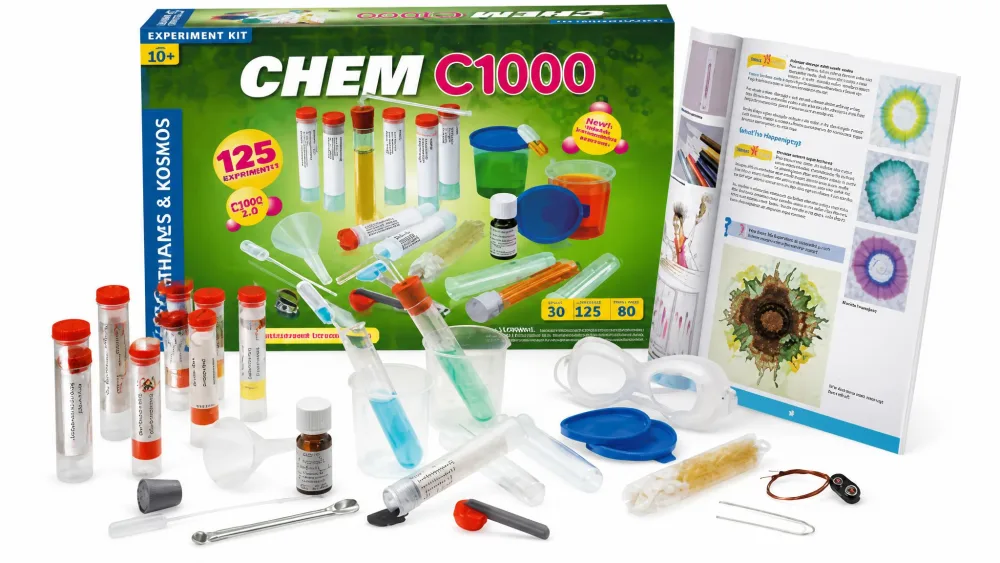
Where the UNGLINGA booklet fails through carelessness, this one fails through ambition. There is a page partway into the 80-page manual where the instructions stop being followable without a second reader, and we found it on the chromatography sequence, halfway through a step that assumed a piece of setup the previous page had not described. We backed up two pages, worked out what the diagram meant, and carried on, and a household without an adult free at that moment would simply have stopped there.
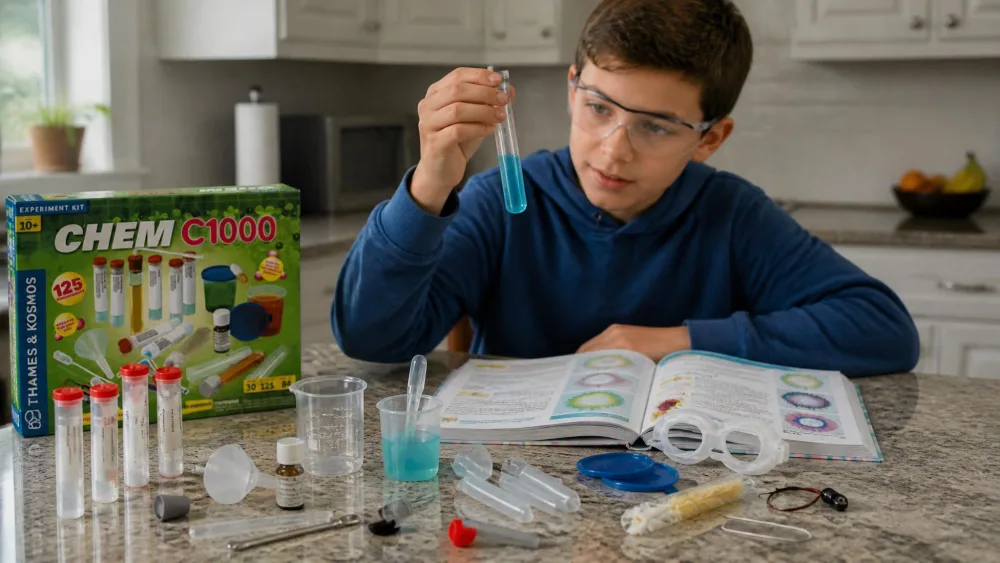
Get past that page and it stops looking like a toy at all. The C1000 carries 125 hands-on experiments and 7 real chemicals, with glass test tubes, beakers, a funnel and three dropper pipettes, and the manual reads like a real course with steps a ten-year-old can work through alone. It is graded for ages 10 and up with adult supervision, made in Germany to the EN 71-4 experimental-sets safety standard, and won a Parents' Choice Gold Award. The manual is uneven, and some ten-year-olds find it dry rather than fun. Price swings between sellers and sat at $57.81 when we checked.
What We Loved
- 125 experiments in an 80-page course-style manual
- Seven real chemicals and genuine glassware
The Not-So-Great
- The manual defeats some families entirely
- Price swings widely between sellers
Bottom Line
The most serious kit here, for a 10-12 year old who already loves chemistry.
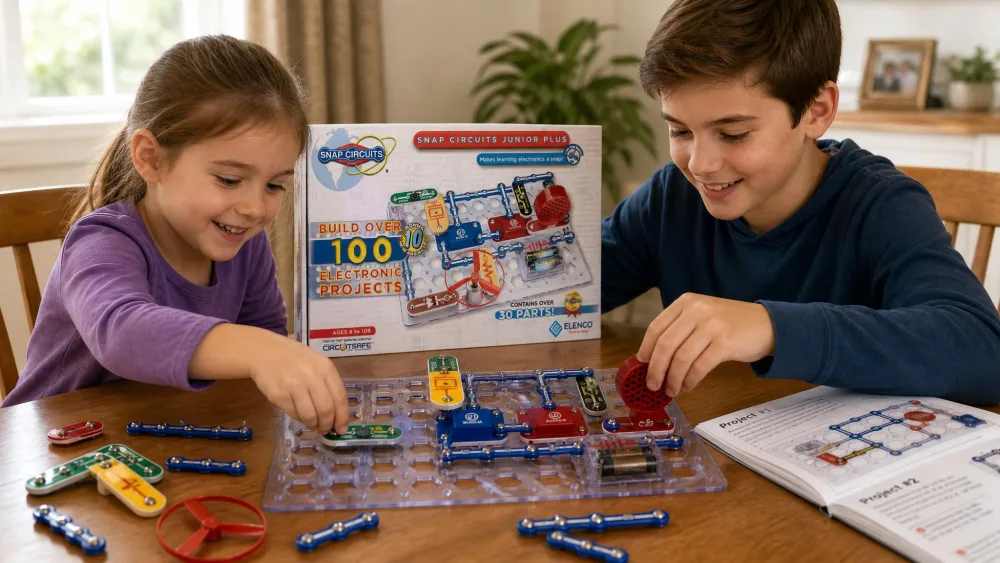
9. Snap Circuits Jr. SC-100: Best STEM Robotics & Electronics Kit
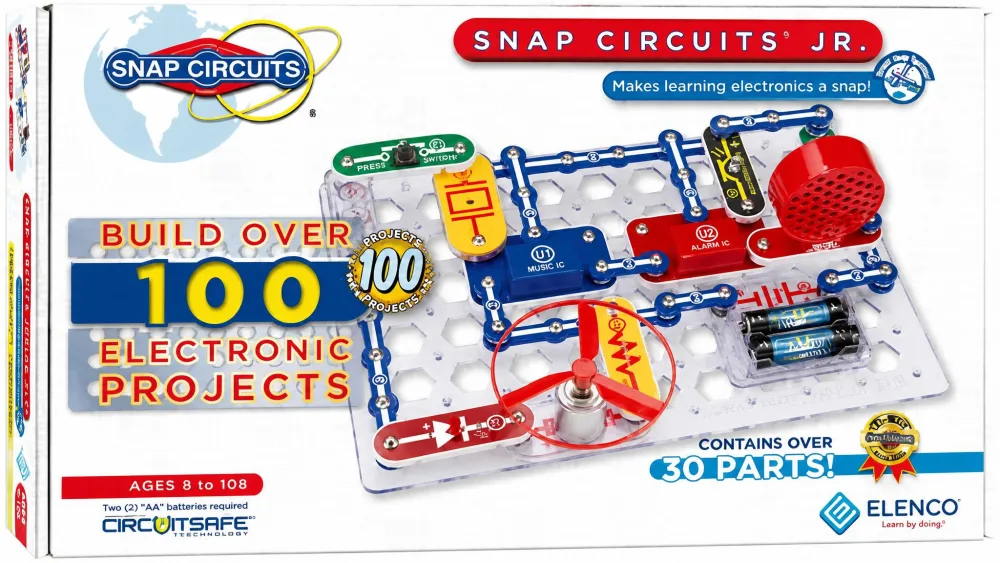
Nothing else here crossed the age spread the way this did. A five-year-old sat down beside a parent, matched the coloured blocks in the diagram to the parts on the grid, and snapped together a working circuit that lit a lamp, and the printed grading on the box says ages 8 and up. Nobody had to explain what a circuit was first, because the diagram did that job on its own.
It runs over 100 projects from 28 parts that snap onto a plastic grid, with no soldering and no tools required. It pulls in older siblings and parents too, and the add-on sets follow soon after. This is screen-free electronics that teaches like a course, and at about $29.98 it is the electronics kit we would buy for a mixed-age household. If robots are the goal, see our guide to the best robot kits for kids.
What We Loved
- Over 100 projects from 28 snap-together parts
- No soldering and no tools needed
The Not-So-Great
- Add-on sets get expensive quickly
- Small parts are easy to lose
10. Thames & Kosmos Bridges & Skyscrapers: Best Physics & Engineering Kit
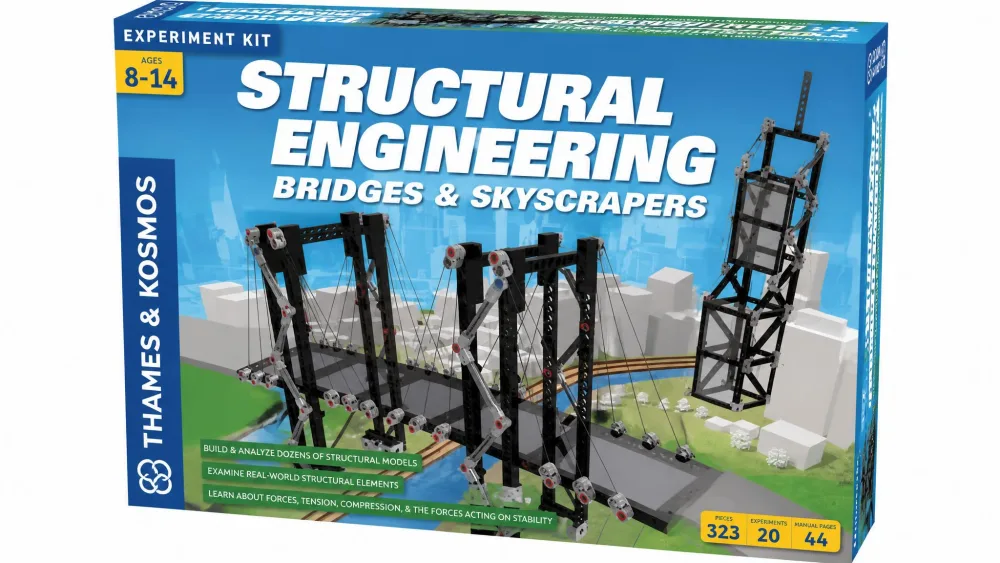
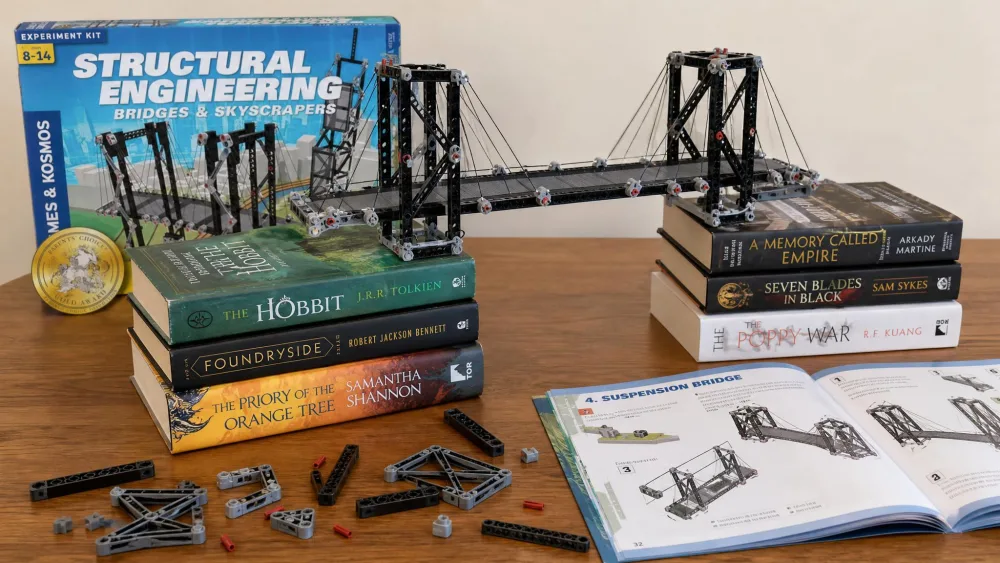
The best moment and the worst moment arrived within a minute of each other. A finished truss bridge, spanning two stacks of books, buckled and dropped its deck under a load that had looked survivable, which is the lesson the whole kit exists to teach. Then the yellow part-removal tool slid off the joint it was supposed to grip, twice, and the piece came out with fingernails and a snapped plastic tab instead.
The pieces really are the weak point, and the plastic breaks more easily than plastic at this price should. Assembly runs from satisfying to frustrating depending on the model, and the manual skips details on some builds. We still rate it, because the kit builds 20 models from over 285 interchangeable pieces with a 36-page illustrated manual, and it teaches force, load, compression and tension in a way no worksheet manages. It sells for around $45.95.
What We Loved
- 20 models from 285 interchangeable pieces
- Pieces are reused across every build
The Not-So-Great
- Plastic pieces break more easily than they should
- Part-removal tools barely grip
Bottom Line
The best physics kit here, once you accept losing a few pieces to breakage.
11. National Geographic Microscope for Kids: Best Biology & Nature Kit
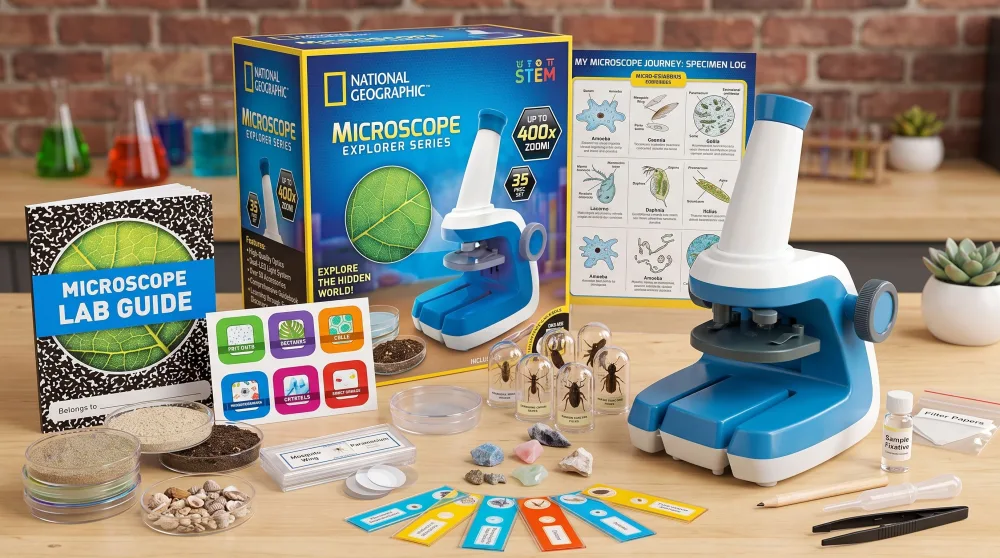
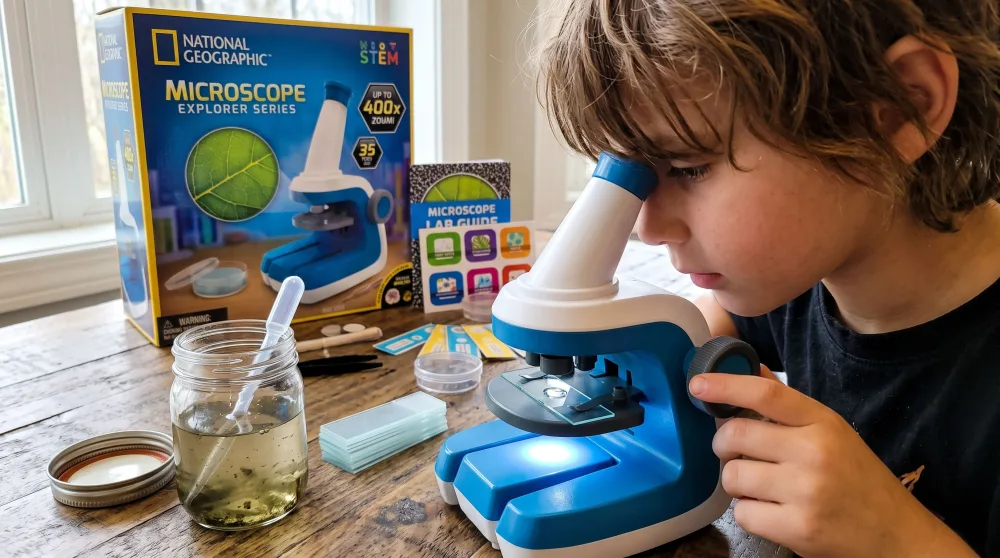
If the engineering kit turns a table into a building site, a microscope changes what a walk outside is for. This one reaches up to 400x magnification across three levels and ships with 6 prepared plant slides, 6 blank slides and 6 rock and mineral specimens, plus a pipette, tweezers and a lab guide, while large focus knobs and LED lighting above and below the stage make it usable by small hands.
The optics are sharp for the price, but this is a starter instrument, and the prepared slides are the weakest part of the box. One of these survived ten months of near-daily use by a six-to-seven-year-old before the stage broke, and it broke because it was forced too far up rather than through ordinary wear. At about $39.99 it is the biology buy we would make for a child who already collects things from the garden.
Parent tipSkip the prepared slides for the first session. A drop of pond water on a blank slide stops the microscope being a toy immediately.
What We Loved
- Up to 400x across three magnification levels
- Blank slides invite real specimen hunting
The Not-So-Great
- Prepared slides are the weakest inclusion
- The stage breaks if a child forces it
12. MEL Science: Best Science Subscription Box
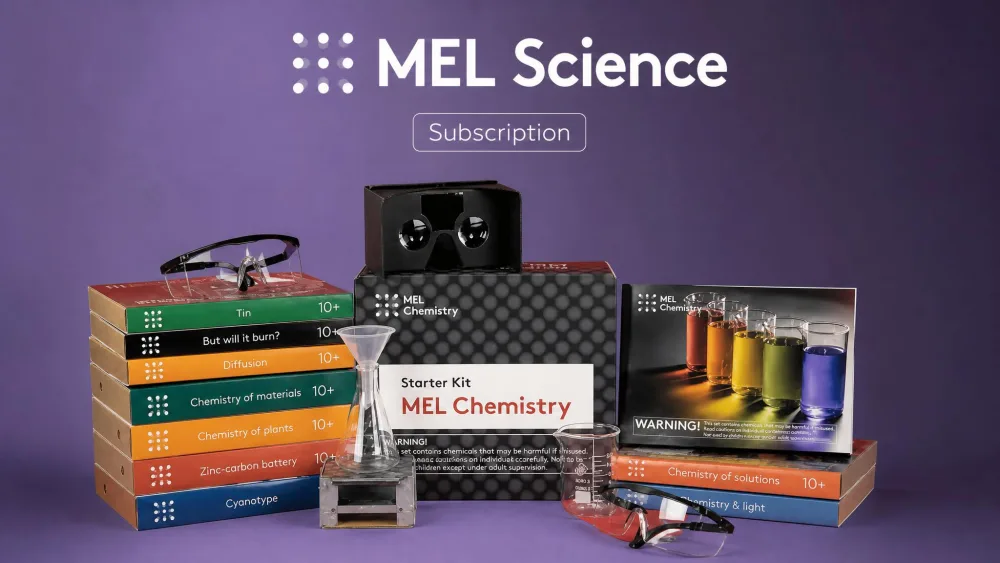
A subscription solves a problem one-time kits cannot: it keeps arriving. MEL Science ships monthly hands-on kits with video guides and augmented-reality experiences across chemistry, physics, math and medicine lines. Entry ages are staggered: STEM from age 5, Physics from 8, Chemistry from 10 and Medicine from 14.
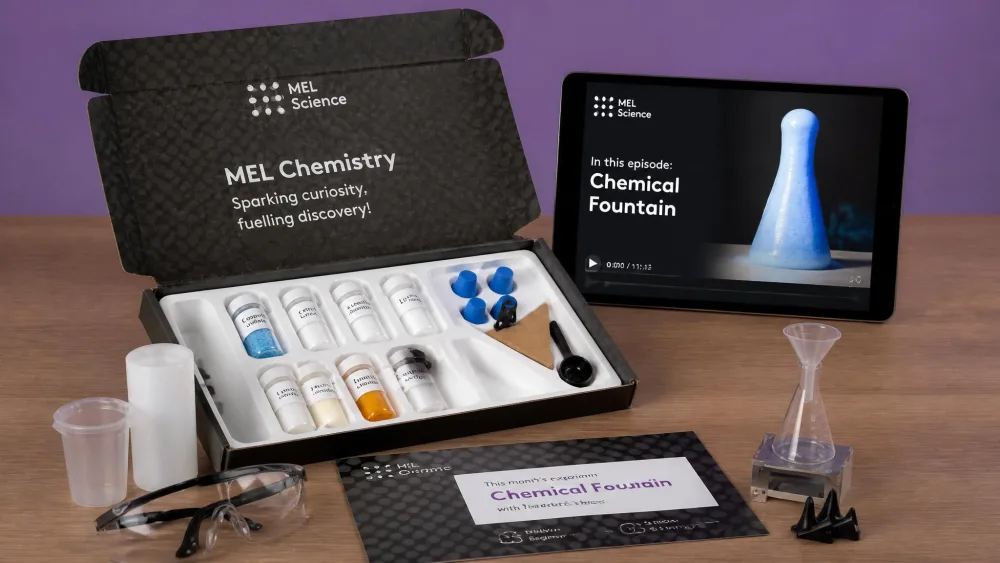
A box arrives as a small parcel of real lab kit rather than a toy. The chemistry starter box brings beakers, flasks, rubber stoppers, funnels and safety glasses, and a STEM box arrives as wooden model parts, syringes, a printed manual and a Science Journey comic. Component quality is the first thing you notice on unboxing, because the wooden pieces and the syringes hold up to rough handling instead of feeling disposable.
Be clear about the pace, though. A single box is an afternoon, not a month. A build-heavy kit like the hydraulic lift takes one sitting with a parent alongside, while a physics box with almost no setup is over rather quickly. The pattern that settles in is about an hour of sitting together on the month's box, then the child re-running the experiment alone afterwards. A six-year-old can assemble a STEM build from the printed steps after one round of adult guidance, and the only real friction is the water-and-syringe step, which wants a towel underneath it.
The app is the surprise. It gets used rather than ignored: kids go straight to the augmented-reality lesson once the build is done, and the VR lab sessions run five to seven minutes each, short enough to hold a younger child's attention. Not everything you need is in the box either, so check before you start. The polarization physics kit assumes you supply a flashlight or a phone light.
Pricing depends on the line and whether you prepay. The entry rate was $29.90 a month when we checked, and the annual plan is advertised as twelve months of science for the price of eight. KiwiCo crates run roughly $18.50 to $23.95 a month. A subscription costs more per year than three good one-time kits, and buys momentum instead of a shelf.
What We Loved
- A new kit arrives monthly without a decision
- Separate lines from age 5 up to 14
The Not-So-Great
- Costs more per year than several one-time kits
- Advertised rates shift with the campaign running
Bottom Line
Worth it once interest is established, not for testing the water.
Quick Comparison: All 12 Science Kits Side by Side
| Kit | Best for | Age range | Experiments included | Supervision needed | Price band |
|---|---|---|---|---|---|
| National Geographic Science Magic Kit | Best overall | 8-12 | 100+ | Yes, chemical packets | About $29.99 |
| 4M KidzLabs Volcano Making Kit | Best budget | 8+ | 1 reusable volcano | Light | About $13.99 |
| Thames & Kosmos Chem C500 | Best chemistry set | 8+ | 28 | Yes | About $19.95 |
| National Geographic Mega Crystal Growing Kit | Best crystal growing | 8-12 | 6 crystals | Yes, hot water | About $29.99 |
| National Geographic Mega Gemstone Dig Kit | Best geology and dig | 8+ | 15 gemstones | Light, messy | About $24.99 |
| Thames & Kosmos Kids First Chemistry Set | Best first kit | 4+ | Picture-led activities | Yes | About $44.00 |
| UNGLINGA 70 Lab Experiments | Best for ages 7-9 | 8+ | 70 | Yes | About $21.99 |
| Thames & Kosmos Chem C1000 | Best for ages 10-12 | 10+ | 125 | Yes | About $57.81 |
| Snap Circuits Jr. SC-100 | Best robotics | 8+, works from 5 | 100+ projects | Minimal | About $29.98 |
| Thames & Kosmos Bridges & Skyscrapers | Best physics and engineering | 8+ | 20 models | Minimal | About $45.95 |
| National Geographic Microscope for Kids | Best biology and nature | 8+ | 18 slides and specimens | Light | About $39.99 |
| MEL Science | Best subscription box | 5+ | Monthly box | Yes | From $29.90/month |
What to Expect at Each Age (4-6, 7-9, 10-12)
Age gradings are a starting point rather than a verdict, and the gap between the number on the box and the child in front of you is usually about reading, not about capability. The Kids First set needs an adult hand on the fiddly steps whatever the box says, while a ten-year-old can work a harder manual alone at the same table.
At 4-6, the kit is a shared activity, so choose picture-led instructions and experiments that resolve in one sitting, because a crystal that takes five days is an abstraction at this age. The HHS Head Start early science guidance is a useful check on what young children get from this kind of play.
At 7-9, children follow illustrated steps with an adult nearby to parse the harder sentences, which makes this the sweet spot for variety kits and dig kits. Attention span stretches to a two-hour excavation but not to a multi-week experiment, so buy for the afternoon rather than for the fortnight.
At 10-12, they can work a manual alone, so the kit needs real content behind it, and serious chemistry, structural engineering and microscopy all land here. Research into hands-on science learning in early childhood supports what parents observe anyway: doing beats watching.
How to Choose a Science Kit for Your Child
1. Match the Kit to Your Child's Age and Reading Level
Reading level is the constraint people forget, and it decides more than the age band does. A kit graded 8+ with dense paragraph instructions is harder for a strong-reading six-year-old than one graded 10+ with numbered diagrams, so look at a sample page of the manual before you look at the number on the corner of the box.
2. Experiment Quality vs. Quantity
Seventy experiments sounds better than twenty-eight until you notice that the bigger kit includes several that do not work while the smaller one includes real glassware. Count what is actually supplied rather than what is listed on the back of the box, and ask whether there is enough of each chemical for a second attempt when the first one goes wrong.
Parent tipWork out the cost per experiment your child will actually finish, not per experiment printed on the box. Two thirds is a realistic completion rate for the big-number kits.
3. Safety, Chemicals, and Adult Supervision
Every chemistry kit here needs an adult in the room, and the age grading is best read as a safety statement rather than a difficulty rating. The CPSC toy safety requirements are worth knowing before you buy: toys made or imported on or after 20 April 2024 must be tested and certified to ASTM F963-23, the mandatory US toy safety standard, and products intended for children under 3 must not contain or release small parts. Toys with small parts meant for children aged 3 to 8 generally carry a choking-hazard label, though the exact threshold depends on the grading the manufacturer assigns.
Watch outKeep chemistry sets in a shared room and put the chemical packets away between sessions. A ten-year-old will take a kit off to a bathroom and run experiments alone if the opportunity exists.
4. Instruction Clarity and Reusability
A booklet with typos costs you an afternoon, so check reviews for comments about the manual before anything else. Reusability matters just as much, and a volcano mold you can pour again, a set of parts that builds twenty different models, and a stack of blank microscope slides all extend a kit well past its printed experiment count.
5. Subject Fit: Chemistry, Physics, Earth Science, or Biology
Follow the child rather than the curriculum, because a child who collects rocks wants a dig kit or a microscope, and one who takes things apart wants circuits or bridges. Chemistry has the widest ladder of any subject here, running from the Kids First set at four right up to the C1000 at ten and above.
6. Price vs. Long-Term Value
Budget kits are not a compromise, and a fifteen-dollar volcano that erupts weekly for a year delivers more science than a fifty-dollar set that stalls on page four. Spend the extra money only where it buys durable equipment you will still be using next year, such as glassware, a microscope, or parts that get reused across builds.
The kit that gets used twice is worth more than the kit with twice the experiments.
Science Kits to Avoid (and Why)
Avoid anything advertising a huge experiment count with no named experiments, because if a listing cannot tell you what the seventy activities actually are, the supplied quantities are almost always the problem. The number is doing the selling that the contents cannot.
Skip unbranded lookalikes as well. The National Geographic and Thames & Kosmos sets have identifiable manufacturers standing behind their safety testing and their age grading, whereas a visually identical kit at half the price may be certified to nothing you can verify from the listing.
Finally, avoid buying above your child's patience, and pay attention to setting and drying times if there is a deadline involved. A kit that needs days of plaster curing before it can be used has defeated a good many science-fair projects the night before they were due.
Frequently Asked Questions
Can a younger child use a kit graded above their age?
Often yes, as long as you read the manual for them and handle anything sharp, hot or chemical. Snap Circuits is graded 8 and up but works from about five with a parent alongside, because the diagrams carry the instructions instead of the text. The place to draw the line is chemicals and glassware, where the grading is a safety floor rather than a difficulty score.
Are science kits safe for kids to use alone?
Non-chemical kits such as Snap Circuits are fine to leave with a child once you have done the first build together. Anything with chemical packets, hot water or glassware needs adult supervision every session.
Do you need to buy extra supplies?
Usually yes. The volcano kit needs vinegar and baking soda, the Kids First set expects you to make cabbage juice and supply rock salt, a candle and markers, and the Chem C500 runs through its four chemicals quickly.
Are one-time kits or subscription boxes better value?
One-time kits are cheaper per experiment and better for testing an interest. Subscriptions cost more across a year but keep momentum going. Entry rates start around $29.90 a month against roughly $20 to $30 for a strong one-time kit.
Can science kits be used for homeschooling?
Yes, and they work best as the practical half of a topic you are already covering. A dig kit anchors a geology unit, the C1000 manual reads like a chemistry course, and the microscope turns biology into fieldwork.
Final Verdict