Snap Circuits Spy Kit Review
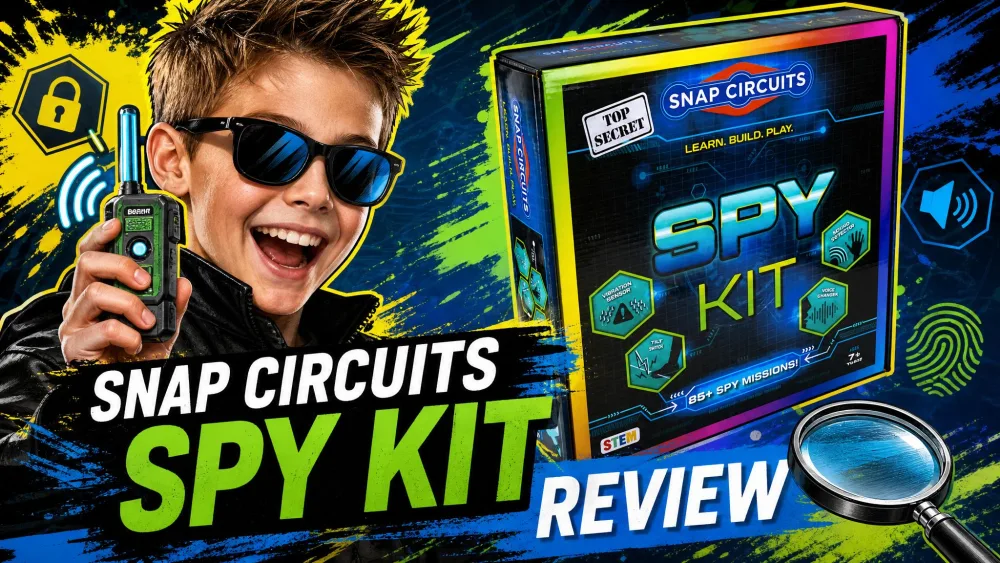
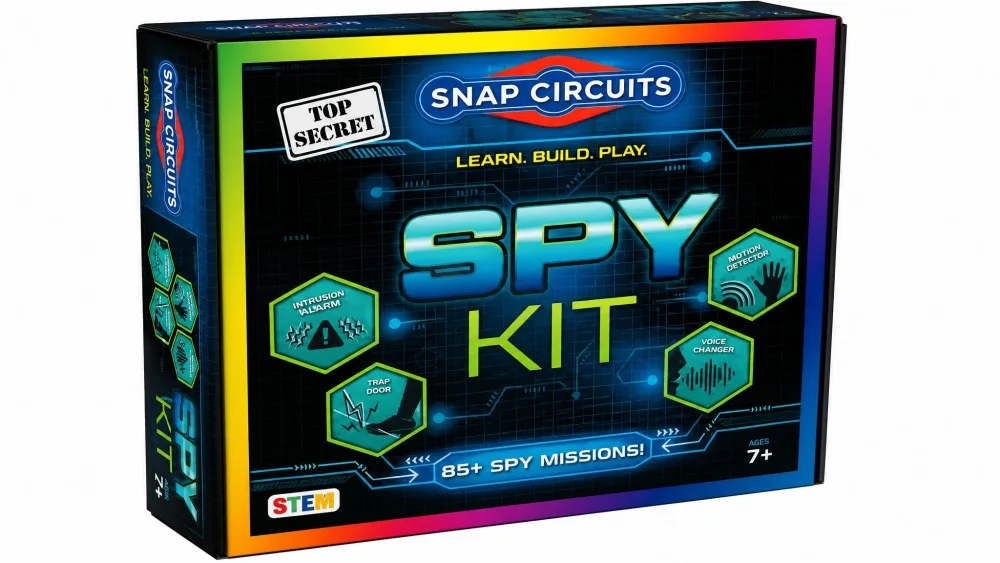
The Snap Circuits Spy Kit is a STEM building set that turns spy gadgets into real, working electronic circuits. Made by Elenco as model SCSPY1, it uses color-coded, snap-together parts so kids can build a motion detector, a voice changer, a trip wire, a vibration sensor, and light or sound alarms. The kit comes with a full-color picture manual and lays out 25+ spy missions to build and play. It is aimed at kids ages 7 and up, with no tools and no soldering.
We worked through the spy missions with our kids over the first week or so after the box arrived, rather than running a fixed test window. Our older builders, comfortably inside the recommended 7-and-up range, took to it quickly and were soon assembling gadgets on their own, while the younger ones needed a guiding hand to get started. What stood out early was the pull of it. Like other Snap Circuits sets, it quickly became a before- and after-school pickup, with kids reaching for it over other activities and lighting up each time a gadget finally worked.
NoteWe built through the spy missions with our kids and watched how the set held up to repeated play. What kept them coming back was the variety, building one working gadget, taking it apart, and snapping together the next. It is not a flawless set, and we get into the honest trade-offs below, but as a way to make electronics genuinely fun it earned its place at the table.
What Is the Snap Circuits Spy Kit?
The Spy Kit is part of Elenco's long-running Snap Circuits line, which has taught electronics through snap-together parts for years. Where most sets focus on general circuits, this one wraps every lesson in a spy theme. Each build is a genuine working circuit that does a spy job, from sensing motion to disguising a voice or tripping an alarm.
What's in the Box
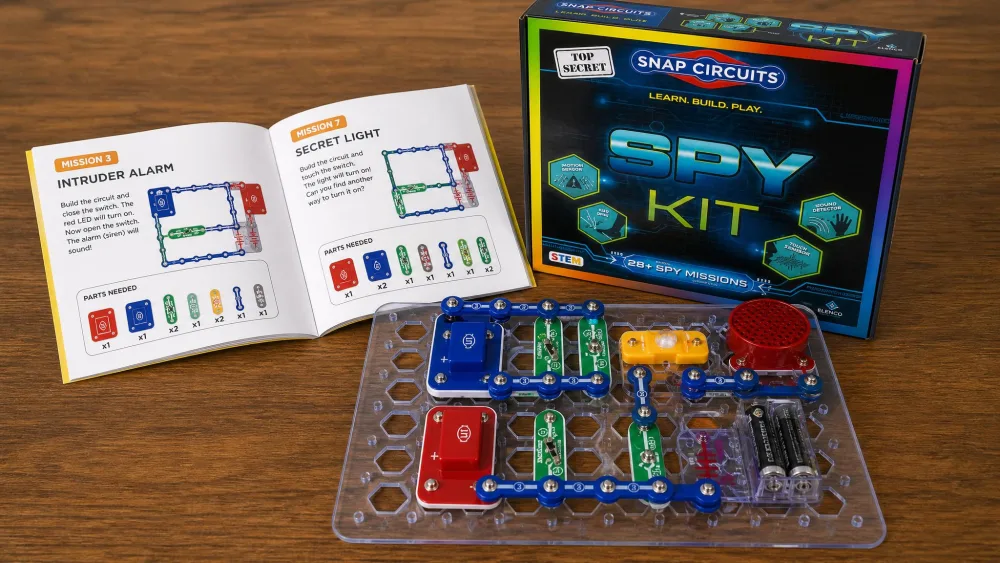
Inside you get the snap-together circuit parts, the plastic base grid, and a full-color picture manual that walks through each project. The parts are color-coded and labeled, which makes matching them to the manual quick.
Who It's For (Age & Skill Level)
Elenco lists the Spy Kit for ages 7 and up (7+), and that guidance matched what we saw at the table. A motivated 7- or 8-year-old can work through much of the manual alone once they get going. Younger builders usually need a grown-up's guiding hand to start. The set also suits both quiet solo building and shared play with a sibling.
The 25+ Spy Missions and Projects
The manual lays out 25+ spy missions, numbered as Projects 1 through 25. Each one builds a gadget a young spy would want, then explains how to use it in play. The projects share a common parts set, so kids can build one mission, take it apart, and snap together the next.
Standout Gadgets: Motion Detector, Voice Changer, Trip Wire & Vibration Sensor
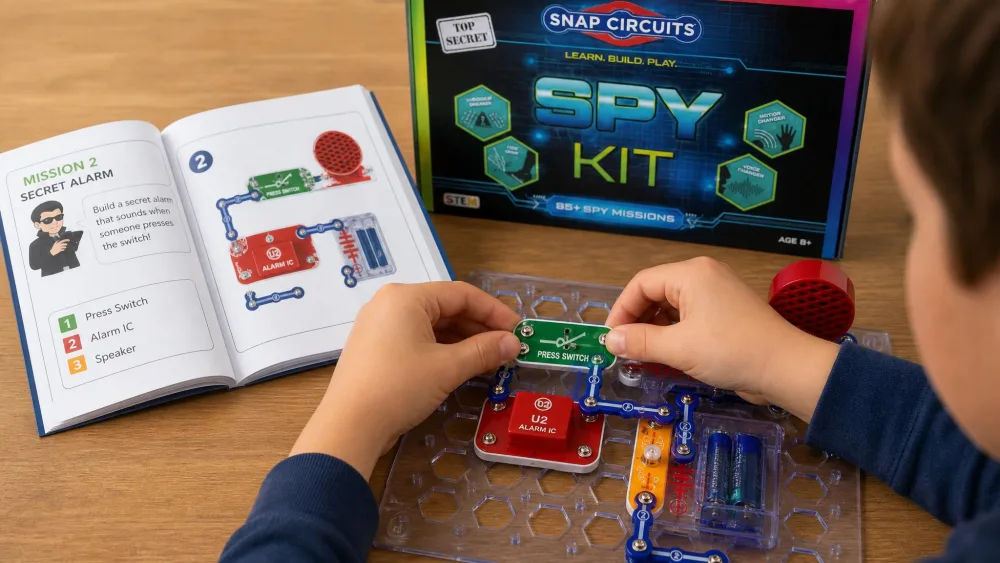
The motion detector guards a door and sounds off when someone crosses it. The voice changer alters how a voice comes through, and it is usually the one kids are quickest to show off. The trip wire triggers an alert when a hidden line is crossed, and the vibration sensor reacts when a protected object is moved. Light and sound alarms round out the set, so a finished mission always does something you can see or hear.
How the Projects Teach Real Electronics
The spy framing is the hook, but the electronics underneath are real. Each gadget is a working circuit, so kids see how a sensor, a switch, a speaker, and a power source connect to do a job. When a build fails, the fix is usually a loose part, teaching kids to trace a circuit and check their connections.
Setup and Ease of Use
The Picture Manual and Independent Building
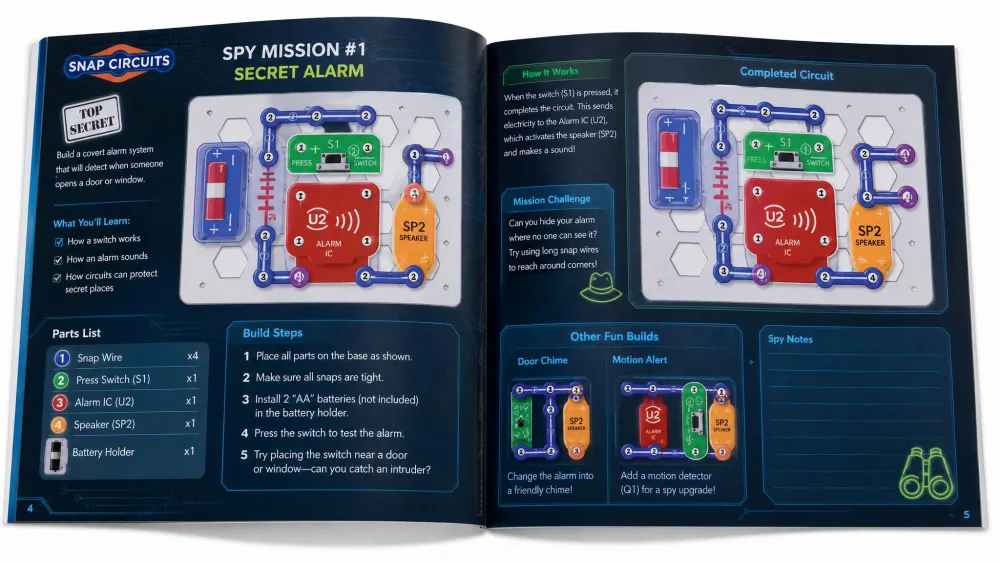
The full-color picture manual is the kit's quiet hero. It shows each project with pictures rather than dense text, so a motivated kid can navigate most of the building alone once they find their footing. We found it clear enough that an adult could step back and let the child lead after the first couple of builds.
CircuitSafe Design and Safety
CircuitSafe technology is built into the parts so the circuits stay safe to handle during normal play. There is no soldering and there are no sharp tools, which is a big reason the set suits the 7+ crowd. Younger kids still benefit from an adult nearby for the first few sessions, both to manage the small parts and to help read the early missions.
Pros and Cons
Pros
- Spy theme makes electronics genuinely fun and keeps kids building
- 25+ missions and standout gadgets like the voice changer and motion detector
- Color-coded snap-together parts with no tools or soldering
- Clear full-color picture manual supports independent building
- Sturdy parts that survive repeated snapping apart and rebuilding
Cons
- 3 AA batteries are not included and must be bought separately
- Some missions are variations on the same circuit rather than fully distinct builds
- A few instructions could be more step-by-step for true beginners
- Younger kids need adult help to get started
- Narrower scope than the broader Classic SC-300 set
Build Quality and Durability
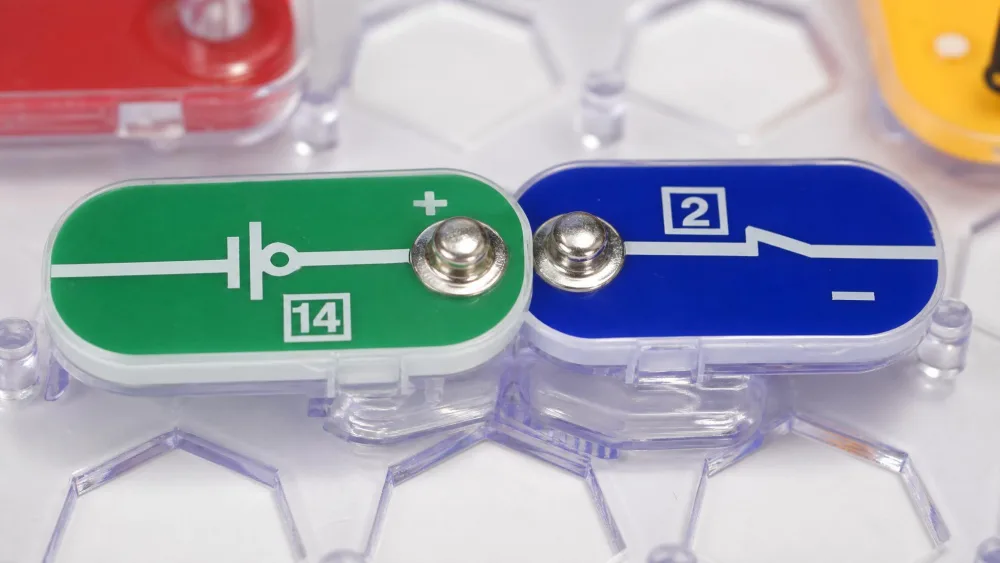
Snap Circuits has a long reputation for parts that last, and the Spy Kit holds that line. The components fit securely through repeated rounds of snapping apart and rebuilding, and after plenty of active play they still clicked together cleanly.
Price and Value for Money
The Spy Kit usually sells for around $55 to $63, though the street price swings by retailer and over time, so there is no single stable figure. For the money you get strong replay value and real electronics learning, which most families will find fair.
Parent tipBudget for batteries before the box is even open. The Spy Kit needs 3 AA cells that are not included, and a rechargeable AA set pays for itself fast once the gadgets are in daily rotation.
How It Compares to Other Snap Circuits Sets
If the Spy Kit is not quite the right fit, the wider Snap Circuits family covers other ages and goals. The Beginner set suits the youngest first-timers at ages 5 and up, the Jr. SC-100 steps up to 100+ projects for ages 8 and up, and the Classic SC-300 goes broadest with 300+ projects. The Spy Kit sits between them, trading raw project count for a focused, themed experience.
| Set | Age | Projects | Focus | Price tier |
|---|---|---|---|---|
| Snap Circuits Spy Kit | 7+ | 25+ spy missions | Spy gadgets: motion detector, voice changer, trip wire, alarms | Mid–high (~$55–63) |
| Snap Circuits Jr. SC-100 review | 8+ | 100+ | Intro electronics fundamentals | Low (~$35) |
| Snap Circuits Classic SC-300 review | 8+ | 300+ | Comprehensive electronics, widest range | High (~$75) |
| Snap Circuits Beginner review | 5+ | 20+ | Youngest first-timers, extra childproofing | Lowest (~$27) |
Educational Value (STEM Learning)
The Spy Kit earns its STEM label honestly. Every gadget is a real circuit, so kids learn how electricity flows and how sensors, switches, and speakers work together.
Skills Kids Develop
Working through the missions stretches several skills at once. Kids practice critical thinking as they trace circuits and work out why a build is not lighting up, build patience and fine motor control by placing small parts precisely, and gain real confidence each time a gadget finally works.
What Other Parents and Reviewers Say
Two themes come up again and again, and they match what we found. The variety and creativity of the missions keep kids interested and building on their own. The honest gripe we noticed too is that some advertised activities are variations on the same circuit rather than fully distinct projects, and a few instructions could be clearer for a true beginner. For an outside read on screen-free learning value, Common Sense Media is a useful authority on the Snap Circuits line.
NoteThe Spy Kit is screen-free, hands-on play. In a house juggling screen time, a set that pulls kids to the table instead of a device is a genuine plus.
Frequently Asked Questions
Are the Spy Kit parts compatible with other Snap Circuits sets?
For the most part, yes. The Spy Kit uses the same snap-together component family as the rest of the line, so parts generally share the same grid and connection system. The catch is that each set's projects are written around its own inventory, so mixing kits is more about borrowing a spare part than running another set's missions.
Can parts break if a circuit is wired incorrectly?
It can happen. A component wired the wrong way can be damaged, which is one more reason a parent with a little electronics sense is worth having nearby during the first week. Most missteps, though, just mean an alarm that won't sound rather than a ruined part.
How do you keep the small parts from getting lost between sessions?
The molded tray the parts ship in is the easiest answer. Packing pieces back into their spots makes a missing part obvious at a glance, and a zip bag around the whole tray helps if the kit travels between rooms.
Will a child outgrow the Spy Kit, and what should they move on to?
A kid who works through the 25+ missions and wants more raw variety is ready for a bigger set. The Jr. SC-100 jumps to 100+ projects and the Classic SC-300 to 300+, both for ages 8 and up. The Spy Kit's strength is theme rather than count, so the move up is about breadth.
It costs more than a basic starter set. Is the spy theme worth the premium?
For a kid who lights up at spy gadgets, usually yes. The theme gets a reluctant builder to the table and keeps them there, and every mission is still a real circuit underneath. If your child is drawn to electronics in general rather than spying, a cheaper starter set delivers the same core learning for less.
Final Verdict: Is the Snap Circuits Spy Kit Worth It?