20 Best STEM Toys for Kids, Tested by Age Group
Half the toys marketed as STEM are a light-up gadget with a science sticker on the box, so we stopped trusting the packaging and started watching what actually came back off the shelf a second week. This list is built the way we build our homeschool shelf: a toy earns a slot by being pulled out again without anyone suggesting it, and by teaching something a child can point to afterward.
So rather than claim a tidy testing calendar, we have set out what each toy demands and the age band it genuinely lands in. Several of these span a wide sibling range instead of one birthday: magnetic tiles still come out daily in homes with kids at 10, 13 and 14, and DUPLO lets a two-year-old build beside an older sibling's small bricks. Others really do need the older child, since a ten-year-old can run the microscope or build the robot alone while a younger one stalls at slide prep and Bluetooth pairing.
Below are 20 picks split into three age bands, with the honest limitation of each one included. If you want the short version, the quick picks come first.
Our Top Picks at a Glance
- Best overall for preschoolers: Educational Insights Design & Drill Activity Center
- Best magnetic building set: MAGNA-TILES Classic 100-Piece
- Best screen-free coding toy: Learning Resources Code & Go Robot Mouse
- Best overall for elementary kids: Osmo Genius Kit
- Best electronics kit: Snap Circuits Jr. SC-100
- Best marble run: Ravensburger GraviTrax Starter Set
- Best beginner chemistry set: Thames & Kosmos Chem C1000
- Best splurge: Makeblock mBot2 Rover
How We Chose These STEM Toys
We bought these ourselves and used them the way any family does, which means on a kitchen table with siblings hovering and pieces going missing. Four things decided the ranking:
- What it actually teaches. A toy had to connect to something real: force and gravity, sequencing, circuits, place value, structural load.
- Replay value. Anything that gets built once and then sits in a closet did not make the cut.
- Durability under normal use. We noted where parts give out, because the weak link is usually one component rather than the whole set.
- How much adult help it needs. Some kits are genuinely independent play. Others need a grown-up for the first session, and we say which is which.
We did not score anything out of ten. Where families disagree about a toy, and they do disagree about several of these, we tell you what the disagreement is about so you can decide whether it applies to your kid.
Best STEM Toys for Toddlers and Preschoolers (Ages 2-5)
NoteAge labels on the box are a liability line, not a readiness test. Plenty of 4-year-olds handle a set labeled 8 and up with an adult sitting alongside, and plenty of 6-year-olds are not ready for something labeled 5. Read the skill the toy demands, not the number on the corner of the box.
1. Educational Insights Design & Drill Activity Center — Best Overall for Preschoolers
Why We Picked It
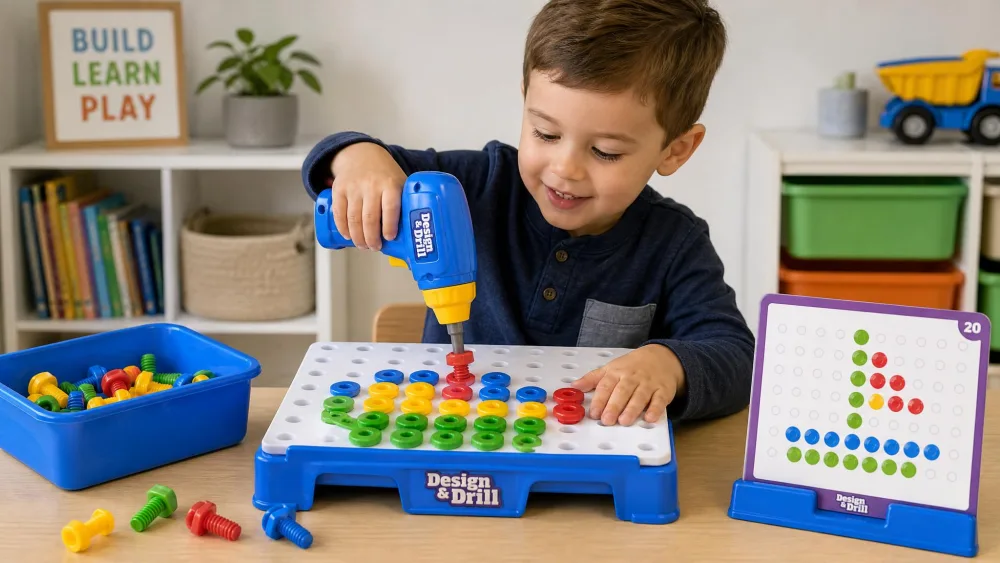
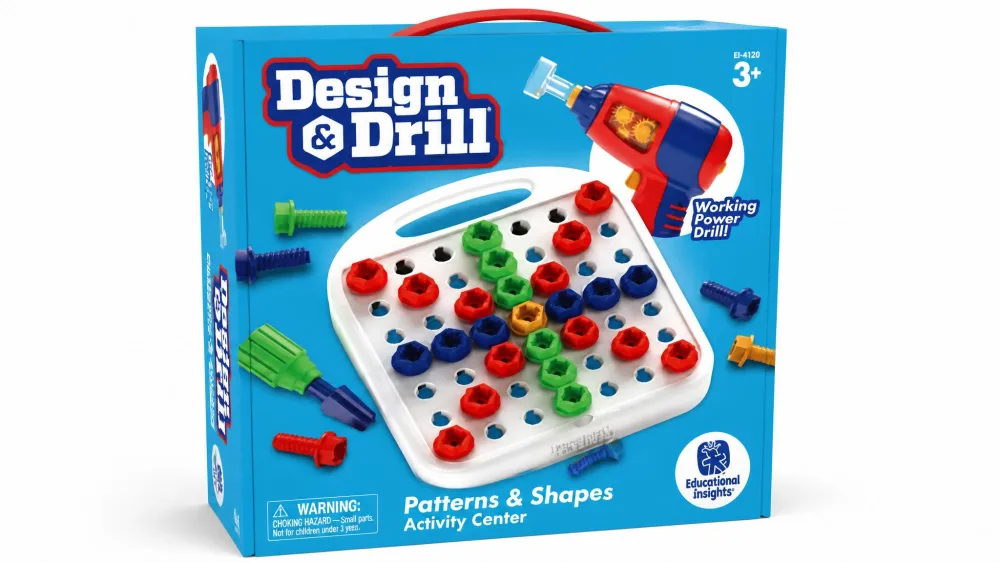
It gives a preschooler a real tool with a real result. The set includes 120 plastic bolts plus a kid-powered electric drill, a screwdriver, a wrench, two drill bits and ten double-sided activity cards, so a child can free-build or follow a pattern. The drill needs 2 AA batteries, which are not included. It works down to about 18 months, though a toddler that young needs both hands on the drill.
What to Know
The board and the bolts are tough. The drill motor is the weak link, and it can quit early: the reverse gear is the first thing to go, sometimes within a handful of uses. That is the gamble at this price, and it is worth knowing before you wrap it.
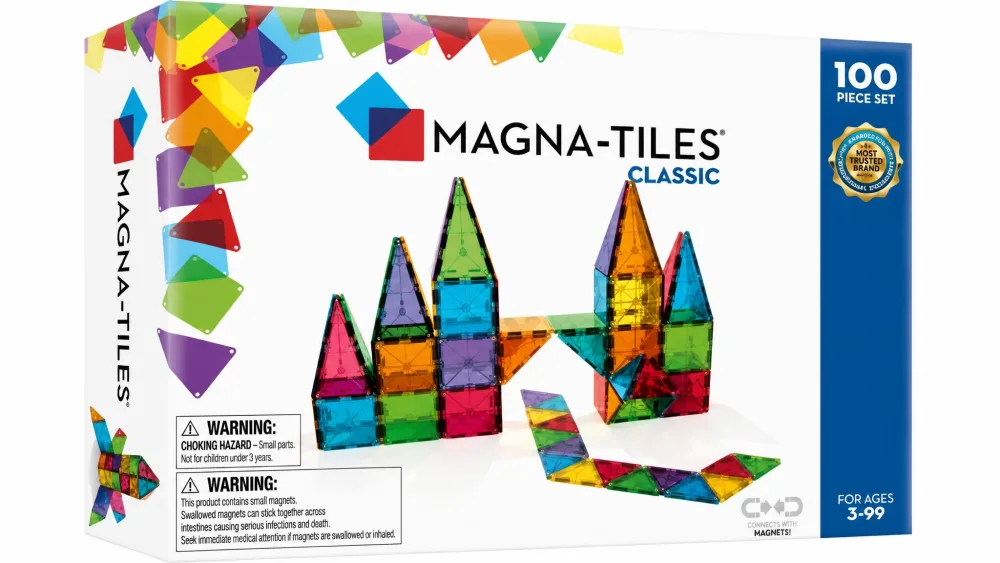
2. MAGNA-TILES Classic 100-Piece — Best Magnetic Building Set
Why We Picked It
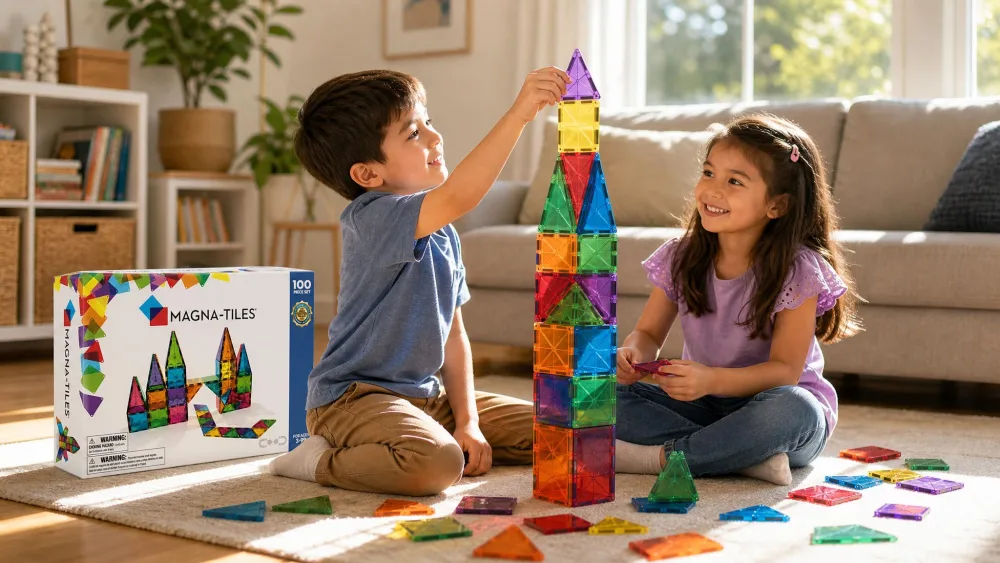
This is the one toy on the list we would replace immediately if it disappeared. The 100-piece box breaks down into 4 large squares, 50 small squares, 20 equilateral, 11 right and 15 isosceles triangles, all compatible with every other set in the Magna-Tiles line. That compatibility is the point: every later box you add makes the tiles already in the bin more useful, instead of starting a separate pile.
What to Know
Kids often stall on day one and need an adult to sit down and build one thing with them. After about five minutes of that, they take over. The real complaint is price. Even households that love the set call $119.99 steep, and that figure moves with promotions and sellers.
NoteThe first-day pattern is consistent across households: the tiles sit untouched until an adult kneels down and builds one lopsided box with a roof. A couple of minutes later the box is a garage, and the adult is surplus to requirements.
3. Learning Resources Code & Go Robot Mouse Activity Set — Best Screen-Free Coding Toy
Why We Picked It
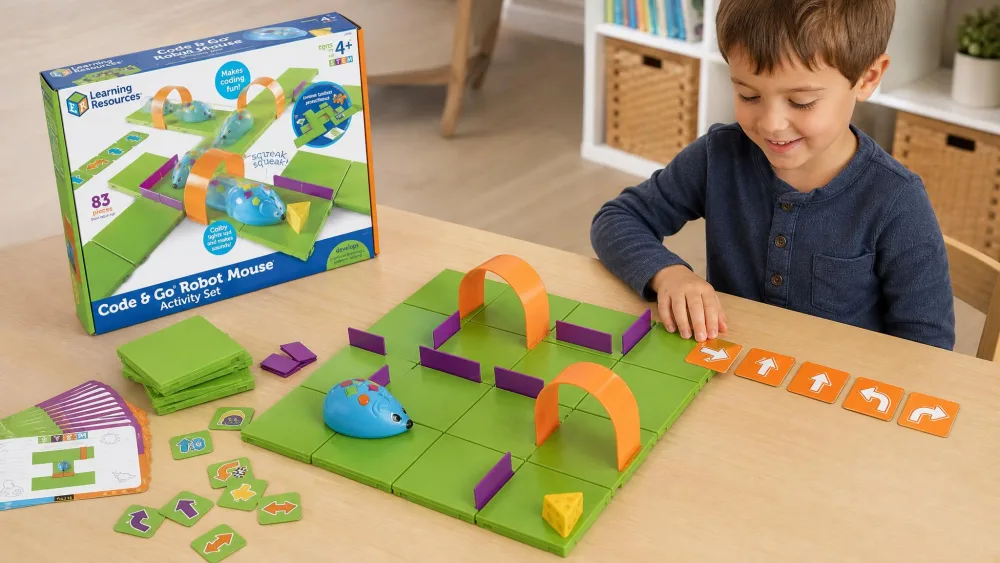
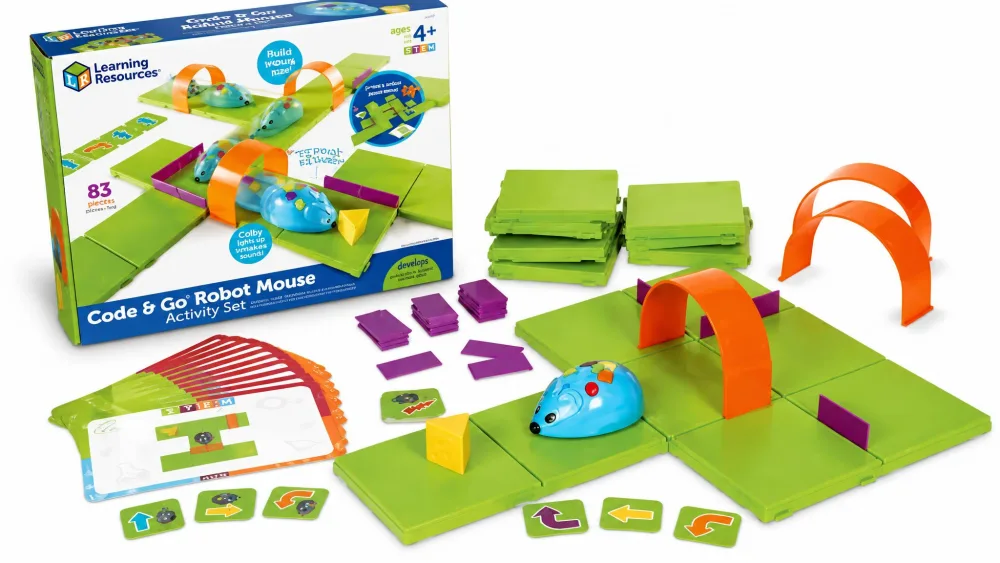
Sequencing is the actual skill behind coding, and this teaches it with zero screen. The box holds Colby the mouse, 16 maze grids that build a 20-inch by 20-inch board, 22 maze walls, 3 tunnels, 30 double-sided coding cards, 10 activity cards and a cheese wedge. It is labeled 4+, and four-year-olds engage with it through the cheese-finding goal, then start inventing their own targets to hide in the maze.
What to Know
The mouse sometimes drifts instead of tracking straight down a maze row, which throws off a sequence a child got exactly right. Expect to referee that once or twice per session, and to explain that the program was fine even when the mouse was not.
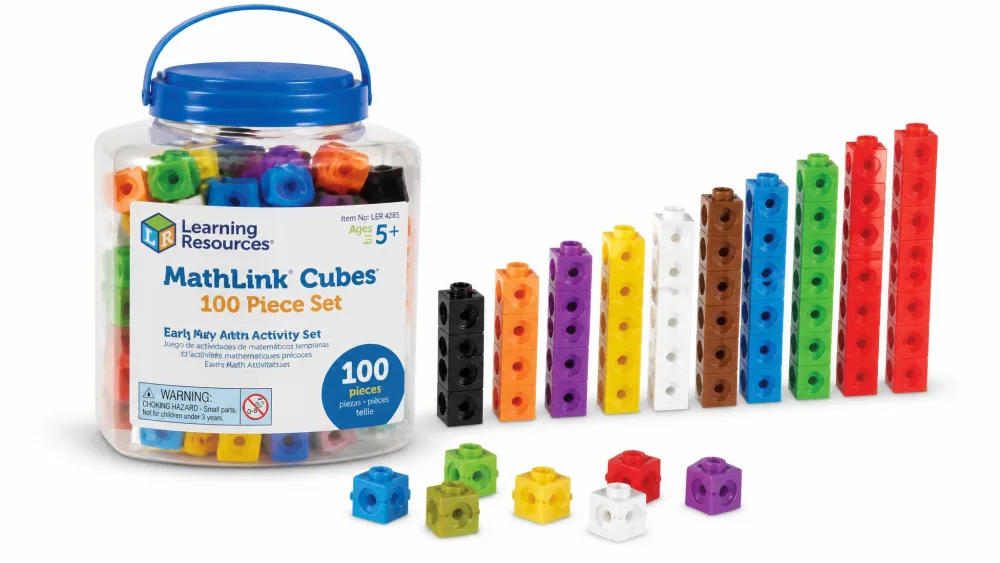
4. Learning Resources MathLink Cubes, Set of 100 — Best for Early Counting and Math
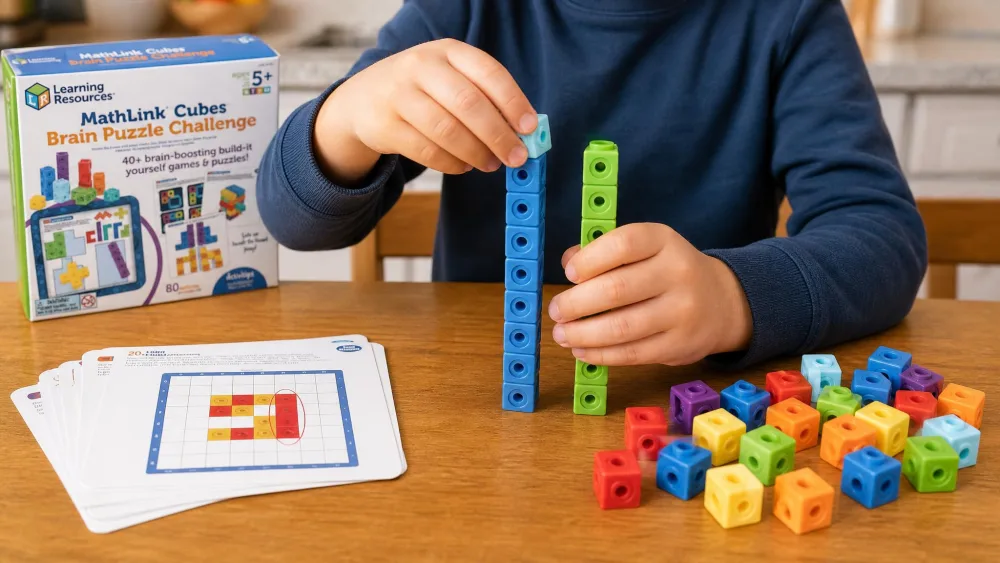
Snapping on all six faces is what separates these from counters you can only stack. A set of 100 cubes, labeled 5+, will hold a shape sideways and upside down, which is what lets a child build a ten-rod, break it into a four and a six, and see that the total did not change. We use them to make arithmetic visible before any pencil work happens: counting to 100, skip counting, making ten, grouping, addition and subtraction, all of it something a child can hold.
Hand strength decides how this goes. Some kids snap and pull them apart easily, while others find them genuinely hard to push together, and that split tracks with age more than anything else. One box of 100 also goes fast once two kids are working, so plan on a second set.
5. Stomp Rocket Jr Multi-Color Launcher — Best Budget Pick
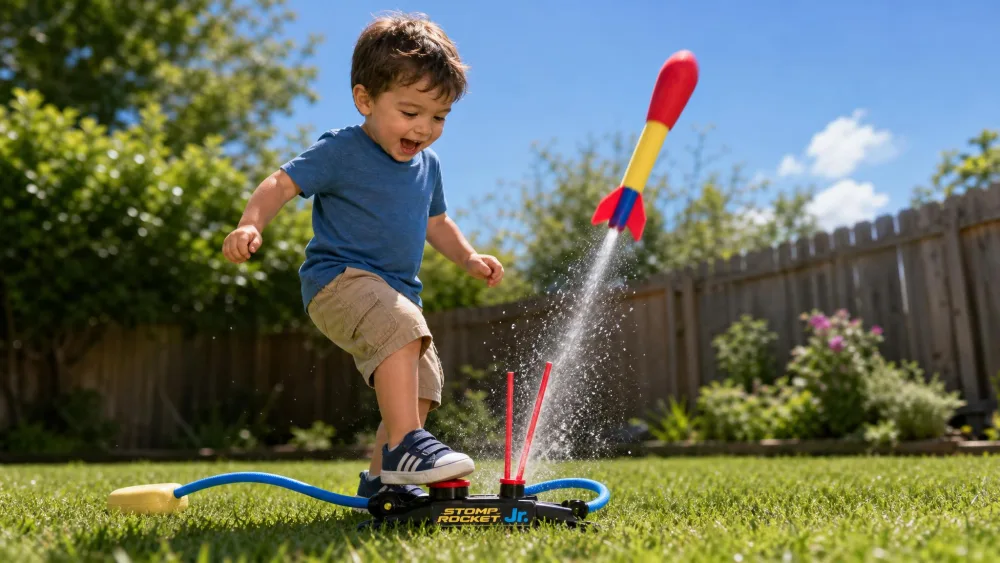
The Physics Part
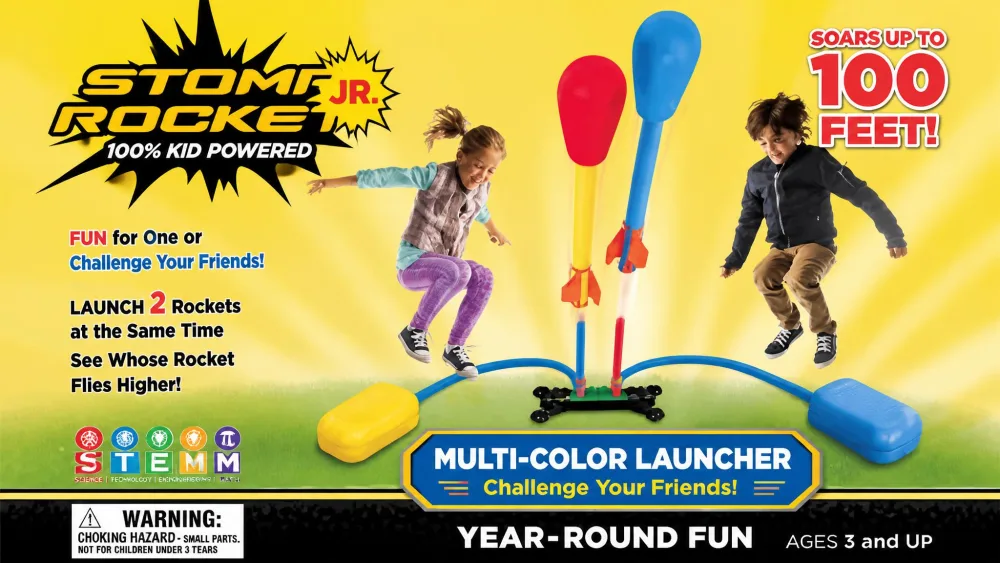
Force and gravity, demonstrated by a kid stomping as hard as they can. The foam rockets launch up to 100 feet, and the whole thing runs on no batteries, cords or plugs. It is labeled ages 3 and up, needs no assembly tools, and gets everyone outside, which is not nothing on a long afternoon.
Set the House Rule First
The rockets are the consumable part. Expect to lose one or two in the first few sessions to splitting or tearing, while the launch base keeps going. Kids also work out fast that the launcher can be aimed sideways to fire it indoors, so set that house rule on day one.
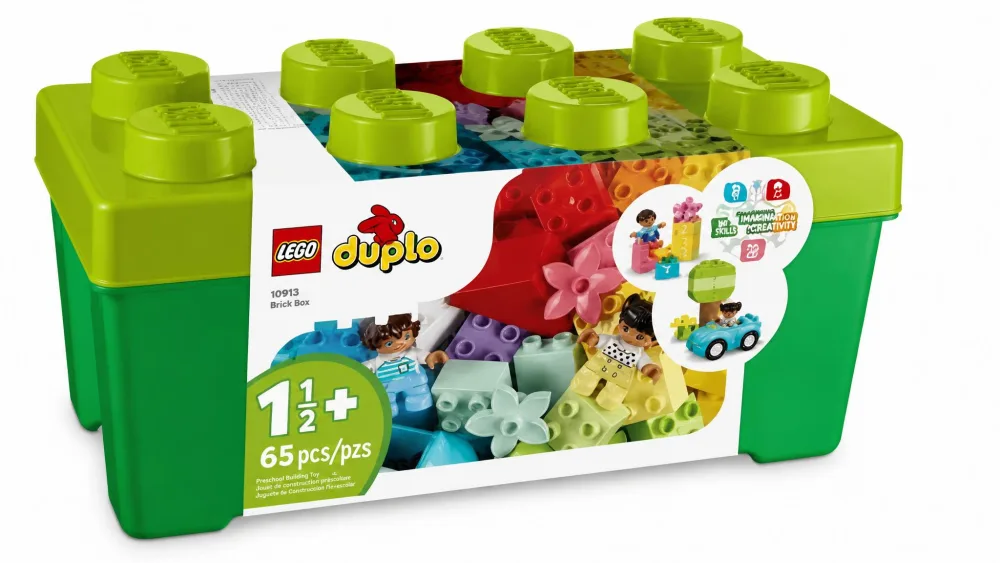
6. LEGO DUPLO Classic Brick Box 10913 — Best Open-Ended Building Set
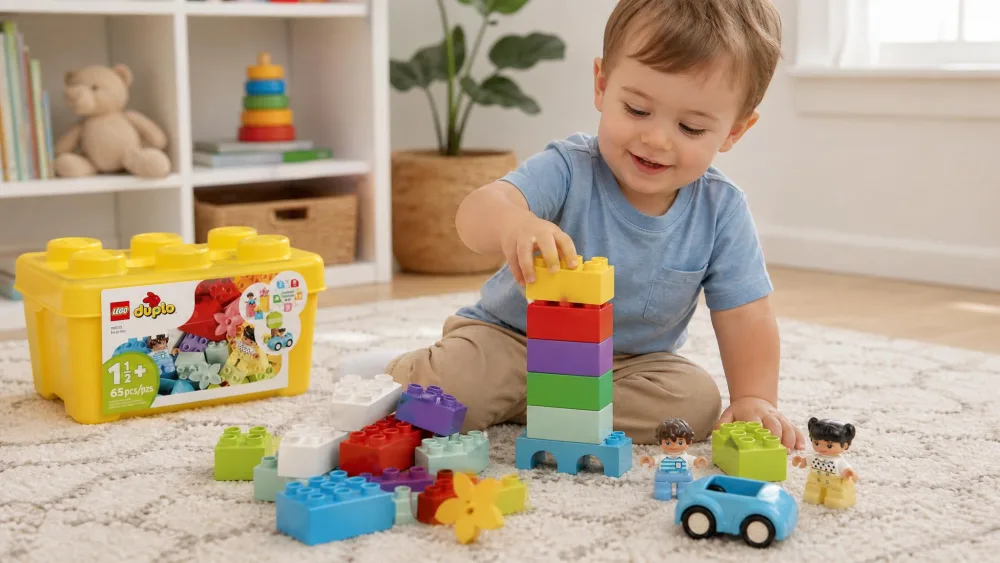
The chunky bricks are the whole point: they let a two-year-old who still mouths pieces build alongside an older sibling's small LEGO without a choking risk in the middle of the floor. The box holds 65 bricks plus a car with moving wheels, windows, flowers, 2 figures and number bricks, and it is labeled 18 months and up.
The number bricks are the only structured element, and most kids ignore them in favor of free building, which is fine. It stores in its own box, which matters more than it sounds when the alternative is bricks under the couch for a year.
Best STEM Toys for Elementary Kids (Ages 6-9)
This is the band where a toy can finally teach a system rather than a single idea, and where research on robotics kits in early childhood starts to line up with what you see at the table: kids this age can plan a sequence, watch it fail, and revise it on their own.
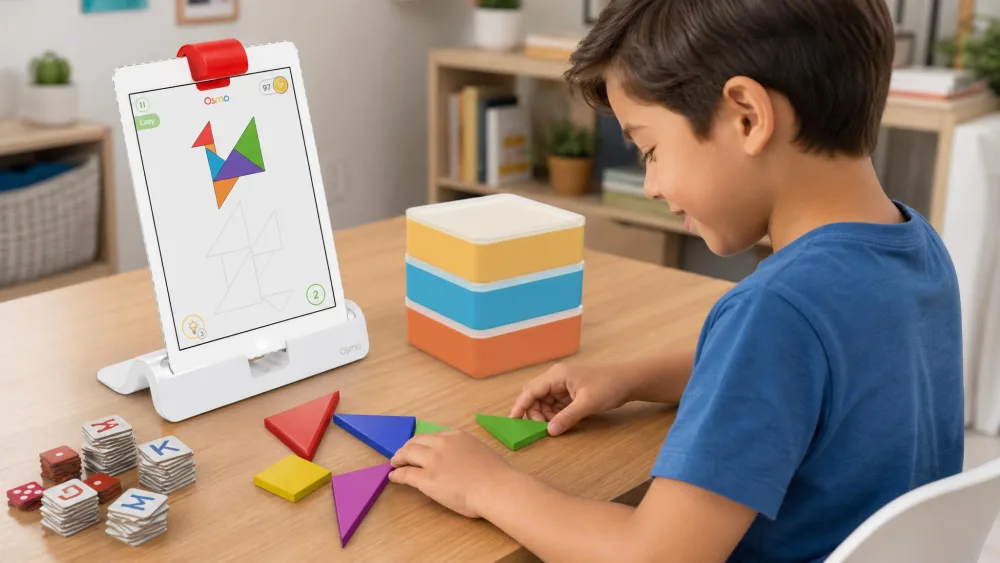
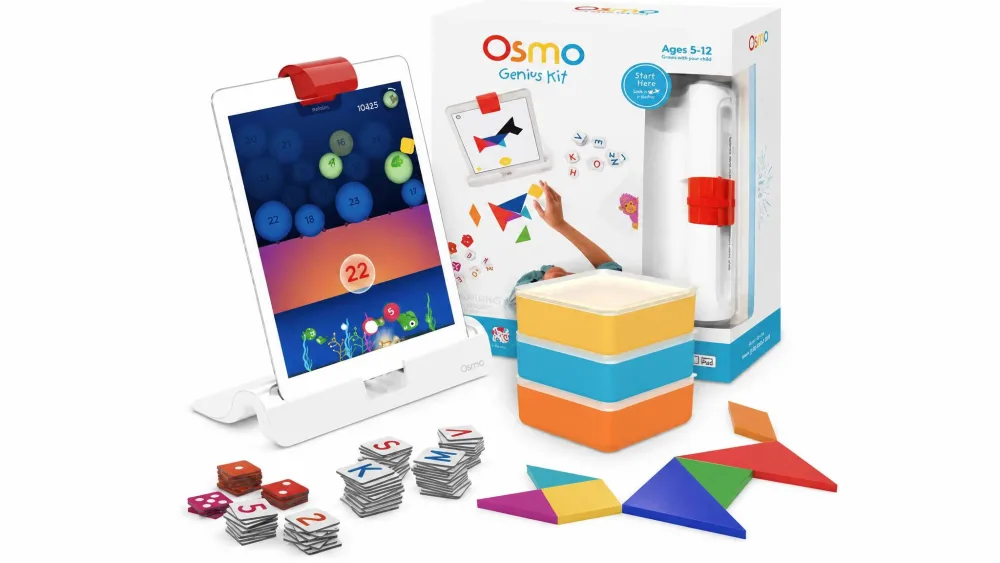
7. Osmo Genius Kit — Best Overall for Elementary
What the Five Games Actually Do
It is the rare screen product where the child's hands are on physical pieces and the tablet is only watching. Labeled 6-10, the kit bundles five games: Tangram spatial puzzles, Newton physics, Masterpiece drawing, Numbers math and Words spelling, all read by the iPad camera in real time.
Check Your iPad First
It needs a compatible iPad, from the 5th generation onward across the standard, mini, Air and Pro lines, and the base does not work with some newer iPad Pro models. Setup is easier than expected but needs a second device, because the account flow emails a code you have to enter, and the iPad has to come out of most cases to sit in the base.
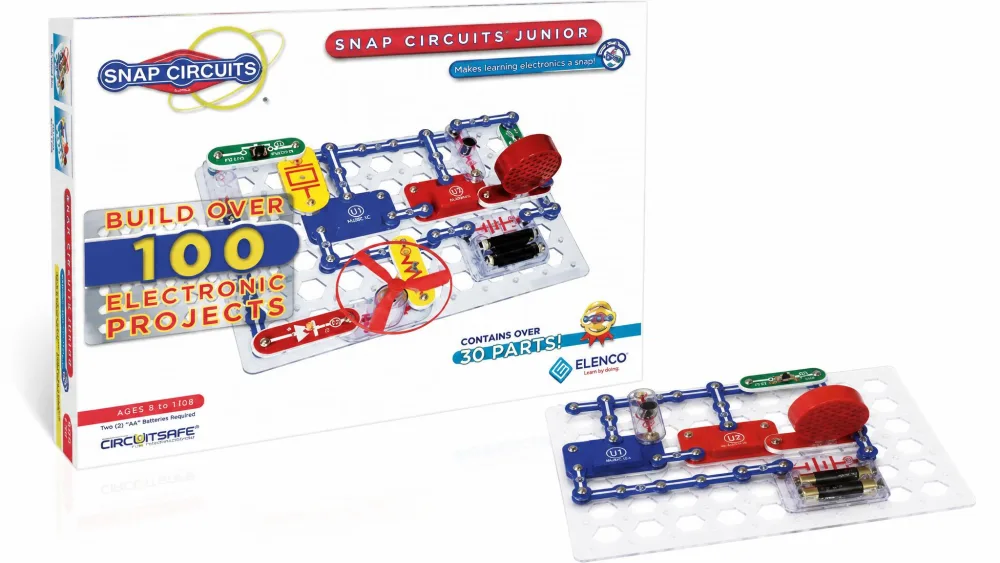
8. Elenco Snap Circuits Jr. SC-100 — Best Electronics and Circuit Kit
Why We Picked It
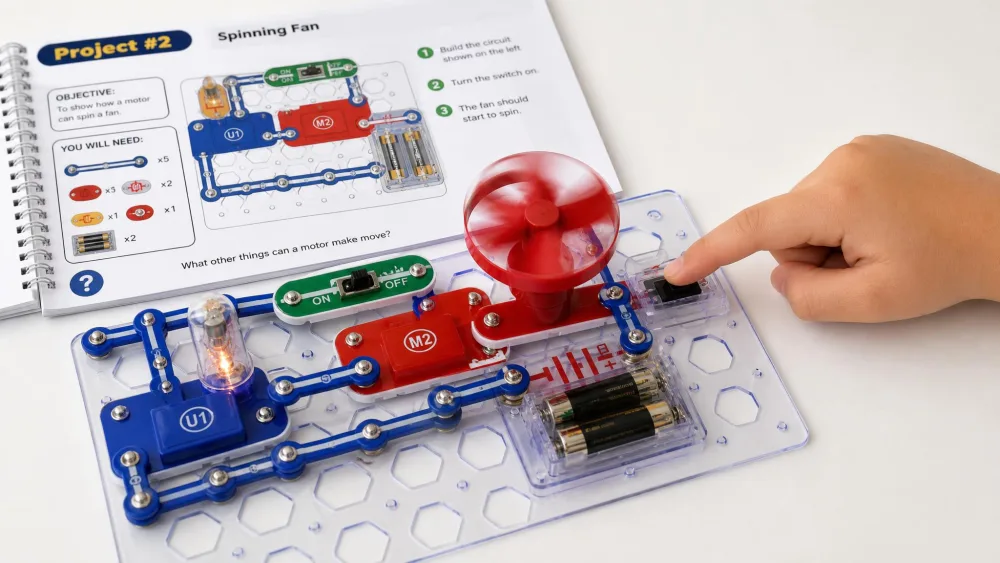
First real circuits, with no soldering and no tools. There are 28 snap-together parts and over 100 projects in a full-color manual, and the payoff arrives fast: the first working circuit is the moment that carries a kid straight into project two. It needs 2 AA batteries, not included, and it pulls the whole household in, adults included.
What to Know
The label says ages 8 and up, but the diagrams are self-explanatory enough that a five-year-old can follow them with an adult nearby. Some parts are fragile in daily use, so a component or two may give out over a year of heavy building.
NoteThis is the kit that ends with a grown-up on the floor at bedtime, still wiring the alarm project, because Snap Circuits reliably pulls in the whole household rather than just the target-age kid.
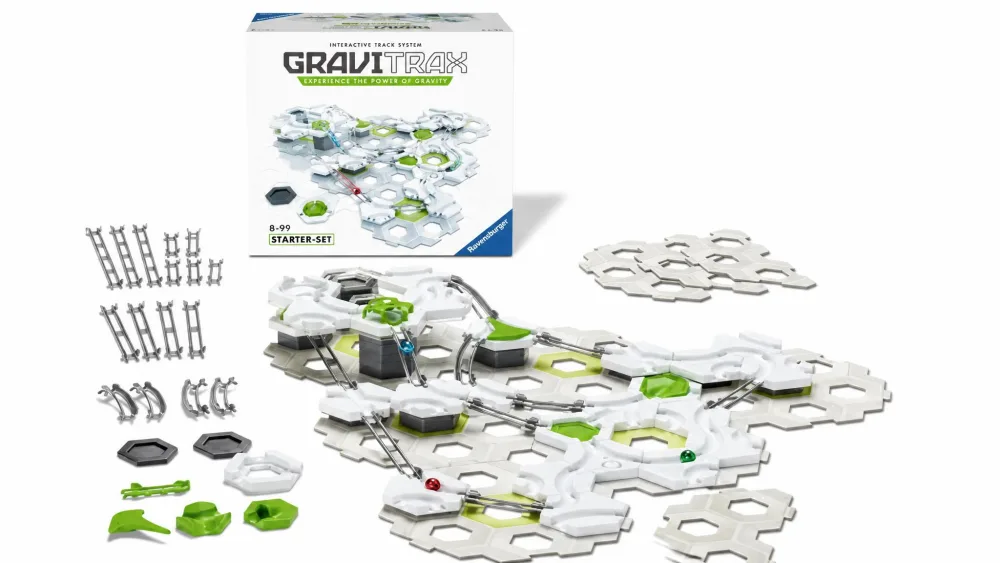
9. Ravensburger GraviTrax Starter Set — Best Marble Run and Physics Toy
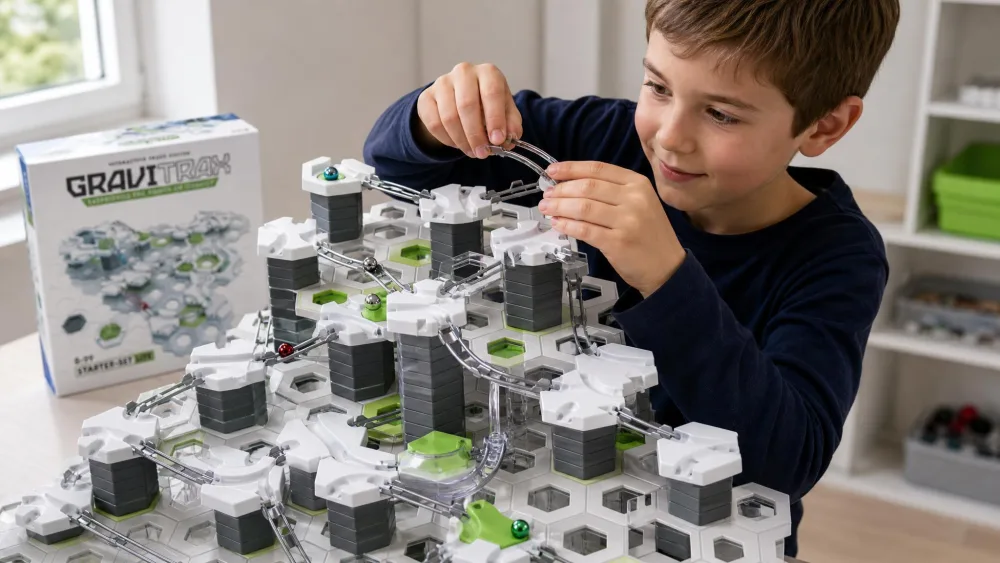
122 Pieces of Gravity
122 pieces of gravity, magnetism and kinetics that a child can rebuild endlessly. Labeled ages 8 and up, it expands across every other GraviTrax set, and it doubles neatly as a physics lesson when you need one.
An eight-year-old will work through every track in the manual and then start designing originals, and that first original is worth watching. It is always too tall and too ambitious, a stack of height tiles with a long straight drop and one hopeful curve at the bottom, and it does not run. The marble either leaves the track on the first bend or stalls halfway down a section that looked steep enough and was not. What gets changed is height: the tower comes down a tile or two, the curve moves further from the drop, and the run that finally works is shorter and less impressive than the one that was drawn in their head. That is the physics lesson, delivered without anyone teaching it.
Build the Manual Tracks First
Work the instruction builds first. Families who jump straight to free building struggle to get a track that actually runs. Durability splits opinion: most of the pieces are sturdy, though a minority of track pieces do break. Pricing is messy, since starter sets sell under several listings, with one sitting near $59.52.
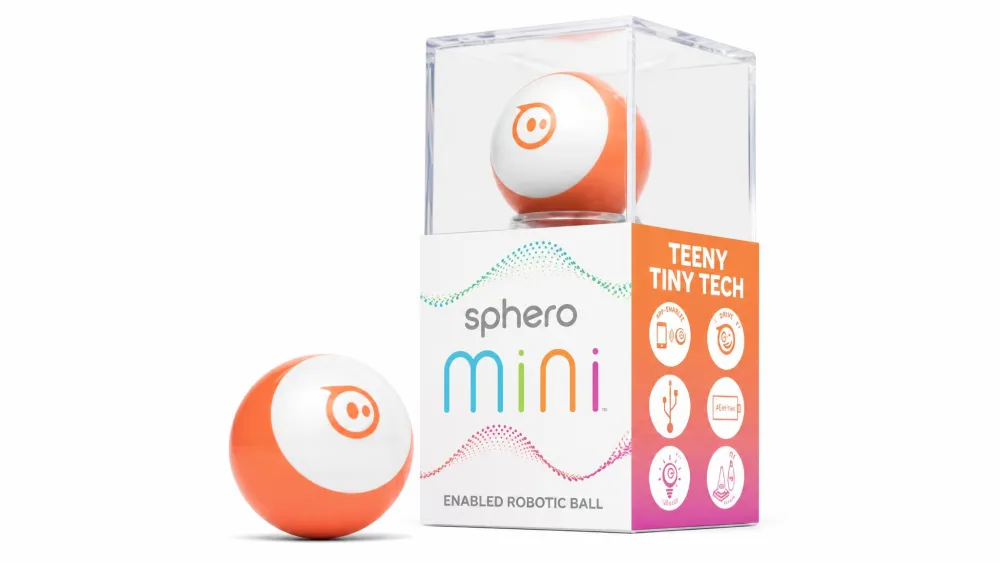
10. Sphero Mini — Best Coding Robot
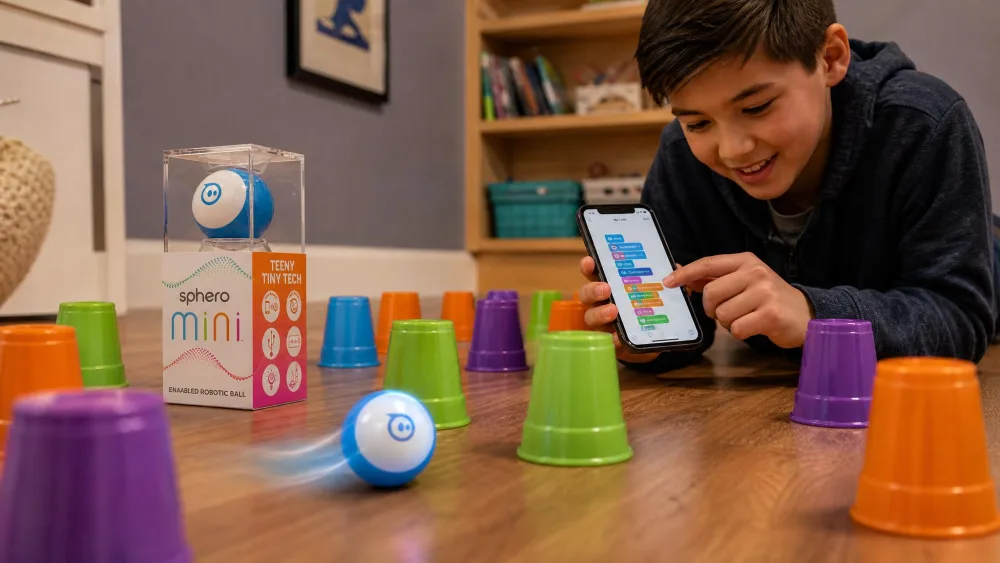
Why We Picked It
A coding robot the size of a ping pong ball, labeled 8+, that scales with the kid. It offers 3 different coding modes through the free Sphero apps: draw a path, drag blocks, or write JavaScript, though the app lineup shifts with software updates. That last step is what keeps it useful past the novelty stage.
What to Know
Two frustrations come up every time. Bluetooth pairing fails often enough to be annoying, and charging takes long enough that a session can end before it starts if nobody planned ahead. It rolls well on hardwood and low-pile carpet, and not at all on thick or fluffy carpet.
11. ThinkFun Rush Hour — Best Logic and Puzzle Game
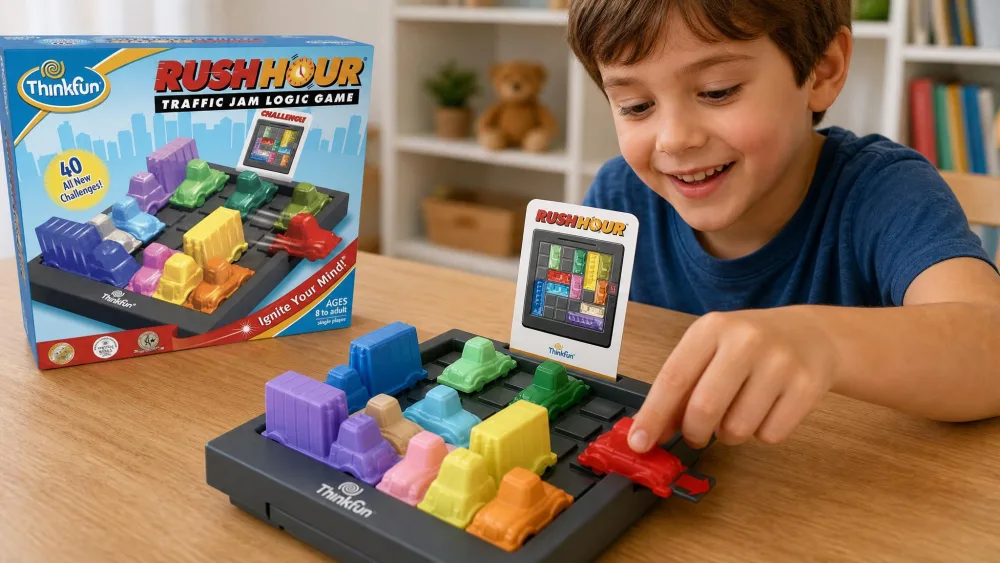
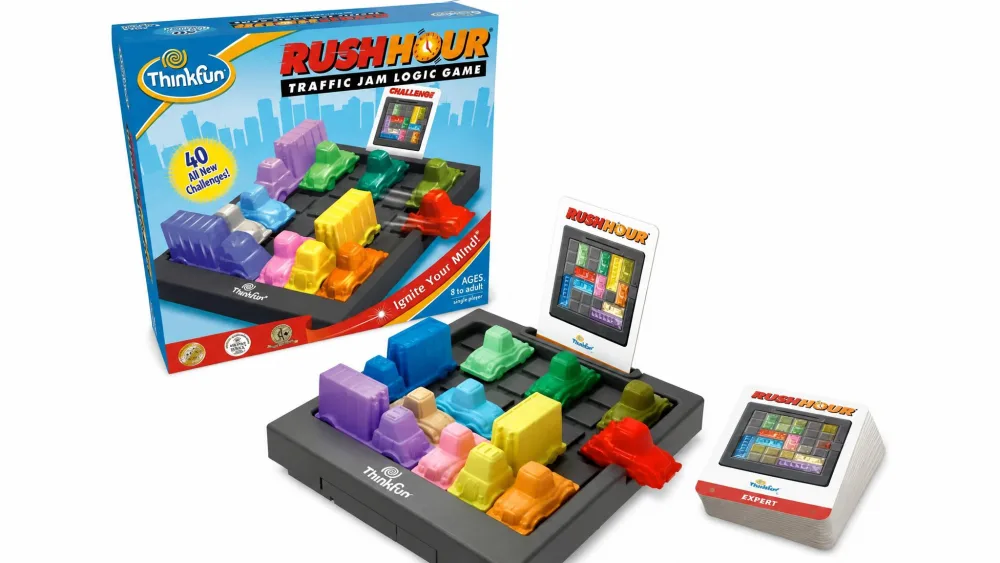
40 challenge cards graded beginner to expert, 15 blocking cars and trucks, one red escape car, and solutions included so nobody has to adjudicate. It is a single-player ThinkFun sliding puzzle that quietly builds frustration tolerance, which is why therapists and teachers keep it on the shelf: kids have to reset and re-plan, over and over.
The clearest measure of how long this game lasts is what households do with it. One family bought a second copy twenty years after the first, which is not nostalgia so much as the original grid finally wearing out and the game still being wanted. Twenty years is two rounds of childhood on the same forty cards, and the cards do not get easier the second time around. It travels well in its own bag, and the only real caution is that a puzzle-loving kid can burn through all 40 cards in a couple of weeks, after which the expert tier is where the value sits.
12. National Geographic Earth Science Kit — Best Beginner Science Kit

What's in the Box
100+ activities including more than 15 experiments: dueling water tornadoes, an erupting volcano, crystal growing and geologic digs. Labeled 8-12, it carries enough material that two siblings can share a session instead of taking turns, which is the difference between a kit that gets used and one that causes an argument.
The Volcano Is Really Two Activities
Understand before you start that the volcano is two separate projects wearing one name. The first is an afternoon: shaping the cone, waiting on it, then painting it, with a newspaper-covered table out of commission the whole time and a child who has to be talked through the part where nothing is happening yet. The second lasts about as long as it takes to read this sentence. The eruption goes, everyone cheers, and it is finished. Both are worth doing, but a child who was promised a volcano and pictured only the second one will feel short-changed at hour two of the first, so say out loud at the start that the building is the project and the eruption is the ribbon on it. The directions are the other weak spot: even families who like the experiments call them vague, so read a step ahead.

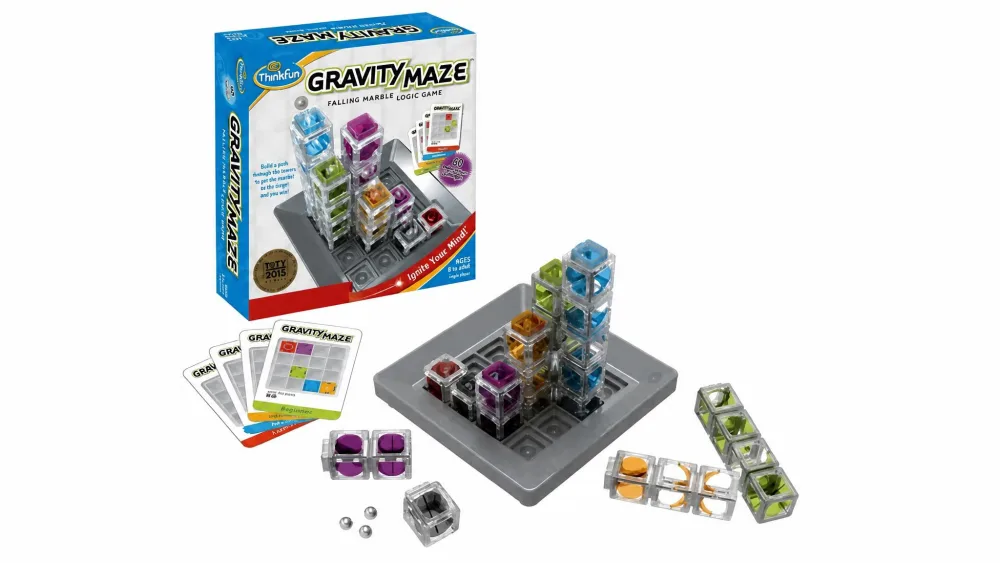
13. ThinkFun Gravity Maze — Best STEM Board Game
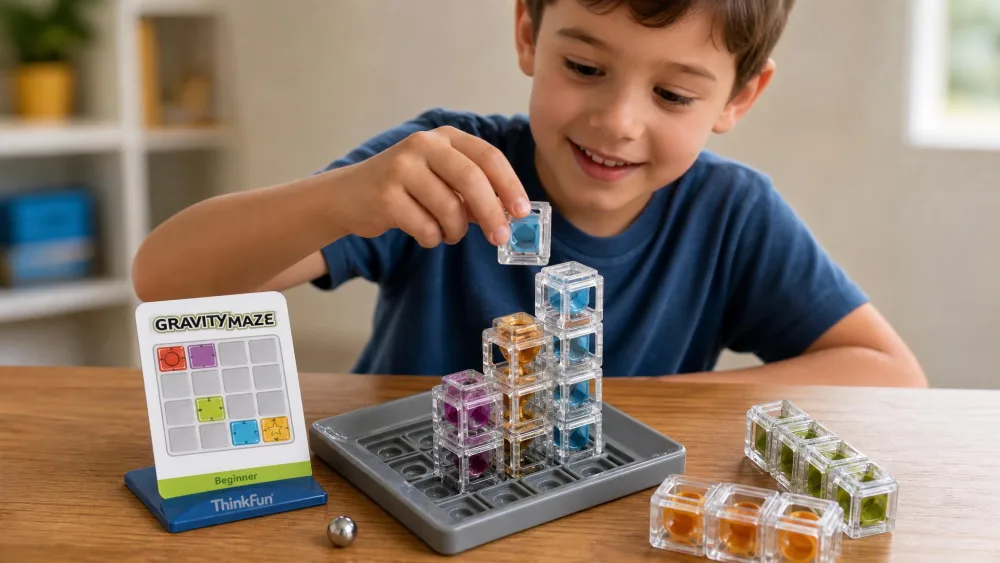
9 towers, a game grid, target pieces and marbles, plus 60 challenge cards graded from beginner to expert. Labeled 8-12, it is the game elementary kids ask for by name during free time. Kids who normally run out of patience will sit and methodically test solutions here, because the falling marble gives instant feedback on a wrong guess.
The early cards run easy for a strong ten-year-old, while an eight-year-old often needs the free-build mode before the graded puzzles land. It also avoids the loose-parts problem of cheap marble runs, since the towers stack and stay put instead of scattering across the floor.
Best STEM Toys for Tweens and Teens (Ages 10+)
Everything in the 6-9 band is designed so that the worst outcome is a tower falling over. That changes here. These picks bring real glass, real chemicals, real voltage and a real Linux machine into the house, and the payoff for that is that a kid can finally do the actual thing instead of a padded version of it. Supervision changes shape rather than disappearing: with the chemistry set and the telescope you are sitting alongside for the first sessions, and with the robot and the Pi you mostly need to be in the room when the software fights back.
14. Thames & Kosmos Chem C1000 (V 2.0) — Best Beginner Chemistry Set

Real Glass, Real Chemistry
Real glassware and real chemistry: 125 experiments, an 80-page full-color lab manual, proper lab equipment and 7 chemicals, covering invisible inks, chromatography and litmus testing. It is labeled 10+ with adult supervision and built to the EN 71-4 safety standard, which is the line between a chemistry set and a novelty kit.
Plan the First Session
A first session with this kit has a shape you should plan for. Several experiments call for household items the kit does not include, so the manual sends you to the kitchen partway through for vinegar, a candle, a glass of water, and the momentum drains out of a session every time that happens mid-step. The fix is unglamorous: an adult reads a step ahead, calls out what is needed next, and gathers it while the child works the current step. Do that and the afternoon runs. Skip it and you spend it walking between the table and the cupboard. It matters more here than with other kits because families split hard on the manual, with some finding the steps clear and kid-followable and others finding them close to impossible. It is not automatically fun for a ten-year-old, either: interest in the subject has to come first.

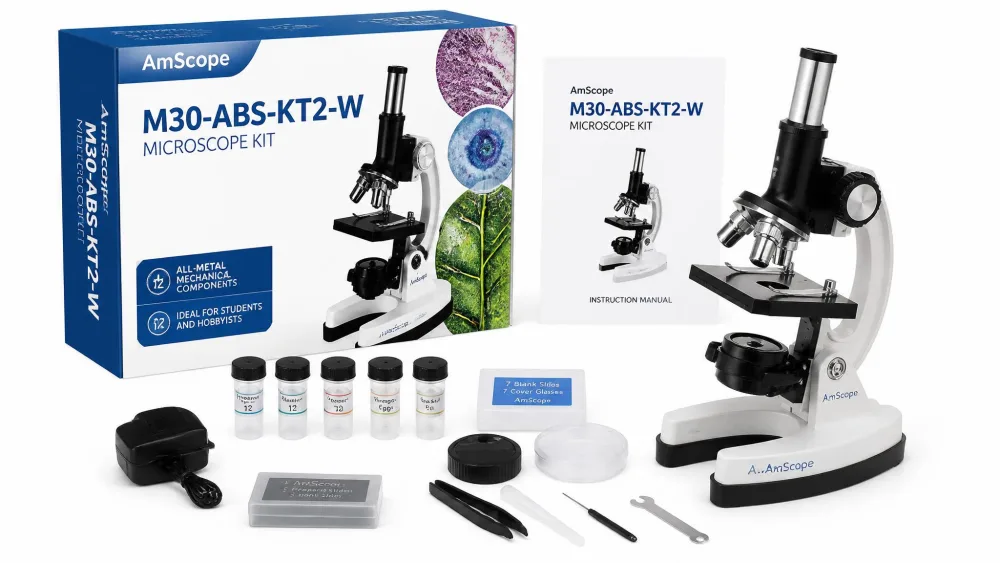
15. AmScope M30-ABS-KT2-W — Best Microscope

Why We Picked It
A metal-body compound microscope with six settings from 120X to 1200X, sold as a 52-piece kit with prepared and blank slides, tools and a hard case. That combination matters: the blank slides and prep tools are what turn it from a viewing toy into something a kid uses on pond water and onion skin all summer.
What to Know
The most common complaint is not seeing anything through the eyepiece, and that usually comes down to slide prep plus expecting more than a starter compound scope can deliver. A ten-year-old can run it alone; younger kids need help. The mirror and light assembly is the delicate part and can break early.
16. Makeblock mBot — Best Robotics Kit
Why We Picked It
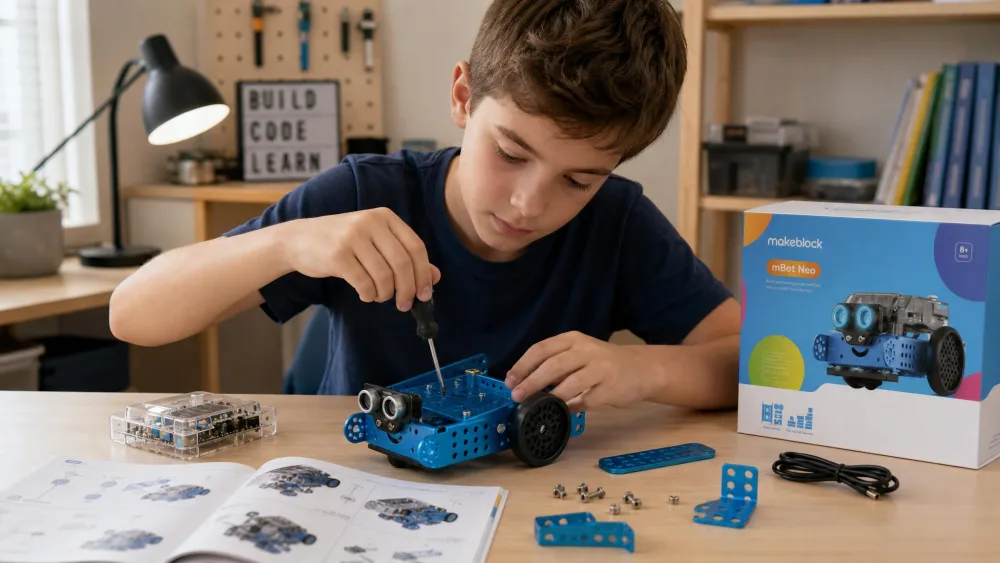
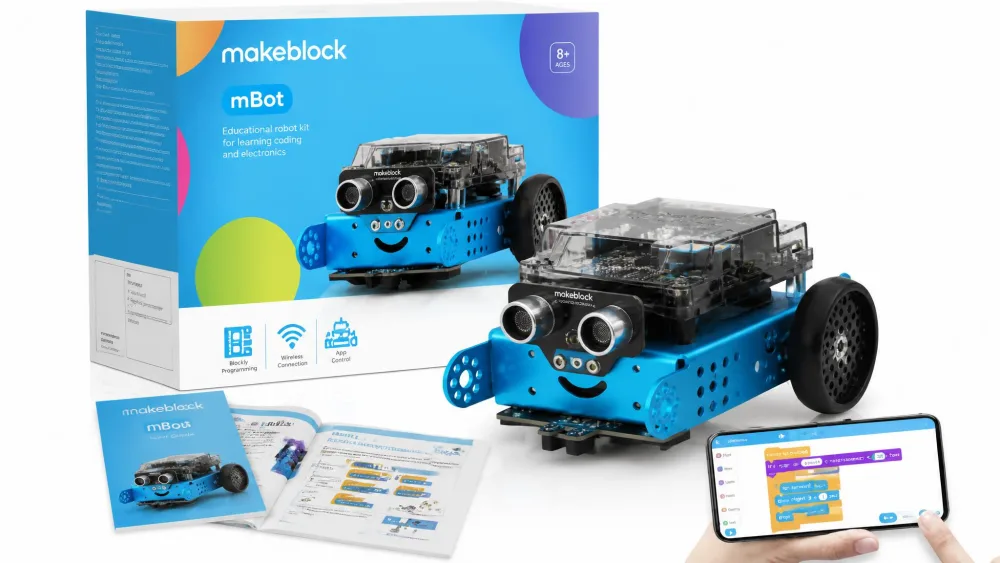
Build it, then code it. The mBot is a metal-chassis robot car labeled 8-12, with line-following and ultrasonic obstacle sensors, and it codes in Scratch first and Arduino later. The manufacturer puts assembly at 15 minutes, though that varies a lot with a child's age and screwdriver experience. A ten-year-old can build it unassisted from the printed instructions.
What to Know
The build is the easy half. The frustration arrives later, at Bluetooth pairing and the mBlock app, and that is the step where a parent usually has to sit down. Once it is paired, the block-to-Arduino path is the best value in kid robotics.
17. Thames & Kosmos Bridges & Skyscrapers — Best Engineering Build
The Engineering It Teaches
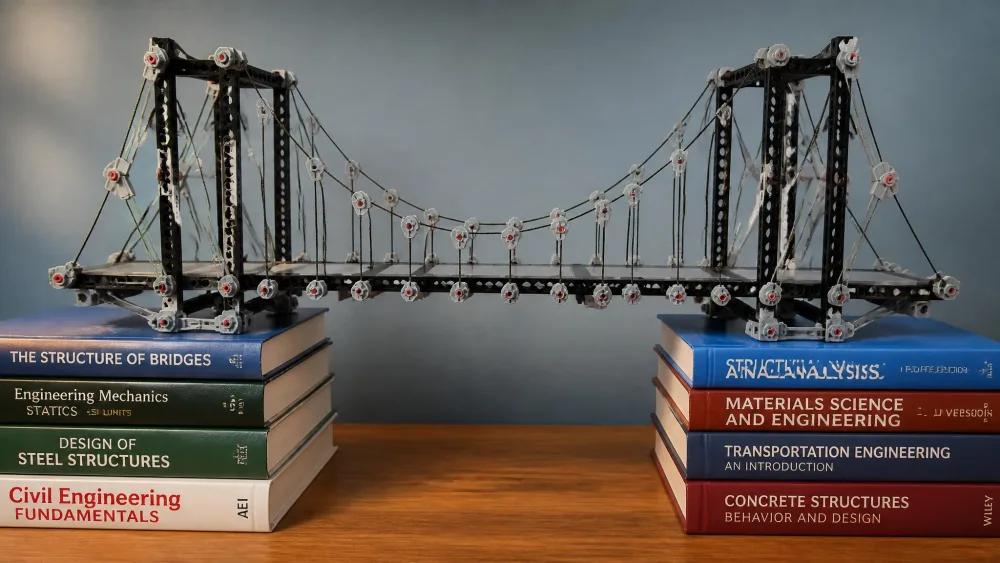
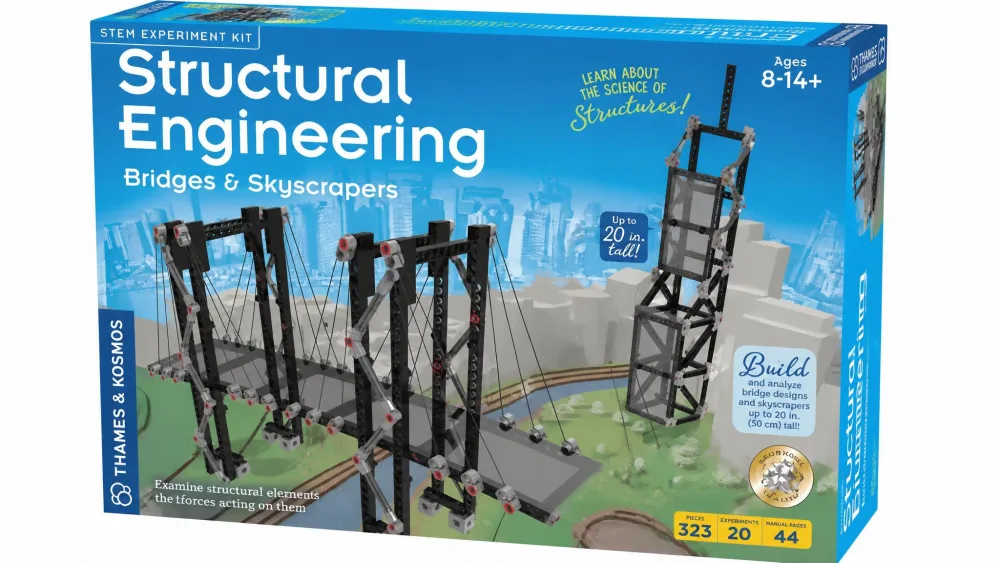
285 interchangeable pieces, 20 different buildable models and a 36-page illustrated manual covering truss, arch, suspension and cantilever bridges plus skyscraper frames. It teaches force, load, compression and tension by making a kid load a bridge until it fails, which is a lesson no worksheet delivers.
Where the Plastic Gives Out
The plastic is the weak point. Pieces break, and the yellow separator tools supplied for prying parts apart barely grip, so expect some fiddling. The instructions also leave gaps, which makes assembly satisfying for a patient kid and genuinely annoying for one who is not.
18. CanaKit Raspberry Pi 5 Starter Kit PRO — Best Advanced Coding Kit
Why We Picked It
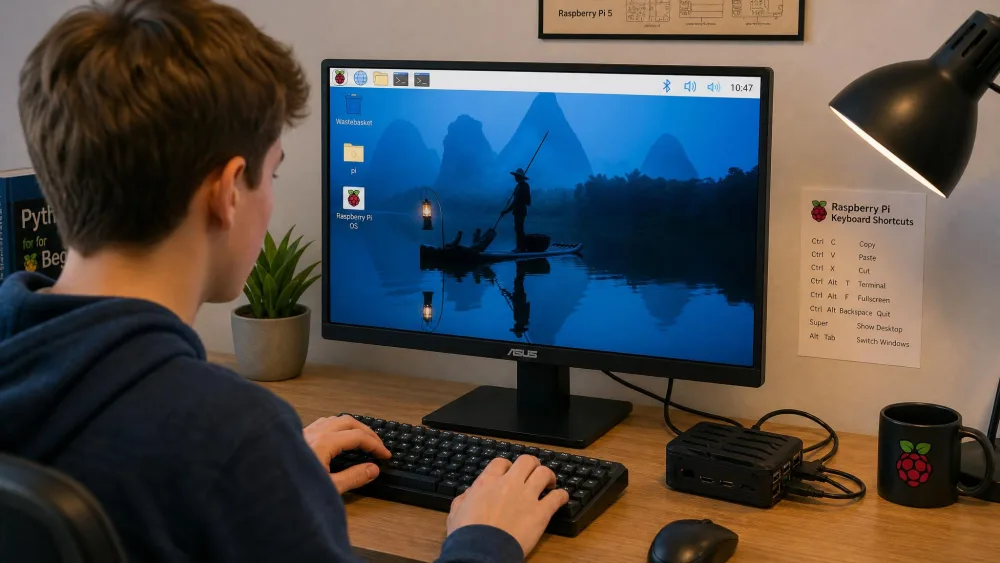
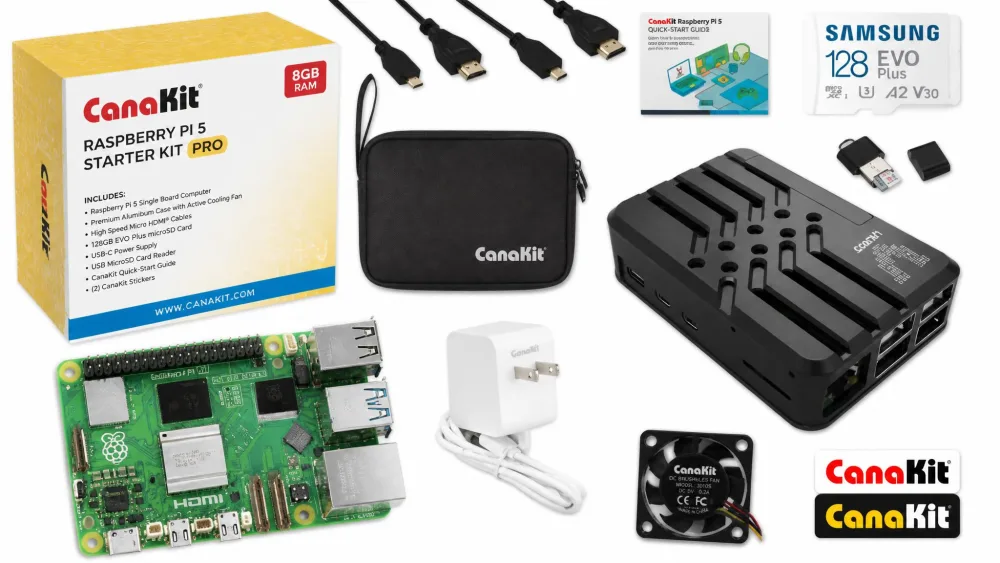
This is where a coding kid stops playing with coding toys. The kit pairs a Raspberry Pi 5 running a 2.4GHz 64-bit quad-core CPU and 8GB RAM with a 128GB microSD card preloaded with 64-bit Raspberry Pi OS, plus case, cooling, power supply and a card reader. It runs Python, Scratch and standard Linux tooling.
What to Know
It arrives complete and boots straight off the preloaded card, which is the main reason to buy a kit rather than parts. The glossy case and the power button are the usual gripes. At $259.95 it is a real computer, so treat it as one and expect to sit alongside for the first evening.
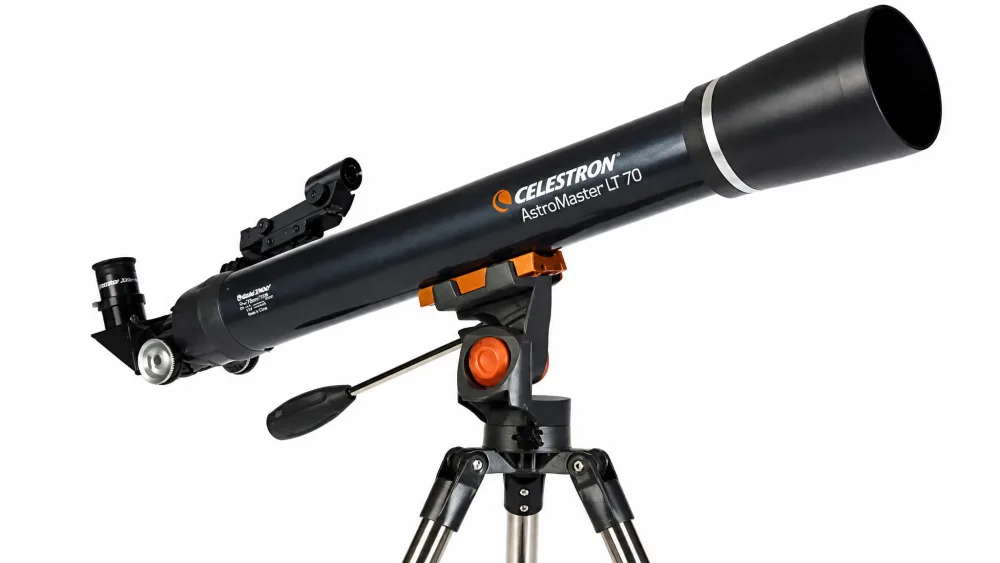
19. Celestron AstroMaster 70AZ — Best Astronomy Pick

What You'll Actually See
A 70mm fully coated achromatic refractor on a manual alt-azimuth mount, which is the smallest telescope worth owning. The first-night targets that actually deliver are Jupiter's moons and Saturn's rings. Stars stay points of light, so say that out loud before the first look or you will get a disappointed kid.
Getting It Outside
It assembles from a few key parts with no tools on an adjustable tripod, and it goes from box to backyard in about 15 minutes. It also works in daylight on landscapes, so it does not sit idle between clear nights. Pricing is inconsistent, since the listing often shows no price and moves between sellers.
20. Makeblock mBot2 Rover — Best Splurge
Why We Picked It
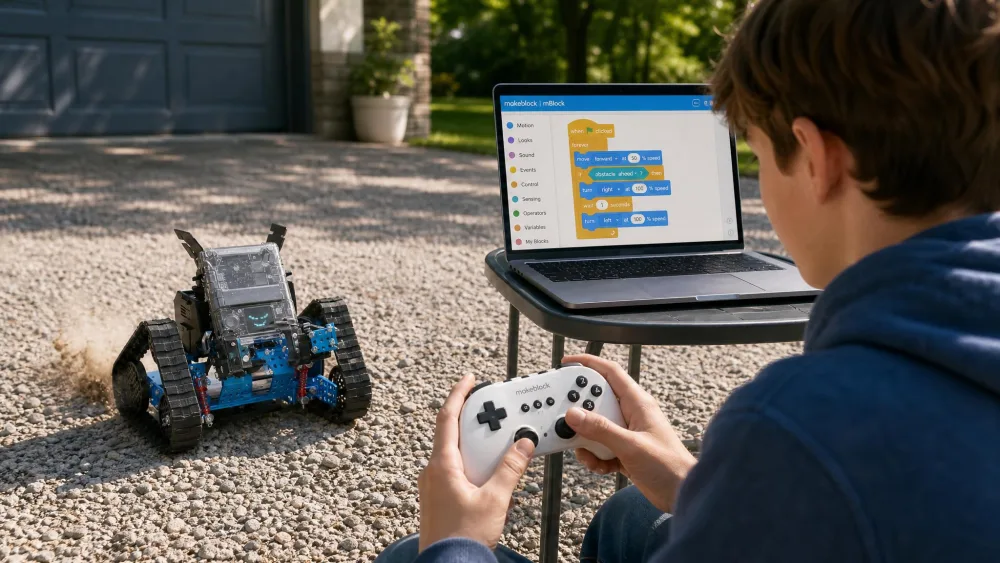
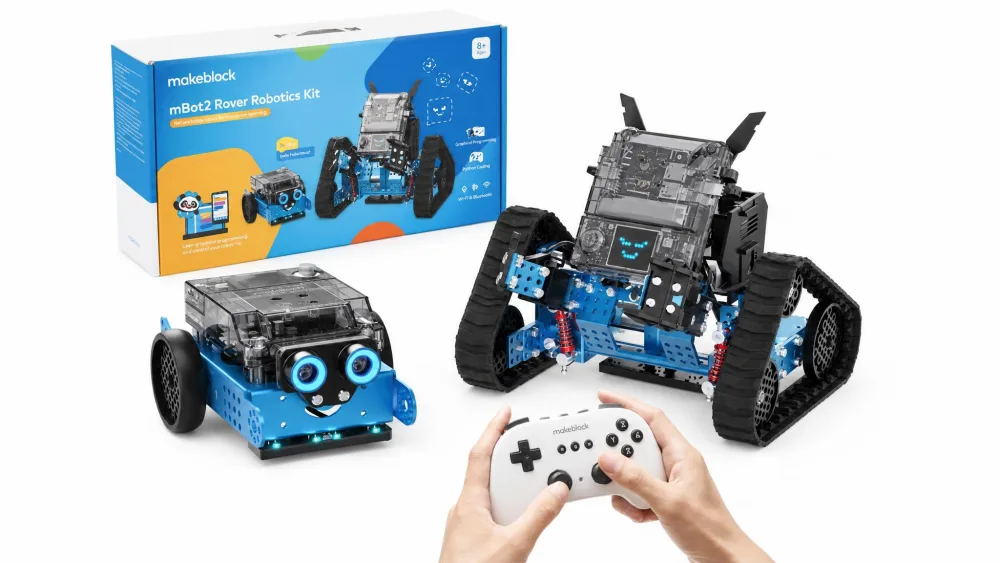
A two-stage build labeled 8-12: it assembles as an mBot2 first, then converts into the larger all-terrain Rover, so one purchase covers two projects. It handles voice and gesture interaction, dance and music routines, and block coding that steps up into Python. Kids who build it start coding it the same day, and coding camps re-buy it year after year.
What to Know
Assembly runs around 40 minutes, depending on how much adult help is on hand. The software path trips adults first: Bluetooth connects through the browser rather than the tablet app, and the app does not work on Fire tablets. Check your hardware before it becomes a birthday morning problem.
NoteThe build is the straightforward half. The time families lose goes to working out that the tablet is never going to connect, and that the laptop browser will.
STEM Toys Compared: Age, STEM Area, and Price
| Product | Age range | STEM area | Price band | Screen-free? | Best for |
|---|---|---|---|---|---|
| Design & Drill Activity Center | 3+ | E | $$ | Yes | Preschool fine motor and first tools |
| MAGNA-TILES Classic 100-Piece | 3+ | E | $$$$ | Yes | Open-ended magnetic building |
| Code & Go Robot Mouse | 4+ | T | $$ | Yes | First coding, no screen |
| MathLink Cubes (100) | 5+ | M | $ | Yes | Counting, grouping, early addition |
| Stomp Rocket Jr | 3+ | S | $ | Yes | Outdoor force and gravity |
| LEGO DUPLO Classic Brick Box 10913 | 18 months+ | E | $$ | Yes | Toddler open-ended building |
| Osmo Genius Kit | 6-10 | M/T | $$ | No (iPad) | Hands-on tablet learning |
| Snap Circuits Jr. SC-100 | 8+ | T/E | $$ | Yes | First real circuits |
| GraviTrax Starter Set | 8+ | E/S | $$$ | Yes | Marble-run physics |
| Sphero Mini | 8+ | T | $$ | No (app) | Block-to-text coding |
| ThinkFun Rush Hour | 8+ | M | $$ | Yes | Sequential logic |
| NatGeo Earth Science Kit | 8-12 | S | $$ | Yes | First science experiments |
| ThinkFun Gravity Maze | 8-12 | E/M | $$ | Yes | Spatial reasoning game |
| Chem C1000 (V 2.0) | 10+ | S | $$$ | Yes | Real beginner chemistry |
| AmScope M30-ABS-KT2-W | 10+ | S | $$ | Yes | Microscopy at 120X-1200X |
| Makeblock mBot | 8-12 | T/E | $$$ | No (app) | Build-and-code robotics |
| T&K Bridges & Skyscrapers | 8+ | E | $$ | Yes | Structural engineering |
| CanaKit Raspberry Pi 5 PRO | 12+ | T | $$$$ | No | Real Linux and Python |
| Celestron AstroMaster 70AZ | 10+ | S | $$$ | Yes | Moon and planet viewing |
| Makeblock mBot2 Rover | 8-12 | T/E | $$$$ | No (app) | Robotics that grows into Python |
What Are STEM Toys (and Do They Actually Work)?
Every pick above earned its slot on the same test, so it is worth stating the test plainly. A STEM toy is one where science, technology, engineering or math is the mechanism of the play rather than a decoration on it. A marble run teaches gravity because gravity is what makes it work. A talking robot that recites facts about gravity teaches nothing, because the child is a listener.
The research on play backs the distinction more than it backs any particular product. Reviews of what research says about toys and play consistently favor open-ended materials that a child controls, over toys that run a script while the child watches.
The useful question is not what the toy teaches. It is what the child has to do to make the toy work.
That test sorts this list quickly. Magna-Tiles, DUPLO and MathLink Cubes ask a child to invent the whole activity. Snap Circuits, GraviTrax and Chem C1000 give a structured path with room to go off it. Rush Hour and Gravity Maze hand over a problem and refuse to help. All of them build problem-solving and critical thinking the same way, by making the child do the work and letting the result be visibly wrong.
How to Choose the Right STEM Toy
Knowing what counts as a STEM toy still leaves the harder question of which one belongs in your house, and that comes down to four things: the child's skill, the category your shelf is missing, how much structure the play needs, and what happens in year three.
Match the Toy to Your Child's Age and Skill Level
Buy for the skill, not the birthday. A child who reads well and follows diagrams can run Snap Circuits years before the label says so, while a child who finds written steps hard will do better with something open-ended like magnetic tiles. Reading ability and fine motor strength predict success here far better than age.
Parent tipThe best predictor of whether a STEM toy gets used is not its STEM category. It is whether it matches something your child is already into. A kid obsessed with the moon will stay with a telescope through three cold nights. The same kid will abandon a chemistry set in a week, no matter how good the set is.
Pick the Right STEM Category: Science, Tech, Engineering, or Math
Most households over-buy engineering, because building sets are the most visible category, and under-buy math and technology. If you already own two building sets, the gap is probably counting manipulatives or a coding toy. The topic breakdown in the NGSS science standards is a useful map of what a child covers at each grade, and a quick way to spot which area your shelf is missing.
Open-Ended vs. Instruction-Led Play
Open-ended sets last longer but need a starting push, and instruction-led kits deliver a result on day one and then need a reason to continue. Most families want one of each. The instruction-led kit gets a child to a finished thing before their patience runs out, and the open-ended set is what they reach for on a rainy Saturday six months later.
Safety, Durability, and Small Parts
Watch outAnything with small parts is a choking risk for kids under three, and several picks here contain marbles, cubes or loose bolts. Chemistry sets and telescopes belong to adult-supervised sessions, not solo play, and button-cell batteries should never be in reach of a toddler.
Durability is worth its own thought, because failure is rarely total. Across these picks it is almost always one component that gives out: a drill motor, a foam rocket, a mirror assembly, a track piece. Ask what the weak link is before you buy, and whether it is replaceable.
Replay Value and Room to Grow
The best value on this list is not the cheapest item. It is whatever still gets used in year three. Sets that expand, like Magna-Tiles, GraviTrax and DUPLO, keep earning their place because new pieces make old pieces more useful. Coding toys that scale from block coding to text, like Sphero Mini and the mBot line, do the same thing with skill instead of parts.
Frequently Asked Questions
What age should kids start playing with STEM toys?
Around 18 months, with something like DUPLO bricks or a stacking set. Formal kits with instructions do not land until about age five or six. Before that, the goal is open-ended building and hands-on problem-solving, not lessons. Follow the child's fine motor skills rather than a target age.
What's the difference between a STEM toy and a regular educational toy?
You can usually tell from the listing page before you buy. Look at the product photos and ask what the child's hands are doing: if the pictured kid is holding, placing or assembling something, that is a good sign, and if they are sitting back watching the toy perform, that is the other kind. Then read the feature bullets for what the toy does versus what the child does. Bullets full of sounds, lights, phrases and modes describe a performance; bullets that count pieces, challenges, builds or experiments describe work the child has to do.
Are expensive STEM toys worth it?
It depends entirely on what the extra money buys. Spend up on sets that expand or scale in skill, because a bigger magnetic tile collection or a robot that grows from blocks into text keeps returning value for years. Do not spend up on a single-outcome kit, where the higher price mostly buys one more finished object. A pricey kit that is used twice is worse value than a cheap one used weekly.
What skills do STEM toys actually build?
Sequencing and planning from coding toys, spatial reasoning from building sets and marble runs, number sense from counting manipulatives, and cause-and-effect reasoning from circuits and science kits. Underneath all of them sits the same real-world habit: try something, watch it fail visibly, and revise it.
How do I get a screen-loving kid interested in STEM toys?
Start with the bridge products rather than a cold switch. A coding robot or a tablet-based kit like Osmo keeps the screen in the picture while the hands do the work. Then build on whatever they already love from games: building, strategy, or problem-solving under pressure.
Do STEM toys need adult supervision?
It depends on the pick. Chemistry sets, telescopes and anything with small parts near a toddler need an adult present. Most building sets, logic games and counting manipulatives are independent play. Coding kits usually need a parent once, at the app or Bluetooth setup step, and then run on their own.
Final Verdict: Our Top STEM Toy Picks
If you buy one thing from this list, buy the MAGNA-TILES Classic 100-Piece, because it is the set that survives a decade of daily use and never needs a manual. For elementary kids, Snap Circuits Jr. SC-100 is the pick that turns a solo activity into a household one, since older siblings and adults end up on the floor building projects that were meant for the eight-year-old.
For the marble-run and physics slot, the GraviTrax Starter Set is the one with real engineering behind it and years of expansion ahead of it. On a tight budget, a set of MathLink Cubes at $8.49 does more per dollar for early math than anything else we own, and the Stomp Rocket Jr gets everyone outside for the price of lunch.
For tweens, Chem C1000 is the only beginner chemistry set here built to a real safety standard, and the Makeblock mBot2 Rover is the splurge that keeps paying, because block coding turns into Python inside the same robot. Whichever way you go, buy for the child in front of you rather than the label on the box, and pick the toy they will pull off the shelf without being asked.