7 Best Volcano Kits for Kids, Picked by Age and Mess Level
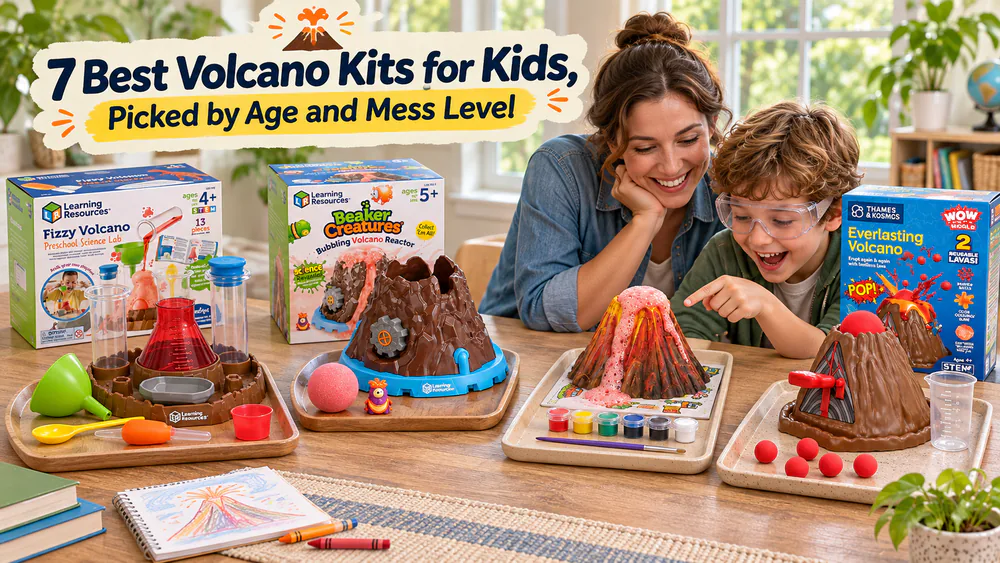
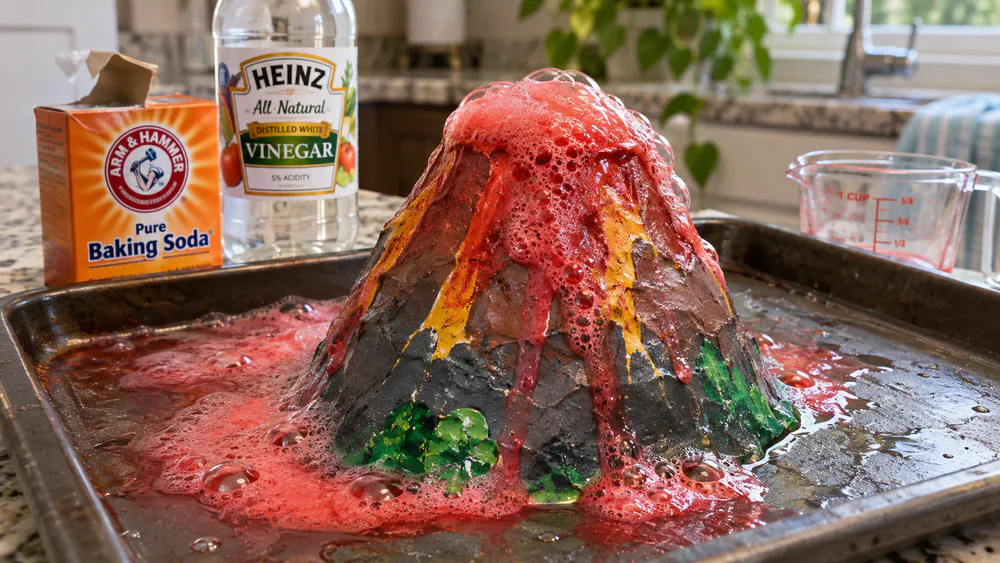
Our plaster volcano did not erupt on the day we mixed it. The plaster had to set and dry before we could paint it, then the paint needed to dry too. That pushed the eruption to day two. The wait was the hardest part for the kids, but once red lava spilled onto our baking sheet, the eruption became everyone's favorite part.
A good volcano kit gives kids a hands-on reason to ask why the foam rises, plus a volcano they can erupt again. We sorted these seven picks by age, eruptions and extra experiments, mess and cleanup.
Our Top Volcano Kit Picks at a Glance
The biggest split is between plaster builds, which take a day or more, and pre-made volcanoes that fizz within minutes.
| Kit | Best for (ages) | Kit type | Eruptions/experiments | Mess level |
|---|---|---|---|---|
| National Geographic Ultimate Volcano Kit | Best overall (8-12) | Plaster build | 3x eruption powder | High |
| Learning Resources Fizzy Volcano | Best for preschoolers (4+) | Pre-made reusable | 10 experiments | Low |
| 4M KidzLabs Volcano Making Kit | Best budget build-and-paint kit (8+) | Plaster build | Repeat vinegar eruptions | Medium-high |
| National Geographic Earth Science Kit | Best for kids who want more than volcanoes (8-12) | Multi-experiment | 15+ activities | Medium |
| National Geographic Jumbo Volcano Science Kit | Best for science fair projects (8-12) | Jumbo plaster build | 3 eruption-powder packets | High |
| Learning Resources Beaker Creatures Bubbling Volcano Reactor | Best for young collectors (5+) | Pre-made reusable | 5 experiments | Medium |
| Wow in the World Everlasting Volcano | Best reusable volcano (4+) | Pre-made reusable | 3 eruption types | Medium |
1. National Geographic Ultimate Volcano Kit: Best Overall
The National Geographic Ultimate Volcano Kit won a NAPPA Award in 2024 and is the most complete build, paint and erupt project here. A real pumice and geode specimen come in the box, though their size and look vary from box to box. You can reuse the mold, but each new volcano needs fresh plaster.
A grown-up handled the plaster in our kitchen and added the water slowly, because a rushed pour can leave a volcano that never sets properly. The plaster set in about 45 minutes, and a couple of hours in a low oven (around 200F) dried it enough to paint that afternoon. The tempera paint took a long time to dry, which pushed our eruption to the next day. With an adult on plaster duty, kids as young as 4 or 5 happily paint and erupt it.
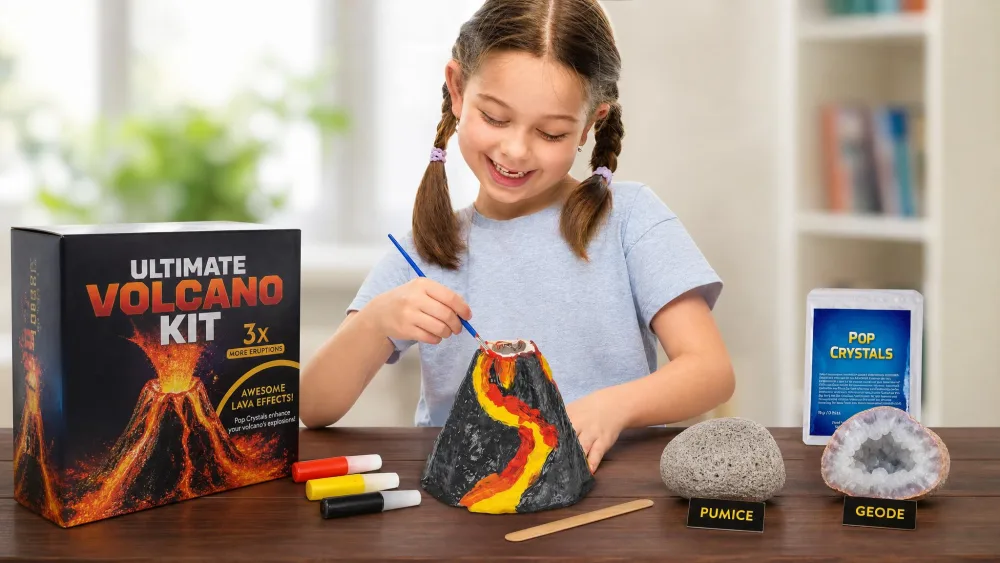
Best for: Kids 8-12, or younger kids with a grown-up mixing the plaster.
Pros
- 3x the eruption powder of the earlier version of the kit
- Keeps erupting with kitchen baking soda and vinegar once the packets run out
Cons
- Pop crystals do not always make a noticeable pop
- The black paint vial runs short
2. Learning Resources Fizzy Volcano: Best for Preschoolers
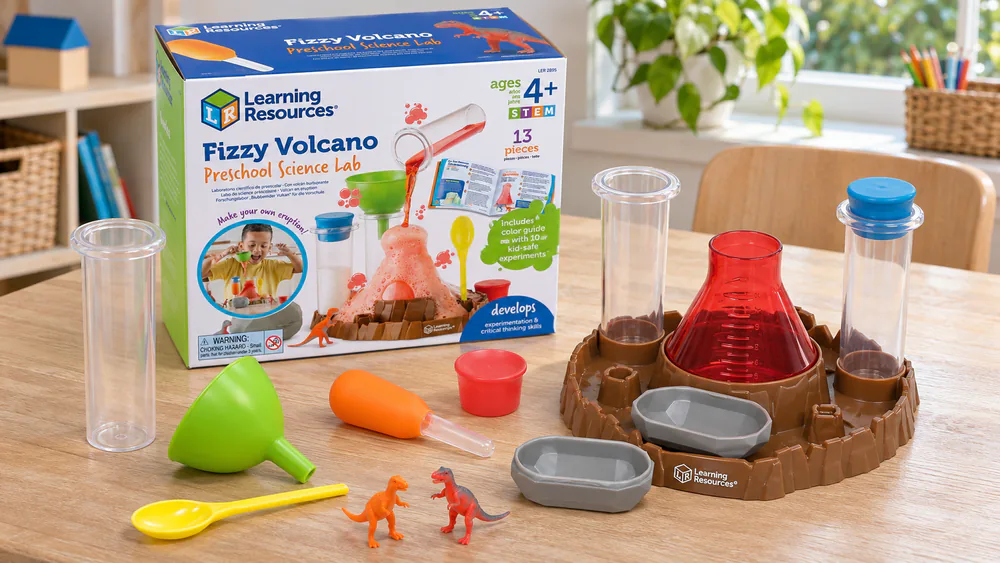
Where the Ultimate kit asks for patience, the Learning Resources Fizzy Volcano fizzes within minutes. The 13-piece, volcano-shaped lab stands 8.5 inches high, stores its kid-sized tools inside and is designed for kids as young as 4.
Pouring in the solution and watching it foam was the favorite job for our four-year-old. The first plain fizz looked small and a little flat, so we added a few drops of food coloring, and after that the requests to make another volcano came again and again. The instructions were simple to follow with a little parent help, and cleanup was quick.
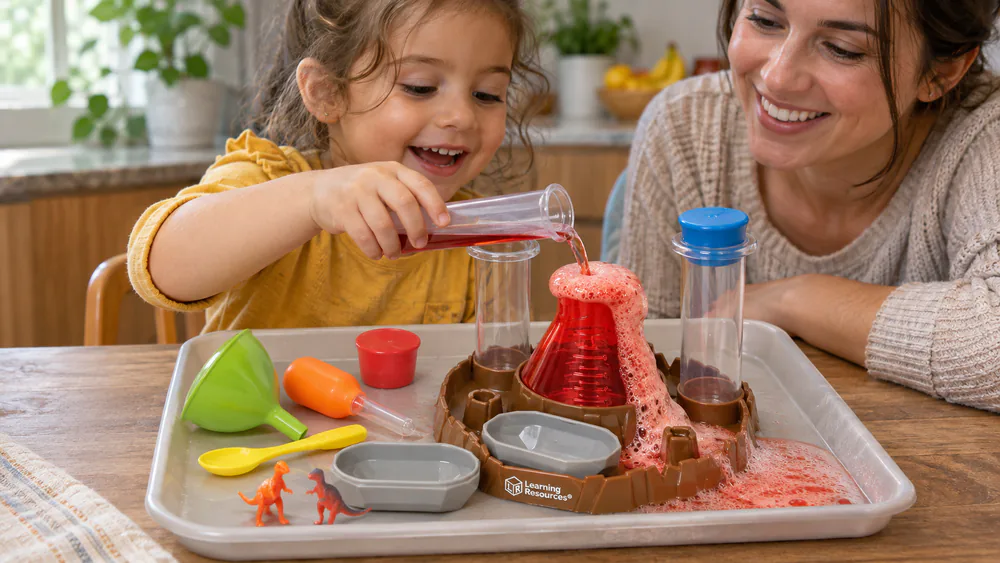
Best for: Preschoolers from age 4 who want their own kid-sized lab tools.
Pros
- Goes past eruptions to slime, storm clouds and a dinosaur fossil
- Sturdy plastic pieces that double as bath and water-play toys
Cons
- Pantry ingredients are not included
- Small parts, so not for children under 3
3. 4M KidzLabs Volcano Making Kit: Best Budget Build-and-Paint Kit
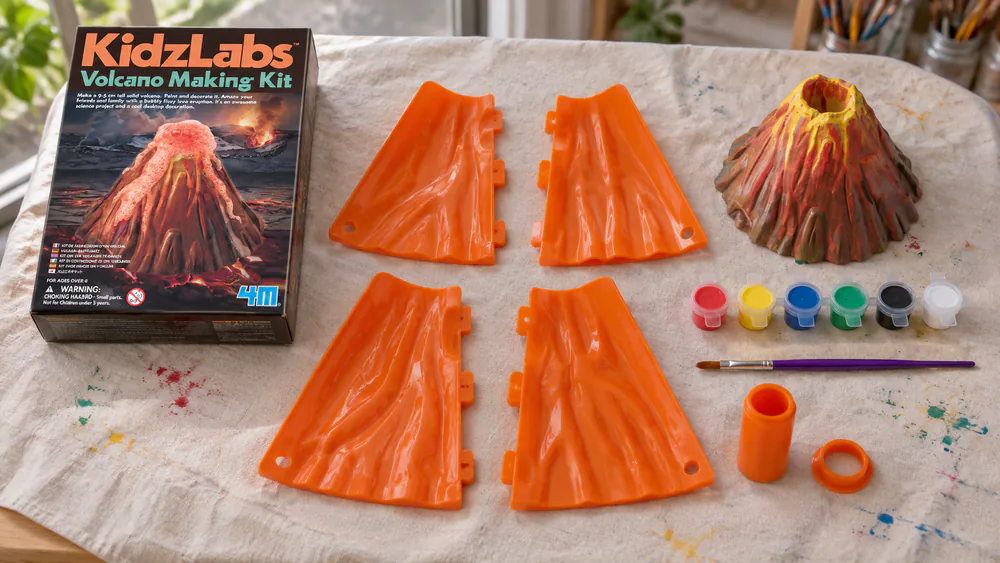
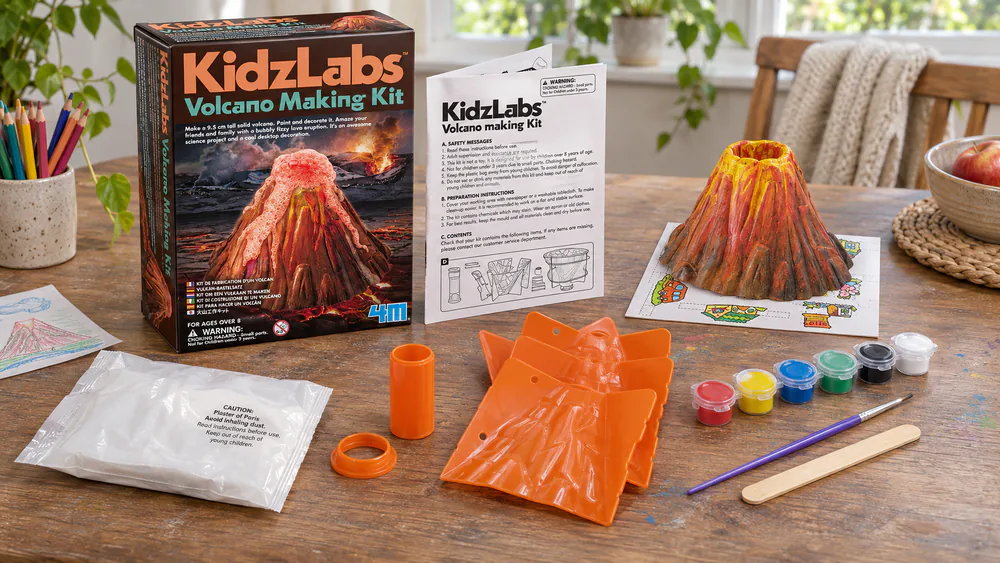
The 4M KidzLabs Volcano Making Kit gives you exactly one volcano's worth of plaster, so it pays to get the pour right the first time. It is recommended for ages 8 and up, and the vinegar and baking soda come from your kitchen.
We set the small plastic eruption chamber in place before pouring, because the instructions are confusing on that step and the chamber is hard to get out afterward. Our second and third graders could mold and paint it on their own, and painting the cone was a highlight for the younger kids too. The chamber gets cast into the plaster, so a pill-bottle-sized container and some craft-store plaster of Paris cover the next build.
Best for: Kids 8 and up who want a small plaster volcano for a class project.
Pros
- Strong, reusable mold of four snap-together panels
- Fast-drying plaster, paint and brush in one small box
Cons
- Mold panels can separate and leak at the seams
- At about 14.5 x 8.5 cm, it suits a desk rather than a big display
4. National Geographic Earth Science Kit: Best for Kids Who Want More Than Volcanoes
If the eruption is only the start of what your child wants, the National Geographic Earth Science Kit gives the volcano plenty of company, for ages 8-12.
The instructions do not show pictures of the components, so we had to guess what a few pieces were until a quick video cleared things up. Once we got going, the crystal growing and the dig kits were what the kids got most absorbed in. The volcano took patience to build and paint, and then the eruption was over quickly, yet it still became a favorite.
Best for: Kids 8-12 who want crystals and digs after the eruption.
Pros
- Crystal growing, dueling water tornadoes and 2 dig kits besides the volcano
- Enough materials to share between siblings
Cons
- Younger kids need a grown-up for much of the assembly
- The water tornado needs two empty soda bottles
5. National Geographic Jumbo Volcano Science Kit: Best for Science Fair Projects
The small stirring spoon snapped in the thick plaster while we built the National Geographic Jumbo Volcano Science Kit, so we finished with a wooden spoon from the kitchen. The plaster stage was very messy, and each layer and the paint needed overnight drying. Once a grown-up had done the building, our preschoolers happily erupted it over and over. A homemade mix of baking soda, vinegar and food coloring gave a bigger lava flow than the packet powder.
Unlike our top pick, this 8-12 kit has kids layer plaster wrap over a frame instead of pouring a mold. Set on a table, the finished volcano stands taller than a tall four-year-old, a real science fair showpiece, and the box adds a geode and a piece of pumice. Open it well before a deadline, because a box can arrive missing frame pieces.
Best for: Kids 8-12 with a few days to give one big project.
Pros
- The set shell holds up to repeated eruptions
- Recipes for extra eruptions with household materials
Cons
- Plaster can run short of covering the whole frame
- Thin plaster spots can crack
6. Learning Resources Beaker Creatures Bubbling Volcano Reactor: Best for Young Collectors
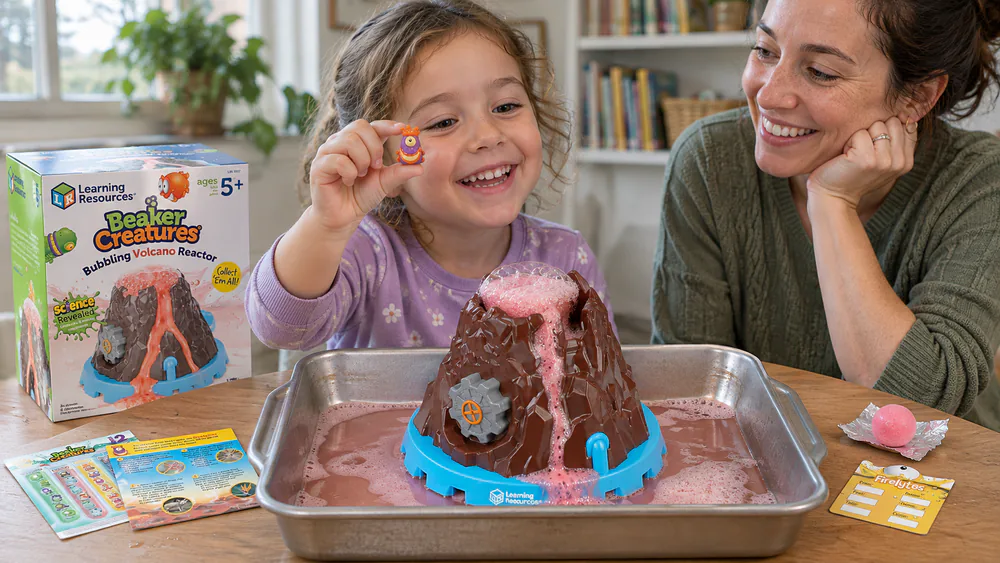
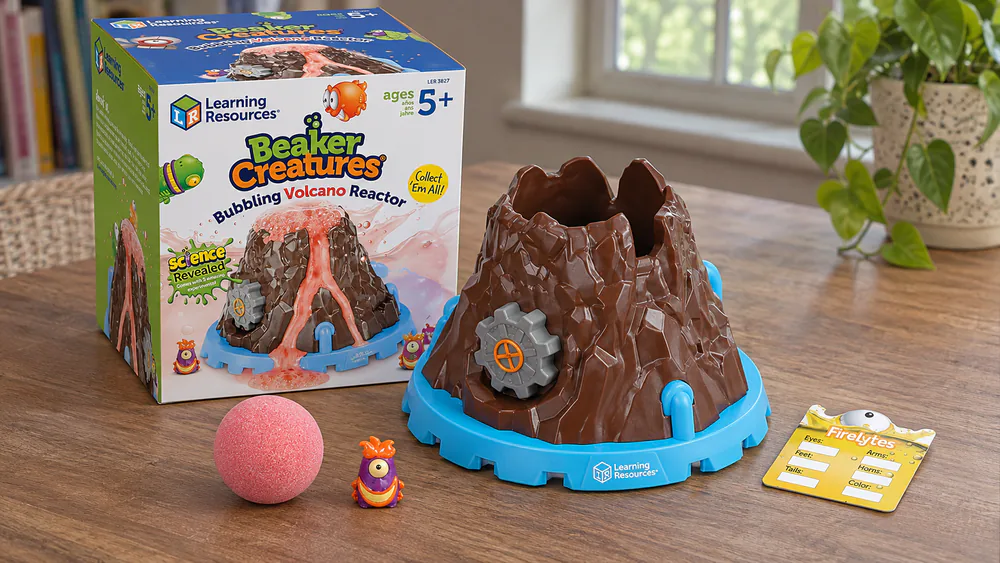
The best moment with the Learning Resources Beaker Creatures Bubbling Volcano Reactor comes after the fizz, when a tiny collectible creature turns up in the water. Our kindergarten-age kids loved that reveal as much as the eruption. We set it in a deep baking pan, because the bubbling spread fast. Not every pod performs, though, and one that only tints the water red or orange is a letdown.
It is made for ages 5 and up, and more than 100 creatures exist across the line, which is where the collecting starts.
Best for: Kids 5 and up who want to start a creature collection.
Pros
- Keeps working with baking soda after the pod is used
- A classification card and quiz poster add a little reading
Cons
- Only one Reactor Pod in the box
- Smaller than the box suggests
7. Wow in the World Everlasting Volcano: Best Reusable Volcano
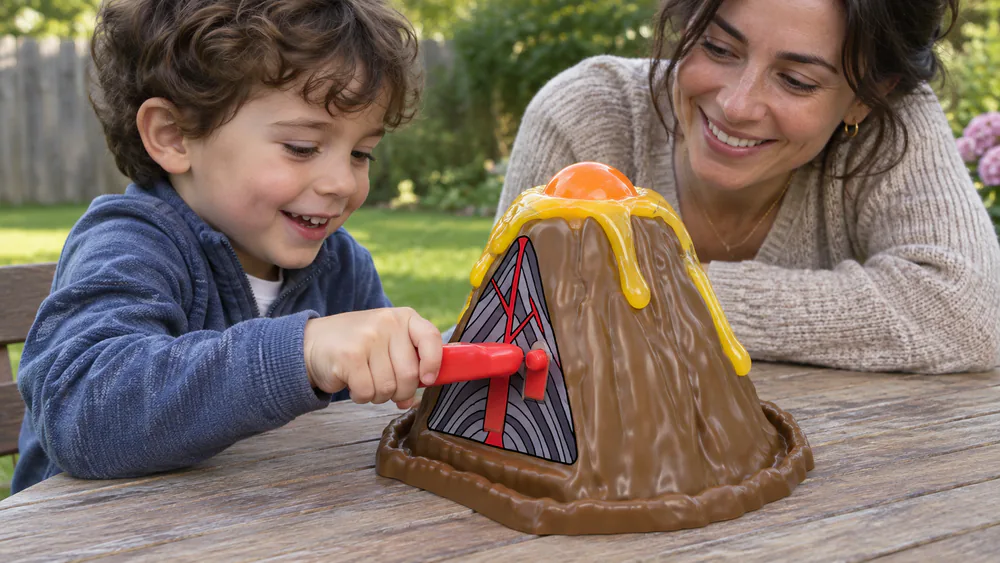
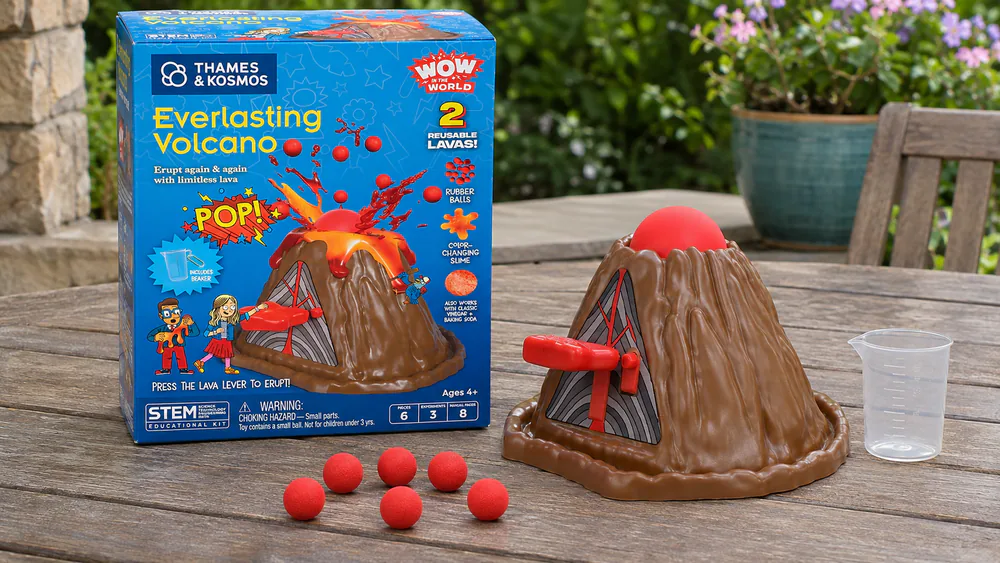
The slime in the Wow in the World Everlasting Volcano oozes down the sides instead of shooting up. The kids hoping for a blast switched to vinegar and baking soda. The rubber lava-rock balls rolled under the furniture, but they wiped clean and went right back in. After a grown-up handled the first setup, our preschoolers worked the lava lever themselves.
Thames & Kosmos makes it for ages 4 and up. The lever needs no batteries, and the 8-page guide links to podcast audio by QR code.
Best for: Kids 4 and up who want repeat eruptions with no plaster.
Pros
- A lip around the base keeps the kitchen-style eruption tidier than a homemade volcano
- No plaster or drying time before the first eruption
Cons
- Sticky slime clings to everything, so slime days are best outside
- Slime comes out watery unless it is mixed first
How to Choose a Volcano Kit for Your Child
Match the kit to your child's age
Preschoolers do best with a pre-made volcano they can pour into right away. Plaster builds are labeled 8 and up, because mixing plaster and waiting for it to dry asks a lot of a younger child.
Count the eruptions and extra experiments
A reusable mold or plastic volcano keeps erupting with kitchen supplies after the first packet, and extras like crystal growing keep kids engaged afterward.
Check what's included (and what you'll need from the kitchen)
Most volcano kits need baking soda, vinegar, dish soap or food coloring from the kitchen, so check the pantry before eruption day.
Plan for the mess and adult supervision
Colored lava spills over the sides, so have the kids wear play clothes and set the volcano on a baking sheet. Plaster builds need an adult for the mixing and can stretch over two or three days.
Watch outSupervise every eruption and keep vinegar and eruption powders away from eyes; safety glasses help for kids leaning in close. Several kits contain small parts and are not for children under 3.
How a Volcano Kit Eruption Works
A kit volcano runs on a chemical reaction. Baking soda and vinegar react to form sodium acetate, water and carbon dioxide gas, and those gas bubbles push the foam up and out of the crater. A squirt of dish soap traps more bubbles, which is why it makes the lava foamier.
A real eruption is very different. Molten rock rises from underground, and its gases expand as the pressure drops, pushing lava and ash out of the vent. The Smithsonian's Global Volcanism Program keeps records on volcanoes worldwide.
NoteKeep the lesson going with a free volcano activity sheet from the University of Alaska Museum of the North or these volcano facts for kids.
Volcano Kit FAQs
What age is a volcano kit good for?
Start with the age guide above. For mixed-age siblings, split the jobs before you open the box: the older child builds and paints, and the younger one pours in the eruption ingredients. That also heads off the squabble over who gets the best part.
Are volcano kits safe for kids to use alone?
Keep an adult nearby. Plaster warms up as it sets, which is normal, so warn kids before they touch the mold. Kits with small parts are not for children under 3.
How many times can you erupt a volcano kit?
No kit states a number, so your pantry is the real limit. With the 4M kit, a little more baking soda than the instructions call for, plus red paint and liquid soap, gave us a bigger red flow than food coloring alone.
Is a volcano kit worth it over a DIY kitchen volcano?
A kitchen volcano teaches the same reaction, but a kit adds a sturdy volcano to reuse and a guide that explains the science.
Final Thoughts on the Best Volcano Kit for Kids
The right kit depends on how much patience your child has for the build.