Best Telescopes for Kids 2026: Age-by-Age Guide (Ages 5-14)

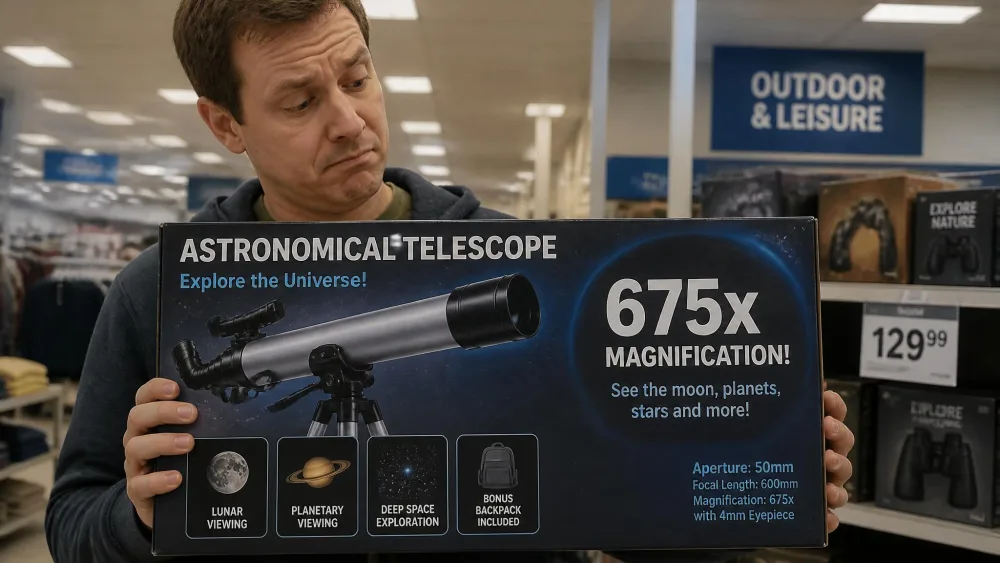
Most first telescopes disappoint the child who unwraps them. The box promises 675x magnification and a poster-sized Saturn, and then the tripod wobbles, the finderscope will not line up, and the eyepiece shows a smear of grey. That gap between the picture on the carton and the view through the glass sours kids on stargazing before they ever see a crater edge.
The fix is not spending more. It is matching the telescope to the age of the child holding it, because a five-year-old and a thirteen-year-old need almost opposite things from the same hobby. One needs a target bright enough to find in five seconds and a body light enough to carry. The other wants a mount that will track a planet while they sketch it.
We picked these eight scopes by aperture, mount stability, setup time and what a child can realistically find alone. The next section spells out exactly how that shook out.
Quick Picks: Best Kids' Telescope at a Glance
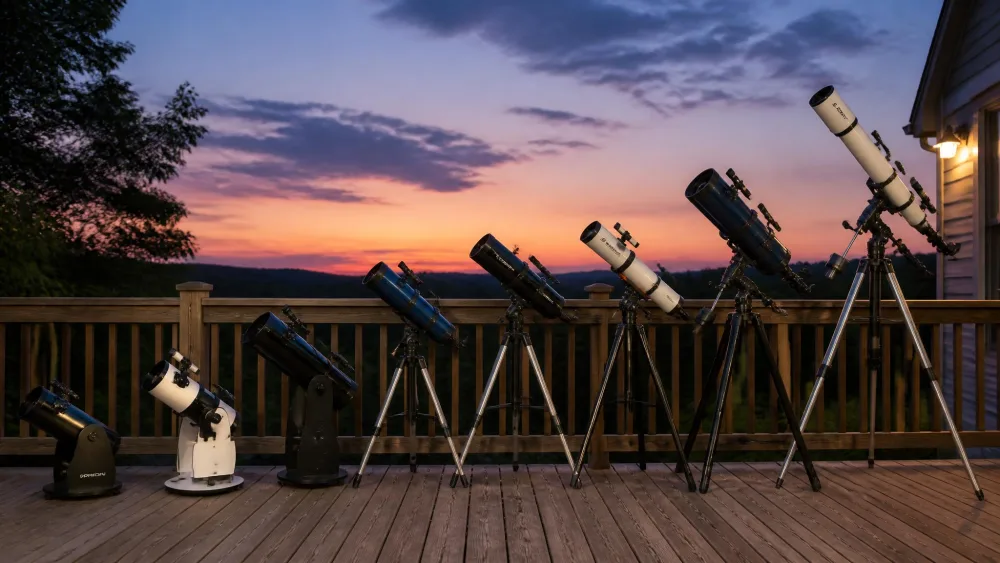
Our quick picks
How We Chose These Telescopes
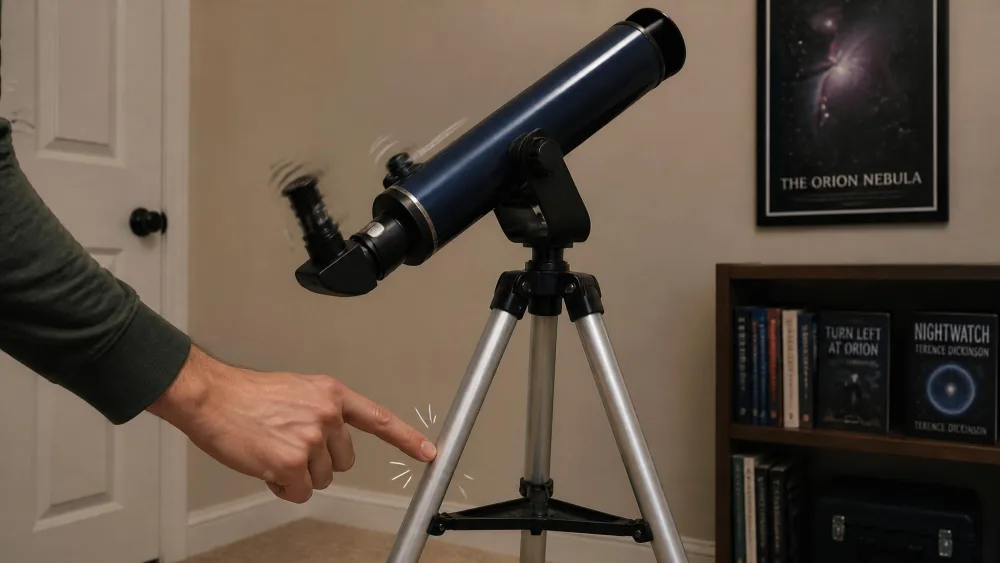
We started from the age bands rather than the brands, because a telescope a thirteen-year-old will love is often the exact scope that makes a six-year-old give up. Aperture came first, since it sets the ceiling on what a child can ever see, and magnification claims were ignored entirely. Mount stability came second, and it carried more weight than optics on every pick under $150. A wobbling tripod is the most common reason a child stops using a telescope at all.
Setup time came third, so we looked for tool-free assembly and counted the steps a child could finish alone, which is why the fifteen-minute AstroMaster and the finder-only Heritage rank where they do. After that we checked the things vendors never advertise. Does collimation come up before every session? Do the supplied eyepieces cap the view? Does the frame survive a knock off a table? Price bands were set per age group rather than across the whole list, and we read the failure reports rather than the highlights.
Best Telescopes for Ages 5-7 (First Scopes)
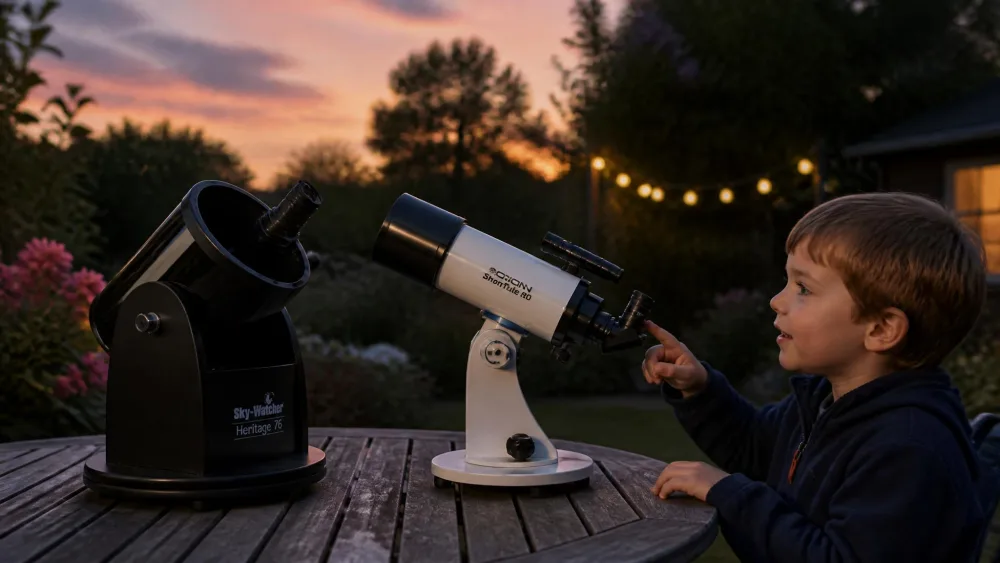
At this age the telescope has to survive being grabbed, and the target has to be bright enough to find in seconds, which in practice means the Moon and nothing else. Tabletop scopes win here because there is no tripod to fight and no height to adjust, so the whole session is about looking rather than assembling. Budget accordingly: under $75 buys everything a child this age can use well.
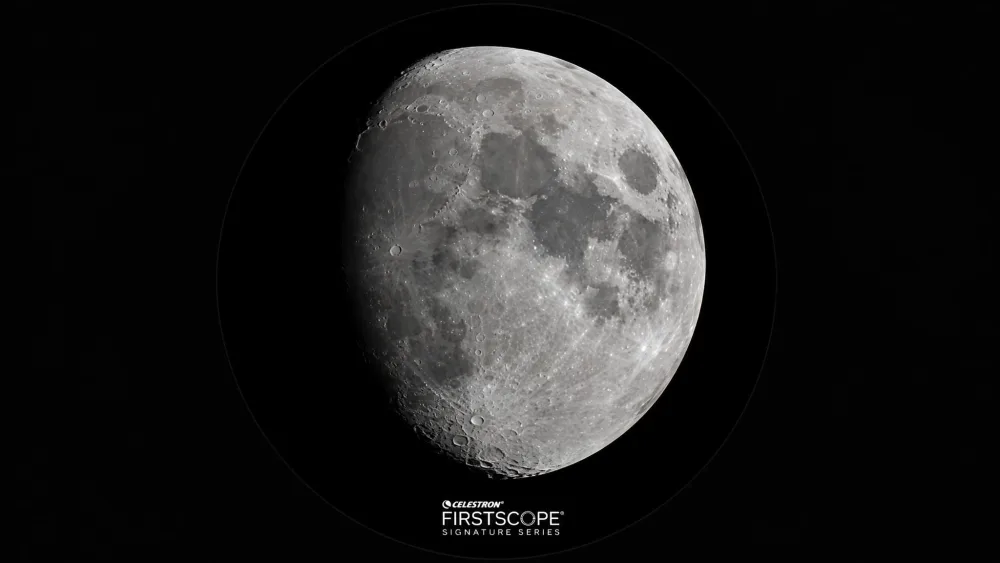
1. Celestron FirstScope Signature Series Moon - Best Overall for Young Kids
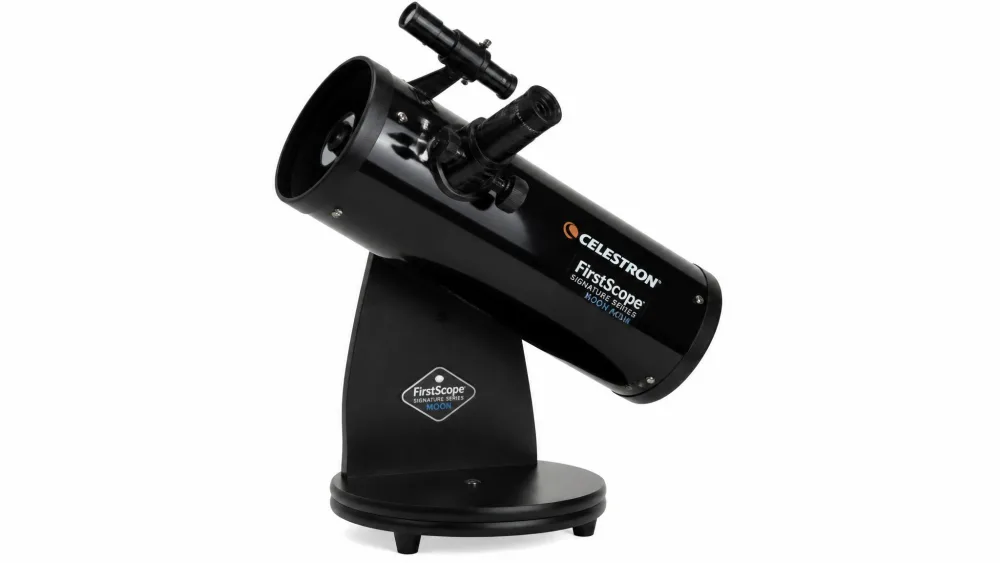
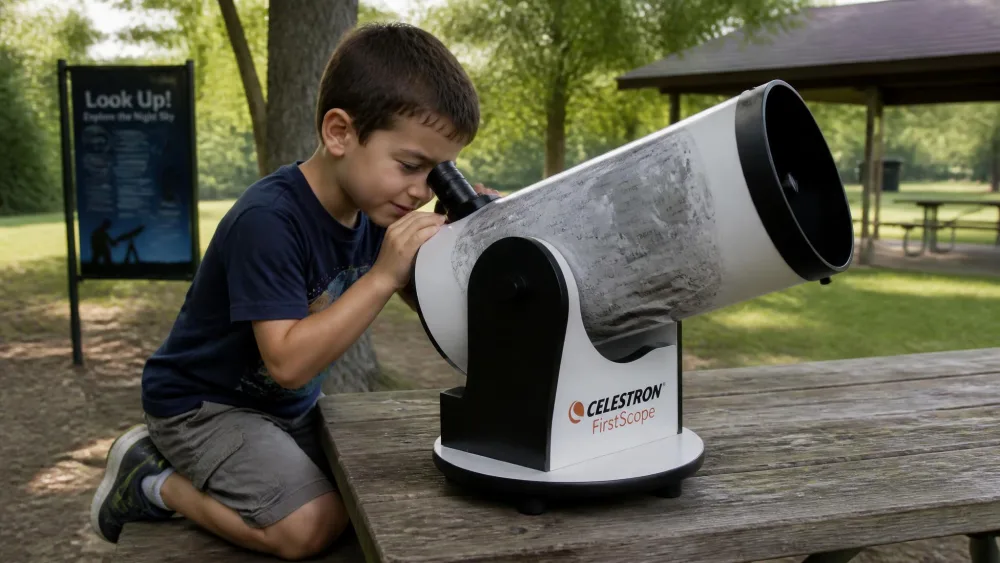
This is a 76mm Newtonian tabletop Dobsonian with a 300mm focal length, and the whole kit weighs 4.3 lbs. It sits in a lap or on a picnic table, and a small child can look straight up through the eyepiece without wrestling a tripod.
Picture the first clear evening. The tube is wrapped in a printed Moon map with named lunar features, and the same names appear on the base. A child looks, then points at the wrap, then reads out the name of the crater they have just found. That is exactly the right activity for a six-year-old who cannot yet read a star chart, because the answer to "what am I looking at" is printed an inch from their hand.
Be honest about the limits. Finding planets with it is genuinely hard for a seven-year-old, and the close-up view falls short of what the box picture suggests. The supplied 20mm and 4mm eyepieces give 15x and 75x, and they are the weak point, so a wide-angle eyepiece bought later transforms the view more than anything else you can do to it.
It runs $69.99 on Amazon against a $74.95 Celestron list price, and prices move with promotions and sellers. Celestron backs it with a 2-year US warranty.
Check price: Celestron FirstScope Signature Series Moon
Pros
- Light enough at 4.3 lbs for a child to carry outside alone
- Printed Moon map on the tube names what they are looking at
- No tripod, no assembly, no height to adjust
Cons
- Planets are hard for a young child to locate
- Bundled 4mm eyepiece is the limiting part of the view
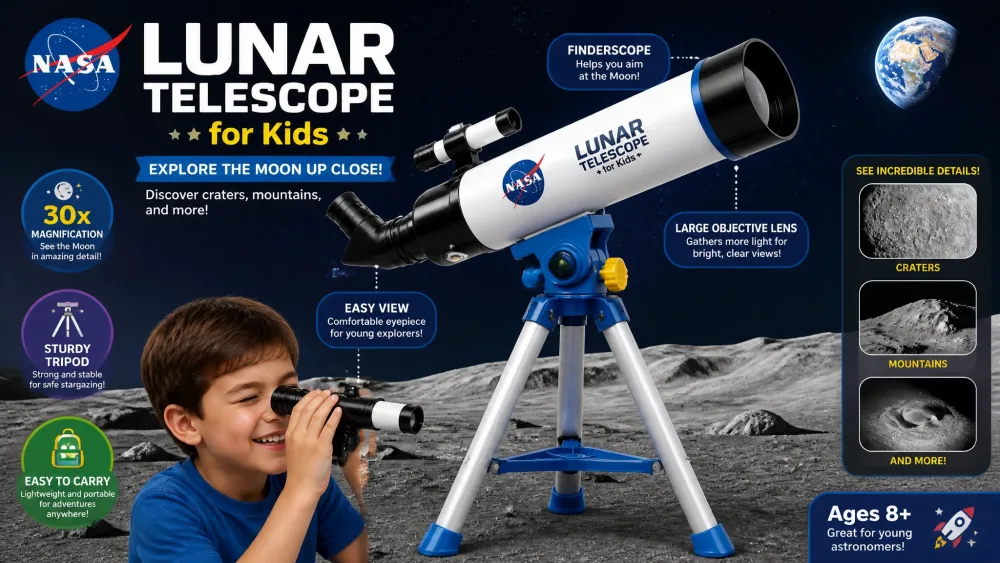
2. NASA Lunar Telescope for Kids - Best Under $60
Two cautions matter more than the price here. The frame is light enough that a knock off a table breaks it, so this scope wants a permanent spot on a low table rather than a shelf it gets lifted down from.
The second caution shapes the first night. A young child leans in, the scope is aimed straight at a bright Moon, and they still report seeing nothing. Children under seven struggle to place their eye well enough on the eyepiece to get an image at all, so an adult ends up finding the target and holding the scope steady while the child takes a turn. That is why we treat this as the tail end of the 5-7 band rather than the start of it. The maker markets it for ages 8-12.
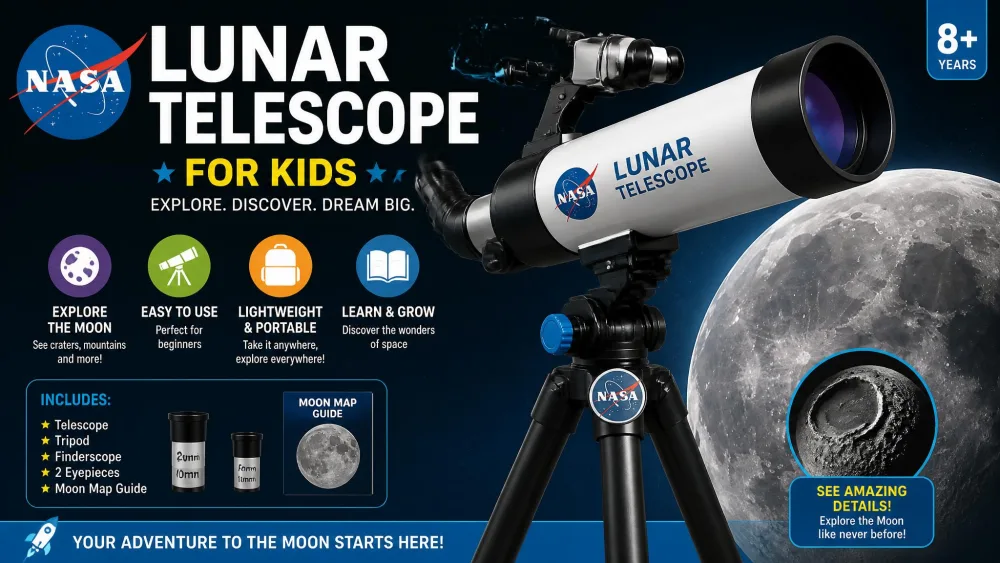
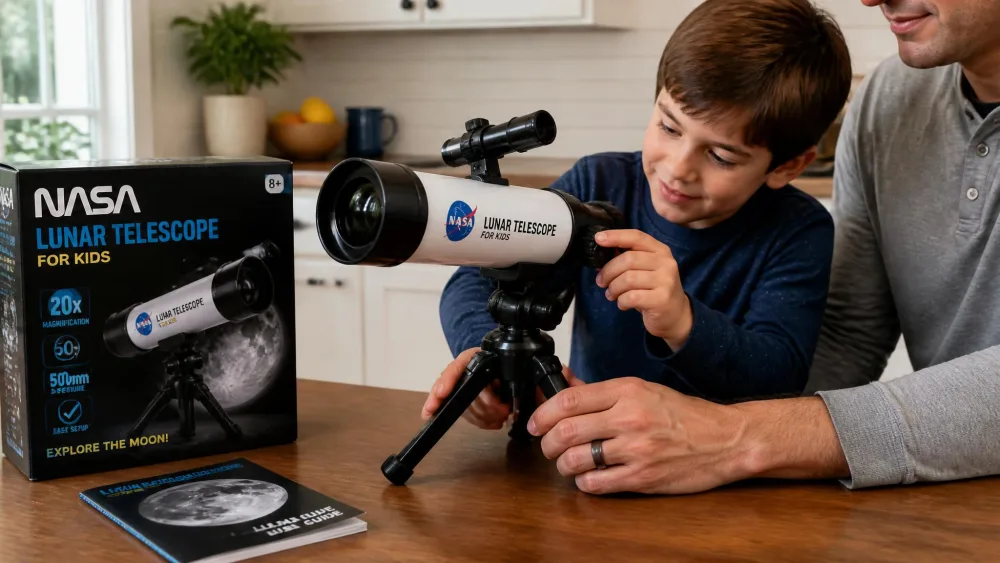
With that said, at $44.99 it is the cheapest scope on the list that still shows real lunar detail. It reaches 90x maximum magnification with two eyepieces, and it ships with a finder scope and a tabletop tripod on a smooth alt-azimuth mount that a child can steer with one hand.
Assembly is easy but slow. Once it is together the Moon comes through clearly, while anything fainter is fiddly to focus and sometimes will not lock in at all.
Check price: NASA Lunar Telescope for Kids
Pros
- Real Moon views for under $50
- Smooth alt-azimuth tabletop mount a child can steer
- Finder scope plus low-power and high-power eyepieces included
Cons
- Light frame breaks if it falls off a table
- Faint targets are difficult to bring into focus
Best Telescopes for Ages 8-10 (Real Astronomy Starts)
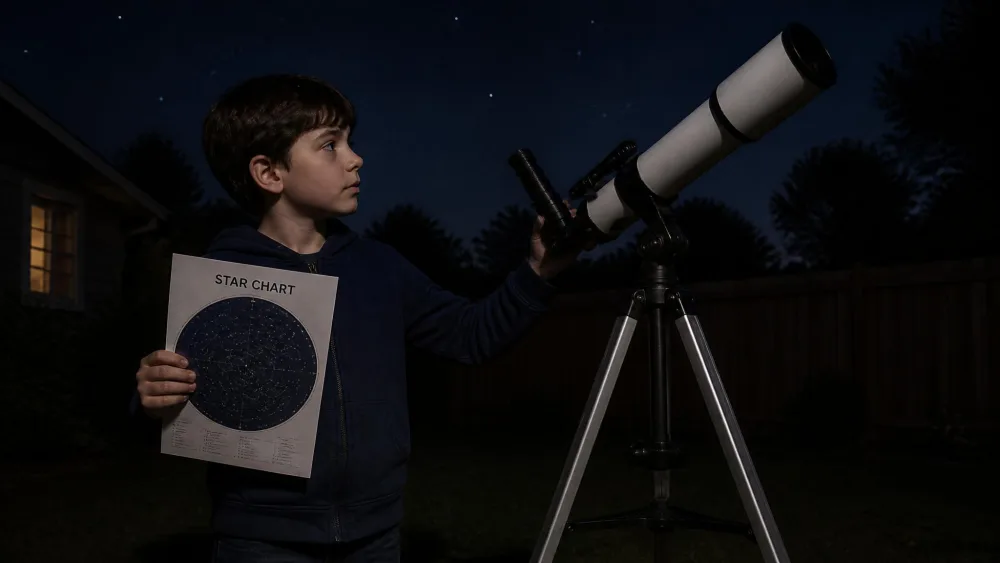
This is the band where a child can align a finderscope, read a simple star map and stay outside long enough for their eyes to adapt, so aperture finally starts paying for itself. Expect to spend $100 to $300. Below that the mount is usually the thing that fails first, and it takes the child's interest with it.
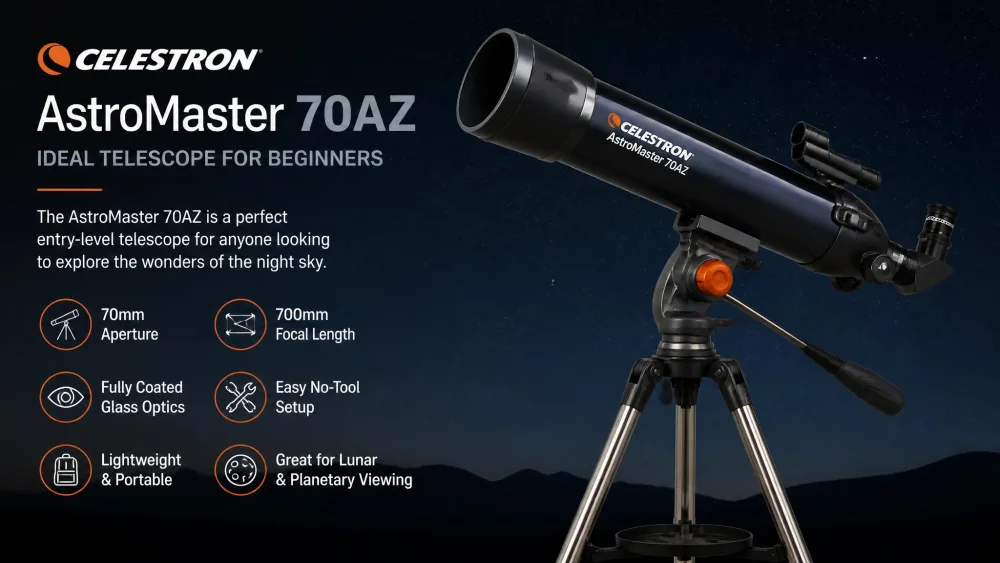
3. Celestron AstroMaster 70AZ - Best Overall for Kids
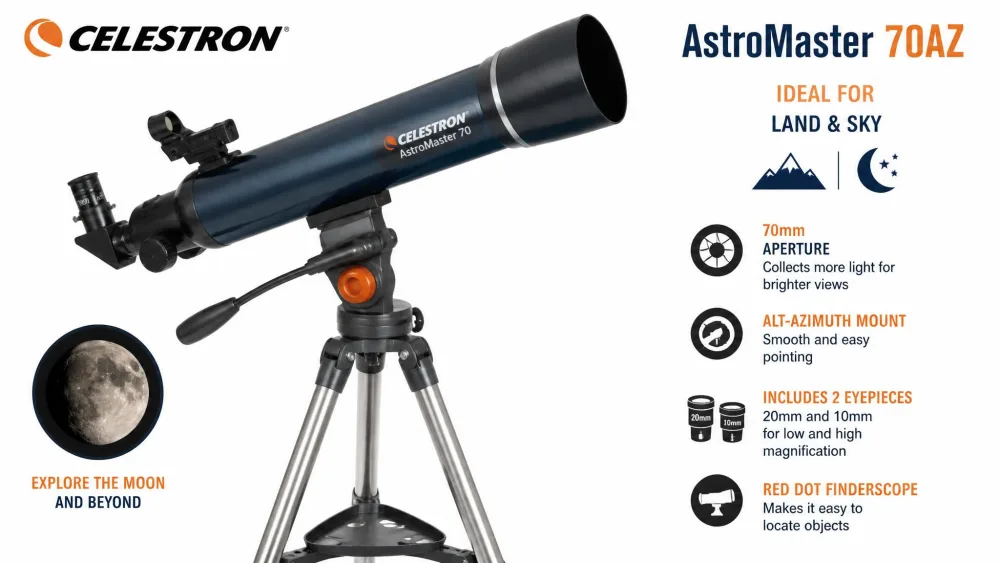
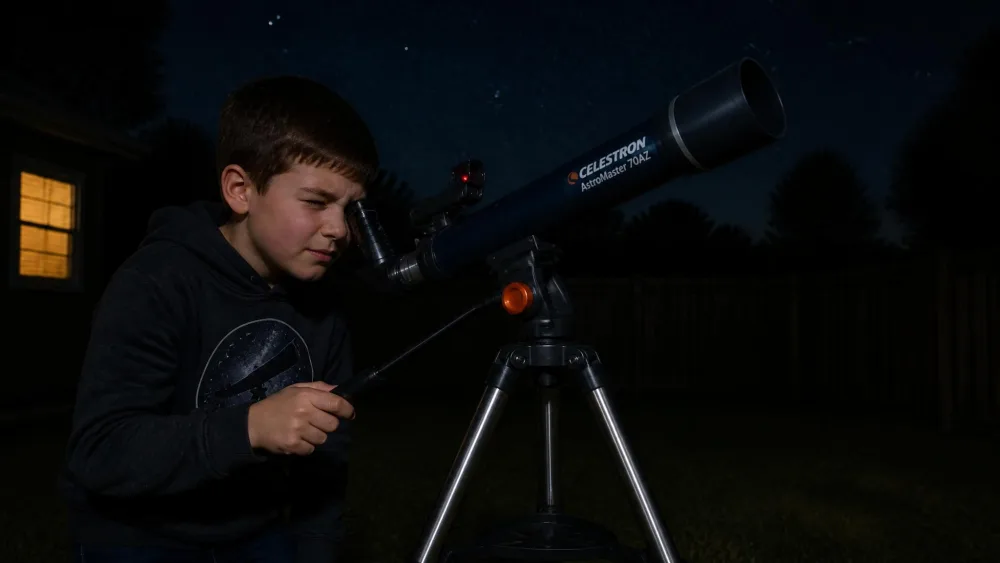
A 70mm achromatic refractor with a 900mm focal length at f/13, this is the scope we would hand to most eight-year-olds. It goes together in under fifteen minutes with no tools, and the slowest part of the whole job is fitting the coin battery into the red dot finder.
The one step that trips up first-time owners is aligning that red dot finder, and the fix is to do it before dark. Set the tripod up in the garden in daylight, put a distant chimney or treetop in the middle of the eyepiece at low power, then adjust the finder's screws until the red dot sits on the same chimney. Skip that and the first night goes like this. The child sweeps the tube around a dark sky, the dot lands on a star that never appears in the eyepiece, and after twenty minutes of nothing everyone goes back inside.
The 20mm and 10mm eyepieces give 45x and 90x, and Celestron rates the highest useful magnification at 165x, which sits slightly above the usual rule of thumb for a 70mm lens. Jupiter's moons, Saturn's rings and the Orion Nebula all show up through those supplied eyepieces, which is not something every scope in this price range manages. The tube weighs 2.9 lbs and the alt-azimuth mount has a simple panhandle, so aiming is intuitive. Aim high, though, and the tripod sags under the tube until the target drifts out of frame.
Celestron lists it at $199.95, above typical street prices.
Check price: Celestron AstroMaster 70AZ
Pros
- Under fifteen minutes to assemble, no tools needed
- Shows Saturn's rings and Jupiter's moons with the included eyepieces
- Erect image diagonal makes it usable for daytime nature watching
Cons
- Constant re-aiming once the tube points high
- Red dot finder alignment defeats a lot of first-time owners
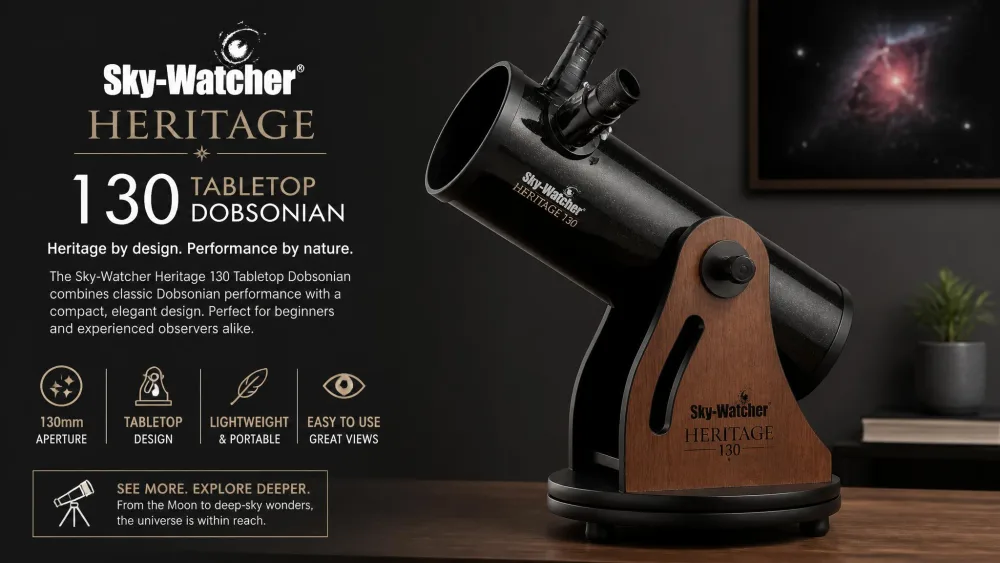
4. Sky-Watcher Heritage 130 Tabletop Dobsonian - Best for Moon and Planets
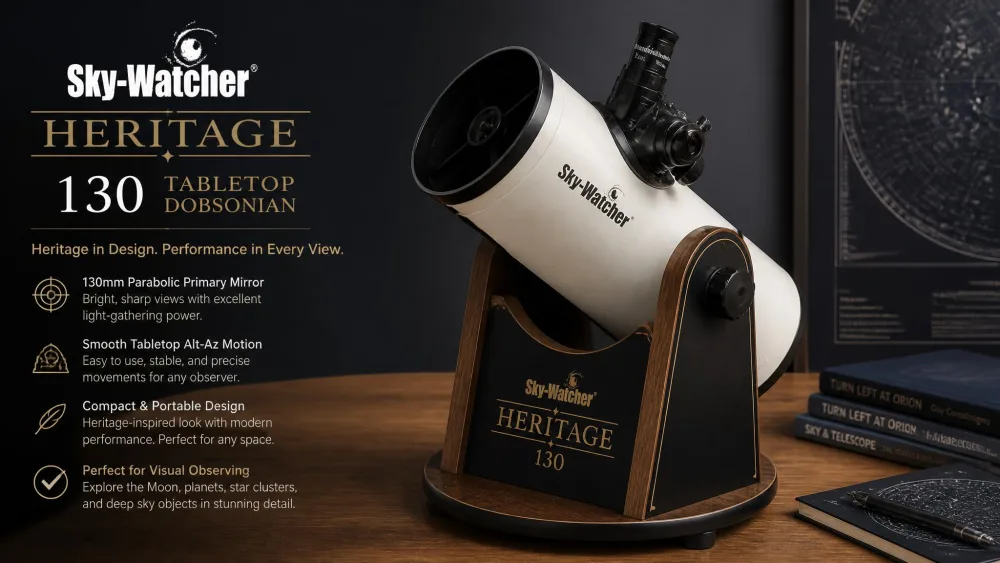
Aperture is what shows planetary detail, and 130mm of parabolic primary mirror is a large step up from anything above it on this list. The focal length is 650mm at f/5, with 25mm and 10mm eyepieces and a red dot finder included in the box.
The first session takes about five minutes of work and one moment of alarm. It arrives nearly assembled, so the only job is attaching the finder with two screws, and then someone reaches for the focuser knob and finds it locked solid. The knob can arrive very tight and needs a firm adult turn before it loosens up. Work it back and forth a few times and it moves normally for good.
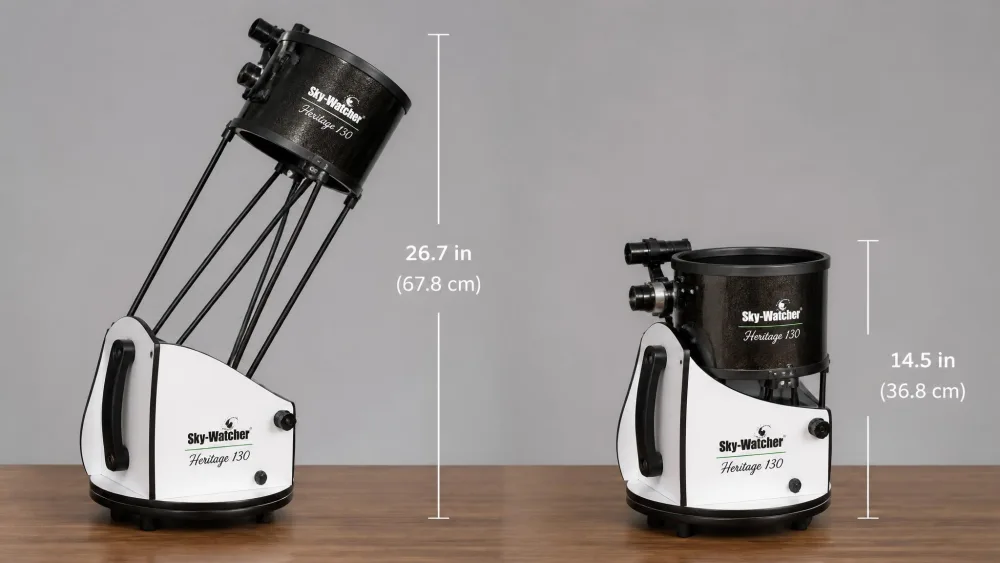
It carries at about 14 lbs, heavy enough that a nine-year-old makes two trips, though the truss tube collapses from about 25 inches down to about 14.5 inches and the Dobsonian base stays solid under a child's hands. Jupiter and its moons, Saturn's rings and star clusters are all visible, while Uranus and Neptune stay points of light no matter what you do. The bundled eyepieces are the limiting factor once a child gets serious.
It runs $305.00 on Amazon, and Sky-Watcher covers it with a two-year warranty against defects.
Check price: Sky-Watcher Heritage 130 Tabletop Dobsonian
Pros
- 130mm of aperture, the most light-gathering per dollar here
- Collapses to about 14.5 inches for carrying
- No assembly beyond attaching the finderscope
Cons
- About 14 lbs is heavy for a child to move alone
- Focuser can arrive stiff enough to need an adult's grip
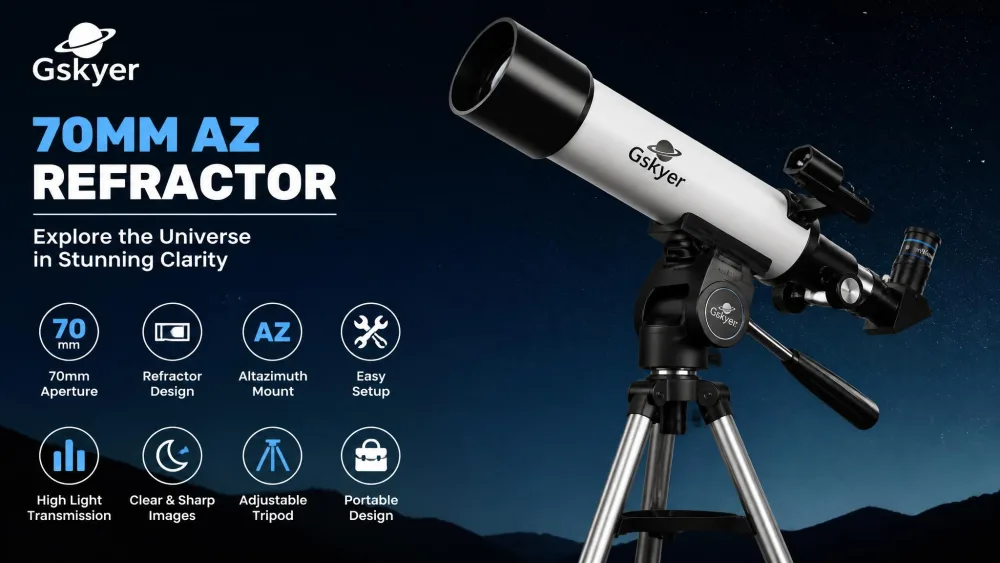
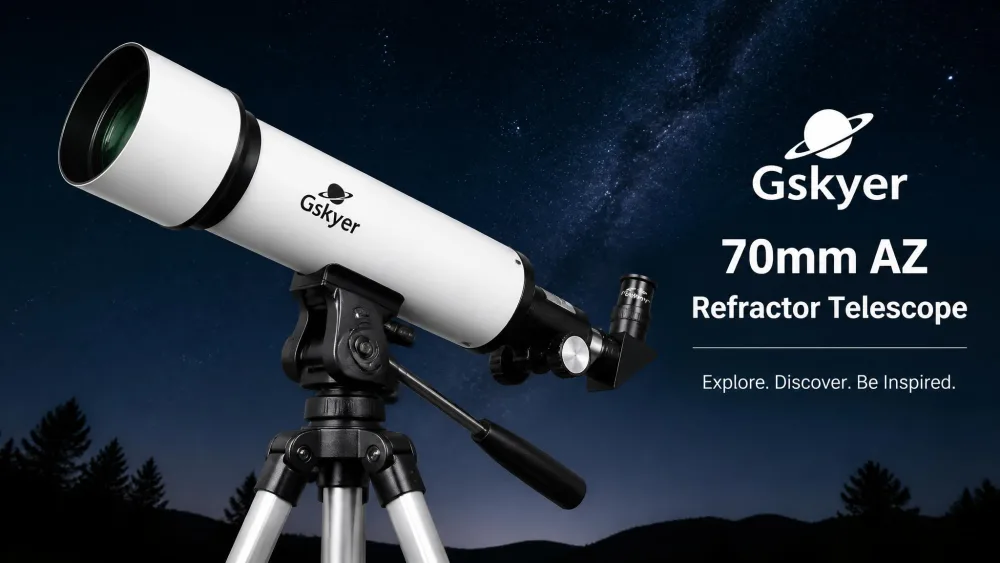
5. Gskyer 70mm AZ Refractor - Best Value
Start with what this one cannot do, because the build quality is where the money went missing.
Do the inspection on day one rather than on the first clear night. Stand the tripod up and lean on it, since a leg that arrives damaged at the rivet lets the whole scope shift under its own weight and shows up the moment you press down. Then fit the finderscope by hand and stop as soon as it seats, because those small screws strip easily when a child over-tightens them. Last, look at the eyepiece housing, which is plastic with a metal locking pin and is where the build feels cheapest. Anything that fails those three checks goes straight back while the return window is still wide open.
What survives the inspection is a genuinely good first refractor for around $96.99: a 70mm aperture and a 400mm focal length at f/5.7, with a 5x24 cross-hair finder, two eyepieces and a 3x Barlow lens. It is the most-bought starter scope in the category by a wide margin, an eight-year-old can learn it without getting overwhelmed, and the Moon comes through clearly on the first night out.
A 70mm aperture is about as small as an aperture gets before the views stop rewarding the effort, so treat this as the floor of the category rather than a bargain hiding at the bottom of it.
Check price: Gskyer 70mm AZ Refractor
Pros
- Around $97 for a genuine 70mm aperture
- Smartphone adapter and shutter remote for photographing the Moon
- Carry bag holds scope and tripod together
Cons
- Finderscope screws strip under a child's grip
- Tripod legs can arrive damaged, leaving the scope unsteady
Best Telescopes for Ages 11-14 (Tweens and Teens)
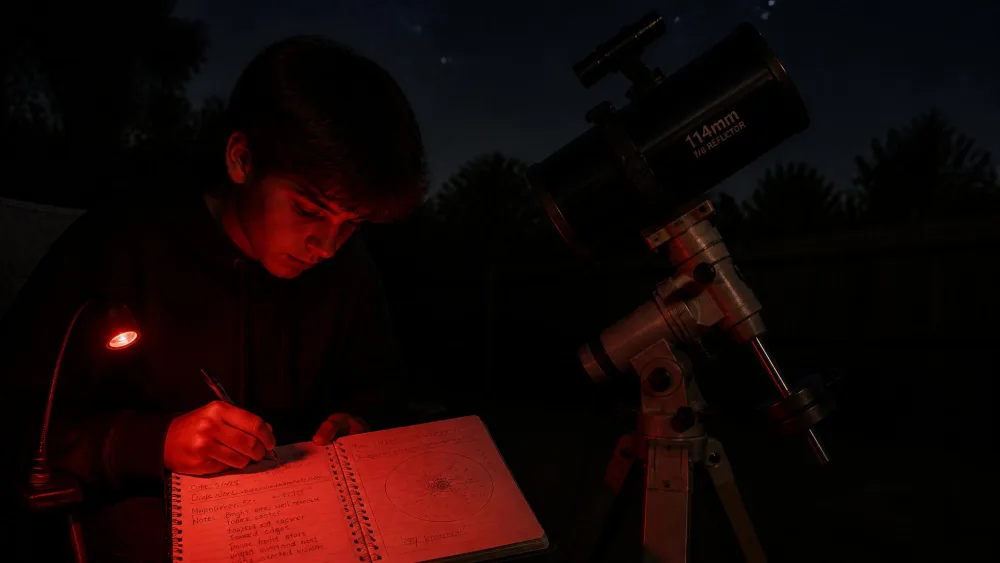
Older kids can handle a mount with a learning curve, and they want targets beyond the Moon, so the calculation changes completely. This is also where app guidance stops being a gimmick and starts saving a whole evening. Prices climb steeply here, from around $230 to $700.
6. Celestron AstroMaster 114EQ - Best for Growing Astronomers
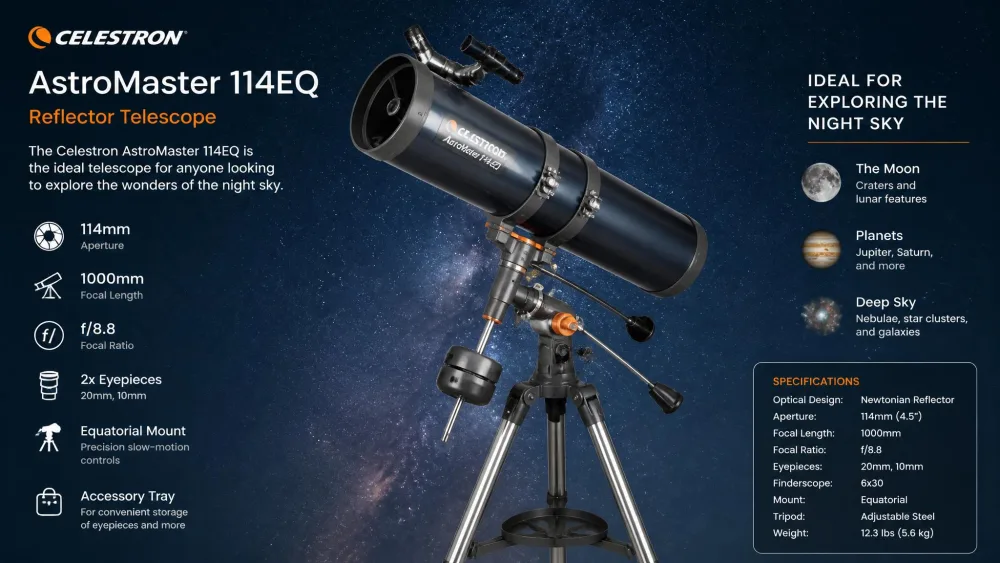
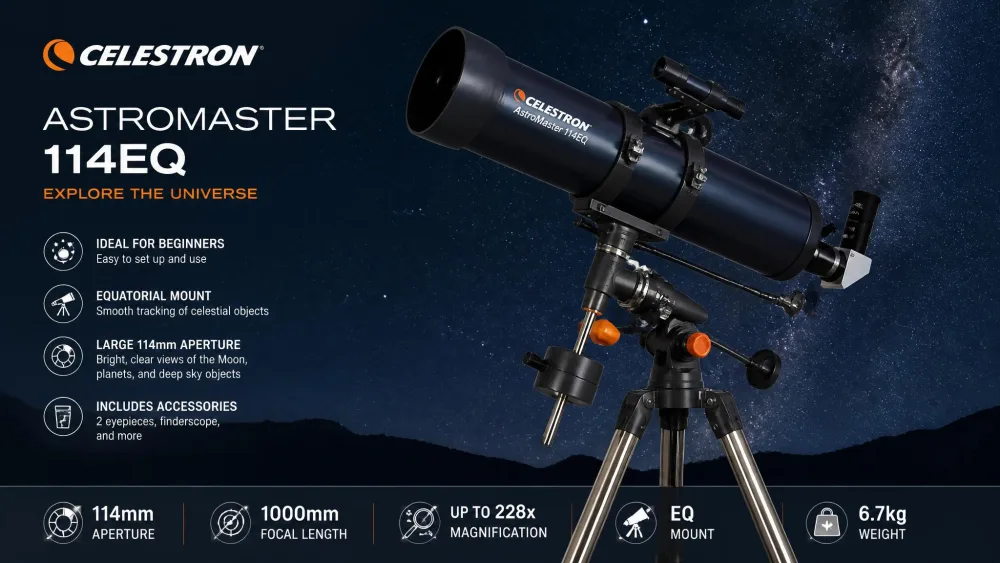
This is a 114mm reflector at 1000mm focal length, f/8.77, on a manual German equatorial mount with setting circles and slow-motion controls. The 20mm and 10mm eyepieces give 50x and 100x, with 269x listed as the highest useful magnification, and the whole thing weighs 13.3 lbs on a steel tripod.
The unboxing is where this one goes wrong. The parts come out onto the floor, the picture instructions turn out to be hard to read, and the build stretches to about half an hour on the first attempt. Somewhere near the end a hand reaches for the slow-motion control screws, and on some boxes they simply are not there. A missing screw on a clear Tuesday night means the mount cannot be driven at all until a replacement arrives, so count the parts against the list the day the box lands rather than while a planet is climbing.
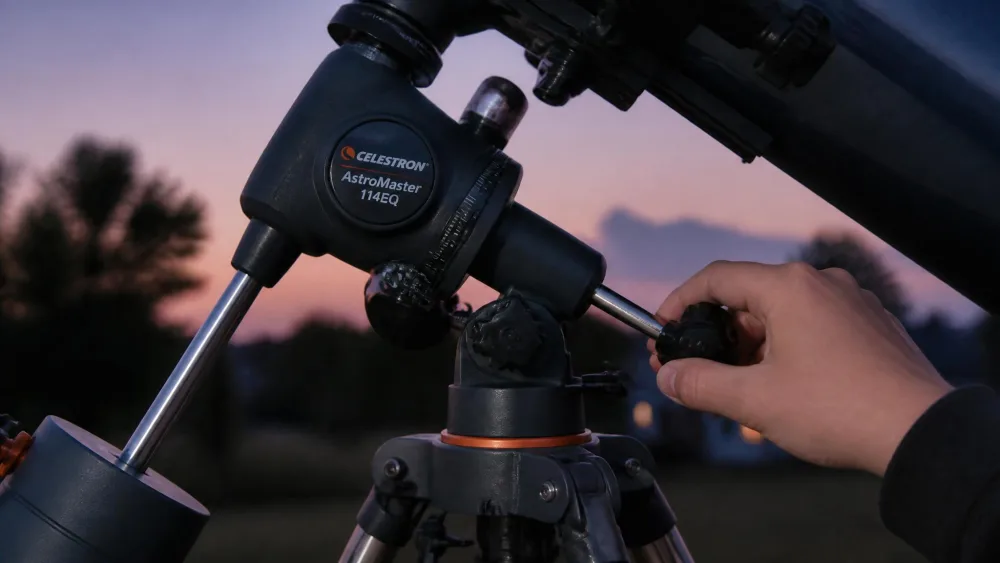
The equatorial mount is both the point and the problem. It lets a teen track a planet smoothly as the sky turns, but it confuses first-time users and finding targets takes a learning night or two.
The Moon looks stunning through it, while Jupiter goes blurry at high magnification with the supplied eyepieces. Celestron sells it as a Newtonian, but there is a corrector lens sitting in the focuser, which makes it a Bird-Jones and makes collimation far harder than it would be on a plain Newtonian. The mirrors need realigning before nearly every session.
Celestron lists it at $329.95, above street price.
Check price: Celestron AstroMaster 114EQ
Pros
- 114mm aperture on a tracking equatorial mount
- Slow-motion controls keep a planet centred as it drifts
- Starry Night software with a 36,000 object database
Cons
- About thirty minutes to set up the first time, with poor instructions
- Needs collimating before nearly every session
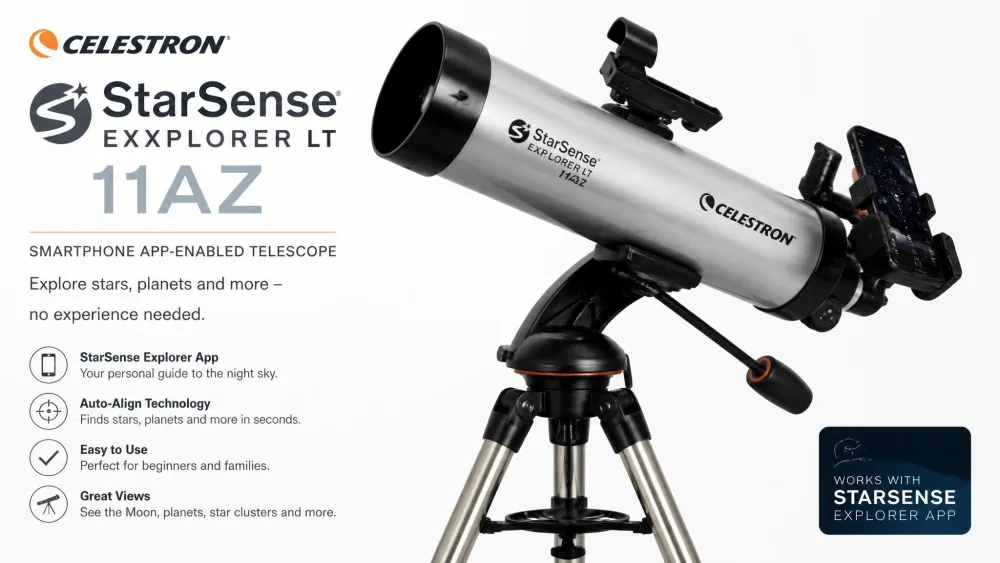
7. Celestron StarSense Explorer LT 114AZ - Best App-Guided Telescope
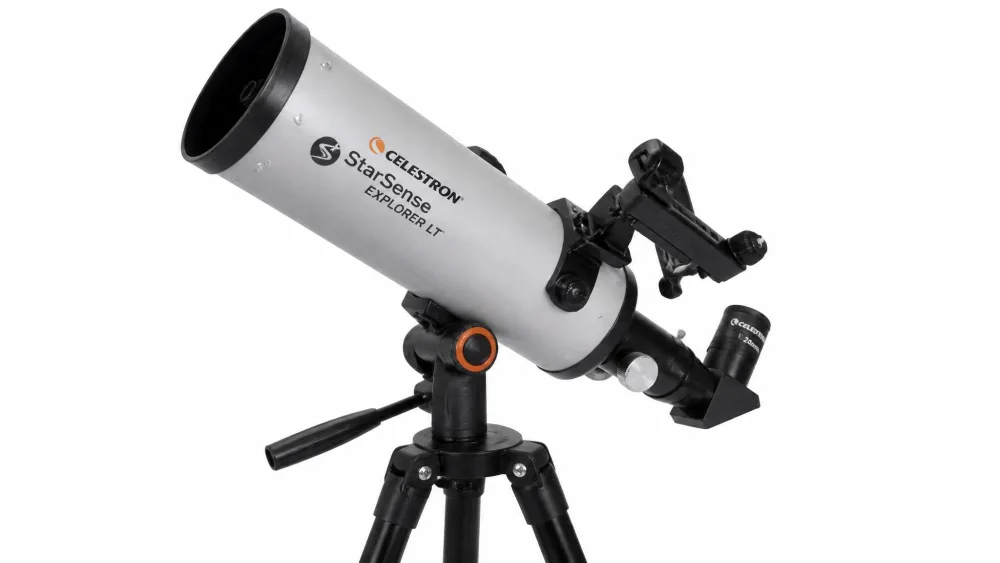
The trade here is simple. For $229.99 you get a 114mm, 1000mm f/9 reflector plus a phone dock and an app that recognises the sky. On-screen arrows steer you toward the target and a bullseye turns green when it lands in the eyepiece, and the app builds a list of tonight's best objects for your time and location, which removes the planning step that stalls most first sessions.
Check your phone before you check anything else, because the app requires Android 12 or later, or iOS 18 or newer on an iPhone XR or newer.
Then there is the code. The scope goes together, the dock clips on, the app opens and asks for the unlock code printed in the box, and sometimes that code comes back invalid. What follows is days of support email while an assembled telescope stands in the hall waiting for first light. Type the code in the week the box arrives, long before the night you have promised.
Once the dock is dialled in it steers reliably and Jupiter's moons show up in the eyepiece, though plate-solving accuracy depends on phone camera quality, dock alignment and sky conditions, so pointing varies from night to night. The tripod and fork are wobbly with no slow-motion locks, which makes fine aiming at high magnification a struggle. Lunar detail is good, while planetary detail is hard to pull out. Celestron markets this one as a Newtonian too, but a Bird-Jones corrector lens sits in the focuser, and collimating it means unscrewing the focuser to remove that lens, which is not a job anyone repeats at every setup.
Check price: Celestron StarSense Explorer LT 114AZ
Pros
- App finds targets a child would never locate alone
- Tonight's-best-targets list removes the planning step
- 114mm of aperture for $230
Cons
- Wobbly fork mount with no slow-motion locks
- Requires a recent phone and a working unlock code
8. ZWO Seestar S30 Pro - Best Smart Telescope for Teens
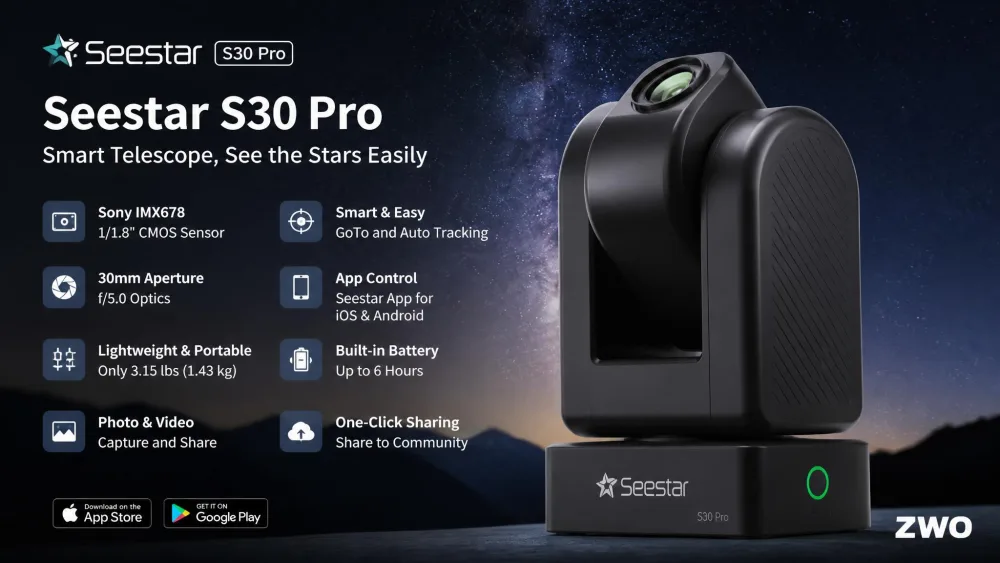
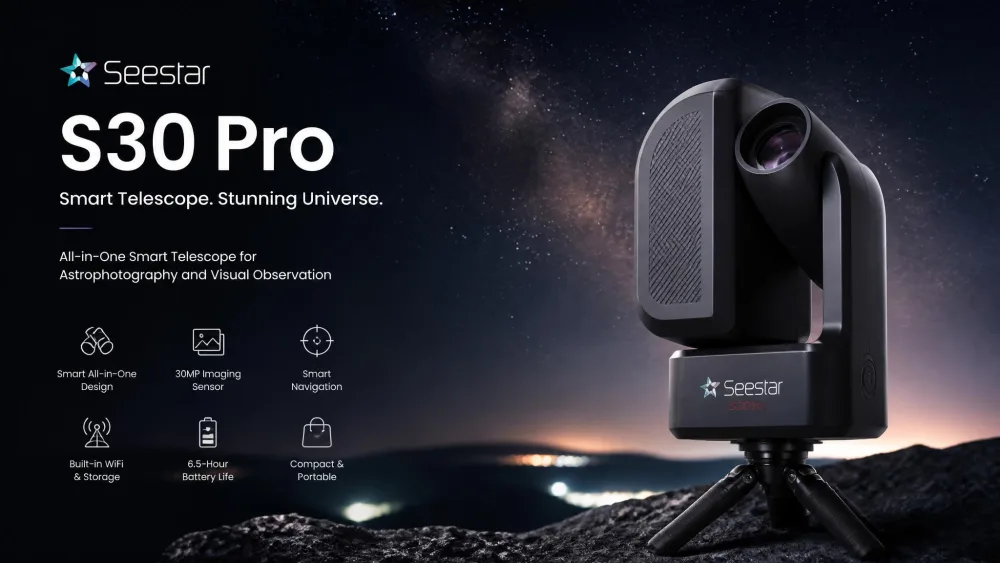
There is no eyepiece at all. A 4-element apochromatic lens with built-in light-pollution and IR filters feeds dual cameras, an IMX585 telephoto and an IMX586 wide-angle with 4K capture, onto 128GB of built-in storage, and the whole $699.00 package is a different kind of instrument from everything above it.
Setup is power on, connect the app, and start, with nothing to remember between sessions. It handles GoTo and tracking automatically, stacks and processes with one tap, and offers four imaging modes including Milky Way and star trails.
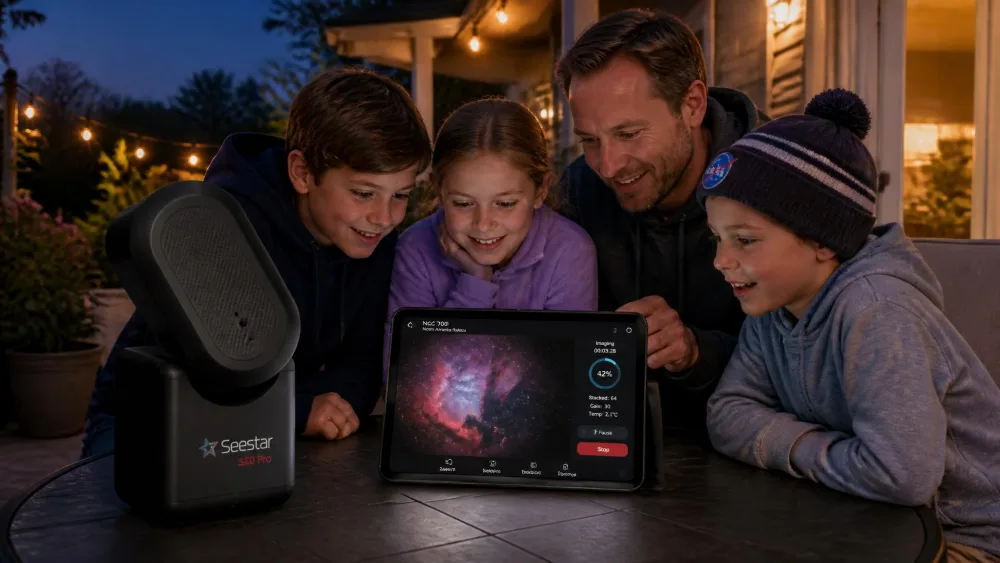
The first night looks nothing like the others in this guide. The scope goes down on the patio, a nebula is chosen from a list, and the image builds on a tablet screen while everyone watches together instead of queueing at an eyepiece. The light-pollution filters do real work from a suburban backyard, so the picture keeps deepening even under sky glow.
That is also the catch. Children see the sky on a screen rather than through glass, which is a genuinely different experience from the shock of a first look at Saturn. Daytime and landscape shots are weak next to the deep-sky stacking, so it disappoints anyone hoping to press it into service for wildlife.
Check price: ZWO Seestar S30 Pro
Pros
- Automatic GoTo, tracking and stacking with no alignment to learn
- Light-pollution filters pull detail from a suburban sky
- Whole family watches one screen instead of taking turns
Cons
- No eyepiece, so nobody looks through glass
- $699 is several times the cost of a capable manual scope
Comparison Chart: All 8 Telescopes Side by Side
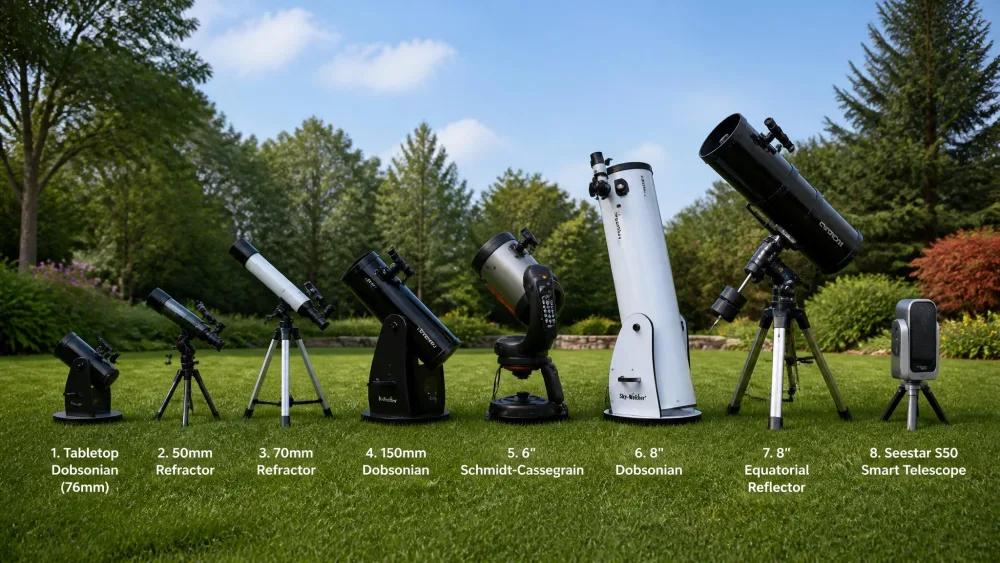
| Telescope | Best age | Type & aperture | Price band | Why it wins |
|---|---|---|---|---|
| Celestron FirstScope Signature Series Moon | 5-7 | Tabletop Dobsonian, 76mm | Under $75 | Moon map on the tube turns viewing into learning |
| NASA Lunar Telescope for Kids | 5-7 | Tabletop refractor, 90x max | Under $50 | Cheapest real Moon views here |
| Celestron AstroMaster 70AZ | 8-10 | Refractor, 70mm | $150-$200 | Sharpest first refractor, with Saturn in reach |
| Sky-Watcher Heritage 130 | 8-10 | Tabletop Dobsonian, 130mm | $300+ | Most aperture per dollar |
| Gskyer 70mm AZ Refractor | 8-10 | Refractor, 70mm | Around $100 | Most-bought starter scope, phone adapter included |
| Celestron AstroMaster 114EQ | 11-14 | Reflector, 114mm | $300+ | Biggest step up, on a tracking mount |
| Celestron StarSense Explorer LT 114AZ | 11-14 | App-guided reflector, 114mm | Around $230 | The app finds targets for you |
| ZWO Seestar S30 Pro | 11-14 | Smart imaging scope | Around $700 | Screen viewing the whole family shares |
What to Look For in a Kids' Telescope
The specifications printed largest on the box are almost never the ones that decide whether a child keeps stargazing. These five are the ones that do.
Aperture Matters More Than Magnification
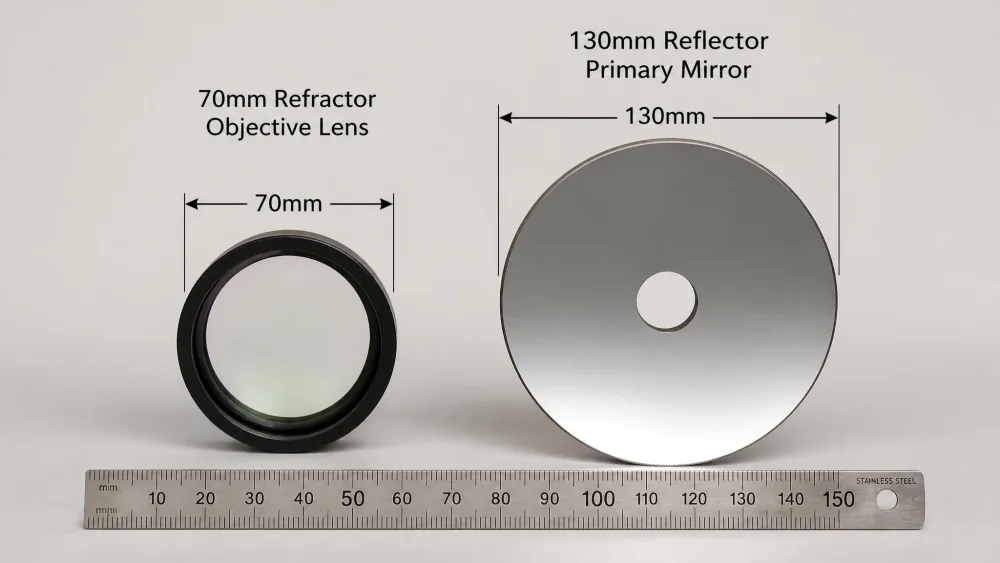
Aperture is the diameter of the main lens or mirror, and it decides how much light the telescope collects, which in turn decides how much detail and how many faint targets a child will ever see through it. Maximum useful magnification runs to about 50x per inch of aperture, or 2x per millimetre, which puts a 70mm refractor somewhere near 140x and the 130mm Heritage at roughly twice that.
In real seeing conditions the usable figure tops out nearer 30x to 40x per inch, because the practical ceiling depends on the air, the optics and the target, and it shifts from one night to the next. Push past that limit and you get empty magnification: a bigger image with no extra detail inside it. That is exactly why the 675x printed on a toy box is not a feature.
Parent tipStart every session on the lowest-power eyepiece, find the target, then swap up. Children who start at high power almost never find anything at all.
Refractor vs Reflector vs Tabletop Dobsonian
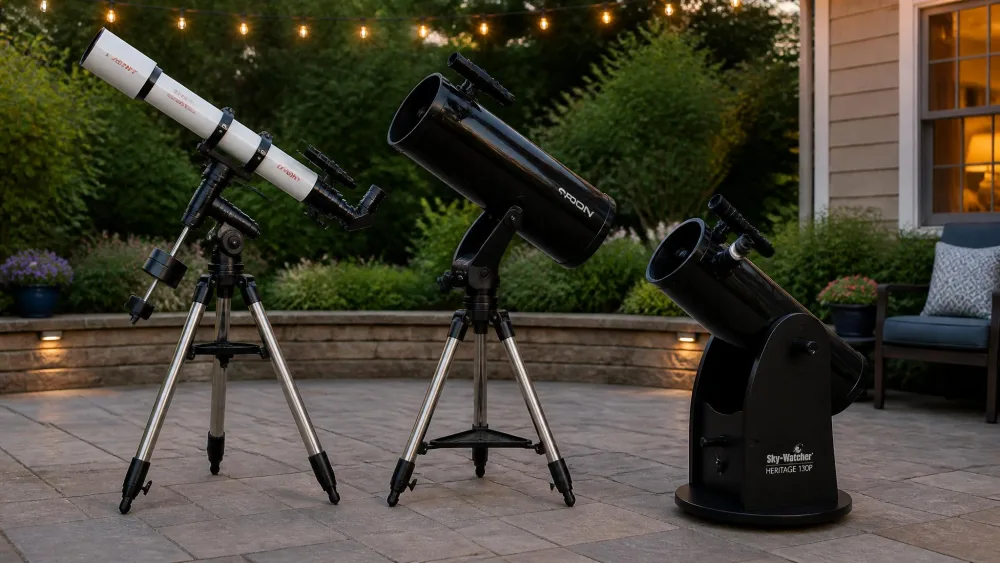
A refractor uses a lens at the front, and because it stays sealed it holds alignment for years and never needs collimating, which makes it the low-maintenance choice for a younger child. The catch is that aperture gets expensive fast in this design.
A reflector uses a mirror instead, so the same money buys considerably more aperture, and the trade is collimation, the periodic job of realigning the mirrors, plus a longer tube that demands a sturdier mount underneath it.
A tabletop Dobsonian is a reflector sitting on a simple rotating base, with no tripod to level and no counterweight to balance, so a child just pushes the tube where they want it and it stays there. For most families it is the easiest large aperture to actually use.
Mount Type: Altazimuth, GoTo, or App-Assisted
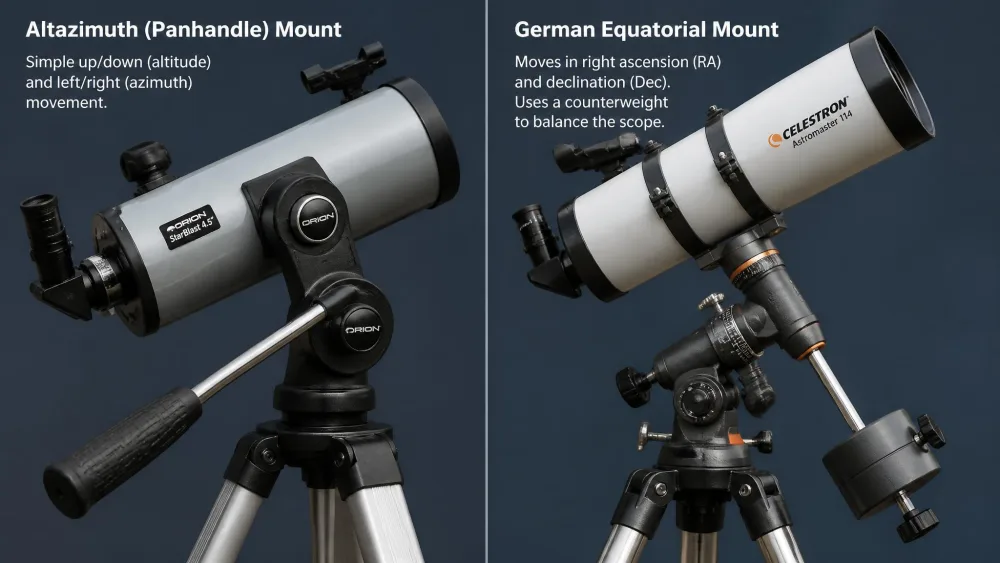
An altazimuth mount moves up, down and sideways, exactly the way a child expects a telescope to move, and it is the right default for anyone under about ten. An equatorial mount aligns to the sky's rotation, and one knob will then track a planet for minutes at a time, which rewards a patient tween and frustrates everyone else. It also added about half an hour to the first setup on the 114EQ.
App-assisted mounts sit between the two. The StarSense system uses your phone's camera to recognise the star field and walk you to a target with on-screen arrows, with no motors and no batteries in the mount itself. Full GoTo adds motors that drive to a target automatically, which is what the Seestar does, and it removes the finding skill along with the frustration.
NoteLight pollution shrinks what any telescope can show. Planets and the Moon cut through a bright suburban sky perfectly well, but nebulae and galaxies need a darker site or a filter.
Setup Time, Weight and Durability
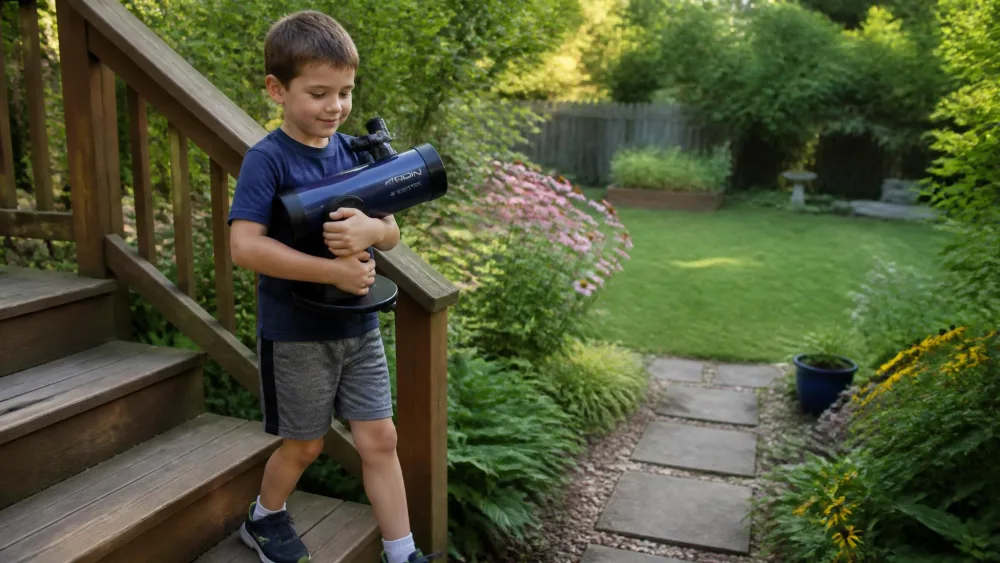
Count the assembly minutes honestly, because a scope that takes half an hour to put together comes out on Saturdays only, while one that takes two minutes comes out on a Tuesday when the sky clears unexpectedly. Weight decides who carries it. At 4.3 lbs the FirstScope is a child's own responsibility, while at about 14 lbs the Heritage becomes a two-trip job for a nine-year-old.
Durability shows up in the joints rather than the optics. Plastic eyepiece housings, riveted tripod legs and small finderscope screws are the parts that fail first, and they fail because a child tightens them harder than an adult ever would.
Parent tipAlign the red dot finderscope in daylight on a distant chimney or treetop. Trying it for the first time in the dark on a real star is where most first nights go wrong.
Telescopes to Avoid (Toy-Store Scopes and 675x Claims)
A telescope advertising 525x or 675x on the box has almost always paired that number with a 50mm or 60mm aperture that cannot support anything close to it. Those scopes deliver the blurry images that convince a child astronomy is boring, and the flexing plastic tripod underneath is usually a worse problem than the optics, because a target that will not hold still cannot be studied at any magnification. That is why a $45 scope with a modest, honest aperture beats a $60 one promising the Hubble.
What Kids Will Actually See on the First Clear Night
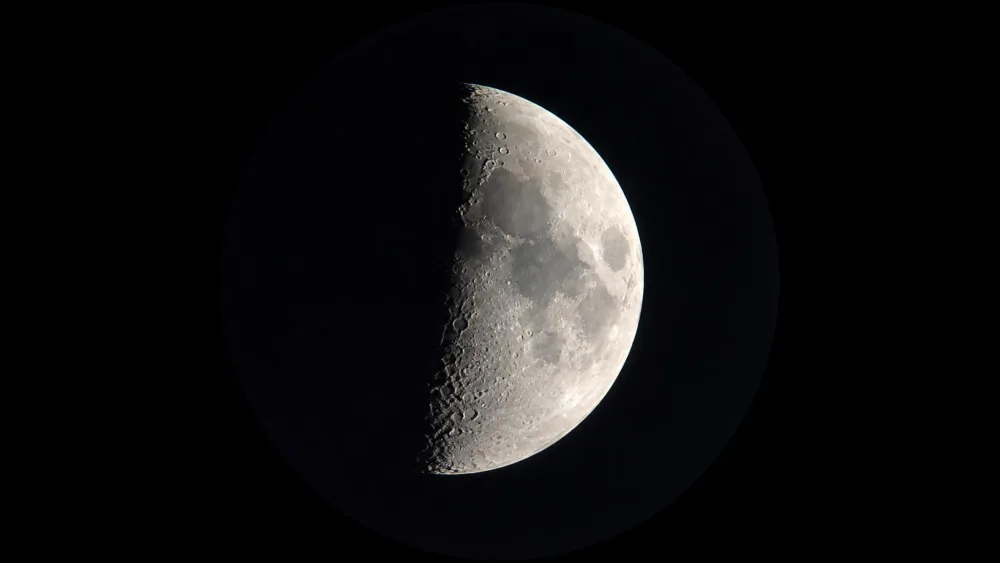
Start with the Moon, and start when it is a half moon rather than full, because craters along the terminator, the line between light and dark, throw long shadows that make the surface look three-dimensional. A full Moon is flat and glaring by comparison, and it is the single most common reason a first session underwhelms.
Jupiter comes next. Even a 70mm refractor shows the disc plus up to four moons strung out in a line, and they visibly change position from one night to the next, which is the thing that hooks most children on the whole hobby.
Saturn's rings resolve as a separate ring rather than an oval bulge at around 50x in a 70mm scope, and rather better with 130mm of aperture behind them. Nearly every child gasps at Saturn.
Then set expectations honestly. Star clusters look like scattered diamonds, and the Orion Nebula shows as a grey-green cloud rather than the pink of photographs. Uranus and Neptune stay points of light in every scope on this list.
Check what's in the night sky this month before you go out, and plan lunar sessions around the Moon's phases so you are not fighting glare on the first attempt.
Watch outNever point a telescope at the Sun, and never let a child aim one during daylight without an adult present. Concentrated sunlight causes permanent eye damage in an instant, and the small screw-on solar filters bundled with cheap scopes are unsafe. NASA's guidance on how to never look at the Sun without a certified solar filter is worth reading before the telescope comes out of the box.
Frequently Asked Questions
What age can a child start using a telescope?
Around five, provided the telescope is a tabletop model with no tripod to manage. Below seven, many children cannot hold their eye steady on an eyepiece long enough to see anything, so an adult usually finds the target and lets the child look. Real independent use tends to start around eight.
How long should a first stargazing session last?
Half an hour is plenty for a child under eight, and much of that is setup and waiting for eyes to adapt, which takes about twenty minutes in full darkness. Plan one or two targets rather than a tour. End while the child still wants more, and expect the second session to run longer than the first now that the finder is already aligned.
How much should we spend on a first telescope?
For ages five to seven, $45 to $75 buys everything a child that age can use. For eight to ten, $100 to $300 covers a genuine 70mm refractor or a 130mm tabletop Dobsonian. Spending more before a child has proven interest usually buys features they will not touch.
What accessory should we buy first once the bundled eyepieces run out of road?
A single good wide-angle eyepiece, before anything else. On the FirstScope, the Heritage and the 70AZ alike the supplied eyepieces are the part holding the view back, and swapping one in transforms what a child sees far more than a filter or a Barlow will. Buy a low-power one rather than a high-power one, because the wider field makes targets easier to find and keeps a drifting object in view for longer. A red torch and a planisphere are the next two things worth the money.
Do kids need a GoTo or smart telescope?
No, but app guidance genuinely helps an older child who gets discouraged hunting for targets. The StarSense system uses a phone camera to walk you to an object and needs a recent Android or iOS device. Full automation like the Seestar suits a teen who wants images more than the skill of finding things.
Can a kids' telescope be used from a light-polluted backyard?
Yes, for the Moon and the planets, which are bright enough to cut through suburban sky glow. Galaxies and nebulae are the casualties, appearing washed out or invisible. A light-pollution filter helps a little, and a single trip to darker countryside helps far more than any accessory.