How to Remove Crayon from Paper (Without Damaging It)
If your kid just decorated an important page with a bright crayon streak, take a breath before you start scrubbing. Whether it is a library book, a worksheet, or a drawing your child wants to keep, aggressive rubbing usually makes crayon marks worse. The paper tears, the wax smears into a wider stain, and now you have two problems.
We spend a lot of our week at the kitchen table with crayons, so we have cleaned up plenty of these accidents. We worked through the methods below on scrap sheets before trusting them on anything that mattered. Here is what actually lifts crayon marks and how to match the method to the paper.
One honest thing first: complete, invisible removal is not realistic. Crayon wax binds into the paper fibers as it goes down, so the goal is to lighten the mark and keep the page usable, not to make it look like the crayon was never there.
Why Crayon Is Hard to Remove from Paper
Crayons are wax-based, a mix of paraffin wax, pigment, and binding agents. When your child presses one against paper, the wax softens slightly and grips the fibers. That grip is the whole problem. The color is not sitting on top of the sheet the way pencil graphite does; it has worked its way into the surface.
That is why Crayola is refreshingly blunt about it. In Crayola's own crayon-removal guidance, the company says it does not make a product to remove crayon from paper, though a kneaded eraser from an art-supply store may help. When the maker admits there is no magic solution, patience and a light touch clearly matter most.
Before You Start: Test and Protect Your Paper
Before you touch the actual mark, find an inconspicuous corner of the same sheet and test your chosen method there first. Thin newsprint, glossy stock, and sturdy cardstock all behave differently, and a spot-test tells you in seconds whether the paper can take it. Work on a hard, flat surface with good light, and keep your movements slow, because paper does not forgive a hurried hand.
NoteMatch the method to the paper. Cardstock and coloring pages handle gentle erasing and a little heat, while thin newsprint and glossy stock are far less forgiving. When in doubt, start gentler than you think you need to.
Method 1: Rub Gently with a Soft (White) Eraser
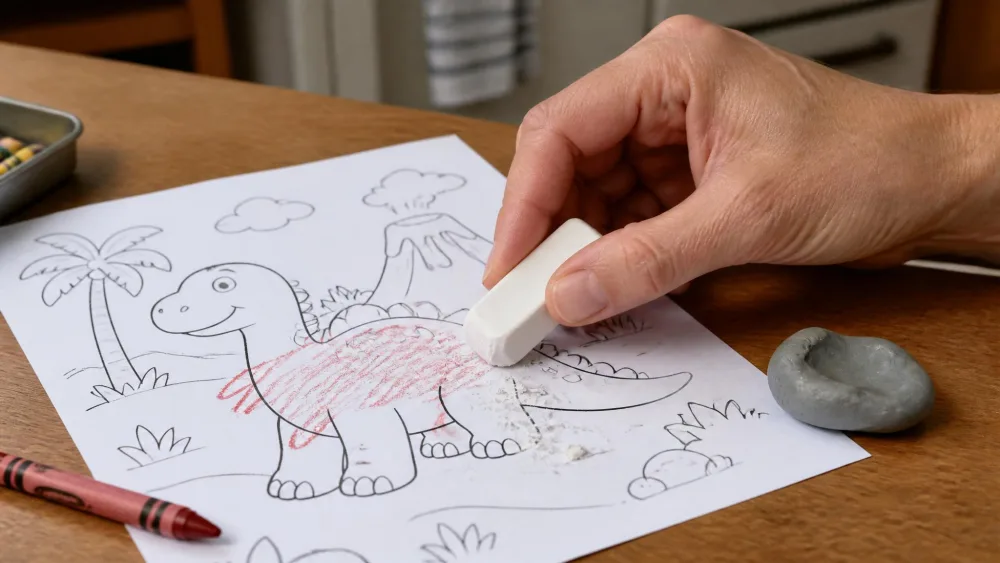
For light marks and stray outlines, start here. Reach for a soft white vinyl eraser, an art-gum eraser, or a kneaded eraser, and gently rub the crayon in small circular motions to lift waxy color while leaving the fibers intact. In our experience the eraser you choose makes or breaks the no-damage result: a soft or kneaded eraser lifts light marks kindly, while a hard pink pencil eraser abrades the surface and thins the paper.
Best eraser types to use
Keep a soft white vinyl eraser or a kneaded eraser in your art drawer. Vinyl and art-gum erasers crumble away gently and carry the wax off with the crumbs, and a kneaded eraser can be pressed onto a mark to lift color with no rubbing at all. Avoid the hard pink erasers on pencil ends, since they are built to abrade.
How to avoid tearing the paper
Use light pressure and let the eraser work over several passes rather than one hard scrub. Support the page flat with your other hand, and stop the moment the surface starts to pill or fuzz.
Method 2: Lift the Wax with Heat (Hair Dryer + Blotting)
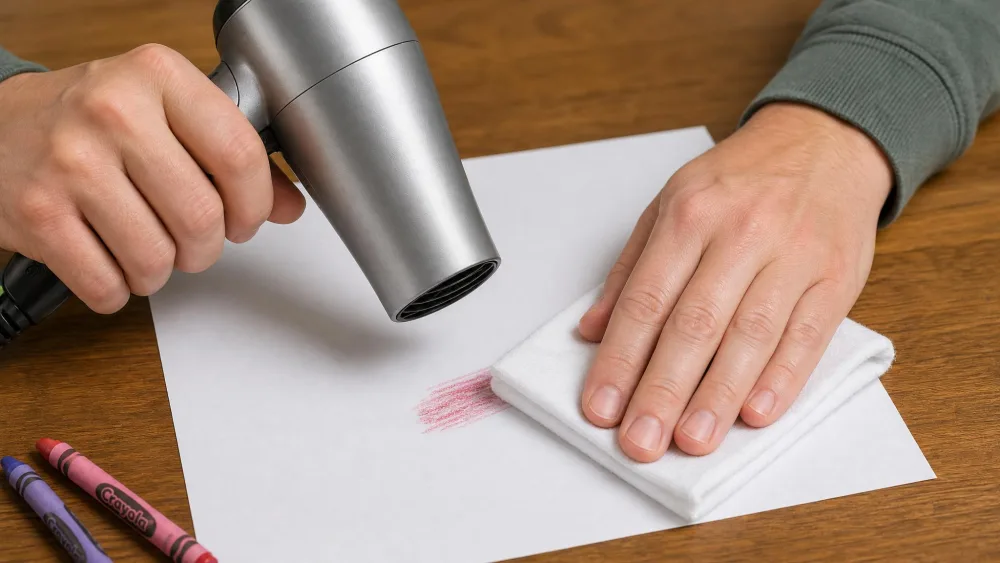
When an eraser alone is not enough, gentle heat can help. Warm the crayon mark with a hair dryer on a low setting to soften the wax, then blot it with a clean, dry cloth. The key word is blot: press the cloth down and lift it straight up rather than dragging it, because a rubbing motion just spreads the softened wax into a wider stain.
Watch outHeat is where thin and glossy paper gets ruined. Keep a barrier such as a clean cloth or a sheet of parchment paper between any hotter heat source and the page, use the lowest effective setting, and watch closely for scorching or curling. Glossy and coated stock is the least forgiving surface for heat, so on those papers stay gentle or skip this method.
Warm the mark and blot with a clean cloth
Work in short bursts. In our own kitchen-table runs, a low-heat pass of roughly twenty to thirty seconds was usually enough to soften a mark before blotting, but treat that as our household estimate rather than a rule. Between passes, fold to a fresh section of the cloth so you are always lifting wax onto a clean surface.
Method 3: Scrape Off Excess Crayon Carefully
If a child pressed hard and left a thick, waxy buildup, lift the excess first. Use a dull, flexible tool: a plastic or silicone scraper, the edge of a credit card, a plastic spoon, or the back of a butter knife. Hold it at a low, shallow angle and make light passes in a single direction to shave the raised wax off. Angle and pressure matter most, because scraping too hard or too steeply tears the sheet and presses wax deeper into the fibers.
Parent tipWork in one direction with light, shallow strokes, and reset to the same starting edge for each pass instead of scrubbing back and forth. One-direction passes lift the loose wax cleanly and give the paper far less chance to snag and tear.
Using a plastic scraper or dull knife
Anchor the page with your free hand and let the flat of the tool glide, keeping the sharp corners off the paper. After a few passes, brush the flakes away and reassess; often this alone lightens a heavy mark enough that a soft eraser can finish the job.
Method 4: Dab with Rubbing Alcohol for Stubborn Marks
For marks that survive erasing, heat, and scraping, a little rubbing alcohol is the last gentle step to try. Dip a cotton swab in isopropyl alcohol, dab it onto the mark, let it sit a few seconds, then blot dry with a clean cloth. Alcohol evaporates quickly and is relatively gentle on paper, which is why it beats water here. Standard household rubbing alcohol is usually about 70% isopropyl, a sensible place to start. Keep the swab barely wet rather than dripping, and spot-test first, since alcohol can lift printed ink along with the crayon.
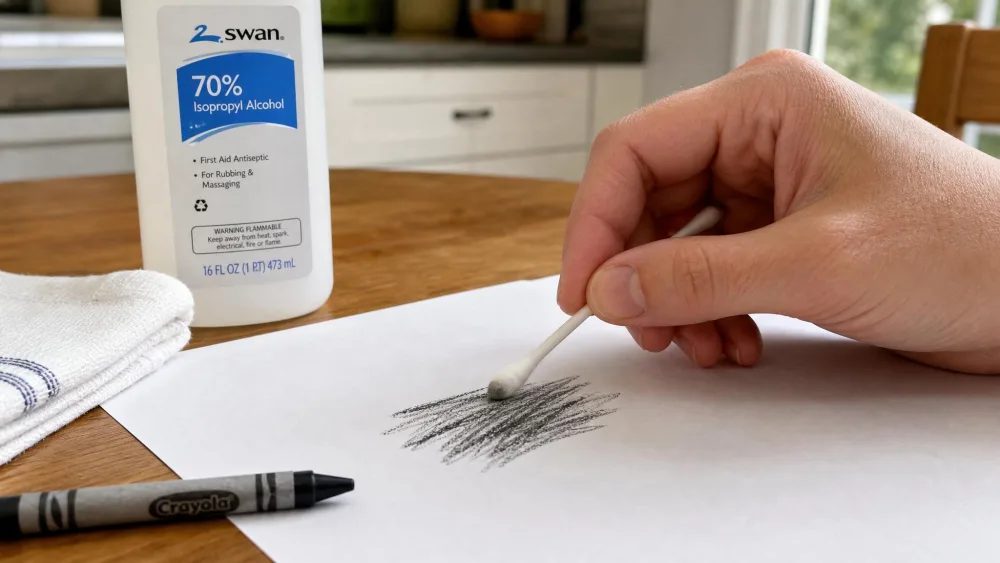
Spot-test first and apply with a cotton swab
Because alcohol can smear both crayon and ink if you drag it, dab and lift rather than wipe. Give the wax a moment to loosen, then blot straight up, switching to a fresh swab as the old one picks up color.
Baby-wipe / mild-solvent variant for delicate paper
On thin or delicate paper, skip the solvent and reach for a barely damp baby wipe. Blot gently, do not soak, and let the paper air-dry flat. You can also press a piece of low-tack or vinyl tape onto the residue and peel it up slowly, which lifts loose crayon with far less abrasion than rubbing.
Which Method to Use for Different Paper Types
Not every method suits every page. The table below is the shorthand we keep in our heads.
| Paper type | Best first move | Approach with care |
|---|---|---|
| Cardstock / coloring pages | Soft eraser, then gentle heat | Scraping heavy buildup |
| Standard printer paper | Soft eraser, then blotting | Alcohol only after a spot-test |
| Thin newsprint / book pages | Kneaded eraser, baby wipe | Heat and alcohol (very light) |
| Glossy / coated stock | Kneaded eraser or vinyl tape | Heat (least forgiving surface) |
Sturdier paper can take erasing, heat, and light scraping, while thin and glossy stock needs the gentlest methods and patience.
Tips to Avoid Damaging the Paper
A few habits protect the page: spot-test first, start with the gentlest tool that could work, blot and lift instead of rubbing, and stop while you are ahead. Just as important is knowing what to avoid. Water and vinegar warp and buckle thin paper and spread the stain, sandpaper scratches and thins the sheet, and hard pink erasers abrade. None of these belong near paper you want to keep.
The last of a crayon mark is rarely worth risking a tear. Lighten it, keep the page whole, and call it a win.
How to Prevent Crayon Marks in the Future
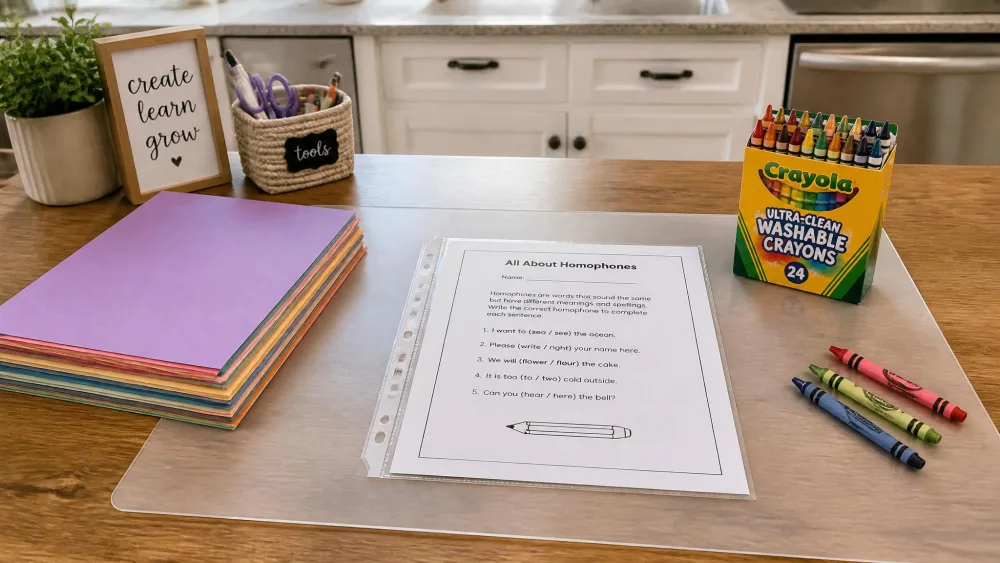
The easiest crayon mark is the one that never lands on the wrong page. In our home, giving each child a stack of scrap paper and a "color only on this" rule cut the accidents on books and worksheets dramatically. Slip pages you care about into a sheet protector during craft time, and store crayons away from important papers. Washable crayons help for younger kids, too; the marks tend to lift a little more willingly than regular wax.
Removing Crayon from Other Surfaces (Walls, Wood, Carpet, Fabric)
Paper is the fussiest surface for crayon, so these gentle-first rules are stricter than what you need elsewhere. Harder, more washable surfaces give you room for warm water, mild soap, and a bit more elbow grease. If the crayon spread beyond the page, we have full guides for the trickier spots: how to get crayon off walls, how to get crayon off wood, removing crayon from carpet, and how to get crayon out of fabric.
Frequently Asked Questions
How do I remove crayon without erasing the drawing or printed design underneath?
Work only on the smear itself and keep every tool light. A kneaded eraser pressed and lifted, or a barely damp baby wipe dabbed on the spot, targets the wax without scrubbing the art around it. Skip rubbing alcohol near printed ink or a colored drawing, and spot-test first.
Which household items should I avoid using on paper?
Keep water, vinegar, and sandpaper away from paper. Water and vinegar warp and buckle the sheet and spread the stain, sandpaper scratches and thins the surface, and hard pink pencil erasers abrade the paper before they lift much crayon.
Does the hair-dryer heat method work on all paper types?
No. Heat works best on sturdier paper like cardstock. Thin newsprint and glossy stock scorch and curl easily, so use the lowest setting, keep a barrier cloth or parchment between the heat and the page, and be ready to stop. When a paper feels fragile, a kneaded eraser or baby wipe is safer.
Is removing washable or metallic crayon any different from regular crayon?
The same gentle, wax-first approach applies to all of them. Washable crayons often lift a little more willingly, while heavier or metallic marks may need a careful scrape before you erase. Start gentle and step up only if you need to.
What is the safest method for thin or delicate paper?
Reach for the least abrasive options: a kneaded or soft white eraser pressed lightly, a barely damp baby wipe, or low-tack vinyl tape peeled up slowly. Avoid heat, alcohol, and scraping on very thin paper, and accept that lightening the mark is a better goal than erasing it.
Conclusion
Crayon on paper will never vanish completely, but with a soft eraser, a little heat, a careful scrape, and the occasional dab of rubbing alcohol, you can lighten almost any mark. It comes down to two habits: spot-test before you commit, and blot and lift instead of rubbing. Start gentle and let the paper set the pace.