KiwiCo Review: What the Subscription Boxes Include and Who They Suit
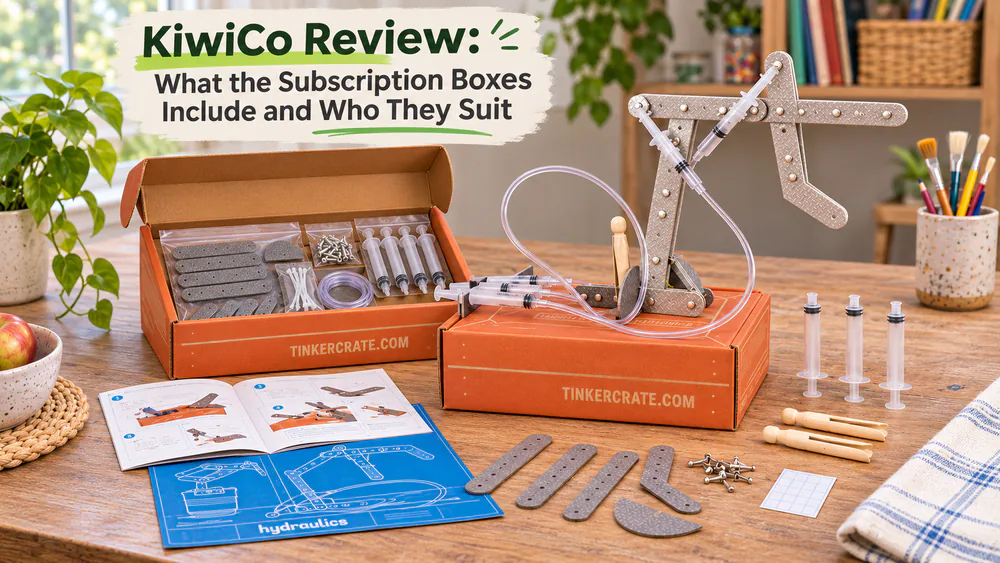
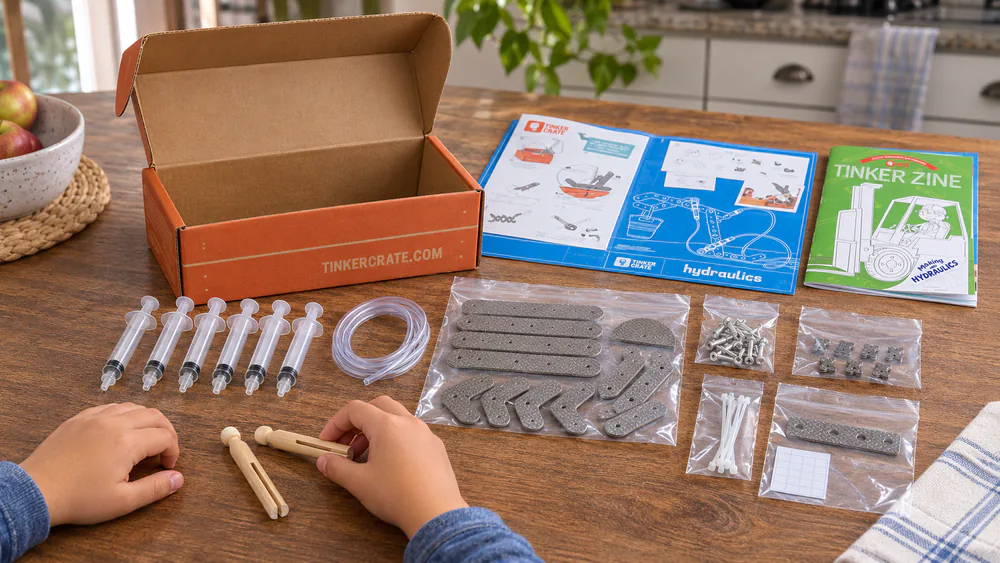
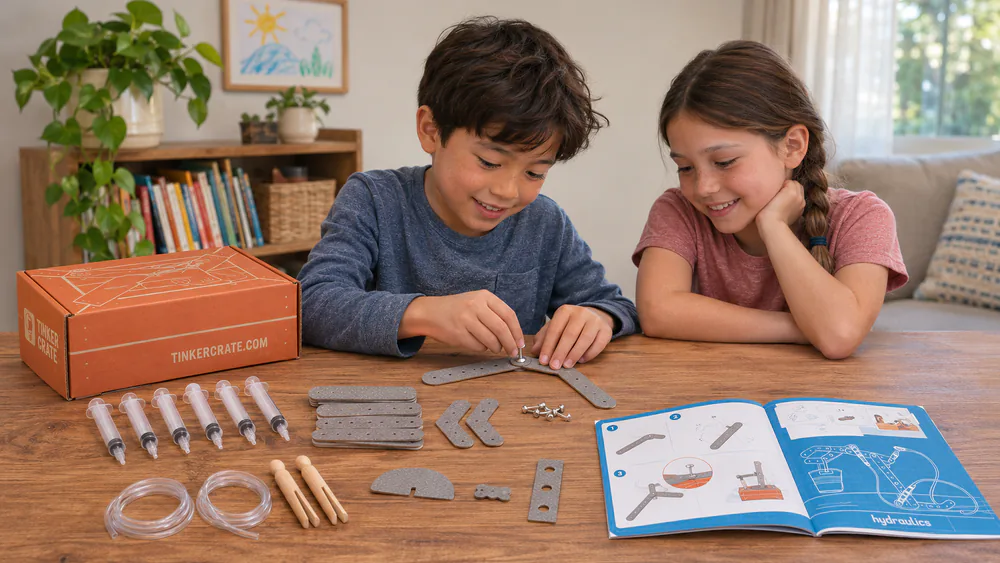
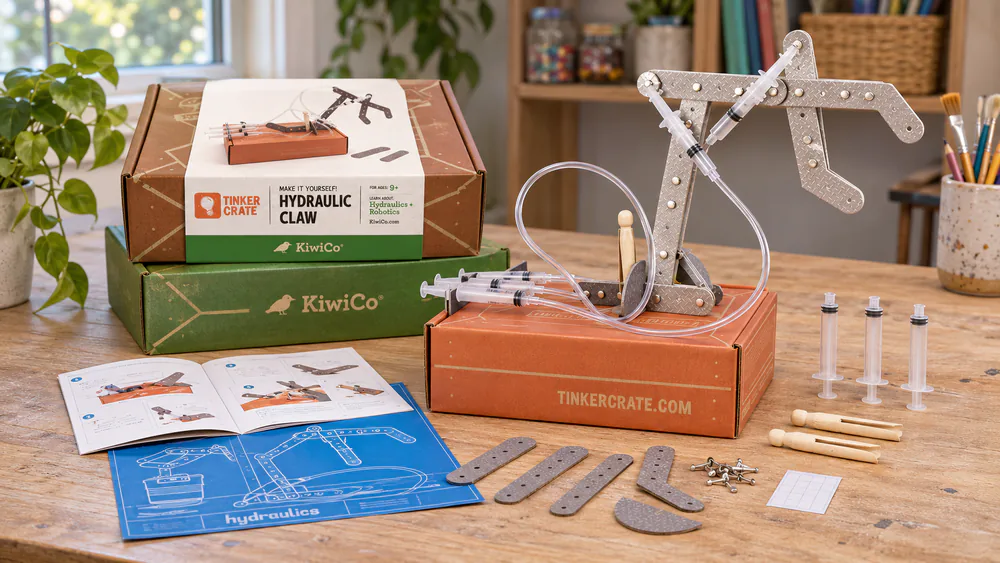
A Tinker Crate hydraulic claw took about an hour to build from the booklet. The instructions were clear enough that a few grade-schoolers followed them alone. Then they kept building bigger versions on their own.
That one project is why we took KiwiCo seriously. Few kits inspire kids to keep building after the last instruction. But a subscription also renews itself, ships on a schedule, and does not fit every child. This review covers what each crate line includes, where it fell short, and who should think twice.
What Is KiwiCo?
KiwiCo is a subscription company that mails hands-on project crates to kids. It was founded in October 2011 by engineer Sandra Oh Lin and is based in Mountain View, California. It started with Kiwi Crate, a monthly box of science and art projects.
In 2024 the company also moved into stores through Target and Barnes & Noble. You can still subscribe directly on the official KiwiCo site, which is where we would start.
KiwiCo Crate Lines by Age
KiwiCo sorts crates by age. The official page lists the lines below. The company has been rolling out newer club names (Sprout, Labs, Studio, and World), and age bands vary between reports. Check the age range on the page when you subscribe, because the names may have changed.
| Crate line | Age range | What it is | Best for |
|---|---|---|---|
| Panda | 0-36 months | Sensory toys, parent guides | Babies and toddlers |
| Koala | 3-6 | Pretend play, early concepts | Preschoolers |
| Kiwi | 6-9 | Science and art projects | Early grade-schoolers |
| Atlas | 6-12 | One country per crate | Geography and culture fans |
| Doodle | 6-12 | Arts and crafts | Young artists |
| Tinker | 9-12 | Engineering builds | Builders and tinkerers |
| Eureka | 12+ | Robotics and electronics | Teens |
Panda Crate (0-36 months)
Panda crates hold sensory toys and parent guides for babies and toddlers. They ship every two months rather than monthly. Some pieces are small and coin-sized, which is a choking risk for babies. Panda play needs a grown-up beside the child the whole time.
Koala Crate (3-6 years)
Koala is built around pretend play and early concepts. We could not confirm build times or kid reactions for this line, so we will not guess. Young children at this age need a grown-up for most steps. A 3-year-old spent an hour with a Chemistry Play Lab crate and kept running extra experiments beyond the booklet.
Kiwi Crate (6-9 years)
Kiwi is the original line, mixing science and art. Most crates take about 30 minutes to an hour. Kids this age can often follow the booklet, though they still do better with a helper nearby.
Atlas Crate (6-12 years)
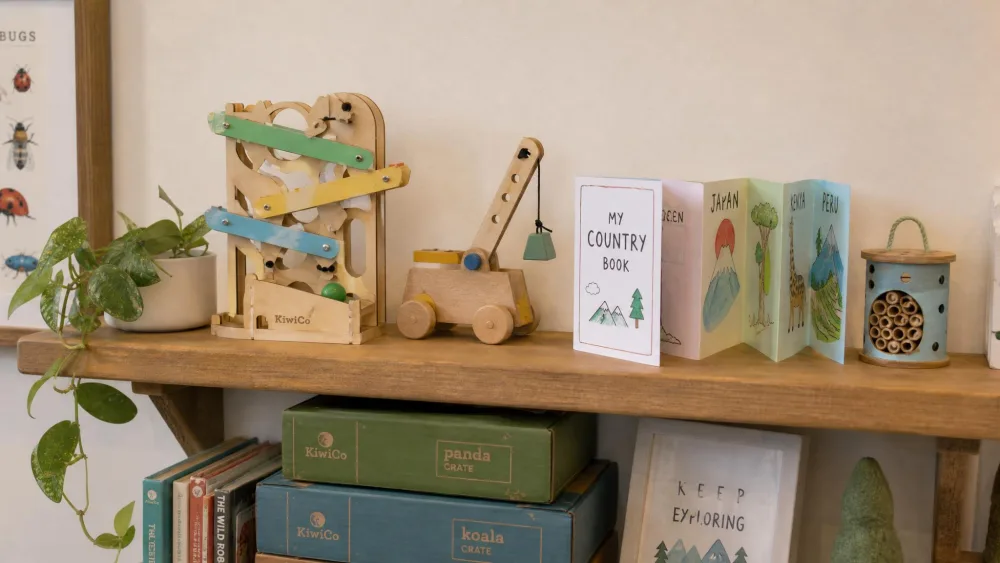
Atlas covers one country per crate. A 7-year-old stayed hooked across several world-travel boxes, and the monthly country pages could be bound into a book. This is the line we would pick for a curious kid who likes maps and food.
Doodle Crate (6-12 years)
Doodle is the arts and crafts line, with projects such as sun-catchers and soap. It suits kids who like making things to keep or give away. Age bands for Doodle differ between sources, so read the listing closely.
Tinker Crate (9-12 years)
Tinker is the engineering line, with builds like a grabber or a motorcycle. The hydraulic claw from the opening is the build we would point to first. An 11-year-old found the middle of the build tedious but felt the working result was worth it. Tinker builds are split into several parts, so you can stop for a break and come back.
Eureka Crate (12+ years)
Eureka brings robotics and electronics for teens. We did not build a Eureka crate ourselves, so we can only describe the line. It is the one to look at when a Tinker fan outgrows the younger projects.
NoteMaker Crate (12+) still shows up on the official page, but it appears to have folded into the newer Studio club. We could not confirm the date, so check before you pick it.
What Is in a Typical Crate
A typical crate contains the project materials and an illustrated booklet, so you know what to expect before choosing a line. Many projects include a toy or tool that kids keep playing with after the build. In our experience those toys often become favorites, long after the build is done.
Build time is modest. Typical crates finish in about 30 minutes and rarely run past an hour, so one crate does not fill an afternoon. Younger kids need a grown-up beside them for most steps. Older kids can work through the booklet largely alone.
Parent tipSome crates need a household item that is not in the box. Read the instructions before opening day so you are not hunting for it mid-build.
KiwiCo for Classrooms and Education Programs
Beyond home use, KiwiCo Education ships crates to programs. It has served nearly 10,000 schools, after-school programs and organizations. The crates come with materials, illustrated instructions, grade-appropriate reading, and minimal prep. They are aligned to NGSS and Common Core. Educators get 10% off orders of 10 or more crates with a code.
One study had educators in a suburban district use crates in classrooms. It is a Johns Hopkins study of KiwiCo crates in classrooms, and KiwiCo promotes it, so read it as brand-published rather than fully independent.
What We Loved and What We Skipped
What we loved is the build itself. The instructions are clear, the toys last, and kids can work toward something that really works. We could do without the pressure of keeping up with a delivery schedule.
NoteWe like to let kids keep the finished toy on a shelf for a few days before the next crate lands, so each build gets its moment.
Pros
- Clear booklets that older kids can follow alone
- Projects often turn into toys kids keep using
- Builds come in parts, so breaks are easy
- Support usually sends replacements for broken or missing pieces when asked
Cons
- Some projects feel thin for the money
- Some crates are too hard or too easy for the stated age
- Kits can be messy, and kids get discouraged without a grown-up to troubleshoot
- Boxes can stack up if you do not change the cadence before they ship
Pricing, Shipping, and Cancellation
KiwiCo is mid-priced overall, with Eureka, Maker, and Panda toward the premium end. Cost varies by line and by term, so check the current figure on the site. Plans come as monthly, 3-month, 6-month, and 12-month terms. All plans auto-renew by default.
Shipping is the easy part. U.S. subscribers get free shipping. Members also get 10% off any KiwiCo purchase, early access to new products, and a birthday surprise. Store orders can be returned within 60 days.
Cancellation takes more care, and it is the most common complaint we found. Unexpected billing is the top one.
- Cancel in your account: name menu, Subscriptions, Manage, then cancel.
- Cancel by 11:59 PM EST the day before the billing date to avoid the next charge.
- Monthly plans can be canceled after the first crate ships.
- Quarterly, semi-annual, and annual plans cannot be canceled mid-term. Turn off auto-renewal and the plan ends when the term finishes.
Watch outA prepaid term cannot be canceled early. If you are unsure, start with a monthly plan. Customer service replies can also be slow, so do not leave changes to the last day.
Before you cancel, you can pause, get crates every other month, or switch line or age range. A pause lasts one month by default, and Customer Care can pause for up to three months at a time.
Who KiwiCo Is Best For
With the details above in mind, KiwiCo suits families who want a short, guided project every month or two. It works for kids who like following a booklet and ending up with a working toy. It is also a good fit if you want fewer decisions about what to buy.
It is a weaker fit if you want a big, slow project. Newer crates drop out of the play rotation sooner than older ones, so some feel thin. Think twice if you dislike auto-renewing plans or want a project your child can complete without you beside them.
KiwiCo Alternatives
If KiwiCo is not right, compare it with other options. On our own site, see our guides to the best subscription boxes for kids and the best STEM kits for kids. A one-off kit lets you test your child's interest without a renewal date.
FAQ
Is KiwiCo worth it for a child who loses interest quickly?
It depends on the fit. Some crates are too easy for the stated age, and a bored child stops. Switching line or age range is the first thing to try.
What if a crate arrives with broken or missing pieces?
Crates can arrive that way. KiwiCo support usually sends replacements when asked.
Can I return something I bought from the store?
Store orders can be returned within 60 days, and orders ship in 2 business days.
Is the Yummy Crate still available?
It appears to have been discontinued as part of the move to newer clubs. Check the official site before counting on it.
How do I cancel or pause?
Use your account under Subscriptions, then Manage. Cancel by 11:59 PM EST the day before billing. Prepaid terms cannot be canceled mid-term, but you can turn off auto-renewal.
How often do crates ship?
Most lines ship monthly. Panda ships every two months, and you can ask for crates every other month on other lines.
Final Thoughts: Is KiwiCo Worth It?
KiwiCo is worth trying if your child likes building and you are happy with short projects. Our best result was a build that kids kept expanding after the booklet ended. Our biggest caution is the auto-renewing plan, so begin with a monthly term and set a reminder.
If you want to see the current lines and terms, the official KiwiCo site lists them all.