The 15 Best Subscription Boxes for Kids in 2026
Our first STEM crate was opened, built and finished in about half an hour, then sat on the counter looking expensive. That gap between delivery day and what happens afterward is the real problem with these subscriptions.
Plenty are wonderful. Plenty are a monthly charge for twenty minutes of paper and stickers, and you only find that out after three deliveries.
So this guide sorts the fifteen boxes worth your money by what they do: build, read, cook, create, explore or wear. For each one you get the ages it really fits, what it costs, and the honest reason it might not work in your house.
NoteTwo things surprised us. The building boxes had the shortest afterlife, because once a build is done it is done. And the wide-age craft boxes were hardest to place in a big family, since one box left a younger child frustrated and an older one bored the same afternoon.
Our Top Picks at a Glance
| Box | Age range | Price per box | Cadence | Focus |
|---|---|---|---|---|
| KiwiCo | 0-36 months to 12+ | About $24/mo | Monthly (Panda every 2 months) | STEM and art |
| MEL Science | 5-10 / 8+ / 10+ | About $29.90-$39.90/mo | Monthly | Chemistry, physics |
| CrunchLabs Build Box | 8-12 | $29.95/mo | Monthly | Engineering builds |
| Bitsbox | 6-12 | From about $16.95/mo | Monthly | Coding |
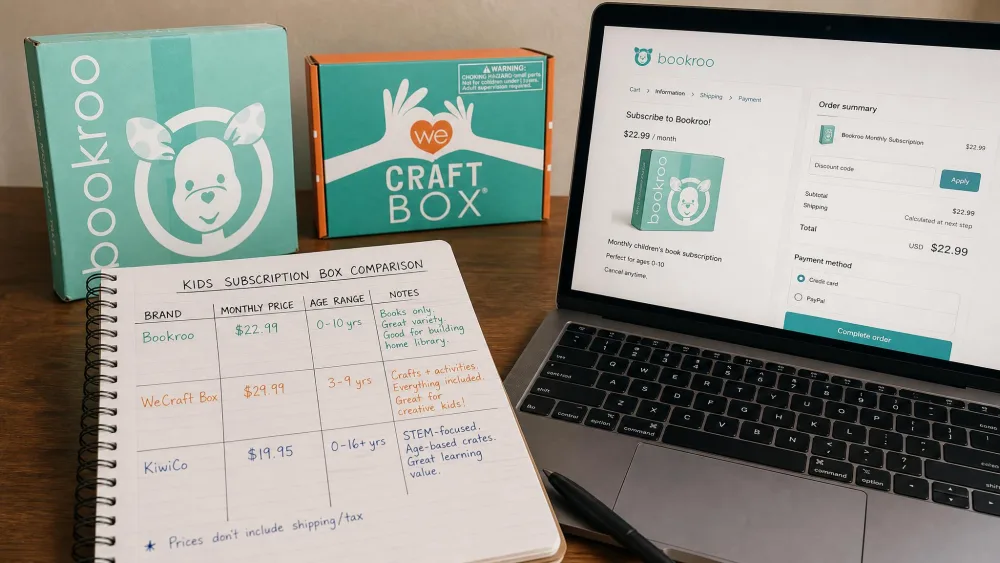
| Bookroo | 0-10 | About $19.95-$21.95/mo | Monthly | Books |
| Literati | Newborn to 13+ | $9.95/mo plus books kept | Monthly | Books |
| We Craft Box | 3-9 | $39.99/mo | Monthly | Crafts |
| Green Kid Crafts | 2-10 | $19.95/mo plus $5.95 shipping | Monthly | STEAM crafts |
| Raddish Kids | 4-14 | About $20-$24 per kit | Monthly | Cooking |
| Little Passports | 3-10 | $14.95-$21.95/mo | Monthly | Geography, culture |
| Lovevery Play Kits | 0-4 | $80 or $120 per kit | Every 2 or 3 months | Montessori play |
| Sensory TheraPlay Box | Varies by need | From $44/mo | Monthly | Sensory tools |
| Pipsticks | 3 and up | $19.95/mo | Monthly | Stickers, mail |
| Stitch Fix Kids | Sizes 2T-14 | $20 fee, $10-$35 per item | On demand | Clothing |
| Universal Yums | Whole family | $17, $29 or $45 | Monthly | International snacks |
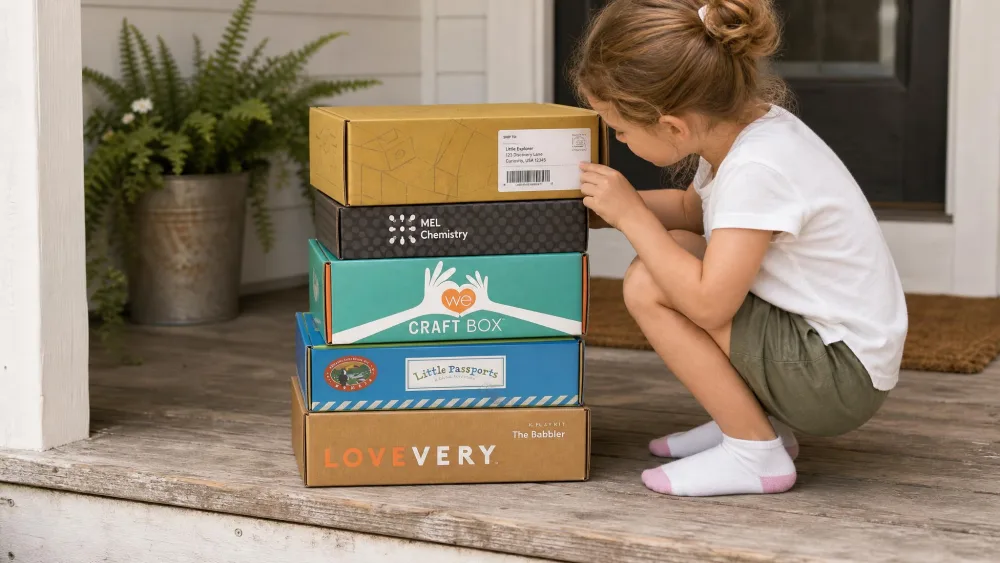
Best Overall Subscription Box for Kids: KiwiCo
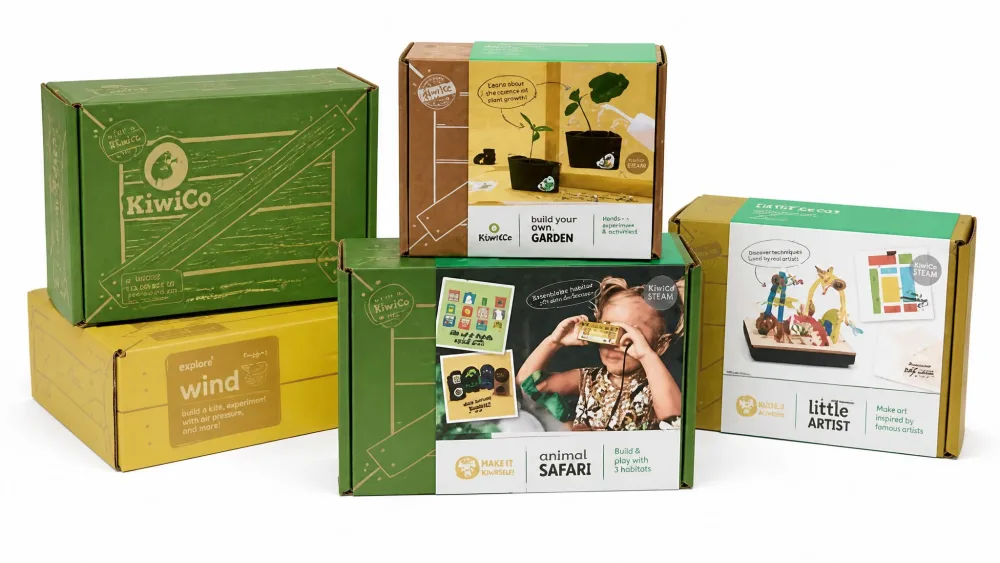
No other service covers as much ground as KiwiCo. The crates run from Panda at 0-36 months through Koala, Kiwi, Atlas, Doodle and Tinker to Maker and Eureka for kids twelve and up.
What's Inside
- A themed project crate with every part and tool included
- A magazine explaining the science or art behind the build
Who It's Best For
Families who want one dependable delivery a month without researching a new brand each time. Our caution is pace: a crate runs 30 minutes to a couple of hours, and the excitement fades once the build is done. Difficulty is uneven too, and one crate landed far too hard for a six-year-old.
Pros
- Widest age span here, newborn through teen
- Every part you need arrives in the crate
Cons
- Pricey for what is often one evening's project
- Difficulty is inconsistent between crates
Best STEM Subscription Box: MEL Science
If KiwiCo is the generalist, MEL Science is the specialist: two or more experiments a month with reusable glassware and reagents, and an app that walks kids through each one. The tracks are MEL Kids for ages 5-10, MEL Physics from eight up and MEL Chemistry at 10+.
Who It's Best For
Kids who already like science and want the real version rather than a novelty. This is not a hand-it-over-and-walk-away subscription: an adult sits alongside to read instructions and manage the mess. The app content is accurate rather than decorative, which is what justifies the price.
Pros
- Real chemistry, not a watered-down version
- App guidance keeps kids on track
Cons
- Needs an adult at the table
- One of the most expensive boxes here
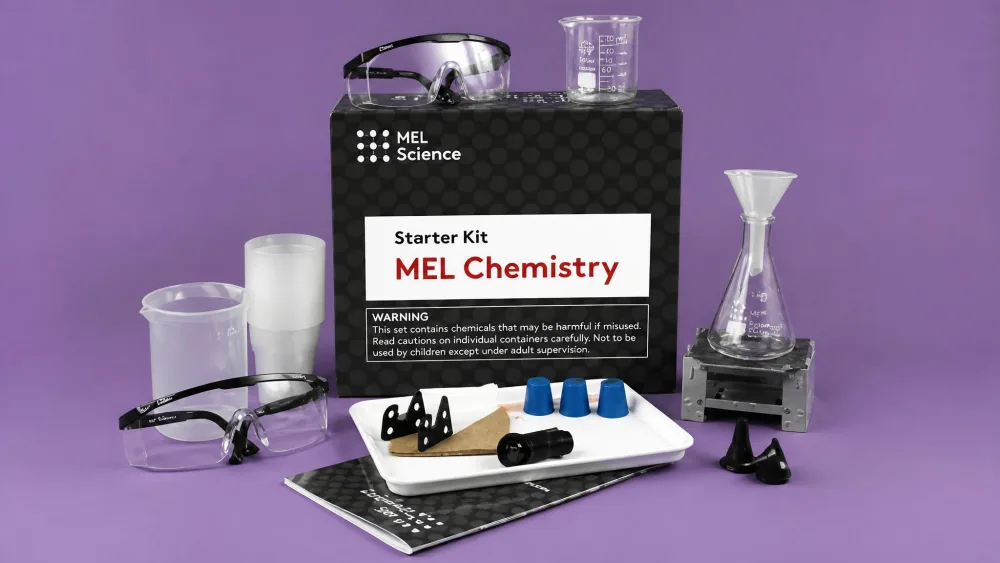
Watch outScience and building boxes contain small parts, magnets and glassware rated for a minimum age. Check the label before handing one to a younger sibling.
Best Engineering Box: CrunchLabs Build Box
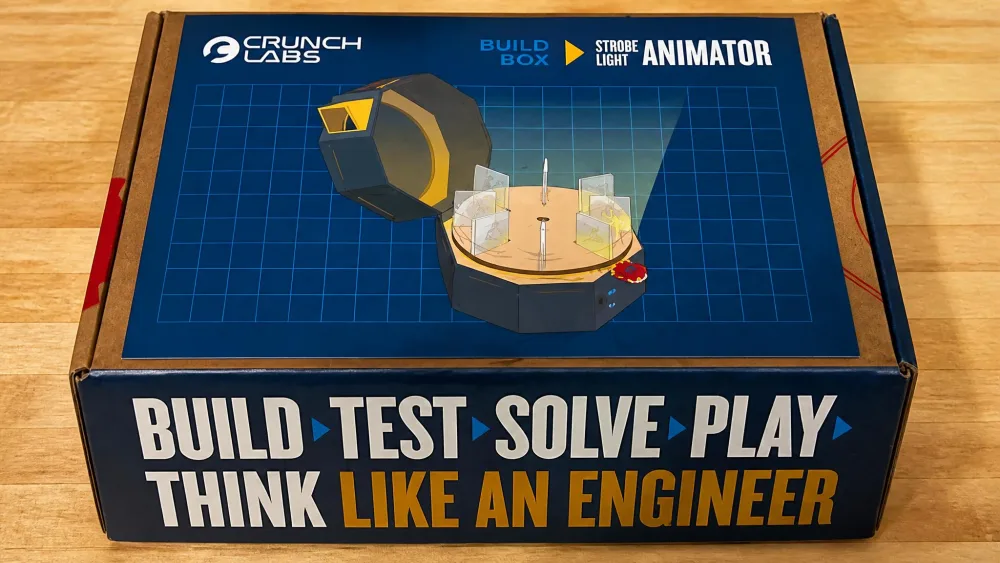
Where MEL sends an experiment to run, the CrunchLabs Build Box sends a machine to assemble: one engineering build a month designed by Mark Rober, with every part, a video walkthrough on the physics and a follow-on challenge. It is built for ages 8-12 and up.
Who It's Best For
Children who enjoy following steps precisely. Watch the first ten minutes. A child who gets the opening steps right sits up straighter and stops asking for help, and that confidence carries through the fiddly middle of the build. Skip one picture, though, and the mechanism will not turn, and the only fix is to start again. Part quality is inconsistent enough that some builds stall on a component rather than on the engineering.
Pros
- Genuinely satisfying mechanical builds
- Walkthroughs teach the reasoning
- Confidence builds fast once a child gets going
Cons
- Rigid instructions leave no room to improvise
- Occasional part problems stall a build
Best Coding Box: Bitsbox
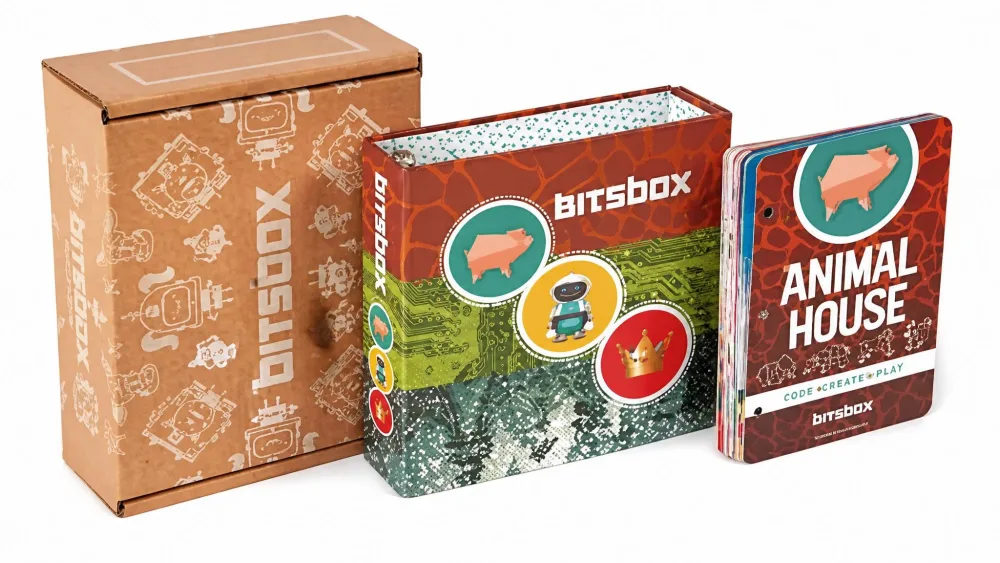
Bitsbox is the one box here that ends on a screen rather than on the table. It mails printed app-project cards at mixed difficulty, kids type them into a browser workspace in JavaScript-style syntax, and the finished apps run on a tablet. It is aimed at ages 6-12.
Who It's Best For
Kids who can already type reasonably well, because the typing is the whole gate. Our seven-year-old spent most of one session hunting for brackets and quotation marks, got the punctuation wrong twice and gave up before the app ever ran. An older child who gets a few lines working and sees the app appear on the tablet asks for the next card immediately. Wait until typing is comfortable and this becomes one of the best-value boxes here.
Pros
- Kids write real code, not drag-and-drop blocks
- Apps run on a device the child already uses
Cons
- Punishing for kids who cannot type yet
- Not screen-free, by design
Best Book Subscription Box: Bookroo
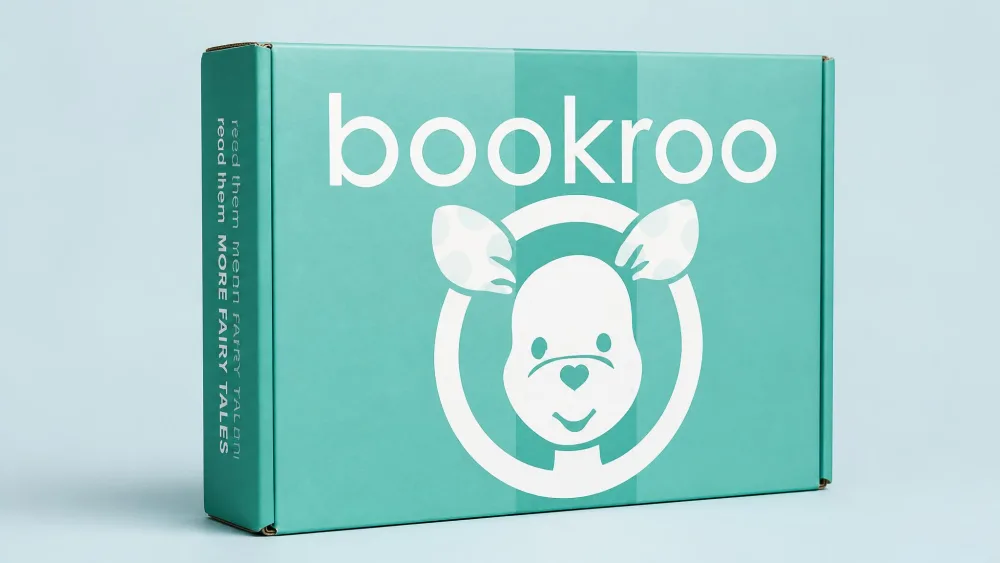
Bookroo wraps each title individually, which turns an ordinary delivery into a small event. The clubs cover ages 0-10: three board books for 0-3, two hardcover picture books for 3-6, two chapter books for 7-10.
What's Inside
- Two or three age-appropriate books, each wrapped separately
- Discussion questions and activity cards
Who It's Best For
Families building a home library rather than borrowing everything. Its strength is discovery: parents consistently find new-to-them authors instead of duplicating what is already on the shelf.
Pros
- Introduces authors you would never have picked
- Wrapped books make delivery day fun
Cons
- No say in the titles you receive
- Shipping is not always bundled in
Best Book Box for Older Kids: Literati
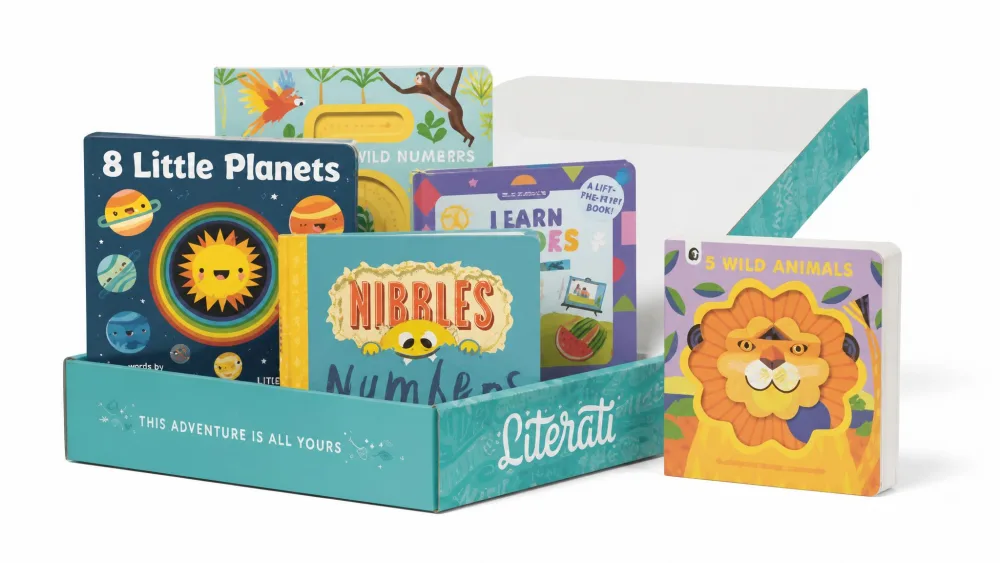
Bookroo makes the choice for you; Literati hands it back to your child. Five hand-picked books arrive with a prepaid return label, you keep the ones your child likes and return the rest, and boxes run by age from newborn upward.
Who It's Best For
Reluctant or picky readers, and older kids who want a say. The fee is only part of the cost, though, because you pay separately for the books you keep, so the real spend swings month to month.
Pros
- Your child chooses what stays
- Low membership fee if you keep nothing
Cons
- Real cost is unpredictable month to month
- Returns are a chore to remember
Best Art and Craft Box: We Craft Box
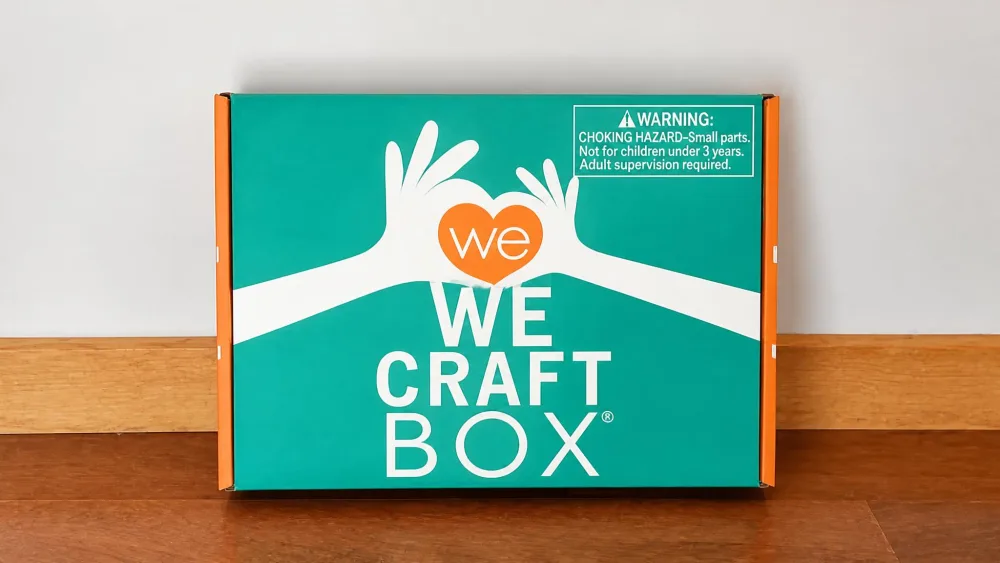
We Craft Box builds one theme a month around two or three craft projects, with pre-cut materials for two children and a themed storybook, for ages 3-9.
What's Inside
- Two to three themed craft projects with pre-cut pieces
- Enough materials for two kids at once
Who It's Best For
Siblings close in age, which is the part most craft boxes get wrong. One theme kept two children busy for about six crafts across nearly a month at roughly two projects a week, and everything was in the box down to the crayons and paintbrushes, so there was no hunting for supplies. Two cautions: some instruction cards are thin on detail, and the fizzy paint is not washable, so it can stain a wooden table if you skip the covering.
Pros
- Materials for two children in every box
- Pre-cut pieces suit the youngest crafters
Cons
- One of the priciest craft boxes at $39.99
- Narrow age window for a craft box
Best Craft Box on a Budget: Green Kid Crafts
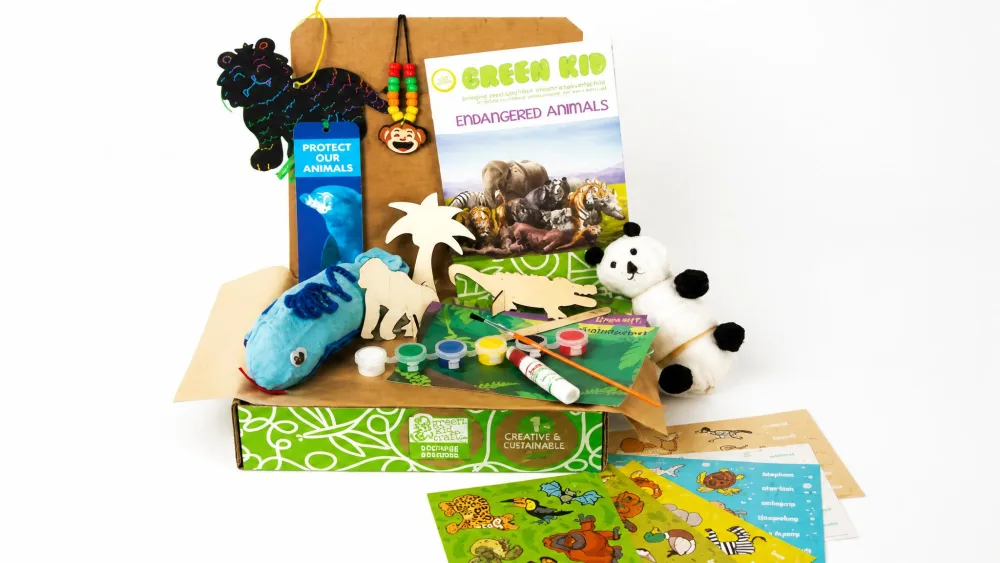
If We Craft Box is the polished option, Green Kid Crafts is the high-volume one at half the price, with a Junior Discovery Box for ages 2-4 and a Discovery Box for ages 5-10.
What's Inside
- Four to six craft and science projects every month
- Recycled and eco-conscious materials
Who It's Best For
Families who want volume for the price. The materials are good enough that most kids build with minimal help, which matters when you are running more than one child at once. Volume is relative, though. Our seven-year-old worked through a whole Discovery Box in one sitting and came back to the empty carton looking for the next activity, put out that a month of crafts had lasted an afternoon. A four-year-old would have stretched it across a fortnight.
Pros
- Four to six projects makes it the best value here
- Eco-conscious materials with little plastic
Cons
- Shipping is charged on top
- Wide age band suits nobody perfectly
Best Cooking Box: Raddish Kids
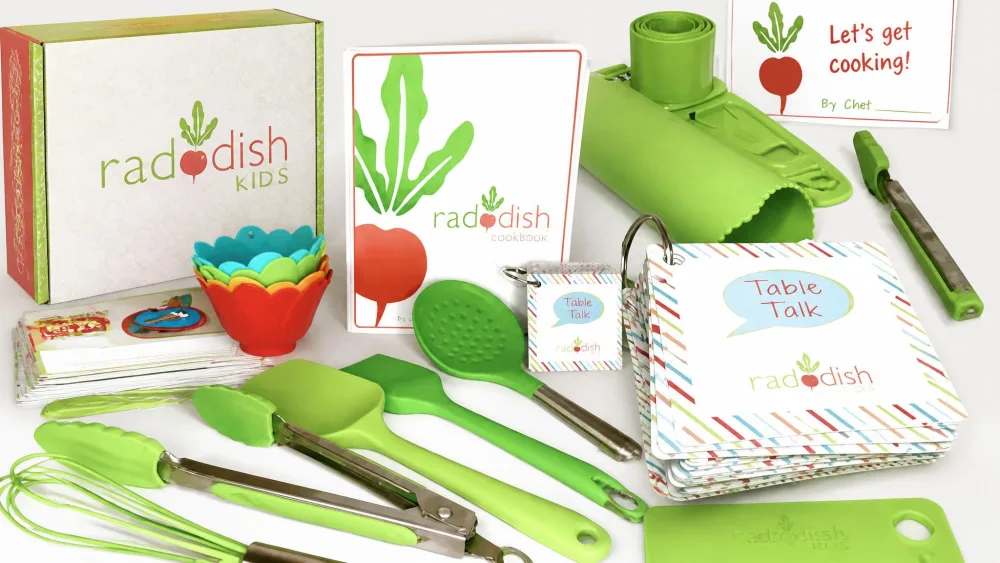
Raddish Kids splits into a Cooking Club for ages 4-14, a Global Eats Club from six up and a Baking Club from eight up.
What's Inside
- Three illustrated recipe guides on a monthly theme
- A real kitchen tool and a collectible apron patch
- Hands-on activities tied to the theme
Who It's Best For
Kids who want to cook for real. One thing catches everyone out: the kits arrive with no food, so an excited child tears the box open and then waits until someone shops. Raddish emails the list ahead of delivery, and taking that seriously changes the experience. Once the ingredients were in, our eight-year-old worked through most of a recipe alone, reading the guide and measuring without prompting, and called an adult over only for the hob and the sharp knife.
Pros
- Genuine cooking skills, not decorated cupcakes
- The kitchen tool gets used long after
Cons
- No ingredients included, so shopping is on you
- Younger cooks need close supervision
Parent tipIf a box is a gift, order at least two weeks out and pick a prepaid term. Prepaying is where the savings live across almost every brand here.
Best Geography and Culture Box: Little Passports
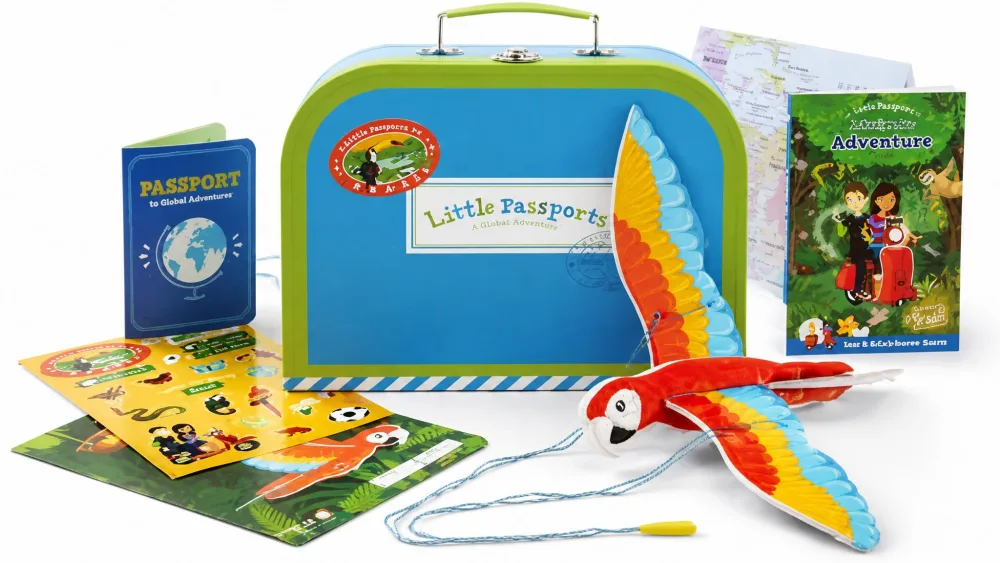
Cooking kits leave a meal behind; Little Passports leaves a collection. It runs the widest set of themed lines here, from Early Explorers and Animals Wild at three up through World Adventures, Kitchen Adventures and Science Expeditions to a USA Edition, and each delivery brings a country or state packet with souvenirs, stickers, activity sheets and an online extension. It is built mainly for ages 3-10.
Who It's Best For
Younger elementary kids who like maps, flags and collecting things, as long as you manage expectations on substance. Our seven-year-old opened a country packet at the kitchen table, read the letter, worked the puzzle sheet and stuck the stickers in the folder, and it was finished in about five minutes. She liked it. It just was not a month of anything, and the USA container feels cheap for the money. For a three- or four-year-old the pacing works better.
Pros
- Many themed lines to match an interest
- Cheapest entry point of any geography box here
Cons
- Light on materials for the price
- Finished in minutes by fast-moving kids
Best Box for Babies and Toddlers: Lovevery Play Kits
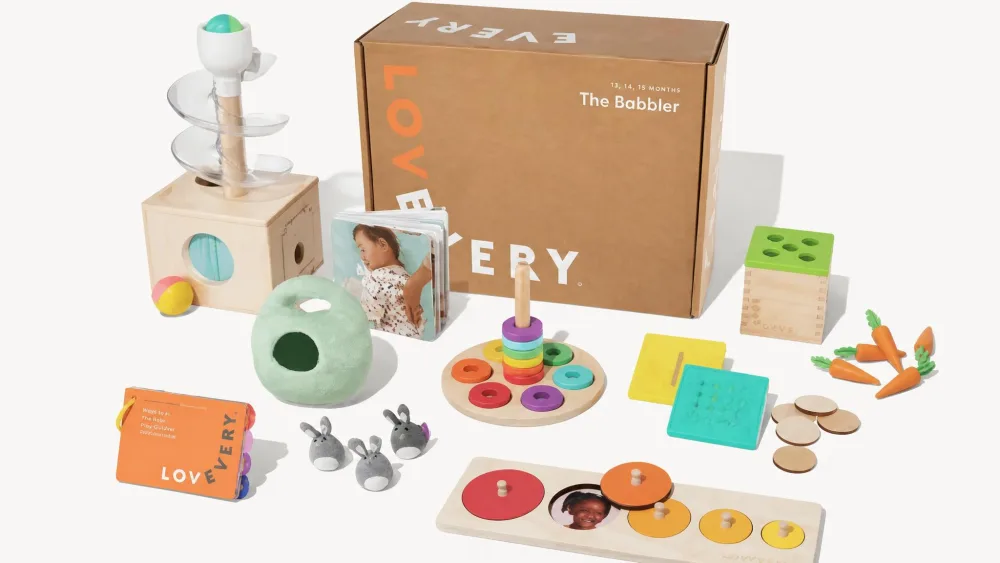
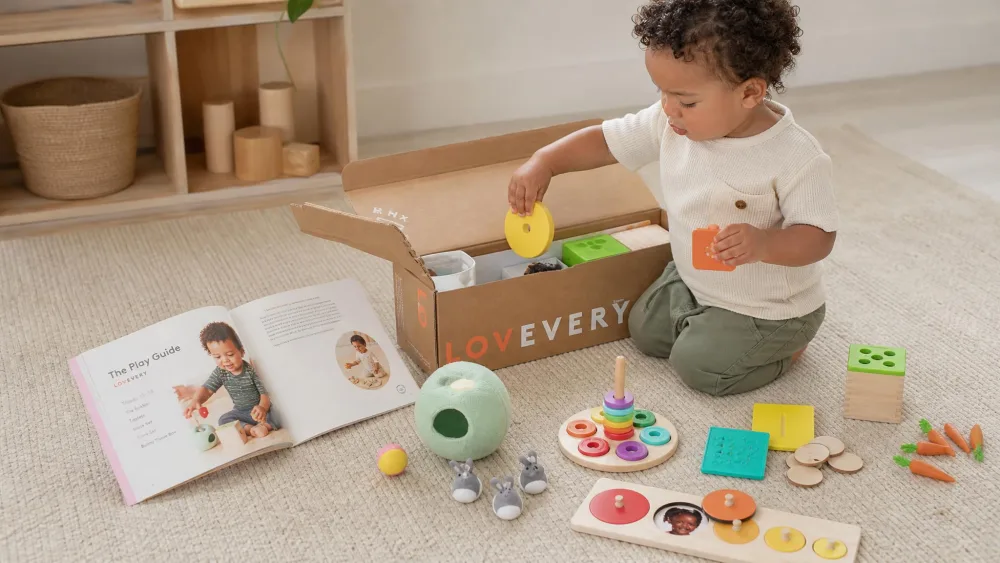
The Lovevery Play Kits arrive on a stage schedule rather than a monthly one: seven to ten Montessori-informed wooden and fabric toys per kit, plus a Play Guide explaining what each piece teaches.
Who It's Best For
First-time parents who would otherwise buy the wrong toy four times over. Expect a hit rate rather than a clean sweep. The texture cards in one kit held our baby's attention for roughly thirty seconds before going into his mouth, and one puzzle was never picked up. The pieces that did land got chewed, thrown off the high chair and dragged across the yard for months and still look fine, which is what makes the price defensible.
Pros
- Toys outlast almost anything else in the basket
- Play Guide removes the guesswork at each stage
Cons
- Highest cost per delivery by a wide margin
- Some pieces in every kit get ignored
Best Sensory Box: Sensory TheraPlay Box
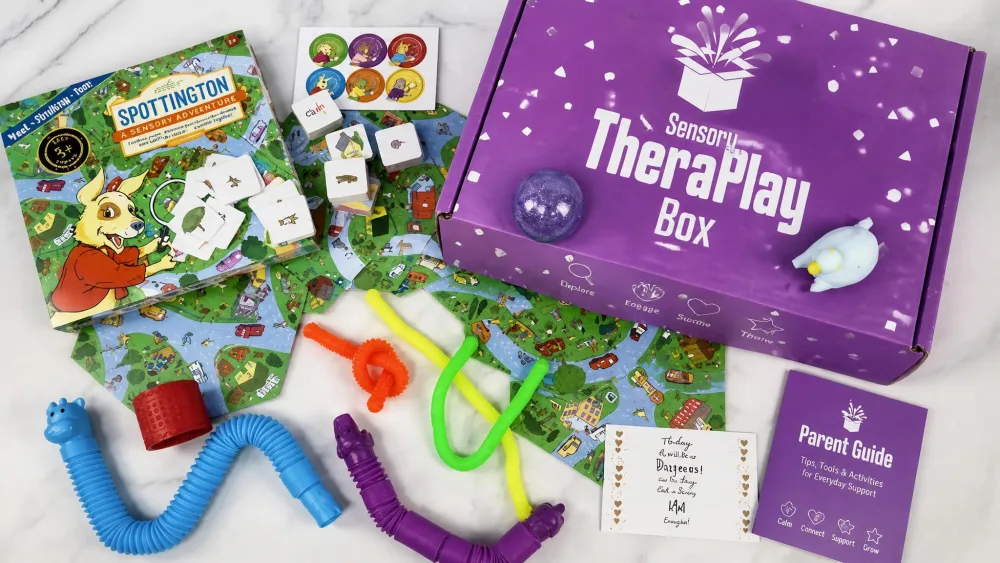
Every other box here is sorted by age. The Sensory TheraPlay Box is curated by occupational therapists instead, and each delivery brings five or more fidgets, chewables and tactile items chosen for kids with sensory processing needs.
Who It's Best For
Families already buying sensory tools one at a time, and anyone whose child has an occupational therapy plan. There is no published age range, because the box is matched to need rather than birthday.
Pros
- Chosen by occupational therapists
- Cheaper than buying the tools individually
Cons
- Expensive next to craft or STEM boxes
- No published age range
Best Sticker and Mail Club: Pipsticks
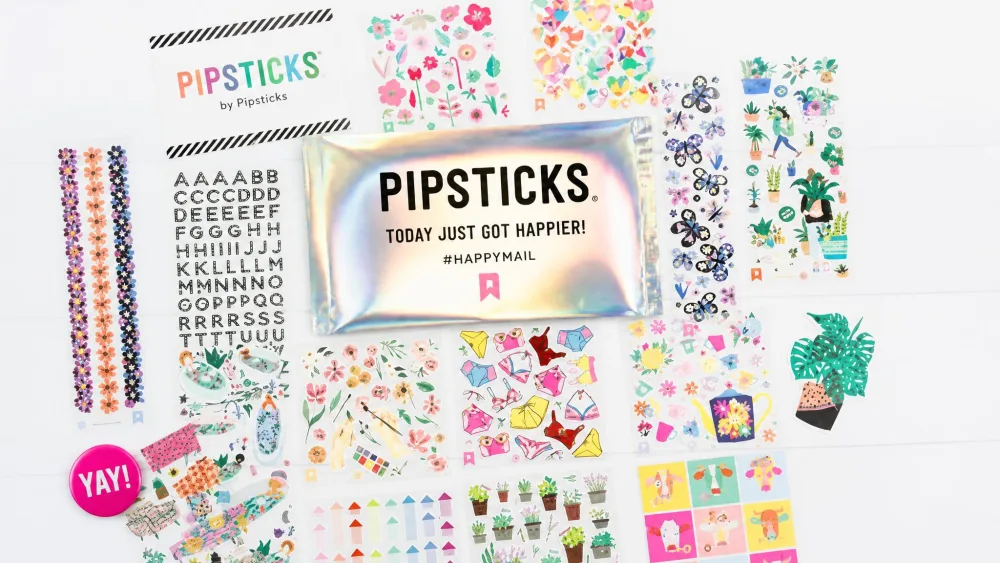
After a run of boxes with something to assemble, Pipsticks is a relief: nothing to build at all. The Kids Classic and Pro Classic tiers each send exclusive sticker sheets, a postcard and a small art extra as real mail addressed to the child.
Why It Keeps Working
It is the smallest idea here and the one with the least to go wrong. Nothing needs assembling or supervising, and nothing ends up half-built on a shelf. The envelope has the child's name on it, which is most of the appeal. The catch is price: $19.95 a month is steep for stickers next to a craft box, and Pipsticks states no minimum age on the Kids Classic tier, so use your judgement with a toddler who still mouths paper.
Pros
- Real mail with the child's name on it
- Nothing to build, clean up or store
Cons
- Steep for what amounts to stickers
- No stated minimum age
Best Clothing Subscription for Kids: Stitch Fix Kids
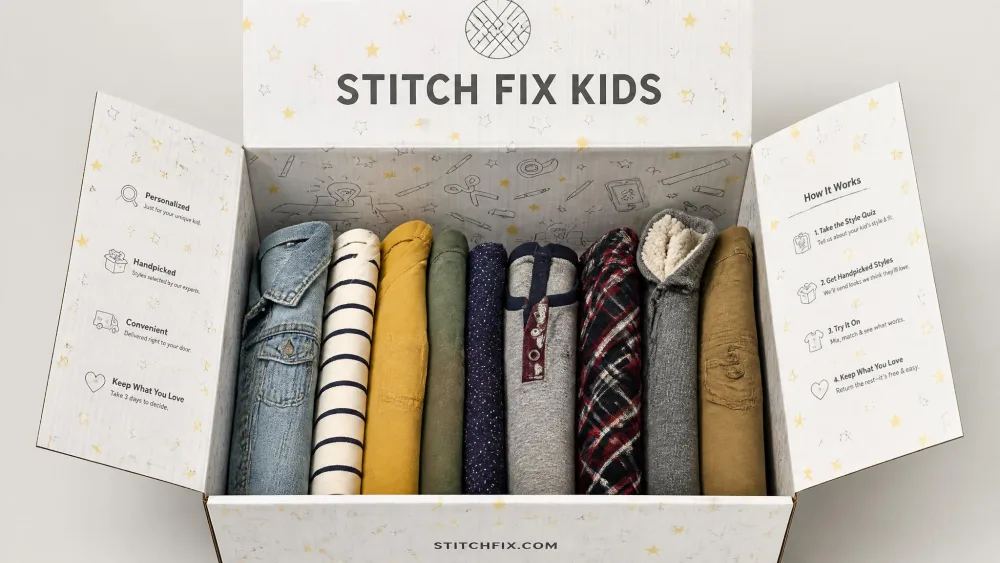
Stitch Fix Kids styles children in sizes 2T through 14 and sends 8-12 items per Fix rather than the five adults get, with a style card showing how the outfits go together.
What a Fix Actually Costs
You pay a $20 styling fee per Fix, credited against anything you keep, and most items land between $10 and $35 depending on the bracket you set. The arithmetic only works if you keep a lot. Keeping the whole box and taking the keep-everything discount works out at just under $12 an item including the fee, which is competitive with a shop. Keep two things and the fee is doing nothing, and if you normally buy secondhand it will feel expensive whatever the per-item price says.
Pros
- More items per Fix than the adult service
- Keeping everything unlocks a real discount
Cons
- Costly if you usually shop secondhand
- Styling fee is wasted if you keep nothing
Best Snack Box for Families: Universal Yums
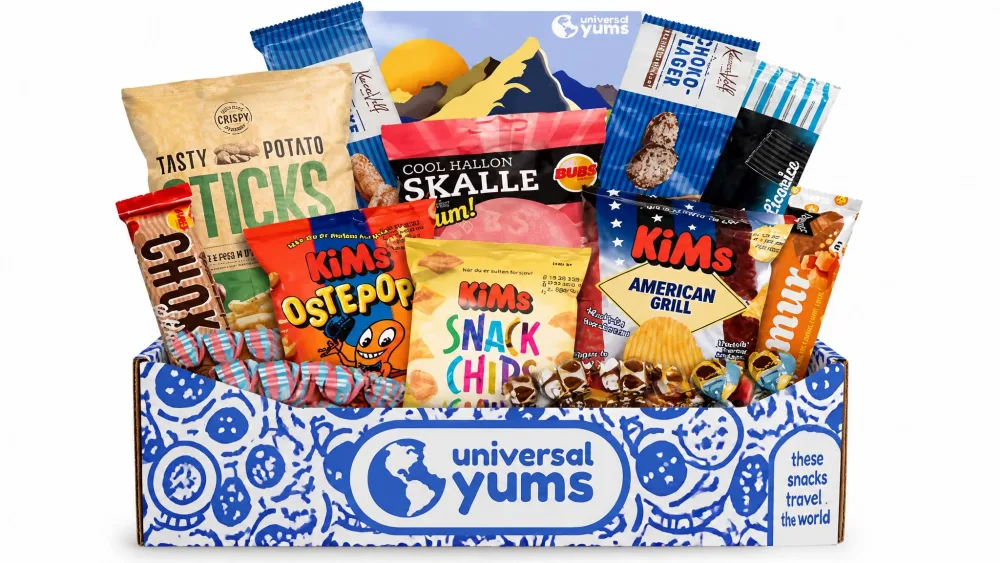
Every other pick here belongs to one child, which in a big family means several subscriptions or an argument. Universal Yums is the box everybody opens together: one country a month, its snacks, and a booklet of trivia and tasting notes, with free shipping in the contiguous U.S. The Yum Box is $17 for five to seven snacks, the Yum Yum Box $29 for ten to twelve and the Super Yum Box $45 for eighteen to twenty.
Who It's Best For
Families who want one shared thing rather than a box per child. It helps picky eaters branch out, because there is enough variety that something always appeals. Buy a tier bigger than you think you need if you are splitting it, since some snacks are single-serve and do not divide.
Pros
- The whole family opens one box together
- Picky eaters try things they would refuse at dinner
Cons
- Single-serve snacks cause arguments
- Snacks are gone in an evening
That is the shortlist. Here is how we narrowed it, and what to weigh before you subscribe.
How We Chose These Subscription Boxes
We started from the boxes that come up again and again in parent recommendations, then cut anything that could not answer three questions: who is it for, what arrives, and what does it really cost.
Age fit came first, because a box that claims ages three to ten usually suits one narrow slice of that range. Then we looked at cost honestly, since almost every service here quotes its lowest prepaid figure as the headline price. Finally we weighed what happens after the excitement of opening: some boxes leave a book, a tool or a toy that stays in use, and others leave a finished project and a recycling pile.
Subscription Boxes by Age: 0-2, 3-5, 6-9, 10-13
Ages 0-2. Lovevery Play Kits, KiwiCo's Panda Crate and Bookroo's board book club. Everything here should be chunky, chewable and free of small parts.
Ages 3-5. We Craft Box, Green Kid Crafts' Junior Discovery Box, Little Passports Early Explorers and Pipsticks. Look for pre-cut materials, because scissors work is still a parent job.
Ages 6-9. The sweet spot: Kiwi and Atlas crates, Bitsbox, Raddish Kids, Bookroo's chapter book club and Little Passports World Adventures.
Ages 10-13. CrunchLabs, MEL Chemistry, Literati, Universal Yums and Stitch Fix Kids. Older kids notice value fast, so lean toward boxes that leave a skill or an object behind.
How Much Should a Kids' Subscription Box Cost?
Most good boxes land between $17 and $30 a month. Below about $15 you are usually paying for paper and stickers; above $40, expect specialist curation or substantial toys.
Watch the costs hiding outside the headline price. Green Kid Crafts charges $5.95 shipping every delivery, Raddish sends no ingredients so a kit's true cost includes a grocery run, and Literati bills the fee and then the books you keep.
Prepaying is the biggest lever: CrunchLabs drops from $29.95 to about $24.95 a box, Raddish from $24 to about $20 a kit, Universal Yums from $17 to about $15.
Parent tipBefore committing to a year, buy one month at full price. A single delivery tells you more than any review, including this one, and the prepay discount will still be there next month.
What to Look For Before You Subscribe
Age range and skill fit
Treat a published age range as the widest possible claim, not a promise. A box built for ages 2-10 is two boxes wearing one label, and the mismatch shows fastest in craft subscriptions, where a five-year-old needs help a nine-year-old resents.
Flexibility, pausing, and cancellation
Every service here lets you pause or cancel from your account, but renewal dates and notice windows vary, so check the terms before the second billing date. Prepaid plans trade that flexibility for the discount.
Watch outAlmost all of these auto-renew by default, and prepaid annual plans usually renew as a full annual charge. Put the renewal date in your calendar the day you subscribe.
Educational value vs. novelty
A box teaches something when the child does the thinking, not when the instructions do it for them. Bitsbox, MEL Science and Raddish all leave a skill behind. Sticker and snack boxes are fun, and fun is a fine reason to buy, but do not pay a learning premium for them.
Cost per box and shipping
Divide the annual spend by the number of deliveries, then add shipping and anything you buy separately. Lovevery looks alarming at $120 per kit until you notice it ships every three months, near $40 a month. Hands-on activities also do something a screen cannot, and the American Academy of Pediatrics on the power of play makes that case.
Frequently Asked Questions
What happens when my child outgrows the age range?
Most of these brands move you up rather than cutting you off. KiwiCo steps a child from Panda through Kiwi and Atlas to Maker and Eureka at 12 and over, Raddish runs its clubs to 14, Literati goes to 13 and up, and Stitch Fix Kids to size 14. The hard ceilings are Bookroo at 10, Little Passports at around 10 and Lovevery at 4, so plan a switch rather than a renewal as those birthdays approach.
Which boxes need a parent sitting at the table?
MEL Science is the clearest case, since an adult reads the instructions and manages the mess. Raddish needs one for a few steps of most recipes even when an eight-year-old handles the rest alone. Green Kid Crafts and We Craft Box are built so kids can work with very little help, and Pipsticks needs no adult at all.
Are kids' subscription boxes worth the cost?
They are worth it when the box replaces spending you were already doing on books, craft supplies or toys, and not worth it when deliveries stack up unopened. Buy a single month first, and prepay only once your child has used two or three boxes.
Do any of these boxes charge extra for shipping?
Some do and some do not, so check before you compare headline prices. KiwiCo ships free to U.S. subscribers and Universal Yums free within the contiguous U.S., while Green Kid Crafts adds $5.95 per delivery and Bookroo's month-to-month price does not always include it. Confirm addresses outside the contiguous U.S. with the vendor.
How often do kids' subscription boxes ship?
Most ship monthly. The exceptions matter: KiwiCo's Panda Crate ships every other month, Lovevery Play Kits every two or three months depending on the stage, and Stitch Fix Kids only when you request a Fix.
Are subscription boxes safe for younger kids?
Boxes designed for babies and toddlers, like Lovevery and Panda Crate, are built to be mouthed and thrown. Boxes for older children often contain small parts, magnets or glassware, so check the printed age grading before a younger sibling gets hold of one.