Sillbird Robot Car Building Kit Review: Is This 5-in-1 STEM Kit Worth It?
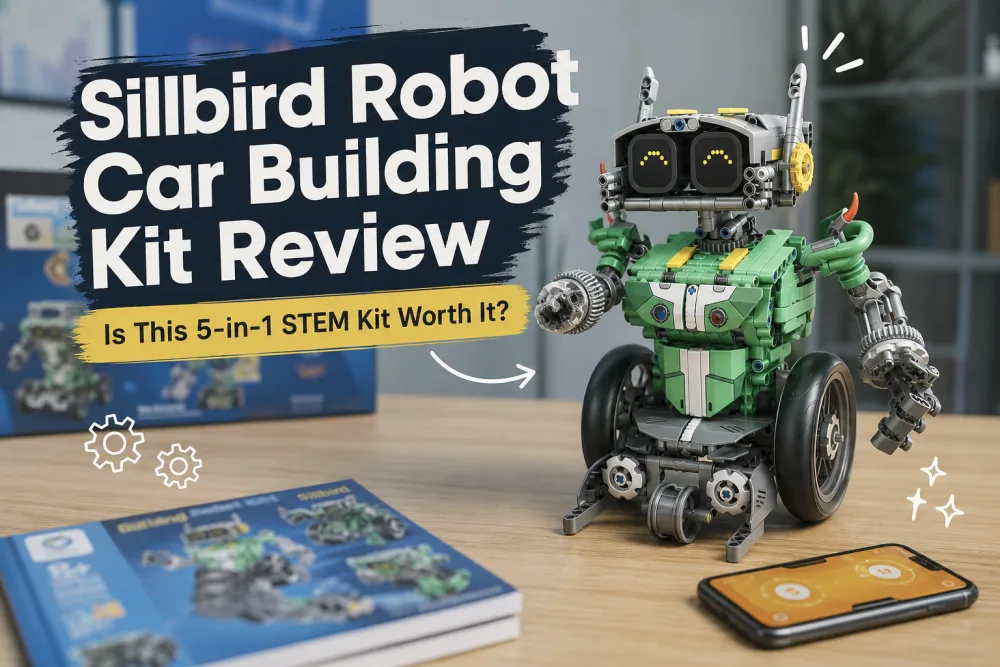
A kit that promises a robot, a car, a tank, and a dinosaur from one box sounds almost too good for the price. That is what we wanted to test at home, where a STEM toy has to survive curious hands and kids who lose interest fast. This is the Sillbird ecoEbot, the 5-in-1 set built from 488 pieces for kids aged 8-12. Here is what held up.
Quick Verdict (Our Rating)
What's in the Box & Key Specs
You get parts for all five models, the rechargeable battery, the remote, and a step-by-step instruction booklet. Control works two ways: the remote, plus a Bluetooth app that adds path planning and basic coding. The battery gives up to 30 minutes per charge.
Specs at a Glance
| Spec | Sillbird Robot Car Kit (5-in-1) |
|---|---|
| Pieces / models | 488 pieces, 5 models (robot, car, tank, dinosaur + custom) |
| Recommended age | 8-12 |
| Control | Remote + Bluetooth app (coding) |
| Battery | Rechargeable, up to 30 minutes per charge |
| Approx. price | ~$59.99 (check the current price on Amazon) |
We saw $59.99 on Sillbird's official product page (down from a $69.99 list), but prices move around, so check before you buy.
Which Sillbird Model Is This? (488 vs 631-piece variants)
Several near-identical Sillbird kits share a name. Ours is the 488-piece, 5-in-1 ecoEbot for ages 8-12. There is also a larger 631-piece sibling on Amazon, but its own listings cannot agree on whether it is a 4-in-1 or a 6-in-1, so we would not lean on its model count. Other, larger Sillbird kits exist too, so match the piece count and label, not the name alone.
NoteMatch the piece count (488) and the "5-in-1" label together, not the name alone, to be sure you are buying the same kit reviewed here.
Building the 5-in-1 Models (Robot, Car, Tank, Dinosaur + Custom)
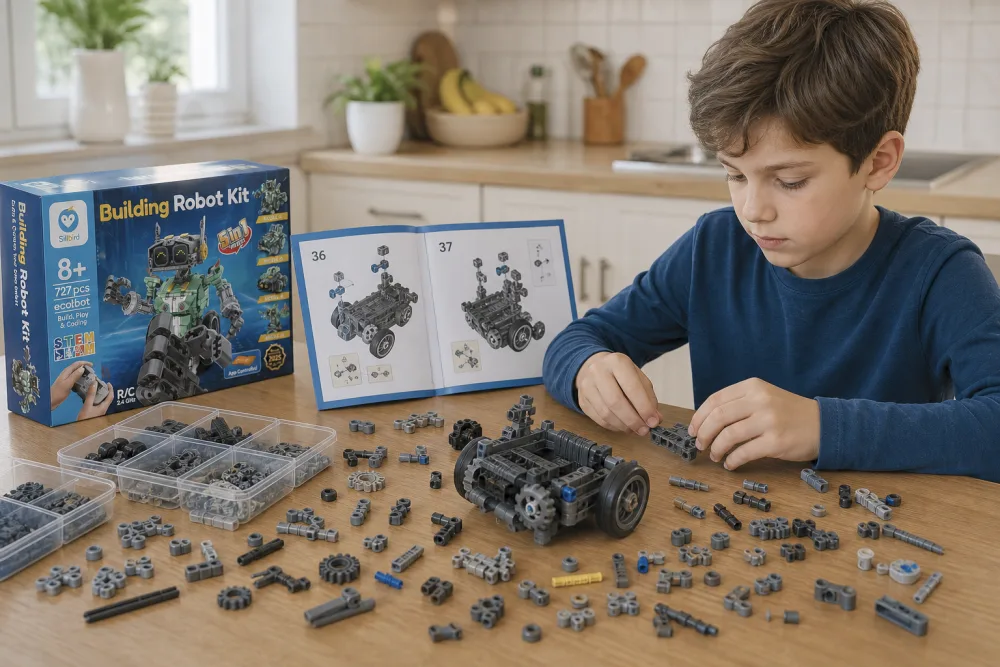
The build is the heart of this kit, and it is a proper project, not a ten-minute snap-together. The instructions are detailed and easy to follow, and working through them produces a real, radio-controlled robot. We liked that the manual does not hide the trickier moments: kids make a wrong choice, spot it, and correct it, and that figuring-out is part of the fun.
The longer payoff is reconfiguring. Rebuilding the robot into the car, tank, or dinosaur is a core part of the play loop kids return to repeatedly.
Difficulty, Build Time & Recommended Age (8-13)
Sillbird puts the build at roughly 3-4 hours, fair for the upper end of the range. Be realistic for younger builders: one parent reported it took their son about two days, so plan for longer, with help, for an eight-year-old.
Parent tipThe sweet spot is a child of nine or older who enjoys following instructions. For an eight-year-old, treat the first build as a shared weekend project.
Instruction Quality
The booklet earns its keep. Steps are clearly illustrated and parts are easy to identify, so a child who can read and follow pictures drives most of the process alone, needing help only at the fiddliest joins.
Coding, Remote Control & App: How It Plays
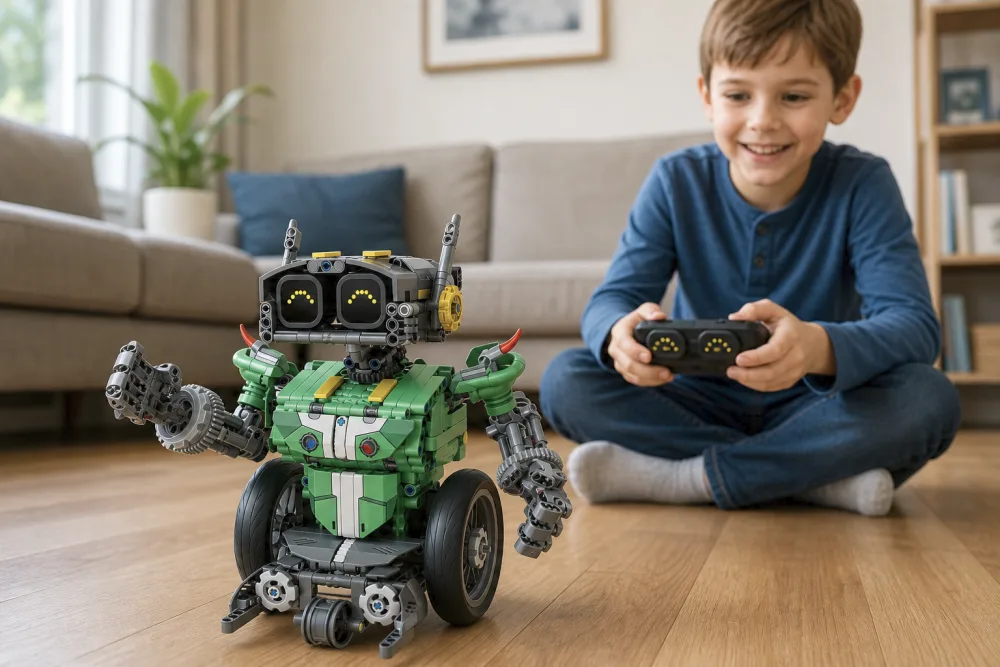
Once assembled, the robot drives well on hard floors and carpet and maneuvers nicely under remote control. That immediate result makes the hours of building feel worth it.
Remote vs App Control
You can drive it straight away with the remote, easiest for younger kids. The kit is also controllable through a free companion app, available on iOS and Android, that adds path planning, precise movement, and basic programming, so a child can tell the robot what to do rather than steer it live.
What Kids Actually Learn (STEM value)
The build teaches mechanical reasoning, sequencing, and patience. The app extends that into coding, a gentle on-ramp to computational thinking in STEM education and a taste of educational robotics. It suits the problem-solving in child-development milestones for ages 8-12.
Performance, Durability & Real-World Use
Motors, Speed, Stunts & Battery Life
The motorized drive gives up to 30 minutes per charge. The larger 631-piece sibling is marketed as a stunt car with two high-performance motors for drifting and flipping; if speed is the main draw, that variant is worth a look. Our 5-in-1 is built around the build-and-rebuild experience, not raw stunt performance.
Build Quality & Durability (ABS plastic)
The parts feel solid. Reviewers describe the construction as ABS plastic, and one tester who worked through 23 kits over two months found the Sillbird's plastic noticeably sturdier than rivals at similar prices. We treat the material as reviewer-reported, but the impression matches: pieces clip firmly and the robot holds together.
The real test of a robotics kit is whether kids rebuild it a week later. This one passes.
Pros and Cons
Pros
- Five genuinely different models from one box, with a rebuild loop that keeps it in use
- Clear, well-illustrated instructions a confident reader can follow alone
- Dual remote and Bluetooth app control, growing from simple driving to basic coding
- Drives well on hard floors and carpet, an immediate payoff after the build
Cons
- The full build runs long, and younger kids will need help to finish
- Small pieces make the early stages fiddly at the bottom of the age range
- Up to 30 minutes per charge means waiting on recharges during long sessions
- App and remote pairing can take a moment to sort out the first time
How It Compares to Other STEM Robot Kits
Sillbird Robot Car Kit vs Other Kids' Robotics Kits
| Feature | Sillbird Robot Car (5-in-1) | 12-in-1 Solar | Mega Cyborg Hand |
|---|---|---|---|
| Pieces | 488 | 190 | 203 |
| Models | 5 | 12 solar | 3 hand configs |
| Age | 8-12 | 8-13 | 7+ |
| Control | Remote + app | Solar | Hand-operated |
| Price | ~$59.99 | Budget | $44.95 |
If your child wants motors and a coding angle, the Sillbird 5-in-1 is the pick. For a battery-free option that runs on sunshine, our Sillbird 12-in-1 Solar Robot Kit review covers a cheaper, screen-free alternative with 190 reusable pieces. If mechanics over electronics is the goal, the Thames and Kosmos Mega Cyborg Hand STEM kit review covers a hydraulic, no-battery build around $44.95.
Who Should Buy It (and Who Shouldn't)
Buy it if you have a child of nine or older who likes building and want a toy that lasts beyond a single session. The rebuild loop and remote-to-app progression set it apart from a static model kit. Think twice if your child abandons fiddly tasks, or if you want an out-of-the-box stunt car rather than a build-first robot.
Price, Warranty & Where to Buy
The official price is around $59.99, down from a $69.99 list, though prices vary. The kit comes with a 1-year warranty from the date of purchase, a 30-day money-back guarantee, and a 30-day return window from delivery, so there is room to change your mind. Check the Amazon listing for current pricing.
Frequently Asked Questions
How many models can you build with the Sillbird Robot Car Kit?
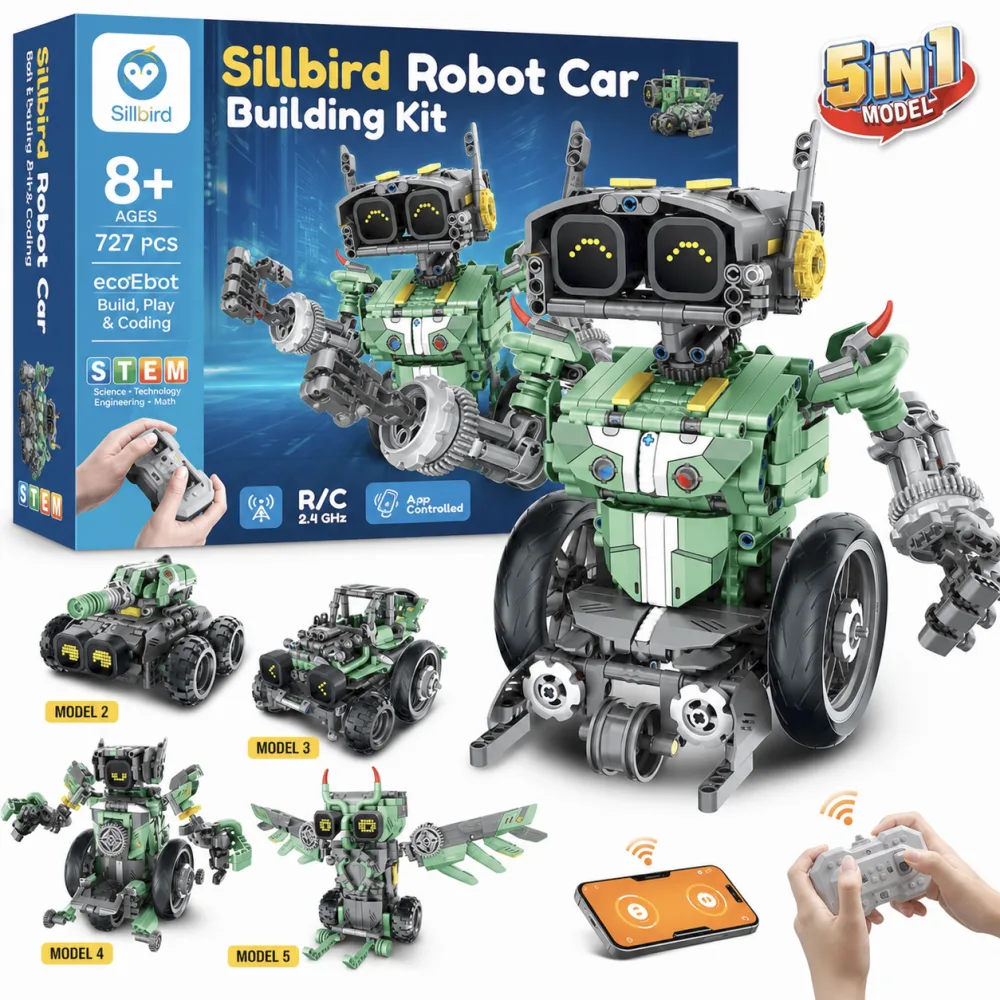
This is the 5-in-1 kit: a robot, car, tank, dinosaur, and a custom design, all from the same 488 pieces. There is a separate, larger 631-piece sibling, but the kit reviewed here is the 5-in-1.
What age is the Sillbird robot kit for?
Ages 8-12. Nine and up is the sweet spot for building independently; an eight-year-old usually needs an adult alongside for the trickier stages.
Does it use a remote, an app, or both?
Both. A remote handles instant driving, and a Bluetooth app, available on iOS and Android, adds path planning and basic coding for kids ready to go beyond live steering.
How long does the battery last and how long is the build?
The rechargeable battery gives up to 30 minutes per charge. Sillbird estimates a 3-4 hour build, though younger builders take longer; one parent reported about two days.
Is it worth the price compared to other STEM kits?
For a motorized, codeable robot with five builds and a real rebuild loop, the value is strong in its bracket. If you want a cheaper, battery-free option, a solar kit is worth comparing.
Final Verdict
The Sillbird 5-in-1 robot kit earns its place as a first proper robotics project for kids 8-12. It asks for patience, and younger children will need a hand, but the reward is a real, drivable robot that turns into four more models over time. Add the coding path and solid build quality, and it is one of the better-value STEM robots this year.