LEGO Gadgets Review: Is the Klutz STEM Activity Kit Worth It?
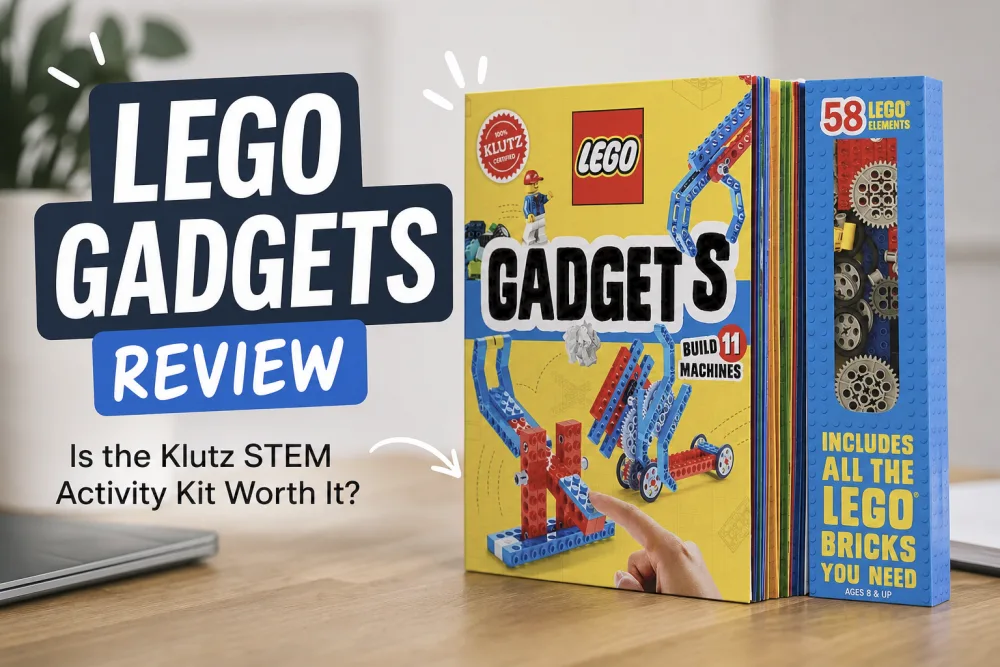
Wondering whether LEGO Gadgets is a real STEM kit or just a book with bricks taped to the cover? We had the same question, so we cleared the kitchen table after dinner and worked through it as a family.
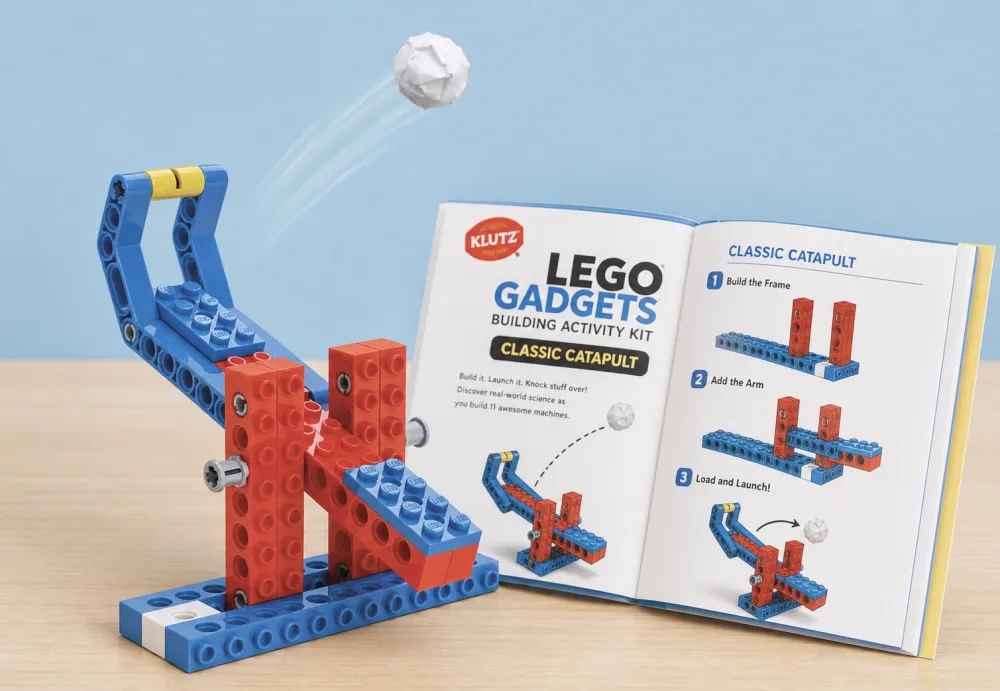
Our kids reached for the Classic Catapult first and built it largely on their own, then spent the session taking turns launching paper balls, leftover bricks, and a few action figures across the room. From there they moved on to the spinning-fan car, and the youngest couldn't wait to start each next gadget. A focused session ran around 45 minutes before anyone needed a break, and the standout moment came when the kids raced off to grab their own LEGO set and started inventing simple machines of their own.
This is a single-product review of the Klutz LEGO Gadgets kit, with a quick look at how it stacks up against its sibling kits. We bought it ourselves, built the machines with our kids, and rated it on what matters at home: how clear the instructions are, how sturdy the gadgets feel, the replay value, and whether the price earns its shelf space.
What is LEGO Gadgets (Klutz)?
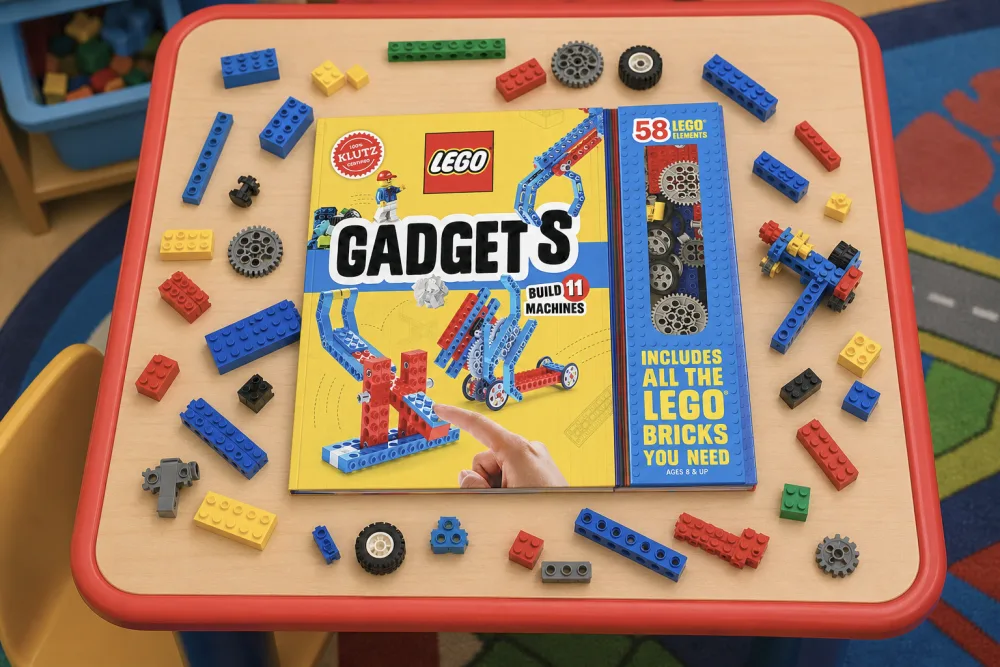
LEGO Gadgets is a LEGO Gadgets (Klutz Activity Kit) from Klutz, the activity-kit imprint owned by Scholastic. It pairs a chunky instruction book with a tray of LEGO Technic pieces, built around one idea: kids learn how machines work by building working machines.
It carries the National Parenting Center Seal of Approval (Spring 2019, ISBN 9781338219630).
What's in the box
Open the kit and you get three things: a 78-page instruction book, 58 LEGO elements (cross axles, Technic bricks, plates, pegs, and gear wheels), and 6 sheets of papercraft for the decorations. The box measures 10.25 inches across, so it slides onto a normal bookshelf rather than into a bin.
The most important thing to know up front: this is a self-contained kit. The 11 guided builds need no extra LEGO bricks. You only reach for your own collection to take the open-ended challenges further.
Recommended age and skill level
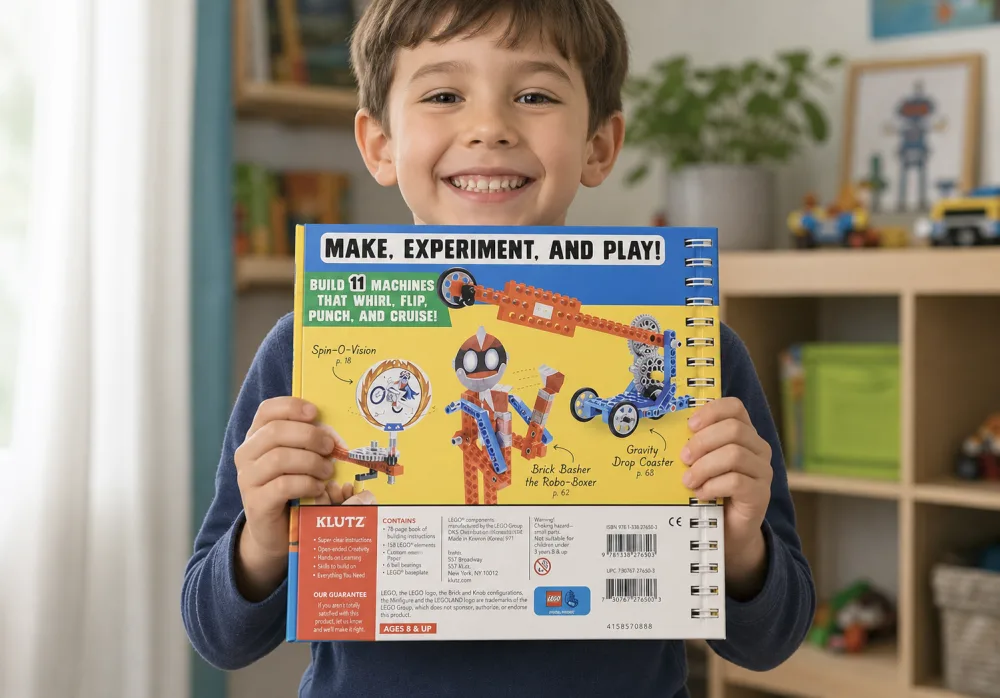
Klutz lists LEGO Gadgets for ages 8 and up, roughly Grades 3 through 8, and that feels right to us. A confident reader around 8 can follow the photo steps alone, while younger kids want a grown-up nearby for the fiddly snaps. Common Sense Media's age and learning-value guidance for parents lands in the same range for LEGO play.
How LEGO Gadgets works
The format is simple. You follow the book to build a machine, make it move, and the instructions quietly teach the mechanism behind it. By the end you've absorbed a fair amount of physics without it feeling like a lesson.
The 78-page instruction book and the 11 machines you build
The 78-page book is the heart of the kit. It uses step-by-step photos with bold headers and simple sight words, so a child can match the picture to the piece in their hand. We found even a pre-reader could follow along by spotting the shapes.
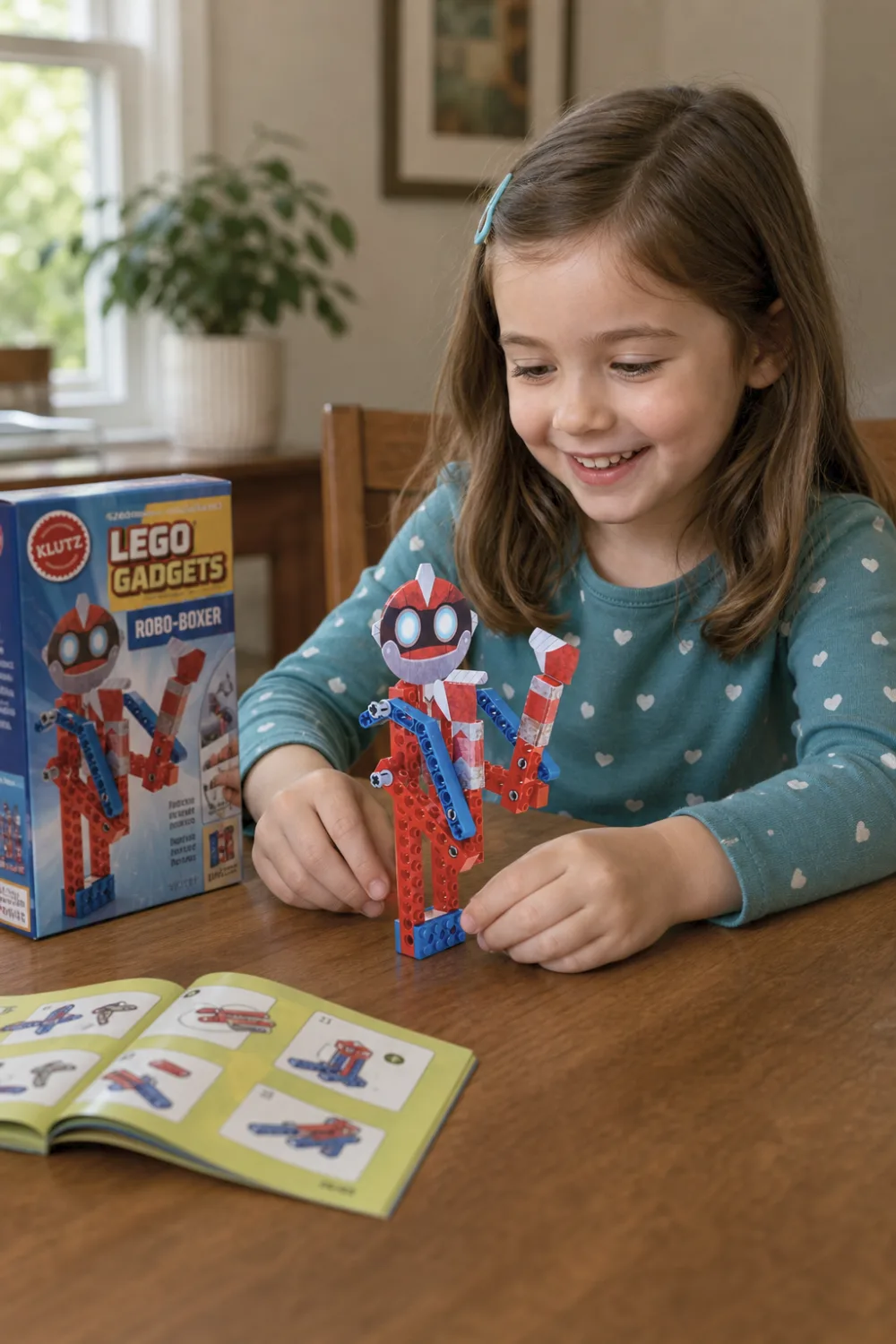
You build 11 working machines, from the practical to the gloriously silly: The Claw, a Classic Catapult, the Spin-O-Vision, a Ghost Guzzler, Rollin' Rex, a Flywheel Cruiser, a Mix Master 3000, a Micro Movie Maker, a Robo-Boxer, and a Gravity Drop Coaster. Treat that list as a guide rather than gospel, since a couple of builds blur together depending on how you count the fan project.
LEGO elements vs. papercraft pieces
This is the one design choice worth understanding before you buy. The moving parts are real LEGO Technic, so they snap, hold, and survive being knocked off the table. The decorative parts, like the boxer's face or the coaster's scenery, are papercraft you punch out and slot on.
The bricks are the durable, reusable part of the kit. The paper pieces look great but are as fragile as you'd expect cardstock to be. The Technic elements match the real LEGO Technic on LEGO.com range for quality, just packaged for guided learning.
Parent tipPunch out all the papercraft before you start a build and keep the sheets in the box. Once a paper piece tears, it's gone, so a child who treats them gently gets far more life out of the kit.
The STEM concepts it teaches (gears, cams, levers, axles)
Underneath the play, LEGO Gadgets teaches genuine simple-machine ideas: gears, cams, cranks, axles, and levers. The catapult is a lever, the cruiser stores energy in a flywheel, and the spinning gadgets show how gears change speed and direction. The book ties each mechanism to real technology like windmills and turbines.
The best part of LEGO Gadgets is that the physics lesson is invisible. The kids think they're just making a boxing robot punch.
Hands-on: building the machines
We set the kit up on the kitchen table after dinner and let the kids drive.
NoteWe built all 11 machines as a household, working through the book over several sittings. The notes below are what we saw with our own kids, not a press-kit summary.
Most of the eleven builds read as easy, because the photo steps let the kids match pieces by sight rather than parse instructions. The catapult, the working claw, and the spinning-fan car went together fast and got the biggest reactions; the kids were openly delighted the moment a gadget actually worked, declaring each finished machine "cool" and showing it off. The one real frustration point was fine-motor work on the smallest pieces, not the design of the gadgets themselves. A younger child needed an adult to snap the tiniest parts in, and one of our less patient builders gave up partway through a fiddly step. The joints, though, held: once a machine was built, it stayed together and worked as intended rather than feeling loose or flimsy.
Setup friction was otherwise minor, mostly punching out the cardboard decorations. The replay value also surprised us. Once the catapult was firing, the kids didn't stop at the book; they grabbed their own LEGO sets to build more simple machines. That hop from following the steps to inventing something new is exactly what we want.
Easiest builds to start with
The simplest machines have the fewest moving links, like the catapult and the claw. They're a confidence-building place to start: a child gets a working result fast, which buys patience for the trickier ones later.
The trickier gadgets and challenges
The harder builds add gear trains and timing, where one part has to drive another. A 7-year-old can manage most of it independently, while a 4-year-old needs help with the small snaps. Each build ends with open-ended prompts that nudge kids to modify what they made.
What we liked
Here's where we landed. The pros clearly outweigh the cons for the age it targets.
Pros
- Self-contained: all 11 builds work with no extra bricks needed
- Photo instructions are clear enough for an 8-year-old to follow solo
- Finished gadgets feel sturdy and actually function
- Real LEGO Technic elements are reusable long after the book is done
- Strong replay value, since kids invent their own machines afterward
- Screen-free STEM that teaches real mechanism concepts
Cons
- Papercraft pieces are fragile and don't survive rough handling
- A few steps don't name the parts, so younger kids may need help
- One book and one copy of each build, so two kids can't build at once
- List price feels a touch high until you catch it on sale
What could be better
The two things we'd change are about the edges, not the core. First, the papercraft: the LEGO parts are tough, but the paper decorations are the weak link, and a kit aimed at energetic 8-year-olds could be more forgiving here.
Second, the instructions occasionally show a piece without naming it, which is fine for a confident reader but leaves a younger child hunting. Plan to sit alongside a beginner for the first build or two.
Watch outThis is a single-build kit, not a class set. There's one copy of each machine's parts, so two kids can't build the same gadget at the same time. For siblings, expect to take turns or build as a team.
LEGO Gadgets vs. other Klutz kits (Gear Bots, Chain Reactions, Race Cars)
LEGO Gadgets isn't the only Klutz LEGO STEM book. The closest sibling is Klutz LEGO Gear Bots review, which trades breadth of machines for kinetic creatures, while LEGO Chain Reactions review leans into linking builds together. Here's how the family compares.
| Kit | Age | # of builds | Bricks included? | List price |
|---|---|---|---|---|
| LEGO Gadgets | 8 and up | 11 machines | Yes, self-contained | $24.99 |
| LEGO Gear Bots | 8-12 | 8 kinetic bots | Yes, self-contained | $23.99 |
| LEGO Chain Reactions | 7 and up | 10 machines | Partial (reuse/own bricks) | under $20 |
| LEGO Race Cars | 7 and up | 6-10 cars | Yes | around $30 |
Gadgets packs the most variety into its 78-page book. Gear Bots is the better pick if your child loves characters over contraptions; its 64-page book and 62 elements build 8 physics-driven creatures. Chain Reactions has an 80-page book but only 33 LEGO pieces, so it isn't fully self-contained: because some parts repeat across projects, you often take a machine apart to build the next. Race Cars throws in 124 elements and a chipboard track, but listings disagree on how many cars it builds and the price runs higher. For a first Klutz LEGO kit, Gadgets is the one we'd reach for, simply for the spread of builds.
Who should buy LEGO Gadgets?
LEGO Gadgets fits a curious 8-to-12-year-old who likes making things move and doesn't mind reading a few steps. It's a strong homeschool pick, because it teaches real simple-machine concepts through play and ties them to lessons you can extend. For a child who already loves LEGO, it adds the how-does-this-work layer.
It's a weaker fit for kids under 8 building alone, or for two children hoping to build side by side from one box.
LEGO Gadgets FAQ
What age is LEGO Gadgets for?
Klutz recommends ages 8 and up, roughly Grades 3 through 8. A confident 8-year-old reader can build most machines independently, while younger kids will want help with the smaller piece snaps.
Do you need your own LEGO bricks?
No. The kit is self-contained, and all 11 guided builds work with the 58 LEGO elements included. You only need your own bricks if you want to extend the open-ended challenges.
How many machines can you build, and how long do they take?
You build 11 working machines, from a catapult to a boxing robot. The kit doesn't publish a per-build time, but the builds are short enough to do across a few sittings rather than one marathon.
Is LEGO Gadgets good for homeschool / STEM learning?
Yes. It teaches gears, cams, levers, and axles through hands-on building and links each mechanism to real technology, which makes it an easy screen-free addition to a homeschool science unit.
Conclusion: is LEGO Gadgets worth it?
For the right kid, LEGO Gadgets is an easy yes. You get 11 working machines, durable reusable Technic bricks, and a genuine simple-machines lesson hiding inside the fun. The papercraft is the one soft spot, and beginners need a little hand-holding, but neither dents the value.
NoteWe'd buy it again. It's earned a permanent spot on our homeschool shelf, and it's the kit we reach for when a kid says they're bored.
At its LEGO Gadgets (Klutz Activity Kit) list price of $24.99, it's a screen-free STEM kit that delivers, and it's better value when it dips on sale.