15 Easy Watercolor Christmas Crafts for Kids
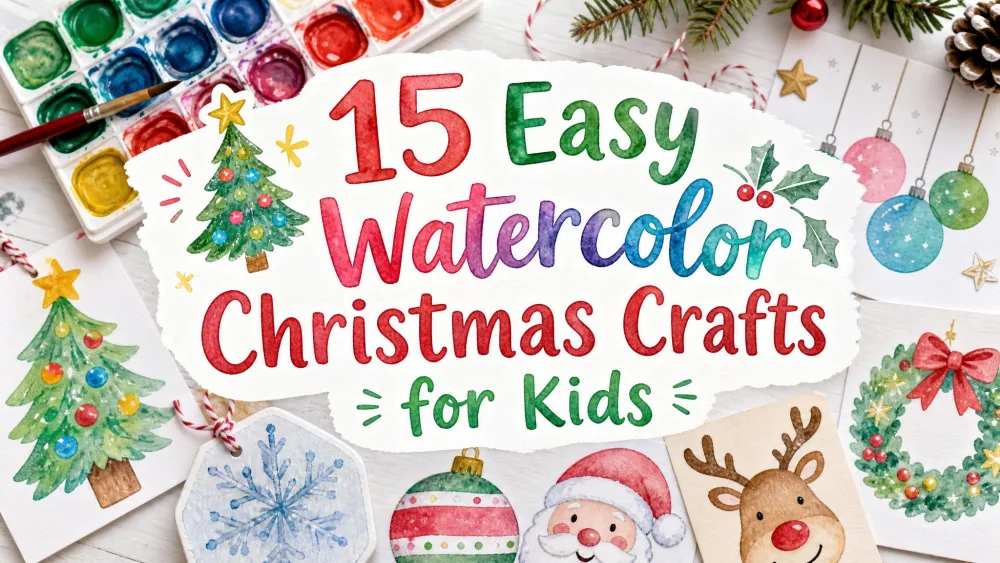
We rounded up 15 watercolor Christmas crafts for kids made simple: trees, ornaments, and cards kids will love painting, tested at our own kitchen table this season. Each idea uses basic watercolor supplies you likely already have, and every step is broken down to keep things simple and mess-free, even for our youngest painters.
These are grouped by type: cards, trees, wreaths and nature scenes, ornaments, characters, and a few extra-simple ideas for younger painters. Grab your paint and a stack of paper, and let's get started.
Materials You'll Need for Watercolor Christmas Crafts
Every craft here uses the same core supplies, so it's worth setting up one proper kit instead of buying piecemeal. Here's what we keep in our craft bin this time of year.
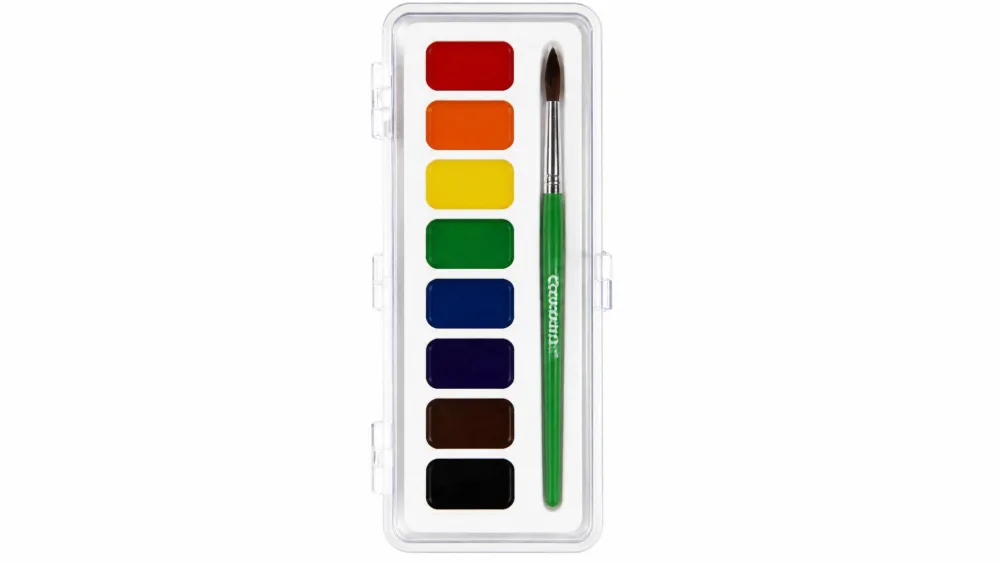
For paint, we like Crayola's washable watercolor pans for their vivid color range. Prang semi-moist watercolors are a sturdier, less-washable step up, and a 36-color watercolor pan set is a popular budget pick for more color variety.
Paper matters more than the paint. Reach for 140 lb cold-press watercolor paper rather than printer paper, since that weight resists the buckling and warping that thinner paper gets once wet. Lighter 90 lb paper works for quick, low-water techniques, but heavier stock forgives beginners still learning brush control.
Parent tipIf paper warps once it dries, don't try to flatten it while still wet. Press it under heavy books once fully dry, and on a drying rack, rest wet paper on a stiff backing sheet instead of leaving it over the open slots.
A couple of round watercolor brushes sized 12 or 16 cover nearly every technique below, and a simple plastic paint palette keeps colors from turning muddy as you mix. Keep a cup of water on hand for rinsing.
For the resist ideas ahead, keep white crayons or oil pastels and a roll of painter's tape on hand. Add white cardstock for cards, air-dry clay for the clay ornaments, coarse salt for the angel card, and thin ribbon or string for hanging ornaments.
None of these crafts need a printed template. Most of the shapes below are simple enough to freehand, and when a cleaner outline helps, a household object does the job just as well: a bowl traces a wreath circle, a cookie cutter outlines an ornament, and a ruler gets you a tidy tree triangle. Trace lightly in pencil first, then paint over the lines.
Watercolor Christmas Cards
Watercolor Snowflake Card
Draw a snowflake in white crayon or white oil pastel first, pressing firmly so the wax lays down thick. Brush blue and purple watercolor over the card, and the invisible snowflake resists the paint and appears like it's glowing against the wash. The reveal happens the moment the brush passes over the crayon lines, so the resist effect is obvious right away.
Watercolor Wreath Card
Load a round brush with two shades of green and press loose, overlapping strokes into a circle for a simple wreath. Dab in a few reds for berries while the green is still damp, so the colors blur slightly at the edges. Once it's dry, a thin black outline traced around the leaves makes the card look finished.
Watercolor Angel Card
Sketch a simple angel outline, then wet the paper around it, not the angel itself, and brush in blue so the shape stays a clean white silhouette against a painted sky. While that background is still wet, sprinkle on a little coarse salt. As it dries, the salt pulls the pigment into small mottled bursts for a frosty texture.
Watercolor Christmas Trees
Simple Watercolor Christmas Tree
Draw a simple triangle tree, then wet the whole shape with clean water using a soft brush. Drop in two or three shades of green from bottom to top and let them bleed into each other on their own. The wet-on-wet blend does most of the work, which makes it a forgiving starting point for a first try at brush control.
Splattered Watercolor Christmas Tree
Paint a green tree shape and let it dry completely. Load an old toothbrush with thin, watery white paint and run a thumb across the bristles to flick fine specks across the tree, like a dusting of snow. This is the messiest step on the whole list, so we keep an old shirt handy just for it.
Watercolor & Oil Pastel Resist Tree
Before painting, draw ornaments, lights, or a star in bright oil pastel directly onto a blank tree outline, then wash green watercolor over the whole shape. The wax repels the paint, so every decoration you drew stays bold while the background goes soft around it. It's a good next step once a child has tried a resist trick before.
Watercolor Wreaths & Winter Nature Designs
Holly & Mistletoe Watercolor
This one skips the card and treats holly and mistletoe as a small nature study. Paint a few loose leaf shapes in two greens, keeping the strokes a little uneven, then add red or white berry dots while everything is still damp. Once dry, a thin ink outline around the leaves turns the wash into something that reads clearly as holly.
Winter Landscape Watercolor
Start with a wet sky wash in blues and grays, let it dry, then add a tree line in dark green, going back over a few trees in black once that layer dries, for depth. Finish with the same toothbrush-splatter trick, flicking white across the scene for falling snow. It's the most involved project here, about 1 hour and 35 minutes total, with roughly 30 minutes of that being active painting.
Watercolor Christmas Ornaments
Watercolor Ombre Sky Ornaments
Cut a circle from watercolor paper for the ornament shape, wet the whole circle with clean water, then paint a light color at the bottom and a deeper shade of the same color at the top. Tip the paper gently so the two blend into a soft gradient, like a little sky captured in a circle. Plan for about 45 minutes of active painting if you're making more than one.
Marbled Watercolor Ornaments
Wet a paper or cardstock circle, then drop in two or three watery colors right next to each other and tilt the paper gently so they swirl into marbled streaks rather than a flat wash. No two ornaments turn out alike, which is part of the fun, and it's a good use for leftover palette colors.
Watercolor Clay Ornaments
Roll out air-dry clay, cut shapes with cookie cutters, then let the ornaments dry completely, which usually takes 24 to 48 hours, or less in a low oven. Don't rush the painting step. Clay that isn't fully dry softens under a wet brush, and the paint bleeds or peels back off. Once truly dry, use concentrated watercolor with very little water, light colors first and darker details layered on after each layer dries.
Watercolor Santas, Elves & Fun Characters
Watercolor Santa Painting
Build Santa from a few basic shapes: a triangle hat, a round beard blob, and two small circles for cheeks. Paint the hat and suit first and let them dry for crisp edges, then work wet-on-wet for the beard so the white blends softly instead of looking stiff. Breaking Santa into a few basic shapes turns him into a paint-by-shape project rather than a freehand portrait, which keeps the whole thing approachable.
Watercolor Elf Card
An elf card uses the same basic shapes as Santa, just swapped for a pointed hat and a striped outfit instead of a red suit. Because the shapes are so simple, this is a fast one to paint, and a nice pick if you want a handmade card without a long production process.
Easy Watercolor Ideas for Beginners & Little Kids
Candy Cane Watercolor Resist
Lay strips of painter's tape diagonally across the paper, then paint red, or red and green, over the whole thing. Peel the tape while the paint is still a little damp, not once it's completely dry, since dried paint can tear the paper along with the tape. If a strip starts to stick, try peeling from the other direction.
Fingerprint Christmas Tree
Draw a simple tree outline and let kids fill it in with fingerprints in green, red, and gold instead of a brush. Don't redip for every print. Reusing the same loaded fingertip across several prints is what gives the tree its texture, since some prints stay bold and others fade lighter. This works well from about age 3 to 8, with a harder diagonal-line version for older kids in that range.
More Watercolor Ideas & Techniques for Kids
If your kids can't get enough of painting once the holiday crafts are done, there's more to try in our watercolor library. 20 easy watercolor painting ideas for kids covers projects for every season, 8 easy watercolor techniques for kids to try breaks down the resist, splatter, and wet-on-wet methods used throughout this list, and how to make watercolor paint for kids is a fun rainy-day project for mixing your own paint from kitchen staples.
Frequently Asked Questions
Can I use regular printer paper instead of watercolor paper?
For most of these crafts, no. Printer paper is too thin to hold up under a wet wash and will buckle, pill, or tear as it dries. The one exception is a craft that barely touches water, like the fingerprint tree, where regular paper or cardstock holds up fine. For anything with a wash step, reach for real watercolor paper or heavy cardstock instead.
What age is watercolor painting appropriate for?
Structured painting with real brush control fits well from around age 3 onward. Younger toddlers can join in with simplified, assisted versions, like finger-dip painting, under close supervision, though readiness comes down to a child's own fine motor skills.
How do I keep watercolor paper from warping?
Tape all four edges down with painter's tape before you start, not just the corners, so the paper can't lift and buckle mid-wash. Blot big puddles with a dry brush instead of letting them pool and soak in, especially on a heavier wash like the winter landscape or the ombre ornaments. If paper still curls once it's dry, press it flat under a stack of heavy books until it flattens back out.
What's the minimum kit if I only want to try one craft before buying everything?
For most of the card and tree ideas, a basic watercolor pan set, one round brush, and a sheet of watercolor paper or heavy cardstock is enough to get started. Skip the second brush size and the mixing palette until you're working on something more involved, like the winter landscape or the ombre ornaments. The resist projects need painter's tape or a white crayon on top of that basic kit, but nothing beyond what most craft bins already have.
Final Thoughts
Watercolor is one of the most forgiving mediums we've tried at our kitchen table, and Christmas gives you an excuse to work through techniques all season, from a five-minute fingerprint tree to a full winter-landscape afternoon. Pick one or two to start, especially if this is a first try at resist techniques or wet-on-wet blending, then build up once those basics feel comfortable.