10 Winter Olympics STEM Activities for Kids
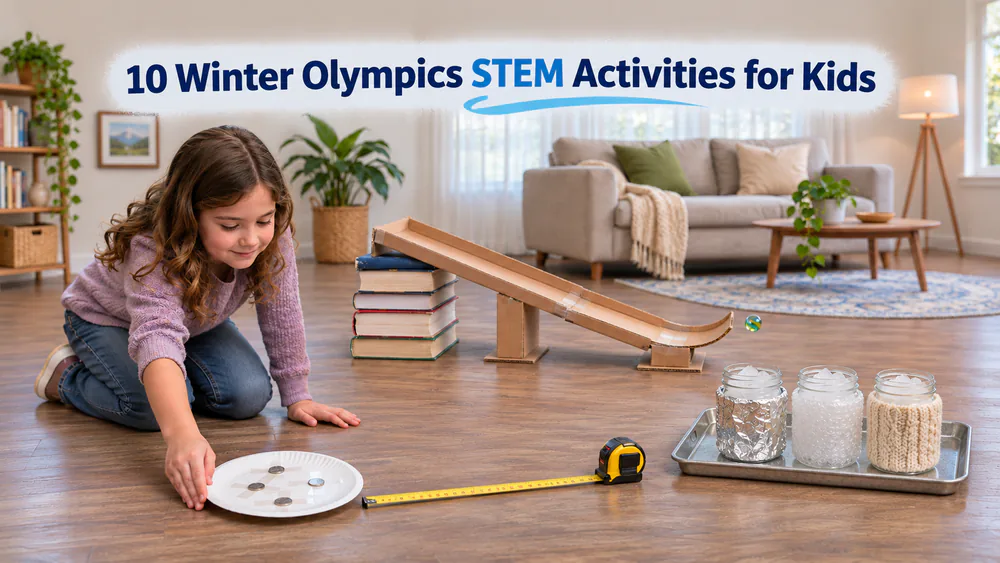
Wondering how to turn the Winter Games into a STEM week at home? These 10 low-prep challenges use winter sports to explore friction, drag, balance and angles. The 2026 Winter Olympics ran February 6 to 22, but these work any time of year, and they suit kindergarten through grade 5. Most take under an hour with supplies you already have, so you can start whenever the mood strikes.
| Sport | STEM concept | Ages |
|---|---|---|
| Curling | Friction | K-5 |
| Bobsled | Drag, energy | K-5 |
| Luge | Center of gravity | K-5 |
| Speed skating | Center of gravity | Grades 2-5 |
| Alpine skiing | Balanced and unbalanced forces | Grades 3-5 |
| Ice hockey | Angles, deflection | Grades 3-5 |
| Ski jumping | Launch angle | Grades 3-5 |
| Snowboarding | Forces, balance | Grades 3-5 |
| Biathlon | Aim, timing | Grades 3-5 |
| Ice rink | Insulation | K-5 |
1. Curling STEM Challenge: Friction on Ice
Kids ask to repeat this one, and it shows why some surfaces slide better than others.
What you need
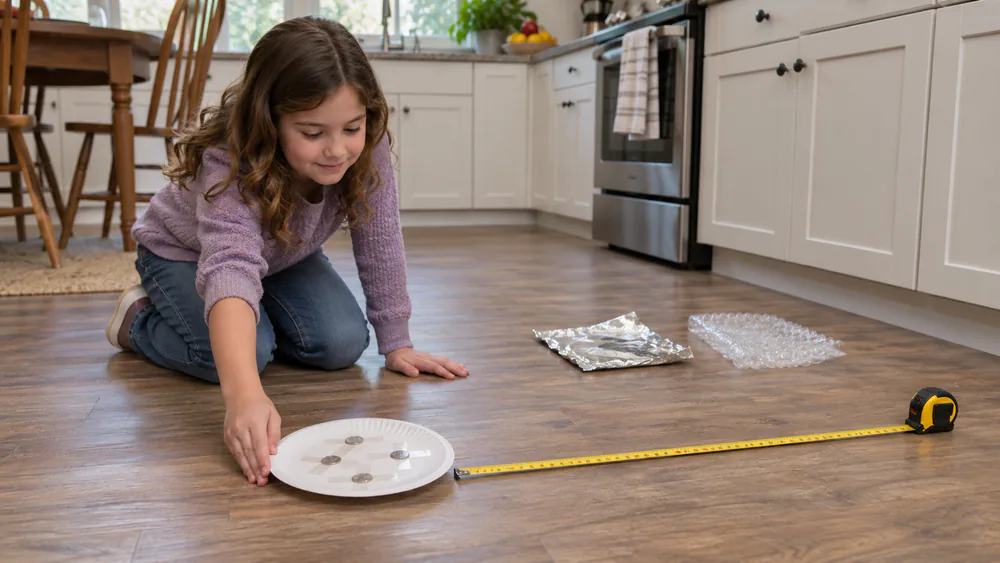
You need: a paper plate, coins, tape, test materials (bubble wrap, foil, tissue paper), and a tape measure.
How to do it
- Tape a few coins on top of the plate so it has some weight.
- Mark a start line on a flat floor.
- Push the bare plate gently and measure how far it goes.
- Cover the underside with one test material and push again with the same force.
- Repeat for each material and pick the slipperiest cover.
Ages K-5, about 20 minutes, low cost. Tip: have one child do every push so the force stays the same. If ice is a hassle, a dry version with a marble in a Lifesaver works too.
The science
Real curling ice is sprayed with water to make tiny bumps called pebbles, which cut the contact area with the stone. Sweeping warms the surface and melts the tops of the pebbles, which lowers friction so that a stone of about 20 kg travels farther.
2. Bobsled STEM Challenge: Drag and Air Resistance
Gummy-bear athletes in different bobsled positions made this the most-requested activity of our set.
What you need
You need: cardboard tubes or foil, painters tape, a marble or gummy bear, a stopwatch, and books for a ramp.
How to do it
- Tape a track of tubes or folded foil to a wall or couch with a few curves.
- Roll a marble from the top and time it.
- Raise the start higher and time it again.
- Try a gummy bear on its back versus sitting up and compare.
- Record the times in a chart.
Ages K-5, about 30 minutes, low cost. Tip: tape the turns gently, because tight turns send the marble flying. Crashes are useful, since kids redesign the turn to find out why. Plastic gutters or half pool noodles hold up better than foil for repeat runs.
The science
Drag is the air pushing back on a moving object, so a flatter body slips through more easily. Raising the start adds potential energy, which turns into kinetic energy on the way down, and real bobsleds carry two or four people.
3. Luge STEM Challenge: Build a Track
A simple craft stick sled shows how weight placement changes a ride.
What you need
You need: a craft stick, a coin, tape, a ramp made from a book and cardboard, and a stopwatch.
How to do it
- Tape a coin at the front of a craft stick.
- Slide it down the ramp and time the run.
- Move the coin to the middle and time it again.
- Move it to the back and time it once more.
- Compare which spot is fastest and straightest.
Ages K-5, about 20 minutes, low cost. Tip: release the sled from the same spot every run so the comparison stays fair.
The science
Weight placement changes the sled's center of gravity and affects how steadily it travels; luge racers also lie flat to reduce air resistance.
4. Speed Skating STEM Challenge: Center of Gravity
The wall-and-leg balance trick hooks kids on center of gravity before any building starts.
What you need
You need: pipe cleaners, a ring candy or washer, and a stopwatch.
How to do it
- Stand sideways to a wall and lift the outer leg to feel the balance trick.
- Shape a skater from pipe cleaners with two legs.
- Add the ring as weight and test its balance.
- Bend the skater lower and see if it stands for 30 seconds.
- Redesign and try again.
Grades 2-5, about 25 minutes, low cost. Tip: tall, narrow skaters topple, so widen the feet and lower the weight.
The science
An object stays upright when its center of gravity sits over its base, which is why skaters crouch low to keep theirs steady through turns.
5. Alpine Skiing STEM Challenge: Balanced and Unbalanced Forces
A tilted tray becomes a slalom course, and the marble shows how a gate changes its path.
What you need
You need: a cookie sheet or foam board, marbles, tape, and cardboard or craft sticks for gates.
How to do it
- Prop the tray at a slope.
- Roll a marble and watch it go straight.
- Tape in gates so the marble must turn six times.
- Test the run, then move the gates to improve it.
- Explain what pushes the marble sideways.
Grades 3-5, about 30 minutes, low cost. Tip: a slope that is too steep sends the marble off the edge.
The science
A marble rolls straight when forces are balanced, but a gate adds an unbalanced force that changes its direction, and a steeper slope adds a bigger push downhill.
6. Ice Hockey STEM Challenge: Angles and Deflection
Bank shots are a fun way to practice predicting angles.
What you need
You need: marbles or a foil-wrapped puck, a cardboard wall, a protractor or paper, tape, and a small goal.
How to do it
- Set a cardboard wall as the boards.
- Roll a marble at the wall at a chosen angle and mark where it bounces.
- Predict the bounce for a new angle.
- Test it and compare.
- Aim a bank shot into the goal.
Grades 3-5, about 30 minutes, low cost. Tip: tape the wall down and mark the start angle, because a loose wall spoils results.
The science
A puck bounces off a wall at about the same angle it arrives, which lets players plan their shots.
7. Ski Jumping STEM Challenge: Launch Angles
Ski jumping has been in the Winter Olympics since 1924, and a marble ramp lets kids test what makes a jump go far.
What you need
You need: a cardboard or tube ramp, a marble or paper skier, books, a tape measure, and tape.
How to do it
- Build a ramp that ends at a lip.
- Release the skier from a marked height.
- Measure the landing distance.
- Change the lip angle in steps and run three trials each.
- Compare which angle flies farthest.
Grades 3-5, about 40 minutes, low cost. Tip: change one thing at a time, because angle is not the same as ramp height.
The science
Launch angle and speed together decide how far something flies, and repeating each trial three times evens out lucky or unlucky runs.
8. Snowboarding STEM Challenge: Forces and Balance
Snowboarding became an Olympic sport in 1998, and kids can design a rider that stays upright.
What you need
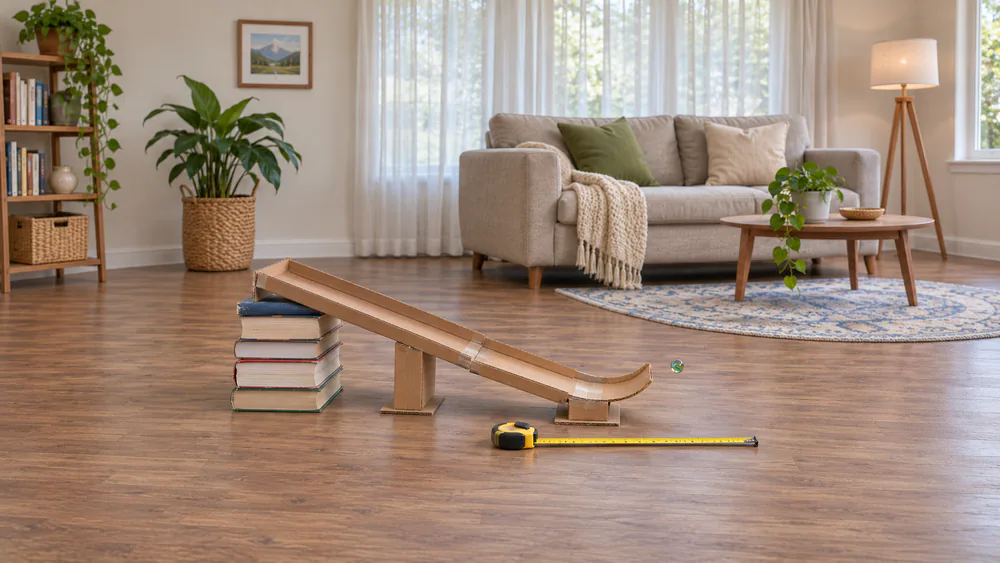
You need: a cardboard or craft stick board, a paper rider, a ramp, coins, and tape.
How to do it
- Build a board and a paper rider.
- Race it down the ramp.
- Add weight and test again.
- Try different surfaces under the board.
- Record which design is steadiest.
Grades 3-5, about 30 minutes, low cost. Tip: riders fall over if the weight sits too high, so keep it low.
The science
Force, friction and weight all shape the ride. A low center of weight keeps the rider balanced, and a rougher surface under the board adds friction that slows it down. Comparing designs helps kids see which change mattered most.
9. Biathlon STEM Challenge: Aim, Math and Timing
Biathlon mixes skiing with shooting: five targets per round, and misses add time.
What you need
You need: ping pong balls, cups or paper plate targets, a straw or cardboard launcher, a tape measure, and a stopwatch.
How to do it
- Make a launcher from a tube and a rubber band, or just use a straw blow.
- Set up five targets.
- Shoot, count the hits, and time the round.
- Add a time penalty for each miss.
- Change one launcher feature and retest.
Grades 3-5, about 40 minutes, low cost. Tip: keep the launch force the same for a fair test, and never aim at faces.
The science
Kids practice measuring, counting and fair testing, since only one thing should change between rounds.
Watch outCutting foam tubes is an adult-only step, and scissors need supervision with younger kids. Keep launchers pointed at targets only.
10. Save the Ice Rink: Melting and Insulation Experiment
This last challenge asks how a rink stays frozen, and kids can compare which everyday materials keep ice from melting the longest.
What you need
You need: ice cubes, plates, bubble wrap, foil, black paper, and a timer.
How to do it
- Wrap one ice cube in an insulating material.
- Leave another uncovered on a plate.
- Check every 2 minutes.
- Record which melts first.
- Repeat with other materials.
Ages K-5, about 20 minutes, low cost. Tip: start with cubes the same size, and wipe up melted water so floors stay dry.
The science
Insulators slow the flow of heat into the ice, so it melts more slowly, and rinks rely on the same idea. Kids can see that a shiny or dark wrapper changes how fast the cube warms up, so ask them to predict the winner before the first check.
Quick Tips for Running These Challenges (Ages, Materials, Mess)
Setup is quick, and most challenges share the same basic supplies: tape, marbles, coins, craft sticks and cardboard.
For K-2, use marbles, ramps and popsicle sticks and focus on watching and comparing, while for grades 3-5 you can add design, build, test cycles with measured trials. Kids stay engaged longest when they get a second round to redesign, so leave time for it.
Remember to add weight to the curling plate so it glides farther and straighter. Explore more projects in our guides to STEM art projects for kids and the best STEM kits for kids.
Frequently Asked Questions
What ages suit these Winter Olympics STEM activities?
Kindergarten through grade 5. Curling, bobsled, luge and the ice rink work across that range, while alpine skiing, hockey, ski jumping, snowboarding and biathlon fit grades 3-5 best.
What supplies do I need?
Mostly household items: paper plates, coins, tape, marbles, cardboard tubes, craft sticks, pipe cleaners and ice cubes.
How long does each activity take?
Most take under an hour. Plan 20 to 40 minutes, plus extra time for a second round of redesign.
How do I adapt them for K-2 versus grades 3-5?
Younger kids can push, watch and compare. Older kids can measure, time, record results in a chart and repeat trials.